Landscaping options and costs in Copperfield
Copperfield, Alberta is the kind of community where a well-designed yard really pays off—especially as more homeowners invest in curb appeal on single-family lots. With Copperfield’s population at 14,095 (Statistics Canada, 2021 Census), demand is steady for practical outdoor upgrades that can handle Prairie freeze–thaw and wind-driven weather. In the Calgary economic region, landscaping pricing is also influenced by how quickly trades can schedule work across nearby pockets like the Copperfield-area growth corridors, where crews are busy in spring and early fall.
In Prairie plant hardiness zones 3–4, the short growing season and late-spring frosts mean contractors have a narrower window to prep bases, install hardscape, and plant. Freeze–thaw cycles are severe, so walkways, patios, and retaining walls need deep, well-compacted bases and proper drainage to avoid heaving and settlement. That base work is a major cost driver, which is why a “surface refresh” often isn’t as simple as it looks. Availability of skilled labour (grading, interlocking stone, and irrigation) also affects timelines and price, particularly when the season is tight.
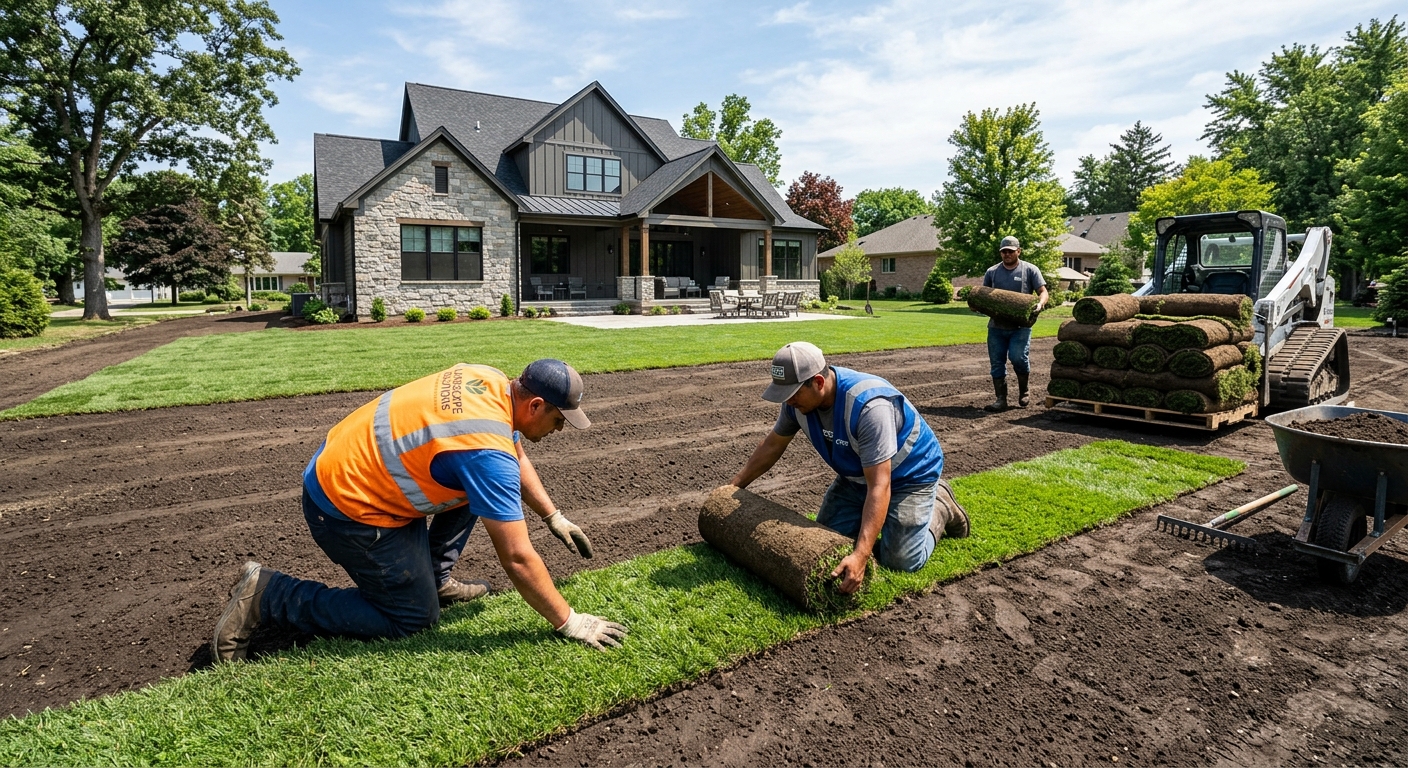
Most homeowners in Copperfield start by choosing a scope: lawn-only, planting-only, or a full package that combines design, grading, hardscape, irrigation, and planting. Below is a practical comparison of common options and typical price bands, so you can align your budget before you ask for quotes.
| Service |
Description |
Season |
Price Range |
| Full landscape design and installation |
On-site assessment, grading/drainage plan, hardscape, planting plan, soil prep, and installation (often includes initial irrigation design) |
Late April–October |
$8,500–$28,000 |
| Sod installation (supply, grade, lay, roll) |
Existing surface prep, minor grading, sod delivery and layout, rolling, starter fert, and initial watering guidance |
May–September |
$2,000–$5,000 |
| Lawn seeding (grade, seed, starter fertilizer) |
Surface conditioning, grading, seed selection for drought tolerance, starter fertilizer, and light topdressing |
April–June and late August |
$1,500–$3,500 |
| Interlocking patio or walkway |
Excavation, base depth and compaction, edge restraints, interlocking stones/pavers, and joint sand |
May–October |
$6,500–$20,000 |
| Retaining wall (interlocking block) |
Block retaining system with drainage layer, filter fabric, base prep, and integrated weep/drainage details |
May–September |
$12,000–$32,000 |
| Tree and shrub planting |
Soil improvement, planting layout, staking/anchoring as needed, mulch beds, and initial care guidance |
May–October |
$1,200–$9,000 |
Prices are estimates only and vary by project scope, site access and material selection.
What affects the price of landscaping in Copperfield
In Copperfield and across Calgary-area communities, two quotes for the “same” landscaping idea can differ by 30–50% because the expensive parts are often hidden: base preparation depth, compaction quality, drainage fixes, soil amendments, and irrigation design. Labour can represent about 40–60% of a full project, so schedule pressure and crew availability in spring and early fall can move pricing as much as materials. That’s why a straightforward lawn and planting job may land near the lower end of the $5,000–$50,000 landscape design/installation band, while a full redesign with grading and hardscape work can push into the mid five-figure range.
Prairie hardiness zones 3–4 (Copperfield area) shape both what grows and what can be installed. Short growing seasons and late frosts also limit when sod can be laid and when planting can safely establish. Retaining wall bases must typically reach below the frost-affected zone, and freeze–thaw requires deep, well-compacted layers—materials and time increase accordingly.
For contrast, coastal BC’s longer, mild season supports broader planting palettes, so labour may be spread across a longer window; however, heavy-rain drainage details add complexity. In the dry interior, irrigation often must be more precise, using zoned controls and efficient drip systems, which is also common here in southern Alberta due to periodic watering restrictions and the cost of wasted water. Southern Ontario’s moderate season still requires summer watering support, though the base prep and frost depth challenges tend to be less punishing than Prairie freeze–thaw cycles.
Concrete examples for Copperfield: (1) If your yard needs re-grading so water drains away from the foundation, the drainage and grading scope can shift a patio project from roughly the $6,500–$20,000 range upward. (2) Upgrading soil and adding a proper drainage bed behind a retaining wall can add cost, but it prevents future settlement and wall movement. (3) Choosing drought-tolerant, zone-appropriate shrubs rather than more delicate ornamentals typically reduces replacement risk and follow-up labour—important when Alberta winters are unforgiving.
| Price Factor |
Why It Matters |
Cost Impact |
| Yard size in sq ft — the primary cost driver for softscape |
More area means more labour hours for prep, more materials for topsoil/seed/sod, and more edging |
Usually the biggest swing; can move the project by thousands |
| Grading and drainage work — slope corrections add significant cost |
Fixing grade protects foundations and prevents ponding that damages lawns and beds |
Often pushes quotes toward the upper part of the sod or full-install bands |
| Drainage bed or French drain installation |
Below-grade drainage reduces freeze-related heaving and water pressure behind walls |
Can add substantial labour and excavation time |
| Plant material tier — native shrubs vs. ornamental vs. mature specimen trees |
Mature trees cost more and may require lifting/staking and protective preparation |
Replacement risk drops with zone-appropriate choices, reducing future spend |
| Hardscape vs. softscape ratio — walls and patios cost more per sq ft than lawn |
Interlocking stone and retaining walls require deep excavation, base layers, and restraints |
Shifts a project into the higher $8,000–$40,000 retaining/hardscaping band |
| Irrigation system design and installation |
Zoned layouts, controllers, and proper head spacing prevent under/over-watering |
Can move a lawn/planting job up versus no-irrigation designs |
| Soil amendment and topsoil required |
Calgary-area soils can be compacted; amendments improve root establishment |
Increases material costs but improves survival and reduces rework |
| Tree removal or stump grinding before new planting |
Clearing impacts schedule, hauling, and sometimes disposal fees |
Adds labour and equipment; can change scope and price quickly |
Permits & regulations in Alberta
In Alberta, most planting, sodding, and typical softscape work does not require a permit. For Copperfield homeowners, that usually means tasks like seed/sod installation, mulched beds, shrub and tree planting, and standard walkway/patio construction are generally handled as private landscaping without municipal permits. That said, retaining walls are the exception: if the wall exceeds the typical threshold—commonly around 1.0 m (3.3 ft) in many municipalities—it often triggers a building permit and may require engineered drawings.
Also watch for drainage and grading approvals. If your project changes lot grading in a way that could direct water toward a neighbouring property or toward storm connections, you may need approval before work begins. And before any digging for irrigation lines, planting holes, or wall footings, always request utility locates so you don’t hit buried services.
To verify an Alberta contractor’s credibility, use a simple step-by-step approach: (1) Confirm the contractor’s Alberta licence status using the appropriate provincial registry information they provide and verify it matches the legal business name. (2) Ask for a current certificate of insurance—liability coverage should be active for the project dates and your address. (3) Ask whether they have WSIB/WCB coverage (or the applicable clearance documentation they use), and request proof in writing. (4) Keep copies of everything in your file before work starts, including the signed scope and any permit responsibility stated in the contract. When trades handle drainage and base excavation in Prairie freeze–thaw, these checks protect you from schedule and risk issues.
Planning a landscape that thrives in Copperfield's climate
To plan a yard that thrives in Copperfield, think “zone-appropriate and frost-smart,” not “pretty and delicate.” Copperfield sits in plant hardiness zones 3–4, with severe freeze–thaw cycles and frequent wind exposure. Choose plants that can handle colder winters and shorter growing seasons with minimal winter protection. Use native and hardy cultivars where possible, and build wind shelter with layered shrubs before you rely on more exposed specimens.
Sod vs. seed is a practical decision in this market. Sod gives instant curb appeal, but installation typically costs 3–4 times per square foot compared with seeding because you’re paying for labour-intensive rolling, delivery, and premium-quality turf. In Calgary conditions, seeding is often more forgiving on budget—especially if you include soil conditioning and starter fertilizer.
Drainage and grading are non-negotiable in Calgary. Pooled water around foundations freezes, expands, and contributes to heaving—so design slopes to move water away from the house and confirm downspout discharge is routed correctly. For hardscape like patios or retaining walls, base preparation must reach below frost-affected depth and be compacted in layers; skipping that step leads to long-term failure.
Low-maintenance design strategies are where Copperfield homeowners save year after year: use mulch, groundcovers, perennial beds, and drought-tolerant groupings rather than thin turf and frequent re-seeding. Xeriscape and rain-garden concepts also fit well here—especially when paired with smart controllers, zoned irrigation, and drip where needed.
One example of where cost differences are justified: if you’re choosing between sod and seeding for a lawn rebuild, spending toward seeding can keep you near the $1,500–$3,500 range for lawn seeding, while sod for the same area can land near $2,000–$5,000—and the savings can be redirected into better drainage grading or drip irrigation, which improves long-term survival in Prairie winters.
| Element |
Climate Consideration |
Maintenance Level |
Price Band |
| Sod lawn installation |
Needs careful timing and watering guidance in zone 3–4; establishment can fail if laid too early |
Medium during establishment, then lower with proper mowing/feeding |
$2,000–$5,000 |
| Native perennial garden |
Hardier root systems for freeze–thaw; better drought tolerance and wind resilience |
Low after establishment (weeding first season) |
$1,200–$4,500 |
| Mulched shrub border |
Mulch buffers soil temperature swings and reduces moisture loss |
Low to medium (pruning and occasional refresh) |
$900–$3,800 |
| Interlocking stone patio |
Requires deep, well-compacted base to prevent frost heave and settlement |
Low (periodic joint sand and gentle cleaning) |
$6,500–$20,000 |
| Retaining wall (block) |
Drainage layer behind wall prevents water buildup and freeze damage |
Low once installed correctly (inspect drainage and weep points) |
$12,000–$32,000 |
| Drip irrigation system |
Optimizes watering efficiency and supports drought-tolerant planting plans |
Medium (seasonal adjustments and winterization) |
$1,500–$6,000 |
How to choose a landscaping contractor in Copperfield
Choosing the right landscaping contractor in Copperfield comes down to proof, clarity, and risk management—not just the lowest number. Start by verifying Alberta licensing: ask for the licence or business registration details and confirm they match the contractor’s legal name. Next, request current liability insurance (certificate of insurance) and ensure it covers landscaping activities like excavation, hardscape installation, and irrigation work. For work coverage, ask about WSIB/WCB: a reputable contractor will provide a clearance letter or proof of coverage that’s current for the project timeline.
Then request 2–3 itemised written quotes. You want a labour + materials breakdown, not a single lump-sum. Ask whether base compaction depth, drainage layers, and disposal are included, especially for patios/walkways and any retaining wall work. A clear scope prevents “surprise” upgrades when crews discover soil conditions or frost-impacted material that must be removed and replaced. Also confirm whether permits (if applicable) are pulled by the contractor or the homeowner.
Warranty matters in Alberta’s freeze–thaw climate. Ask for workmanship warranty length and what it covers—settlement, stone lifting, or irrigation failures from installation errors. Product/manufacturer warranty is separate; confirm if it’s transferable and how you submit claims.
Finally, insist on a sensible payment schedule: never pay more than 10–15% upfront. Hold back a portion until the job is complete and you’ve received an “as-built” summary for irrigation (where installed) and final walkthrough sign-off. Get the start date and completion estimate in writing, including weather contingencies for late frosts and site access.
- Verify Alberta licence/business name matches the quote and invoice
- Request certificate of liability insurance before any work starts
- Confirm WSIB/WCB coverage (or clearance letter) is current
- Get 2–3 itemised quotes with labour and material lines
- Check scope details: base depth, compaction method, drainage layers
- Confirm disposal/haul-away is included (and how topsoil is handled)
- Ask who is responsible for permits if a retaining wall threshold is met
- Request a clear warranty for workmanship and product terms
- Use a payment schedule with no more than 10–15% upfront
- Require a start date and a realistic completion window in writing
- Insist on utility locates before digging for irrigation or wall footings
- Ask for a site protection plan to avoid damage to lawns, fences, and driveways
Red flags in Copperfield: quotes that avoid mentioning base depth and drainage, “too-good-to-be-true” prices that cut excavation/compaction corners, contractors who won’t provide insurance and WSIB/WCB proof, vague warranty language (or no warranty), and payment requests for large upfront deposits beyond typical 10–15%.
Frequently asked questions — landscaping in Copperfield
When is the best time to landscape in Copperfield?
The best time for most landscaping in Copperfield is typically late April through October, when soil thaws enough for excavation, grading, and planting. For Calgary-area freeze–thaw conditions, spring work is often focused on hardscape base prep and drainage, then planting once risk of late frosts improves. Sod installation has tighter timing—lay it too early and establishment struggles when nights dip; too late and you may not get strong root growth before cold snaps. If you’re budgeting, a small planting scope or seeding can fit into shoulder windows, while patios and interlocking work generally perform best in the stable warm periods. If your lawn rebuild is urgent, labour and materials align well with the $1,500–$3,500 lawn seeding band during appropriate seeding windows.
Do I need a permit for a retaining wall in Alberta?
In Alberta, many landscaping tasks don’t require permits, but retaining walls often do when they exceed a typical height threshold—commonly around 1.0 m (3.3 ft) depending on the municipality’s rules. For Copperfield homeowners, treat anything near or above that height as “permit likely,” especially if the wall meaningfully changes slope or affects drainage. The safer path is to ask your contractor to confirm whether a permit is required before excavation begins. Also remember that drainage and grading changes that affect where water runs can trigger approval requirements. Before signing a contract, clarify in writing who pulls the permit, who engineers the plan if needed, and what the warranty covers for drainage-related movement or settlement.
How do I improve drainage in my yard?
Start by observing where water goes after a heavy rain or melting snow. In Copperfield, pooling near foundations is a red flag because freeze–thaw expansion can worsen soil movement. Practical drainage improvements include correcting grade so runoff sheds away from the house, adding a drainage bed or French drain where water concentrates, and ensuring downspouts discharge to an appropriate location. If you’re installing a patio or walkway, ask your contractor how they handle base depth and slope so water doesn’t sit under stone. For retaining walls, drainage layers behind the wall are essential. A drainage fix can change your budget, but it often protects the rest of the project—especially if you’re already investing in hardscape in the $6,500–$20,000 patio/walkway range.
What is xeriscaping and does it suit Copperfield?
Xeriscaping is landscaping designed to use less water through plant selection, soil improvement, and efficient irrigation—or in many cases, minimal irrigation. In Copperfield’s Prairie zones 3–4, xeriscape concepts suit most yards because they prioritize drought-tolerant, wind-hardy plants and mulch-covered beds that reduce moisture loss. It’s also a smart fit with Alberta’s periodic water constraints and the Calgary market’s push toward efficient, zoned systems. Xeriscaping doesn’t mean “no colour”—you can combine native perennials, hardy shrubs, decorative grasses, and rock/garden structures with drip irrigation and a smart controller. If you’re comparing lawn options, xeriscaping can be a cost-effective trade: replacing some high-water turf with low-maintenance planting may shift spending away from higher maintenance work and into more durable hardscape/planting.
How do I plan a low-maintenance yard?
A low-maintenance yard in Copperfield usually comes from smart structure: fewer lawn-only areas, more mulched beds, and plants selected for local hardiness and dryness. Build with groundcovers and perennials that can handle winter cold and summer stress, and group plants with similar water needs so you don’t overwork the irrigation system. Mulch depth and edging matter because they reduce weed invasion and keep beds tidy with less labour. For low-maintenance results, prioritize drainage and proper grading first—then you’re not fighting dead patches or waterlogged soil. If you’re choosing between turf and planting, consider that sod installation can land in the $2,000–$5,000 band, while seed or a mixed planting plan can cost less overall and still improve curb appeal with reduced yearly upkeep.
How deep should a retaining-wall base be for local frost?
For retaining walls in Copperfield, the base must be engineered around local freeze–thaw and load requirements, not just “a couple of inches of gravel.” In practice, reputable contractors excavate to remove unsuitable material and build a compacted, deep base with proper drainage layers behind the wall to prevent water pressure and freeze damage. The exact depth depends on wall height, soil type, and engineered design where required, which is why permits may apply above common thresholds. If your wall is near or above the typical permit height (around 1.0 m / 3.3 ft), insist on a plan that specifies excavation depth, compacted base layers, drainage gravel, filter fabric placement, and weep/drain details. This is where saving on cost usually causes future movement—especially in Prairie winters.