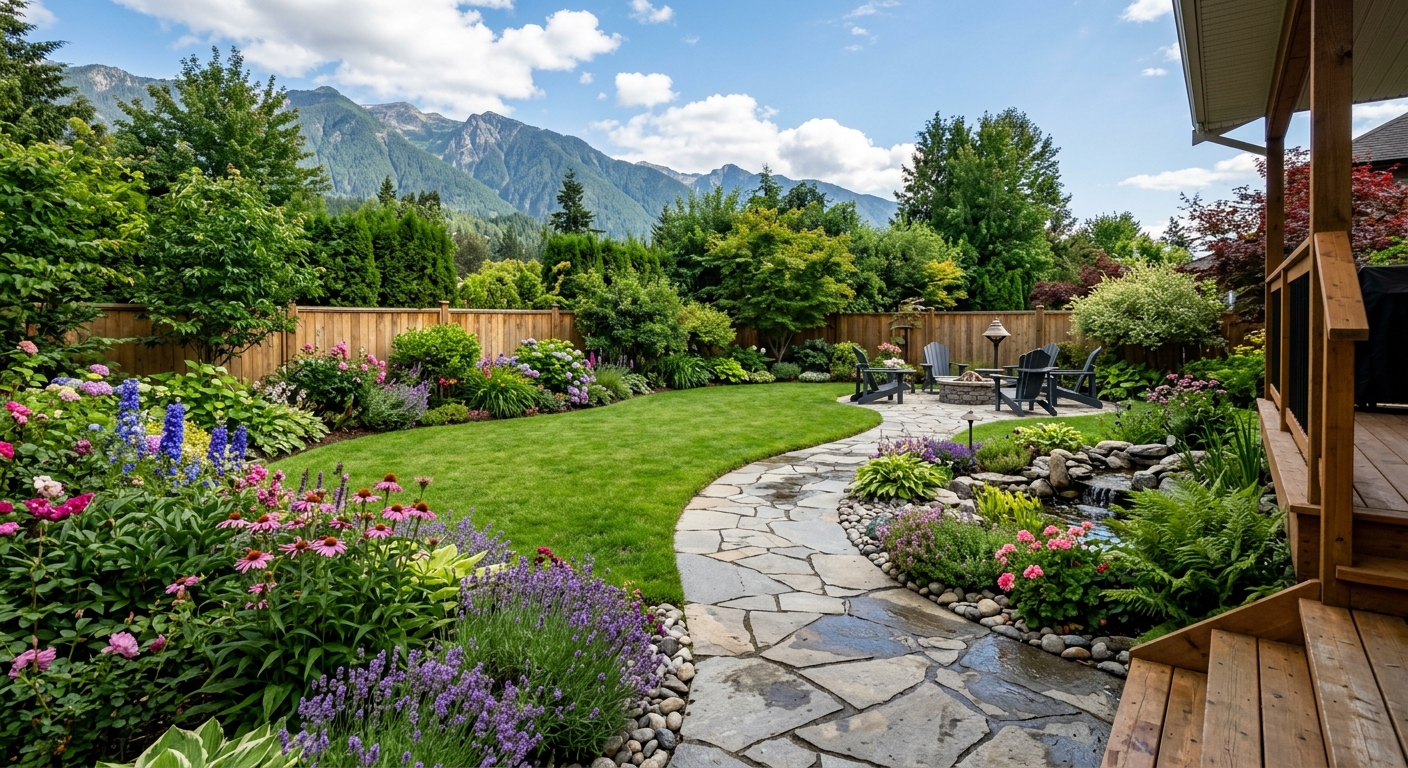
Landscaping options and costs in Hamptons
In Hamptons, Alberta, landscaping decisions are largely shaped by the realities of Prairie planting zones, freeze–thaw cycles, and the fact that many homes here are set up for year-round curb appeal upgrades. With Hamptons’ population at 7,360 (Statistics Canada, 2021 Census), the town has a steady mix of homeowners looking to improve their lots as trades activity ramps up each spring. And because Hamptons sits in the broader Calgary economic region, contractor capacity and pricing often track what’s happening across Calgary and nearby communities—especially when demand is high after a mild winter. In practice, that means you’ll see more consistent availability in late spring and early summer, and tighter scheduling when late frosts push installs back.
Costs also reflect how southern Alberta yards are built to survive heaving, drainage issues, and UV exposure. In hardiness zones 3–4, late-spring frosts and early fall cold snaps shorten the window for planting and turf establishment. Freeze–thaw severity affects everything from retaining wall footings to the deep, well-compacted bases needed for patios and walkways. Labour typically represents 40–60% of many full-scope projects, so crews can move budget up or down depending on how much grading, base prep depth, and haul-away work is required.
Demand is particularly strong in family-heavy residential pockets like the newer west-side expansion areas, where homeowners want fast visual results (patios, sod, and clean planting beds) before summer events. Below is a practical cost comparison to help you line up the right scope before you request quotes.
| Service |
Description |
Season |
Price Range |
| Full landscape design and installation |
On-site design, grading plan, hardscape, planting, topsoil/soil amendments, irrigation (optional) |
May–September (best planting windows; base work in spring/fall if weather allows) |
$9,000–$35,000 |
| Sod installation (supply, grade, lay, roll) |
Minor grading, base rake, soil prep, supply and lay sod, roll and first watering plan |
Late April–June; early September in milder stretches |
$2,000–$6,000 |
| Lawn seeding (grade, seed, starter fertilizer) |
Light grading, seed blend, starter fertiliser, erosion-friendly tack/mulch as needed |
May–June or late August–early September |
$1,500–$3,500 |
| Interlocking patio or walkway |
Excavation, compacted base, interlocking stones, edge restraint, leveling and compaction |
May–October (weather-dependent compaction) |
$8,000–$28,000 |
| Retaining wall (interlocking block) |
Excavation, wall block system, compacted granular base, drainage gravel/weep provisions |
May–October |
$10,000–$38,000 |
| Tree and shrub planting |
Planting design/placement, cold-hardy stock, mulch rings, staking where needed, establishment watering plan |
May–June and September (protect from late frosts) |
$900–$14,000 |
Prices are estimates only and vary by project scope, site access and material selection.
What affects the price of landscaping in Hamptons
For the same landscaping idea, Hamptons homeowners can see quote differences of 30–50% across Calgary and the wider Alberta region because “landscape scope” is never identical in how it’s built. The biggest drivers are site prep depth (especially where frost heave risk exists), drainage strategy, and how much material has to be hauled in or out. Two yards may both end up with “a patio and shrubs,” but one could need major regrading, deep base compaction, or a drainage bed—while the other is mostly straightforward refresh work. Labour availability (and crew hours) also swings prices when schedules tighten in peak summer weeks.
Climate and planting realities matter here: Calgary’s hardiness zones 3–4 mean the working season is shorter. Late frosts can delay planting and require extra winter protection, while freeze–thaw cycles demand deep, well-compacted bases under patios, walkways, and retaining wall footings. If you’re working with drought-prone summer periods, smart irrigation design and soil improvement can be a worthwhile cost even when turf looks “cheap” on paper. By contrast, coastal BC (zones 7–8) supports longer seasons and lush growth but carries different drainage demands; Southern Ontario (zones 5–6) often has a more forgiving establishment window, though mid-summer dry spells still push irrigation.
Concrete examples from Hamptons pricing: (1) Adding proper drainage (like a French drain to daylight or a drainage bed beneath hardscape) can push a walkway job toward the higher end of the $8,000–$28,000 patio band because excavation depth and geotextile/base layers increase labour and materials. (2) Going from lawn seeding at $1,500–$3,500 to sod typically costs far more, especially where heavy grading is needed to level the grade before laying turf—this is where the savings can disappear. (3) If your home lot has older, compacted soil typical of earlier builds, adding topsoil and amendments becomes necessary to prevent weak root establishment and patchy turf.
| Price Factor |
Why It Matters |
Cost Impact |
| Yard size in sq ft — the primary cost driver for softscape |
More area means more topsoil, mulch, seed/sod, and labour hours |
Can change total by 20–40% depending on how much turf/bed space you expand |
| Grading and drainage work — slope corrections add significant cost |
Proper slope prevents pooling, foundation moisture, and heaving issues |
Often adds substantial excavation and re-compaction time; can move a job into a higher band quickly |
| Drainage bed or French drain installation |
Freeze–thaw performance depends on keeping base layers free-draining |
Material + labour heavy; common for patios, wall projects, and low spots |
| Plant material tier — native shrubs vs. ornamental vs. mature specimen trees |
Better stock costs more and needs proper spacing, staking, and establishment care |
Specimen trees and premium shrubs can double the planting portion of a quote |
| Hardscape vs. softscape ratio — walls and patios cost more per sq ft than lawn |
Stone, base prep depth, and compaction are more labour/material intensive |
Hardscape-heavy scopes typically raise total cost faster than turf/bed-only plans |
| Irrigation system design and installation |
Zones, controller, and head placement reduce water waste and improve survival |
Zoning + distribution lines can add meaningful costs, but reduce long-term losses |
| Soil amendment and topsoil required |
Compacted or rocky soils need amendment for roots and stable turf establishment |
Haul-in volume and labour can increase the budget even if plant counts stay the same |
| Tree removal or stump grinding before new planting |
Access constraints and disposal time add complexity to site prep |
Can add days and extra equipment; often a major source of quote variation |
Permits & regulations in Alberta
In Alberta, most landscaping work you’d do in Hamptons—planting, sodding, and typical softscape installs—usually doesn’t require a permit. However, there are important exceptions to keep the project compliant and to protect you if something goes wrong. Retaining walls above a height threshold (commonly 1.0 m / 3.3 ft in many municipalities) typically require a building permit, and sometimes engineered drawings depending on the design and site conditions. Also, changes to lot grading that affect drainage toward a neighbouring property or storm sewer connections can trigger approval requirements, especially where water routing changes could impact others or public drainage.
Before digging, arrange utility locates so your contractor (or you) knows where buried services are. This applies to planting holes, trenching for drainage, and wall footings. And because watering restrictions can be strict during drought conditions, even if Hamptons follows provincial and local expectations rather than coastal rules, you should confirm any applicable water-use bylaws before installing an irrigation system or running establishment schedules.
To verify your contractor is set up properly, ask for: (1) their Alberta licence/registration where applicable for the type of work they perform, (2) a current certificate of liability insurance naming you/your property (as appropriate), and (3) proof of workers’ compensation coverage (WSIB/WCB) for their workers. For confirmation, check the relevant online registry entry for their credentials, review the insurance certificate dates and coverage limits, and request a clearance letter or equivalent proof from the coverage provider. A reputable contractor won’t hesitate to provide these documents before any shovel hits the ground.
Planning a landscape that thrives in Hamptons's climate
To build a yard that performs in Hamptons, design around hardiness zone 3–4 conditions and the local freeze–thaw pattern—rather than aiming for “fast growth” at the expense of durability. Start with plant selection: choose native or zone-appropriate shrubs and perennials that tolerate cold snaps and wind, and plan for winter protection where tender species might struggle. Next, think through sod vs. seed. Sod gives instant coverage, but it’s more expensive and still depends on correct prep; seeding is usually more budget-friendly and can be just as durable when you use proper grading and a starter fertiliser.
Drainage and grading come next because Calgary-area soils can shift and compact. If water pools near your foundation, you’ll fight foundation moisture and premature turf decline. For patios, retaining walls, and walkways, base preparation must reach below frost influence and be deeply, well-compacted. That’s why an interlocking stone patio isn’t only a surface upgrade—it’s a structural base system.
For low-maintenance design, reduce annual upkeep with groundcovers, mulched shrub borders, and perennials that return reliably. Consider xeriscape and rain-garden style elements where appropriate: they’re designed to handle periodic dry spells and more intense melt events while reducing irrigation demand. If you’re torn between spending on sod or investing in soil improvement, here’s a common reality check: moving a 500 sq ft lawn from seeding in the $1,500–$3,500 band toward full sod can quickly land in the $2,000–$6,000 range—so it’s only “worth it” if you truly need immediate visual results or you’re using drainage/base corrections that would otherwise require rework.
| Element |
Climate Consideration |
Maintenance Level |
Price Band |
| Sod lawn installation |
Short establishment windows after late frosts; requires firm grade and proper watering plan |
Medium (weekly establishment watering and early mowing schedule) |
$2,000–$6,000 |
| Native perennial garden |
Cold-hardy structure survives winter; mulch improves crown protection through freeze–thaw |
Low to medium (spring cleanup, seasonal weeding) |
$3,500–$10,000 |
| Mulched shrub border |
Wind-tolerant, drought-tolerant shrubs reduce water demand; good edging helps prevent erosion |
Low (mulch refresh, pruning as needed) |
$2,500–$9,000 |
| Interlocking stone patio |
Requires deep, compacted base to resist frost heave and settling |
Low (occasional joint sand refresh) |
$8,000–$28,000 |
| Retaining wall (block) |
Needs proper drainage gravel/weep provisions to prevent hydrostatic pressure |
Low (annual visual inspection for movement) |
$10,000–$38,000 |
| Drip irrigation system |
Zoned, targeted watering supports drought tolerance and helps survive hot, dry spells |
Low (seasonal controller checks and filter maintenance) |
$3,000–$12,000 |
How to choose a landscaping contractor in Hamptons
Choosing the right landscaping contractor in Hamptons comes down to proof, clarity, and workmanship standards—not just the lowest number. Start by verifying Alberta credentials where applicable, and confirm liability insurance and workers’ compensation coverage. Ask for a current certificate of liability insurance (make sure it’s active for the project dates) and proof of WSIB/WCB coverage for their employees. If they can’t provide documents quickly, treat that as a scheduling and safety red flag.
Next, request 2–3 itemised written quotes. You want a breakdown that separates labour from materials and lists line items like excavation, compacted base depth, stone type, edging, soil/topsoil volume, disposal, and irrigation components (if included). Avoid “lump sum” quotes without scope detail—two contractors can quote the same final number but be pricing different base prep depths or drainage provisions, which is where freeze–thaw failures usually begin.
Read the scope carefully: is demolition included (old sod, tree removal, stump grinding), is permit pulling included where required (often for retaining walls above local thresholds), and is disposal/haul-away included? Warranty matters too—ask for a workmanship warranty length and whether manufacturer warranties on materials are transferred to you. Finally, align the payment schedule with risk: never pay more than 10–15% upfront, and hold back a portion until the job is complete and you’ve confirmed quality checks.
Get the timeline in writing, including a start date and a realistic completion estimate based on Prairie weather. If they can’t talk about frost dates, compaction inspections, and planting windows, you’re likely to experience delays.
- Provide proof of liability insurance with coverage limits and effective dates.
- Provide proof of WSIB/WCB coverage (or equivalent clearance) for workers.
- Share an Alberta licence/registration reference relevant to their work scope.
- Use itemised quotes: excavation, base prep depth, materials, and disposal should be listed.
- Confirm drainage approach in writing (French drain/bed, slope targets, and tie-in points).
- Ask who compacts the base and what compaction method is used.
- Check whether retaining walls include drainage gravel/weep provisions and geotextile where needed.
- Clarify if irrigation is included: controller, zoning, heads, lines, backflow prevention (if applicable).
- Review warranty: workmanship duration and what it covers (and doesn’t cover).
- Confirm what “cleanup” includes and whether site restoration is part of the scope.
- Keep the payment schedule conservative (10–15% maximum upfront).
- Request a start date and completion estimate tied to weather windows.
Concrete red flags in the Hamptons area: they won’t show insurance/coverage documents; they quote with no base preparation details for patios/walkways; they dismiss drainage concerns (“don’t worry about it”); they require a large upfront deposit before any site measurements; or they won’t put a detailed scope and warranty terms in writing.
Frequently asked questions — landscaping in Hamptons
How do I prevent weeds in my Hamptons garden?
In Hamptons, weed prevention starts before planting: reduce exposed soil and create a stable mulch/bed depth. For established beds, use a consistent 2–3 inch layer of mulch and keep it topped up annually so seeds can’t reach light. For new shrub borders, edging and properly sized soil beds help prevent migration from lawn areas. Many homeowners also benefit from installing a geotextile under mulch in high-weed zones (not under tree trunks), then cutting clean holes for plants. If you’re dealing with a lawn edge problem, we often refine the grade so water doesn’t wash seeds into beds during melt events. Timing matters too—weed control works best when you address it early in spring while you’re still within the short working window after late frosts. If you’re building a new bed as part of a project, it typically fits within planting budgets like $900–$14,000 depending on plant quantities and soil prep.
How do I design a low-water yard in Hamptons?
A low-water yard in Hamptons is about targeting the right plants and watering efficiently, not just “using less water.” Start with drought-tolerant, zone-appropriate shrubs and perennials that handle Prairie wind and dry spells in the Calgary region. Then improve soil structure—compacted soil wastes water and increases runoff. A drip irrigation system with proper zoning is often the best approach: it delivers water directly where plants need it and reduces evaporation losses, especially during hot, dry weeks. If you’re renovating a turf area, consider reducing lawn size and replacing part of it with mulched borders and groundcovers. Xeriscape-style elements (gravel mulch in controlled zones, drought-tolerant perennials, and strategic spacing) can also help you avoid constantly re-watering stressed plants. In terms of budgeting, homeowners sometimes choose planting-first strategies rather than replacing everything with sod; sod installs commonly fall in the $2,000–$6,000 band depending on area and grading, while well-planned shrub/perennial installs may fit comfortably within the $900–$14,000 planting range.
How do I find a licensed landscaper in Hamptons?
In Alberta (including Hamptons), finding the right contractor is about checking documentation and scope quality, not only asking for references. Start by requesting proof of liability insurance and confirmation of WSIB/WCB coverage for their workers—ask for certificate documents with current effective dates. Next, ask for their Alberta licence/registration reference relevant to the work they’re doing (especially if they’re building retaining structures or performing scope that falls under regulated categories in your municipality). To verify, check the relevant online registry where credentials are published, then compare what they send you to the registry listing. For job-specific scope, request 2–3 itemised quotes and ensure they include base prep and drainage details—this is where reputable contractors differentiate themselves in Prairie freeze–thaw conditions. If they can’t clearly explain base depth under patios or how they manage drainage around slopes, don’t assume “it’s standard.” A good contractor will also outline their workmanship warranty in writing and provide a conservative payment schedule (usually not more than 10–15% upfront).
How much does landscaping cost in Hamptons?
Landscaping costs in Hamptons typically depend on how much grading, drainage, hardscape base prep, and plant material you’re including. For many homeowners, a full design-and-install project lands in the mid five-figure range once patios, planting, and any irrigation are included—though the total can be lower or higher depending on site complexity. To give you realistic anchors: sod installation (supply, grade, lay, roll) commonly fits the $2,000–$6,000 band, while a patio or walkway with proper base prep and interlocking stone often lands in the $8,000–$28,000 band based on size and excavation depth. Retaining wall projects (block systems with drainage provisions) are often higher, commonly within $10,000–$38,000 depending on wall height, length, and access. For planting-only work—cold-hardy trees, shrubs, and bed installation—homeowners often see $900–$14,000. If your yard needs drainage fixes or soil amendment due to older compacted ground, expect movement toward the higher ends because the foundational prep is what protects performance through freeze–thaw cycles.
What plants thrive in Hamptons's climate zone?
Hamptons sits in Prairie hardiness zones 3–4, so the best plants are cold-hardy, wind-tolerant, and able to reset after late frosts. In practice, that means choosing shrubs and perennials suited to Calgary-area conditions—plants that don’t rely on a long, frost-free growing season. Many homeowners do well with native or native-adjacent shrubs (for structure and lower watering) and hardy perennials that establish strong root systems by early summer. For tree choices, focus on species proven for Alberta conditions and install them with proper planting depth, mulch rings, and staking when needed to reduce wind rock. Mulch is essential: it protects crowns and moderates soil temperature through freeze–thaw. If you’re installing a new garden as part of a bigger plan, your plant budget often fits the $900–$14,000 band depending on whether you’re adding several shrubs and perennials or larger specimens. A contractor who’s familiar with Hamptons will also align plant selection with your sun exposure and drainage patterns so you’re not relying on heavy watering to keep tender species alive.
Sod vs seed — which is better for a Hamptons lawn?
Both sod and seed can work well in Hamptons, but they solve different problems. Sod is the faster visual fix: you get instant coverage, and it can be a good choice if you need the lawn to look complete for an event or you have minimal time between grading and summer use. But sod typically costs more—often landing in the $2,000–$6,000 band depending on area and prep. Seed is usually more budget-friendly and can be very reliable when the grade is correct and you use the right blend and starter fertiliser; seeding often fits the $1,500–$3,500 range. Where freeze–thaw matters most is soil prep: if the base isn’t firm and well-drained, both options can struggle. In Hamptons, I generally recommend sod when speed and visual uniformity are priorities, and seeding when you can manage establishment watering and want better long-term cost control. Either way, keep a tight establishment schedule during the short planting window after late frosts.