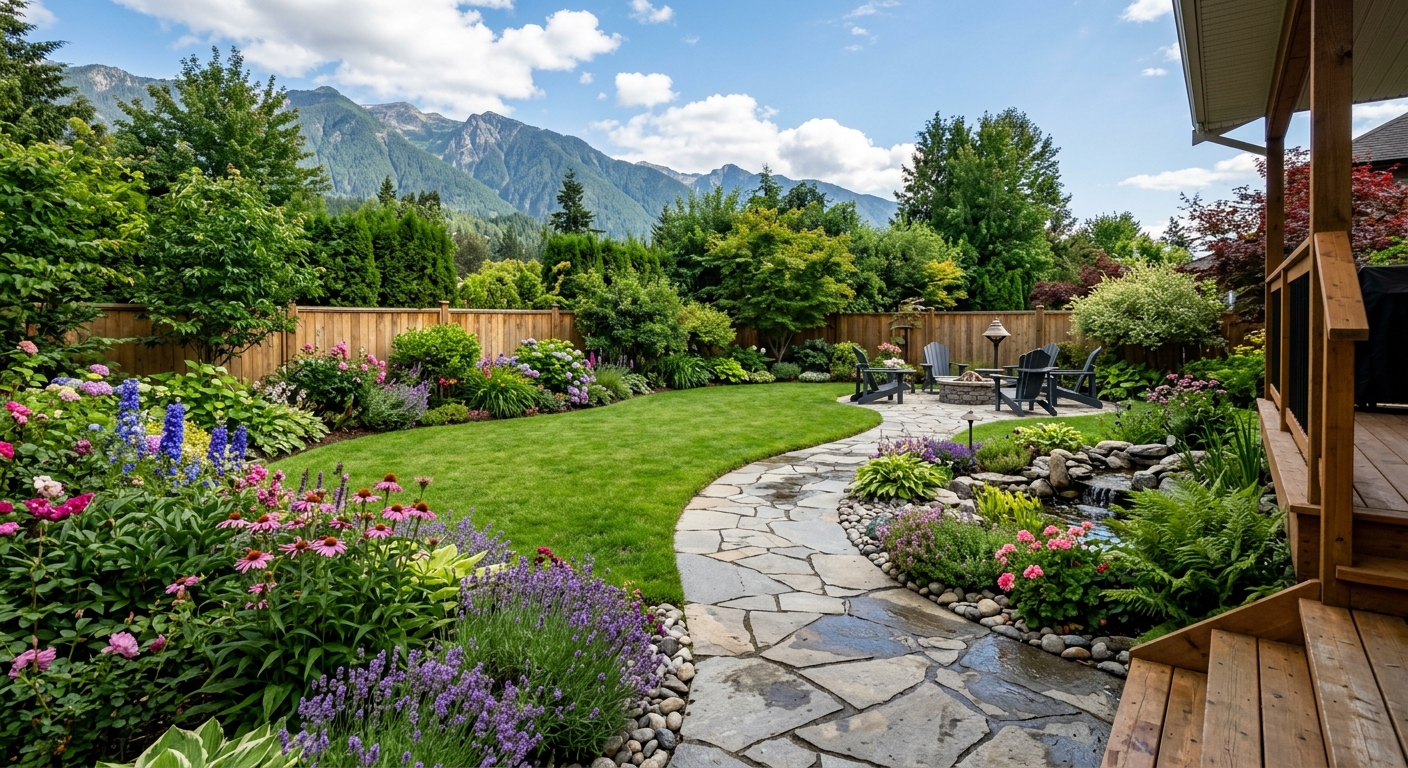
Landscaping options and costs in Summerside
Summerside, Alberta is a place where the yard you build matters as much as the house—because the growing window is shorter and the freeze–thaw cycle is real. With a population of 7,976 (Statistics Canada, 2021 Census), we’re not drawing from a huge local labour pool, so availability and scheduling can affect price. Most homes here are single-detached style neighbourhoods (common across the area), and that ownership mix tends to drive investment in full frontage makeovers, not just small touch-ups.
In the Calgary economic region, landscaping costs are shaped by Prairie plant hardiness zones 3–4, late-spring frosts, and early fall cold snaps. That means contractors spend more time on base preparation, drainage, and winter-readiness—especially for patios, walkways, and retaining walls where deep, well-compacted bases help prevent heaving. Contractors also need cold-hardy, drought-tolerant species and efficient irrigation design to avoid wasted water and plant loss.
We see the strongest demand for backyard and front-yard upgrades in family-heavy areas such as the Riverside Estates neighbourhood, where homeowners often add interlocking patios, perimeter shrub borders, and wind-screening trees. If you’re budgeting for a full refresh, you’ll typically see labour represent a major share of the total project, and the final number depends heavily on grading, soil correction depth, and material selections. Use the table below to compare realistic options and current price bands, then we’ll break down what moves those numbers in the next section.
| Service |
Description |
Season |
Price Range |
| Full landscape design and installation |
Site visit, concept + layout, grading/drainage plan, planting beds, hardscape (as selected), soil/topsoil, and irrigation (if included) |
Late spring to early fall (weather-dependent) |
$8,000–$32,000 |
| Sod installation (supply, grade, lay, roll) |
Remove dead turf, rough grade/level, amend soil as needed, lay sod, roll/compact, starter fertiliser and first watering plan |
May to September |
$2,000–$5,800 |
| Lawn seeding (grade, seed, starter fertilizer) |
Light top-dressing or grading corrections, seed selection, starter fertiliser, and establishment guidance |
Spring seeding: April to June; fall seeding: late August to September |
$1,500–$3,800 |
| Interlocking patio or walkway |
Excavate, deep base + compaction, geotextile, bedding sand, edging, block installation, joint sand, sealing (optional) |
May to October |
$8,000–$28,000 |
| Retaining wall (interlocking block) |
Footings, excavation and drainage layer, crushed stone behind wall, block installation, cap/finishing, seeding/planting for look (as selected) |
May to October |
$10,500–$36,000 |
| Tree and shrub planting |
Soil preparation, planting of shrubs/perennials and cold-hardy trees, mulch rings, staking (as needed), and watering plan |
Spring to early fall |
$900–$12,500 |
Prices are estimates only and vary by project scope, site access and material selection.
What affects the price of landscaping in Summerside
In Summerside, it’s common to see quotes for the “same” job vary by 30–50% across Calgary and wider Alberta because the scope on paper often hides the real drivers: how much grading is required, how deep base work must go for freeze–thaw stability, and what soil corrections are necessary. The plant palette also changes the price—nursery stock for Prairie conditions isn’t a one-size-fits-all purchase, and mature or container-grown specimens cost more. Add in the reality that labour can represent roughly 40–60% of a full project, and pricing differences make sense.
Zone 3–4 hardiness affects both what grows and what contractors can do on site. Late frosts and early cold snaps shorten the window for planting and seeding, while freeze–thaw cycles demand deep, well-compacted bases for retaining walls, patios, and walkways. In comparison, coastal BC (Zone 7–8) can use a wider range of faster-filling plants thanks to a longer season, but drainage work can still be heavy where rainfall is higher. In the BC interior, water restrictions push drip and xeriscaping; in southern Alberta, we still plan efficient irrigation and soil improvement, but we’re mostly working against winter persistence and wind exposure. Even within Alberta, older housing stock can require more regrading around foundations and downspouts—time that pushes projects toward the higher end of the $8,000–$32,000 full landscape band.
Two local examples that reliably move costs in Summerside: (1) a front yard that slopes toward the foundation typically needs added drainage bed depth and regrading, which can add a few thousand dollars; (2) replacing patchy turf with sod can jump budgets quickly—sod often lands in the $2,000–$5,800 range depending on area, whereas seeding and starter fertiliser generally stay lower. The finish you want (curb-edge detailing, decorative edging, or a larger retaining wall) also determines whether you’re closer to the mid or high end of the $10,500–$36,000 wall band.
| Price Factor |
Why It Matters |
Cost Impact |
| Yard size in sq ft — the primary cost driver for softscape |
More square footage means more excavation, base prep, soil, labour hours, and materials (seed/sod/mulch) |
Small yards can stay near low bands; larger lots often push toward mid/high pricing |
| Grading and drainage work — slope corrections add significant cost |
Correcting slope and redirecting water protects foundations and reduces pooling and heaving risk |
Can add substantial time and equipment costs, commonly shifting a quote by thousands |
| Drainage bed or French drain installation |
Improves subsurface water movement under patios, along fences, or near low spots |
Materials + trenching depth increase labour and disposal costs |
| Plant material tier — native shrubs vs. ornamental vs. mature specimen trees |
Mature trees and premium ornaments are pricier and require careful handling and larger holes |
Upgrading to “specimen” stock raises the planting line item quickly |
| Hardscape vs. softscape ratio — walls and patios cost more per sq ft than lawn |
Pavers/blocks need excavation, base stone, compaction, and edging detailing |
Higher hardscape proportions move projects toward the high end of retaining/walkway bands |
| Irrigation system design and installation |
Zone-based layouts, backflow prevention, and freeze protection increase both design and install time |
Can add notable cost but often reduces plant loss and watering waste |
| Soil amendment and topsoil required |
Compacted or poor native soil needs amendment depth for rooting and drought resilience |
Extra soil and labour can shift pricing by a few thousand depending on depth |
| Tree removal or stump grinding before new planting |
Root mass and stump removal affect excavation planning and planting layouts |
Often required for clean bed prep; increases equipment and labour time |
Permits & regulations in Alberta
In Alberta, most everyday softscape work—planting beds, sodding, top-dressing, mulch installs, and routine grading that doesn’t alter drainage to create off-site impacts—typically does not require a permit. That said, retaining walls above a common municipal threshold of about 1.0 m (3.3 ft) often require a building permit, and sometimes engineering input depending on the wall height, design, and site conditions. If you’re changing lot grading in a way that affects drainage patterns toward a neighbour, a storm sewer connection, or a low spot on the property, you may also trigger approval requirements.
Before any digging for wall footings, drainage trenches, or planting holes, call for utility locates. That’s critical—one missed line can halt the job, and it’s a safety and compliance issue.
To verify a contractor is properly covered for Summerside work, follow these steps:
- Confirm Alberta licence status (where applicable for the work type) using the appropriate online registry for your contractor’s credentials.
- Request a Certificate of Liability Insurance naming you as an additional insured (where your contractor can do so) and check limits and expiry dates.
- Verify workers are covered under WCB/WSIB (in Alberta this is WCB; ask for confirmation documentation).
- Ask whether they pull any required permits for retaining walls and drainage alterations—and who pays the permit fees.
- Ensure the quote includes utility-locate coordination (or at minimum confirms you’ll arrange it before excavation).
For drought-year planning, also ask about irrigation programming and any applicable local water-use expectations—especially as Calgary-region homeowners balance plant survival and smart controllers.
Planning a landscape that thrives in Summerside's climate
To plan a yard that thrives in Summerside, design for the realities of Prairie zones 3–4: wind, a shorter growing window, and a freeze–thaw cycle that can heave poorly built bases. Start with plant selection—choose native and zone-appropriate species that tolerate cold and recover from spring weather swings, then group them by water needs. A good approach is pairing drought-tolerant shrubs and perennials with wind protection (evergreens or structural trees), rather than trying to force broadleaf, long-season plants that struggle under Alberta’s early cold snaps.
Next, decide between sod and seeding. Sod delivers instant visual results, but it’s typically 3–4x the per-square-foot cost compared to seeding once you factor in the work and materials. Seeding is more budget-friendly and can be very effective if you correct grade and provide proper starter fertiliser—especially for areas where you can keep moisture consistent during establishment.
Drainage and grading are non-negotiable in Calgary-area freeze cycles. Pooling water weakens soil structure and foundation-facing edges. For patios and retaining walls, base preparation needs depth and compaction that account for the local frost movement; otherwise you risk settling, cracked pavers, or wall issues. Finally, reduce ongoing upkeep with low-maintenance design: mulch, groundcovers, and perennials that don’t require weekly attention.
On irrigation, you don’t have to “overbuild.” Many homeowners do best with a zoned system and drip where possible, then top up during establishment. For a real-world comparison: if sod runs you around $2,000–$5,800 for a typical lawn install, switching to seeding at $1,500–$3,800 can make sense when your goal is long-term resilience and you can manage watering during germination.
| Element |
Climate Consideration |
Maintenance Level |
Price Band |
| Sod lawn installation |
Quick coverage, but must be established with careful watering through late spring frost swings and into summer dryness |
Medium (initial watering and occasional rolling) |
$2,000–$5,800 |
| Native perennial garden |
Better cold tolerance and winter structure; shorter season is less of a problem when plants are suited to zone 3–4 |
Low to medium (spring cleanup, occasional weeding) |
$1,800–$7,000 |
| Mulched shrub border |
Mulch moderates soil temperature and reduces winter stress and moisture loss from wind |
Low (mulch refresh and seasonal shaping) |
$900–$4,500 |
| Interlocking stone patio |
Requires deep, compacted base to resist heaving and movement from freeze–thaw cycles |
Low (sweep/clean, joint sand top-up if needed) |
$8,000–$28,000 |
| Retaining wall (block) |
Needs proper drainage behind wall and a stable footing depth to handle Prairie frost movement |
Low (visual inspections after extreme freeze events) |
$10,500–$36,000 |
| Drip irrigation system |
Zoned drip helps target water under wind and drought conditions; freeze-protection and winterisation matter |
Medium (seasonal adjustments and winter blowout/maintenance) |
$2,500–$9,000 |
How to choose a landscaping contractor in Summerside
Choosing the right landscaping contractor in Summerside is mostly about proving competence, not just getting a number. Start by verifying coverage and credentials. Ask for a Certificate of Liability Insurance and confirm the effective dates and coverage limits. Then request confirmation of WCB coverage for their workers. If they’re quoting labour-intensive work like grading, drainage trenches, or hardscape base prep, you want documentation—not verbal assurances.
Next, get 2–3 itemised written quotes that break labour and materials into lines (excavation, base stone, edging, soil/topsoil, pavers/blocks, plant stock, irrigation components, disposal). A fair quote will show how they reached your totals and where you have options. Pay attention to what’s excluded: is tree removal included, is disposal included, are topsoil quantities specified, and is permit pulling included if you’re building a retaining wall above the typical threshold? For waste and site restoration, don’t accept “as required” without numbers.
Warranty matters too. Look for a workmanship warranty (commonly season-based or multi-year) and ask how plant replacement is handled if winter damage occurs. Confirm whether product/manufacturer warranties apply to irrigation components or paving materials, and whether warranty transfer is possible if you sell the home.
For payment schedule, never pay more than 10–15% upfront. Use a holdback until completion and final cleanup. Finally, require a start date and an estimated completion timeline in writing, because weather and material delivery can shift schedules in zone 3–4 conditions.
- Request WCB confirmation and check it’s current.
- Ask for liability insurance certificates and confirm dates.
- Verify the quote includes utility-locate coordination before digging.
- Demand itemised line items (no single “lump sum” for the entire job).
- Confirm base prep depth and compaction method for patios/walkways.
- Ask how they handle drainage (French drain vs. grading only).
- Clarify soil amendment and topsoil depths (in inches), not just “we’ll add soil.”
- Make sure disposal and site cleanup are specified.
- Confirm irrigation components (zones, controller type, winterisation steps) if included.
- Ask for the plant list: species names, sizes, and whether substitutions are allowed.
- Review warranty terms for workmanship and plant replacement policy.
- Require the payment schedule in writing and keep a holdback.
Concrete red flags: (1) only one quote without a clear breakdown of grading/base work; (2) vague drainage promises like “it’ll be fine” without a drainage plan; (3) no proof of WCB/liability coverage; (4) asking for large upfront payments (well beyond 10–15%); (5) no written start/completion dates or no mention of permits if your project includes a taller retaining wall.
Frequently asked questions — landscaping in Summerside
What is the best grass type for a Summerside lawn?
In Summerside and the broader Calgary-area zone 3–4 conditions, the “best” lawn grass is typically a blend formulated for cool-season lawns: varieties of Kentucky bluegrass and/or turf-type tall fescue are common choices because they handle Alberta winters and recover from spring wear. If you’re installing new turf, focus less on marketing names and more on whether the seed/sod mix is meant for cold-hardy, drought-tolerant Prairie lawns. For budgeting, a sod install usually lands around $2,000–$5,800 depending on yard size and base prep, while seeding is often closer to $1,500–$3,800. Either way, proper grading and compaction are what make the grass survive freeze–thaw movement.
When should I aerate and overseed my lawn in Summerside?
For Summerside (Prairie zone 3–4), aeration and overseeding are usually timed to let grass establish before winter. Spring aeration is often best after the ground has thawed and soil is workable (commonly late April through June), while fall overseeding can work well when daytime temps start cooling (often late August into September). Aerate only when the lawn is actively growing and the soil can be worked without becoming a muddy mess. If you’re dealing with thatchin/garden compaction near sidewalks, aeration helps moisture and fertiliser reach roots. Consider pairing overseeding with a light top-dress and starter fertilizer. In many cases, a contractor can also recommend seeding rates and a simple watering plan that fits Alberta’s drying winds.
What trees grow best in Summerside's climate zone?
In Alberta’s zone 3–4 backyard conditions, the best-performing trees are those selected for cold tolerance, wind resilience, and local drought cycles. Homeowners often do well with hardy conifers for winter structure (which also act as wind screens) and cold-tolerant deciduous options that handle Alberta winters reliably. The exact species choice should match your yard’s sun exposure, soil drainage, and whether you need fast privacy or long-term curb appeal. When planning, remember that base and planting pit prep affect survival as much as the tree type—poor drainage can cause stress even in “hardy” species. If you’re budgeting for a fuller update, tree and shrub planting commonly falls around $900–$12,500 depending on plant sizes and how much soil work is needed.
How much does sodding a yard cost in Summerside?
Sodding in Summerside depends on yard square footage and how much grading and soil correction the contractor must do before laying turf. Typically, costs for sod installation (supply, grade, lay, roll) land in the $2,000–$5,800 range for most residential installs, with the higher end usually tied to more excavation, heavier base work, or bigger areas. A key price driver is drainage and base stability—if the lawn area is uneven or low spots pool water, you’ll pay more to fix grading before the sod can perform. If budget is tight, seeding is often a lower-cost path (often about $1,500–$3,800), but it takes longer to look finished and requires a careful establishment watering routine.
How do I prevent weeds in my Summerside garden?
Weed prevention in Summerside is mostly about layered soil preparation and correct planting density. Start by removing existing weeds properly (including roots), then address soil quality with appropriate topsoil and soil amendment depth so desirable plants establish quickly. Use mulch in planted beds—mulch suppresses weed germination and moderates soil temperature through cold snaps. Edge your beds so grass doesn’t creep in, and keep irrigation targeted so you’re not overwatering bare soil. For homeowners who want a cleaner long-term look, a well-designed shrub border (mulched and planted at the right spacing) drastically reduces weed pressure. If you’re also doing hardscape, a properly installed base and edging helps prevent weed intrusion through joints and along patio borders.
How do I design a low-water yard in Summerside?
A low-water yard in Summerside should focus on plant selection, efficient irrigation, and soil improvement—rather than trying to “save water” while keeping water-hungry plants. Choose drought-tolerant, cold-hardy species suited to zone 3–4, group plants by water needs, and use mulch and groundcovers to reduce evaporation. Consider drip irrigation with zoned controls so you can target roots and winterise correctly; avoid sprinkler overspray on walkways and beds. If you want a concept that looks good and doesn’t demand daily upkeep, use a mix of mulched shrub borders and native perennial structure with xeriscape-style spacing. Costs vary, but irrigation and installation commonly sit in the mid-to-upper landscape range (often alongside full projects), and the best ROI usually comes from fixing grading and drainage first so plants don’t struggle.