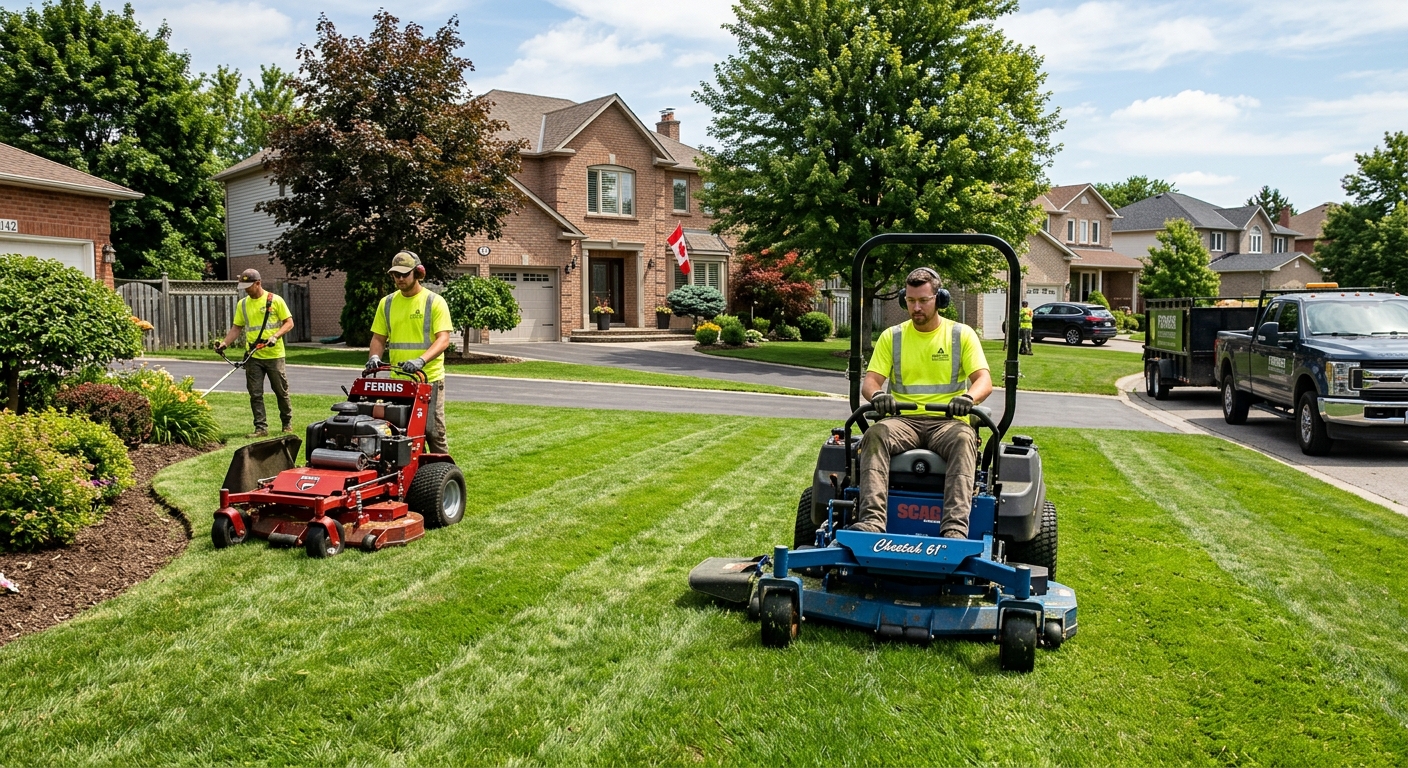
Landscaping options and costs in Upper Delbrook
In Upper Delbrook, landscaping decisions are shaped by how you want to use your yard—whether that’s a family-friendly lawn, a tidy front approach, or a layered garden that looks great even on rainy weeks. With 1,186 residents in the community (Statistics Canada, 2021 Census), most projects are neighbourhood-scale rather than mass developments, so design and construction schedules often tighten around the same high-demand streets. You’ll also see a lot of detached homes in the Lower Mainland–Southwest, which typically means more usable yard area and a stronger incentive to invest in long-term improvements like hardscape, drainage upgrades, and established planting beds.
Cost in Upper Delbrook is influenced by the Lower Mainland–Southwest climate: plant hardiness zones 7–8, mild wet winters, and long cool summers allow contractors to start earlier and keep crews working longer than in short-season regions. That longer working window helps reduce “rush” surcharges, but it can also raise expectations—homeowners want lush, layered results and efficient irrigation, and labour is competitively priced because the trade is active year-round. Structural work still needs attention to freeze–thaw cycles; bases and drainage are built deeper to prevent frost heave and wall movement on sloped sites common in the area.
In Upper Delbrook proper, trade demand is especially high around the older, established streets where lots have mature trees and tighter access—think along the approaches near the Upper Delbrook neighbourhood core—because crews often need more careful excavation, stump work, and drainage correction before new planting and patios. The right scope will land you in a realistic budget band, which you can compare in the table below.
| Service |
Description |
Season |
Price Range |
| Full landscape design and installation |
Site visit, layout concept, plant palette, grading/soil, softscape + hardscape coordination, irrigation where required |
Year-round with peak install May–October |
$10,000–$45,000 |
| Sod installation (supply, grade, lay, roll) |
Minor grading, weed control, soil prep, sod delivery, laying, rolling, and initial watering plan |
Late spring to early fall (avoid heavy rain weeks) |
$2,500–$8,000 |
| Lawn seeding (grade, seed, starter fertilizer) |
Topdressing, seed selection, starter fertilizer, light raking, and first-season care guidance |
Spring (and some fall over-seed) |
$2,000–$6,000 |
| Interlocking patio or walkway |
Excavation, base/granular compaction, edging, interlocking stone, slope/drainage detailing |
May–October (weather-dependent) |
$12,000–$35,000 |
| Retaining wall (interlocking block) |
Block wall build with proper drainage behind the wall and base prep for freeze–thaw |
May–October |
$18,000–$60,000 |
| Tree and shrub planting |
Soil amendments, planting, staking (if needed), mulching, and watering plan to establish roots |
Spring and fall planting windows |
$3,000–$12,000 |
Prices are estimates only and vary by project scope, site access and material selection.
What affects the price of landscaping in Upper Delbrook
In Upper Delbrook and the broader Lower Mainland–Southwest, the same “looking” landscaping project can land anywhere from 30% to 50% apart in quotes because the scope behind the scenes changes—especially with drainage, soil preparation, access, and plant size. Contractors may also price differently depending on whether the job is largely softscape (soil and planting) or includes structural hardscape (patios and retaining walls). Where labour and scheduling are tight, crews also tend to prioritize projects with smoother access and fewer unknowns, which can widen differences between bids.
Climate and frost timing play a real cost role. In coastal British Columbia (zones 7–8), you can plant and grow through a long season, but you still must design around wet winters and freeze–thaw cycles. That’s why retaining walls and any bases for patios typically require deeper excavation and proper drainage. In Prairie regions (zone 2–4), short growing windows push clients toward drought-tolerant, low-maintenance planting and compressed schedules; retaining-wall foundations often need more frost-depth attention. In contrast, Upper Delbrook gives you a lush palette opportunity, but heavy rain means drainage work costs are often non-negotiable—French drains, cleanouts, and subbase prep can add meaningful budget before you ever buy a single tree.
Two local examples that move your cost up or down: first, correcting a sloped lawn that drains toward a foundation can add grading and drainage line-items, often shifting a job from the $5,000–$15,000 softscape range toward the higher brackets used for combined design and installation. Second, swapping sod for seeding changes both cost and timing—sod commonly comes at roughly three to four times the per-square-foot cost of seeding, but it’s often justified when you need instant curb impact before a busy summer season. Finally, older neighbourhood lots often have more mature trees; more removal, stump grinding, and soil amendment can swing planting budgets within the $1,000–$15,000 planting band.
| Price Factor |
Why It Matters |
Cost Impact |
| Yard size in sq ft — the primary cost driver for softscape |
More area requires additional soil prep, mulch, seed/sod, labour hours, and follow-up care |
Typically scales the majority of softscape cost; small yards may still have fixed access and mobilization fees |
| Grading and drainage work — slope corrections add significant cost |
In wet winters, incorrect slope causes pooling and foundation moisture; corrections often require rework of existing surfaces |
Can add substantial labour and disposal, often pushing projects up a full budget band |
| Drainage bed or French drain installation |
Lowering water tables behind planting beds and away from foundations reduces plant failure and hardscape settlement |
Material + trenching costs can be one of the largest “hidden” expenses |
| Plant material tier — native shrubs vs. ornamental vs. mature specimen trees |
Mature trees cost more to source, transport, and install safely; ornamentals can require more labour for sizing |
Can swing tree & shrub budgets by thousands depending on mature specimen selection |
| Hardscape vs. softscape ratio — walls and patios cost more per sq ft than lawn |
Interlocking stone and retaining walls require deeper excavation, base materials, and compaction |
Higher hardscape ratios quickly move you from “garden budget” into retaining/patio pricing |
| Irrigation system design and installation |
To handle occasional restrictions and keep lawns established efficiently, smart controllers and proper zoning help |
Generally adds cost but reduces long-term water waste and patchy turf |
| Soil amendment and topsoil required |
Coastal soils still need structure and drainage; poor soil causes rework and weak establishment |
Frequent add-on when existing fill is clay-heavy or compacted |
| Tree removal or stump grinding before new planting |
Root zones can interfere with drainage lines and hardscape bases; stumps require excavation support |
Can add disposal and extra labour time, especially with tight access |
Permits & regulations in British Columbia
For most landscaping work in British Columbia, planting, sodding, and the majority of softscape installations do not require a permit. That typically includes new sod or seeding, shrub and tree planting, mulching, and most garden-bed builds that don’t alter structures or create major retaining requirements. However, retaining walls are where permits often come into play. As a rule of thumb, retaining walls above a height threshold—typically 1.0 m (3.3 ft) in many municipalities—may require a building permit and, in some cases, engineered drawings depending on site conditions and wall details.
Also consider grading: changes to lot grading that affect drainage toward neighbouring properties or tie into storm sewer connections can trigger approval requirements. Before any digging—planting holes, irrigation trenching, or wall footings—make sure utility locates are called so crews avoid striking underground services.
To protect yourself in Upper Delbrook, verify your contractor’s credentials step-by-step:
- British Columbia business licence/registration (if applicable) and proof of ability to work in the province (confirm via the contractor’s official information online).
- Liability insurance certificate of insurance: request COI naming you as additional insured where possible.
- WSIB/WCB coverage: confirm the contractor carries the correct workers’ coverage for jobsite staff.
- Ask for a clearance letter or coverage confirmation documents showing the work is covered.
If a contractor can’t provide current insurance/coverage documentation before starting, treat that as a pricing red flag—because the costs of a workplace incident can become your problem.
Planning a landscape that thrives in Upper Delbrook's climate
Designing a yard that thrives in Upper Delbrook means working with zone 7–8 conditions and the Lower Mainland–Southwest precipitation pattern: mild winters, long cool summers, and enough rain that drainage is often the difference between “healthy in year one” and “struggles by year three.” Start with plant selection—choose native or zone-appropriate shrubs and perennials that handle wet seasons and don’t demand constant winter protection. Next, decide on sod vs. seed based on your timeline and tolerance for establishment time. Sod gives instant curb appeal, but it’s usually about 3–4 times the per-square-foot cost of seeding, and it still requires good soil prep to avoid thin patches.
Drainage and grading matter locally. In Upper Delbrook, you’ll commonly need to correct subtle slopes so water doesn’t pool near foundations or walkways. For hardscape such as patios and retaining walls, base preparation needs to account for freeze–thaw cycles: proper granular layers, compaction, and drainage layers help prevent movement. Low-maintenance design strategies that fit the market include mulched shrub borders, groundcovers in understory areas, and perennial groupings that repeat for a “designed” look without extra seasonal replanting.
If you want a water-smart option, consider rain gardens or micro-catchments in lower spots: they help manage runoff and reduce strain on irrigation. For example, spending toward drainage corrections and a better soil amendment might be justified when a sod installation would otherwise fail—if you’re looking at a sod project around $2,500–$8,000, an extra drainage line-item can save you from paying twice.
| Element |
Climate Consideration |
Maintenance Level |
Price Band |
| Sod lawn installation |
Needs consistent moisture at establishment; benefits from well-drained topsoil despite wet winters |
Moderate (early watering and monitoring) |
$2,500–$8,000 |
| Native perennial garden |
Adapts well to zone 7–8 conditions with lower winter damage risk when planted in proper drainage |
Low to moderate (seasonal weeding and deadheading) |
$3,000–$12,000 |
| Mulched shrub border |
Mulch buffers wet-to-cool season swings and helps regulate soil moisture during long cool summers |
Low (annual top-up and occasional pruning) |
$2,500–$10,000 |
| Interlocking stone patio |
Requires base depth and compaction to handle freeze–thaw and avoid settlement in wet months |
Low (occasional cleaning; joint sand management) |
$12,000–$35,000 |
| Retaining wall (block) |
Drainage behind the wall is critical in heavy-rainfall periods to reduce hydrostatic pressure |
Low (inspection of drainage outlets and vegetation) |
$18,000–$60,000 |
| Drip irrigation system |
Efficient watering for establishment and drought-ready operation if restrictions occur |
Low (seasonal tune-up; controller maintenance) |
$3,000–$10,000 |
How to choose a landscaping contractor in Upper Delbrook
Choosing the right contractor in Upper Delbrook is mostly about proof, not promises. Start with verification: ask for their British Columbia business information, certificate of liability insurance, and workers’ coverage confirmation (WSIB/WCB). Then check it—look for a current certificate with project-relevant coverage dates, and request paperwork that shows coverage for their workers working on your site.
Next, get 2–3 itemised written quotes. The best bids separate labour and materials and clearly list inclusions like excavation, base/granular delivery, compaction, edging, soil amendments, irrigation components, and disposal. A lump sum with vague wording (“all materials included”) makes it impossible to compare correctly. Read the scope for exclusions: permit pulling (if required), topsoil quality, tree removal limits, irrigation starter supply, and whether restoration is included if existing sprinklers are relocated.
Warranty matters too. Ask for the workmanship warranty length for installation and whether product warranties (plants, sod, stone, interlocking materials) are manufacturer-backed and whether they’re transferable to you as the homeowner. Also lock in the payment schedule: never pay more than about 10–15% upfront. Use a holdback until key milestones are complete (rough grading, base completion, and final clean-up).
Finally, demand a timeline in writing—start date, number of working days, and completion estimate. In Lower Mainland–Southwest weather, rain can shift days, but reputable crews still plan sequencing and protect partially finished work.
- Ask for COI (liability insurance) showing your address or name if possible.
- Request WSIB/WCB clearance or coverage confirmation before mobilization.
- Ensure quotes are itemised: labour hours, materials, and equipment rates.
- Confirm whether drainage engineering details are included (French drain, outlets, grading targets).
- Verify what happens to excavated soil and debris (disposal included or extra?).
- Check if permit pulling is included where retaining-wall thresholds typically trigger permits.
- Review the plant list for common and scientific names, and mature sizes.
- Confirm topsoil/soil amendment type and depth (not just “add soil”).
- Ask how sod or seed will be protected during establishment (watering plan).
- Confirm edging details and joint sand specification for interlocking stone.
- Get the workmanship warranty in writing with start date tied to completion.
- Use a payment schedule with a holdback until final acceptance.
Red flags in Upper Delbrook include: (1) a quote that doesn’t break out labour/materials, (2) refusal to provide current insurance/coverage documentation, (3) skipping drainage details and promising “it’ll drain fine,” (4) asking for a large upfront payment (over 10–15%), and (5) vague timelines without sequencing for weather delays.
Frequently asked questions — landscaping in Upper Delbrook
How do I plan a low-maintenance yard?
In Upper Delbrook, the easiest low-maintenance plans start with drainage-correct grading and zone-appropriate planting in beds that are mulched and grouped by water needs. Choose shrubs and perennials suited to the Lower Mainland–Southwest’s zone 7–8 conditions so you’re not constantly replacing winter-damaged plants. If lawn is part of your goal, consider a smaller sod footprint and use seeding or groundcover in secondary areas to reduce ongoing upkeep. For timing, sod projects often land around $2,500–$8,000 depending on size and prep; a well-prepped seeded lawn may cost less but takes longer to thicken. If you’ve got a slope or wet spot near the foundation, budget for drainage first—fixing pooling is usually cheaper than repeated lawn re-seeding. Always ask your contractor for a maintenance plan (mulch schedule, pruning windows, and irrigation controller settings) so the yard stays easy after the first season.
How deep should a retaining-wall base be for local frost?
Retaining-wall base depth depends on wall height, soil type, and drainage details, but the local requirement you can’t ignore in British Columbia is freeze–thaw movement risk. Even in the coastal zones 7–8, you still get winter temperature swings, so contractors typically excavate deeper and compact granular base layers rather than relying on shallow “surface footings.” A good quote should describe the excavation depth, base material (often granular layers), compaction method, and how drainage gravel and weep pathways are built behind the wall to manage hydrostatic pressure. If your wall is near the common permit threshold (often around 1.0 m in many municipalities), expect extra documentation and conservative engineering. Don’t accept a design that only talks about blocks—insist on the drainage layer, outlet placement, and the base/gravel build-up. That’s what prevents movement and frost-related heave over the long term.
How much does professional landscape design cost?
In the Lower Mainland–Southwest, professional landscape design is usually priced as part of a full design-and-install scope or as a stand-alone service, depending on the contractor. If you’re moving from a “plant what we like” approach to a coordinated plan (grading targets, drainage strategy, planting layout with mature sizes, and hardscape sizing), design costs are often bundled to reduce total project friction. For budgeting, many Upper Delbrook homeowners look at full landscape design and installation budgets around $10,000–$45,000, especially when softscape and hardscape are combined. If your plan is mostly plantings only, you may fit closer to the tree and shrub planting band (often $1,000–$15,000), but the scope still matters: drainage corrections and irrigation design can raise the total even when the yard looks “simple.” Ask for a clear proposal showing what the design includes—site measurements, plant list, and drawings or layout guidance—so you can compare quotes fairly.
How do I compare landscaping quotes?
To compare landscaping quotes in Upper Delbrook, treat every bid like it’s missing something until proven otherwise. Start by ensuring quotes are itemised: labour hours, materials (sod vs seed type, stone thickness, block type), soil amendments (topsoil depth and quality), and disposal. Compare inclusions for grading and drainage: one contractor might include a French drain and slope correction while another assumes the existing grade is fine. That difference alone can swing pricing by 30% to 50%. Confirm whether irrigation is included and whether it’s drip, sprinkler, or both, along with smart controller features if relevant. Check whether permits are included for retaining walls above typical thresholds (often around 1.0 m) and whether utility locates are part of the plan. Finally, compare timelines and warranty terms: workmanship warranty length and any product warranty transferability. A slightly higher quote can be the better value if it’s the only one that properly handles drainage and base prep.
How long does a landscaping project take in Upper Delbrook?
Project duration in Upper Delbrook depends on weather windows, access, and how many trades are involved. In the Lower Mainland–Southwest, planting and softscape work can often proceed for much of the year, but heavy wet weeks can slow excavation and compaction. Simple planting refreshes can be done in a day or two, while sod and lawn conversions often take several days for prep, laying, and early establishment protection. Interlocking patios and retaining walls typically require a longer window because of excavation, base construction, drainage detailing, and curing/compaction steps. As a planning baseline, many homeowners see small combined softscape + grading jobs run about 1–2 weeks from start to finish, while more complex patios/retaining projects can extend longer depending on stone lead times and crew scheduling. The key is getting your start date and completion estimate in writing and confirming how the contractor sequences the work around rain to avoid leaving partially completed base or drainage exposed.
What is the best grass type for a Upper Delbrook lawn?
For Upper Delbrook, the “best” grass is the one matched to your sun level, drainage, and maintenance habits, but in most cases homeowners do best with turf cultivars suited to coastal BC conditions: cooler growth with good performance in cool, moist seasons and resilience to periodic wet/dry swings. If you want fastest results, sod is commonly chosen because it establishes instantly—budgets often land around $2,500–$8,000 depending on size and prep. If you’re aiming for lower cost, seeding can work well, but it needs good grading, proper seed selection, and patience as the lawn thickens through the growing season; it typically falls within the lawn seeding band (often $2,000–$6,000). Either way, irrigation efficiency matters: drip and smart control help avoid overwatering during rainy stretches and support establishment during dry spells if restrictions occur. Your contractor should recommend a seed or sod mix based on your site’s shade and soil drainage, not a one-size-fits-all product.