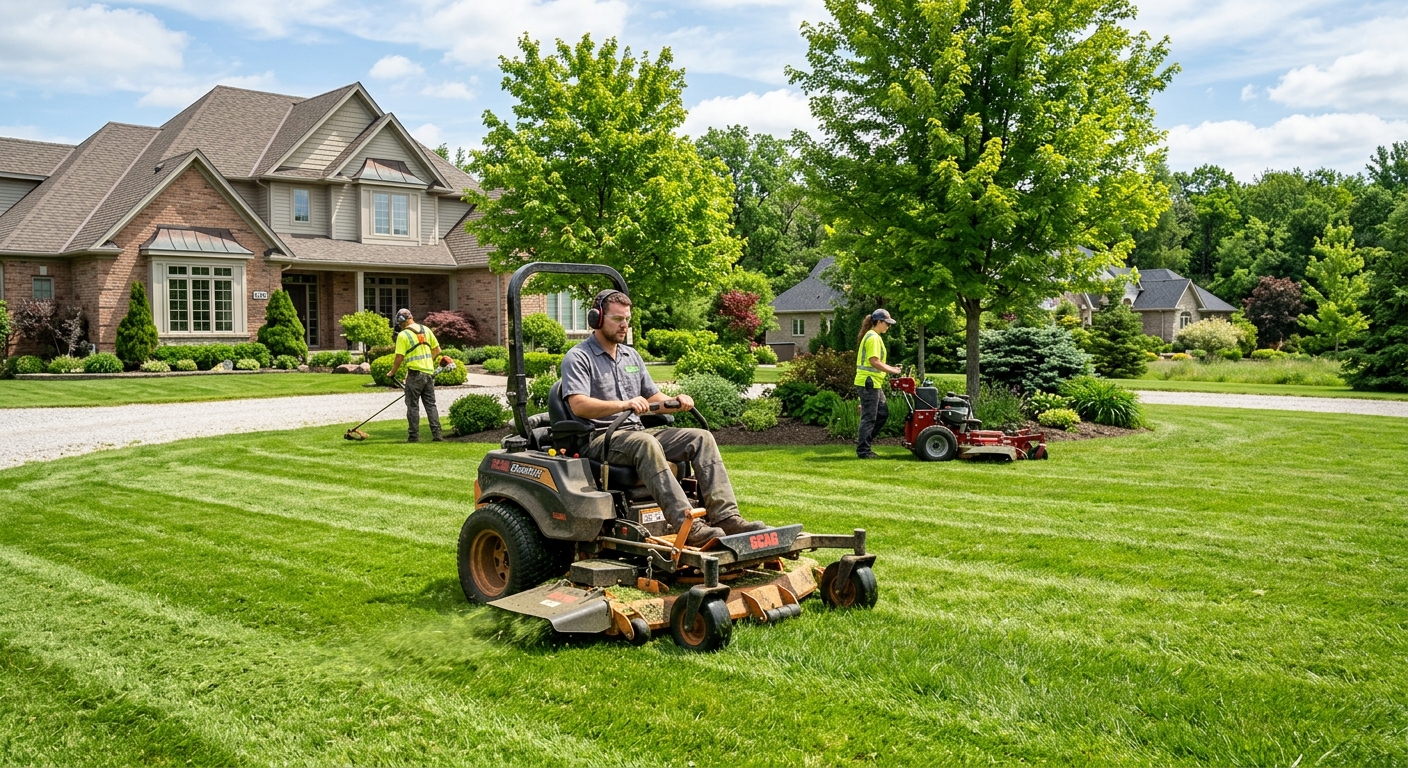
Landscaping options and costs in Chippawa
Chippawa is a distinct pocket in the Niagara/Greater Toronto orbit, and homeowners here consistently want yards that look good through winter slush and still hold up during humid summers. With a population of 6,077 in the 2021 Census (Statistics Canada, 2021 Census), most projects are on smaller residential lots where every decision—from grading to plant choice—directly affects cost and timeline. In this area, many homes are built on lots with usable yard space, which makes it easier for families to justify upgrades like patios, garden borders, and mature trees rather than “just mowing and edging.”
Toronto-area landscaping pricing is shaped by climate and soil. We typically work in plant hardiness zones 6a–7a, with winter lows around –23 to –18°C, and the working season is driven by freeze–thaw cycles. That means deeper, well-compacted bases for patios and steps, and careful drainage around foundations—especially where clay or fill soils trap moisture. Labour availability also tightens in peak spring and fall, because contractors in the GTA plan around the frost-free period (roughly May to October), so early booking often reduces change-order costs. In Chippawa, demand tends to spike in family-heavy areas near the busiest residential corridors along major roads, where curb appeal upgrades are common.
Below is a realistic cost comparison for common scope options, followed by a note on how your site conditions can shift the final numbers.
| Service |
Description |
Season |
Price Range |
| Full landscape design and installation |
On-site design, planting plan, grading/drainage coordination, hardscape and softscape install (typical residential front + small backyard) |
Late spring to early fall |
$8,000–$40,000 |
| Sod installation (supply, grade, lay, roll) |
Soil prep, minor grading, topsoil adjustment, sod delivery and installation with rolling |
Mid-spring to early fall |
$2,500–$8,000 |
| Lawn seeding (grade, seed, starter fertilizer) |
Light grading, seed selection, starter fertilizer, and initial watering schedule |
Spring or early fall |
$1,800–$5,200 |
| Interlocking patio or walkway |
Excavation, base/granular layers, geotextile, interlocking pavers, edge restraints, and finishing |
Late spring to early fall (weather permitting) |
$6,000–$22,000 |
| Retaining wall (interlocking block) |
Wall layout, excavation to proper footing depth, drainage gravel/geocomposite where needed, blocks and caps |
Late spring to early fall |
$6,000–$30,000 |
| Tree and shrub planting |
Plant selection, soil amendment, staking, mulching, and install (excluding major removal) |
Spring and fall |
$800–$6,000 |
Prices are estimates only and vary by project scope, site access and material selection.
What affects the price of landscaping in Chippawa
Even when two homeowners request “the same” landscaping job in the Toronto area, quotes can differ by 30–50% because scope details and site constraints often change the labour hours and material volumes. In Chippawa, the largest swing comes from how the project interacts with frost, drainage, and clay/fill soils. In zones 6a–7a, plant survival is usually manageable, but the working season is still limited by frost dates and freeze–thaw cycles—so contractors must mobilize efficiently. When crews can’t install as planned (wet clay, limited access, or waiting on hardscape cure times), costs rise.
To compare costs across regions: Prairie areas (zone 2–4) often need drought-tolerant, wind-hardy designs and spend more effort on soil and irrigation simplicity because seasons are shorter and hotter dry spells are more intense. Coastal BC (zone 7–8) can support lush palettes and a longer growing window, but it still demands drainage planning in heavy rain. Dry BC interior and Alberta frequently face irrigation constraints, so the design shifts toward drip irrigation and low-precipitation head systems. Southern Ontario offers a moderate season with summer dry spells where supplemental irrigation may be necessary, but plants are selected for winter lows rather than extreme cold-only survival.
Two local examples in Chippawa: (1) If your grade slopes toward a foundation, the grading and drainage correction can add significant labour and can push a walkway or patio project toward the higher end of the interlocking band (often closer to $6,000–$22,000) because of deeper base and slope adjustments. (2) Mature tree or shrub replacement with multiple specimens can raise the plant budget toward the upper range of $800–$6,000 once we include heavier stock and staking. In many older homes, the yard may have settlement from past fill; that can trigger extra excavation and topsoil/subsoil work before anything else.
| Price Factor |
Why It Matters |
Cost Impact |
| Yard size in sq ft — the primary cost driver for softscape |
Larger areas require more topsoil/seed/sod, labour hours, and material delivery |
High impact; can multiply costs across the full job |
| Grading and drainage work — slope corrections add significant cost |
Drainage toward the right direction protects foundations and prevents pooling |
Medium to high impact; often 15–35% of softscape budget |
| Drainage bed or French drain installation |
Clay soils and heavy spring rain can overwhelm shallow drainage |
Medium to high impact depending on length and discharge point |
| Plant material tier — native shrubs vs. ornamental vs. mature specimen trees |
Stock size affects price, installation labour, and support requirements |
Medium impact; can move tree/shrub installs substantially |
| Hardscape vs. softscape ratio — walls and patios cost more per sq ft than lawn |
Stone, pavers, base layers and excavation drive material and labour |
High impact; a 200 sq ft patio is rarely “cheap” |
| Irrigation system design and installation |
Helps establish sod/seed; zone-appropriate coverage reduces water waste |
Medium impact; can add a meaningful line item |
| Soil amendment and topsoil required |
Clay/fill often needs amendment for root development and proper drainage |
Medium impact; increases hauling and spreading time |
| Tree removal or stump grinding before new planting |
Access, disposal, and ground disturbance add equipment and labour |
Medium to high impact depending on root and stump size |
Permits & regulations in Ontario
For most Ontario homeowners in Chippawa, planting, sodding and the majority of softscape work typically do not require a permit. The work that does commonly trigger a permit is larger structural change—especially retaining walls above the usual threshold for height (often around 1.0 m / 3.3 ft, depending on the specific municipality and conditions), and any significant grading changes that could affect drainage toward storm sewers or neighbouring lots. Another key “approval-adjacent” item is utility proximity: call for utility locates before any digging for planting holes or wall footings so you can avoid gas, hydro, telecom, or water-service surprises.
Here’s a practical step-by-step for verifying a contractor before you sign: first, confirm the contractor has the correct Ontario landscaping/business licensing where applicable and that they provide proof of liability insurance with current coverage. Next, ask for proof of workers’ compensation coverage (WSIB/WCB) if they employ workers—if they’re subcontracting, you want to see the sub’s coverage documentation as well. Request a certificate of insurance (COI) and keep it on file. For liability, ensure the COI lists your property address or at least references the job scope; for some projects, you may also receive a clearance letter or policy details confirming active coverage.
Finally, confirm any local water-use rules with the contractor—while the provided comparison context focuses on drought planning in other regions, Ontario municipalities can still restrict irrigation during hot spells. That matters for establishing sod and seed reliably during summer dry stretches.
Planning a landscape that thrives in Chippawa's climate
The most reliable way to plan a yard in Chippawa is to design around winter lows, spring thaw conditions, and the freeze–thaw cycle that stresses both plants and hard surfaces. Chippawa sits in GTA hardiness ranges where you can succeed with zone-appropriate trees and perennials, but you must still respect moisture movement in clay and fill. Start with plant selection: choose native, cold-tolerant species and perennials that don’t require special winter protection. In practice, that reduces watering needs and lowers the chance of winter dieback that makes spring rework necessary.
Next, decide sod vs. seeding. Sod gives instant curb impact, but it’s typically about 3–4x the cost per square foot compared with seeding because you’re paying for material and hauling/installation. If you’re working a smaller front lawn and you want rapid results before a sale, sod can be justified. For example, a sod installation in the $2,500–$8,000 range can make sense when you need fast coverage and your soil prep is straightforward; if you have time and you’re aiming to save budget, seeding is usually the smarter choice for reaching new lawn areas.
Drainage and grading come third. Toronto-area downpours and spring melt can pool in low spots, so I treat grading like a foundation component—correct slopes, protect foundations, and direct runoff safely. For patios and retaining walls, base preparation must account for frost line behavior: deeper compacted granular layers, proper geotextile, and adequate drainage behind walls help prevent heaving and shifting. Finally, build low-maintenance structure using mulch, groundcovers, and layered perennials so you reduce annual upkeep without sacrificing seasonal colour. Where water is a concern, consider rain-garden layouts or xeriscape principles in selected zones—concentrate moisture-tolerant plantings in wet areas and drought-tolerant choices in drier pockets.
| Element |
Climate Consideration |
Maintenance Level |
Price Band |
| Sod lawn installation |
Quick establishment before winter; still sensitive to spring pooling and dry spells |
Low once established, moderate during first 4–6 weeks |
$2,500–$8,000 |
| Native perennial garden |
Cold-hardy selection for winter lows; good resilience through spring freeze–thaw |
Low to moderate (mulch top-ups and seasonal clean-up) |
$1,200–$6,500 |
| Mulched shrub border |
Helps moderate soil temperature swings and improves moisture consistency |
Low (weeding control and occasional pruning) |
$800–$4,500 |
| Interlocking stone patio |
Frost movement requires solid base, compaction, and correct slope for drainage |
Low (periodic joint sand checks) |
$6,000–$22,000 |
| Retaining wall (block) |
Requires footing depth and proper drainage behind the wall to handle freeze–thaw |
Low after installation (inspect drainage outlets/lines) |
$6,000–$30,000 |
| Drip irrigation system |
Supports targeted watering during summer dry spells; reduces waste versus sprinkler overspray |
Low once tuned (seasonal adjustments) |
$1,200–$6,000 |
How to choose a landscaping contractor in Chippawa
Choosing the right contractor in Chippawa is mostly about proof: proof of coverage, proof of scope clarity, and proof they know how Ontario weather stresses a job. Start by verifying Ontario licensing/business requirements where applicable and ask for liability insurance documentation. For workers, confirm WSIB/WCB coverage—request a certificate of clearance or COI showing active coverage and job-specific details. If they’re subcontracting (excavation, drainage, hardscape crews), ask whether those subs are covered and insured as well; you want the responsibility chain clear.
Get 2–3 itemised written quotes. A helpful quote shows line items for labour and materials separately (e.g., excavation depth, base course thickness, number of plant units by size, sod type), and it should state what’s included in topsoil, disposal, and finishing. Watch for exclusions such as “permit not included,” “material substitutions,” or “additional charges if grading exceeds X hours.” If your project needs a permit (commonly certain retaining walls above the typical threshold and/or major grading/drainage alterations), confirm whether the contractor will handle the permit process or whether that’s your responsibility.
Warranty matters: ask for the workmanship warranty length and whether it covers settlement, base failure, or plant replacement tied to workmanship. Also ask about product/manufacturer warranties (often different timelines and claim processes) and whether warranty coverage is transferable if you sell the property. For payment schedule, never agree to more than 10–15% upfront; hold back payment until key milestones are complete and deficiencies are corrected. Finally, get a start date and an estimated completion window in writing so you can plan around municipal weather and frost constraints.
- Ask for WSIB/WCB proof before work begins (and confirm it covers their workers on your site).
- Request a current COI for liability insurance and ensure the scope matches your project.
- Insist on itemised labour + materials pricing, not just a lump sum.
- Confirm excavation, base thickness, and compaction details for patios/walkways.
- For retaining walls, ask about drainage gravel, weep management, and geocomposite (where applicable).
- Verify disposal/haul-away is included (or explicitly excluded).
- Confirm topsoil quantity and soil amendment plan if you have clay/fill.
- Check plant lists: common name + size at install (e.g., height/spread) and spacing.
- Ask who will handle utility locates before digging near services.
- Review warranty terms in writing and ask what voids coverage (including improper watering).
- Agree to a payment schedule with holdback until punch-list items are complete.
- Get a written timeline with weather contingencies and access constraints.
Red flags in the Chippawa area: (1) quotes that aren’t itemised and only provide a single “package” price, (2) no proof of insurance/WSIB/WCB but still requesting full or nearly full payment upfront, (3) vague hardscape base specs (no mention of granular layers/compaction), (4) plant lists that omit sizes and suppliers, and (5) dismissing drainage concerns (“it’ll be fine” after grading changes) without a proposed plan.
Frequently asked questions — landscaping in Chippawa
How do I compare landscaping quotes?
In Chippawa, compare quotes the way you’d compare building renovations: line item by line item, not just the total. Ask each contractor to break out labour and materials separately for grading, soil/topsoil, drainage work, and hardscape base prep. For lawn work, confirm the sod or seed type, coverage area, and whether edging and soil prep are included. For patios and walkways, insist on base thickness details and what’s included for disposal. A common issue is that one quote may sound lower but excludes proper drainage correction, which can cost more later. If one contractor’s full scope estimate falls near the lower end of typical design & installation ($8,000–$40,000), verify what’s missing—often it’s drainage, topsoil volume, or plant quantity.
How long does a landscaping project take in Chippawa?
Timelines in Ontario are driven by weather, freeze–thaw conditions, and cure times for hardscape and any drainage/hardscape components. In Chippawa, many outdoor projects can be scheduled from roughly late spring through early fall, but rain and ground saturation can slow excavation and base compaction. A small planting install (tree/shrub planting) can be done in a day or two, while sod or seeding depends on soil prep and establishment window—sod is typically installed within a short on-site period, but you should plan for several weeks of follow-up watering guidance. For interlocking patios or walkways, expect multiple days including excavation, base build, paver installation, and final finishing. Bigger projects that involve full design and installation commonly run longer, and the contractor should provide a written schedule plus weather contingencies. If your quote is closer to $8,000–$40,000 for full design, it usually reflects a multi-step build, not a one-day refresh.
What is the best grass type for a Chippawa lawn?
For lawns in Chippawa and the wider Toronto area, the “best” grass depends on sun exposure and how you’ll maintain it, but most successful residential lawns use a cool-season turf that stays green through summer heat and can recover after frost. Many homeowners do well with a blend that includes Kentucky bluegrass or fine fescues for durability and colour, paired with a hardy rye component when quick establishment is desired. If you prefer sod, the contractor can match sod type to your light conditions and soil drainage—important in areas that hold water. If you seed, choose a seed blend designed for Ontario conditions rather than a generic all-purpose mix. Regardless of type, proper grading and soil preparation are what prevent bare spots—especially where clay or fill creates wet pockets.
When should I aerate and overseed my lawn in Chippawa?
Aeration and overseeding are typically most effective when the lawn is actively growing but temperatures aren’t extreme—so for Chippawa, plan around late spring to early summer for quick recovery, and again in early fall when nights cool but soil still holds warmth. Aerating helps reduce compaction and improves seed-to-soil contact, which matters in GTA freeze–thaw environments where soil can shift. After overseeding, you’ll need consistent watering (enough to keep the top layer moist until germination), and then gradual reduction as the seedlings establish. If you’re planning irrigation, consider timing so you’re not overwatering right before heavy rains. If your budget is tight, overseeding is often more cost-effective than full sod replacement; remember sod installs commonly land in the $2,500–$8,000 range depending on size and prep.
What trees grow best in Chippawa's climate zone?
Chippawa sits in a zone that supports many common cold-hardy Canadian trees, but “best” still depends on your microclimate—soil moisture, wind exposure, and sunlight. In typical GTA yards, homeowners often do well with trees like serviceberry (Amelanchier), red maple (Acer rubrum), and little-leaf linden (Tilia cordata) where space allows. For smaller yards, smaller-stature options are usually the safest because they reduce long-term pruning and foundation conflicts. If you have drainage issues from clay soils, choose trees that tolerate periodic moisture without becoming stressed. Your contractor should also consider mature spread so roots don’t compete with patios or underground services. Tree and shrub planting packages often fall within $800–$6,000, but the exact range depends heavily on whether you’re installing smaller stock or mature specimens with staking and added labour.
How much does sodding a yard cost in Chippawa?
Sodding cost in Chippawa usually depends on lawn size, how much grading/soil prep is needed, and whether drainage corrections are included. In the Toronto-area pricing band, sod installation (including supply, grade, lay, and roll) commonly falls in the $2,500–$8,000 range for typical residential scopes. If the ground is uneven or compacted, the “hidden” cost is usually the preparation: additional topsoil, re-grading, and making sure water can drain away from the foundation. If you need irrigation added to support establishment, that can increase the total. When comparing quotes, ensure sod type is specified, confirm whether edging is included, and ask if the contractor includes disposal and final cleanup. A quote at the low end may still be realistic, but only if site prep is minimal and the coverage area is clearly documented.