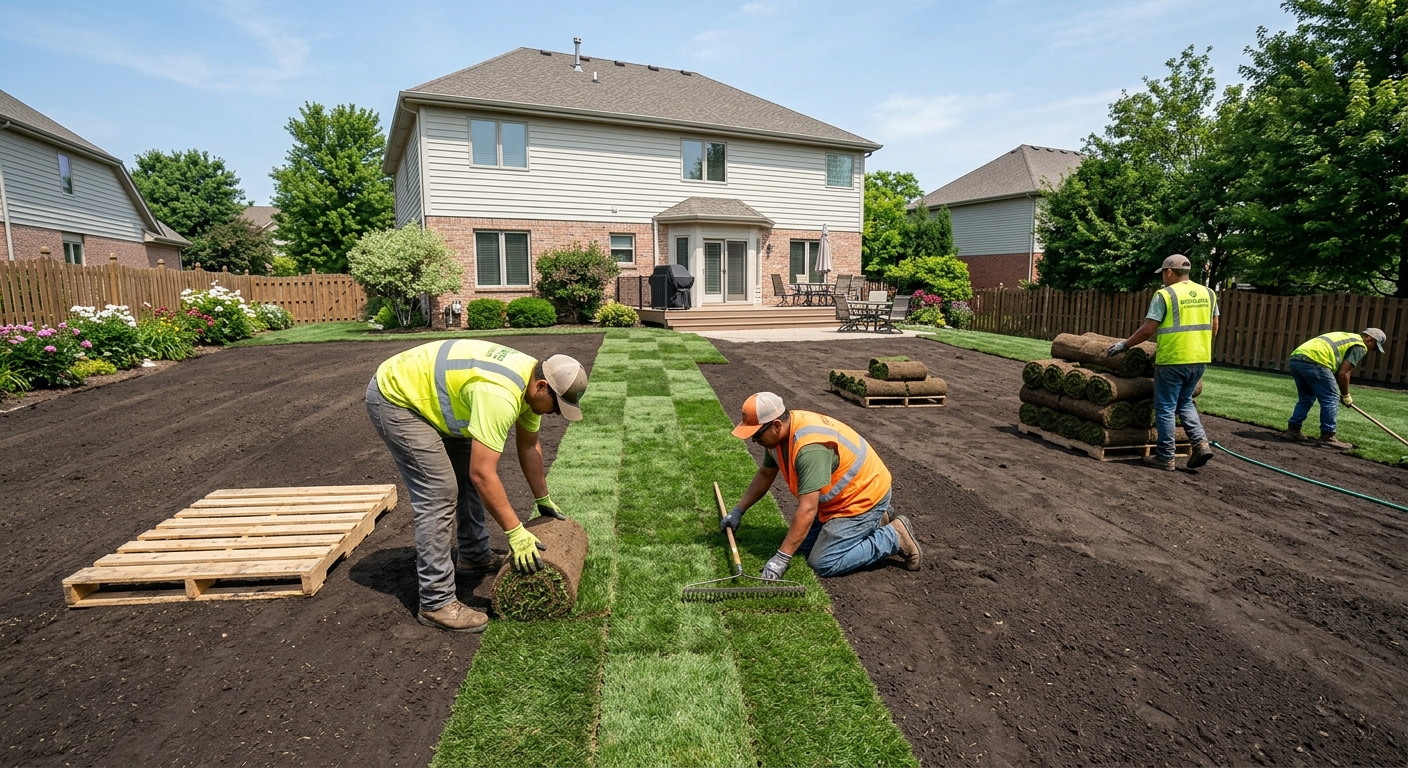
Landscaping options and costs in Mount Pleasant West
Mount Pleasant West, Ontario is a neighbourhood where homeowners often invest in their yards because the local housing mix means many properties have usable outdoor space to improve. With a population of 29,658 (Statistics Canada, 2021 Census), it’s also an active contractor market—so you can compare options from design-build crews to hardscape specialists. In practice, pricing responds to what’s most common in the Toronto-area: freeze–thaw durability, drainage performance, and plant survival through winter lows that can run roughly –23 to –18°C in plant selection for our zone range (6a–7a). Because the GTA growing window is mainly May to October, installers schedule around frost dates and the time it takes to compact bases, settle gravel, and establish new sod or seed. In Mount Pleasant West, work is especially in demand around the Sheppard Avenue West and the Highway 401 corridor, where many homes get curb-focused upgrades—walkways, patios, and refreshed shrub borders—before peak summer selling season.
Expect quotes for similar projects to move based on excavation depth for clay/fill soils, how much drainage re-grading is needed, and whether the scope includes geotextile/geogrid, subdrains, or topsoil replacement. If you’re deciding between a full design-build plan and “phase by phase” upgrades, the table below gives realistic Toronto-area ranges you can use to benchmark bids.
| Service |
Description |
Season |
Price Range |
| Full landscape design and installation |
Site visit, layout and planting plan, grading/drainage coordination, softscape + hardscape build-out, finishing details |
Spring to early fall (mainly May–October) |
$8,000–$40,000 |
| Sod installation (supply, grade, lay, roll) |
Topsoil check and light grading, soil prep, sod supply and installation, rolling, initial watering guidance |
Late spring to early fall |
$2,500–$8,000 |
| Lawn seeding (grade, seed, starter fertilizer) |
Minor re-grade, seed selection, starter fertilizer, light covering as needed, first-season establishment care |
Spring or early fall |
$1,200–$5,000 |
| Interlocking patio or walkway |
Excavation, base prep (including geotextile/geogrid as required), pavers/stone, edge restraints, jointing sand |
All suitable weather windows (spring to fall) |
$6,000–$25,000 |
| Retaining wall (interlocking block) |
Wall build with proper base, drainage layer/backfill, block installation, finishes and ties as required |
Spring to fall |
$6,000–$30,000 |
| Tree and shrub planting |
Plant selection, soil amendments, digging, backfill, staking/wrapping if needed, mulch ring, planting guarantee |
Spring or fall (weather-dependent) |
$800–$6,000 |
Prices are estimates only and vary by project scope, site access and material selection.
What affects the price of landscaping in Mount Pleasant West
In Mount Pleasant West and across the Toronto-area, you can see the same “basic” landscaping idea come in 30–50% apart because the biggest costs aren’t the visible plants—they’re the base preparation, drainage corrections, and durability work needed for freeze–thaw. Toronto-area quotes also reflect labour availability and scheduling during the May–October frost-free period, plus how many crews can handle heavy excavation and hardscape installation. The plant palette is also tied to hardiness and timing: in our zone range (6a–7a), we still plan for winter lows around –23 to –18°C, and that affects both plant selection and how much winter protection or staking is required for establishment.
Compare that with how Prairie regions (Zone 2–4) often require ultra-hardy, wind- and drought-tolerant planting and simpler layouts because working seasons can be shorter and summer dryness is common; in coastal BC (Zone 7–8), lush structure is easier but good drainage is still crucial in heavy-rain settings. Meanwhile, dry BC interior communities often build irrigation and drip zones around water restrictions. In Southern Ontario (Zone 5–6), we’re typically planning irrigation for summer dry spells while still dealing with wet springs and clay soil.
In Mount Pleasant West specifically, costs rise when a property needs excavation for clay/fill, re-grading to prevent pooling, or subdrains to protect foundations and walkways. A modest interlocking walkway can fall into the $6,000–$25,000 band if base depth and drainage are straightforward—but if the grade has to be corrected and additional granular base is required, it can land closer to the upper end. Likewise, a full design-build that uses drainage, patios, and planting phases commonly sits within $8,000–$40,000; smaller “softscape-only” scope stays closer to the mid-lower numbers. Older neighbourhood lots often have mature trees, later walkway additions, and variable soil compaction, so tree removal, stump grinding, and topsoil replacement can add noticeable labour even when the yard size looks similar on paper.
| Price Factor |
Why It Matters |
Cost Impact |
| Yard size in sq ft — the primary cost driver for softscape |
More square footage requires more soil prep, seed/sod, edging, and materials |
Higher square footage typically increases total cost across sod, seeding, and planting packages |
| Grading and drainage work — slope corrections add significant cost |
Proper fall away from foundation reduces pooling and winter damage |
Can push a project 15–35% higher if excavation is deeper and re-compaction is extensive |
| Drainage bed or French drain installation |
Helps move excess water from clay soils and downspout discharge areas |
Often adds mid-project cost due to trenches, gravel, geotextile, and discharge tie-in |
| Plant material tier — native shrubs vs. ornamental vs. mature specimen trees |
Size, transplanting difficulty, and lead times change labour and material prices |
Can swing the planting portion from “budget” to “premium” quickly |
| Hardscape vs. softscape ratio — walls and patios cost more per sq ft than lawn |
Pavers/stone require deeper bases, restraint systems, and precise leveling |
Projects with more patio/wall area usually land toward the upper range bands |
| Irrigation system design and installation |
Even in Southern Ontario, summer dry spells benefit from reliable coverage and zoning |
Adds cost but reduces re-work and plant loss during establishment |
| Soil amendment and topsoil required |
Clay/fill soils often need improvement for root growth and stable bases |
Can materially raise labour and delivery fees |
| Tree removal or stump grinding before new planting |
Impacts excavation, disposal, and safe access for equipment |
Unexpected removals are a common cause of quote variance |
Permits & regulations in Ontario
For most homeowners in Ontario, basic planting and softscape work typically does not require a permit. In Mount Pleasant West, that usually includes tasks like sodding, lawn seeding, planting shrubs/perennials, applying mulch, and installing many garden paths or low borders. Retaining walls are different: if a wall is above a municipal threshold—commonly 1.0 m (3.3 ft) in many Ontario municipalities—permits are often required and engineering drawings may be requested for certain conditions. Changes to lot grading can also trigger approvals if they affect drainage toward neighbouring properties or storm sewer connections.
Before digging anywhere—plant holes, French drain trenches, or retaining wall footings—have the contractor call for utility locates. This protects you and the crew from damaging buried services. Also, confirm irrigation and water-use bylaws (in Ontario) and seasonal restrictions that can apply during drought-like conditions; even when the “rules” are looser than dry regions, municipalities can still impose limits on irrigation timing or volume.
To verify a contractor in Mount Pleasant West, ask for three things and check them: (1) licensing information where applicable (and ensure they are eligible to perform the described work), (2) liability insurance with adequate limits—request a certificate of insurance—and (3) WSIB/WCB coverage confirmation (ask for proof). A clearance letter or current account status document is usually available upon request. If they can’t provide documentation quickly, that’s a red flag before you sign.
Planning a landscape that thrives in Mount Pleasant West's climate
Planning for Mount Pleasant West means working with our hardiness range (zones 6a–7a), our wet spring-to-summer swing, and the freeze–thaw reality that punishes weak bases. Start with plant selection: choose zone-appropriate perennials, hardy shrubs, and structurally sound trees that can handle winter lows near –23 to –18°C. Native and well-adapted plants generally require less watering and fewer extra winter supports once established. For turf, decide early between sod and seed—sod gives instant curb appeal, but it’s costly and still depends on good soil contact and correct grading; seeding is slower but can be a better match for budgets.
Drainage and grading are non-negotiable in Toronto-area yards. Pooling water against foundations, walkways, or under eaves can lead to soft subgrades and early hardscape settlement. For hardscape and retaining walls, base prep must be built for frost depth and seasonal movement: proper excavation, compacted granular layers, edging restraints, and drainage layers protect longevity. Finally, build low-maintenance structure: mulch rings, groundcovers in beds, and a repeatable perennial palette reduce annual labour without sacrificing appearance.
If you want water-smart options, consider a rain garden in a downspout-to-yard swale and select low-water species within. For example, sod in the $2,500–$8,000 range can be justified when you need fast results; but if your priority is cost-per-season and you’re comfortable with establishment, seeding can redirect dollars toward drainage improvements or higher-quality planting where it actually boosts long-term performance.
| Element |
Climate Consideration |
Maintenance Level |
Price Band |
| Sod lawn installation |
Needs warm establishment window and consistent moisture during rooting; protects against erosion in fall |
Medium (initial watering and monitoring are critical) |
$2,500–$8,000 |
| Native perennial garden |
Hardy selection tolerates winter lows; strong roots handle Toronto clay better with soil amendment |
Low to medium (spring tidy-up and seasonal weeding) |
$1,200–$6,000 |
| Mulched shrub border |
Mulch moderates freeze–thaw stress and reduces soil moisture swings |
Low (occasional top-up and pruning) |
$800–$5,000 |
| Interlocking stone patio |
Requires deep base and drainage to resist winter heave and settlement |
Low (sweeping and joint maintenance) |
$6,000–$25,000 |
| Retaining wall (block) |
Backfill drainage and proper base depth reduce freeze–thaw and hydrostatic pressure |
Low (visual checks after heavy winters) |
$6,000–$30,000 |
| Drip irrigation system |
Targets water to roots and suits water-smart plantings; important during summer dry spells |
Medium (seasonal adjustments and winter blowout planning) |
$1,500–$7,500 |
How to choose a landscaping contractor in Mount Pleasant West
Choosing the right contractor in Mount Pleasant West starts with verification. For Ontario work, ask for proof of liability insurance and WSIB/WCB coverage (request a certificate of insurance and a WSIB/WCB clearance letter or account confirmation). If the quote includes anything like hardscape excavation, drainage, or retaining wall work that affects structural elements, confirm they have the right credentials for the scope they’re advertising and that insurance matches the type of work planned. Don’t accept “we’re covered” without documents you can keep.
Next, get 2–3 itemised written quotes instead of lump sums. A good bid separates labour and materials (pavers/stone, block type, sod or seed quantities, topsoil and amendments, base aggregates, drainage pipe, geotextile/geogrid, and disposal). Read exclusions carefully: ask whether permits are included (if needed for a retaining wall), whether disposal and haul-away are part of the price, and who supplies soil and mulch. Warranty matters too—ask for workmanship warranty length and whether product/manufacturer warranties apply to plants and hardscape components. For plants, confirm what happens if replacement is needed due to winter dieback during the first establishment season.
Payment schedule should be sensible: typically no more than 10–15% upfront. Hold back a portion until completion and final cleanup are done. Finally, require a written start date and a completion estimate, because spring weather delays can affect sod and seeding timelines in Ontario.
- Ask for insurance certificate and WSIB/WCB clearance proof before work starts.
- Request a site visit and written scope (not just a photo-based quote).
- Confirm quantities: sq ft of sod/seed, patio sq ft, wall linear feet, and plant count.
- Ensure base prep details are listed (compaction depth, geotextile/geogrid, drainage ties).
- Check whether disposal/haul-away of excess soil and debris is included.
- Verify permit responsibility for retaining walls where a building permit may be required.
- Ask for drainage approach: subdrain/French drain details if re-grading is needed.
- Confirm edging and restraints for hardscape (prevents edge creep and settlement).
- Ask about soil amendment plan and topsoil depth/specs.
- Get a written watering/aftercare plan for sod, seed, and newly planted material.
- Clarify warranty terms in writing (labour vs. material; replacement expectations).
- Review payment terms—avoid large deposits and don’t pay the final amount early.
Concrete red flags I see with landscaping bids in Mount Pleasant West: (1) no itemized quantities—just “lump sum” language, (2) refusal to provide insurance or WSIB/WCB proof, (3) skipping drainage or base-prep details in the scope, (4) offering unusually low prices for interlocking patios/retaining walls without explaining base depth and geotextile/geogrid, and (5) vague timelines like “spring this year” without start/finish dates.
Frequently asked questions — landscaping in Mount Pleasant West
What trees grow best in Mount Pleasant West's climate zone?
In Mount Pleasant West (Toronto-area, hardiness roughly 6a–7a), the “best” trees are those that tolerate winter cold down near –23 to –18°C and handle our freeze–thaw cycles without weak root conditions. Commonly successful choices include serviceberry (Amelanchier), littleleaf linden (Tilia cordata), and hardy crabapples (Malus) for smaller yards. For privacy and structure, upright arborvitae or similar hardy evergreens work well where there’s enough space for mature width. If your yard has clay or compaction, improving planting soil and ensuring drainage away from foundations is just as important as species choice. A good planting quote often lands in the $800–$6,000 band depending on tree size, access, and whether any stump removal is required.
How much does sodding a yard cost in Mount Pleasant West?
Sod pricing in Mount Pleasant West typically tracks lawn square footage plus how much prep your base needs. If the grade is mostly correct and there’s no major drainage correction, sod supply and installation commonly falls within $2,500–$8,000. Prices climb when excavation is needed for clay/fill correction, when edging and topsoil replacement are substantial, or when there are access constraints that require more labour. Also note timing: spring and early fall are ideal for establishment in Ontario’s zone range, and crews often schedule around weather to reduce risk. If you’re trying to stretch budget, ask about whether minor re-grade and soil amendment are included, because those are the items that usually determine how well sod roots and lasts through summer dry spells and winter freeze–thaw.
How do I prevent weeds in my Mount Pleasant West garden?
Weed control starts with the foundation of the bed: proper soil prep and a clean planting layout. In Mount Pleasant West, where many yards have thicker clay fill or past compaction, we typically recommend removing existing weed roots, then adding a soil amendment layer as needed so plants establish quickly and shade the ground. A thick (but not overburdening) mulch layer helps—generally 2–3 in (5–8 cm)—and using a quality weed barrier under mulch can help in larger borders, though we avoid turning every bed into “plastic-covered” landscapes. Dense perennial planting is one of the best long-term weed suppressors: it reduces bare soil that weeds exploit. If your scope includes lawn-to-bed conversions, factor in edging and a robust border detail; otherwise, weed migration is common after just one season.
How do I design a low-water yard in Mount Pleasant West?
Low-water doesn’t mean “no water ever”—it means designing smarter for Toronto-area dry spells. Start by grouping plants by water needs and choosing zone-appropriate species that tolerate our winters and summer humidity swings. Mulch and groundcovers reduce evaporation from soil. Where you have downspout discharge or a consistently damp area, consider a rain-garden or swale so runoff is captured rather than wasted. If you want to automate watering, a drip irrigation system is often more efficient than sprinklers, especially in shrub borders. For budgeting, drip irrigation design and installation commonly sits in a $1,500–$7,500 range depending on zoning and yard size. The best ROI is usually spending on drainage and soil amendment first—because healthy roots reduce the total water you need once plants are established.
How do I find a licensed landscaper in Mount Pleasant West?
For Mount Pleasant West, the easiest way to find a reliable contractor is to verify documentation before you compare prices. Ask for proof of liability insurance and WSIB/WCB coverage (request a clearance letter or current account confirmation). For licences, you should confirm they are properly qualified for the scope they’re selling and can provide relevant registration details when applicable. Then compare itemised quotes: labour and materials breakdowns, and whether disposal, base preparation, and drainage work are included. Use the written scope as your checklist—if a contractor can’t explain base depth for pavers, or how they’ll handle drainage for clay soils, you don’t have enough information to judge the bid. A reputable team will also provide a workmanship warranty and clearly state what’s covered versus what’s the homeowner’s responsibility during establishment.
How much does landscaping cost in Mount Pleasant West?
Landscaping cost in Mount Pleasant West depends heavily on how much softscape versus hardscape you’re adding, and how much drainage and soil work is required for clay/fill conditions. For many homeowners, a full design and installation package typically lands in the $8,000–$40,000 range, especially when it includes drainage corrections and at least one hardscape element (like patio/steps) plus planting. If you’re focusing on turf only, sod installation commonly comes in around $2,500–$8,000, while planting-focused projects often fall within $800–$6,000 depending on plant sizes and access. To avoid budget surprises, ask contractors to itemise grading, drainage, base materials, and disposal—these line items usually explain most of the 30–50% quote differences you’ll see across the Toronto area.