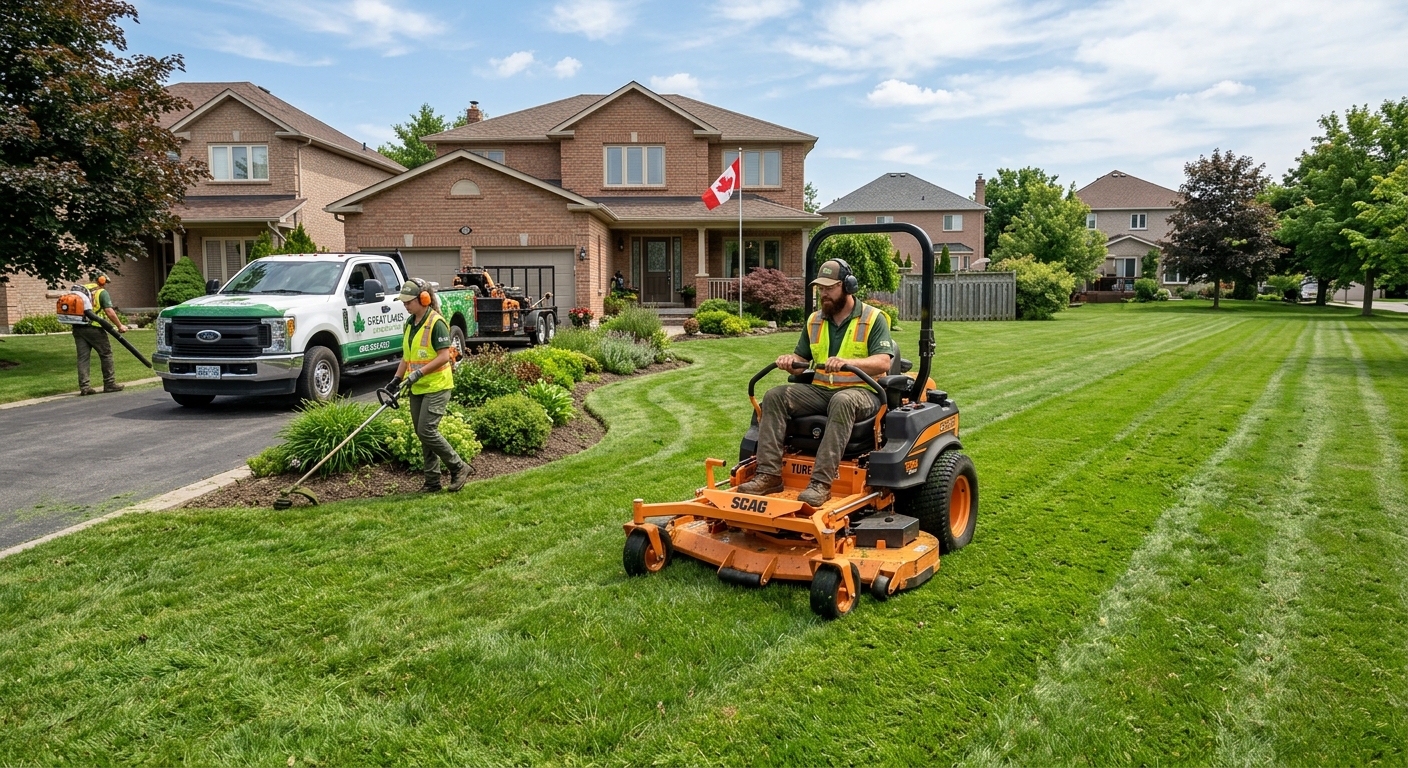
Landscaping options and costs in Ottawa
Ottawa homeowners typically have more yard flexibility than renters because about 63.9% of Canadian households in the city area are owner households (Statistics Canada, 2021 Census), and Ottawa’s housing stock is heavily geared toward detached properties—single-detached houses make up 41.7% of dwellings (Statistics Canada, 2021 Census). That matters: detached lots usually mean more hardscape and softscape surface area to maintain and a stronger incentive to invest in drainage, interlocking, and planting.
In Ottawa, pricing is tightly linked to our freeze–thaw cycle and zone (4b–5a). Contractors must build patios, steps, and retaining wall bases with deep, well-compacted granular layers and correct drainage, or you’ll see heaving, settling, and cracked edges within a few winters. Labour availability also fluctuates because our working window is shorter than coastal areas—roughly May to October for soil work, planting, and interlock base prep—while spring saturation and clay-rich soils can slow excavation and grading.
Demand is especially strong in established communities where homeowners refresh curb appeal and walkways before resale, such as Nepean (South Nepean) and Barrhaven. With that in mind, the options below show realistic ranges for common projects, so you can compare quotes apples-to-apples and understand where your money typically goes before we talk about what changes the price most.
| Service |
Description |
Season |
Price Range |
| Full landscape design and installation |
On-site assessment, concept and plant plan, grading/drainage coordination, soil amendment, hardscape + planting installation |
May–October |
$12,000–$45,000 |
| Sod installation (supply, grade, lay, roll) |
Spot grading/levelling, soil prep, sod supply, laying, rolling, starter watering |
Late April–June; Sept–Oct (when soil is workable) |
$2,000–$8,500 |
| Lawn seeding (grade, seed, starter fertilizer) |
Light grading, seed blend selection for Ottawa shade/sun, starter fertilizer, initial watering plan |
April/May or early Sept |
$1,500–$5,500 |
| Interlocking patio or walkway |
Excavation, base (granular layers), edging, pavers, leveling, compaction, and drainage-friendly slope |
May–October |
$4,500–$28,000 |
| Retaining wall (interlocking block) |
Footings/base prep, block installation, geotextile/backfill, drainage gravel and weep management |
May–October |
$6,000–$30,000 |
| Tree and shrub planting |
Site layout, soil amendment, planting, staking (if needed), mulch ring, aftercare plan |
May–October (with careful watering) |
$1,200–$10,000 |
Prices are estimates only and vary by project scope, site access and material selection.
What affects the price of landscaping in Ottawa
In Ottawa, it’s common to see quotes for the “same” job vary by 30–50% because the scope shifts behind the scenes—often in grading, drainage, soil amendment, haul-off, and how contractors build for freeze–thaw. Our region sits in plant hardiness zones 4b–5a, and those frost conditions directly define both what grows and what crews can do in each month. In Ottawa, the frost-free window is roughly May to October, so excavation and base prep must be completed within a tighter working window than in warmer regions.
By comparison, Prairie regions (Zone 2–4) typically require more drought-tolerant, wind-hardy choices and careful topsoil strategies because summers can be harsh and dry; retaining wall base depth also must account for frost penetration. Coastal BC (Zone 7–8) allows a longer planting season and a lush palette, but heavy rainfall means drainage details are just as critical—sometimes more labour-intensive. In BC’s drier interior and in parts of Alberta, water restrictions heavily influence irrigation design, while Ottawa usually isn’t under the same level of outdoor water curtailment, yet clay soils can still stay saturated in spring, raising the cost of excavation and improving drainage.
Concrete Ottawa examples: (1) If your yard is sloped toward the foundation, adding a proper drainage bed and regrading can push a project up within the “retaining walls & hardscaping” band (often $4,000–$30,000) because of extra granular, geotextile, and disposal. (2) If a lawn area needs significant soil remediation, the “sod” budget ($1,500–$8,500) climbs quickly when sod prep requires removing compacted clay and importing better topsoil. (3) Homes built before 1981—about 44.2% of dwellings in the city area—often have older grading patterns and buried services that complicate excavation and drainage tie-ins, impacting cost.
| Price Factor |
Why It Matters |
Cost Impact |
| Yard size in sq ft — the primary cost driver for softscape |
More area means more topsoil prep, seed/sod, mulch, and labour time |
Can scale the total by 2–4x between small and full-yard projects |
| Grading and drainage work — slope corrections add significant cost |
Proper drainage reduces pooling and foundation moisture during spring thaw |
Often adds large labour and machine-hour charges; can be a major portion of the estimate |
| Drainage bed or French drain installation |
Clay soils hold water; sub-surface drainage prevents frost-related movement |
Material + excavation can raise project cost noticeably, especially in heavy soil |
| Plant material tier — native shrubs vs. ornamental vs. mature specimen trees |
Hardy native and zone-appropriate plants cost less and establish faster |
Switching from small stock to larger specimens can materially increase the planting budget |
| Hardscape vs. softscape ratio — walls and patios cost more per sq ft than lawn |
Interlock base prep and wall systems require more materials and compaction |
Higher hardscape ratios commonly push totals toward the upper end of “hardscaping” ranges |
| Irrigation system design and installation |
Smart zoning and efficient heads reduce waste and future labour |
Typically increases costs, but can prevent repeated overwatering and plant loss |
| Soil amendment and topsoil required |
Ottawa’s clay-rich soils often need imported topsoil and amendments |
Can convert a mid-budget lawn project into a higher budget due to hauling and spreading |
| Tree removal or stump grinding before new planting |
Clearing affects timelines and can require additional disposal |
Often adds a separate line item that can be substantial depending on access |
Permits & regulations in Ontario
In Ontario, most typical landscape work—like sodding, planting, topsoil spreading, seeding, mulching, and general softscape installation—usually does not require a permit. However, there are important exceptions in Ottawa and across Ontario. Retaining walls above a height threshold—commonly around 1.0 m (3.3 ft) in many municipalities—often require a building permit and sometimes engineered documentation depending on height, location, and load conditions. Also pay attention to changes to lot grading that affect drainage toward neighbouring properties or tie into storm connections; those adjustments may trigger approval requirements because they can change how water flows during spring melt.
Before any digging—whether for planting holes or wall footings—arrange for utility locates so you don’t damage buried services. For irrigation, confirm local rules governing outdoor water use and any seasonal restrictions (particularly relevant when homeowners are also considering water-saving design due to drier periods elsewhere in Ontario’s broader climate profile).
How to verify a contractor in Ottawa: (1) Check the contractor’s Ontario licence/registration status through the appropriate provincial registry; (2) request a current certificate of insurance (general liability at minimum) and ensure it matches the job address; (3) confirm WSIB/WCB clearance or coverage for workers—ask for a clearance letter or proof of coverage. Only proceed once these are supplied in writing.
Planning a landscape that thrives in Ottawa's climate
To plan landscaping that thrives in Ottawa, you design around our zone (4b–5a), spring saturation risks, and freeze–thaw timing—not just around curb appeal. Start with plant selection: choose cold-hardy, zone-appropriate plants (native where possible) and build winter structure with shrubs and small trees that tolerate low temperatures and wind. Then decide between sod vs. seed: sod gives an instant, uniform lawn, but it costs about 3–4x more per sq ft than seeding because you’re paying for harvested product and faster labour turnaround. Seed is slower to look finished, but it’s often the most cost-effective way to establish a durable lawn when you can commit to watering during germination.
Next, address drainage and grading. Ottawa yards can hold water during thaw, so re-slope the lawn away from foundations, and consider a drainage bed if you see pooling. For hardscape, base preparation is non-negotiable: patios and steps need properly compacted granular layers that extend below frost-affected movement, with the right slope so water doesn’t migrate toward the house.
For low-maintenance appeal, use mulch, groundcovers, and layered perennials to reduce annual weeding and preserve soil moisture. If you want a water-conscious approach, a rain garden or carefully placed drainage planting bed can complement Ottawa’s precipitation pattern while preventing nuisance runoff.
Where the price difference is justified: if you’re comparing sod versus seeding for the same area, a seeded lawn might land in the $1,500–$5,500 band, while sod installation often lands higher—around $2,000–$8,500—and is worth it when you need rapid visual completion (selling, events) or you have an area that’s hard to keep seeded during heavy spring rain.
| Element |
Climate Consideration |
Maintenance Level |
Price Band |
| Sod lawn installation |
Establishes quickly but needs careful watering around spring/late-fall schedules and frost timing |
Medium (watering and light post-install care) |
$1,500–$8,500 |
| Native perennial garden |
Zone-appropriate perennials handle cold snaps and bounce back after winter |
Low to Medium (mulch refresh and seasonal pruning) |
$800–$6,500 |
| Mulched shrub border |
Helps manage moisture and temperature swings in clay-rich soils; mulch reduces frost heave risk in planting pockets |
Low (annual mulch top-up, occasional pruning) |
$900–$7,500 |
| Interlocking stone patio |
Freeze–thaw demands a deep, compacted granular base and correct drainage slope |
Low (occasional cleaning; inspect edges) |
$4,000–$28,000 |
| Retaining wall (block) |
Requires proper footings and backfill drainage to prevent water pressure and movement |
Low (inspection of drainage outlets and surface settlement) |
$6,000–$30,000 |
| Drip irrigation system |
Efficient watering supports hardy plants and reduces issues from spring saturation/late freezes by targeting roots |
Medium (seasonal start-up/adjustments) |
$1,000–$6,000 |
How to choose a landscaping contractor in Ottawa
Choosing the right contractor is especially important in Ottawa because workmanship affects how well your yard survives winter. Start by verifying Ontario licensing/registration requirements that apply to the contractor and trade. Next, ask for liability insurance (a current certificate of insurance listing your address as the work site) and confirm WSIB/WCB coverage with a clearance letter or proof of coverage. If they can’t provide documents promptly, that’s a risk sign.
Then, get 2–3 itemised written quotes with a labour and materials breakdown—don’t accept one vague lump sum. Make sure the scope is complete: which base layers are included under interlock, whether disposal/haul-off is included for clay excavation, and whether any permits are pulled (for example, retaining walls that may cross the height threshold). Confirm warranty terms in writing: workmanship warranty length, product/manufacturer warranties, and whether warranties are transferable if you sell your home.
For payment, plan a schedule that keeps you protected. In practice, never pay more than about 10–15% upfront; hold back remaining payments until the job is complete, cleaned, and corrected. Finally, require a timeline: the contractor should provide a written start date and an estimated completion date based on weather windows in Ottawa.
- Provide proof of Ontario licensing/registration (ask for the reference number).
- Share a current certificate of liability insurance and confirm coverage limits.
- Provide WSIB/WCB clearance or proof of coverage for their workers.
- Use written, itemised quotes: labour hours, material quantities, and unit rates.
- Confirm excavation scope: topsoil removal, hauling, and re-spread requirements.
- For interlock and patios: verify base thickness, compaction method, and edging details.
- For drainage: ensure they specify outlets, slope, and what ties into existing systems.
- Clarify what’s excluded: tree removal, stump grinding, permits, disposal, and site protection.
- Get a written warranty for workmanship and separate product/manufacturer warranty terms.
- Confirm whether warranty covers settlement/heaving related to freeze–thaw workmanship.
- Discuss payment schedule: small deposit, then milestone-based payments with holdback.
- Require a written schedule tied to Ottawa’s working season (spring thaw risk, fall timing).
Red flags in Ottawa: (1) “We’ll do it cheaper, don’t worry about drainage” language; (2) quotes that don’t specify base depth/compaction for interlock or footings for retaining walls; (3) refusal to provide insurance/WSIB documentation; (4) a large deposit upfront with no milestone plan; and (5) no written scope, schedule, or warranty details.
Frequently asked questions — landscaping in Ottawa
Sod vs seed — which is better for a Ottawa lawn?
Sod and seed both work in Ottawa, but the better choice depends on your timeline and your soil prep. If you need the lawn to look complete quickly (moving timelines or curb-appeal needs), sod is often the right fit; typical Ottawa sod installation budgets run about $2,000–$8,500 depending on area and site prep. If you can wait a bit and you’re willing to manage early watering, seeding is usually more budget-friendly, often landing in the $1,500–$5,500 range. Because Ottawa spring can bring saturation from thaw, poor drainage or compacted clay can sabotage either option, so ask your contractor how they’ll grade, amend soil, and ensure the seed or sod sits on a stable, properly prepared surface.
How much does a retaining wall cost in Ottawa?
In Ottawa, retaining wall pricing depends heavily on wall height, wall length, excavation, and whether drainage backfill and geotextile are included. For interlocking block retaining walls, many projects fall around $6,000–$30,000 as a realistic band once you account for deep base preparation required for freeze–thaw and the extra granular/backfill needed to prevent water pressure. If your yard needs significant regrading or if access is tight (long carry distances, overhead wires, limited machine time), costs can increase. The biggest “value” check is whether the quote specifies proper drainage (weep gravel/outlets) and compaction—those details are what prevent movement after winter cycles.
When is the best time to landscape in Ottawa?
For most Ottawa landscape work, the best window is roughly May to October, when soil is workable and crews can build strong interlock bases, complete grading, and establish plants. Spring is workable but can be delayed by thaw and muddy clay, so schedules often start once ground conditions firm up. Late fall planting can be limited for some stock because winter establishment can be harder if plants go in too late; however, mulching and some container plants can still be practical with the right aftercare. If you’re planning a lawn refresh, sod and seeding are typically best in late spring or early fall when temperatures are more stable and watering is more manageable.
Do I need a permit for a retaining wall in Ontario?
In Ontario, many small landscape updates don’t require permits, but retaining walls are a common exception. As a rule of thumb in many Ontario municipalities, retaining walls above about 1.0 m (3.3 ft) often require a building permit, and in some cases engineered drawings depending on the wall’s location, height, and conditions. In Ottawa, also consider that changing lot grading to redirect drainage can trigger approvals because it impacts how water flows. The safest approach is to ask your contractor to confirm the permit requirements for your exact wall dimensions and location, and to clearly state in the quote whether permit work is included or the homeowner must handle it.
How do I improve drainage in my yard?
In Ottawa, drainage problems are often caused by clay soils, poor grading, or downspouts that discharge near the foundation. Start with observation: where does water pool after a rain or spring thaw, and does it track toward the house? Then correct the slope away from foundations and consider a dedicated drainage system like a drainage bed or French drain. For many projects, drainage is what separates a “cosmetic” landscape refresh from a lasting one—especially when you’re installing interlock, steps, or a retaining wall that must resist frost movement. Ask for a site-specific plan: where the water will go, how outlets connect to existing systems, and how they’ll manage freeze–thaw so water doesn’t re-enter the excavation.
What is xeriscaping and does it suit Ottawa?
Xeriscaping is landscaping designed to reduce water use using drought-tolerant plants, smart layouts, mulch, and efficient irrigation or rainwater strategies. In Ottawa, it absolutely can work, but you don’t design it the same way you would in very arid climates. Our clay soils can stay wet in spring, and winters are long, so you focus on cold-hardy plants, soil health, and runoff control—not just “drought-only” species. A rain garden or a planted drainage bed can be a great Ottawa-friendly middle ground: it manages stormwater and reduces pooling while still lowering irrigation needs once plants are established. If you’re budgeting, compare watering and maintenance costs against your planting and hardscape choices before replacing a healthy lawn entirely.