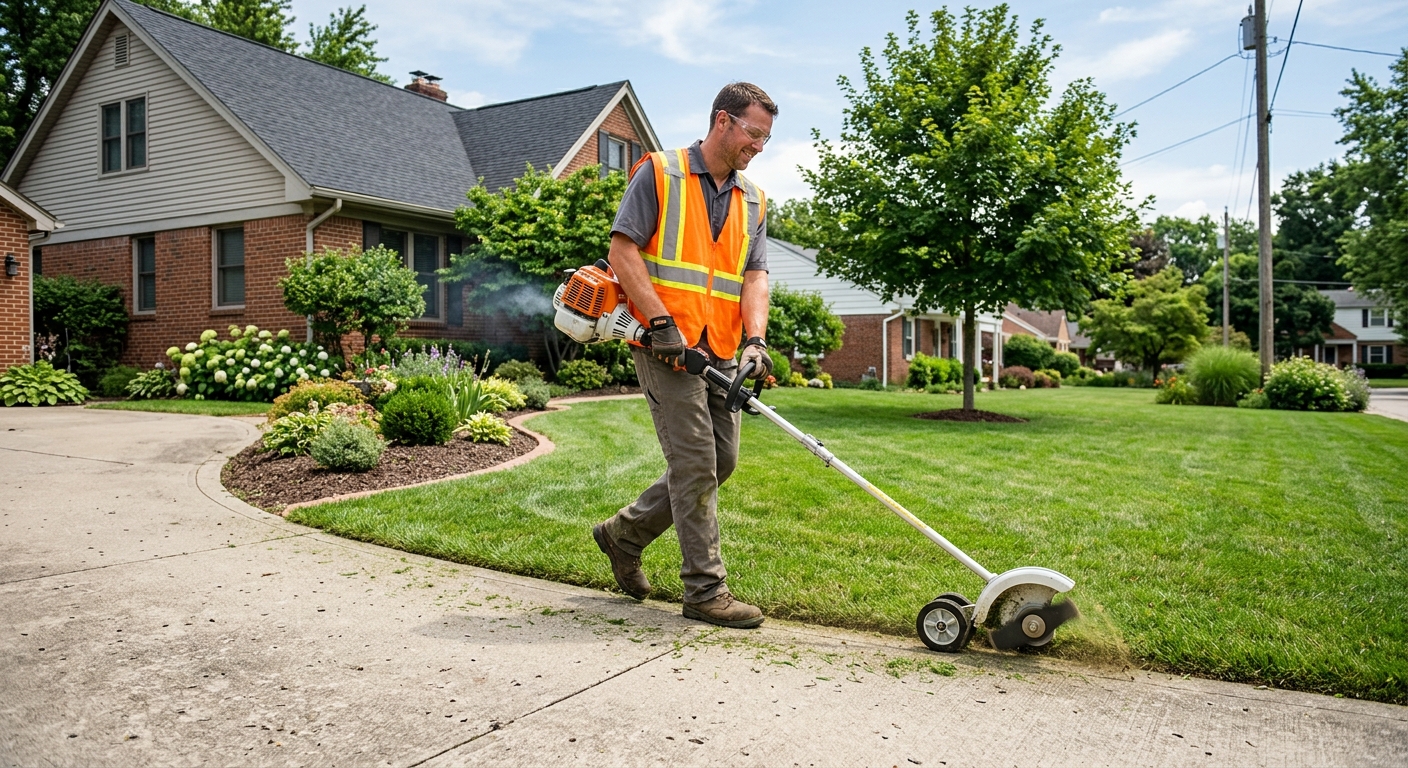
Landscaping options and costs in Temiskaming Shores
Temiskaming Shores is the kind of place where landscaping decisions follow the yard’s realities: colder winters, freeze-thaw cycles, and a lot of older home stock. With single-detached houses making up 78.4% of dwellings, many properties have enough outdoor space to justify real design work (not just a few bags of mulch). And since 3,090 homeowner households make up 72.3% of households, most homeowners are investing for comfort, curb appeal, and property value—especially on streets where front yards are visible year-round.
In the Northeast context, costs tend to run higher than southern, longer-season markets because excavation, base preparation, and drainage work must be engineered for frost. Projects also compete for labour during the short practical construction window (mid-late spring through early fall), so mobilization and crew scheduling can add premium costs. Contractor availability is particularly tight in areas like West Temiskaming and the downtown core edges, where access, existing trees, and municipal proximity often slow demolition, hauling, and regrading.
Most homeowners start by comparing a “full-service” plan versus doing pieces—sod, planting, or hardscape—then choosing options that fit budget and maintenance tolerance. Below are realistic price bands you’ll see for common scopes, so you can compare quotes apples-to-apples before site measurements and material selection.
| Service |
Description |
Season |
Price Range |
| Full landscape design and installation |
On-site design + grading/drainage plan, bed layout, supply & installation of plants, sod/seed, and basic hardscape where specified |
Mid-late spring to early fall |
$8,000–$30,000 |
| Sod installation (supply, grade, lay, roll) |
Soil prep, grading to shape, sod supply, delivery, rolling, and initial watering guidance |
Late spring to early fall (weather-dependent) |
$3,000–$9,000 |
| Lawn seeding (grade, seed, starter fertilizer) |
Final grade correction, seed selection, starter fertilizer, light topdressing, and initial care instructions |
Early-mid spring or late summer (short window) |
$1,800–$5,500 |
| Interlocking patio or walkway |
Excavation, base build-up, compaction, edge restraints, interlocking pavers, jointing sand |
Spring to early fall |
$6,000–$25,000 |
| Retaining wall (interlocking block) |
Block selection, excavation, geogrid/backfill strategy, drainage stone, cap or coping (if specified) |
Spring to early fall |
$8,000–$22,000 |
| Tree and shrub planting |
Site layout, planting holes, soil amendment, staking (if needed), mulching, and first-season care plan |
Spring (leaf-out window) and fall (rooting window) |
$1,500–$8,000 |
Prices are estimates only and vary by project scope, site access and material selection.
What affects the price of landscaping in Temiskaming Shores
Across the Northeast economic region and southern Ontario, the same “basic” landscaping job can swing by 30–50% mainly because climate dictates both what can be installed and how it must be built. In colder zones with short frost-free windows, crews spend more time on excavation, base preparation, and drainage so patios, walls, and lawns don’t heave. In warmer, longer-season markets, contractors can work faster and establish plants with fewer weather-related delays—so labour and time premiums are lower.
Hardiness zone and frost dates also control your plant palette and your scheduling. Prairie-like conditions (think Zone 2–4 practical planting) favour drought-tolerant, wind-hardy selections and require tighter watering plans and smarter soil prep. Retaining wall bases must often be built below the frost line, which increases aggregate, labour, and disposal costs. By contrast, coastal climates (longer growing seasons) can support lush, layered planting, but tend to require extra drainage design in heavy-rainfall areas.
In Temiskaming Shores specifically, two concrete examples show why estimates vary. First, a lawn edge that needs regrading can add several days of labour and additional base material; a job that might start in the $3,000–$9,000 sod band can move upward if drainage and subbase aren’t correct. Second, adding a “small” retaining wall for a slope correction often pushes budgets toward the $6,000–$25,000 hardscaping band because the work isn’t just block—it’s excavation depth, geogrid (if required), drainage stone, and backfill compaction. Many homes here were built before 1981 (77.5%), so existing drainage patterns and soil conditions can be uneven, meaning more site work and testing during design.
| Price Factor |
Why It Matters |
Cost Impact |
| Yard size in sq ft — the primary cost driver for softscape |
More area means more labour hours, seed/sod, and finishing (topsoil, compaction, edging) |
Large jobs can scale up from several thousand dollars into the full design/install range |
| Grading and drainage work — slope corrections add significant cost |
Correcting low spots prevents pooling and foundation moisture issues |
Can add days of excavation and re-topsoiling, increasing overall quote by a wide margin |
| Drainage bed or French drain installation |
Intercepts water before it damages turf and masonry |
Often shifts projects into higher hardscape/installation totals due to pipe, stone, and labour |
| Plant material tier — native shrubs vs. ornamental vs. mature specimen trees |
Hardy native plants cost less and establish more predictably; mature trees carry higher material and handling costs |
Specimen upgrades can significantly increase “tree & garden planting” totals |
| Hardscape vs. softscape ratio — walls and patios cost more per sq ft than lawn |
Block, pavers, edging, and thicker base layers require specialized installation |
Even moderate patios or walls can dominate budgets compared to seeding/sod |
| Irrigation system design and installation |
Weatherproof zoning and correct coverage reduces waste and winter risk |
Can move a lawn plan upward depending on whether you need drip vs. traditional spray |
| Soil amendment and topsoil required |
Cold-climate turf needs structure; poor soils cost more to correct to establish roots |
Additional truckloads and labour can increase costs even if the lawn area is unchanged |
| Tree removal or stump grinding before new planting |
Stumps disrupt grading and future planting layouts |
Extra equipment and disposal time can add a noticeable lump sum before planting |
Permits & regulations in Ontario
In Ontario, most straightforward landscaping work—planting, sodding, seeding, and typical softscape (mulch beds, walkways made with standard landscaping materials)—usually does not require a permit. However, retaining walls can be different. When a wall is above a municipal height threshold (commonly around 1.0 m in many Ontario municipalities), a permit is typically required and engineered drawings may be requested depending on height, location, and surcharge conditions.
Also pay attention to grading. If your contractor plans changes to lot grading that alter drainage toward neighbouring properties or impact how stormwater connects to existing infrastructure, approvals may be triggered. Before any digging for wall footings, drainage lines, or planting holes, utility locates are essential—this helps prevent damage to buried services and costly delays.
For Temiskaming Shores homeowners, you should also confirm water-use rules with the city (especially when timing overlaps with drought-like conditions). In practice, Ontario restrictions are often seasonal and can affect irrigation scheduling, so a drip plan may be preferred for efficiency.
To verify a contractor properly, follow this step-by-step: (1) Confirm Ontario licensing/credentials with the contractor’s registration details and business address; (2) Ask for a current certificate of liability insurance and make sure the policy limits are appropriate for excavation and hardscape; (3) Request proof of WSIB coverage (or the correct coverage status) for workers; and (4) Ask whether they can provide a clearance letter confirming active coverage status. Get these documents before work starts so your protection matches the job risk.
Planning a landscape that thrives in Temiskaming Shores's climate
Designing for Temiskaming Shores means planning around cold-season survival: freeze-thaw cycles, winter wind, and a shorter workable window than you’d see in mild regions. Start with plant selection. In this part of Ontario, the safest approach is choosing native and zone-appropriate shrubs and perennials that establish roots quickly and tolerate deep cold with minimal winter wrapping. Avoid “pretty but fragile” ornamentals unless your contractor can propose a realistic winter protection plan (and confirm they’ve used similar species successfully locally).
Next, decide between sod and seeding. Sod gives instant visual results and quicker erosion control, but it is typically 3–4x more per sq ft than seeding because you’re paying for harvested turf, delivery, and installation labour. If you’re budget-sensitive or planning phased landscaping, seeding can be a smarter first step—then you thicken beds and plant shrubs once the lawn stabilizes.
Drainage and grading are non-negotiable in Northeast-like conditions. Pooling around foundations promotes heaving and turf failure, so a gentle slope away from the house and a properly prepared subgrade matter more than seed brand. For patios and retaining walls, base prep must account for frost line impacts: deeper excavation, thicker aggregate layers, and proper compaction reduce long-term movement.
For low-maintenance curb appeal, use mulch, groundcovers, and hardy perennials to reduce bare soil (which weeds love). Consider rain-garden or drainage swale elements where you have natural runoff paths—paired with native wet-tolerant plants, they manage water without constant manual upkeep. As a dollar example: if a sod lawn plan lands in the $3,000–$9,000 band, a seeding option may come in closer to the lower end for similar coverage, allowing you to redirect savings into drainage correction or the first round of shrub planting.
| Element |
Climate Consideration |
Maintenance Level |
Price Band |
| Sod lawn installation |
Needs consistent moisture during establishment; frost heave risk if subgrade is poor |
Medium (watering/monitoring first season) |
$3,000–$9,000 |
| Native perennial garden |
Better winter survival and wind tolerance; improves with mulch and leaf fall |
Low to medium |
$1,800–$6,000 |
| Mulched shrub border |
Mulch moderates soil freeze-thaw and reduces winter desiccation on young shrubs |
Low |
$2,500–$7,500 |
| Interlocking stone patio |
Requires engineered base thickness and edge restraints for frost movement |
Low |
$6,000–$25,000 |
| Retaining wall (block) |
Drainage stone and proper backfill are critical to prevent freeze-thaw failures |
Low |
$8,000–$22,000 |
| Drip irrigation system |
Targets roots efficiently; helps during establishment within short growing windows |
Medium (seasonal adjustments) |
$1,500–$7,000 |
How to choose a landscaping contractor in Temiskaming Shores
Start by verifying Ontario coverage and accountability, not just a nice portfolio. Ask for (1) proof of Ontario business registration/licensing where applicable to the work they advertise; (2) a current certificate of liability insurance (the name on the policy and effective dates should be current); and (3) WSIB coverage documentation for workers on-site. If they’re self-employed, ask how they handle coverage and whether they can provide the appropriate clearance letter or equivalent proof for their labour. Don’t accept “we’re covered” without documents you can review.
Next, request 2–3 itemised written quotes that break labour and materials separately—especially for excavation depth, base aggregate, drainage components, and plant list quantities. A lump sum can hide scope gaps like disposal, topsoil thickness, edging type, or whether disposal is included. Make sure the scope clearly states what’s excluded (for example, tree removal beyond stump grinding, additional drainage laterals, electrical tie-ins for lighting, or replacing damaged turf).
Warranty matters in cold climates. Confirm the workmanship warranty length (often for installation defects), the manufacturer warranty for pavers/blocks/plants where applicable, and whether warranties are transferable if you sell your home. For payment, a common safe approach is not paying more than 10–15% upfront; schedule milestone payments tied to measurable progress and holdback until the job is complete and cleaned up. Finally, get a written start date and a completion estimate that accounts for weather and curing times.
- Ask for the exact scope: measurements, depths, and materials (base thickness, drainage stone, geotextile use).
- Confirm disposal/hauling is included for excavated soil and old sod.
- Check that utility locates are arranged before digging.
- Verify insurance certificate limits and that the certificate is current.
- Verify WSIB coverage or clearance documentation for workers.
- Request an itemised plant list (species, size/class, and quantity) rather than “assorted shrubs.”
- Ensure turf prep includes grading targets and topsoil depth (not just “rake and seed”).
- Confirm edging type and line—straight runs and restraint matter for long-term neatness.
- Ask how drainage is handled where water flows now (spot elevations and swales).
- Get the warranty terms in writing, including what constitutes a workmanship defect.
- Use a payment schedule with clear milestones and a holdback for punch-list items.
- Confirm the schedule: start date, weather contingencies, and when patios/pavers are expected to be finished.
Red flags we often see around Temiskaming Shores: (1) no written scope or vague allowances, (2) refusal to provide insurance/WSIB documents, (3) unusually low hardscape quotes that don’t specify base thickness and compaction, (4) starting excavation without utility locates, and (5) demanding large upfront payments (bigger than 10–15%) before any measurable work is completed.
Frequently asked questions — landscaping in Temiskaming Shores
How long does a landscaping project take in Temiskaming Shores?
In Temiskaming Shores, timelines are heavily influenced by frost risk, soil moisture, and crew availability within the short workable season. Softscapes like planting and mulching can often be done in a few days once the site is prepared, while full grading and drainage can extend the schedule by a week or more depending on how much excavation is required. Sod installation is usually fast on “paper,” but scheduling depends on weather and how quickly the subgrade is ready for rolling. For hardscaping (patios, walkways, retaining walls), build time is tied to base preparation, compaction, and curing windows; a walkway or small patio commonly fits into 1–2 weeks, while a retaining wall can take longer. If your scope targets the $6,000–$25,000 band for hardscape, expect the project to be coordinated tightly to avoid weather delays.
What is the best grass type for a Temiskaming Shores lawn?
For lawns in Temiskaming Shores, the best approach is usually a cold-tolerant, shade- and wear-capable seed mix designed for northern Ontario conditions. Many homeowners do well with a fine fescue blend for resilience and lower water demand, or with a mix that includes hardy perennial rye for stronger establishment in open areas. The key isn’t just grass type—it’s proper grading, starter fertilizer, and seed-to-soil contact. If you’re comparing quotes, seeding (often closer to the lower end of the project range) can be a cost-effective way to establish turf, and then you can fill gaps over the next season. Sod can be great for fast curb appeal, typically in the $3,000–$9,000 range, but it still needs correct prep to prevent winter heaving.
When should I aerate and overseed my lawn in Temiskaming Shores?
Aeration and overseeding work best when temperatures are cool but the grass can still recover—usually in early fall or late spring, depending on how quickly your lawn wakes up. Aeration helps if you have thatch buildup or compacted soil from foot traffic, which is common in older yards built alongside pre-1981 homes (77.5% of dwellings were built before 1981). For overseeding, use seed matched to your existing lawn and topdress lightly so seed contacts soil without burying it too deeply. After aeration, keep moisture consistent during germination, but avoid overwatering that can lead to runoff and pooling on poorly graded areas. If you already have drainage issues, address grading first—otherwise the new seed patch may struggle even with the right timing.
What trees grow best in Temiskaming Shores's climate zone?
For Temiskaming Shores, focus on cold-hardy trees and those that can handle wind and winter desiccation. Common reliable choices in northern Ontario landscapes include species like white spruce and Norway spruce (with careful siting), as well as some smaller ornamental options depending on site conditions. For deciduous structure, homeowners often choose hardy selections that tolerate cold and early spring exposure. The “best” tree depends on your yard’s soil drainage and sun—so a quick site assessment matters. In this region, mature trees cost more but can establish faster visually; however, planting and watering plans must be consistent the first season to reduce transplant shock. If your goal is a full planting pass, tree and shrub installation typically falls in the $1,500–$8,000 band depending on quantities and whether any equipment is needed for larger stock.
How much does sodding a yard cost in Temiskaming Shores?
Sodding costs in Temiskaming Shores typically land in the $3,000–$9,000 range, depending on lawn size, access, and what the contractor must do to get the grade right. The biggest drivers are not just sod quantity; they’re subgrade condition, drainage corrections, edging details, and disposal/topsoil requirements. If the yard has low areas that hold water, you can expect additional excavation and base prep, which moves the total toward the upper end even if the visible sod area looks similar. If you’re trying to control budget, ask for an itemised quote that shows soil prep scope. It’s also worth comparing sod against seeding: seeding is often cheaper and may fit a phased plan if you’re building gardens and drainage over multiple seasons.
How do I prevent weeds in my Temiskaming Shores garden?
Weed prevention starts with reducing bare soil and improving the “soil environment” so plants establish quickly. In Temiskaming Shores, we commonly recommend a thick mulch layer in shrub beds (installed after planting), using weed barrier only where appropriate (and not as a substitute for proper soil prep). Pull existing weeds before planting, then loosen and amend the bed so roots compete effectively. For perennial gardens, dense planting and groundcovers reduce light reaching weed seeds. Edging matters too—clean edges stop grass infiltration and make mowing easier. If drainage is off and the bed stays soggy, weeds often take over because desirable plants struggle. Lastly, plan for maintenance for the first season: consistent watering during establishment and occasional spot weeding prevents annual weeds from setting seed before your plants fully fill in.