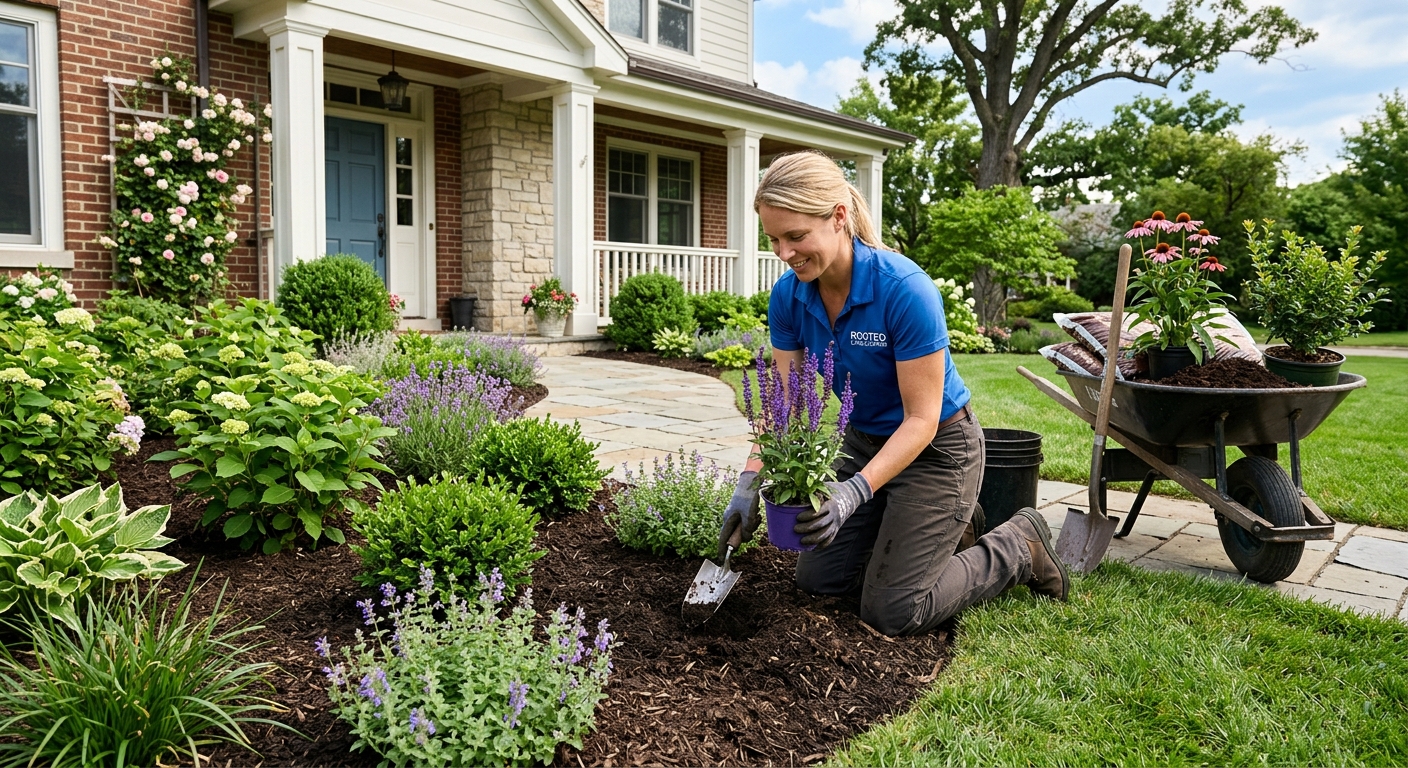
Landscaping options and costs in Banff Trail
Landscaping in Banff Trail can run the gamut from quick lawn upgrades to complete front-yard transformations, and the cost differences are easiest to see when you compare the work types side by side. Banff Trail has a relatively small population of 3,805 (Statistics Canada, 2021 Census), which often means steady demand but fewer contractors locally—so access, scheduling, and haul distance can influence your quote. Just as importantly, Banff Trail’s housing pattern typically includes many detached properties (Statistics Canada, 2021 Census), and that extra yard space creates more opportunity for hardscape, mature trees, and drainage corrections that go beyond “just planting.”
In Calgary’s Prairie plant hardiness zone 3–4, late-spring frosts and early fall cold snaps define both what survives and how long we can safely work on soil, sod, and base materials. Freeze–thaw cycles are severe, so retaining walls, patios, and walkways need deep, well-compacted bases and proper drainage to avoid heaving and premature cracking. In this market, labour commonly represents 40–60% of a full project, and comprehensive installs (grading, hardscape, planting, irrigation) frequently land in the mid five-figure range across the Calgary region.
Based on what homeowners ask for most, demand is especially high around newer infill and established residential pockets where yards tend to be tighter and drainage is often uneven—front entries on many side streets are where we see patios, small retaining walls, and windbreak planting requested first. Use the options below to anchor your budget, then we’ll break down what moves the price in the next section.
| Service |
Description |
Season |
Price Range |
| Full landscape design and installation |
On-site plan, grading/drainage strategy, hardscape, planting, and optional irrigation |
Late spring to early fall |
$5,000–$50,000 |
| Sod installation (supply, grade, lay, roll) |
Remove/level existing area, prepare base, supply sod, lay and roll, light start-up watering plan |
Mid May to late August (weather permitting) |
$1,500–$6,000 |
| Lawn seeding (grade, seed, starter fertilizer) |
Grade to correct low spots, seed blend for zone conditions, starter fertilizer, light mulch/tack where needed |
Spring or early fall |
$900–$3,500 |
| Interlocking patio or walkway |
Excavate, compacted base, concrete edging, pavers, jointing sand, finishing touches |
Spring to early fall |
$8,000–$35,000 |
| Retaining wall (interlocking block) |
Layout, excavation and drainage stone, compaction, block installation, cap/finishing |
Spring to early fall |
$8,000–$40,000 |
| Tree and shrub planting |
Soil prep, planting holes, backfill, mulch ring, watering plan, staking where required |
Spring or fall (weather permitting) |
$800–$15,000 |
Prices are estimates only and vary by project scope, site access and material selection.
What affects the price of landscaping in Banff Trail
Two homeowners in Banff Trail can receive very different quotes for what looks like the “same” job—often by 30–50%—because Calgary-area bids are heavily driven by site conditions and how contractors manage drainage, frost depth and installation quality. In our market, labour demand is seasonal, equipment access matters (especially for compact lots and backyards), and base-prep depth is not optional in freeze–thaw conditions. A contractor’s approach to soil improvement and drainage can also change labour time substantially, even before you get to plants and stone.
Climate and the working window are a big part of the variance. In Prairie zones 3–4, late frosts and early cold snaps shorten safe planting and sod windows, which can push crews to prioritize faster installs or schedule around setbacks. Prairie yards need drought-tolerant, wind-hardy species, and retaining wall base depth must extend below the frost-affected area. Compare that with coastal BC’s longer growing season (zone 7–8), where planting palettes can be lush but heavy-rain drainage design becomes the cost driver. In dry BC interior and many Alberta communities, irrigation design (zoned systems and smart controllers) often determines material choices. In southern Alberta, effective irrigation still helps establish plants, but the emphasis is on efficient delivery, soil structure, and mulch rather than high-water turf.
Concrete examples: if your yard slopes toward the foundation, correcting it with proper grading and sub-drainage can add thousands to the job because it’s excavation and base work, not “just moving dirt.” If you swap a basic seeding approach for sod to get instant curb appeal, budget accordingly—sod projects in this area often sit in the $1,500–$6,000 band, while a larger graded seeding plan may be closer to the lower end of lawn upgrades. If your wall is taller or needs more excavation due to frost-depth considerations, you can easily see costs move within the $8,000–$40,000 retaining-wall band. Housing-stock age also matters: older properties may have settled grades or hidden drainage issues that add $2,000+ worth of corrective work before planting begins.
| Price Factor |
Why It Matters |
Cost Impact |
| Yard size in sq ft — the primary cost driver for softscape |
More square footage increases material quantities and labour hours |
Often the biggest multiplier for sod, seeding, mulch, and planting |
| Grading and drainage work — slope corrections add significant cost |
Pools and foundation moisture risks must be corrected with engineered slope |
Can move a “mid” job to a higher band quickly (excavation + re-compaction) |
| Drainage bed or French drain installation |
Relieves saturated soils and protects paved surfaces during freeze–thaw |
Commonly adds substantial labour and gravel/pipe material costs |
| Plant material tier — native shrubs vs. ornamental vs. mature specimen trees |
Mature stock costs more and requires careful handling and staking |
Can double the planting portion even when the yard size is similar |
| Hardscape vs. softscape ratio — walls and patios cost more per sq ft than lawn |
Pavers and block work need deep bases, compaction, and skilled finishing |
Shifts budgets toward retaining-wall and patio bands |
| Irrigation system design and installation |
Zoning and efficient head layout reduce waste and improve establishment |
Material + trenching + controller setup can be a major line item |
| Soil amendment and topsoil required |
Heavy clay or compacted native soil often needs structure and nutrient balance |
Adds hauling and spreading; improves plant success and longevity |
| Tree removal or stump grinding before new planting |
Access, stump size, and debris handling affect equipment time |
Can add a noticeable fixed cost before planting even begins |
Permits & regulations in Alberta
In Alberta, most everyday yard work—planting, sodding, and the majority of softscape tasks—typically does not require a permit. For a Banff Trail homeowner, that generally includes installing mulch beds, shrubs, trees (with proper excavation), seeding lawns, and building standard garden borders. However, retaining walls above a commonly used height threshold of 1.0 m (3.3 ft) in many municipalities typically require a building permit, and sometimes engineered drawings depending on height, conditions, and design. Changes to lot grading that alter how water drains toward a neighbour, or toward storm sewer connections, may also trigger approvals.
Before any digging for planting holes or wall footings, always call for utility locates so you don’t hit buried lines. That’s a practical safety step and can prevent costly rework.
To verify your contractor’s Alberta legitimacy, do it in a simple sequence:
- Ask for their company name and registration details, then confirm they’re properly licensed/registered for the work they’re billing.
- Request a current certificate of liability insurance and confirm coverage limits are appropriate for the scope (ask how they’ll protect your property and driveway).
- Confirm workplace coverage: in Alberta this is typically WCB coverage—request proof and make sure it’s active.
- Get the contractor to put permit responsibility in writing (who pulls it, if required, and what drawings are included).
- Do a quick insurance expiry check right before the start date.
If a quote includes a retaining wall or drainage regrading, ensure you’re clear on whether permitting is included, and whether the contractor or homeowner is responsible for approvals.
Planning a landscape that thrives in Banff Trail's climate
Planning for Banff Trail’s climate means choosing plants and building details that work with the freeze–thaw cycle, wind exposure, and the zone-appropriate precipitation pattern—rather than trying to force a lush, long-season look that won’t hold up. In Calgary’s Prairie zones 3–4, plant selection is your first “cost control.” Prioritize native and zone-appropriate trees, shrubs, and perennials that tolerate cold and wind, then add winter protection only where it’s needed (mulch, windbreak placement, and strategic grouping). That lowers replacement rates and reduces the annual labour burden.
Next, think about sod vs. seed. Sod gives instant results and can stabilize soil quickly, but in Banff Trail it usually costs about 3–4x more per sq ft than seeding because you’re buying mature turf and the labour intensity is higher. If your goal is curb appeal for the first season, sod can be worth it; if your priority is long-term value and you have a good grading plan, seeding is often the smarter budget move.
Drainage and grading are where many Calgary yards get into trouble. Even a beautiful planting layout fails if water pools or creeps toward foundations—so correct slopes, add a drainage bed or French drain where needed, and build hardscape bases deep and well-compacted to protect against heaving.
For low-maintenance design, use mulch, groundcovers, and hardy perennials to reduce mowing and watering. Xeriscaping elements—like gravel-backed shrub borders, drought-tolerant plants, and drip irrigation in the right zones—fit Banff Trail well when paired with soil improvement. As a dollar example: if you’re comparing a $1,500–$6,000 sod install to a seeding plan plus mulch and a simple drip line, the cheaper path can free budget to fix grading and drainage—often the best investment you can make because it protects everything built on top.
| Element |
Climate Consideration |
Maintenance Level |
Price Band |
| Sod lawn installation |
Needs a frost-safe install window; edges must be level to avoid heaving |
Medium (initial watering and mowing schedule) |
$1,500–$6,000 |
| Native perennial garden |
Zone-appropriate hardiness reduces winter losses; mulch protects crown areas |
Low to medium (spring cleanup, occasional divide) |
$800–$6,000 |
| Mulched shrub border |
Wind-tolerant shrubs and proper spacing cut drying stress in chinooks |
Low (weeding control and top-up mulch) |
$1,200–$8,000 |
| Interlocking stone patio |
Base depth and drainage keep joints stable through freeze–thaw |
Low (occasional joint sand/top edging) |
$8,000–$35,000 |
| Retaining wall (block) |
Requires deep, well-compacted base and drainage stone to prevent movement |
Low (visual checks for settling and weeping) |
$8,000–$40,000 |
| Drip irrigation system |
Zoned delivery helps drought tolerance and supports establishment in short seasons |
Medium (seasonal adjustments and checks) |
$2,000–$12,000 |
How to choose a landscaping contractor in Banff Trail
Choosing the right contractor in Banff Trail starts with verifying coverage and professionalism—because snow-melt drainage failures and freeze–thaw heaving are expensive to fix. First, confirm Alberta licensing/registration for the type of work they’re advertising. Next, request a certificate of liability insurance and ensure the coverage is active and appropriate for your job size (especially if heavy equipment is involved for excavation). For workplace coverage, ask for proof of WCB/WCB-style coverage (and check that it’s current). If a contractor can’t provide documentation quickly, treat it as a warning.
Then get 2–3 itemised written quotes. You want a breakdown showing labour vs. materials, and line items for excavation, base prep, compaction, drainage stone/pipe, topsoil, and disposal. Avoid “lump sum only” bids unless you have detailed exclusions listed. Read the scope carefully: is permit pulling included where required (for retaining walls above typical thresholds), is disposal included, and what happens if subsoil conditions differ after digging?
On warranty, ask for the workmanship warranty length and what it covers (settlement, heaving, paver shifting, irrigation failures) and whether it’s transferable to future homeowners. For payment schedule, a common safe approach is no more than 10–15% upfront for materials and scheduling, with holdback until key completion milestones are signed off. Finally, insist on a written timeline: start date, weather contingencies, and an estimated completion date.
- Ask for references from similar Banff Trail yards (grading + hardscape, not just planting).
- Require utility locate confirmation before digging.
- Check that their quote lists excavation depth and base build-up details.
- Confirm drainage scope in writing (where water goes and what stone/pipe is used).
- Get sod and seed specs: cultivar/variety, seed mix, and install timing window.
- Verify plant lists include mature size and spacing so they don’t outgrow the design.
- Ask who provides disposal and where debris is hauled.
- Confirm whether fencing, edging, and topsoil hauling are included.
- Make sure irrigation (if included) is zoned and includes a controller plan.
- Request warranty terms in plain language, including start date and claim process.
- Avoid contractors who pressure you to pay more than 10–15% upfront.
- Look for clear exclusions: what’s not included (topsoil depth, wall engineering, permit fees).
Red flags to watch for in the Banff Trail market: (1) vague quotes that don’t specify base depth or drainage; (2) no proof of liability insurance or current coverage; (3) payment demands that exceed 10–15% upfront without milestone justification; (4) promises of “guaranteed sod” without discussing late frost risk and aftercare; and (5) refusal to provide an itemised labour/material breakdown.
Frequently asked questions — landscaping in Banff Trail
Sod vs seed — which is better for a Banff Trail lawn?
In Banff Trail (Calgary area), the better choice depends on your timeline and how level your site is. Sod gives instant curb appeal and stabilizes soil quickly, but you must install it in a safe window and follow aftercare to reduce shock—especially with late-spring frosts and early cold snaps. For typical lawn upgrades, sod projects often land in the $1,500–$6,000 range depending on yard size and grading needs. Seeding costs less and can perform very well when the base is graded correctly and you use zone-suitable seed with starter fertilizer; it’s often a better value if you’re planning a longer timeline. If you have low spots or drainage issues, fix those first—otherwise both sod and seed can fail or thin.
How much does a retaining wall cost in Banff Trail?
Retaining wall pricing in the Banff Trail area is driven by height, length, soil conditions, and the amount of excavation and drainage required. In Calgary’s freeze–thaw climate, a proper wall needs a deep, well-compacted base and usually drainage stone behind the wall to prevent water pressure and movement. For typical interlocking block retaining walls, homeowners commonly budget within the $8,000–$40,000 range depending on complexity (tight access, base depth requirements, and how much regrading is needed). If your wall is above typical permit thresholds (often 1.0 m in many municipalities), costs can also rise due to permit/engineering needs and additional documentation.
When is the best time to landscape in Banff Trail?
For most landscaping in Alberta, late spring through early fall is the practical installation window. Sod is generally best in mid-May to late August (weather permitting) so roots can establish before cold snaps. Planting trees, shrubs, and perennials is often successful in spring and in fall when temperatures are milder, but you still need to avoid late frost risk that can stress newly planted material. Hardscape work like patios and walkways is typically scheduled when the ground isn’t frozen and crews can achieve proper compaction. In freeze–thaw conditions, rushing base prep or installing too late can lead to settling or heaving, so reputable contractors build in weather contingencies for Banff Trail yards.
Do I need a permit for a retaining wall in Alberta?
Often, yes—depending on the retaining wall height and the specifics of your site. While many softscape tasks like planting and sodding typically don’t require permits, retaining walls above a common threshold of about 1.0 m (3.3 ft) in many Alberta municipalities usually require a building permit, and sometimes engineered drawings. Site grading changes that impact drainage toward neighbouring properties or storm connections can also trigger approval requirements. For Banff Trail homeowners, the safest approach is to ask your contractor to confirm whether permitting is required for your wall size and to spell out in writing who pulls the permit and whether engineering is included when needed. When in doubt, verify before excavation begins.
How do I improve drainage in my yard?
Drainage improvement should start with observing where water pools after rain and where it flows during melt—then correcting the route with grading and, where needed, drainage infrastructure. In Calgary’s freeze–thaw cycle, standing water contributes to soil saturation and can undermine patios, walkways, and the base of retaining walls. Common solutions include regrading to create proper slope away from foundations, installing a drainage bed or French drain, and adding under-surface stone with geotextile separation to prevent fines from clogging the system. Soil amendment can also help if your yard has compacted clay. If you’re planning new hardscape, address drainage first; otherwise you may end up paying twice.
What is xeriscaping and does it suit Banff Trail?
Xeriscaping is landscaping designed to reduce water use while still looking great—typically by combining drought-tolerant plants, efficient irrigation (often drip), mulch, and soil improvements. Yes, xeriscaping suits Banff Trail because the Prairie zones 3–4 climate and semi-arid conditions favour wind-hardy, cold-tolerant species and smart watering rather than high-water turf. Many homeowners keep a smaller lawn footprint for play and curb appeal, then shift the rest of the yard to mulched borders, groundcovers, and perennials that handle cold and dry cycles. Depending on scope, irrigation design is often the key cost driver; a thoughtfully designed system helps plants establish without overspending on water-intensive layouts. When sod isn’t necessary everywhere, you can redirect budget into grading/drainage and more resilient planting.