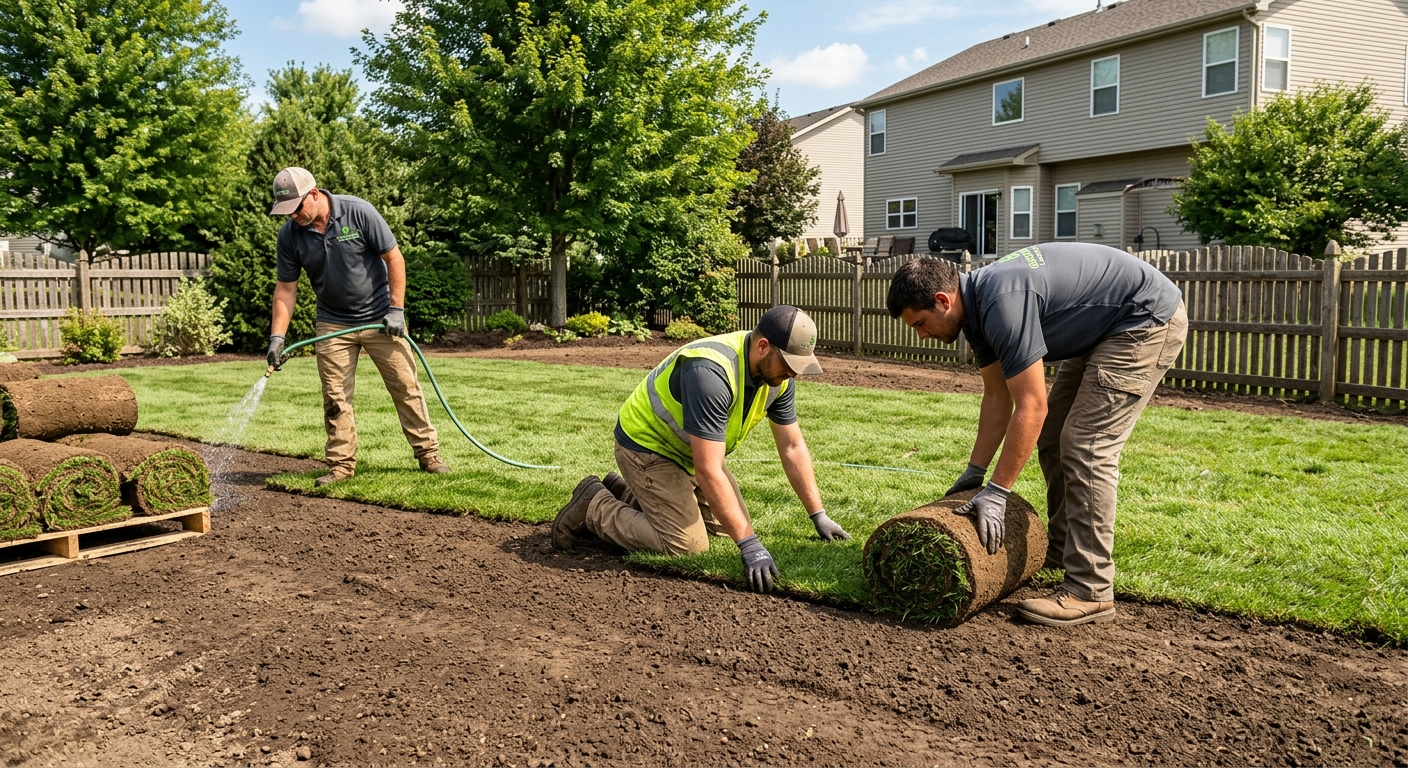
Landscaping options and costs in Carrington
Carrington homeowners typically look at landscaping the same way they look at home upgrades: as an investment that protects what’s already built and improves day-to-day enjoyment. With a population of 2,750 (Statistics Canada, 2021 Census), Carrington is small enough that contractor scheduling can tighten quickly when multiple projects hit at once, especially around late spring. Most residents with yard space also prefer curb appeal and practical outdoors—another reason landscaping demand is steady in mature neighbourhood pockets like the Westvale Drive area, where lots tend to support both softscaping and hardscape additions.
In the Calgary region (Prairie zones 3–4), the season is shorter and freeze–thaw is severe. That means base prep for patios, walkways, and retaining walls must be deep and well compacted, with proper drainage to reduce heaving. It also shapes plant choices: you’ll generally get better long-term results from cold-hardy, drought-tolerant varieties rather than lush, water-hungry palettes. Labour availability and material lead times can swing your total cost as crews move between sites across Calgary and nearby communities. In practice, comprehensive projects commonly land in the mid five-figures once grading, hardscape, planting, and irrigation are included—especially when excavation and drainage tie-ins are required. If you’re budgeting, that’s why you’ll see wide bands for “design and install” work versus straightforward lawn upgrades.
Below is a realistic comparison of common landscape scopes in Carrington to help you match your budget to the right level of work.
| Service |
Description |
Season |
Price Range |
| Full landscape design and installation |
Site visit + concept plan, grading considerations, base prep, hardscape, planting, soil amendments, and (where included) irrigation layout/installation |
Late spring to early fall |
$5,000–$50,000 |
| Sod installation (supply, grade, lay, roll) |
Minor grading, soil amendments, sod supply, installation, rolling, and initial watering plan |
May to September (best results before the hottest weeks) |
$1,500–$6,000 |
| Lawn seeding (grade, seed, starter fertilizer) |
Light grading, seed selection, starter fertilizer, seeding, and establishment watering guidance |
April/May and late summer (weather-dependent) |
$900–$4,000 |
| Interlocking patio or walkway |
Excavation, compacted base, polymeric sand, edging, and pattern layout |
May to September |
$8,000–$22,000 |
| Retaining wall (interlocking block) |
Wall layout, excavation, engineered-style drainage considerations, base/compaction, blocks, and weep/drainage components |
May to September |
$8,000–$40,000 |
| Tree and shrub planting |
Soil prep, mulch, plant placement, staking/anchoring where needed, and establishment watering guidance |
Spring and early fall |
$800–$15,000 |
Prices are estimates only and vary by project scope, site access and material selection.
What affects the price of landscaping in Carrington
In Carrington and across the broader Calgary market, quotes for the “same” landscaping job can vary by 30–50% because the scope often hides the expensive parts: excavation depth, base preparation, drainage design, and how many labour hours it takes to do it correctly within a short season. Even when you request similar deliverables, contractors may propose different plant tiers, different base thicknesses, or different irrigation approaches—each choice directly changes both materials and labour.
Prairie plant hardiness zones 3–4 and the local frost calendar strongly affect both what grows and what your contractor can install. Retaining walls, patios, and walkways need deep, well-compacted bases to survive freeze–thaw. In practical terms, that often means more truckloads of gravel and more time on compaction. In addition, short growing seasons push people toward cold-hardy, wind-tough species and smart irrigation (zoned systems and soil improvement rather than “just add more water”).
For example, a small grade correction for lawn leveling may look modest, but if drainage must be re-routed to prevent pooling, you can see a step-up that moves a job from the lower part of the interlocking range into the mid range. Similarly, sod can cost significantly more than seeding—often 3–4 times per square foot—so the sod line item can quickly escalate if the yard area is large. On the other hand, a focused tree and shrub planting using smaller plants may stay closer to the $800–$15,000 planting band, especially if there’s minimal excavation.
Concrete local impacts in Carrington include: (1) older home lots with mature trees can require extra time for stump grinding or careful root disturbance; (2) sloped lots or downspouts near foundations frequently trigger drainage beds or French drains; and (3) severe freeze–thaw means patios that skip base depth are more likely to fail, so reputable crews price base prep upfront rather than “hope it settles.” With average labour costs making up roughly 40–60% of full projects, these site realities are what separate a budget bid from a long-lasting one.
| Price Factor |
Why It Matters |
Cost Impact |
| Yard size in sq ft — the primary cost driver for softscape |
More area means more soil amendments, more seed/sod, more labour, and more irrigation coverage |
Can change total softscape by 2x+ between small and large yards |
| Grading and drainage work — slope corrections add significant cost |
Correct slopes protect foundations and prevent pooling during melt or heavy rain events |
Often adds thousands when excavation and re-shaping are required |
| Drainage bed or French drain installation |
Helps manage water movement where soils stay saturated, reducing frost-related heaving risk |
Typically increases project totals noticeably due to excavation, stone, and labour |
| Plant material tier — native shrubs vs. ornamental vs. mature specimen trees |
Mature specimens cost more and take more time to install safely; native options often establish faster |
Can swing a planting budget by several thousand depending on size and quantity |
| Hardscape vs. softscape ratio — walls and patios cost more per sq ft than lawn |
Hardscape requires base materials, compaction time, and skilled layout/edge work |
Moving from mostly lawn to mostly stone can raise costs quickly |
| Irrigation system design and installation |
Zoning, layout, controllers, and freeze-resistant components add cost but improve survival rates |
Commonly adds a meaningful line item to full landscape projects |
| Soil amendment and topsoil required |
Compacted or poor soils reduce root growth; amendments improve establishment in short seasons |
Costs increase with soil volume and delivery distance |
| Tree removal or stump grinding before new planting |
Clearing increases labour and disposal needs; hidden obstacles slow crews |
Can add thousands, especially with larger stumps and complex access |
Permits & regulations in Alberta
In Alberta, most planting, sodding, and typical softscape work does not require a permit. That includes tasks like seeding, laying sod, planting trees and shrubs, installing mulch beds, and building low-profile garden features. Where things often trigger permits is when you cross into retaining walls and site-drainage changes.
Work that typically DOES require a permit includes retaining walls above a municipal threshold—commonly around 1.0 m (3.3 ft) in many areas—because those can affect structural safety and drainage. Also consider permits if you’re doing significant lot grading that changes how water drains toward a neighbour or toward a storm connection, especially where drainage patterns can create off-site impacts. If your project involves excavating for wall footings or trenching for drains, always arrange utility locates before digging.
Work that typically does NOT require a permit includes planting holes for small to medium shrubs and trees (with locates), adding topsoil and mulch, and most patio/walkway work under typical conditions—though local rules can vary depending on exact scope, height, and proximity to services.
For your Carrington project, verify a contractor’s Alberta credentials step-by-step: (1) ask for their licence details and check the relevant online registry for validity; (2) request a current certificate of insurance (liability) naming you as an interested party if required; and (3) confirm WSIB/WCB coverage paperwork is active—ask for clearance letters or account evidence, not just verbal confirmation. Reliable contractors won’t hesitate to provide documents before you sign.
Planning a landscape that thrives in Carrington's climate
Planning in Carrington means designing for the realities of Prairie zones 3–4: short growing windows, windy conditions, and severe freeze–thaw that punishes weak drainage. Start with plant selection that matches your yard’s exposure. Choose zone-appropriate, cold-hardy and drought-tolerant varieties (plus wind protection where needed), and consider native or near-native shrubs and perennials that establish reliably with less watering and less winter drama. If you’re hoping for “lush,” keep in mind southern Alberta can turn irrigation into a cost and a headache during restrictions—so soil health and efficient irrigation layout matter more than volume.
When comparing sod vs. seed, sod gives instant visual payoff but costs more and still needs proper base prep. As a rule of thumb, sod can be roughly 3–4x more per sq ft than seeding in similar conditions. A practical example: if a 500 sq ft area is being refreshed, seeding might fit a budget closer to the lower end of lawn work, while sod could push the project into the higher lane—often justified when you need fast use of a play area or you’re correcting erosion and want a quick, stable root mat. If you don’t need immediate coverage, seeding and soil amendment can deliver a strong result with less upfront expense.
In Calgary, drainage and grading are not optional. Build slopes away from foundations, and use proper base preparation for hardscape so frost doesn’t lift pavements. Low-maintenance strategies like mulched shrub borders, groundcovers, and layered perennials reduce annual upkeep while maintaining curb appeal. For a more water-smart design, consider xeriscape planting zones and a rain-garden-style pocket that helps manage stormwater runoff without relying on constant irrigation.
| Element |
Climate Consideration |
Maintenance Level |
Price Band |
| Sod lawn installation |
Needs good base prep and consistent early establishment before cold snaps |
Medium (watering schedule during establishment) |
$1,500–$6,000 |
| Native perennial garden |
Cold-hardy species handle winter; fewer replantings after freeze–thaw |
Low to medium (spring cleanup, occasional weed control) |
$2,500–$9,000 |
| Mulched shrub border |
Mulch moderates soil temperature and reduces moisture loss in wind |
Low (mulch refresh and pruning) |
$1,800–$7,500 |
| Interlocking stone patio |
Requires deep compacted base to resist heaving |
Low (occasional leveling/edge checks) |
$8,000–$22,000 |
| Retaining wall (block) |
Base depth and drainage behind the wall are critical in freeze–thaw |
Low (periodic inspection of drainage outlets/weep areas) |
$8,000–$40,000 |
| Drip irrigation system |
Supports drought-tolerant plantings with targeted watering and wind-appropriate coverage |
Low (seasonal checks, controller updates) |
$2,000–$8,000 |
How to choose a landscaping contractor in Carrington
Choosing the right contractor in Carrington starts with documentation and clarity. First, verify Alberta coverage: ask for their liability insurance certificate (and confirm it’s current), and request proof of WSIB/WCB coverage—don’t accept “we’re covered” without paperwork. For licensing, ask which Alberta registrations apply to their scope and check it through the appropriate online registry before work starts. If a contractor can’t provide documents quickly, that’s a warning sign.
Next, get 2–3 itemised, written quotes rather than lump sums. You want a breakdown that shows labour vs. materials, excavation quantities, base depth assumptions, soil/topsoil amounts, and what’s included for disposal. Clarify whether a permit pull is included (for items like higher retaining walls) and whether drainage work connects to existing downspouts or only addresses surface grading. Good contractors also list exclusions: what’s not being removed, what trees or roots are out of scope, and whether rock/surface surprises are billed as change orders.
For warranty, ask for two pieces: the workmanship warranty length (how long they stand behind installation) and any manufacturer warranty on products like pavers, blocks, turf components, or irrigation parts. Confirm whether warranties transfer to a new homeowner if you sell. Payment schedule matters too: never pay more than 10–15% upfront; hold back a portion until completion and touch-ups are done. Finally, get the start date and estimated completion date in writing, including weather contingencies common to Prairie freeze–thaw windows.
- Ask for proof of liability insurance and WSIB/WCB coverage before signing.
- Verify their Alberta registration/licence details online for the exact legal name on the quote.
- Get an itemised quote: labour, materials, excavation/base depth assumptions, and disposal.
- Confirm if utility locates are included and who orders them.
- Require a written scope for grading and drainage (slopes, outlet direction, tie-ins).
- Specify base prep: compacted thickness and material type under patios/walks/walls.
- Clarify plant lists and sizes (container size/caliper) and whether substitutions are allowed.
- Check whether irrigation is part of the scope and if it’s zoned/freeze-aware.
- Request a workmanship warranty in writing (not just “we’ll fix it”).
- Understand payment schedule: 10–15% max upfront; holdback until final walk-through.
- Make sure timelines include realistic limits for late-spring frost risk and cold snaps.
- Review how change orders are priced (pre-agreed rates vs. “as quoted”).
Red flags in the Carrington market: (1) vague quotes with no base depth or drainage details; (2) refusing to provide insurance/WSIB documentation; (3) demanding large upfront payments beyond 10–15%; (4) promising “we’ll start anytime” without weather-limited scheduling; and (5) no written timeline or warranty terms.
Frequently asked questions — landscaping in Carrington
What trees grow best in Carrington's climate zone?
In Carrington (Prairie zone 3–4 conditions), you’ll generally have the best long-term success with hardy, wind-tolerant trees that handle winter cold and freeze–thaw. Homeowners commonly do well with species like Manitoba maple (choose wisely for placement), Amur chokecherry, and certain varieties of spruce and pine that tolerate cold snaps and UV exposure. If you’re planting near walkways or foundations, match mature size to the space and plan root-safe placement—contractors should discuss setbacks and soil conditions before digging. Because Carrington has a smaller local population (2,750; Statistics Canada, 2021 Census), appointment availability can be tighter in peak spring, so locking in your tree order early helps avoid delays. A typical planting scope (tree and shrubs) often falls into the $800–$15,000 band depending on quantity and size.
How much does sodding a yard cost in Carrington?
Sodding cost in Carrington usually depends on yard size, how much grading is required, and how much soil amendment is needed for a stable base. For most typical residential upgrades, sod installation falls into about $1,500–$6,000 when you’re working within common lot access and a straightforward base prep. If your lawn area needs major re-grading to fix slope or drainage toward the foundation, your quote can move upward because excavation and drainage materials add time. In freeze–thaw conditions around Calgary, a “quick” sod install without the right base often fails sooner, so reputable crews will invest in compaction and proper underlayment. If you only need cosmetic refresh and can accept slower establishment, seeding is often less expensive than sod.
How do I prevent weeds in my Carrington garden?
Weed control starts before planting. In Carrington, the combination of wind, short growing seasons, and freeze–thaw means bare soil gets colonized quickly, especially on borders that don’t yet have dense canopy. The best approach is soil preparation plus barrier materials: remove existing weeds and roots, loosen compacted soil, then add a quality mulch layer (not thin “dusting”). For shrub borders, keep mulch 1–2 inches away from stems to avoid rot. If you’re installing perennials, consider landscape fabric only where appropriate (e.g., between mulch layers) and rely on coverage plus correct plant spacing for long-term suppression. A well-designed border that includes groundcovers reduces weed space. Expect that weed suppression is part of the “installation” mindset, not something you do once—so ask your contractor what’s included for preparation and mulch depth in the quote.
How do I design a low-water yard in Carrington?
To design a low-water yard in Alberta near Calgary, focus on matching plants to site exposure and using water efficiently. Start with zone-appropriate, drought-tolerant species and add wind protection where needed—wind-driven evaporation is a major factor here. Build healthy soil (topsoil and amendments) so roots grow deeper and plants need less frequent watering. Consider xeriscape principles: group plants by water needs, use mulched beds instead of turf, and add groundcovers and perennials that form a protective layer over soil. For irrigation, a zoned drip system is usually the most efficient option because it targets roots rather than spraying leaves; it also supports timed watering schedules. If your project includes sod, note that sod can be substantially more costly than seeding and still requires establishment watering. For budgeting, many homeowners shift from all-lawn to a mixed planting plan to keep totals in the mid five-figure range rather than pushing toward hardscape-heavy costs.
How do I find a licensed landscaper in Carrington?
In Carrington and across Alberta, “licensed” can mean different things depending on the contractor’s scope, so the safest route is to verify three items: (1) their Alberta registration/licence details for the legal business name they’ll use on your contract; (2) current liability insurance, with a certificate of insurance you can review; and (3) WSIB/WCB coverage evidence. Ask the contractor to provide documents before work starts—reputable companies typically provide certificates immediately. Then, check the online registry for licence validity if applicable to their trade category and confirm the coverage is active for the project period. You should also ask how they handle utility locates before digging planting holes or wall footings. With Carrington’s tight season windows, choosing a properly insured contractor helps protect you if the schedule slips or if unexpected underground services are encountered.
How much does landscaping cost in Carrington?
Landscaping costs in Carrington vary widely because the biggest drivers are yard size, grading/drainage needs, base prep depth for hardscape, and the plant tier (native vs. ornamental vs. mature specimens). Many residential “full” makeovers across the Calgary area land in the mid five-figures once grading, hardscape, planting, and irrigation are included. If you’re planning a specific component, the ranges are easier to manage: sod installation typically sits around $1,500–$6,000, while interlocking patios and walkways often fall into the $8,000–$22,000 range. Retaining wall projects can run $8,000–$40,000 depending on height, excavation, and drainage. Tree and shrub planting commonly falls into $800–$15,000. In Prairie zones 3–4, correct drainage and deep, compacted bases add cost, but they’re what prevent heaving and early failures.