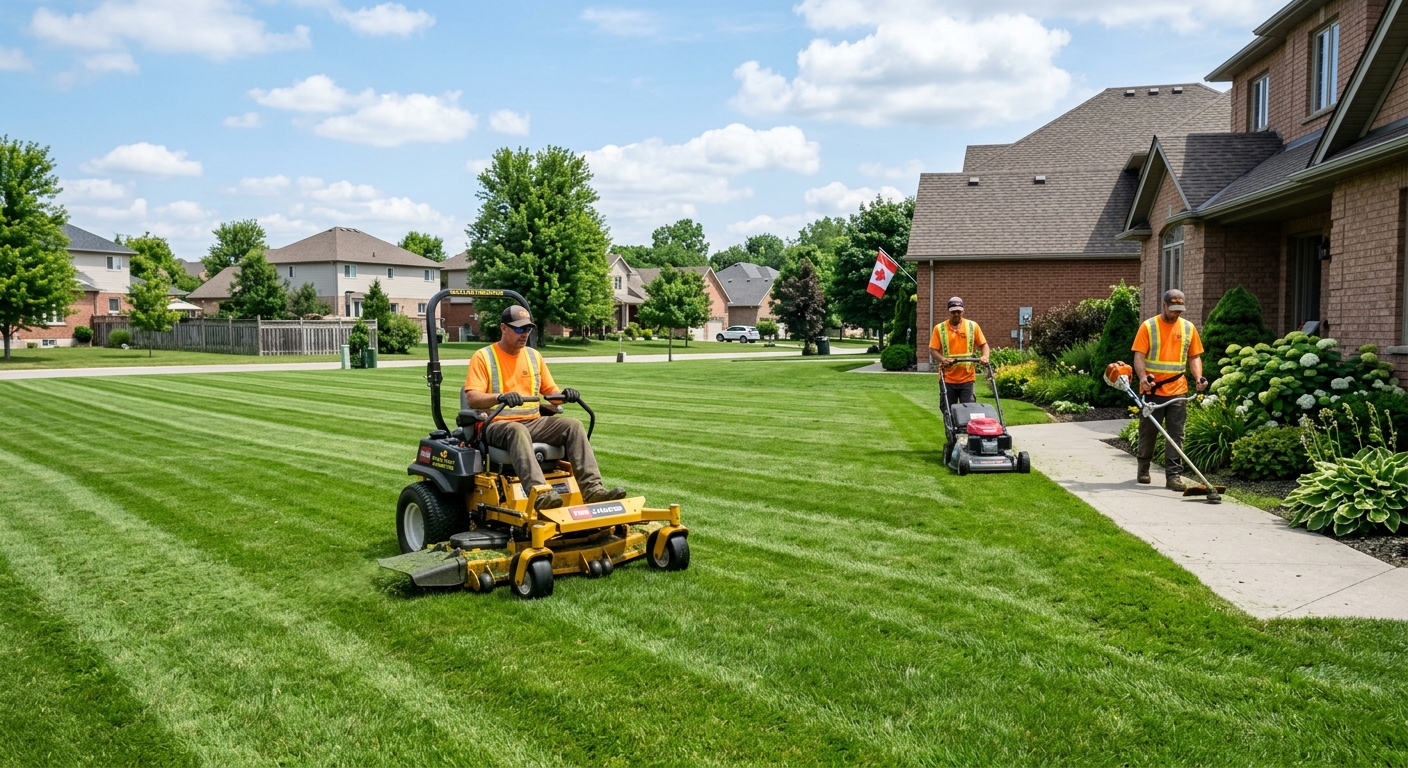
Landscaping options and costs in Empire Park
Empire Park, Alberta is where a lot of homeowners want “nice curb appeal” quickly—but our short window for outdoor work and our hard freeze–thaw cycles mean the best results come from choosing the right scope and building it properly from the ground up. With Empire Park at 5,176 people (Statistics Canada, 2021 Census), our local contractor availability can tighten in peak spring weeks, especially in established pockets where families are still adding to mature lots. Most households also have enough private yard space to invest; that matters because softscape (plants and turf) and hardscape (patios, walkways, retaining walls) are usually bundled together for a cohesive look rather than piecemeal upgrades.
In Calgary and surrounding communities, landscaping pricing is shaped by Prairie plant hardiness zones 3–4, late-spring frosts, and early fall cold snaps. If water pools near a foundation, you can get long-term moisture issues and heaving around walkways—so deep, well-compacted bases and drainage are not optional. Labour typically represents about 40–60% of a full project, and comprehensive work in areas like Saddleridge-style infill neighbourhoods and similarly older, more established streets in Empire Park tends to land in the mid five-figure range once grading, hardscape, planting, and irrigation are included.
Below are common project types and typical price bands you’ll see for Empire Park estimates—then you can compare what each contractor includes before signing.
| Service |
Description |
Season |
Price Range |
| Full landscape design and installation |
Site visit, grading/drainage concept, planting plan, hardscape layout, materials take-off, installation (hardscape + softscape + optional irrigation) |
Late April to October |
$8,000–$45,000 |
| Sod installation (supply, grade, lay, roll) |
Soil prep, grading, topsoil/compaction, sod delivery and placement, rolling, starter irrigation setup |
May to early September |
$2,000–$6,000 |
| Lawn seeding (grade, seed, starter fertilizer) |
Light grading, seeding, starter fertilizer, light mulch (where appropriate), early watering guidance |
May to early July (or late August in some cases) |
$1,500–$4,500 |
| Interlocking patio or walkway |
Excavation, base (often granular and compacted), edging, paver installation, joint sand, cleanup |
May to October |
$8,000–$30,000 |
| Retaining wall (interlocking block) |
Wall layout, excavation, geotextile, compacted base, block installation, drainage behind wall |
May to October |
$10,000–$40,000 |
| Tree and shrub planting |
Soil amendment, planting pits, root ball placement, staking (as needed), mulching, initial watering plan |
April to October (depending on thaw) |
$1,200–$15,000 |
Prices are estimates only and vary by project scope, site access and material selection.
What affects the price of landscaping in Empire Park
In Calgary and across Alberta, quotes for the same “visual” job can vary by 30–50% because contractors price the unseen work: base depth, drainage corrections, soil improvement, and how much hand-labour is needed to fit the design into real lots. Two yards can both “need a patio,” but one may already have firm grade and adequate fall away from the home, while another has clay that holds water and requires deeper excavation and a drainage bed.
Our hardiness zone 3–4 and the practical frost window drive both what grows and what crews can safely install. Prairie regions face short growing seasons and quick weather swings, so crews plan around cold snaps and spring thaw. Keeping the retaining-wall base below the frost line typically means more excavation and more compacted granular layers. By contrast, coastal BC (zone 7–8) allows longer planting seasons and broader palettes, but heavy rain areas make drainage design and erosion control the main cost driver. In the dry BC interior, restrictions push efficient irrigation design and soil improvement. Southern Ontario (zone 5–6) usually has a longer season than Calgary but still needs irrigation planning during summer dry spells.
In Empire Park, pricing changes fast with three common conditions. First, if your lot needs regrading to create proper runoff away from foundations, the drainage work can push a lawn-only estimate toward the mid-range of sod or even into larger design & installation scopes (for example, a basic sod refresh at $2,000–$6,000 can become a bigger project if topsoil is stripped and rebuilt). Second, if you’re moving from seed to sod for instant coverage, sod can cost materially more per square foot, but it’s often justified when you need quick visual results before events or resale. Third, mature tree planting increases labour and material handling; a small shrub border might stay near the planting band ($1,200–$15,000), while larger specimen trees push costs upward due to equipment and staking.
| Price Factor |
Why It Matters |
Cost Impact |
| Yard size in sq ft — the primary cost driver for softscape |
More area means more labour hours, materials (seed/sod/topsoil), and cleanup time |
High variability; often the biggest multiplier across quotes |
| Grading and drainage work — slope corrections add significant cost |
Correcting fall away from the home and sidewalks prevents pooling and heaving |
Can increase softscape or patio projects substantially |
| Drainage bed or French drain installation |
Subsurface drainage manages freeze–thaw moisture and reduces foundation risk |
Medium to high impact depending on length and outlet |
| Plant material tier — native shrubs vs. ornamental vs. mature specimen trees |
Supply cost, delivery size, and installation labour increase with larger caliper/root balls |
Low tier stays near typical planting bands; specimens raise totals |
| Hardscape vs. softscape ratio — walls and patios cost more per sq ft than lawn |
Patios and blocks require deeper excavation, compacted bases, and precise alignment |
Often shifts the project from “mid” to “upper” price ranges |
| Irrigation system design and installation |
Zoned heads, trenching, and controller setup affect both cost and long-term success |
Medium impact, higher when drainage lines and multiple zones are needed |
| Soil amendment and topsoil required |
Clay-heavy soils need improvement for root establishment before winter |
Medium impact; can be a major driver on new infill lots |
| Tree removal or stump grinding before new planting |
Removal/disposal and proper stump grinding prevent future regrowth and uneven settling |
Low to high depending on size, access, and disposal |
Permits & regulations in Alberta
In Alberta, most typical landscape work—like planting, sodding, and routine softscape installation—generally does not require a permit. For Empire Park homeowners, that usually means you can plan yard improvements such as seeding, laying sod, installing garden borders, and planting trees and shrubs without a municipal permit.
Where permits do come into play is typically with retaining walls above a height threshold (commonly 1.0 m in many Alberta municipalities) and any work that changes the structural or drainage profile of the property. Retaining walls at or above that threshold often require a building permit and sometimes engineered drawings. Also, if your grading changes how water flows—especially where it affects drainage toward neighbouring properties or directs runoff toward storm connections—approval requirements may apply.
Before anyone digs, confirm utility locates. Even for planting holes, wall footings, and irrigation trenches, you should have utilities marked to avoid service strikes. Finally, check watering and water-use rules where applicable; during drought conditions, smart controllers, zoned drip systems, and soil-first strategies help you stay within restrictions and keep plants alive through hot spells.
How to verify your contractor (step-by-step): (1) Request their contractor information and check their Alberta business licence/registration where applicable via the provincial registry or the contractor’s stated registration details. (2) Ask for a Certificate of Insurance and confirm liability coverage is current and lists the correct named insured. (3) Verify WSIB/WCB coverage using the clearance letter or current account status they provide. (4) Keep a copy of the insurance certificate and clearance documentation with your contract.
Planning a landscape that thrives in Empire Park's climate
To plan a yard that thrives in Empire Park, Alberta, you want to work with our zone 3–4 reality: late-spring frosts, early fall cold snaps, and intense freeze–thaw cycles that punish poor bases and standing water. Start with plant selection—choose cold-hardy, wind-tolerant varieties that establish quickly and don’t demand constant watering. Native and zone-appropriate shrubs and perennials usually perform better because they’re adapted to our temperature swings and shorter growing windows.
Next, decide between sod and seed. Sod looks “finished” sooner and gives instant coverage, but it typically costs about 3–4x more per sq ft than seeding when you account for supply and labour density. Seeding can be the smarter value in larger lawns where you can tolerate green-up over the season. If you need fast coverage before a major event or for resale, the price difference is more justified.
For Calgary’s drainage-driven climate, grading and drainage are essential. Pooling water near foundations increases moisture risk and can worsen heaving around patios and walkways. When building patios, retaining walls, and walkways, base preparation must reach a depth and compaction level that survives winter expansion—otherwise you’ll see uneven joints and movement. Finally, low-maintenance design strategies—mulch beds, groundcovers, perennial structure, and well-spaced shrubs—reduce annual upkeep without sacrificing curb appeal. If you’re aiming to cut water use, xeriscaping and rain-garden concepts can work well here: pair deeper-rooted plants with smart irrigation zoning and soil improvement rather than relying on heavy turf watering.
Practical example: if you’re comparing a lawn refresh, a basic seeding project might land around $1,500–$4,500, while full sod coverage may come closer to $2,000–$6,000 depending on area and site prep. If the grading is already solid and you just need coverage, seeding is often the value play; if the site is thin or you need immediate visual results, sod can be worth the premium.
| Element |
Climate Consideration |
Maintenance Level |
Price Band |
| Sod lawn installation |
Needs warm soil for rooting; vulnerable if laid too close to late frosts |
Medium (watering for establishment, then routine mowing) |
$2,000–$6,000 |
| Native perennial garden |
Cold-hardy structure survives winter better; shorter season rewards strong early planting |
Low to medium (mulch refresh, light pruning) |
$1,200–$7,500 |
| Mulched shrub border |
Mulch moderates soil temperature swings and helps hold moisture through dry stretches |
Low (weed suppression, occasional shaping) |
$1,000–$8,000 |
| Interlocking stone patio |
Requires deep, compacted base to handle freeze–thaw movement and prevent settlement |
Low (occasional joint sand/top-up) |
$8,000–$30,000 |
| Retaining wall (block) |
Needs drainage behind the wall and a frost-resistant base to avoid heaving |
Low (periodic inspection, drainage check) |
$10,000–$40,000 |
| Drip irrigation system |
Zoned delivery reduces water waste and supports drought-tolerant planting |
Low (seasonal adjustments and controller setup) |
$2,500–$10,000 |
How to choose a landscaping contractor in Empire Park
Choosing the right contractor in Empire Park starts with verifying Alberta coverage and then demanding clear paperwork. For licensing, ask the contractor for their Alberta business registration details and confirm the information matches the company on the quote. For liability insurance, request a Certificate of Insurance showing current coverage and ask what they list for named insured and coverage limits. For workers’ coverage, verify WSIB/WCB using their clearance letter or status confirmation—don’t rely on verbal promises.
Next, get 2–3 itemised written quotes. You want labour and materials separated (base prep, excavation, disposal, pavers/blocks, seed/sod, topsoil, mulch, plant material, irrigation components). Avoid lump-sum quotes that only state “landscaping and installation” without quantity or scope. Read exclusions carefully: is site restoration included, is disposal of excavated material included, are utility locates included, and is turf replacement beyond the work area included?
Warranty matters in a freeze–thaw climate. Ask for a workmanship warranty length (for example, for interlocking stone settlement or drainage performance) and whether the product warranty is manufacturer-backed and transferable. Finally, payment schedule is critical: never pay more than 10–15% upfront. Use a holdback until completion and a walkthrough-based sign-off.
Timeline should be written: include a start date, weather contingency language, and an estimated completion window. In our short Prairie season, that’s often the difference between plants establishing well and “late fall planting” stress.
- Provide Alberta business registration details and ensure the quote is in the same company name.
- Show current Certificate of Insurance (liability) and confirm it covers the scope.
- Submit WSIB/WCB clearance letter (or status confirmation) before work begins.
- Get 2–3 itemised quotes with quantities, not only totals.
- Confirm whether excavation, disposal, and topsoil/top-up are included.
- Ask how they manage drainage (fall away from house, French drain details if needed).
- For patios/walkways: confirm base depth, compaction method, and edging.
- For retaining walls: confirm geotextile, drainage behind wall, and block leveling method.
- For planting: ask about soil amendment type and how they size and space plants.
- For sod/seed: confirm timing recommendations and watering/setup responsibility.
- Confirm warranty terms for workmanship and whether plant/product warranties apply.
- Schedule a site walkthrough before final payment; request a final punch list.
Red flags to watch for in Empire Park: (1) quotes that don’t mention drainage/grading details but assume “it’ll settle fine”; (2) no documentation for insurance and WSIB/WCB clearance; (3) payment requests exceeding 10–15% upfront; (4) no written timeline or weather contingency; and (5) vague warranties with no length or coverage scope.
Frequently asked questions — landscaping in Empire Park
When is the best time to landscape in Empire Park?
In Empire Park and the broader Calgary area, the best window is typically late April through October, but success depends on thaw and soil conditions. For planting trees, shrubs, and perennials, aim for early spring after thaw when crews can dig without destroying soil structure, and again in summer if temperatures aren’t extreme. For sod, plan for May to early September so the grass can root before early fall cold snaps and late frosts. Seed is often best in late spring or early summer when germination stays consistent. Because freeze–thaw cycles are severe, patio base work and retaining-wall construction should be planned for stable weather so compaction isn’t undermined. (Statistics Canada, 2021 Census)
Do I need a permit for a retaining wall in Alberta?
In Alberta, many softscape tasks (planting, sodding, most landscaping changes) generally don’t require a permit, but retaining walls are the common exception. If the wall is above a typical threshold—often 1.0 m in many Alberta municipalities—expect that a building permit may be required, sometimes with engineered drawings. Also, if your wall project changes lot grading or directs drainage toward neighbouring properties or storm connections, you may need additional approval. For Empire Park homeowners, the practical approach is to ask your contractor to confirm permit responsibility in writing before excavation. Even when a permit isn’t required, utility locates should be done prior to digging footings and drainage trenches.
How do I improve drainage in my yard?
Drainage improvements start with observation: where does water pool after rain, and does it track toward your foundation or sidewalks? In Empire Park’s freeze–thaw climate, pooling water can contribute to heaving around hardscape, so corrections matter. Common solutions include regrading to create consistent fall away from the home, installing a drainage bed or French drain, and ensuring downspouts discharge away from vulnerable spots. If you’re adding a patio, the base should be properly built so joints don’t trap water and freeze. If you’re within a larger project scope, drainage often blends into full design & installation work that may fall around $8,000–$45,000 depending on the extent of excavation and outlet complexity.
What is xeriscaping and does it suit Empire Park?
Xeriscaping is a water-smart landscaping approach that uses drought-tolerant plants, soil improvement, mulching, and efficient irrigation (often drip) to reduce water demand. In Empire Park, it suits the semi-arid Prairie reality of shorter seasons and periodic watering restrictions and is a strong fit for zone 3–4 hardy plantings. The key is not “no landscaping,” but landscaping that’s drought-tolerant and wind-hardy, with deep rooting and proper spacing. Many clients pair xeriscape beds with a small sod area only where traffic and appearance demand it. Pricing varies, but the drip irrigation line item can shift totals upward; for context, irrigation upgrades often sit in the mid-range of $2,500–$10,000 depending on zones and trenching length. Done well, it lowers ongoing watering and helps plants survive chinook-driven dry spells.
How do I plan a low-maintenance yard?
A low-maintenance yard in Empire Park is planned for winter survival and fewer seasonal tasks. Choose shrubs and perennials that are cold-hardy and structurally sound so they don’t require constant replanting after storms and cold snaps. Use mulched shrub borders and groundcovers to reduce weeds, and keep turf only where it’s truly needed. For seasonal upkeep, focus on mulch refresh, light pruning, and weed control rather than frequent regrading or re-seeding. Drainage and base prep are part of low maintenance too—if patios and walkways are built correctly, you avoid recurring repairs. If you’re working within a budget, seeding can be a value step (often $1,500–$4,500), while a mature, well-placed shrub and perennial structure can hold its look for years. The best results come from grouping plants by water need and hardiness rather than mixing everything.
How deep should a retaining-wall base be for local frost?
In Empire Park and across Calgary’s Prairie climate, retaining-wall bases must be constructed to resist freeze–thaw movement. While the exact depth depends on wall height, soil conditions, and engineering requirements (especially if permits apply), the rule of thumb is that the base must be set below frost-affected movement and built with properly compacted granular layers. That usually means more excavation than homeowners expect, plus geotextile and drainage behind the wall so water doesn’t build up and freeze. A professional contractor will assess soil and wall design before committing to a depth. If you’re budgeting, retaining walls typically fall around $10,000–$40,000 based on length, wall height, and drainage needs—accurate base and drainage design is what protects the wall long-term.