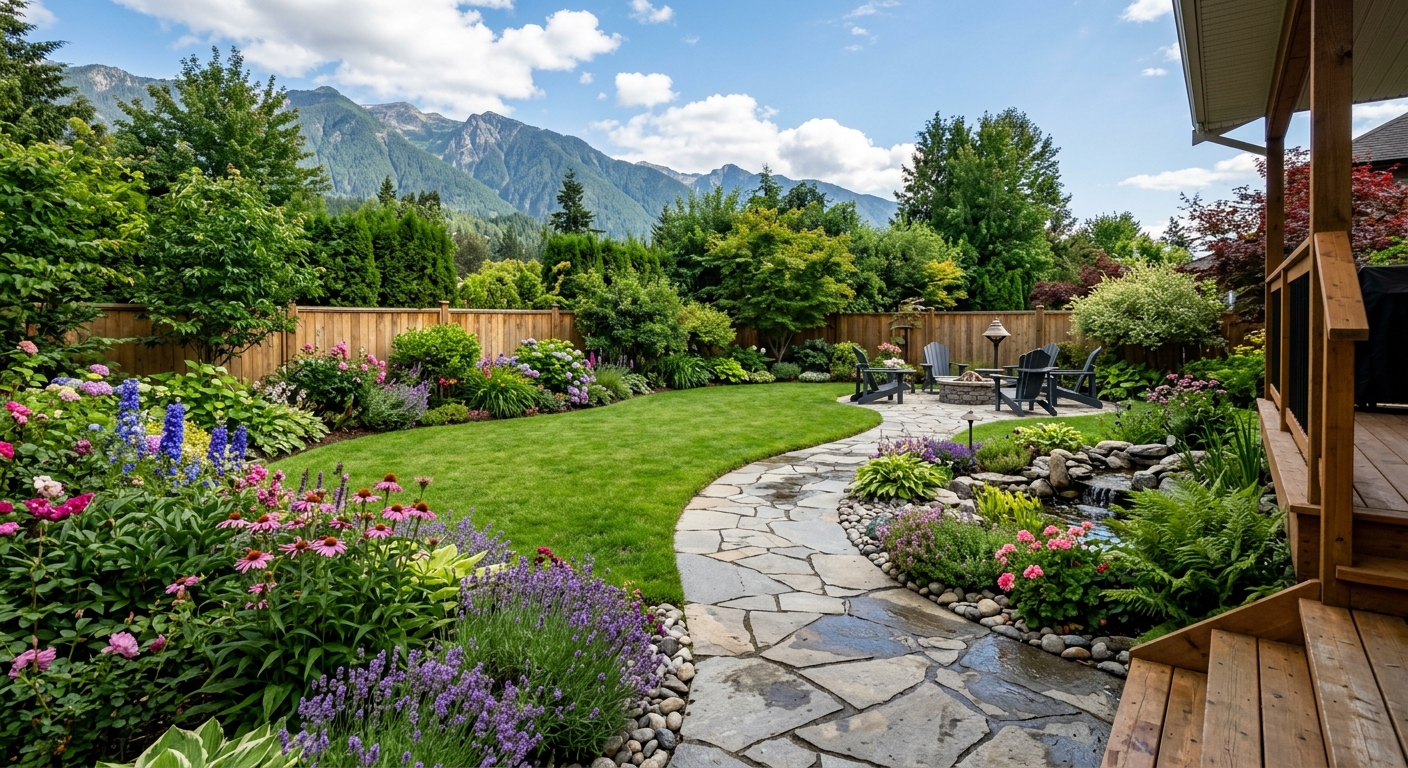
Landscaping options and costs in Lee Ridge
Lee Ridge, Alberta is a great place to invest in a yard, but your landscaping plan has to respect chinooks that swing temperatures fast and the hard freeze–thaw cycles that can heave poorly built edges. With a 2021 population of 2,741 (Statistics Canada, 2021 Census), the local owner-operator trades and small landscape crews are busy during the short workable window, so earlier scheduling matters. In Lee Ridge, many detached homeowners have the yard space and ownership motivation to upgrade softscape and curb appeal over time; at the same time, the Calgary-area market regularly pushes comprehensive projects into the mid five-figure range once grading, hardscape, planting, and irrigation are included.
In practice, Calgary’s Prairie plant hardiness zones 3–4, late-spring frosts, and early fall cold snaps shape both what survives and how long contractors can work on site. Severe freeze–thaw also means patios, walkways, and retaining wall bases need deep, well-compacted construction with proper drainage—those details drive labour and material use. Because labour typically represents 40–60% of a full project, the contractor’s crew size, access constraints, and how much excavation is required can swing quotes considerably. This is especially common in busy infill or street-renewal pockets like the older core areas of Lee Ridge, where driveways, fences, and side-yard access limit machine time and disposal routes.
Below is a realistic comparison of common landscape services, so you can line up apples-to-apples when you request your next quote.
| Service |
Description |
Season |
Price Range |
| Full landscape design and installation |
Site meeting, concept + layout, grading/drainage plan, soil improvement, planting, hardscape (as applicable), and irrigation design/installation |
Spring to early fall (freeze-safe base prep where needed) |
$5,000–$50,000 |
| Sod installation (supply, grade, lay, roll) |
Rough grading, soil/compaction adjustments, sod supply and installation, rolling, starter watering plan |
Late spring to early summer (after risk of hard frost) |
$1,500–$6,000 |
| Lawn seeding (grade, seed, starter fertilizer) |
Fine grading, seed selection for the zone, starter fertiliser, light topdressing, and establishment watering schedule |
Early spring or early fall seeding windows |
$900–$3,500 |
| Interlocking patio or walkway |
Excavation, base materials, compaction, paver edging, joint sand, and clean final grading |
Spring to fall (avoid wet base conditions) |
$8,000–$28,000 |
| Retaining wall (interlocking block) |
Excavation, engineered base strategy where required, drainage layer, geotextile, and block installation |
Spring to early fall |
$8,000–$40,000 |
| Tree and shrub planting |
Soil amendment, planting holes, staking (as needed), mulch rings, and establishment watering plan |
Spring and fall (best for rooting) |
$800–$15,000 |
Prices are estimates only and vary by project scope, site access and material selection.
What affects the price of landscaping in Lee Ridge
You can absolutely see 30–50% quote swings for what looks like the “same” landscaping job across Calgary and Alberta, and it usually comes down to unseen work: base depth, drainage, soil condition, and how much labour time is required for access and hauling. In Calgary’s zone 3–4 environment, late frosts and early cold snaps limit when crews can excavate and compact. That working-season constraint increases demand for qualified crews, and it also makes scheduling and mobilization costs show up more clearly in quotes.
Zone hardiness and frost timing do two things at once. First, they define what grows: Prairie yards need cold-hardy, wind-tolerant, drought-tolerant species rather than lush, broadleaf-heavy palettes that would struggle. Second, they define how we build: retaining wall base depth generally has to reach below the frost line and drainage has to be engineered to prevent water pressure behind walls. Compared with coastal BC’s longer growing season (zone 7–8), you often pay less in BC for “quick start” planting results, but you still pay for drainage where rainfall is heavy. Alberta is different: freeze–thaw and semi-arid summers usually mean higher emphasis on soil improvement, efficient irrigation design, and robust hardscape bases instead of high-water turf.
Concrete examples in Lee Ridge: (1) If your soil is heavy clay or you have sloped grade toward the house, grading and drainage can add significant cost and can push a mid-range lawn upgrade toward the higher end of the full landscape band (often approaching $5,000–$50,000). (2) A small patio can jump in price if the contractor needs deep excavation and a thicker base to prevent future settlement. (3) Tree and shrub planting costs rise when you choose more mature sizes or need additional soil aeration/compost, and when chinook winds require staking for establishment.
| Price Factor |
Why It Matters |
Cost Impact |
| Yard size in sq ft — the primary cost driver for softscape |
More area means more topsoil, seed/sod, mulch, and labour hours for preparation and establishment |
Can change total cost by 20%–60% depending on acreage and accessibility |
| Grading and drainage work — slope corrections add significant cost |
Calgary-area freeze–thaw makes water pooling a long-term problem; correcting slope protects foundations and paver edges |
Often adds 10%–30% to comparable projects |
| Drainage bed or French drain installation |
Intercepts groundwater and reduces hydrostatic pressure behind walls and under patios |
Commonly adds a noticeable line-item—sometimes another 5%–25% depending on length and outlets |
| Plant material tier — native shrubs vs. ornamental vs. mature specimen trees |
Hardy native stock is usually more affordable; mature specimens and more ornamental varieties cost more and may require staking |
Can swing planting budgets by 30%+ for the same garden footprint |
| Hardscape vs. softscape ratio — walls and patios cost more per sq ft than lawn |
Pavers, base stone, compaction, edging, and disposal drive higher material and labour |
Shifting 100 sq ft from lawn to patio can noticeably move totals within the mid five-figure band |
| Irrigation system design and installation |
Zone-based drip/performance heads prevent winter issues and help meet water-smart expectations |
Often adds 5%–20% depending on number of zones and controller features |
| Soil amendment and topsoil required |
Fixing compaction, clay, or poor topsoil improves rooting and reduces patching costs after establishment |
Typical add-on can range from minor to major based on haul distance and depth |
| Tree removal or stump grinding before new planting |
Impacts prep time, disposal, and sometimes requires protective measures for nearby structures |
Can add several thousand dollars for difficult access or multiple stumps |
Permits & regulations in Alberta
In Alberta, most planting and typical softscape work generally does not require a permit—think lawn seeding/sodding, shrub and tree planting, mulch installs, and routine grading for landscaping. Retaining walls are the common exception. Many municipalities require a building permit when a retaining wall rises above a height threshold—commonly around 1.0 m (3.3 ft)—and some situations may also call for engineering depending on wall height, soil conditions, and surcharge loads.
Changes to lot grading can also trigger approval if they materially affect drainage toward neighbouring properties or connect flow toward storm sewer systems. Before any digging (planting holes, irrigation lines, or wall footings), always call for utility locates so you don’t hit buried services. For water-use rules, check current local guidance and any restrictions during drought conditions—while Lee Ridge homeowners are in Alberta, the wider Calgary region still follows water-smart practices that influence how irrigation is designed.
To verify a contractor for work around Lee Ridge, do this step-by-step: (1) Check the Alberta contractor licensing/registration status through the appropriate government and registry tools (your contractor should be able to provide their business details clearly). (2) Request a certificate of insurance—verify liability coverage limits are adequate for landscaping excavation and hardscape work. (3) Ask for proof of WCB/WSIB coverage (Workers’ compensation). Don’t rely on verbal assurances. (4) Confirm whether they can provide a clearance letter if applicable and ensure the certificate dates align with your project timeline.
Planning a landscape that thrives in Lee Ridge's climate
Designing a yard that thrives in Lee Ridge means working with the Prairie reality of hardiness zones 3–4, wind, and a frost calendar that gives you a limited establishment window. Start with plant selection: choose cold-hardy, zone-appropriate native or adapted perennials and shrubs that handle drought once established. Build in winter protection where it matters—windbreak placement, good mulch coverage around root zones, and avoiding water-hungry plants in exposed beds. Next, decide whether you want sod or seed. Sod gives instant visual results, but in Calgary it’s typically 3–4x more expensive per sq ft than seeding because of material cost, labour intensity, and preparation needs for a clean base. If you’re trying to save money, seeding with a proper grade and starter fertiliser schedule can be the better long-term value—especially for larger lawn areas.
Drainage and grading are non-negotiable in Calgary. Pooling or inconsistent slope can lead to foundation moisture, which then shows up later as paver edge failure or lawn thinning. For hardscape like patios and walkways, proper base preparation to support freeze-safe thickness is what keeps things level through repeated freeze–thaw cycles. Finally, plan low-maintenance structure: groundcovers, mulch, and hardy perennials reduce annual upkeep and mowing while protecting soil from summer drying.
For a typical Lee Ridge homeowner, it’s often worth spending on base prep and a zoned irrigation/drip plan rather than buying high-water plants. For example, if you’re deciding between sod and seeding, a lawn budget that lands closer to $1,500–$6,000 for sod may be justified when you need fast curb appeal—but if you can accept a gradual green-up, seeding often lets you redirect dollars toward drainage fixes that actually protect structures.
| Element |
Climate Consideration |
Maintenance Level |
Price Band |
| Sod lawn installation |
Requires good drainage and a stable grade to survive freeze–thaw and early fall cold snaps |
Medium during establishment; lower after roots take hold |
$1,500–$6,000 |
| Native perennial garden |
Zone-appropriate species handle drought and winter cold with less watering once established |
Low to medium (spring cleanup and occasional weeding) |
$2,000–$12,000 |
| Mulched shrub border |
Mulch moderates soil temps, reduces evaporation, and helps protect roots from wind burn |
Low (refresh mulch and light pruning) |
$800–$8,500 |
| Interlocking stone patio |
Deep, well-compacted base and proper drainage prevent settlement during freeze–thaw cycles |
Low (occasional joint sand top-up) |
$8,000–$28,000 |
| Retaining wall (block) |
Drainage layer and base depth reduce hydrostatic pressure and heaving risk |
Low after construction (visual checks after spring melt) |
$8,000–$40,000 |
| Drip irrigation system |
Zoned drip reduces waste in semi-arid summers and supports frost-safe scheduling |
Low once set up; occasional seasonal adjustments |
$1,200–$7,500 |
How to choose a landscaping contractor in Lee Ridge
Choosing the right contractor in Lee Ridge starts with verifying the basics and then demanding clear, itemised paperwork. First, confirm Alberta licensing/registration status for the business that will do the work, not just a salesperson. Next, request liability insurance and check the certificate of insurance: ensure the named insured matches the contractor you’re hiring, and verify coverage is appropriate for excavation and hardscaping. Finally, confirm WCB/WSIB coverage (or the applicable provincial counterpart) so you’re not exposed if an on-site injury occurs. Don’t accept old documents—ask for current dates and have the contractor email PDFs you can keep.
Get 2–3 itemised written quotes with a labour and materials breakdown. Look for clarity on base prep depth, drainage provisions, topsoil/soil amendment quantities, disposal fees, and whether permits (if applicable) are included. In Alberta, retaining wall permit requirements can change the job scope—so your quote should say explicitly whether permit pulling is included, who pays the fees, and how long approval adds to the schedule.
Warranty matters too: ask for the workmanship warranty length and what it covers (settlement, misalignment, failed base compaction, plant replacement). Confirm product/manufacturer warranty terms for irrigation components and plants, and whether coverage is transferable to you. On payment, keep it safe: never pay more than 10%–15% upfront, and hold back a portion until you’re satisfied with completion and cleanup.
Finally, require a written timeline: start date, key milestones (delivery, base work, planting), and an estimated completion date that accounts for weather interruptions.
- Use a written scope that states what’s included and excluded (haul-away, topsoil depth, edging, disposal).
- Confirm base prep specifications for patios/walkways (stone type, thickness, compaction approach).
- Ask who handles utility locates and when digging starts.
- Require irrigation drawings or a clear head/zone plan for drip systems.
- Check that prices match the service band you’re expecting (lawn vs. full install vs. hardscape).
- Get plant lists with quantities and common/Latin names so substitutions are controlled.
- Request a planting/establishment watering plan specific to Alberta summers.
- Clarify accessibility: confirm how materials will be delivered and where equipment can park.
- Ask for the disposal route or confirm dump fees are included where excavation occurs.
- Review warranty terms in writing (workmanship + product coverage + replacement policy).
- Confirm schedule flexibility and what triggers a change order (weather, unforeseen underground conditions).
- Ensure payment schedule is aligned with milestones and final inspection.
Red flags to watch for in Lee Ridge: contractors who won’t provide insurance or WCB/WSIB documentation, quotes that omit drainage/base prep details, only offering lump-sum pricing with no itemisation, starting work without utility locates, or demanding large upfront payments well above 10–15%.
Frequently asked questions — landscaping in Lee Ridge
How do I prevent weeds in my Lee Ridge garden?
Weed control in Lee Ridge starts before planting: proper site prep, a weed barrier where appropriate, and a well-mulched bed. After grading, we typically remove existing weeds with root-level extraction, then install 2–3 inches of mulch (not bare soil) to reduce light to weed seeds. Using a groundcover layer in bigger zones also helps—bare edges around stones and fence lines are where weeds tend to appear first. For beds near patios and walkways, keep joint sand topped up and avoid washing soil into paver joints during the freeze–thaw season. If you’re comparing budgets, many homeowners spend more effectively by directing dollars toward soil amendment and mulch coverage rather than repeated spot herbicide treatments. When appropriate, a contractor can also recommend pre-emergent timing for Alberta growing conditions, but the foundation is always good prep and coverage.
How do I design a low-water yard in Lee Ridge?
A low-water yard in Lee Ridge is mainly about plant selection, soil structure, and irrigation efficiency—not about removing greenery. Focus on cold-hardy, drought-tolerant species suited for zones 3–4, grouped by sun exposure and wind exposure so each zone gets the right amount. Improve soil first (compost and aeration where needed) so water soaks in rather than running off during spring melt. Then design irrigation with zoning: drip irrigation to tree rings and shrub rows is usually far more efficient than overhead sprinkling, especially in Calgary’s semi-arid summers. Pair drip with a smart controller that can adjust watering by season. If you’re working within a typical landscape scope, you can often keep costs reasonable by using fewer high-water turf areas and investing your budget into beds and irrigation—projects that include full design and installation often fall within $5,000–$50,000, and a well-zoned drip add-on is commonly part of that planning.
How do I find a licensed landscaper in Lee Ridge?
For Lee Ridge homeowners, the safest approach is to verify three things up front: business/contractor standing, liability insurance, and WCB/WSIB coverage. Ask for documents and confirm they are current and match the company name that will perform the work. You can then request an itemised written quote that clearly states labour, materials, disposal, and drainage/base prep. Don’t rely only on social media photos—ask about similar projects in the Calgary area and how they handled freeze–thaw issues such as patio settlement or retaining wall drainage. If permits are required (for example, some retaining walls above typical height thresholds), ask whether the contractor pulls the permit and how that affects timeline. If you see a contractor refusing to provide insurance or coverage details, or only giving verbal scope, treat it as a red flag and keep shopping.
How much does landscaping cost in Lee Ridge?
Landscaping cost in Lee Ridge depends heavily on whether you’re doing softscape only (lawn and planting), hardscape only (patios/walls), or a full redesign with grading and irrigation. As a general guide, sod installation typically runs about $1,500–$6,000 once you include supply and installation. Interlocking patio or walkway projects often start around the mid-range hardscape budgets and can move higher depending on excavation and drainage requirements. For comprehensive work—grading, drainage, planting, hardscape, and irrigation—many Calgary-area projects land in the mid five-figure range, commonly aligned with $5,000–$50,000. Retaining wall installs (interlocking block) commonly sit in the $8,000–$40,000 band because base depth and drainage layers drive material and labour. The best way to narrow it down is to get 2–3 itemised quotes that match scope line by line.
What plants thrive in Lee Ridge's climate zone?
In Lee Ridge (Prairie zones 3–4), plants that thrive are typically cold-hardy, wind-tolerant, and able to handle periodic drought once established. Look for adapted shrubs and perennials that perform well in Alberta winters and don’t require constant summer watering. Many homeowners do best with native perennial selections and hardy shrubs rather than broadleaf ornamentals that may struggle after late spring frosts or early fall cold snaps. For structure, use hardy, drought-tolerant options and group them by exposure—west-side beds exposed to wind can dry out faster, so select tougher varieties or add windbreak strategy with placement. Mulched shrub borders help moderate soil temperature swings and reduce evaporation, which matters during freeze–thaw and the dry spells that follow. A good contractor can also build in winter protection methods like mulch depth and appropriate staking for establishment.
Sod vs seed — which is better for a Lee Ridge lawn?
In Lee Ridge, sod and seed both work, but they’re suited to different priorities. Sod gives immediate curb appeal and a fast-looking finish, but it typically costs about 3–4x more per sq ft than seeding once labour and materials are included. Sod also demands a well-prepared, stable base—poor grading or drainage problems can show up as patchiness after freeze–thaw cycles. Seeding is usually more cost-effective and can be a good choice for larger areas, especially if you can accept gradual establishment. For many homeowners weighing value, sod budgets often land around $1,500–$6,000, while seeding can be a lower-cost route depending on yard size and soil prep. The “better” option depends on your timeline, your drainage/grade condition, and whether you want immediate results versus investing in a longer establishment period.