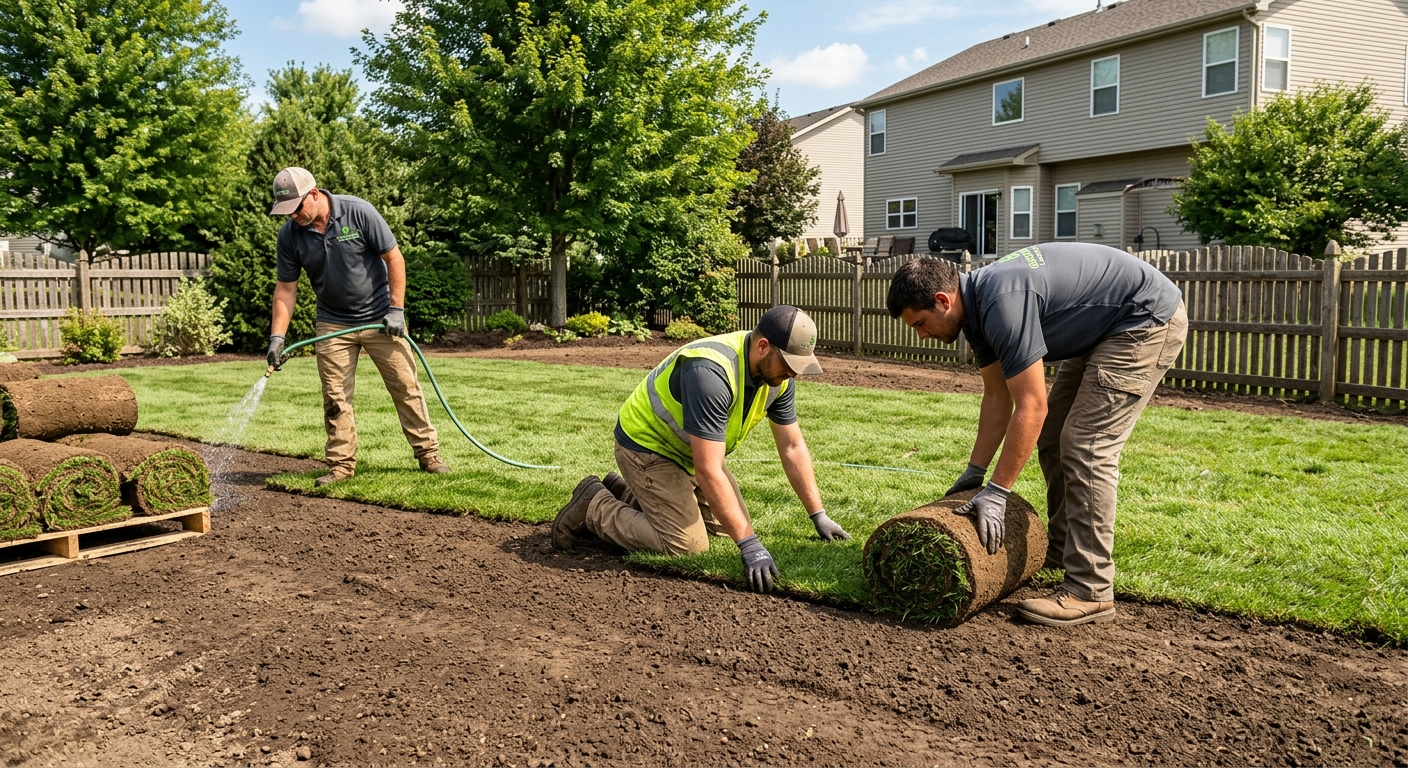
Landscaping options and costs in Harvest Hills
In Harvest Hills, the landscaping plan you choose is usually as much about timing and climate resilience as it is about curb appeal. With a population of 7,805 (Statistics Canada, 2021 Census), the community reflects typical Calgary-area residential patterns—many homeowners have the yard space to justify improvements like patios, planting beds, and irrigation upgrades. This matters because labour and base-prep work scale with footage, and detached homes often mean more front-and-back landscaping scope than condo properties.
Calgary-area projects also come with a different cost reality than milder regions: Prairie hardiness zones 3–4, late-spring frosts, and early fall cold snaps shorten the working season. Freeze–thaw cycles are severe, so patio, walkway, and retaining wall foundations need deep, well-compacted bases and drainage to prevent heaving and settlement. Hiring can be competitive in peak summer weeks, and that demand can push scheduling and labour rates higher within the same price band.
In Harvest Hills, installs are especially in demand around the busier streets where homeowners want to refresh entryways and manage sloped yards—front grading, walkways, and curb-adjacent planting are common scope items. If you’re comparing options, the numbers below show how typical services stack up before you factor in site access, slope, and material tier. Use the table as a starting point, then tighten the estimate once we confirm yard dimensions and whether drainage work is required.
| Service |
Description |
Season |
Price Range |
| Full landscape design and installation |
Site assessment, layout, plant palette, grading/drainage plan, hardscape, planting, and irrigation coordination |
Late April to October (weather-dependent) |
$15,000–$45,000 |
| Sod installation (supply, grade, lay, roll) |
Light grading, topsoil/top dressing as needed, sod supply, lay-and-press, rolling, initial watering plan |
May to September |
$2,000–$5,500 |
| Lawn seeding (grade, seed, starter fertilizer) |
Minor grade correction, seed blend, starter fertiliser, top dressing where required, first watering guidance |
April (on workable ground) and September |
$1,500–$3,500 |
| Interlocking patio or walkway |
Base excavation, compaction, geotextile, leveling sand, pavers, edge restraints, jointing sand |
May to October |
$8,500–$28,000 |
| Retaining wall (interlocking block) |
Excavation, wall blocks, drainage gravel, geogrid/compaction as required, cap units, finishing |
May to September |
$12,000–$38,000 |
| Tree and shrub planting |
Soil improvement, planting holes, amendments, staking where needed, mulch ring, initial watering plan |
Early spring and fall (when soil is workable) |
$1,200–$12,000 |
Prices are estimates only and vary by project scope, site access and material selection.
What affects the price of landscaping in Harvest Hills
In Harvest Hills, you can see quotes for the “same” landscaping scope swing by 30–50% across Calgary and neighbouring communities because the hidden work differs: base preparation depth, drainage corrections, and whether irrigation and soil improvement are included. Even when the visible elements look similar—like a patio plus planting—freeze–thaw realities mean contractors can’t skip compaction, and they often add more drainage than expected when slopes or downspout runoff don’t behave.
Two major drivers are the plant hardiness zone and the frost calendar. Southern Alberta sits in Prairie zones 3–4, with short growing windows and late frosts. That affects both what grows (cold-hardy, wind-tolerant, drought-tolerant species) and how long crews can work on softscape without risking damage. In coastal BC (zones 7–8), a long growing season can lower some plant-changeover risk, but heavy-rain drainage design and base protection still matter; in the dry interior, irrigation design and soil conditioning tend to dominate. In Alberta’s semi-arid climate, smart controllers, zoned systems, and soil amendments often cost more upfront but save labour and plant stress later.
Concrete examples from Harvest Hills: (1) If your yard needs grading to stop pooling toward the house, drainage and regrading can add thousands—often pushing a patio project toward the $8,500–$28,000 range rather than a leaner estimate. (2) If you’re upgrading from basic turf to drought-smart planting, tree and shrub supply plus soil improvement can move from “small refresh” toward the $1,200–$12,000 planting band, especially with larger caliper specimens. Finally, older housing stock can mean more established roots and buried utilities, which increases excavation time.
| Price Factor |
Why It Matters |
Cost Impact |
| Yard size in sq ft — the primary cost driver for softscape |
More area means more topsoil prep, base materials, seeding/sod or planting quantities |
Low to very high; a larger lawn/bed footprint can change total spend by thousands |
| Grading and drainage work — slope corrections add significant cost |
Freeze–thaw and foundation protection require correct slope away from structures |
Often moderate to major increases if regrading is needed (sometimes the biggest swing factor) |
| Drainage bed or French drain installation |
Captures excess water and reduces heave/settlement risks near patios and walls |
Commonly adds a noticeable mid-project budget increase |
| Plant material tier — native shrubs vs. ornamental vs. mature specimen trees |
Mature trees and premium ornamentals cost more and may need staking and stronger soil prep |
Can shift total landscaping cost upward significantly depending on sizing |
| Hardscape vs. softscape ratio — walls and patios cost more per sq ft than lawn |
Pavers/blocks require deeper excavation, base layers, and compaction |
High impact if you add retaining walls, patios, or wider walkways |
| Irrigation system design and installation |
Zones, water routing, and controller setup affect material and labour |
Moderate to major increase, especially for multi-zone layouts |
| Soil amendment and topsoil required |
Correcting heavy clay or sandy pockets improves root establishment and reduces future failures |
Can add moderate costs, especially across larger landscaped zones |
| Tree removal or stump grinding before new planting |
Removal work affects access, disposal, and time on site |
Often adds a meaningful one-time charge |
Permits & regulations in Alberta
In Alberta, most routine landscape work—planting, sodding, topsoil placement, and typical softscape installations—normally does not require a permit. That said, retaining walls and any grading that materially changes drainage patterns can be where homeowners get surprised. As a practical rule in the Calgary area, retaining walls above a height threshold (often 1.0 m or 3.3 ft in many municipalities) typically require a building permit, and sometimes engineered drawings depending on design conditions.
Also confirm whether your project involves grading changes that affect how water moves off your lot. If regrading directs runoff toward neighbouring properties, changes the flow rate to a storm sewer connection, or alters drainage in a way that could impact others, the approval trigger can be higher. Before any digging for planting holes or wall footings, call utility locates so crews don’t hit buried services.
For irrigation and water-use rules, Alberta homeowners should check local bylaws and seasonal restrictions. Even though Harvest Hills is in a semi-arid climate, outdoor watering limits can tighten during dry periods, so efficient systems (zoned drip/smart controllers where appropriate) are often the smartest compliance-friendly route.
To verify your contractor in Harvest Hills: check their Alberta licence (and trade registration where applicable), request proof of liability insurance with valid coverage dates, and ask for WSIB/WCB clearance documents (or the applicable coverage letter). Get those documents before work starts and confirm the certificate details match the company name doing the job.
Planning a landscape that thrives in Harvest Hills's climate
Designing for Harvest Hills means working with Prairie hardiness zone 3–4 conditions, not against them. Aim for a yard that can handle cold snaps, wind exposure, and severe freeze–thaw cycles around foundations and pavements. Start with plant selection: choose native and zone-appropriate species that tolerate drought and winter stress, and plan for wind protection near entries and fences. With Alberta’s shorter growing season, hardy choices establish more reliably and require less winter protection than delicate ornamentals.
Next, decide between sod and seed. Sod delivers instant visual coverage, but it’s usually costlier and relies on correct soil prep and watering discipline—especially during the shoulder seasons. Seeding is typically less expensive and gives you flexibility to time work around workable ground, but it needs patience for germination and establishment. In many Harvest Hills budgets, the difference is real: if sod is about 3–4 times the per-square-foot cost of seeding, that premium is justified only when you need quick curb appeal or you’re repairing a damaged lawn fast. Otherwise, seeding plus soil improvement often performs better long-term.
Drainage and grading are the “make-or-break” items in Calgary. Pooling after spring melt or heavy rain can lead to foundation moisture and settlement; base preparation for patios and retaining walls needs to extend below frost-affected zones and remain well-compacted with proper drainage. For low-maintenance design, use mulched shrub borders, groundcovers, and perennials to reduce annual upkeep—then support growth with efficient irrigation planning. Xeriscape or a rain-garden feature can also reduce irrigation demand while improving how water moves across your site.
| Element |
Climate Consideration |
Maintenance Level |
Price Band |
| Sod lawn installation |
Needs good soil prep before heat cycles and spring melt; quick rooting reduces erosion during thaw periods |
Medium (watering management in establishment year) |
$2,000–$5,500 |
| Native perennial garden |
Cold-hardy, drought-tolerant plants handle zone 3–4 winters and semi-arid dry spells better |
Low to medium (seasonal cleanup and occasional weeding) |
$1,200–$6,500 |
| Mulched shrub border |
Mulch buffers freeze–thaw at root level and reduces moisture loss in windy conditions |
Low (top-ups every 1–2 years) |
$1,500–$7,500 |
| Interlocking stone patio |
Requires deep, well-compacted base and drainage to prevent heaving from freeze–thaw |
Low (regular sweeping and occasional joint sand/top-up) |
$8,500–$28,000 |
| Retaining wall (block) |
Needs proper drainage gravel and footing depth to manage freeze expansion and water pressure |
Low (periodic inspection of drainage and caps) |
$12,000–$38,000 |
| Drip irrigation system |
Zoned drip supports drought-tolerant planting while aligning with seasonal watering restrictions |
Medium (seasonal adjustments and winterisation) |
$2,000–$10,000 |
How to choose a landscaping contractor in Harvest Hills
Start by verifying licensing and coverage, then compare quotes on scope—not just totals. In Alberta, ask for the contractor’s Alberta licence/trade registration details (where applicable) and request proof of liability insurance. For coverage, confirm WSIB/WCB clearance (or the applicable clearance letter) before work begins; you want evidence that subcontractors are also covered. Always match the documents to the exact company name and project address.
Next, get 2–3 itemised written quotes with labour and materials broken out: excavation, base materials, stone/pavers, blocks, plant quantities, soil amendments, and irrigation parts. Make sure the quote specifies what’s included and what’s excluded—particularly disposal of excess soil, winter protection measures, utility locates, and whether permits (if required) are pulled by the contractor or you.
Warranty matters in Freeze–thaw country. Ask for a workmanship warranty length and what it covers (settlement, base failures, drainage issues). Also separate product/manufacturer warranty from workmanship; some warranties require registration or specific maintenance. Clarify whether warranties are transferable to a new homeowner if you sell.
Payment schedule: never pay more than 10–15% upfront. Use a holdback until completion and final touch-ups (and ensure the schedule aligns with materials lead times). Require a start date and an estimated completion timeline in writing, because Harvest Hills installs can stall during thawed-ground delays.
- Confirm contractor identity: legal business name, address, and contact details match the insurance certificate.
- Ask for liability insurance proof with active policy dates.
- Provide WSIB/WCB clearance documentation before the first shovel hits the ground.
- Request utility locate proof or insist it’s ordered before excavation.
- Get itemised quantities: sq ft of sod/seed, number of pavers/blocks, plant counts and sizes.
- Ensure drainage/grading scope is explicit (slope targets, French drain/rock specifications if included).
- Verify base build-up specs: excavation depth, geotextile use, compaction requirements.
- Clarify disposal: how much soil removal is included and where it’s hauled.
- Confirm irrigation inclusions: controller type, zones, and winterisation steps.
- Ask for a materials tier and source (native vs ornamental, block/paver brand, tree/warranty handling).
- Use a clear warranty document that separates workmanship vs product coverage.
- Structure payments with milestones and holdback until final inspection and cleanup.
In Harvest Hills, common red flags include contractors who won’t put grading/drainage details in writing, vague base specs (or “we’ll do whatever is needed” without measurements), quoting only lump sums without quantities, asking for large upfront payments beyond 10–15%, and skipping coverage documentation or refusing to provide insurance and WSIB/WCB clearance before starting.
Frequently asked questions — landscaping in Harvest Hills
How deep should a retaining-wall base be for local frost?
For Harvest Hills and the Calgary area, retaining-wall base depth has to account for freeze–thaw and the wall’s structural requirements, not just a “standard” number. In practice, contractors build below frost-affected zones and size the excavation based on wall height, block system specifications, and local soil conditions. You should expect a detailed base section showing excavation depth, geotextile placement, drainage gravel, and compaction steps. Because water management is critical, the wall needs proper behind-wall drainage so hydrostatic pressure doesn’t push it over during thaw cycles. A reputable installer will reference the block manufacturer’s instructions and your site conditions, and they’ll coordinate permit needs if the wall height crosses typical thresholds (often around 1.0 m).
How much does professional landscape design cost?
Professional landscape design in Harvest Hills commonly ranges from a smaller design-only budget up to a full package when design is tied to installation. For homeowners comparing quotes, the key is whether design is standalone or bundled with the build. As a reference point, full landscape design and installation for many Calgary-area projects typically lands in the $15,000–$45,000 band once grading, hardscape, planting, and irrigation coordination are included. If you’re doing only planting layouts or a concept plan, design pricing may be lower, but your contractor should still show drawings, plant quantities, and a clear site plan that matches zone 3–4 hardiness realities. Always confirm deliverables (plans, planting list, and irrigation notes if included) before paying a design retainer.
How do I compare landscaping quotes?
Start by comparing apples to apples: ask each contractor for an itemised quote with labour and materials separated, plus quantities (sq ft, linear feet, plant counts, and sizes). Then verify what’s included: grading goals, drainage items like French drains (if needed), geotextile and base depth for patios/walkways, disposal of excess soil, and whether utility locates are handled. For irrigation, check the number of zones and whether a smart controller and winterisation steps are included. It’s normal for bids to differ by 30–50% when one quote includes deeper base work or drainage beds that another treats as “extra.” Use the local price bands as guardrails—for example, interlocking patios often fall around $8,500–$28,000 depending on scope—then investigate why the outliers are higher or lower.
How long does a landscaping project take in Harvest Hills?
Project length in Harvest Hills is mostly driven by weather windows, access, and how much grading/drainage is required. Softscape-only work (like planting) can sometimes be completed in a day or two, especially in the early spring or fall when soil is workable. Hardscape-heavy projects need more time for excavation, base prep, compaction, and curing/settling—so patio and walkway builds typically take longer than planting refreshes. Retaining wall projects also require time for excavation, drainage rock placement, block setting, and proper backfill compaction. Full landscape projects—design through installation—often span multiple weeks in the Calgary market once scheduling and material lead times are included. Ask your contractor for a written start date, completion estimate, and a clear contingency plan if freeze–thaw or rain interrupts base prep.
What is the best grass type for a Harvest Hills lawn?
In Harvest Hills, the “best” grass is the one that’s cold-hardy, disease-tolerant, and can establish in a short Prairie growing season. Many homeowners do well with perennial cool-season blends designed for Alberta conditions, with seed choices selected for winter survivability and early spring recovery. If your site is high-traffic or shaded, the blend should match those conditions rather than using a single generic seed type. Sod can work, but it still depends on proper grade, base conditions, and consistent establishment watering. If you’re aiming for flexibility, lawn seeding is often a better match when you want to work with the shoulder-season timing and reduce upfront cost—seeding packages often land in the $1,500–$3,500 range, depending on the lawn area and soil prep required.
When should I aerate and overseed my lawn in Harvest Hills?
For Harvest Hills and the wider Calgary area, aeration and overseeding are typically most successful in spring (when the ground is workable and grass is waking up) or early fall (when conditions are cooler but the lawn can still grow before cold snaps). The goal is to seed when you have enough growing days for germination and root establishment, without letting young grass get stressed by late frosts. If drainage is poor or the soil is compacted, aeration won’t fully fix the problem—so you may need soil amendment as well. A contractor may recommend seeding after aeration with a light top dressing approach. Avoid overseeding right before a long freeze period; in Prairie climates, that can lead to patchy establishment even if the seed is high quality. If you’re uncertain, base the timing on actual soil temperatures and readiness, not just the calendar.