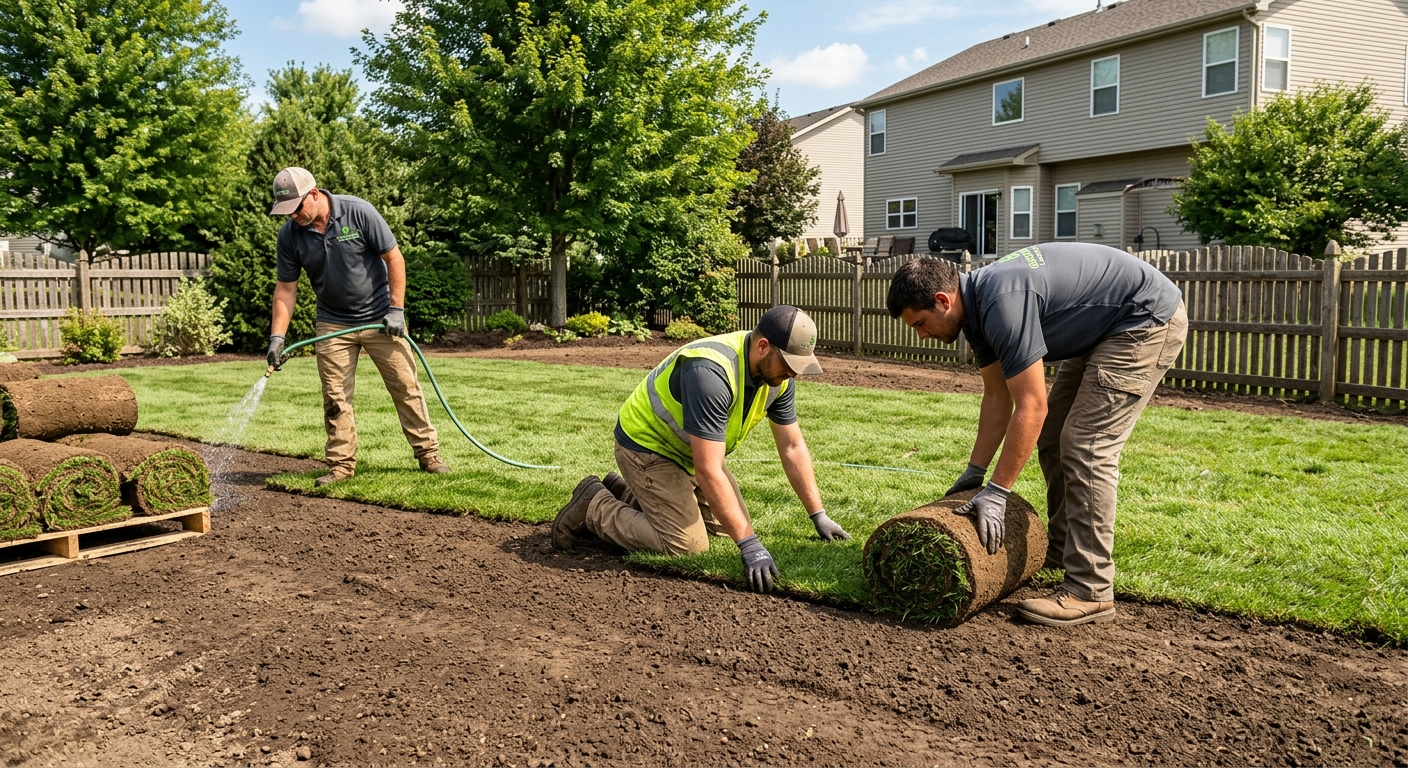
Landscaping options and costs in Magrath
Magrath homeowners usually start with a simple goal—make the yard look finished—but the path to a great result depends on what you want done (softscape, hardscape, drainage, or all of it). With just 2,481 residents in the 2021 Census and a homeowner majority (homeowner households were 77.9% of households), many detached properties—single-detached homes make up 88.8% of dwellings—tend to have enough yard area to justify a multi-step upgrade rather than one-off fixes. That’s a big reason you’ll see demand cluster around well-established areas like the older, central residential streets off Main Street, where many lots were built earlier and need refresh work.
In the Lethbridge–Medicine Hat region (Canadian plant hardiness zone 4b), winter lows are harsh (around −31.7°C to −28.9°C). That matters because freeze–thaw cycles increase the structural base depth required for patios, walkways, and retaining walls, so contractors price more excavation, compaction, and drainage detail than you’d see in milder climates. The working window is also tighter—most planting and surfacing is practically done roughly May–September—so labour schedules can concentrate, especially when crews are booked for multiple yards in the same week.
As a result, “same job” quotes can diverge based on soil amendment amounts, the type and quantity of hardy plants, and whether irrigation/drainage design is included from day one. Use the ranges below as a realistic starting point, then we’ll break down the main price drivers in the next section.
| Service |
Description |
Season |
Price Range |
| Full landscape design and installation |
Site walk, concept + planting plan, grading/drainage allowances, supply & install of plants, mulch, and hardscape where included |
May–September (design can start earlier) |
$8,000–$35,000 |
| Sod installation (supply, grade, lay, roll) |
Fine grading, topsoil/soil amendments as needed, sod supply, lay, roll, and initial watering plan |
Late April–September (best results after spring thaw) |
$4–$8 |
| Lawn seeding (grade, seed, starter fertilizer) |
Light grading, seed blend, starter fertilizer, raking, and initial watering/maintenance guidance |
May–June and early September |
$1,200–$3,500 |
| Interlocking patio or walkway |
Excavation, compacted base + sand, edge restraints, pavers/bricks, and jointing sand |
May–September |
$6,000–$18,000 |
| Retaining wall (interlocking block) |
Block system, proper base and drainage layer (weeping tile where required), backfill and compaction |
May–September |
$10,000–$40,000 |
| Tree and shrub planting |
Prairie-hardy selection, planting pits, amendment, mulching, staking as needed, and watering plan |
May–September |
$500–$8,000 |
Prices are estimates only and vary by project scope, site access and material selection.
What affects the price of landscaping in Magrath
In Magrath and across the Lethbridge–Medicine Hat region, the same visible “end result” can cost very different amounts—often 30–50%—because quotes reflect different construction details underneath the finish. Two yards can both end up with a patio or similar planting counts, but one contractor may include deeper excavation and drainage bed build-up to handle Alberta freeze–thaw, while the other may rely on a thinner base. Labour availability also plays a role during the short May–September window, and crews can be booked back-to-back when multiple homeowners time projects for summer curb appeal.
Climate defines both what grows and what crews can safely install. Southern Alberta sits around zone 4b with winter lows near −31.7°C to −28.9°C, and that limits plant palettes to drought-tolerant, wind-hardy species that can survive cold and hot, dry summers. Meanwhile, retaining wall base depth must reach below the local frost impacts, which pushes material and excavation costs up. If you compare to coastal BC (zone 7–8), BC’s longer frost-free season allows more multi-season planting, but they often spend more on drainage and water-management planning due to heavier rainfall patterns. In the dry interior BC context, irrigation design can also add cost; in Magrath we still prioritize efficient irrigation, but the key is avoiding costly overwatering that can trigger winter issues in poorly drained soils.
Concrete examples from typical Magrath projects: (1) a yard built before 1981 is more likely to have older soil compaction and drainage quirks—54.0% of homes were built before 1981—so grading and soil amendment can add thousands. (2) switching from seeding-only to sod is a fast visual jump, but at roughly $4–$8 per sq ft for sod, the budget may jump significantly compared with smaller seed jobs (often within a $1,200–$3,500 seeding band). (3) adding a French drain or drainage bed is commonly the difference between a “nice” backyard and one that stays usable after spring melt.
| Price Factor |
Why It Matters |
Cost Impact |
| Yard size in sq ft — the primary cost driver for softscape |
More area means more labour hours, materials, topsoil, and maintenance planning |
Often the biggest driver; can swing total by 2× to 3× |
| Grading and drainage work — slope corrections add significant cost |
Correcting ponding, adjusting downspout routing, and achieving consistent slopes require excavation and fill |
Commonly adds several thousand dollars on uneven lots |
| Drainage bed or French drain installation |
Freeze–thaw demands stable drainage behind walls and under paving |
Can add major cost; often among the top “hidden” additions |
| Plant material tier — native shrubs vs. ornamental vs. mature specimen trees |
Hardy natives cost less but look best when installed in good quantities; mature specimens cost more upfront |
Can move project totals from “good” to “premium” quickly |
| Hardscape vs. softscape ratio — walls and patios cost more per sq ft than lawn |
Pavers and retaining wall systems require base engineering, geotextile, compaction, and restraints |
Shifts the budget upward even if the footprint is small |
| Irrigation system design and installation |
Efficient layout and smart controls reduce water waste and protect plants through prairie dry spells |
Can add a meaningful line item; varies widely by zoning and controls |
| Soil amendment and topsoil required |
Better soil structure improves root establishment and long-term survival in zone 4b conditions |
Often increases cost when clay/compaction is present |
| Tree removal or stump grinding before new planting |
Removal needs proper staging, equipment access, and disposal |
Can add thousands depending on access and stump size |
Permits & regulations in Alberta
In Alberta, most typical landscaping tasks—planting shrubs and trees, sodding, seeding, mulching, and most softscape work—generally do not require a permit. The work that most commonly triggers permits is retaining wall construction at or above a municipal threshold (often around 1.0 m or 3.3 ft in many municipalities), especially where a wall could affect neighbouring properties or be close to structures. Also watch grading: if you plan to change lot grading in a way that redirects water toward a neighbouring lot, onto a foundation, or toward a storm sewer connection, that may trigger approval or at least require compliance with drainage rules.
For Magrath homeowners, the safest approach is: (1) decide whether you’re doing any retaining walls over the local threshold or any major grade changes, (2) call Alberta One-Call (utility locates) before digging, even for planting holes or wall footings, and (3) confirm irrigation and water-use bylaws for your area and season. Even though Alberta restrictions are not usually as strict as some dry BC interior areas, water-efficient systems still matter—especially during hot, dry stretches.
To verify a contractor before work starts, check three items step-by-step: (1) Alberta business licensing (where applicable) and whether they list their trade capability for landscaping/hardscape; (2) liability insurance—ask for a current certificate of insurance naming you as additional insured where possible; and (3) worker coverage—request proof of WSIB/WCB clearance or coverage. If the contractor can’t provide documents quickly and clearly, that’s a sign to pause and compare other quotes.
Planning a landscape that thrives in Magrath's climate
Planning for Magrath’s climate is about working with the reality of zone 4b and prairie weather: cold snaps, hot dry summers, and frequent freeze–thaw. Start with plant selection. Choose hardy, zone-appropriate species (native and prairie-adapted) and build in winter resilience using proper planting depth, wind-tolerant layouts, and mulching. In a yard with older foundations and tighter soils—remember 54.0% of homes were built before 1981—early survival is often won or lost through soil prep and drainage, not just plant “type.”
Sod versus seed is another key planning decision. Sod gives instant curb appeal and quicker erosion control, but it typically costs about 3–4 times more per sq ft than seeding once you include prep. In Magrath, sod is commonly priced around $4–$8 per sq ft for installed material, while seeding jobs can often be budgeted as a smaller, lower-cost line item (frequently landing in the $1,200–$3,500 range for many residential yards). Sod is justified when you need fast visual results or have exposed soil that you want stabilized quickly after grading.
Drainage and grading are critical in Lethbridge–Medicine Hat conditions. Water that pools during spring melt can freeze overnight, damaging turf and stressing planting beds. For hardscape—patios and retaining walls—base preparation must respect frost behaviour: deeper excavations, well-compacted base, and drainage layers reduce heaving and movement. Finally, low-maintenance strategies help your yard stay great without constant upkeep: groundcovers, mulch rings, and hardy perennials reduce weeds and protect roots. Xeriscape-style design and rain-garden elements (where drainage permits) can also support water-efficient landscaping choices around prairie wind and dry spells.
If your budget is tight, prioritize drainage first. A well-designed drainage bed can prevent the “cheap fix that fails,” whereas replacing struggling turf repeatedly costs more over a few seasons.
| Element |
Climate Consideration |
Maintenance Level |
Price Band |
| Sod lawn installation |
Fast establishment in a short May–September window; needs good drainage to avoid winter stress |
Medium (watering until rooted; mow and spot-repair) |
$4–$8 per sq ft |
| Native perennial garden |
Zone-appropriate, drought-tolerant plants handle prairie heat and cold better with less winter protection |
Low (seasonal pruning and weed control) |
$2,000–$7,000 |
| Mulched shrub border |
Mulch moderates soil temperatures and protects root zones through freeze–thaw cycles |
Low to medium (annual mulch refresh) |
$1,500–$6,000 |
| Interlocking stone patio |
Requires proper base and drainage to prevent heaving; wind and temperature swings stress edges |
Low (occasional joint sand/top-ups) |
$6,000–$18,000 |
| Retaining wall (block) |
Base depth and drainage behind the wall are essential for freeze–thaw stability |
Low (periodic inspection of weeping/settlement) |
$10,000–$40,000 |
| Drip irrigation system |
Efficient watering for shrubs and beds during hot, dry weeks; avoids excess moisture |
Low (seasonal adjustments and controller setup) |
$1,500–$6,500 |
How to choose a landscaping contractor in Magrath
Choosing a contractor in Magrath is mostly about proof: proof of coverage, proof of workmanship, and proof that the quote reflects your site conditions—not just a standard brochure. Start with verification. Ask for (1) their Alberta business details and any trade documentation they use for hardscape/landscape installs; (2) liability insurance—request a current certificate of insurance; and (3) worker coverage—ask whether they carry WSIB/WCB or can provide clearance/coverage documentation. A reputable contractor provides these without pressure.
Next, get 2–3 itemised written quotes with a labour-and-materials breakdown (not a single lump sum). Confirm exactly what’s included: excavation depth for paving or wall footings, geotextile and base materials, soil amendments, drainage beds, topsoil depth, and whether disposal and cleanup are part of the price. Ask whether permits (when required for certain retaining walls or major grade changes) are included or your responsibility. Pay attention to warranties: workmanship warranty length should be stated clearly; product/manufacturer warranties should be included for turf products, trees, or specific irrigation components, and you should know if warranties are transferable if you sell your home.
For payments, never pay more than 10–15% upfront. Use a holdback until completion and final grading/cleanup are confirmed. Also request a written timeline—start date, staging schedule, and completion estimate—since prairie weather can shift material delivery and planting windows.
- Ask for licence/business details and verify they match the quote and invoice.
- Request a certificate of liability insurance before any site work starts.
- Ask for WSIB/WCB coverage proof or clearance documentation.
- Require itemised quotes: labour, materials, excavation/base, drainage, and haul-away.
- Confirm what’s excluded (disposal, utility locate costs, tree removal, topsoil overages).
- Check if retaining wall quotes include drainage/gravel and proper weep provisions.
- Ensure the patio/walkway base spec is stated (compaction and base depth).
- Ask who supplies plants and whether substitutions are permitted (and at what price).
- Get a planting/irrigation watering plan for the first 2–4 weeks.
- Review warranty terms in writing (workmanship and product warranties separately).
- Don’t accept large upfront payments; hold back 10–20% until final walkthrough.
- Request an estimated calendar schedule for May–September planting and surfacing.
Red flags I commonly see in Magrath: (1) quotes with no base/drainage details for patios or walls, (2) contractors who won’t share insurance and WSIB/WCB proof, (3) “one price fits all” estimates that don’t mention grading or soil amendment needs, (4) refusal to put warranty and start dates in writing, and (5) pressure for 50%+ upfront payments before excavation or material orders.
Frequently asked questions — landscaping in Magrath
How much does professional landscape design cost?
In Magrath, most homeowners spend as part of a bigger project budget rather than paying for design alone. If you’re doing a full plan that leads into installation, design & installation packages commonly fall in the $8,000–$35,000 band depending on complexity (drainage work, hardscape footprint, and planting scope). If you only need concept work for a smaller yard, some contractors reduce the design portion when you proceed with installation. The reason ranges swing is practical: zone 4b layouts require a realistic approach to winter survival, wind exposure, and short planting windows (roughly May–September). Also, many Magrath lots have older soil/drainage conditions—so the design needs to address grading and erosion control, not just plant placement.
How do I compare landscaping quotes?
When comparing quotes in Alberta (including Magrath), compare apples to apples by reading the line items, not the total. First, verify the scope: is grading and drainage included, or is that an add-on? Second, check hardscape specs—base depth, compaction, geotextile, and edge restraints for patios and walkways. Third, confirm what’s included for plants: are they prairie-hardy natives, ornamental shrubs, or mature specimen trees? Fourth, look for irrigation design: a simple hose hookup costs less than a planned drip system with proper zoning. A quote that lands near the lower end of the $8,000–$35,000 design-and-install range may be missing drainage or soil amendments, which can cost more later if the turf fails or the patio shifts. Ask for written clarification before signing.
How long does a landscaping project take in Magrath?
Project duration in Magrath depends on weather, material lead times, and whether drainage/hardscape is part of the job. Softscape-focused work can often be staged quickly within the May–September window, while patios, interlocking walkways, and retaining walls require longer because base preparation must be built and compacted correctly before pavers or blocks go on. Typical timelines range from a couple of days for small planting refreshes to several weeks for full front-and-back yard makeovers when excavation, drainage beds, and hardscape occur in sequence. Winter also plays a role: you can plan in spring, but turf and planting must be scheduled around safe working conditions. A good contractor will provide a written start date, completion estimate, and a contingency plan if late spring frost or heavy rain affects site conditions.
What is the best grass type for a Magrath lawn?
For Magrath (zone 4b) you’ll typically get the best results with cool-season, hardy mixes designed for prairie winters and dry summers. Many homeowners choose blends with strong seedling establishment and good mowing tolerance, and contractors may recommend turf that handles freeze–thaw while staying drought tolerant once established. If you’re seeding, ask what seed blend they use and whether it includes starter fertilizer. If you’re installing sod, make sure it’s sourced for Alberta’s climate—quality and root readiness matter as much as the grass “name.” Cost-wise, sod installed often comes in around $4–$8 per sq ft, while seeding is usually less expensive upfront, commonly landing in the $1,200–$3,500 range for many residential yards. The “best” choice is whichever matches your timeline and drainage situation.
When should I aerate and overseed my lawn in Magrath?
For lawns in Magrath, aeration and overseeding are usually most successful in early fall (often August into September) when the soil is still warm enough for seed germination but the hot summer stress is easing. Late spring can also work if frost risks are fully past and the lawn is actively growing, but spring seeding needs careful watering. Aeration is especially helpful if your yard sees compaction (common on older lots and driveways that funnel traffic). If you seed after aeration, use a starter fertilizer suited to cool-season grasses and keep watering light but consistent until new growth establishes. Avoid overseeding right before a cold snap—young seedlings struggle through prairie cold. If your lawn has persistent thin spots, consider drainage and soil amendment first; reseeding alone can fail when water pools or the soil is overly compacted.
What trees grow best in Magrath's climate zone?
In Magrath’s zone 4b conditions, the “best” trees are those that are proven prairie-hardy and tolerant of wind, cold winters, and dry periods. Homeowners commonly do well with hardy selections such as certain spruce varieties, willows (where there’s moisture tolerance), and robust deciduous options like Manitoba maple or similar cold-tolerant trees, depending on site moisture and soil. The right tree also depends on your yard’s drainage: if you have low spots where water pools during spring melt, choose species that can handle periodic wetness, or fix drainage first. Tree planting in Magrath is often budgeted in the $500–$8,000 range depending on quantity and whether you’re planting smaller caliper trees or larger specimens. A reputable contractor will match species to wind exposure and soil conditions, not just availability.