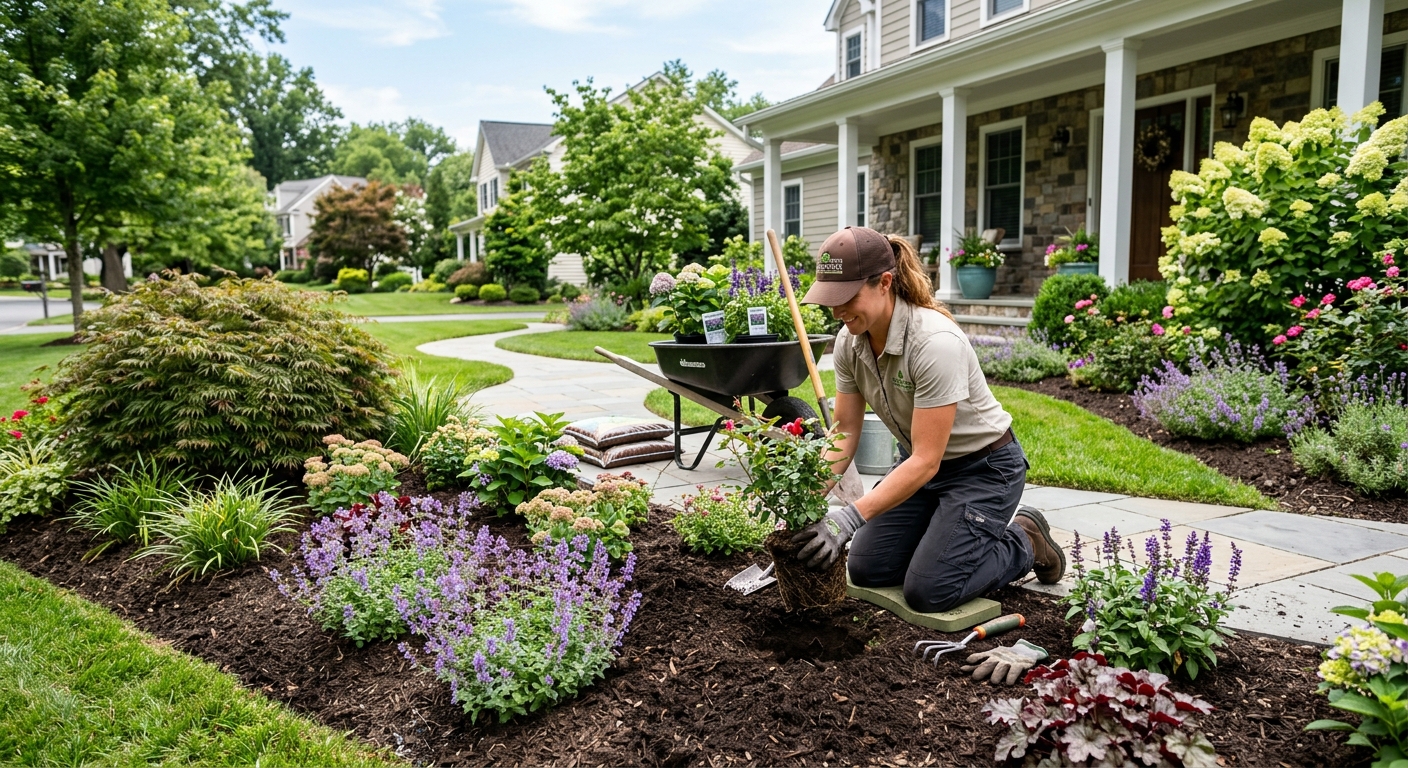
Landscaping options and costs in Sundance
Sundance, Alberta is a growing community where homeowners want driveways, patios, and plantings that look sharp for years—but must stand up to Prairie plant hardiness zones 3–4, freeze–thaw cycles, and sudden cold snaps. With a population of 9,590 (Statistics Canada, 2021 Census), demand is steady and contractor availability can tighten during spring start-ups. Landscaping budgets are also easier to justify when many residents already have the space to invest: Sundance is built around detached home lots, which typically come with enough yard area to meaningfully improve drainage, soften hardscape, and add curb appeal.
In the Calgary region, costs tend to run higher than “basic make it pretty” projects because deep base preparation is non-negotiable. Walkways and patios need compacted layers sized for winter heaving, and retaining walls require proper base depth and drainage to avoid failure. Labour represents a major portion of many bids (often 40–60% on comprehensive jobs), and scheduling trades around late-spring frost risk can also affect pricing.
In Sundance, trade activity is especially strong around newer subdivisions where grading is still fresh and homeowners want a finished look quickly. Areas near the core residential pockets—where backyards connect to drive access and where service lines influence excavation—are common spots for patio and planting package installs. If you’re comparing quotes, the table below helps you anchor “like-for-like” pricing before you dig into details.
| Service |
Description |
Season |
Price Range |
| Full landscape design and installation |
Site visit, design, grading/drainage plan, plant palette, hardscape build, soil improvement, and installation |
May–October (best results late May to September) |
$15,000–$45,000 |
| Sod installation (supply, grade, lay, roll) |
Surface grading, topsoil/levelling as needed, sod supply, lay and roll, starter fertilizer |
Late spring to early fall |
$2,500–$6,000 |
| Lawn seeding (grade, seed, starter fertilizer) |
Fine grading, seed mix selection for zone 3–4, starter fertilizer, light raking/rolling |
Spring or early fall (cooler temps help germination) |
$1,500–$3,500 |
| Interlocking patio or walkway |
Excavation, compacted base, edging, interlocking stone, jointing sand, clean finish |
May–October |
$8,000–$30,000 |
| Retaining wall (interlocking block) |
Layout, excavation, compacted base, drainage geotextile/stone, interlocking wall build |
May–September |
$10,000–$35,000 |
| Tree and shrub planting |
Soil amendment, staking where needed, hardy plant selection, mulching, establishment watering plan |
Spring and fall |
$1,200–$12,000 |
Prices are estimates only and vary by project scope, site access and material selection.
What affects the price of landscaping in Sundance
In Sundance, two quotes for the “same” landscaping can differ by 30–50% because the scope drivers aren’t always described clearly—especially grading depth, drainage details, and how much softscape area is included. Contractors in Calgary and nearby communities manage crews across multiple starts, and jobs that require extra excavation, more trucking, or longer curing times for base layers can price higher even when the final look seems similar.
Climate and site conditions are the real cost levers. Prairie zones 3–4 have a shorter working window, late-spring frosts, and severe freeze–thaw cycles, so retaining wall and hardscape bases must reach below the frost-impacted depth with well-compacted materials and proper drainage. In coastal BC (zone 7–8), the long growing season supports broader palettes and faster plant establishment, but heavy-rainfall drainage engineering is critical. In the interior BC context, water restrictions often drive drip irrigation and xeriscaping design. Southern Ontario (zone 5–6) typically supports a moderate season, but dry spells still require irrigation planning during summer—meaning systems and soil prep remain cost items. In Sundance, we balance cold hardiness and drought tolerance while keeping irrigation efficient.
Concrete examples that raise cost in Sundance include: (1) replacing compacted clay with imported topsoil and adding soil amendment for successful rooting; (2) correcting slope so runoff doesn’t pond near foundations; and (3) adding a drainage bed or French drain where downspouts discharge toward the yard. If you’re choosing sod over seeding, sod often pushes a project into the higher band—for instance, sod packages can land around $2,500–$6,000 depending on area and prep, while planting-only additions can stay nearer $1,200–$12,000 when soil work is limited.
Finally, housing age matters. Older lots may have settlement or buried drainage issues; when excavation uncovers unexpected conditions, it can move a job from a “planting refresh” to a comprehensive install that includes grading and base rebuild—where labour and materials are the bulk of the spend.
| Price Factor |
Why It Matters |
Cost Impact |
| Yard size in sq ft — the primary cost driver for softscape |
More area means more excavation, soil, labour hours, and materials (sod/seed/mulch) |
Higher softscape projects can scale quickly from “small refresh” to mid five-figure totals |
| Grading and drainage work — slope corrections add significant cost |
Correct slopes prevent pooling, protect foundations, and reduce winter heaving risk |
Commonly adds substantial labour and machine time; can swing bids 30%+ |
| Drainage bed or French drain installation |
Captures subsurface water and routes it away from structures |
Material + trenching increases overall budget, especially with trucking |
| Plant material tier — native shrubs vs. ornamental vs. mature specimen trees |
Hardy native/native-adapted plants cost less and establish reliably in zone 3–4 |
Tier changes can shift a planting budget by thousands |
| Hardscape vs. softscape ratio — walls and patios cost more per sq ft than lawn |
Hardscape needs deeper base, compaction, edging, and stone quantities |
More stone/paving typically pushes projects toward the retaining wall/patio bands |
| Irrigation system design and installation |
Zoned systems and controllers protect plants without wasting water |
Adds cost for piping, valves, trenching and programming; reduces long-term failures |
| Soil amendment and topsoil required |
Improves structure for roots and helps lawns survive cold weather stress |
Imported material + labour can noticeably increase the total |
| Tree removal or stump grinding before new planting |
Clearance enables excavation and prevents future root/grade conflicts |
Often adds a separate crew/time block, especially on constrained sites |
Permits & regulations in Alberta
In Alberta, most typical landscaping work—planting, sodding, mulching, and the majority of softscape installs—typically does not require a permit. The main exceptions homeowners run into in places like Sundance are related to retaining walls, significant grading, and anything that impacts drainage or utility infrastructure.
Work that commonly DOES require a permit: retaining walls above a municipal height threshold—often around 1.0 m (3.3 ft) in many jurisdictions—can require a building permit, and sometimes engineered drawings depending on height, condition, and site constraints. Work that may require approval: changes to lot grading that materially affect drainage direction (for example, directing water toward neighbouring properties or tying into storm connections) can trigger review requirements. Always do before digging: arrange utility locates before planting holes, footing excavations, or wall base trenches, because buried lines can be affected.
Work that typically does NOT require a permit: routine tree/shrub planting, sod installation, seeding, adding mulch, installing low, garden-grade edging below the retaining-wall threshold, and most surface-level pathway work.
To verify a contractor’s Alberta standing, homeowners should (1) check licensing/registration where applicable through provincial resources, (2) request a current certificate of liability insurance naming you (or confirming coverage is active), and (3) confirm WSIB/WCB coverage where required by the contractor. Ask for clearance details in writing, then keep those documents with your quote contract.
Planning a landscape that thrives in Sundance's climate
To plan a yard that thrives in Sundance, Alberta, you design around hardiness zone realities and the local freeze–thaw pattern—not against it. Sundance sits in Prairie zone 3–4 conditions, where winter browning, spring re-growth timing, and short-season establishment all matter. Start with (1) plant selection: choose zone-appropriate, cold-hardy species and build wind protection into the layout using shrubs, evergreens, and proper spacing. (2) For lawn choice, know that sod gives instant coverage but costs roughly 3–4x more per sq ft than seeding once base prep is included. (3) Drainage and grading are critical in Calgary-area yards: pooling water near foundations becomes a long-term foundation moisture risk and increases freeze pressure under hardscapes. (4) For patios and retaining walls, base preparation must be compacted and built to tolerate winter movement; the goal is a stable, well-drained platform. (5) Low-maintenance design strategies—mulch beds, groundcovers, and perennials—reduce annual upkeep while improving curb appeal.
For a low-water direction, consider xeriscape and/or rain-garden features using drought-tolerant plants and engineered capture zones. In practice, most Sundance homeowners get better results by improving soil and using efficient irrigation only where plants need it—rather than trying to “force” high-water turf through a semi-arid summer.
Here’s a practical dollars-and-logic example: if your preference is quick curb appeal, you might choose sod, pricing many installations around $2,500–$6,000 for typical yard scopes. If you can tolerate a longer establishment timeline, seeding is often nearer $1,500–$3,500, and the savings can be redirected into deeper soil amendment or a zoned drip plan—supporting stronger long-term plant survival.
| Element |
Climate Consideration |
Maintenance Level |
Price Band |
| Sod lawn installation |
Instant cover helps reduce erosion before early cold snaps; proper base compaction limits heaving |
Medium (watering/establishment, then regular mowing) |
$2,500–$6,000 |
| Native perennial garden |
Native-adapted plants handle zone 3–4 winters and reduce watering needs once established |
Low to medium (spring cleanup, seasonal weeding) |
$800–$5,000 |
| Mulched shrub border |
Mulch moderates soil temperatures and moisture; dense shrubs offer wind protection |
Low (occasional refresh of mulch, pruning) |
$1,200–$6,500 |
| Interlocking stone patio |
Freeze–thaw demands deep, compacted base and correct drainage away from the house |
Low (minimal cleaning, occasional joint sand top-up) |
$8,000–$30,000 |
| Retaining wall (block) |
Strong base depth and drainage geotextile/stone are essential to prevent movement |
Low (periodic inspection after freeze cycles) |
$10,000–$35,000 |
| Drip irrigation system |
Zoned drip improves efficiency in semi-arid summers and supports drought-tolerant plantings |
Medium (seasonal tune-up and winterization) |
$1,800–$6,500 |
How to choose a landscaping contractor in Sundance
Choosing the right contractor in Sundance starts with proving the basics: Alberta licensing/registration where applicable, liability insurance, and WSIB/WCB coverage. Ask for their certificate of insurance and confirmation that coverage is active for the project dates. If they can’t provide documentation, that’s a serious warning sign. For WSIB/WCB, request written proof of coverage (or that the contractor is compliant under their business structure) so you’re not left holding the risk if an injury occurs. Then verify the contractor’s business info and credentials through the relevant provincial resources.
Next, get 2–3 written itemised quotes—not one lump sum. The best bids break labour and materials apart (for example: base excavation, compaction, stone supply, edging, drainage stone, geotextile, and plant quantities). Read the scope for exclusions: what’s not included (permit pulls, disposal/trucking, topsoil depth, or replacement of damaged sprinklers)? Confirm whether disposal is included for excavation and whether material selections are “allowance” items or fixed products.
For warranty, separate workmanship from product warranties. Ask how long the workmanship warranty lasts, whether it transfers if you sell your home, and what maintenance is required to keep plant warranties valid. For payments, never go heavy upfront—most homeowners should target 10–15% max at the start, then use a holdback until completion and final cleanup. Finally, demand a written timeline with a start date, weather contingency plan, and a completion estimate.
- Provide their insurance COI and WSIB/WCB proof before work begins
- Use a signed contract with an itemised scope and line-by-line pricing
- Confirm disposal/trucking is included or listed separately
- Require a detailed drainage and grading description (not “we’ll level it”)
- Ask for base specifications for patios/walkways/retaining walls
- Confirm which irrigation components are included (controller, valves, zoning)
- Request plant lists with quantities and sizes (and substitutions policy)
- Verify permits responsibility—who pulls retaining wall approvals if required
- Get a clear warranty: workmanship length and product warranty terms
- Use a payment schedule with 10–15% upfront and a holdback until completion
- Get a start date and finish date in writing, with weather contingencies
- Ask how they handle freeze risk (base protection, scheduling, curing times)
Red flags to watch for: vague scopes with no base/drainage details, refusing to share an itemised breakdown, pushing for large upfront payments, promising sod “next week” without addressing grade compaction, or offering minimal/no warranty on workmanship for patios, walkways, and retaining walls in Sundance’s freeze–thaw climate.
Frequently asked questions — landscaping in Sundance
When should I aerate and overseed my lawn in Sundance?
Aeration and overseeding in Sundance work best when the grass can recover quickly—typically early fall for many zone 3–4 lawns, or spring if daytime temperatures stabilize. Because Sundance and the broader Calgary region experience late spring frosts and early cold snaps, avoid overseeding too close to hard freezes; you want germination before the soil cools enough to stall growth. If your lawn is compacted or bare in high-traffic areas, aeration plus overseeding is usually the fastest “repair” path without re-laying sod. Budget-wise, many homeowners keep repairs modest before committing to a full lawn reset (often closer to the $1,500–$3,500 seeding band rather than sod-level pricing). A contractor should also recommend the right seed mix for zone 3–4 and correct soil prep so seed contacts soil, not thatch.
What trees grow best in Sundance's climate zone?
In Sundance (zone 3–4 conditions), the best choices are cold-hardy, wind-tolerant trees that handle Prairie winters and summer drought swings. Common successful options in the Calgary area include conifers like Colorado spruce (often used for structure and wind buffering) and hardy pines, plus deciduous varieties that tolerate cold and establish reliably when planted in well-prepped soil. The right fit depends on your yard’s drainage, sunlight, and spacing from paths or the home. Planting cost typically sits in the broader tree/shrub planting band—many installations start around $1,200–$12,000 depending on the number of trees, sizes, and whether soil amendment is required. A good contractor will also plan for staking only when needed and will recommend mulching and an establishment watering plan tuned to Sundance’s short season and freeze–thaw cycle.
How much does sodding a yard cost in Sundance?
Sodding in Sundance depends heavily on how much grading and base prep is required before the sod goes down. For typical residential yard scopes in the Calgary region, sod installation commonly lands around $2,500–$6,000, especially when supply, grading/levelling, laying, rolling, and starter fertilizer are included. If your existing lawn is uneven, compacted, or has drainage issues, the price usually increases because deeper soil work and re-grading are necessary to prevent future settling and heaving. Many homeowners choose sod when they want immediate curb appeal after excavation or when erosion control is urgent before early cold snaps. For a slower-but-cheaper approach, seeding is often less expensive (commonly closer to $1,500–$3,500), but it doesn’t cover instantly and requires careful watering during establishment.
How do I prevent weeds in my Sundance garden?
Weed prevention in Sundance comes down to the basics done well: soil prep, correct plant spacing, and consistent mulch. Start by removing existing weeds (including roots where practical), then amend soil so your chosen plants establish quickly—healthy, dense beds shade soil and reduce weed germination. Use 2–3 inches of quality mulch around (not against) plant crowns, and keep a weed-suppression barrier only where appropriate—overusing barriers can create drainage or maintenance problems if not installed correctly. For perennial/shrub borders, proper spacing is key; overcrowding leads to weak growth and more thinning later. Many weed problems also come from edges where lawn meets garden—installing a clean border/edging and maintaining turf height helps. If you’re investing in a shrub border package, it often fits into the mid planting range, but the real savings are fewer repeat “rebuild” cycles over multiple seasons in zone 3–4 conditions.
How do I design a low-water yard in Sundance?
A low-water yard in Sundance should focus on soil improvement, drought-tolerant plant selection, and efficient irrigation design. Start by choosing zone-appropriate, cold-hardy plants that tolerate summer dryness after establishment (many native-adapted species work well in Prairie zones 3–4). Avoid over-relying on high-water turf areas; instead, consider reducing lawn footprint and replacing it with mulched shrub borders, groundcovers, and native perennial groupings. Drainage matters too—pooling water can damage roots and lead to uneven watering needs. If you include irrigation, ask for zoned systems with drip where feasible and a controller that matches plant zones; this is especially important in dry, semi-arid Calgary-area summers. Even without strict outdoor restrictions every year, smart irrigation and better soil often outperform “more watering.” If you’re comparing budgets, a yard upgrade that pairs planting with efficient irrigation usually costs more than simple seeding, but it can still land within the planting and design bands rather than forcing an expensive full sod lawn.
How do I find a licensed landscaper in Sundance?
To find a contractor in Sundance (or the Calgary region serving it) you should verify three things: credentials where applicable in Alberta, liability insurance, and WSIB/WCB coverage. Start by asking for their certificate of insurance and checking it’s current and active for the work scope; request confirmation of WSIB/WCB coverage in writing. Next, check online provincial business/credential resources for the contractor’s status, then confirm they can provide references or photos of similar freeze–thaw-aware installations like patios and retaining walls. Get 2–3 itemised written quotes so you can compare labour and materials separately (base prep, drainage stone, edging, plants/quantities, disposal). A transparent contractor will include warranty terms and a clear schedule. If a bid lands far below the typical $15,000–$45,000 comprehensive design/installation range without explaining why, treat it as a potential scope gap—especially for drainage and base work.