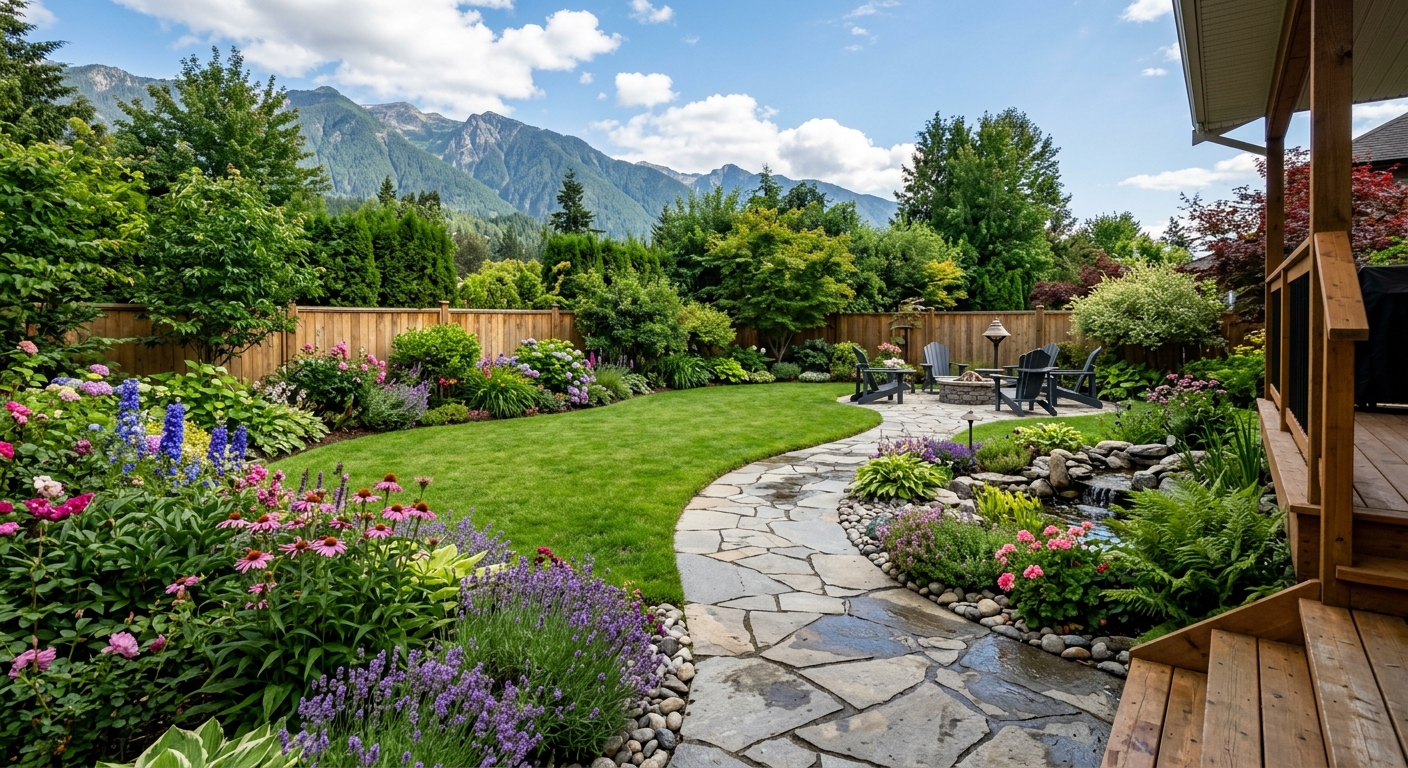
Landscaping options and costs in Palliser
Palliser, Alberta homeowners typically look for landscaping that can handle chinooks, winter kill, and intense freeze–thaw cycles without turning the yard into a yearly maintenance project. With a local population of just 3,285 (Statistics Canada, 2021 Census), the contractor market is smaller than bigger Calgary hubs, so availability can affect scheduling and pricing—especially during spring and early fall. In many detached neighbourhoods, owners have the space and long-term incentive to upgrade yards gradually or do a full front-and-back refresh, which is why comprehensive installs are in steady demand.
In the Calgary region’s prairie hardiness zone 3–4, late-spring frosts and early fall cold snaps compress the install window. That timing matters for labour costs, because base prep, grading corrections, and hardscape foundations often take longer to do “right” when the ground is too wet or temperature swings threaten materials and compaction. Freeze–thaw also raises the stakes for patios, walkways, and retaining walls: crews typically need deep, well-compacted bases and proper drainage so pavements don’t heave and wall footings don’t heave over time.
Demand is especially strong around residential growth pockets and established streets where front yard curb appeal directly impacts resale—commonly in areas like the Palliser Estates area—where homeowners balance drought-tolerant planting with durable hardscape. If you’re comparing budgets, the table below will help you match common scope options to realistic Palliser price bands.
| Service |
Description |
Season |
Price Range |
| Full landscape design and installation |
Site walk, concept-to-final plan, grading and drainage, hardscape, planting, and irrigation where needed |
Late spring through early fall |
$10,000–$45,000 |
| Sod installation (supply, grade, lay, roll) |
Existing turf removal (if required), soil prep, base grading, sod supply, layout, rolling, and start-up watering plan |
May–September (best when soil is warm) |
$2,000–$6,000 |
| Lawn seeding (grade, seed, starter fertilizer) |
Light grading, seed blend selection for zone 3–4, starter fertilizer, raking, and establishment watering schedule |
April–June and early fall (weather dependent) |
$1,500–$3,500 |
| Interlocking patio or walkway |
Excavation, compacted base, edging, interlocking stones, and joint sand; includes basic site grading |
May–September |
$8,000–$30,000 |
| Retaining wall (interlocking block) |
Block system, drainage behind wall (weep holes/stone), base excavation and compaction; length and height dependent |
May–September |
$10,000–$40,000 |
| Tree and shrub planting |
Soil amendment, planting, staking as required, mulch, and post-plant watering plan |
Spring and early fall |
$900–$14,000 |
Prices are estimates only and vary by project scope, site access and material selection.
What affects the price of landscaping in Palliser
In Palliser and the broader Calgary region, it’s common to see quotes for the same “basic” yard improvement vary by 30–50%. The reason usually isn’t the labour rates alone—it’s the hidden scope. Two contractors can both say “patio plus planting,” but one includes deep base excavation, proper drainage, and soil amendment while the other assumes the existing subgrade is adequate. In a freeze–thaw climate, those choices directly change materials, equipment time, and how long the crew must work to achieve proper compaction.
Hardiness zone and frost timing also matter. With prairie zone conditions (3–4) and late-spring frosts, sod and some planting work can’t start until soil is workable and temperatures stabilize. Retaining wall base work must reach below the local frost-affected zone to reduce heaving risk, which increases excavation depth and disposal costs.
Local conditions can raise or lower costs quickly. For example: (1) If your front yard slopes toward the house, crews often add grading correction and subdrainage—pushing you from a lower end patio range (for example, $8,000–$30,000) toward the higher end once drainage beds and thicker bases are required. (2) If you want a mixed border with native shrubs and a few hardy trees, you might stay closer to the “tree and garden planting” band (often $800–$15,000). But if you request mature specimens (larger caliper trees or multiple replacements), planting totals rise due to bigger root balls, staking, and longer install time. (3) If the yard has heavy clay or poor drainage, soil amendment and potentially a drainage bed or French drain become necessary—adding labour and material but preventing foundation moisture and pooling.
Finally, housing-stock age plays a role. Older lots may have deeper utilities, older fill, or uneven base layers, which can increase excavation time and base prep depth. Younger lots may have less regrading, but still require frost-resilient bedding under hardscapes and correctly sequenced irrigation lines for the shorter growing season.
| Price Factor |
Why It Matters |
Cost Impact |
| Yard size in sq ft — the primary cost driver for softscape |
More turf, seed, mulch, and bed area means more topsoil, materials, and labour time |
Can swing budgets by 20–40% |
| Grading and drainage work — slope corrections add significant cost |
Freeze–thaw and pooling risk demand corrected slopes away from foundations |
Often adds several thousand dollars |
| Drainage bed or French drain installation |
Captures and redirects water to reduce foundation moisture and heaving |
Typically a mid-to-high four-figure add-on |
| Plant material tier — native shrubs vs. ornamental vs. mature specimen trees |
Larger or more ornamental plants cost more and take longer to install properly |
Can change planting cost by 2–3x |
| Hardscape vs. softscape ratio — walls and patios cost more per sq ft than lawn |
Excavation, base thickness, and materials drive hardscape pricing |
Rebalances totals quickly; walls/patios dominate |
| Irrigation system design and installation |
Zone-based drip/sprinkler layouts prevent overwatering and support winter-ready turf |
Often adds substantial labour and equipment costs |
| Soil amendment and topsoil required |
Poor soil needs amendment for rooting and to reduce winter heave |
Can add moderate-to-high material costs |
| Tree removal or stump grinding before new planting |
Clearing affects access, disposal, and how soon the base can be prepped |
Frequently adds a few thousand dollars |
Permits & regulations in Alberta
For most residential landscaping in Alberta, you typically do not need a permit for planting, sodding, and standard softscape work like seeding, mulching, and shrub installation. The common exception is when work creates a structure that changes the engineered safety profile—most notably retaining walls above the local height threshold. In many municipalities, that threshold is around 1.0 m (3.3 ft), and a building permit may be required. Some retaining-wall projects also need engineered drawings depending on wall height, soil conditions, and how the wall is constructed.
Also watch for approval triggers tied to drainage. Any change to lot grading that redirects water toward a neighbouring property or toward storm sewer connections can trigger additional requirements. In all cases, get the contractor to confirm the exact scope and whether permits are included. As a baseline safety step, have utility locates completed before digging—especially for wall footings, irrigation lines, and planting holes near services.
To verify a contractor in Palliser, do this step-by-step: (1) Confirm the contractor’s Alberta licence/registration status through the appropriate provincial registry channels (many landscaping contractors have trade or business registrations you can verify online). (2) Request a certificate of insurance and verify general liability coverage is current and includes landscaping/hardscape operations. (3) Ask whether workers are covered under WCB/WSIB-style coverage (depending on employer setup) and request a clearance letter or evidence of coverage. Don’t rely on verbal confirmation—collect documents before work starts.
Planning a landscape that thrives in Palliser's climate
Planning for Palliser means working with prairie conditions: zone 3–4 hardiness, sharp temperature swings, and severe freeze–thaw cycles. Start with plant selection. Prioritize native and zone-appropriate perennials, shrubs, and hardy trees that can tolerate wind exposure and short summers with less irrigation. Next, be realistic about sod versus seed. Sod looks great immediately, but in southern Alberta it’s a premium because it relies on consistent soil conditions for installation and establishment; it can cost about 3–4x per sq ft versus seeding, especially when subgrade prep is needed.
Drainage and grading are the difference between a curb-appeal yard and a failing one. In Calgary’s soils, water pooling near foundations can cause moisture problems and destabilize paving bases. For patios, retaining walls, and walkways, contractors should prep to a frost-resilient base depth and include edge restraint and proper slope away from structures. For water-smart design, consider xeriscape and rain-garden elements: mulch reduces evaporation, groundcovers limit bare soil, and drip irrigation with zoned control targets the plants that actually need it.
Here’s a cost example that often justifies the spend: if you have a small lawn repair area and you choose sod, you might pay around $2,000–$6,000 for installation depending on area and prep. If you’re working within a tight budget, seeding (often $1,500–$3,500) can be a better fit—provided you can commit to establishment watering. Many Palliser homeowners combine options: seed for broader areas, sod only where foot traffic or appearance demands instant coverage.
| Element |
Climate Consideration |
Maintenance Level |
Price Band |
| Sod lawn installation |
Best when soil warms; needs strong base prep to survive winter freeze–thaw |
Medium (watering and mowing during establishment) |
$2,000–$6,000 |
| Native perennial garden |
Zone-appropriate plants handle cold snaps and wind; mulch protects roots |
Low to medium (spring cleanup and occasional weeding) |
$900–$6,000 |
| Mulched shrub border |
Drought-tolerant shrubs reduce irrigation demand during dry spells |
Low (top up mulch and spot-prune) |
$1,500–$8,500 |
| Interlocking stone patio |
Requires deep, well-compacted base and proper drainage to prevent heaving |
Low (periodic joint sand/top-up) |
$8,000–$30,000 |
| Retaining wall (block) |
Base depth and drainage behind the wall are critical in freeze–thaw |
Low (inspection and drainage checks) |
$10,000–$40,000 |
| Drip irrigation system |
Zoned drip conserves water and targets roots; winterization planning helps |
Medium (seasonal adjustments and monitoring) |
$2,500–$9,500 |
How to choose a landscaping contractor in Palliser
Choosing the right landscaping contractor in Palliser is about evidence, not promises. Start by verifying licensing/registration where applicable in Alberta, then request insurance documentation. You should see a current certificate of general liability insurance that matches the work you’re hiring for (hardscape excavation, wall building, irrigation installation, and landscaping operations). Next, confirm workplace coverage: ask for WCB/WSIB-style coverage evidence and a clearance letter or proof the employer is in good standing. Don’t accept “we’re covered” without paperwork.
Then get 2–3 itemised written quotes. You want a breakdown that separates labour from materials and explains scope items: excavation volume, base thickness, drainage methods, edging type, and plant counts and sizes. A lump-sum quote can hide big differences and lead to change orders.
Read the scope carefully for what’s excluded. Is permit pulling included (if required for a retaining wall above the municipal threshold)? Is disposal included for excess soil or old turf removal? Are topsoil and soil amendment specified? Is irrigation included only as piping, or does it include controllers, zones, and coverage testing? Warranty matters too: ask for the workmanship warranty length (and what it covers) and the product/manufacturer warranty terms—also whether you can transfer coverage to future owners if you sell.
Payment schedules should protect you. Avoid paying more than 10–15% upfront; hold back a portion until the complete walkthrough and cleanup are done. Get the timeline in writing with a start date target and completion estimate—spring weather can shift, but a clear schedule reduces surprises.
- Verify Alberta licence/registration status before work starts.
- Collect certificate of insurance (current date and correct contractor name).
- Request WCB/WSIB-style coverage proof/clearance letter.
- Demand itemised quotes: separate excavation, base materials, drainage, and planting/labour.
- Confirm disposal is included (soil, old turf, packaging debris).
- Ask for base thickness details for patios/walkways and frost-resilient bedding.
- Confirm drainage design: slope requirements and any French drain components.
- Get a written planting list (plant species, sizes, quantities, spacing).
- Ask who does irrigation: design, zoning, install, and testing.
- Review warranty terms in writing (workmanship duration and exclusions).
- Plan payment: no more than 10–15% upfront; final holdback after walkthrough.
- Ensure timeline is written with start/completion estimates and weather contingency notes.
Red flags to watch for in Palliser: (1) no written scope or vague descriptions like “standard base prep” without thickness; (2) reluctance to provide insurance/WCB/WSIB proof; (3) insisting on full upfront payment; (4) promising “instant sod” without discussing soil prep and compaction; and (5) skipping drainage behind retaining walls or claiming it’s optional in a freeze–thaw climate.
Frequently asked questions — landscaping in Palliser
How much does professional landscape design cost?
In Palliser, professional landscape design is often priced as part of a full design-and-install package or billed separately depending on how detailed you need the plan to be. For many homeowners, the most cost-effective approach is tying design to installation so the design time directly informs the grading, hardscape base, and plant quantities. If you’re only doing design, budgets can vary widely based on whether you want concept sketches, a detailed planting plan, and irrigation layout. As a reference point for the overall project, many comprehensive installs land in the mid five-figure range (labour and materials together), and design typically forms a portion of that. Also note Palliser’s prairie zone 3–4 timing—design that assumes “easy year-round planting” won’t match the late-spring and early-fall frost reality (Statistics Canada, 2021 Census).
How do I compare landscaping quotes?
To compare quotes in Palliser, insist on itemised scopes rather than “lump sum” totals. Look for differences in grading and drainage (slope corrections, whether a French drain or drainage bed is included), base depth and compaction standards for patios/walkways, and whether topsoil/soil amendment quantities are specified. Compare planting lists too: the number of plants, their sizes at installation, and whether native or ornamental stock is proposed. For irrigation, confirm the number of zones and whether drip/sprinkler type is appropriate for drought-tolerant planting. A quote that lands lower may omit drainage behind retaining walls or underspec base prep—an expensive shortcut in a freeze–thaw climate. As a simple check, if one quote is for a retaining wall around $10,000–$40,000 and another is far below that without explaining drainage, footings, or wall height, ask what’s missing before you decide.
How long does a landscaping project take in Palliser?
The timeline depends on weather, site access, and whether the scope includes hardscape base prep, drainage, and irrigation. In Palliser and the Calgary area, most crews aim to complete exterior work between late spring and early fall because of late-spring frosts and early cold snaps. A small planting-only project can be finished in a day or two, while sod or seeding plus soil prep may take several days depending on grading and access. Interlocking patios and walkways usually require more time due to excavation, base compaction, and curing/settling steps before final surfacing. Retaining walls take longer because proper drainage behind the wall and correct base depth must be built in sequence. For reference, multi-step projects that combine grading, drainage, hardscape, planting, and irrigation commonly span multiple weeks from start to completion, not a single weekend.
What is the best grass type for a Palliser lawn?
In Palliser’s zone 3–4 climate, the best grass choice is typically a cold-hardy turfgrass mix designed for Alberta’s freeze–thaw cycles and dry stretches. Many homeowners do well with perennial rye or blends that include turf types selected for durability, plus proper establishment practices (seed depth, light rolling, and consistent early watering). If you’re doing seeding, choose a seed mix recommended for northern climates and confirm the seeding rate and starter fertilizer are included. If you’re laying sod, ask whether it’s a frost-tolerant sod cultivar suited to Alberta conditions and whether the contractor will address soil drainage before installation—because poor drainage is a common reason for patchy lawns come spring. Regardless of type, mowing height and fall timing affect winter survival, and early fall seeding often works well when temperatures allow germination.
When should I aerate and overseed my lawn in Palliser?
For Palliser, plan aeration and overseeding around the periods when the lawn can recover before the temperature drops sharply. Late spring after frost risk is typically safer, but early fall can also work if soil temperatures remain warm enough for germination. The key is to aerate when the lawn is actively growing enough to bounce back quickly—then overseed with an appropriate blend and use a starter fertilizer. If you aerate too late in the fall, seedlings may not establish before cold snaps. Also, prioritize watering during establishment (deep, less frequent so roots grow, not constant shallow watering). If your lawn suffers from drainage issues, fix grading or consider drainage improvements first; aeration alone can’t fix persistent pooling. When budgets are tight, this can be a cost-effective alternative to full sod replacement, often staying within lawn work bands like $1,500–$3,500 for seeding depending on area.
What trees grow best in Palliser's climate zone?
In Palliser’s prairie zone 3–4 conditions, “best” trees are the ones that handle cold winters, wind exposure, and summer drought without excessive watering. Homeowners commonly do well with hardy deciduous options such as Manitoba maple and some types of poplar/aspens (fast growers that tolerate cold), plus colder-climate hardy varieties of spruce and pine for structure through winter. The right choice also depends on your yard’s sun exposure and soil drainage—trees struggle if the site is constantly wet or compacted. If your yard is near hardscape, ask the contractor how they’ll protect roots and maintain clearance from patios/walkways. For purchasing and planting, realistic budgets for tree and shrub installation commonly fall around $800–$15,000 depending on the number of trees, their size at planting, and whether staking and soil amendment are needed. A good contractor will match species to your frost and watering reality rather than a “one-size-fits-all” list.