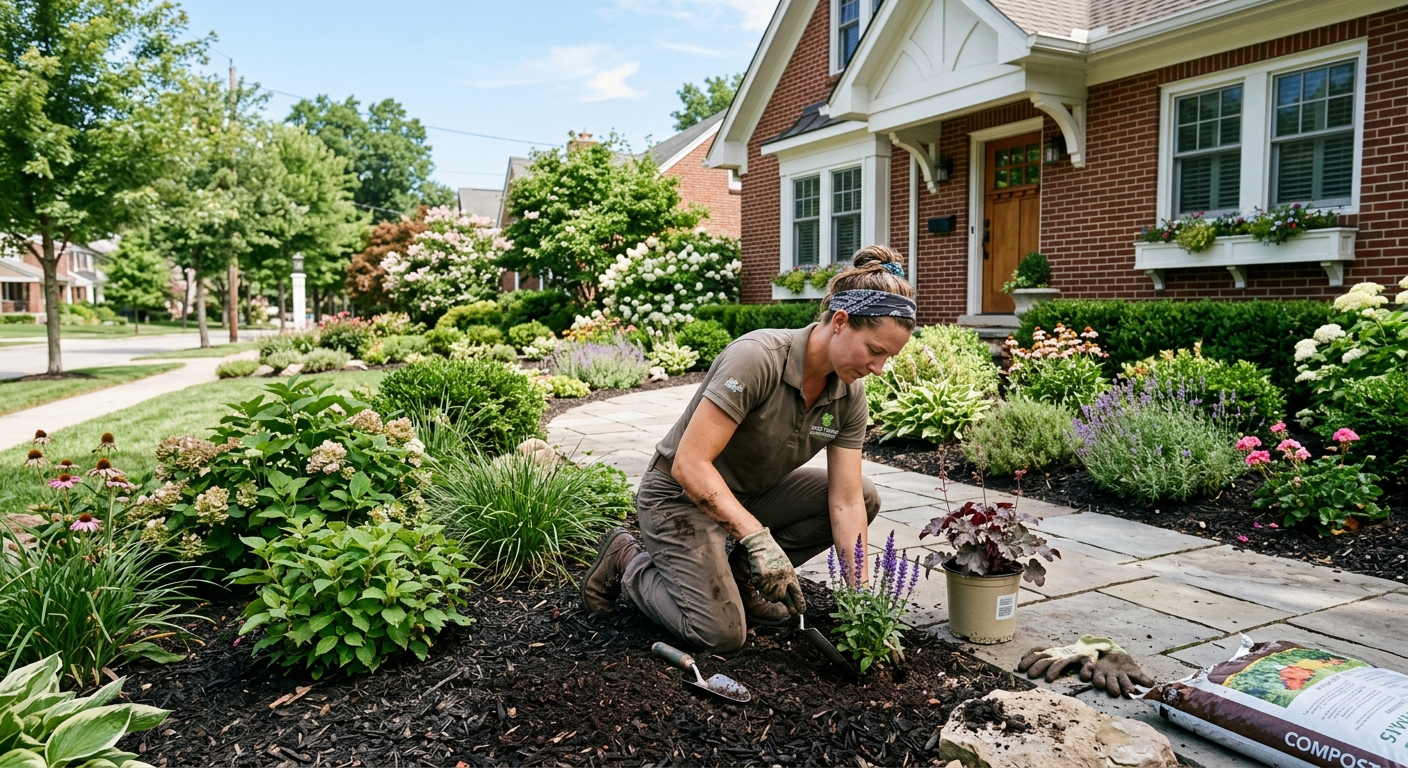
Landscaping options and costs in Panorama Hills
Panorama Hills homeowners typically start with a clear goal—more usable yard space, better curb appeal, or fixing drainage—and then compare options side by side. With a population of 25,535 (Statistics Canada, 2021 Census), there’s enough ongoing housing activity in the Calgary region to keep crews busy, which matters for scheduling and pricing. Panorama Hills’ mix of newer single-detached properties also means many lots have the space to invest in hardscape, tree planting, and irrigation upgrades rather than only patching turf.
In Calgary and surrounding communities, landscaping cost is strongly shaped by prairie plant hardiness zones 3–4, late spring frosts, and early fall cold snaps. Freeze–thaw cycles are severe, so patios, walkways, and retaining walls need deep, well-compacted bases and proper drainage to avoid heaving and settlement. That adds labour and base material depth compared with milder climates. Availability also shifts: crews often concentrate on May to early October, and contractors prioritize projects that can be completed and inspected within the workable window.
In Panorama Hills, this trade is especially in demand around the older-to-maturing pockets near the community’s established streets where driveways, back patios, and side yard drainage improvements are common. If you’re comparing a full refresh to smaller upgrades, the table below gives practical price bands for typical scope levels.
| Service |
Description |
Season |
Price Range |
| Full landscape design and installation |
Site walk, grading plan (as needed), base prep, hardscape, softscape, soil amendment, planting, and irrigation (where included) |
May–October (weather permitting) |
$10,000–$45,000 |
| Sod installation (supply, grade, lay, roll) |
Grade/leveling, topsoil preparation, sod delivery and install, light rolling, initial watering plan |
Late April–September (avoid frozen/soak days) |
$2,500–$6,000 |
| Lawn seeding (grade, seed, starter fertilizer) |
Light grading, seed selection for Calgary conditions, starter fertiliser, raking and initial watering schedule |
April–June or late August–September |
$1,500–$3,500 |
| Interlocking patio or walkway |
Excavation, compacted base, edging, interlocking stone, and joint sand |
May–October |
$8,000–$28,000 |
| Retaining wall (interlocking block) |
Block wall with drainage gravel and weep provisions where required, base excavation and compaction |
May–September (freeze risk considered) |
$12,000–$40,000 |
| Tree and shrub planting |
Soil prep, planting pits, amendments, mulch, and a care plan for establishment |
May–October (install before heat stress where possible) |
$1,200–$15,000 |
Prices are estimates only and vary by project scope, site access and material selection.
What affects the price of landscaping in Panorama Hills
In Panorama Hills, it’s normal to see quotes for the “same job” vary by 30–50% across Calgary and Alberta because landscaping scope is easy to underestimate. Two contractors can propose the same finished look, but differ on base depth, drainage details, soil amendments, plant size, and whether irrigation is included—those choices change both labour time and material consumption. Labour also tends to represent a large share of total cost; in a busy Calgary season, faster scheduling and ready crews can reduce downtime, while complex grading and hauling can drive the price up.
Prairie plant hardiness zones 3–4 mean the working window is shorter than in long-season regions. Late spring frosts and early fall cold snaps also affect how quickly we can finish and cure bases, especially under patios and retaining wall footings. A retaining wall in Calgary isn’t just “stacked block”—the base depth must reach below the frost zone and be well-compacted with drainage behind it to prevent freeze–thaw heaving. By comparison, coastal BC’s longer growing season (often Zone 7–8) supports broader palettes, but heavy-rain drainage design is still crucial there. In BC’s dry interior, water-use restrictions can push budgets toward drip irrigation and soil improvement; southern Alberta still sees periodic restrictions, so efficient controller and zoned irrigation design is commonly included. Southern Ontario (Zone 5–6) generally has a longer, more moderate season, which can reduce labour pressure versus Calgary.
Concrete examples in Panorama Hills: (1) a sloped backyard that needs regrading and swales typically adds cost quickly because excavation and hauling increase; (2) “instant curb appeal” requests—like upgrading from seeding to sod—often jump budgets because sod can cost several times more per square foot; and (3) choosing a mix of ornamental shrubs versus hardier native, zone-appropriate plantings changes the plant ticket and ongoing winter protection needs. That’s why a mid five-figure landscape package can land anywhere from the lower end near $10,000–$15,000 to full projects approaching the upper end near $45,000, depending on grading, drainage and hardscape.
| Price Factor |
Why It Matters |
Cost Impact |
| Yard size in sq ft — the primary cost driver for softscape |
More turf/planting area means more excavation, soil amendments, seed/sod, and labour hours |
High (directly scales cost) |
| Grading and drainage work — slope corrections add significant cost |
Regrading to manage runoff affects foundation protection and reduces freeze–thaw damage |
High (excavation + rehaul) |
| Drainage bed or French drain installation |
Subsurface drainage requires deeper work, clean stone, and proper tie-in points |
Medium to high |
| Plant material tier — native shrubs vs. ornamental vs. mature specimen trees |
Hardier natives often establish faster with less winter risk; larger specimens cost more and require handling |
Medium (plant prices vary widely) |
| Hardscape vs. softscape ratio — walls and patios cost more per sq ft than lawn |
Stonework depends on base depth, compaction, edging, and labour-intensive cutting |
High for higher hardscape areas |
| Irrigation system design and installation |
Zoned layouts, controller choice, and trenching depth for lines affect cost and long-term water efficiency |
Medium to high |
| Soil amendment and topsoil required |
In Calgary’s freeze–thaw environment, proper soil structure supports roots and reduces future settling |
Medium (depends on existing soil) |
| Tree removal or stump grinding before new planting |
Removal/disposal or grinding adds equipment time and affects the schedule |
Medium (can become high) |
Permits & regulations in Alberta
In Alberta, most routine landscaping—planting, sodding, lawn seeding, mulch refreshes, and typical softscape installs—generally does not require a permit. The main “permit triggers” homeowners should watch for are retaining walls above local height thresholds and any work that changes lot grading in a way that affects drainage toward neighbouring properties or storm connections.
Retaining walls are the most common exception. Many municipalities require a building permit for retaining walls above a threshold that is often around 1.0 m (3.3 ft), and some situations call for engineered drawings depending on height, soil conditions, and how the wall is constructed. Also, if your plan includes changing drainage patterns—like regrading to direct runoff to a storm sewer connection—approval may be required.
Before digging, call for utility locates. Even for “just planting holes,” lines for irrigation, power, gas, or low-voltage services can be present. Step-by-step for Panorama Hills homeowners: (1) ask the contractor for their Alberta licence details and confirm them through the relevant online registry; (2) request a current certificate of insurance showing general liability coverage; (3) confirm WSIB/WCB coverage where applicable; (4) request a clearance letter or evidence of account status, if the contractor uses subcontractors; and (5) ensure the scope states who is responsible for any required approvals and locates.
Finally, confirm irrigation and water-use bylaws locally. While Alberta’s restrictions are less stringent than some interior BC periods, drought conditions still change watering expectations, and smart controllers plus zoned systems help you stay compliant.
Planning a landscape that thrives in Panorama Hills's climate
Planning for Panorama Hills means working with Calgary’s zone 3–4 reality: cold winters, freeze–thaw cycles, and a shorter growing window. Start with plant selection—choose hardy, zone-appropriate species (often native or proven drought-tolerant varieties) so you’re not relying on heavy winter protection or constant watering. For sod versus seed, think speed versus cost and risk: sod gives instant coverage, but the surface can dry out or slip if base prep and rolling aren’t done properly; seed costs less and is often more forgiving for establishing during the right spring or fall temperatures.
Drainage and grading are non-negotiable. If you have downspout runoff, sloped lots, or historically wet spots, build grading so water flows away from foundations and toward intended drainage pathways. For patios, walkways, and retaining walls, base preparation needs to account for the local frost line: deep, well-compacted bases and correct drainage layers reduce heaving and settlement. Low-maintenance design strategies also matter—mulched shrub borders, groundcovers, and perennials reduce mowing and help soils stay insulated in winter.
For a yard that fits water realities, consider xeriscape or a rain-garden approach: use drought-tolerant plants in zones, add compost and mulch to improve moisture retention, and route downspout overflow into a designed infiltration area where appropriate. On cost, a practical example: if you want a lawn area that’s 2,000 sq ft, sod can push you toward $2,500–$6,000 quickly, while seeding might be closer to $1,500–$3,500 once grading is minimal—savings are usually justified when you can wait for establishment and you still want the same functional green space.
| Element |
Climate Consideration |
Maintenance Level |
Price Band |
| Sod lawn installation |
Needs good base prep and proper watering/rolling during early establishment; freeze risk if laid too late |
Medium (initial watering + monitoring) |
$2,500–$6,000 |
| Native perennial garden |
Hardier species handle zone 3–4 winters better and tolerate dry spells with less reliance on irrigation |
Low to medium (seasonal pruning/weeding) |
$2,000–$9,000 |
| Mulched shrub border |
Mulch insulates roots through freeze–thaw and reduces evaporation during chinooks and dry periods |
Low (replenish mulch as needed) |
$1,200–$6,500 |
| Interlocking stone patio |
Requires a deep, compacted base and proper drainage so winter movement doesn’t heave slabs |
Low (occasional joint sand/cleaning) |
$8,000–$28,000 |
| Retaining wall (block) |
Must include drainage gravel/weep provisions and reach below frost depth for stability |
Low (periodic visual checks) |
$12,000–$40,000 |
| Drip irrigation system |
Zoned drip reduces water waste and supports drought-tolerant plant establishment in Prairie conditions |
Medium (seasonal tune-ups) |
$1,800–$7,500 |
How to choose a landscaping contractor in Panorama Hills
Choosing the right contractor in Panorama Hills starts with verification, not photos. In Alberta, ask for their Alberta licence (where applicable to their scope), current general liability insurance, and WSIB/WCB coverage evidence. How to check: (1) confirm the licence/standing using the appropriate online registry; (2) request a certificate of insurance and verify coverage limits are active (and that it lists you as an interested party if they offer it); (3) ask for proof of WSIB/WCB account status/clearance letter or comparable documentation before work begins; and (4) ensure subcontractors are also covered.
Next, get 2–3 itemised written quotes. Look for a breakdown that separates labour, excavation/grading, base materials, drainage components, stonework, planting, and irrigation (if included). Avoid lump-sum quotes that hide assumptions. Carefully read exclusions: is disposal/haul-away included? Are topsoil and soil amendment included? Is permit work included if a wall threshold triggers approval?
Warranty matters. Request a workmanship warranty length (for example, base and stone/installation issues) and confirm the product/manufacturer warranty on materials such as irrigation equipment or specific plants. Clarify whether warranties are transferable if you sell the home.
For payment, never pay more than 10–15% upfront. Hold back a portion until final walkthrough and completion. Insist on a start date and completion estimate in writing, since Alberta weather can move schedules—especially when freeze risk tightens the end-of-season window.
- Provide a detailed scope map or site plan sketch with measurements and quantities.
- List base depth and drainage layers for patios/walkways/retaining walls.
- Confirm which sod/seed/plant varieties are included (not “generic sod”).
- State who installs irrigation and whether it includes controllers and zoning.
- Include disposal/haul-away details (and approximate truck/trips if known).
- Show allowance pricing for premium materials and what triggers change orders.
- Document topsoil/soil amendment type and rate (by volume or depth).
- Specify the schedule for inspections, especially for drainage tie-ins.
- Confirm cleanup standards at substantial completion and final completion.
- Provide a workmanship warranty in writing with exclusions spelled out.
- Use a payment schedule tied to milestones, not large early payments.
- Communicate how they handle weather delays and spring/fall frost risk.
Red flags to watch for in Panorama Hills: missing insurance or unwillingness to provide WSIB/WCB evidence; quotes with vague “allowances” that don’t list quantities; no stated drainage/base depth for hardscape (a major Calgary freeze–thaw risk); pressure to pay large deposits early; and a warranty that’s only verbal or doesn’t cover installation workmanship.
Frequently asked questions — landscaping in Panorama Hills
How much does a retaining wall cost in Panorama Hills?
In Panorama Hills, a typical interlocking block retaining wall often falls in the mid-to-upper five-figure range depending on length, height, and site conditions. For most homeowner-friendly backyard walls, many projects land around $12,000–$40,000. Price can move quickly when base excavation is deep (to get below frost influence), when drainage gravel and proper weep provisions are required, or when access limits how equipment and materials can be brought in. Older lots with existing slopes, poor runoff patterns, or difficult soil can also increase grading and hauling time. When you compare quotes, confirm they include drainage behind the wall and the same base depth; otherwise, you may be comparing two different engineering levels under Calgary’s freeze–thaw conditions.
When is the best time to landscape in Panorama Hills?
The best window for most landscaping in Panorama Hills is usually late April through September, because crews need workable ground conditions and you need time for plant establishment before early fall cold snaps. Sod is typically best when soil temperatures are suitable and the risk of late frost is lower; seeding can also work well in spring or late summer/early fall if temperatures remain stable. Hardscape (patios, walkways) and retaining wall work should be scheduled when we can achieve and compact base layers properly without frozen material. If your plan includes irrigation trenching, coordinating installation in the warm season helps avoid damaged lines from freeze-up. In practice, many jobs book earliest for May to early June, and later in summer for smaller plantings.
Do I need a permit for a retaining wall in Alberta?
Often, you don’t need a permit for routine planting or softscape, but retaining walls are the common permit trigger. In many Alberta municipalities, retaining walls above a threshold (frequently around 1.0 m or 3.3 ft) require a building permit, and some designs may need engineered drawings depending on height, soil conditions, and wall construction details. Additionally, if your project changes lot grading in a way that affects drainage direction toward neighbouring properties or storm connections, approvals may be needed. The best approach is to ask your contractor to confirm whether the planned wall meets the local threshold and whether permits are included in the scope. Also, confirm utility locates before any excavation for wall footings.
How do I improve drainage in my yard?
In Panorama Hills, improving drainage usually starts with correcting grading so water doesn’t pool near foundations, then adding targeted drainage components where runoff collects. A contractor may recommend a drainage bed or French drain to move water away from problem areas, paired with regrading and proper topsoil placement. If downspouts discharge toward a low spot, redirecting flow to a designed infiltration area or drainage channel can help. Freeze–thaw in Calgary makes this more urgent: water trapped in wrong locations can contribute to heaving around patios and wall bases. When getting quotes, ask specifically whether they include drainage gravel/pipe, how they tie in to existing drainage, and whether soil amendments and compaction methods are addressed. That’s where many cost differences come from.
What is xeriscaping and does it suit Panorama Hills?
Xeriscaping is a landscaping approach that reduces irrigation needs by using drought-tolerant, zone-appropriate plants and efficient planting design. In Panorama Hills (Prairie Zone 3–4 conditions), xeriscaping can suit many yards, especially where you want fewer maintenance tasks and less water use during dry stretches. The key is plant selection and soil work: mulch helps insulate roots and slow evaporation, while drip irrigation (often zoned) supports establishment without wasting water. Even if Alberta occasionally enforces water-use limits, good xeriscape design is about long-term success, not just compliance. If you’re comparing options, note that turning a lawn area from sod to drought-tolerant planting can change your budget, but drainage and base prep still matter anywhere you install patios or borders. Many homeowners find the reduced annual upkeep is worth it.
How do I plan a low-maintenance yard?
A low-maintenance yard in Panorama Hills is usually planned around fewer “high-effort” zones: reduce mowing by keeping lawn areas smaller, then build structure with mulched shrub borders, groundcovers, and perennials chosen for Zone 3–4 hardiness. Use efficient irrigation design if you install watering—zoned drip typically supports deep watering where plants need it. Drainage comes first: if water moves correctly away from foundations, plants are less stressed and hardscape lasts longer under freeze–thaw cycles. On cost, you can balance spending between statement elements and upkeep. For example, you might invest in an interlocking patio in the $8,000–$28,000 range while keeping planting simpler and more resilient. Ask contractors to propose a plant list with winter survivability and a practical care plan, not just a first-season look.