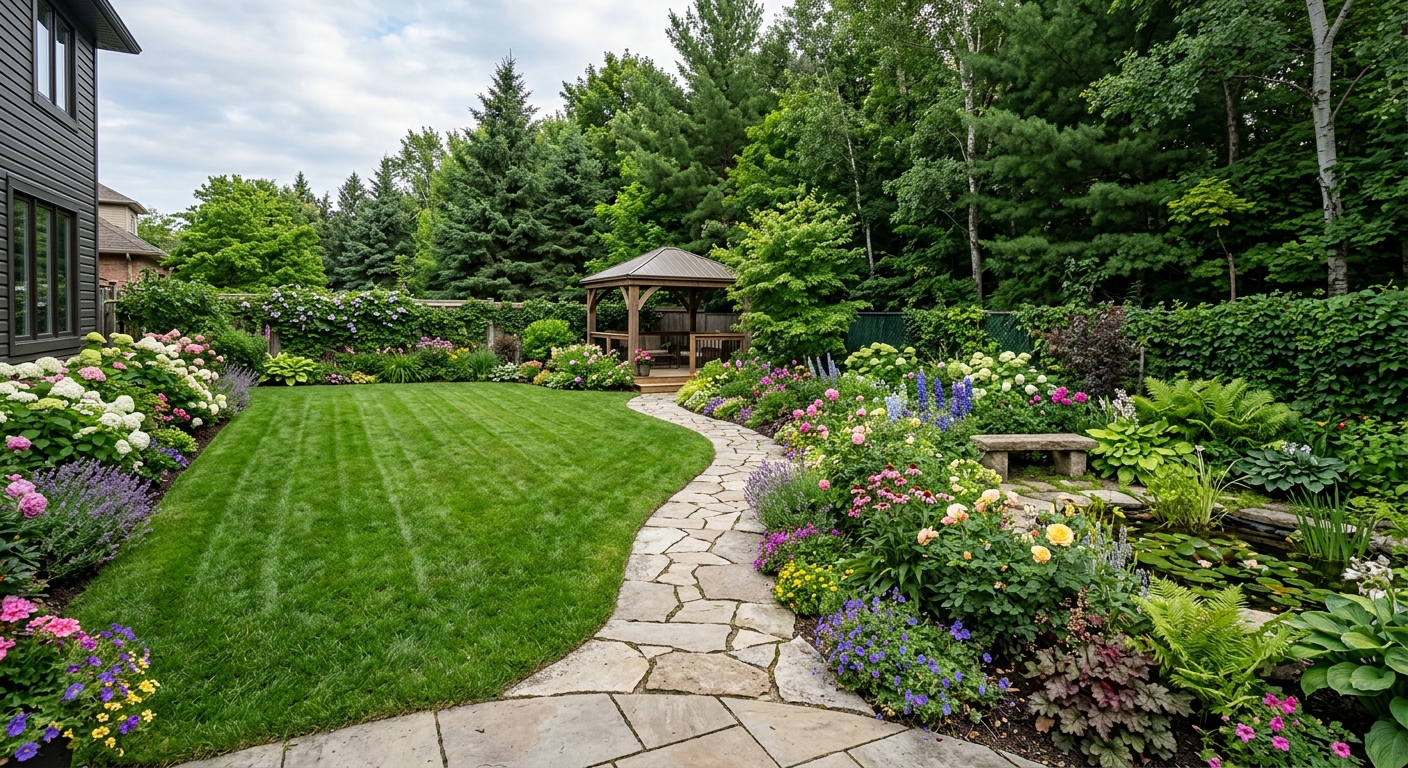
Landscaping options and costs in Shaganappi
Landscaping in Shaganappi is popular because many homes have room to improve curb appeal—locally, the Calgary-area profile shows 1,765 residents in this neighbourhood (Statistics Canada, 2021 Census). In practical terms, that mix of single-detached and family lots means driveways, walkways, and front-yard planting are often the first upgrades homeowners tackle, especially when winter fatigue makes yards look tired. On the contractor side, Calgary’s labour market and the Prairie hardiness zone play a big role: we’re working in Prairie plant hardiness zones 3–4 with late-spring frosts and early fall cold snaps, so crews typically schedule more work in narrower windows. Freeze–thaw cycles are severe here, which increases the attention we pay to deep, well-compacted base preparation under patios, walkways, and retaining-wall footings—those extra steps drive cost. In Shaganappi, work is especially in demand around the Shaganappi Point area where established homes often get refreshed with interlocking, planting, and improved drainage after long winters. Because landscaping in Calgary commonly falls into the mid five-figure range once grading, hardscape, planting, and irrigation are combined, quotes can vary widely based on access, soil conditions, and how much re-grading is required.
Below is a straightforward comparison of common options you’ll see in Shaganappi pricing, so you can benchmark the offers you receive and then fine-tune scope with your contractor.
| Service |
Description |
Season |
Price Range |
| Full landscape design and installation |
Site walk, concept + planting plan, grading/drainage, sod/seed or planting, hardscape, and optional irrigation |
May–October (extended spring/fall where soil allows) |
$5,000–$50,000 |
| Sod installation (supply, grade, lay, roll) |
Rough grade, topsoil/compaction, supply and lay sod, starter fertiliser and first watering plan |
Late April–September |
$1,500–$6,000 |
| Lawn seeding (grade, seed, starter fertilizer) |
Fine grade, seed blend, starter fertiliser, light roll and watering schedule |
April/May and early August (weather-dependent) |
$700–$3,500 |
| Interlocking patio or walkway |
Excavation, deep base, geotextile, compacted sub-base, pavers, edge restraints and joint sand |
May–September (best before freeze-ups) |
$3,500–$18,000 |
| Retaining wall (interlocking block) |
Excavate + compacted wall base, block placement, drainage gravel, weep system where required |
May–October |
$8,000–$40,000 |
| Tree and shrub planting |
Soil prep, planting layout, cold-hardy selection, staking where needed, mulch and first-season care |
Spring and early fall |
$800–$15,000 |
Prices are estimates only and vary by project scope, site access and material selection.
What affects the price of landscaping in Shaganappi
If you receive two quotes for what sounds like the same landscaping job, it’s not unusual to see differences of 30–50% across Calgary and broader Alberta. In Shaganappi, the biggest reason is that a “lawn + a few plants” scope is often missing the hidden work: deeper base prep for freeze–thaw resistance, drainage corrections, and soil amendment requirements. Prairie hardiness zones 3–4 also compress the working season—late-spring frosts and early fall cold snaps mean contractors try to maximize efficient scheduling. That affects labour availability and can raise rates if your job needs rework due to unsuitable ground conditions. Compare this to coastal BC’s longer growing season (Zone 7–8), where lush broadleaf options are common but drainage demands are shaped by heavy rainfall; and to southern Ontario (Zone 5–6), where the season is more forgiving, but you still plan around summer dryness. Calgary’s semi-arid conditions and periodic watering limitations generally push homeowners toward smart irrigation design, soil improvement, and drought-tolerant planting rather than high-water turf.
Concrete examples from Shaganappi that move costs up or down: (1) If your yard needs re-grading to direct water away from a foundation, you’re not just moving dirt—you’re adding labour, hauling, and sometimes extra sub-drainage. (2) Moving from a basic seeding plan to full sod can jump total lawn spend because sod installation typically sits in the $1,500–$6,000 band for many average yards, while design-inclusive full projects commonly land in the $5,000–$50,000 range once hardscape and drainage are included. (3) Older housing areas often have compacted soils and buried debris, which can add cost to excavation and soil replacement. Those effects matter more as you go bigger: a few extra truckloads or a deeper base can swing the overall number fast.
| Price Factor |
Why It Matters |
Cost Impact |
| Yard size in sq ft — the primary cost driver for softscape |
More area means more materials (topsoil, seed/sod, mulch) and longer labour time for prep and installation |
Often the largest swing: can change a project by several thousand dollars |
| Grading and drainage work — slope corrections add significant cost |
Freeze–thaw heave risk increases when water pools; correct slopes require excavation and re-compaction |
Typical increase of thousands when foundation drainage is involved |
| Drainage bed or French drain installation |
Subsurface water control prevents wet soil and winter movement under patios/walls |
Can add a mid-project “step-up” cost depending on trenching depth |
| Plant material tier — native shrubs vs. ornamental vs. mature specimen trees |
Hardy, smaller plants cost less; mature trees/shrubs require more handling, sometimes staking and protection |
May shift planting budgets from hundreds to several thousand |
| Hardscape vs. softscape ratio — walls and patios cost more per sq ft than lawn |
Pavers/blocks need excavation depth, base materials, and restraint systems |
High impact: tends to push projects into mid five-figure totals |
| Irrigation system design and installation |
Zones, backflow protection, controllers, and line routing take labour and careful layout |
Can add materially, especially for drip + smart zoning |
| Soil amendment and topsoil required |
Compacted Prairie soils often need improved structure; poor topsoil causes weak turf and stressed plants |
Small loads may be modest; large replacements can add thousands |
| Tree removal or stump grinding before new planting |
Additional equipment time and debris hauling; root material affects excavation planning |
Often a noticeable cost increase if access is limited |
Permits & regulations in Alberta
In Alberta, most planting, sodding, and typical softscape work does not require a permit. That includes seeding, installing mulch beds, planting trees and shrubs, laying sod, and building many standard garden borders. Where permits commonly enter the conversation is with retaining walls above a height threshold—often around 1.0 m (3.3 ft) in many municipalities—because wall loads and safety considerations may require a building permit and, in some cases, engineered drawings. Another trigger is changes to lot grading that affect how water drains toward neighbouring properties or how it connects to a storm system. Drainage issues matter in Calgary: improper slope correction can contribute to pooling, foundation moisture, and freeze–thaw movement.
Before digging for planting holes or wall footings, always ensure utility locates are completed. Contractors should arrange these; homeowners can confirm the process is happening and that digging won’t start until marks are on site. Also confirm local watering and irrigation rules. While Calgary’s restrictions can vary seasonally, Alberta generally pushes efficient watering practices—so drip irrigation, properly set controllers, and zone-based scheduling are valued.
To verify your contractor in Shaganappi, ask for: (1) their Alberta licence/registration details (and confirm they are active on the appropriate online registry), (2) a valid certificate of insurance showing general liability (and request it before work starts), and (3) confirmation of WSIB/WCB clearance (depending on their employer situation). If they can’t provide documentation promptly or won’t share clearance details, that’s a strong sign to pause.
Planning a landscape that thrives in Shaganappi's climate
To plan a landscape that thrives in Shaganappi’s climate, aim to work with the zone and frost rhythm instead of fighting it. Shaganappi falls within Prairie plant hardiness zones 3–4, where late-spring frosts and early cold snaps can stress tender plants, and freeze–thaw cycles can lift poorly built edges. Start with (1) plant selection: choose native or proven Calgary-hardy species that handle winter wind and periodic drought. We favour cold-tolerant shrubs, grasses, and perennials with strong root systems so they need less overwintering fuss. (2) Decide between sod vs. seed: sod gives instant green, but it’s typically 3–4x the per-sq-ft cost of seeding once you include prep and rolling. (3) Prioritise drainage and grading: Calgary homes are sensitive to pooling, especially near foundations and under eaves, so correct slopes and install drainage where water concentrates. (4) For hardscape like patios or retaining walls, base preparation should account for the frost line—deep, well-compacted sub-base prevents heaving and cracked pavers. (5) Keep maintenance low with groundcovers, mulched beds, and a layered perennial structure.
For water-wise design, consider a xeriscape-inspired layout: drought-tolerant planting grouped by watering needs, plus a small rain garden or bermed swale to absorb spring melt and short wet periods. A practical dollar example: if you’re deciding between seeding and sod for a typical front lawn area, upgrading to sod often lands in the $1,500–$6,000 band, while a seeding approach can be materially lower. That upgrade is justified when you need immediate curb impact for an upcoming sale or event; otherwise, seed plus good topsoil and smart watering frequently performs better long-term.
| Element |
Climate Consideration |
Maintenance Level |
Price Band |
| Sod lawn installation |
Needs consistent early watering to establish before summer heat and fall cold snaps |
Medium (establishment period), then lower after roots knit |
$1,500–$6,000 |
| Native perennial garden |
Cold-hardy roots handle freeze–thaw; group plants by watering needs |
Low to medium (spring cutback and occasional weeding) |
$800–$15,000 |
| Mulched shrub border |
Mulch buffers soil temperature swings and reduces evaporation |
Low (occasional refresh and shaping) |
$1,200–$10,000 |
| Interlocking stone patio |
Deep base and proper drainage stop heaving during Prairie freeze–thaw cycles |
Low (sweep and periodic joint sand top-up) |
$3,500–$18,000 |
| Retaining wall (block) |
Requires drainage gravel and compaction below frost movement zones |
Low (periodic inspection of drainage and weep areas) |
$8,000–$40,000 |
| Drip irrigation system |
Efficient watering supports drought-tolerant planting under restrictions |
Low (seasonal adjustments and checks) |
$1,000–$8,000 |
How to choose a landscaping contractor in Shaganappi
Choosing the right contractor matters more in Shaganappi than many people expect, because freeze–thaw performance depends on details: base depth, drainage design, and installation timing. First, verify Alberta coverage. Ask for their proof of general liability insurance (a current certificate of insurance) and confirm who the insured party is—don’t accept expired documents. Next, verify their WSIB/WCB coverage by requesting a clearance letter or equivalent proof they are properly registered. Also check that they are appropriately registered/licensed through Alberta’s relevant online registry resources—most reputable contractors will provide their registration info without hesitation.
Get 2–3 itemised written quotes that separate labour and materials (and, ideally, base prep vs. surface work). Avoid lump-sum-only proposals where it’s unclear whether sod includes grading, topsoil, and compaction, or whether a patio price assumes proper drainage and edge restraints. Read the scope carefully: is permit pulling included for any retaining wall work that crosses the height threshold? Is disposal/haul-off included for excavated material? Who supplies bedding sand, geotextile, and joint sand? Ask for the warranty in writing: workmanship warranty length, product/manufacturer warranty coverage, and whether it transfers if you sell the home.
Payment schedules should be reasonable. As a rule, never pay more than 10–15% upfront. Hold back the remainder until the job is complete and any deficiencies are corrected. Finally, insist on a timeline with a start date and completion estimate in writing—weather delays happen, but good contractors plan around frost risk and soil readiness.
- Ask for Alberta registration/licence details and confirm they match the company name on the quote.
- Request a certificate of insurance and verify coverage limits before work starts.
- Get WSIB/WCB clearance proof (clearance letter or equivalent documentation).
- Request an itemised quote: labour, materials, excavation, base materials, and disposal.
- Confirm what’s included in sod prep (grade correction, topsoil depth, compaction method).
- For patios and walkways, verify the specified base depth, geotextile use, and edge restraints.
- For drainage, require a clear plan: French drain depth/length and where water goes.
- Ask about soil amendment type and quantity (topsoil vs. screened loam vs. compost mix).
- Confirm plant warranty: what survives, how replacement works, and when.
- Clarify if irrigation is included (controller, backflow protection if applicable, and zones).
- Check the payment schedule and keep holdback until final inspection.
- Get warranty terms and maintenance expectations in writing (watering period, mulch refresh).
Red flags in Shaganappi: vague “materials included” language with no quantities, no written start/completion timeline, refusal to provide insurance/WSIB/WCB documentation, missing drainage details for patios/walls, and asking for most payment upfront before any hardscape base prep is complete.
Frequently asked questions — landscaping in Shaganappi
How much does sodding a yard cost in Shaganappi?
Sodding in Shaganappi typically lands in the $1,500 – $6,000 band for many standard front-yard areas once you include site grading, topsoil/compaction, sod supply, and installation. Your final price depends heavily on how much base correction is needed because freeze–thaw cycles punish low spots and poor compaction. Late-spring frosts also influence scheduling—if you’re too early and the ground is wet, compaction and rolling quality drop, which can affect how the sod roots. If you want a faster curb-appeal result for a sale, sod is usually justified; if you can wait for establishment, seeding can be a more budget-friendly route. Always ask whether disposal and topsoil depth are included in the quote.
How do I prevent weeds in my Shaganappi garden?
Weed prevention in Shaganappi starts with foundation prep and realistic expectations. First, eliminate existing weeds by removing roots and disturbed soil before planting beds—then install a proper weed-control layer under mulch (high-quality landscaping fabric in areas where appropriate). Use a 2–3 in (5–8 cm) mulch layer consistently; mulch reduces light to weed seeds and buffers temperature swings from chinooks and cold snaps. Choose hardy, zone-appropriate plants so you get quick canopy coverage—bare soil invites weeds. For lawn edges and transitions, maintain a clean border line (edging and a thicker mulch band help). In Alberta, watering practices matter: overwatering thin beds encourages weeds, while efficient drip or timed schedules with smart controllers supports established plants. If weeds still appear, spot-treat early rather than letting them seed.
How do I design a low-water yard in Shaganappi?
In Shaganappi, a low-water yard works best when you group plants by water needs and build soil to hold moisture during dry stretches. Start by selecting cold-hardy, drought-tolerant species suited to Prairie zones 3–4, and avoid “importing” high-water plants that struggle through winter stress. Use mulch beds and groundcovers to reduce evaporation, and plan efficient watering with zoned irrigation or drip tubing aimed at root zones rather than the whole landscape. Drainage design is also part of water-wise planning: corrected slopes prevent pooling, then controlled watering focuses on what actually needs it. If you’re budgeting, note that a full landscape project (design + installation + irrigation + grading) often falls into the $5,000 – $50,000 band, but even smaller upgrades like drip zones and soil amendment can deliver big savings without converting everything to sod.
How do I find a licensed landscaper in Shaganappi?
To find a reliable landscaper in Shaganappi, start by verifying Alberta registration/licence details through the relevant online registry resources and match the company name on the quote to the documentation you find. Then request proof of general liability insurance via a certificate of insurance (confirm it’s current) and ask for WSIB/WCB clearance documentation or a clearance letter. A reputable contractor should provide these before you sign anything and should answer questions about base prep and drainage clearly. Next, request 2–3 itemised written quotes—labour and materials broken out, not only a lump sum. This helps you compare apples to apples and ensures key items like topsoil depth, geotextile, drainage gravel, or sod prep aren’t quietly missing. If a contractor pressures you to pay large upfront deposits, that’s another warning sign.
How much does landscaping cost in Shaganappi?
Landscaping costs in Shaganappi vary by scope, but most homeowners can anchor expectations to mid five-figure project totals when grading, hardscape, planting, and irrigation are included. For context, full design and installation commonly falls in the $5,000 – $50,000 band depending on hardscape size, drainage complexity, and plant maturity. If your scope is narrower, sod installation often lands in the $1,500 – $6,000 band, while retaining walls and related drainage can run into the $8,000 – $40,000 range. The largest cost drivers are yard size, excavation depth for freeze–thaw durability, and how much re-grading is required to protect foundations. Weather timing also matters because late-spring frost risk affects when ground is workable for compaction and base construction.
What plants thrive in Shaganappi's climate zone?
Shaganappi’s Prairie zones 3–4 mean you should prioritise cold-hardy, wind-tolerant plants with proven performance in Calgary conditions. Look for native or locally proven shrubs and perennials that can handle winter temperature swings and early fall cold snaps, plus plants that tolerate periodic drought. A good strategy is layering: grasses for structure, perennials for colour, and shrubs for year-round form. For low-water designs, combine mulch, groundcovers, and drip irrigation so roots get targeted moisture while the rest of the bed stays protected. Your planting list should also consider sun and exposure: south-facing sites warm quickly and can dry fast, while sheltered corners often hold snow longer. A licensed landscaper can recommend specific varieties for your soil and light conditions and help you avoid “pretty but fragile” selections that struggle through Alberta’s freeze–thaw cycles.