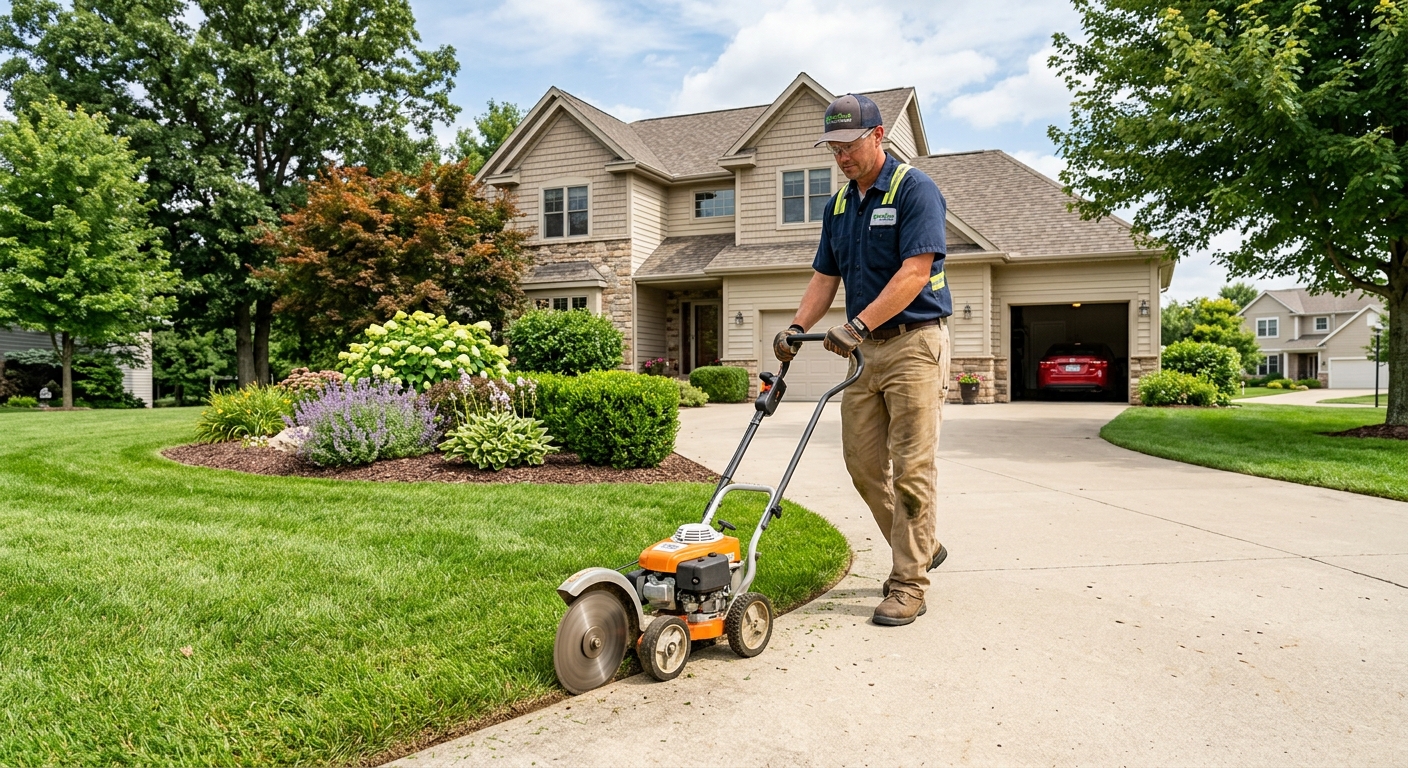
Landscaping options and costs in Terwillegar Towne
Terwillegar Towne is a fast-growing community in the Calgary economic region, and landscaping demand tends to rise as homeowners settle into their yards and plan upgrades. With the neighbourhood sized to a population of 6,627 (Statistics Canada, 2021 Census), contractor availability is generally good, but schedules can tighten during peak spring and early fall—right when freeze–thaw cycles and late cold snaps still affect what crews can install. Most detached properties here come with real outdoor space, which often motivates families to invest in curbs, walkways, and plantings rather than “small fixes.” In practice, that’s why many budgets land in the mid five-figure range once grading, hardscape, planting, and irrigation are bundled.
Calgary-area pricing is also shaped by the climate: Prairie hardiness zones 3–4 bring short working windows, severe freeze–thaw, and wind-chill exposure. To prevent heaving and failure, patios, retaining walls, and walkways need deep, well-compacted bases and drainage detailing—more than many homeowners expect when comparing quotes. Meanwhile, plant selection matters; drought-tolerant, cold-hardy species help reduce future watering costs in Alberta’s semi-arid conditions and periodic restriction periods.
If you’re comparing options, the table below shows typical ranges for common projects in Terwillegar Towne, so you can match scope to budget before requesting itemised quotes.
| Service |
Description |
Season |
Price Range |
| Full landscape design and installation |
Site visit, grading/drainage plan, hardscape and softscape install, and optional irrigation design |
May–Oct (weather-dependent) |
$10,000–$35,000 |
| Sod installation (supply, grade, lay, roll) |
Soil prep, grading/leveling, topsoil placement, sod delivery and installation, roll/edge trim |
Late Apr–Jun; Aug–Sep (best survival windows) |
$3,000–$7,500 |
| Lawn seeding (grade, seed, starter fertilizer) |
Light grading, seed selection, starter fertiliser, seeding, light rake and roll |
May–Jun; Aug (cooler soil temps) |
$1,500–$4,500 |
| Interlocking patio or walkway |
Excavation, deep base, geotextile, compacted sub-base, jointing sand, finishing |
May–Oct |
$8,000–$25,000 |
| Retaining wall (interlocking block) |
Excavation, compacted drainage gravel, geogrid/backfill (if needed), block installation |
May–Sept |
$12,000–$35,000 |
| Tree and shrub planting |
Soil amendments, planting, staking (if needed), mulching, initial watering plan |
May–Oct (with freeze-risk awareness) |
$1,800–$10,000 |
Prices are estimates only and vary by project scope, site access and material selection.
What affects the price of landscaping in Terwillegar Towne
In Terwillegar Towne (Calgary region), the same “headline” project can come in 30–50% apart because contractors often design to different durability standards. In our Prairie zones 3–4, freeze–thaw cycles are severe, and that directly impacts labour hours for excavation, base depth, compaction, and drainage—especially for retaining walls, patios, and any walkways that bear weight. The working season is also shorter due to late-spring frost risk and early fall cold snaps, so crews may price to protect schedule certainty when material delivery and curing windows are tight.
Plant costs and irrigation design can vary widely, too. Zone-appropriate, drought-tolerant shrubs and perennials typically cost less to maintain, but the “right” selection isn’t the cheapest plant from the list—it’s the one that survives our winters and wind without needing repeated replacements. For example, when builders compare sod vs. seed, sod offers instant visual impact but is usually about 3–4x the per-square-foot cost of seeding once supply and labour are included. Likewise, a full landscape package can land closer to $10,000–$35,000 when the scope is mainly planting and grading, but it trends toward $8,000–$40,000 territory for patios, walls, and base work that must be built for deep frost protection.
Concrete examples from homes in the Terwillegar Towne area: (1) If your property slopes toward a foundation or downspout line, drainage corrections add excavation and engineered base build-up; (2) If you’re adding a retaining wall to manage grade differences, the cost increases quickly with wall length, height, and the need for drainage gravel and backfill systems; (3) If access is tight (narrow side gate, mature trees), crews spend more time on hauling and placement, raising effective labour cost.
| Price Factor |
Why It Matters |
Cost Impact |
| Yard size in sq ft — the primary cost driver for softscape |
More area means more soil prep, materials, and installation time |
Can swing total softscape cost by 20–60% depending on coverage |
| Grading and drainage work — slope corrections add significant cost |
Proper drainage prevents pooling and foundation moisture, but requires excavation and re-compaction |
Often adds a few thousand dollars on top of basic planting |
| Drainage bed or French drain installation |
Creates a reliable path for water away from the house |
Can add material and labour equivalent to a mid-sized planting phase |
| Plant material tier — native shrubs vs. ornamental vs. mature specimen trees |
Hardiness and size affect survival rate, labour, and transplant handling |
May double material costs for the same “number of plants” |
| Hardscape vs. softscape ratio — walls and patios cost more per sq ft than lawn |
Hardscape requires deep excavation, base build-up, and compaction |
Shifts the project from lower five-figure to mid five-figure ranges quickly |
| Irrigation system design and installation |
Zoned, efficient systems prevent overwatering and reduce winter damage |
Can add several thousand dollars depending on zones and controller type |
| Soil amendment and topsoil required |
Improves rooting in compacted or poor native soils |
More import soil = higher hauling and placement costs |
| Tree removal or stump grinding before new planting |
Clears planting areas and avoids root competition/grade obstacles |
Often adds time and disposal/haul-off charges |
Permits & regulations in Alberta
In Alberta, most common yard upgrades in Terwillegar Towne don’t require a permit: planting beds, sodding and seeding, mulching, typical fencing, and most softscape work are generally handled as routine private property improvements. Where permits commonly come into play is with retaining walls above a height threshold (often around 1.0 m or 3.3 ft in many municipalities), and with any project that changes grading in a way that affects drainage patterns toward neighbouring properties or storm sewer connections.
Before anyone digs, always request utility locates. Even for planting holes or wall footings, locating underground services is the safe, standard first step and helps avoid costly repairs and delays.
Here’s a practical way a homeowner can verify an Alberta contractor and protect themselves:
- Check contractor business details in the online registry for the current licence status (and confirm the legal entity matches the contract).
- Request a Certificate of Insurance showing general liability for landscaping/contracting activities, and confirm the coverage is active for your job dates.
- Ask for proof of WCB coverage (or a clearance letter where applicable). Don’t accept “we’re covered” without documentation.
- Verify the scope includes disposal/haul-off if excavation is required (grading, drains, wall base material).
- Confirm who is responsible for any required permits if a retaining wall height or grading trigger applies.
Finally, confirm local irrigation and water-use bylaw requirements as part of your plan—even in Alberta, drought conditions and semi-arid scheduling can affect when and how irrigation is operated.
Planning a landscape that thrives in Terwillegar Towne's climate
Planning for Terwillegar Towne means working with Prairie zone 3–4 realities: strong winds, rapid temperature swings, and freeze–thaw that tests every base and rooting layer. Start with plant selection—choose cold-hardy, drought-tolerant species and local-adapted varieties that handle winter desiccation and summer dry spells with less fuss. Native and zone-appropriate shrubs and perennials generally require fewer watering cycles and better establishment than overly delicate ornamentals.
Next, decide between sod and seeding with your budget and timeline in mind. Sod gives instant curb appeal, but in Calgary-area pricing it’s typically 3–4x the per-square-foot cost of seeding once labour, delivery, and soil prep are included. That cost can be justified when you need fast visual results (for example, selling, hosting, or replacing an eroded lawn quickly). Seeding is usually the smarter value if you can accept a longer “green-up” period and protect the seed during establishment. If you want the lawn look sooner, an approach many homeowners use is seeding for most areas and sod for high-visibility stripes near the front steps.
Drainage and grading are non-negotiable in Calgary. Proper slope away from the foundation and well-drained base layers help prevent pooling and foundation moisture. For hardscapes like patios and retaining walls, base preparation must be built deep and compacted to tolerate the local frost line effects—otherwise you’ll see heaving, shifting pavers, and premature joint sand loss.
For low-maintenance design, use mulch, groundcovers, and perennial structure so the yard stays tidy with fewer interventions. Xeriscape and rain-garden concepts also work well here: they reduce irrigation demand while managing water flow during spring melt. The key is designing soil media and overflow paths so water doesn’t sit near foundations.
As a simple dollar example: replacing a worn lawn with sod at $3,000–$7,500 may be worth it if you need fast results, but switching to seeding at $1,500–$4,500 usually offers better value when your priority is long-term resilience and you can manage establishment.
| Element |
Climate Consideration |
Maintenance Level |
Price Band |
| Sod lawn installation |
Requires tight timing around late-spring and fall frosts; fast establishment helps resist wind stress |
Medium (watering during establishment, then routine mowing) |
$3,000–$7,500 |
| Native perennial garden |
Cold-hardy roots survive winters better; selection supports drought tolerance in Prairie summers |
Low to medium (spring tidy, occasional weeding) |
$2,000–$8,000 |
| Mulched shrub border |
Mulch moderates freeze–thaw and reduces moisture loss; shrubs handle wind once established |
Low (top up mulch, prune annually) |
$1,800–$6,500 |
| Interlocking stone patio |
Deep base and drainage prevent heaving from freeze–thaw |
Low (periodic joint sand refresh) |
$8,000–$25,000 |
| Retaining wall (block) |
Drainage gravel and proper backfill are essential to avoid movement during freeze cycles |
Low (inspection for drainage/settlement) |
$12,000–$35,000 |
| Drip irrigation system |
Zoned watering supports drought tolerance; smart controllers help match watering to Prairie conditions |
Medium (seasonal adjustments, winterisation) |
$2,500–$8,500 |
How to choose a landscaping contractor in Terwillegar Towne
Choosing a contractor in Terwillegar Towne is mostly about risk control: you want proof they can legally work, safely perform excavation, and stand behind workmanship. Start with Alberta licence verification: confirm the contractor’s business details and licence status via the appropriate online registry, and ensure the legal name matches the contract. Next, ask for an up-to-date Certificate of Insurance—general liability should cover your project scope and dates. For worker coverage, verify WCB/WCB clearance where applicable; request the document before work starts, not after.
When you get quotes, require 2–3 itemised written proposals instead of a single lump sum. A good quote breaks down labour and materials: excavation quantity, topsoil/import soil, geotextile, base depth/compaction, drainage components, plant lists and sizes, and irrigation parts (if included). Carefully read exclusions: confirm whether permits are included where required, whether disposal/haul-off is included for excess soil, and whether tree removal/stump grinding is part of the scope or extra.
Warranty matters in Calgary’s freeze–thaw environment. Ask for the workmanship warranty length for base and hardscape installation (pavers, wall blocks, edging) and whether product/manufacturer warranties apply to irrigation parts, sod, or plant material. Also ask if warranties are transferable to future owners.
For payment scheduling, avoid large upfront deposits. A common safe approach is no more than 10–15% upfront, with a holdback until completion and final cleanup. Finally, insist on a start date and completion estimate in writing so you can plan around the shortened spring/fall windows.
- Ask for proof of Alberta licence status and confirm the legal entity on the contract.
- Request Certificate of Insurance and verify it matches the job dates and scope.
- Provide WCB/WCB clearance documentation before digging begins.
- Get 2–3 itemised quotes with labour and material breakdown.
- Confirm base depth, geotextile use, and compaction method for patios/walkways.
- Specify drainage details (slope away from house, French drain/bed if needed).
- Require a written plant list: genus/species, cultivar, container size, and quantity.
- Clarify sod/seeding timelines, protection steps, and post-install watering guidance.
- Check what disposal/haul-off includes for soil excavation and debris.
- Confirm permit responsibility if a retaining wall height or grading triggers approval.
- Ask for workmanship warranty and product warranty terms in writing.
- Use a payment schedule with a holdback until final grading, cleanup, and handover.
Red flags to watch for in Terwillegar Towne: (1) a quote that won’t specify base prep depth/compaction for hardscape; (2) “universal” plant lists that ignore zone 3–4 hardiness and Alberta winter wind; (3) no documentation for insurance or WCB/WCB clearance; (4) pressure for large upfront payments; (5) vague scope language like “surface grading” without drainage direction or disposal details.
Frequently asked questions — landscaping in Terwillegar Towne
How much does sodding a yard cost in Terwillegar Towne?
Sodding in Terwillegar Towne typically lands in the $3,000–$7,500 range depending on lawn size, grading complexity, and access. Most homeowners underestimate the prep: sod doesn’t just “sit on top”—it needs correct grading, adequate topsoil/soil amendment, and compacted base so the lawn doesn’t sink or lift during freeze–thaw. Timing matters here too; sod establishment is usually best in late spring or early fall, when cold snaps are less likely to damage fresh roots. If your quote includes removal of old turf and haul-off, that can raise the total but protects your lawn from uneven settlement.
How do I prevent weeds in my Terwillegar Towne garden?
Weed prevention starts with site prep and plant strategy in Alberta. First, remove existing weeds thoroughly and address soil compaction so mulch and groundcovers can do their job. For new beds, we usually recommend landscape fabric only as a supporting layer—mulch depth and plant density matter more long-term. Use 2–3 inches of properly maintained mulch to block light, then choose zone-appropriate groundcovers and perennials that fill space rather than leaving bare soil. If you’re adding shrubs, space them so they canopy sooner (without crowding). Finally, set a maintenance rhythm: quick spring pulls after thaw and spot-weeding through summer prevents weeds from going to seed. (Statistics Canada, 2021 Census)
How do I design a low-water yard in Terwillegar Towne?
A low-water yard in Terwillegar Towne is mainly about selection and irrigation efficiency—plants can’t do the job alone in a semi-arid, wind-exposed Prairie climate. Start with drought-tolerant, cold-hardy plants suited to zone 3–4, and build beds with mulch and soil amendments to reduce evaporation. Consider drip irrigation with zoned watering and a smart controller so you’re not watering the same areas repeatedly. If you’re comparing options, sod is usually more water-intensive during establishment; switching to seeding or targeted sod for high-visibility areas reduces long-run irrigation load, with seeding commonly priced at $1,500–$4,500. Design drainage so water moves away from foundations but can be captured in rain-garden pockets where appropriate.
How do I find a licensed landscaper in Terwillegar Towne?
Begin by asking the contractor for Alberta licence status and confirming the legal business name matches the quote/contract. Next, request proof of general liability insurance for landscaping work, and verify it’s active for your dates. For worker protection, ask for WCB/WCB clearance documentation—don’t accept verbal assurances. Then compare scopes: itemised quotes should specify base prep, drainage, plant sizes/types, and irrigation parts if included. You can also ask for references for similar yards in the Calgary area, particularly projects that involved freeze–thaw-resistant hardscape and drainage. For schedule fit, ask when they can start, since late-spring frosts can affect install windows in Terwillegar Towne.
How much does landscaping cost in Terwillegar Towne?
Total landscaping cost varies widely based on whether you’re doing planting only or full hardscape + irrigation + drainage. As a realistic starting point, many combined projects across the Calgary region commonly land in the mid five-figure range once grading, patios/walkways, retaining walls, planting, and irrigation are included. If you’re building from a smaller scope, planting and bed work often fits in the $1,800–$10,000 range (depending on tree and shrub sizes), while patios and walkways commonly start around $8,000–$25,000 once deep base prep and proper drainage are done. For sod, many homeowners see $3,000–$7,500. The biggest variable is usually grading/drainage and access—those drive labour and material quantities.
What plants thrive in Terwillegar Towne's climate zone?
Terwillegar Towne sits in Prairie hardiness zones 3–4, so plants must handle winter cold, wind desiccation, and short growing seasons. Successful choices typically include cold-hardy shrubs like hardy spirea and potentilla, plus perennials such as coneflower and hardy grasses that tolerate drought after establishment. For trees, cold-tolerant options (selected by local conditions and site exposure) tend to perform better than tender ornamentals. The key is pairing species with the right placement: full sun plants in open areas, wind-protected specimens near structures, and drought-tolerant planting in any beds that dry quickly. A properly mulched, amended bed improves survival so you’re not replanting after Alberta winters.