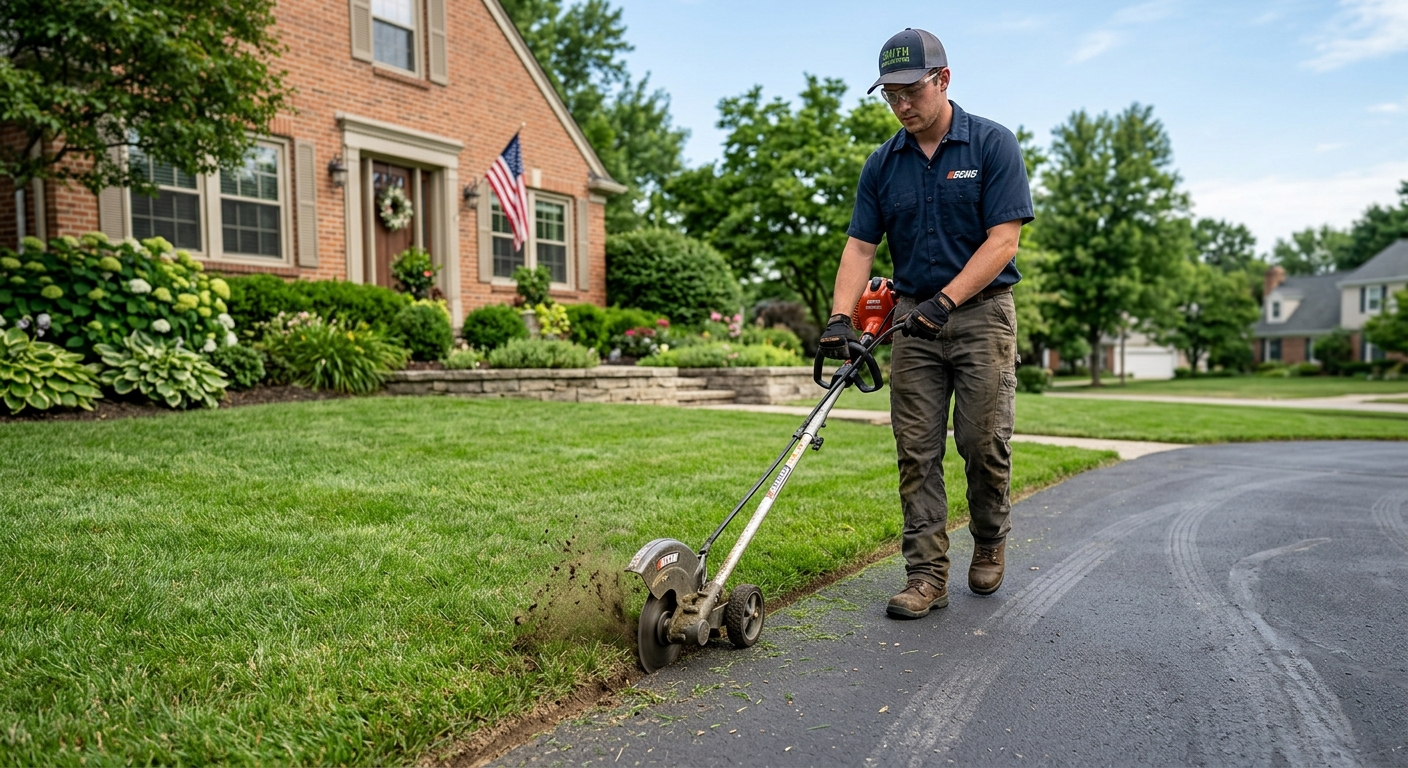
Landscaping options and costs in Wetaskiwin
Wetaskiwin homeowners typically have a lot of yard to work with, especially since single-detached homes make up 58.2% of local dwellings and owner households represent 63.4% of households (Statistics Canada, 2021 Census). That mix—detached properties with private yard space and a strong owner-investment mindset—creates steady demand for everything from new sod to complete front-yard makeovers in neighbourhoods like Downtown Wetaskiwin and along 40th Avenue, where curb appeal upgrades are frequent.
In the Edmonton economic region, costs are shaped by a short prairie growing season, freeze-thaw cycles, and generally drier conditions. That means labour and materials are scheduled tightly from spring warm-up through fall establishment windows. It also means contractors need proper base prep and drainage design: if a base or weeping path is wrong, frost expansion can shift hardscape, and water can pool against foundations. As a result, full landscape design and installation budgets often reflect both the visible finish and the “invisible” work like grading corrections, soil amendment, and drainage management.
To help you compare quotes that look similar on paper but differ in scope, use the table below as a practical starting point for Wetaskiwin projects. Once you choose the service level, we can narrow the season timing and material choices to what will survive Winter lows and summer moisture stress in your specific yard.
| Service |
Description |
Season |
Price Range |
| Full landscape design and installation |
Consultation, site assessment, grading/drainage plan, plant palette, hardscape/softscape build-out, and project management |
Late spring to early fall (typical window) |
$8,000–$45,000 |
| Sod installation (supply, grade, lay, roll) |
Spot grading, topsoil/compaction as needed, sod supply, layout, rolling, and establishment watering guidance |
Spring to early fall |
$3,000–$8,000 |
| Lawn seeding (grade, seed, starter fertilizer) |
Light grading, seed blend, starter fertilizer, and an establishment plan for thin or patchy areas |
Spring (and sometimes early fall) |
$1,800–$6,000 |
| Interlocking patio or walkway |
Excavation, compacted base, geotextile, edging, interlocking stone, and joint sand |
Spring to fall (base prep critical before freeze-up) |
$4,500–$18,000 |
| Retaining wall (interlocking block) |
Engineered-style base build, drainage rock/weep holes (as required), wall block installation, and backfill |
Spring to early fall |
$9,000–$35,000 |
| Tree and shrub planting |
Soil prep, staking, mulching, and zone-appropriate trees/shrubs (often includes minor bed shaping) |
Spring and fall planting windows |
$500–$5,000 |
Prices are estimates only and vary by project scope, site access and material selection.
What affects the price of landscaping in Wetaskiwin
If you’re comparing quotes for the “same” landscaping job in the Edmonton region, it’s common to see 30–50% differences. That gap usually comes down to how much hardscape and drainage work is truly included, how difficult access is for equipment, and the quality/tier of soil, stone, and plant material. Labour availability also matters in a short growing season—when a crew is booked for multiple projects at once, scheduling changes can shift costs.
In Wetaskiwin and the broader Edmonton market, the plant hardiness zone and frost timing directly influence both what can be planted and how long crews can work. Prairie regions (roughly Zone 2–4) have short growing seasons and harsh winters, so many designs lean toward drought-tolerant, wind-hardy species that establish faster. Structurally, retaining-wall and hardscape bases must reach below the frost line and be installed with drainage so freeze-thaw doesn’t lift or shift materials. In wetter, coastal systems (Zone 7–8), crews can often plant more variety and for longer periods; Edmonton-area yards still need water-smart establishment, so irrigation planning can add cost but protect your investment.
Two practical Wetaskiwin examples: (1) yards built on older soil or with poor drainage—common in homes built before 1981 (55.7% of dwellings)—often require more excavation and topsoil/soil amendment, pushing a project toward the higher end of the $8,000–$45,000 full design/install band. (2) If your project includes a retaining wall plus drainage beds and regrading, you’re typically moving into the higher end of the retaining-wall budget (often $9,000–$35,000 for interlocking block systems), because the base and drainage components drive both materials and labour.
| Price Factor |
Why It Matters |
Cost Impact |
| Yard size in sq ft — the primary cost driver for softscape |
More square footage means more excavation, soil, seeding/sod, plants, and/or edging length |
Usually the biggest driver; can scale costs across 30–50% |
| Grading and drainage work — slope corrections add significant cost |
Proper slopes prevent pooling and foundation moisture; often requires machinery and re-compaction |
Often pushes jobs toward the upper band of design/install |
| Drainage bed or French drain installation |
Subsurface drainage stabilizes soils through freeze-thaw and reduces washouts |
Adds materials, trenching, geotextile, and gravel, increasing total cost |
| Plant material tier — native shrubs vs. ornamental vs. mature specimen trees |
Mature trees cost more to source, handle, and install; specimen-size also affects recovery timelines |
Can change planting budgets dramatically within the same “number of plants” |
| Hardscape vs. softscape ratio — walls and patios cost more per sq ft than lawn |
Stone, base prep, and compaction labour are more intensive than seeding |
Shifts pricing from “sod/lawn” bands toward higher installation bands |
| Irrigation system design and installation |
Efficient zoning and head placement matters for establishment watering in prairie conditions |
Can add significant labour and equipment cost, but reduces failed plantings |
| Soil amendment and topsoil required |
Compacted native soils need amendments for roots; poor soil increases seeding/sod failure risk |
Hauling and materials increase cost quickly on larger areas |
| Tree removal or stump grinding before new planting |
Extra equipment time and disposal changes the work scope and timeline |
Often adds a one-time cost that surprises homeowners comparing “same plan” quotes |
Permits & regulations in Alberta
In Alberta, most planting, sodding, and routine softscape work typically does not require a permit. That usually includes tasks like seeding/sod installation, mulch and bed preparation, and planting trees and shrubs. However, retaining walls can cross into permit territory depending on size and the way the wall is built. In many Alberta municipalities, retaining walls above a height threshold—often around 1.0 m (3.3 ft)—require a building permit and sometimes engineered drawings. Because local thresholds can vary, Wetaskiwin homeowners should confirm the specific rule with the city before construction starts.
Grading is another area to watch: changes to lot grading that affect drainage toward neighbouring properties or storm sewer connections can trigger approval requirements. And before any digging (for planting holes, footings, or drainage trenches), contractors should locate underground utilities. As a homeowner, ask whether utility locates are completed and where the locate marks are documented on-site.
To verify an Alberta-licensed contractor, start by checking their licensing details through the relevant provincial contractor registry, then request proof of liability insurance and workers’ compensation coverage (WSIB/WCB). For each: (1) confirm the certificate matches your contractor’s legal name, (2) ensure coverage is active for the project period, and (3) ask if they can provide a clearance letter or documentation showing account status. This step-by-step verification protects you when freeze-thaw and excavation-related risks increase during spring and fall.
Planning a landscape that thrives in Wetaskiwin's climate
Planning for Wetaskiwin means designing around the local frost calendar, winter lows, and prairie moisture patterns rather than relying on what looks good in milder climates. Start with plant selection: choose hardy, zone-appropriate plants and—where possible—native species that handle wind and cold without excessive winter protection. Many homeowners in Wetaskiwin are also dealing with older lots (55.7% of dwellings built before 1981), where soil may be compacted; better soil prep and mulch coverage often decide whether landscaping survives.
Sod vs. seed is another key decision. Sod gives instant visual results, but the installed cost is commonly about 3–4 times per sq ft compared with seeding when you factor in labour and materials. If you want a quick “finished look” for a front yard, sod can be justified—but only if grading and topsoil are corrected so roots aren’t trapped in poor drainage. For drainage and grading, Edmonton-area yards need attention to prevent pooling and foundation moisture; this is where design and excavation work can raise overall budgets toward the higher end of a full $8,000–$45,000 project.
Hardscape must be built for freeze-thaw: patio bases and retaining-wall footings should be prepared to appropriate depth and compacted correctly, with drainage rock and paths for water to escape. For low maintenance, focus on groundcovers, mulched borders, and perennials that don’t require weekly watering or constant deadheading. Xeriscaping and rain-garden style features can work well in Edmonton-area yards: a rain garden depresss water in a controlled area while drought-tolerant planting around it improves resilience.
Example: if you compare seeding at roughly $1,800–$6,000 against sod at about $3,000–$8,000, sod may be “worth it” if you have heavy traffic on a front entrance and want faster establishment before summer stress. If your priority is long-term resilience on a larger area, seeding plus soil amendment and smart watering often delivers better value.
| Element |
Climate Consideration |
Maintenance Level |
Price Band |
| Sod lawn installation |
Establishment watering is critical in prairie summers; grading must reduce runoff and puddling |
Medium during first season, then low |
$3,000–$8,000 |
| Native perennial garden |
Zone-appropriate plants handle cold winters and droughty spells once established |
Low to medium (weeding first year, then reduced) |
$1,500–$7,500 |
| Mulched shrub border |
Mulch moderates soil temperature swings and reduces evaporation during dry stretches |
Low (annual mulch top-up, seasonal pruning) |
$1,200–$6,000 |
| Interlocking stone patio |
Freeze-thaw tolerance depends on base depth, compaction, and correct jointing |
Low (occasional joint sand/top-up) |
$4,500–$18,000 |
| Retaining wall (block) |
Needs a proper frost-aware base and drainage backfill to prevent movement |
Low (inspect drainage and weep paths) |
$9,000–$35,000 |
| Drip irrigation system |
Efficient watering helps establish plantings during short growing seasons without waste |
Low (set-and-adjust seasonally) |
$1,000–$6,500 |
How to choose a landscaping contractor in Wetaskiwin
Choosing the right contractor in Wetaskiwin starts with verification. In Alberta, ask for: (1) proof of liability insurance, (2) workers’ compensation coverage (WSIB/WCB clearance/documentation), and (3) confirmation of their Alberta contractor credentials. How to check each: request the certificate of insurance and clearance paperwork, confirm the legal name matches the company on your contract, and ensure dates cover your scheduled start/end. If possible, keep copies in your project file.
Next, request 2–3 itemised written quotes—not a lump sum. You want separate line items for labour vs. materials (stone/soil/sod/seed), excavation/hauling, and any drainage components. Clarify exclusions up front: is disposal included, or will you pay dump fees separately? Is permit pulling required for any retaining-wall scope, and is that cost included? In Alberta, retaining walls above common thresholds may require permits, so your quote should explicitly state who handles it and what drawings (if any) are needed.
Warranty matters in prairie freeze-thaw. Ask for the workmanship warranty length and what it covers (settlement, lifting, drainage performance). Also ask whether product/manufacturer warranties apply to the specific plants and materials used and whether they’re transferable to you as the homeowner. For payment, never pay more than 10–15% upfront; use a holdback until completion and walkthrough acceptance. Finally, get start date and an estimated completion timeline in writing, including weather contingency notes.
- Ask for proof of liability insurance and confirm policy dates cover your job.
- Request WSIB/WCB clearance or documentation (and confirm the contractor’s legal entity name matches).
- Get licensing details and verify them before work begins.
- Require an itemised quote: labour, materials, excavation, disposal, and delivery.
- Confirm whether grading and drainage tie-ins are included (and where water will go).
- Ask if geotextile, base compaction, and drainage rock are included for hardscape/walls.
- Clarify plant sourcing and plant sizes (tagged sizes, not “similar” plants).
- Confirm irrigation scope: design, install, and controller/timer setup.
- Ask about soil testing (or at least soil assessment) and the amount of topsoil/amendment.
- Check cleanup expectations: final debris removal and material hauling/disposal.
- Review the warranty in writing and ask who responds if issues appear after freeze-thaw.
- Use a payment schedule with a holdback and do not exceed 10–15% upfront.
In Wetaskiwin, watch for these red flags: (1) quotes that omit drainage/grading scope but later add “extra” excavation, (2) no proof of current insurance or WSIB/WCB documentation, (3) vague plant lists (“assorted shrubs”) without sizes/quantities, (4) no written start date/soil-prep steps, and (5) pressure to pay large deposits before base work is complete.
Frequently asked questions — landscaping in Wetaskiwin
When is the best time to landscape in Wetaskiwin?
For Wetaskiwin landscaping, timing usually matters as much as product choice. Sod and most lawn work perform best when soil temperatures are warming in spring, and you still have enough time for establishment before fall cool-down. Most planting (trees/shrubs/perennials) is also commonly done in spring and fall, when stress is lower and watering requirements are more manageable. Because the Edmonton region has freeze-thaw cycles and a short prairie growing season, contractors typically try to finish major excavation and hardscape base prep before deep cold sets in. If you’re comparing budgets, remember that full landscape installs often land within the $8,000–$45,000 range depending on how much grading, drainage, and scheduling complexity is involved.
Do I need a permit for a retaining wall in Alberta?
In Alberta, many homeowners don’t need a permit for planting and routine softscape work, but retaining walls can be different. In many municipalities, a retaining wall above a height threshold—often around 1.0 m (3.3 ft)—typically requires a building permit, and sometimes engineered drawings depending on the design and soil conditions. Changes to grading that affect drainage toward neighbours or storm connections can also trigger approval. For Wetaskiwin, the best approach is to confirm the threshold and process with the city before construction. A reputable contractor should either confirm permit requirements during quoting or clearly state if permit handling is included.
How do I improve drainage in my yard?
Improving drainage in Wetaskiwin usually starts with understanding where water is pooling and why. Common causes are low spots, compacted soil layers, or grading that directs runoff toward foundations. A contractor will typically evaluate slope, downspout discharge, and where surface water travels, then recommend solutions such as regrading, adding a drainage bed, or installing a French drain. In Edmonton-area freeze-thaw conditions, drainage work is especially important because wet soils expand and shift during temperature swings. This is one reason “landscape design/install” quotes can vary widely—grading and drainage components can move a project toward the upper end of the $8,000–$45,000 band.
What is xeriscaping and does it suit Wetaskiwin?
Xeriscaping is a water-smart approach that uses drought-tolerant plant palettes, efficient watering, and soil strategies to reduce irrigation demand. In Wetaskiwin and the Edmonton region, it often suits homeowners well because summers can be dry and winters are harsh, so plants must survive both moisture stress and freeze-thaw. Xeriscaping doesn’t mean “no plants”—it means choosing hardy, zone-appropriate species and using mulch, groundcovers, and good soil preparation to slow evaporation. You can also combine it with rain-garden style depressions in areas where water naturally collects. While irrigation design can add upfront cost, it can protect establishment—especially when sod or new plantings are installed during the short growing season.
How do I plan a low-maintenance yard?
A low-maintenance yard in Wetaskiwin is usually built on three choices: (1) resilient plant selection, (2) mulch and weed suppression, and (3) fewer “high-work” features. Start with a native perennial garden and mulched shrub borders so you’re not constantly replanting or watering delicate species that won’t handle prairie winters. Then design beds with edging and 2–3 inches of mulch to reduce weeding and evaporation. If you’re comparing turf options, seeding can be more cost-friendly than sod—sod often falls within the $3,000–$8,000 band, while lawn seeding can be lower depending on area and prep. Finally, incorporate efficient irrigation (often drip) or targeted watering so establishment is handled without wasting water.
How deep should a retaining-wall base be for local frost?
The correct retaining-wall base depth depends on wall height, local soil conditions, drainage design, and the frost depth applicable to the construction standard used in Alberta. Practically in Wetaskiwin-area work, contractors build a frost-aware base below the zone affected by freeze-thaw and verify compaction before placing block systems. Because inadequate base depth or missing drainage rock/weep paths can allow movement over winter cycles, it’s not a “guessing” job. A proper quote should specify excavation depth, base materials, compaction method, and the drainage plan—not just the block style. If your wall is at or above a typical permit threshold (commonly around 1.0 m / 3.3 ft), expect additional documentation requirements as part of getting the job approved.