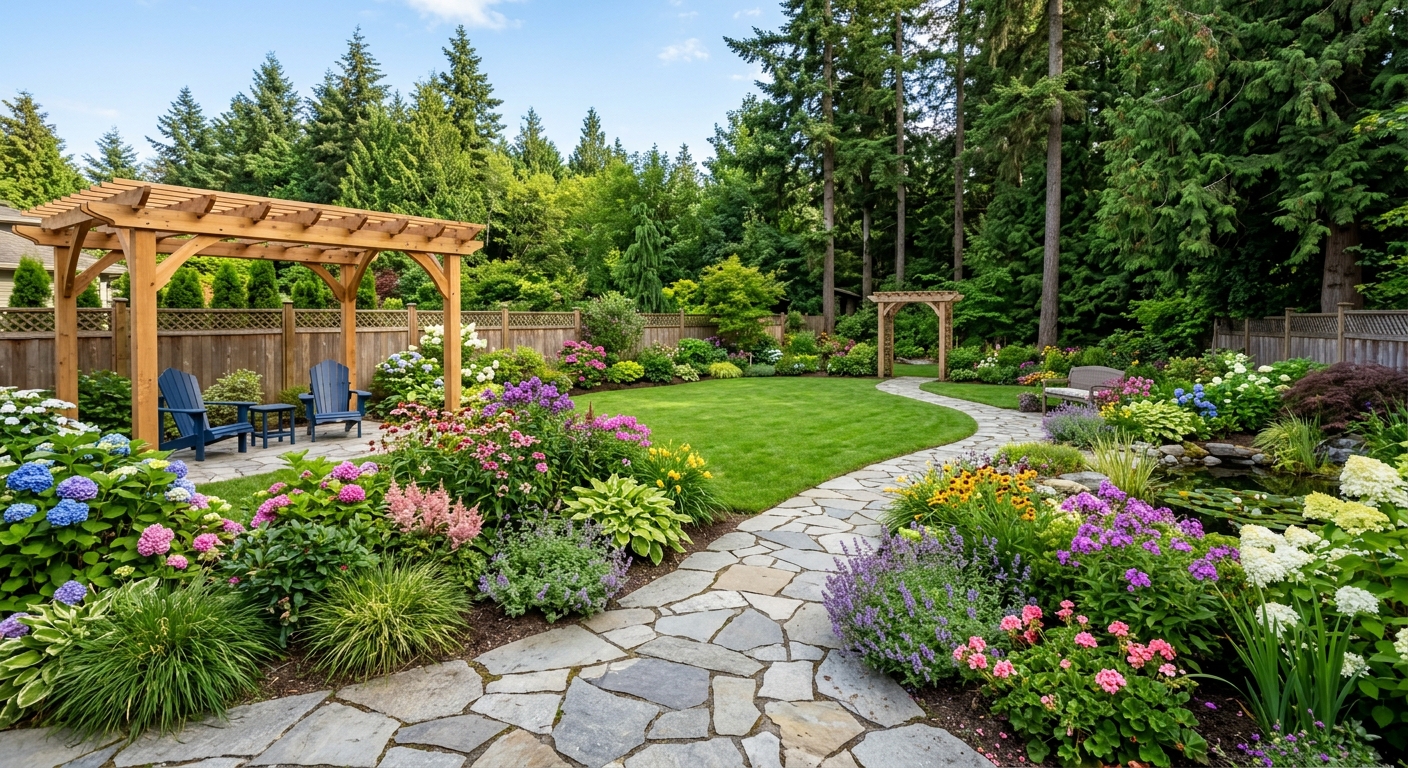
Landscaping options and costs in Woodcroft
Woodcroft, Alberta is where homeowners increasingly invest in outdoor upgrades, and that’s because the community’s housing mix supports yard-focused improvements—(Statistics Canada, 2021 Census) reported a total population of 2,598, and in this kind of tight, established neighbourhood, landscaping resale value often matters. In practice, detached properties commonly have enough yard area to justify softscape and hardscape together, so you’ll see full-service bids more often than “small tweaks.”
In Calgary’s Prairie plant hardiness zones 3–4, late-spring frosts and early fall cold snaps shape both what survives and how long crews can work. Freeze–thaw cycles are severe, which means foundations, patios, and walkways need deep, well-compacted bases and drainage that prevents heaving. That drives cost up versus regions with longer, milder seasons. It also affects contractor availability: during the narrow window when soil is workable and frost risk drops, labour demand spikes across nearby communities like Airdrie and Cochrane—so scheduling can influence price.
In Woodcroft, landscaping demand is especially noticeable around newer phases and busier streets where front-yard curb appeal shows most (for example, the corridor near local shopping and school routes). If you’re comparing options, the quickest way is to match your goals to typical scopes—then benchmark against the table below for planning-level pricing.
| Service |
Description |
Season |
Price Range |
| Full landscape design and installation |
Site visit, grading/drainage plan, soil improvement, planting, hardscape (where included), and irrigation design/installation |
Late spring to early fall |
$14,000–$42,000 |
| Sod installation (supply, grade, lay, roll) |
Remove debris, fine-grade, base prep, sod supply and placement, roll/compact, start-up watering plan |
May to September |
$2,100–$5,800 |
| Lawn seeding (grade, seed, starter fertilizer) |
Light grading, seed blend, starter fertiliser, top-dress if required, initial watering guidance |
May to early August (weather-dependent) |
$1,500–$3,900 |
| Interlocking patio or walkway |
Excavation, compacted base, geotextile, interlocking units, edging and basic drainage slope |
May to October |
$8,500–$28,000 |
| Retaining wall (interlocking block) |
Block wall system, excavation, compacted base and drainage layer, weep material behind wall |
May to October |
$12,000–$34,000 |
| Tree and shrub planting |
Soil amendment, digging, setting, staking (if needed), mulch rings, and initial watering schedule |
Spring or fall |
$1,200–$14,500 |
Prices are estimates only and vary by project scope, site access and material selection.
What affects the price of landscaping in Woodcroft
Even when two homeowners ask for “the same” landscaping in Woodcroft, quotes in Calgary and the wider region can swing by 30–50%—mainly because the biggest cost drivers are usually hidden in prep work. Crews price for freeze–thaw resilience (deep bases, drainage, and frost-safe grading), not just for visible finishes. The working season is shorter in Calgary’s Prairie climate, so labour and equipment are in higher demand during the window when soil is workable, and that can push up rates when a job can’t be started immediately.
Zone 3–4 conditions also define plant choices and installation timing. Prairie regions need drought-tolerant, wind-hardy species, and retaining wall base depth often must extend well below where frost effects can heave materials. By contrast, coastal BC’s longer growing season supports lush broadleaf palettes but typically still requires robust drainage work—only the moisture pattern is different. Southern Ontario generally has a moderate season, while interior BC clients often lean on xeriscaping and drip irrigation designs due to water-use constraints.
Two concrete examples that commonly change the price in Woodcroft: (1) a backyard that slopes toward a foundation may require more grading and a drainage bed—this can add thousands even before you see a single shrub; (2) replacing damaged turf with sod can cost far more than a seed-based renovation, but it may be justified when you need instant coverage for a sale. As a benchmark, sod installs often sit around $2,100–$5,800, while a seeding and starter-fertiliser approach can land around $1,500–$3,900 depending on area and soil condition.
Finally, many Woodcroft homes are older enough that existing topsoil can be thin or compacted—so you’re paying for soil amendment and topsoil placement to get roots established before winter. In Calgary, that “unseen” work is where good lawns and stable bases start, and it’s reflected in most mid five-figure comprehensive projects.
| Price Factor |
Why It Matters |
Cost Impact |
| Yard size in sq ft — the primary cost driver for softscape |
More square footage increases excavation, soil amendments, sod/seed, mulch, and planting labour |
Higher area can add thousands quickly (especially for turf removal and re-laying) |
| Grading and drainage work — slope corrections add significant cost |
Correct slopes protect foundations and prevent pooling; bad grading can cause heaving on hardscapes |
Often a major swing factor; can change scope mid-quote |
| Drainage bed or French drain installation |
Freeze–thaw needs an engineered approach to water management |
Can add substantial labour/material cost versus surface-only fixes |
| Plant material tier — native shrubs vs. ornamental vs. mature specimen trees |
Mature stock costs more and may need better staking, wider holes, and longer handling time |
Specimen trees can be a budget jump even in small planting counts |
| Hardscape vs. softscape ratio — walls and patios cost more per sq ft than lawn |
Hardscape needs deeper excavation, compacted base, and careful drainage slopes |
Projects with more patio/walls often move into higher price bands |
| Irrigation system design and installation |
Zoned, frost-aware layouts reduce stress during Alberta’s temperature swings |
Can add thousands; complexity increases with beds and slopes |
| Soil amendment and topsoil required |
Thin or compacted native soils need added topsoil/compost for root growth |
Often required for long-term turf and shrub success |
| Tree removal or stump grinding before new planting |
Stumps and roots affect excavation depth, drainage, and planting layout |
Removal can add time, equipment, and disposal costs |
Permits & regulations in Alberta
For most landscaping in Alberta—including Woodcroft—planting, sodding, and typical softscape work usually does not require a permit. That means tasks like laying sod or seed, installing mulch and shrub borders, planting trees and perennials, and adding small garden paths are commonly handled without municipal building permits. However, some projects do cross into “structure” territory. Retaining walls above a height threshold—typically 1.0 m (3.3 ft) in many municipalities—often require a building permit and sometimes engineered drawings, especially when they’re supporting significant soil loads.
Also watch for grading-related approvals: changes to lot grading that alter drainage patterns toward neighbouring properties or storm sewer connections may trigger requirements. Before digging, you should call for utility locates (and ensure the contractor does as well) so planting holes and wall footings don’t hit buried lines.
To verify a contractor is set up correctly in Alberta, start with their licensing and coverage. First, ask for the contractor’s Alberta licence details (or registration if applicable) and confirm it online through the relevant provincial registry. Next, request a current certificate of insurance showing general liability with adequate limits for landscaping work. Then ask whether they carry WSIB/WCB coverage (or the appropriate coverage status letter, depending on their structure) and keep a copy of the clearance letter in your file.
Finally, confirm local irrigation and water-use bylaws. While Woodcroft follows Calgary-area rules and practical seasonal limits, contractors who design zoned systems and efficient controllers handle both summer demand and any restriction periods more responsibly.
Planning a landscape that thrives in Woodcroft's climate
Planning for Woodcroft means working with Calgary’s Prairie conditions—shorter seasons, windy weather, and frequent freeze–thaw. The goal isn’t just “hardy plants,” it’s a yard built to drain, resist frost movement, and reduce water stress. Start with plant selection: choose native and zone-appropriate shrubs and perennials that can handle Prairie sun and wind, and that typically need less watering once established. Then decide between sod and seed. Sod gives near-instant coverage, but it’s more expensive and still depends on good base prep; in Calgary, sod can cost about 3–4x per sq ft versus seeding when you compare the same area.
Drainage and grading are the make-or-break elements. If water pools near your foundation or flows toward the home, it can undermine turf and make hardscape settle unevenly. For patios, walkways and retaining walls, base prep must be deep and well-compacted to cope with frost line movement. That’s why a “cheap” patio without proper base thickness often looks fine in year one and shifts after repeated freeze–thaws.
For low-maintenance design, use mulch and groundcovers, and repeat a few tough plants in clusters rather than scattering many fragile varieties. Xeriscape-style layouts can work well in Woodcroft: think drip irrigation, drought-tolerant perennials, and a rain-garden pocket where water can safely infiltrate.
A practical dollar example: if your goal is lawn renovation and your budget allows a quicker finish, sod might put you around $2,100–$5,800 for the scope, while seeding and starter fertiliser might be closer to $1,500–$3,900. The extra cost is justified when you need immediate curb impact or you’re working around heavy foot traffic during turf establishment. If timing is flexible and soil prep is solid, seeding can be the better value.
| Element |
Climate Consideration |
Maintenance Level |
Price Band |
| Sod lawn installation |
Needs frost-safe prep, consistent moisture during establishment, and good drainage to avoid winter die-off |
Low after establishment; higher watering attention in the first weeks |
$2,100–$5,800 |
| Native perennial garden |
Zone-appropriate plants handle Prairie wind and heat; mulch helps moderate freeze–thaw swings |
Low to moderate (spring cleanup and occasional weeding) |
$1,200–$6,500 |
| Mulched shrub border |
Thick mulch reduces surface moisture loss and protects roots during cold snaps |
Low (spot water first season; prune as needed) |
$900–$4,800 |
| Interlocking stone patio |
Requires deep compacted base and proper slope to shed water away from the home |
Low (occasional joint clean-out and sand topping) |
$8,500–$28,000 |
| Retaining wall (block) |
Needs frost-resilient base and drainage layer behind the wall to prevent bowing and heave |
Low (periodic inspection of weep holes and drainage) |
$12,000–$34,000 |
| Drip irrigation system |
Zoned drip reduces water waste and supports drought-tolerant planting in Prairie conditions |
Low (seasonal checks and winterisation) |
$2,200–$9,500 |
How to choose a landscaping contractor in Woodcroft
Choosing a contractor in Woodcroft is easiest when you verify three basics: licensing/registration (if applicable), liability insurance, and WSIB/WCB coverage. Ask for proof before the quote is final. For liability, request a current certificate of insurance and confirm the coverage applies to landscaping services, not just general premises. For WSIB/WCB, ask whether they provide coverage under their business and request the clearance letter (or equivalent proof of coverage status) so you’re not exposed if a worker is injured on your property.
Next, get 2–3 itemised written quotes. You want line items that separate labour from materials, and that show quantities (sq ft of sod, sq ft of patio, number and size of trees/shrubs, drainage footage, and irrigation zones). Avoid lump sums that don’t explain what’s included.
Read the scope carefully: is debris disposal included? Is permit pulling included where required (for example, some retaining wall height projects)? Are utility locates included in the schedule? Does the base preparation depth for patios/walkways match freeze–thaw requirements?
Warranty matters too. Confirm the workmanship warranty length and what it covers (settlement, heaving, plant replacement rules), plus any product/manufacturer warranty on irrigation components or plant material. Ask if warranties are transferable if you sell.
For payments, never pay more than 10–15% upfront. Use a holdback until the job is complete and cleanup is finished. Finally, require the start date and completion estimate in writing so weather delays and seasonal work windows don’t become a surprise.
- Ask for proof of Alberta licence/registration (where applicable) before work starts.
- Confirm general liability insurance and request the certificate.
- Request WSIB/WCB clearance letter or coverage proof.
- Get 2–3 itemised quotes (labour + materials + quantities).
- Ensure the quote specifies base depth and drainage details for patios/walkways.
- Clarify disposal: who hauls away sod debris, roots, and excavated soil?
- Ask who performs utility locates and when they’re scheduled.
- Confirm irrigation: controller type, number of zones, and winterisation approach.
- Check plant list includes common name, variety, size (e.g., caliper/height), and warranty terms.
- Verify retaining wall permit responsibility when the wall height crosses typical thresholds.
- Use a payment schedule with a holdback until final grade and cleanup.
- Require a written timeline including start date and completion estimate.
Red flags in Woodcroft include contractors who won’t provide insurance/coverage proof, quotes that don’t show quantities (especially for sod/seed, drainage footage, and base materials), promises of “no need for drainage” near foundations, watering/irrigation designs that ignore zoned control, and payment requests above 10–15% upfront without a contract clearly listing milestones.
Frequently asked questions — landscaping in Woodcroft
How long does a landscaping project take in Woodcroft?
In Woodcroft and the Calgary region, timelines depend heavily on freeze–thaw readiness and weather windows. Softscape-only work (mulch, planting, and small borders) can often be completed in a few days once soil is workable. Full yard renovations and hardscape projects take longer because excavation, deep base preparation, drainage adjustments, and compaction must be done correctly for winter performance. A typical mid-scope project (for example, a patio plus planting) may run one to three weeks of on-site work, with additional time for curing/settling and final adjustments. For lawns, sod can look “done” fast, but establishment and ongoing watering guidance in the first weeks still matters before you relax. If you’re aiming for early fall installation, note that cold snaps can shorten the usable window compared with late spring in Alberta.
What is the best grass type for a Woodcroft lawn?
For Woodcroft, most homeowners do best with cold-hardy, Prairie-suited grass blends rather than fine ornamental types that struggle in Alberta’s temperature swings. The “best” option depends on whether you’re doing sod or seeding and how much sun your yard gets. In Calgary-area residential work, many crews recommend turf blends selected for durability and winter survival, paired with proper soil amendment and drainage so the roots aren’t sitting in water during melt cycles. If you’re seeding, your contractor should suggest a blend and a starter fertiliser plan that fits Calgary conditions and your soil type. If you’re budgeting for sod, remember that sod installation commonly falls around $2,100–$5,800 for many typical residential scopes, but the quality of the base prep is what determines longevity in Woodcroft’s freeze–thaw environment.
When should I aerate and overseed my lawn in Woodcroft?
In Woodcroft, aeration and overseeding usually work best in the late spring to early summer window when temperatures are consistently warming and the lawn can recover before fall cold snaps. A second option is early to mid-fall, but it depends on how quickly nights drop and how your lawn responds to cooler weather. The key is timing: you want enough growing time for new seed to germinate and establish strong roots before winter. Aeration helps when soil is compacted, which is common in yards with older fill or heavy foot traffic. Overseeding works well if you already have a reasonable turf base and want to thicken it. If your lawn has major bare patches due to drainage issues, fix grading first—otherwise seed and aeration won’t hold. In many cases, contractors pair this with proper fertilisation and weed control to keep establishment high.
What trees grow best in Woodcroft's climate zone?
Woodcroft sits in Prairie hardiness zones 3–4, so you want trees known for winter hardiness, tolerance to wind, and reliable performance through freeze–thaw cycles. Popular choices in Calgary-area landscaping include cold-hardy varieties such as certain spruce types for wind screening, plus deciduous trees that handle dry spells once established. The right selection also depends on your yard’s sun exposure and available root space—especially if you’re planting near walkways or drainage paths. For best results, choose nursery stock sized appropriately for your space (smaller is often easier to establish) and use correct backfill and watering during the first growing season. If you’re planning a larger planting refresh as part of a broader project, tree and shrub planting commonly lands around $1,200–$14,500 depending on the number and size of trees. A good contractor will also recommend staking only when needed and provide an initial watering schedule that fits Alberta conditions.
How much does sodding a yard cost in Woodcroft?
Sodding cost in Woodcroft typically depends on the lawn area, how much grading is required, and whether drainage or soil amendment is needed before the sod goes down. For many standard residential jobs, sod installation often lands in the neighbourhood of $2,100–$5,800, assuming typical access and a manageable amount of prep work. If your yard needs significant topsoil addition, re-grading to correct pooling, or drainage improvements, the price can move higher because excavation and compaction take extra time and materials. Also, if you want sod to match the colour and density of existing turf, your contractor may select a specific sod product and schedule installation for the most reliable weather window. Compare quotes on scope rather than just totals: ask what base prep and disposal are included. That’s where budget differences usually come from.
How do I prevent weeds in my Woodcroft garden?
Weed prevention in Woodcroft starts with soil and moisture management, not just spraying. In Calgary-area yards, freeze–thaw and spring melt can expose bare soil and create perfect conditions for weed germination. Use a quality mulch layer (the thickness matters), keep planting beds densely planted so weeds can’t find open spaces, and add a geotextile where it fits the design (especially under decorative groundcover areas). Pull weeds early when they’re small, before they set seed. If you’re installing new borders, proper bed preparation—removing perennial weeds with roots where possible—saves money later. If you’re doing irrigation, ensure drip is zoned and targeted so you aren’t watering weeds between plants. Many homeowners also benefit from pre-planning for edging so grass doesn’t invade beds. If you’re unsure, a contractor can recommend a maintenance plan that matches Alberta’s shorter growing season and your preferred upkeep level.