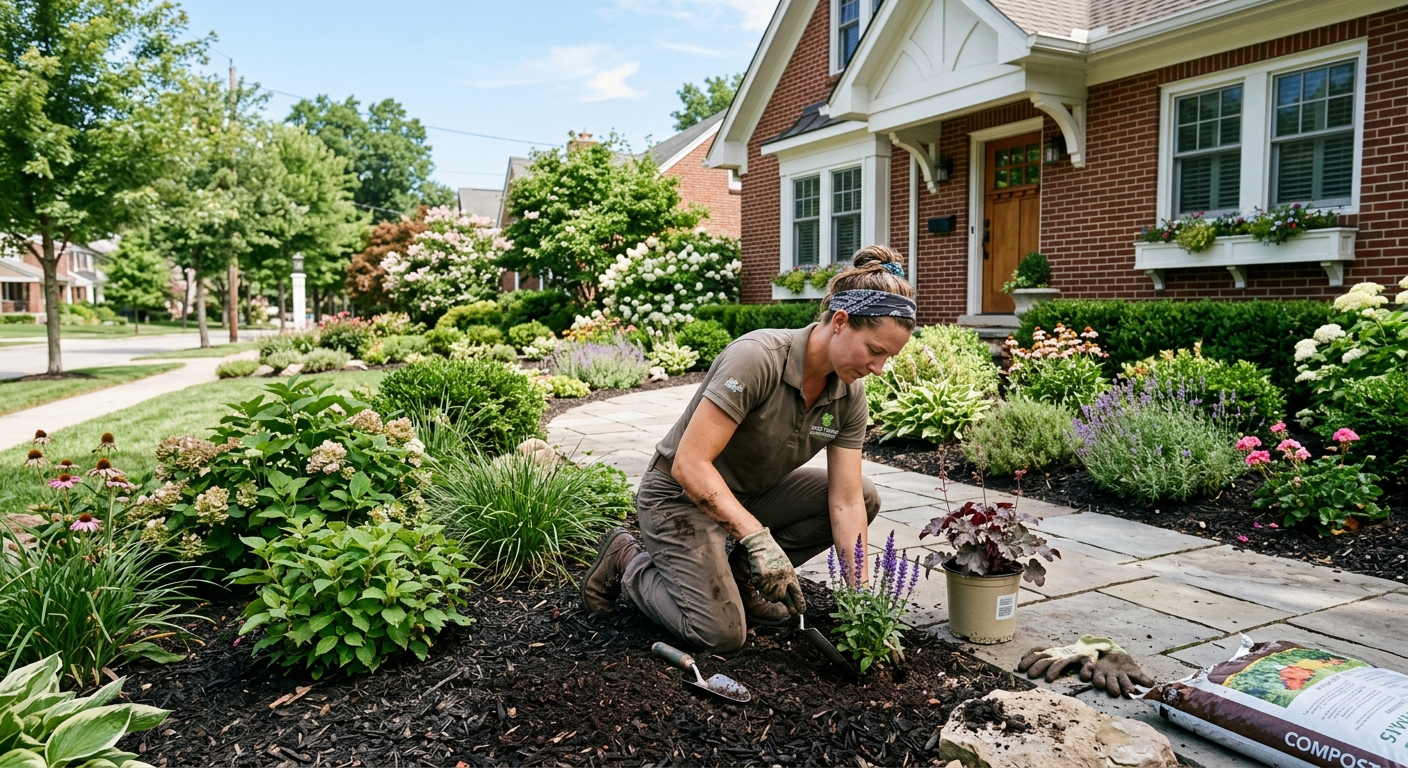
Landscaping options and costs in Austin Heights
Austin Heights homeowners typically have the room to invest in a full yard refresh because the neighbourhood is made up largely of single-detached homes, which means more frontage, more soil area, and more opportunity to improve drainage and curb appeal. With a population of 3,340 (Statistics Canada, 2021 Census), local contractors often have a steady demand for repeatable services—design, turf, and layered planting—especially around the established pockets of the community where spring installs sell out first. Lower Mainland–Southwest conditions (plant hardiness zone 7–8) directly shape both schedule and scope: winters are mild and wet, frost is usually early March to early April, and first fall frost often lands in November. That longer working window can reduce delays, but it also raises expectations for “finished” results—clean grading, tidy edges, and reliable irrigation start-up.
Cost in Austin Heights is also influenced by site realities common in the Lower Mainland–Southwest: compacted clay-to-loam soils, heavier rainfall periods, and freeze–thaw cycles that can stress patios and retaining-wall bases. That’s why many quotes include deeper excavation, proper compaction, and drainage bedding even when the visual work looks straightforward. It’s also why availability can tighten around peak planting months, and why materials like soil, interlocking stone, and irrigation components may price differently week to week.
To compare apples to apples before you request estimates, review the typical ranges below for the most common projects in Austin Heights.
| Service |
Description |
Season |
Price Range |
| Full landscape design and installation |
On-site design, layout and planting plan, grading/drainage coordination, planting + hardscape build |
Mar–Nov (softscape also possible on suitable winter weeks) |
$8,500–$45,000 |
| Sod installation (supply, grade, lay, roll) |
Soil prep, grade correction, sod delivery and install, roll + initial watering setup |
Apr–Oct |
$2,500–$7,500 |
| Lawn seeding (grade, seed, starter fertilizer) |
Final grading, seed and starter fertilizer application, light topdressing, first watering guidance |
Mar–Oct |
$2,000–$5,000 |
| Interlocking patio or walkway |
Excavate, compact, base/gravel, edge restraints, stone pavers/finishing, clean-up |
Apr–Nov |
$10,000–$35,000 |
| Retaining wall (interlocking block) |
Excavate and compact base, drainage layer/weep provisions, block install, backfill and finishing |
Apr–Nov |
$15,000–$65,000 |
| Tree and shrub planting |
Soil conditioning, staking where needed, plant placement, mulch rings/beds, initial watering plan |
Mar–Jun and Sep–Nov |
$1,200–$12,000 |
Prices are estimates only and vary by project scope, site access and material selection.
What affects the price of landscaping in Austin Heights
In the Lower Mainland–Southwest, quotes for the “same” landscaping idea can differ by 30–50% because the hard part is rarely the visible surface—it’s excavation, drainage strategy, soil readiness, and how long a crew can safely work in wet weather. Two contractors may both offer, for example, a lawn install, but one may include more topsoil, base correction, and better irrigation set-up to prevent patchy turf. That same scope difference shows up across British Columbia because planting conditions and frost timelines change what crews can do, when they can do it, and which product tiers are realistic.
Zone 7–8 in coastal BC supports a long growing season and lush palettes, so many projects lean into layered perennials and broadleaf evergreens. However, heavy rainfall and occasional freeze–thaw cycles still require strong drainage detailing. In Austin Heights, that often means deeper excavation for hardscape bases and proper compaction under patios and walls, even though the weather is generally workable from early spring through late fall. Where costs can jump is when a site needs significant grading corrections, drainage bed installs, or a more engineered retaining wall base. Conversely, costs can drop when your yard is relatively level and drains well, allowing simpler softscape prep and a tighter installation schedule.
Concrete examples: (1) If your lawn area needs regrading, the project can move from a typical seeding budget around $2,000–$5,000 toward a sod build in the $2,500–$7,500 range, because both turf success and drainage improvements depend on getting the grade right. (2) If you’re adding a block wall, a drainage layer and compacted base can push an interlocking wall from a mid-range estimate into the upper end of $15,000–$65,000 when excavation depth and access are challenging. (3) Older housing stock often brings older soils, tree roots, and buried debris—meaning additional soil amendment and sometimes stump grinding before new planting can start.
| Price Factor |
Why It Matters |
Cost Impact |
| Yard size in sq ft — the primary cost driver for softscape |
Material quantities (topsoil, seed, sod, mulch) and labour hours scale directly with area |
Small changes in size can shift the job by thousands |
| Grading and drainage work — slope corrections add significant cost |
Fixing low spots and directing runoff prevents pooling near foundations and turf failure |
Often the biggest cause of 30–50% quote differences |
| Drainage bed or French drain installation |
Under wet conditions, proper sub-surface drainage protects patios, basements, and plant roots |
Can add several thousand depending on length and excavation depth |
| Plant material tier — native shrubs vs. ornamental vs. mature specimen trees |
Specimen size (and how many) changes supply costs and installation time/staking needs |
Lower tiers keep planting closer to the minimum; mature stock pushes higher |
| Hardscape vs. softscape ratio — walls and patios cost more per sq ft than lawn |
Stone, base, labour, and long-term stability requirements raise per-area pricing |
Hardscapes can double or triple the budget compared to turf-only plans |
| Irrigation system design and installation |
Even in wetter seasons, efficient irrigation improves establishment and tolerates occasional restrictions |
Upgrade to drip + smart control typically increases costs but reduces watering mistakes |
| Soil amendment and topsoil required |
Clay-heavy or compacted soils need structure (compost, drainage-friendly amendments) for root health |
Bulk soil deliveries and labour can add noticeable cost on larger areas |
| Tree removal or stump grinding before new planting |
Clearing stumps/roots impacts grading, safety, and planting layout |
Can add time and disposal fees, especially with limited access |
Permits & regulations in British Columbia
In British Columbia, most everyday yard work—planting, sodding, and the majority of softscape installations—typically does not require a building permit. That includes seeding, mulch/topsoil replacement, laying turf, installing garden borders, and planting shrubs and trees. The main exception homeowners run into is retaining walls above the local threshold: in many municipalities this is commonly around 1.0 m (3.3 ft), where a building permit and sometimes engineered drawings may be required.
Another “permit-trigger” is grading that changes drainage patterns. If your project alters lot grading in a way that affects how runoff moves toward neighbouring properties or storm sewer connections, approvals may be needed. Also, before any digging—whether planting holes, irrigation trenches, or wall footings—have utility locates done so you don’t hit buried services.
Homeowners in Austin Heights can verify contractor readiness in a practical way. Step one: ask the contractor for proof of licensing/registration where applicable in BC and check it on the provincial/registries they provide. Step two: request a current certificate of insurance (general liability) matching the job address and dates; confirm coverage limits and that they’re insured for excavation and landscaping activities. Step three: confirm their workers’ compensation coverage (WSIB/WCB coverage) so you’re not exposed if someone is injured on site.
Finally, confirm irrigation and water-use rules for your area (especially if drought restrictions are in effect in the wider region). A reputable contractor will reference the applicable bylaws and will design irrigation that’s efficient and safe for the season.
Planning a landscape that thrives in Austin Heights's climate
To plan a yard that thrives in Austin Heights, work with zone-appropriate planting and the Lower Mainland–Southwest weather pattern: mild winters, early-to-mid spring frost, and first fall frost often in November. The goal is to avoid “overworking” plants with poor drainage or watering schedules that don’t match cool, wet seasons. Start with plant selection. In zone 7–8, choose native and zone-suitable shrubs and perennials that establish with less fuss, then build winter hardiness with good mulch coverage and correct spacing. Next, decide between sod vs. seed: sod gives instant visual results, but it generally costs about 3–4x more per sq ft than seeding once labour and material are factored. Sod can be worth it when you need fast curb appeal (for example, preparing the home for a sale) or when your grade is already dialled in.
Drainage and grading are critical in Austin Heights. Pooling water can damage turf roots and keep planting beds saturated longer than they should be. For hardscape, remember that patios and retaining walls still experience freeze–thaw stress even in coastal BC. That means correct base preparation and proper drainage bedding, along with excavation depth that accounts for local seasonal movement. Finally, build a low-maintenance design: use mulch, groundcovers, and long-blooming perennials to reduce weeding and annual re-seeding. If you want to lower water demand, consider a rain garden or targeted xeriscape-inspired planting in appropriate zones of the yard—especially along areas that receive runoff.
Where the price difference is justified: if you’re starting from a worn lawn, seeding in the $2,000–$5,000 range can be the smarter choice for budget control. But if you also need regrading and you want immediate, uniform coverage while plants establish, spending toward a sod install around $2,500–$7,500 can make sense—provided the drainage prep is included, not cut.
| Element |
Climate Consideration |
Maintenance Level |
Price Band |
| Sod lawn installation |
Establishment window from spring to fall; keep roots moist during early weeks through cool, wet spells |
Low–medium (watering + first-season care) |
$2,500–$7,500 |
| Native perennial garden |
Zone 7–8 planting works well with layered blooms and less winter damage risk |
Low (mulch refresh and seasonal pruning) |
$1,500–$6,500 |
| Mulched shrub border |
Mulch stabilizes moisture during shoulder seasons and protects crowns in wetter winters |
Low (weeding reduction, occasional edging) |
$1,200–$5,500 |
| Interlocking stone patio |
Design for drainage and base stability through freeze–thaw cycles, even in coastal conditions |
Low (periodic joint top-up and cleaning) |
$10,000–$35,000 |
| Retaining wall (block) |
Proper base depth and drainage prevents movement and water buildup on sloped sites |
Low (visual checks for settling; minor repairs if needed) |
$15,000–$65,000 |
| Drip irrigation system |
Efficient watering helps plant establishment and supports compliance if restrictions are introduced |
Low (seasonal tuning + controller updates) |
$1,500–$6,000 |
How to choose a landscaping contractor in Austin Heights
Choosing the right contractor in Austin Heights is mostly about verifying capacity: proper insurance, correct coverage, and an itemised approach that reflects BC job realities (wet seasons, drainage complexity, and permit triggers for larger retaining walls). First, verify BC licensing/registration where applicable and confirm your contractor can legally perform the work they’re proposing. Next, request a current certificate of insurance for general liability that matches the job scope and timeline. If crews will be working on an active site with excavation, liability should be broad enough for the tasks involved.
Then check workers’ compensation coverage (WSIB/WCB). Ask for proof of clearance/coverage documentation and make sure it’s active for the trade doing the installation. Step away from vague statements like “we’re covered”—get the document and verify dates.
Get 2–3 itemised written quotes. The best quotes break labour and materials out separately (excavation, base rock, stone/paver units, topsoil/compost, plant quantities, irrigation components, and any disposal). Read the scope carefully: what’s excluded? Is permit handling included where needed? Is material hauling/disposal of removed soil included? What about finishing touches like edging, cleanup, and first watering/start-up adjustments?
Warranty matters too. Ask for a workmanship warranty length, whether product warranties apply (and how manufacturer coverage works), and whether any warranties are transferable if you sell. Payment schedules should be conservative: never pay more than 10–15% upfront, and hold back part of the payment until the job is complete and walk-through items are resolved. Get a start date and completion estimate in writing, especially because rain weeks can affect sequencing.
- Request itemised quotes (labour + materials) rather than one lump sum
- Confirm when topsoil/compost amendments are included and the expected depth
- Ask for drainage details: French drain vs. drainage bed, and where runoff goes
- Verify insurance certificate dates and coverage limits
- Confirm workers’ compensation coverage (WSIB/WCB) and keep proof on file
- Check whether irrigation is included (and whether it’s drip, soaker hoses, or sprinklers)
- Clarify disposal/haul-away: removed turf, soil, and debris handling
- Confirm permit responsibility for retaining walls and any major grading changes
- Ask for product lists: plant cultivars/sizes, sod type/seed blend, and stone/paver specs
- Review warranty terms for workmanship and clarify what happens if plants fail early
- Ensure the payment schedule matches typical milestones and includes a holdback
- Get a written timeline that accounts for rainy-season interruptions
Red flags in Austin Heights: contractors who won’t provide an itemised quote; no proof of liability insurance or workers’ compensation; vague drainage statements (“we’ll just level it”) without explaining runoff control; withholding contracts until after deposits; and promising exact completion dates without acknowledging wet-weather sequencing in the Lower Mainland–Southwest.
Frequently asked questions — landscaping in Austin Heights
How much does sodding a yard cost in Austin Heights?
Sodding in Austin Heights typically lands in the mid-to-upper part of local bands depending on prep. For most homeowners, a complete sod install (supply, grade correction, lay, roll) is commonly estimated around $2,500–$7,500. If your yard needs meaningful grading or drainage work, the budget usually rises because labour and soil/base materials increase, and turf success depends on the grade staying stable. In the Lower Mainland–Southwest (zone 7–8), you can install sod from spring into fall, but crews still try to avoid the wettest windows to prevent muddy track damage and uneven rolling. Always confirm whether disposal, topsoil depth, and initial watering/irrigation start-up are included.
How do I prevent weeds in my Austin Heights garden?
Weed prevention starts before plants go in. In Austin Heights, the Lower Mainland–Southwest’s frequent moisture means weed seeds germinate readily if soil is left bare. Ask your contractor about proper weed control steps: removal of existing vegetation and roots, using landscape fabric only where appropriate (many mulched beds do better with mulch + spacing rather than fabric that can trap moisture), and applying a thick layer of mulch (typically 2–3 in) after planting. Dense planting—native shrubs and layered perennials—reduces light to the soil, which helps. For borders, edging and consistent maintenance matter more than “one-time” weed killer. If you’re also planning irrigation, design drip so beds aren’t overwatered during cool, wet periods.
How do I design a low-water yard in Austin Heights?
Even though coastal BC generally has adequate rainfall, a low-water yard in Austin Heights still benefits from efficient irrigation and smart planting layout. Start by grouping plants by moisture needs: wetter-tolerant species near downspouts or natural runoff routes, and more drought-tolerant shrubs/groundcovers on the sunnier, faster-draining side. Add a drip irrigation system (often budgeted around $1,500–$6,000 depending on zones) so water goes to roots instead of drifting across beds. Consider a rain garden or designed swale in areas that receive runoff, then plant with zone-appropriate species that handle periodic saturation. If you currently have lawn-only areas, replacing part of it with mulched borders can reduce seasonal watering demands without sacrificing curb appeal. Check local irrigation/water-use bylaws when restrictions are announced.
How do I find a licensed landscaper in Austin Heights?
In British Columbia, “licensed” can vary by trade and job type, but you can still verify three key things before hiring in Austin Heights. First, ask for proof of appropriate BC registration/licensing for the contractor’s scope and confirm it via the relevant online registry they use. Second, request a current certificate of insurance (general liability) for the work dates—make sure it covers landscaping/excavation activities and matches your address. Third, confirm workers’ compensation coverage (WSIB/WCB) and ask for clearance documentation. Then compare itemised quotes: good contractors separate labour and materials (topsoil, drainage, stone, plants, irrigation components). If they won’t provide documentation or detailed scope, move on.
How much does landscaping cost in Austin Heights?
Landscaping cost in Austin Heights depends heavily on scope: softscape only is different from patios, retaining walls, and integrated irrigation. For most typical homeowner projects, budgeting by category helps. For example, a lawn refresh through seeding is often estimated around $2,000–$5,000, while sod installs commonly fall around $2,500–$7,500 once grade prep is included. Tree and shrub planting tends to be in the $1,200–$12,000 range depending on quantities and plant sizes. If you’re combining design plus installation with hardscape and drainage, many projects land within broader design & installation estimates (often $8,500–$45,000). A final price depends on access, drainage needs, and whether a retaining wall reaches permit-trigger height.
What plants thrive in Austin Heights's climate zone?
Austin Heights sits in Lower Mainland–Southwest growing conditions (zone 7–8), so many broadleaf evergreens, hardy shrubs, and layered perennials perform well with proper drainage and mulch. Focus on zone-appropriate selections and native-friendly options where possible, because they’re adapted to local winter wetness and the coastal temperature range. In practice, good choices include evergreen shrubs that hold colour through winter, long-blooming perennials for spring to fall interest, and groundcovers that suppress weeds once established. If you’re planning a low-water layout, mix drought-tolerant groundcovers and shrubs in sun-exposed areas with moisture-tolerant plants near rain garden zones. Your contractor should match plants to sun exposure and soil drainage so you don’t overwater in cool, wet months.