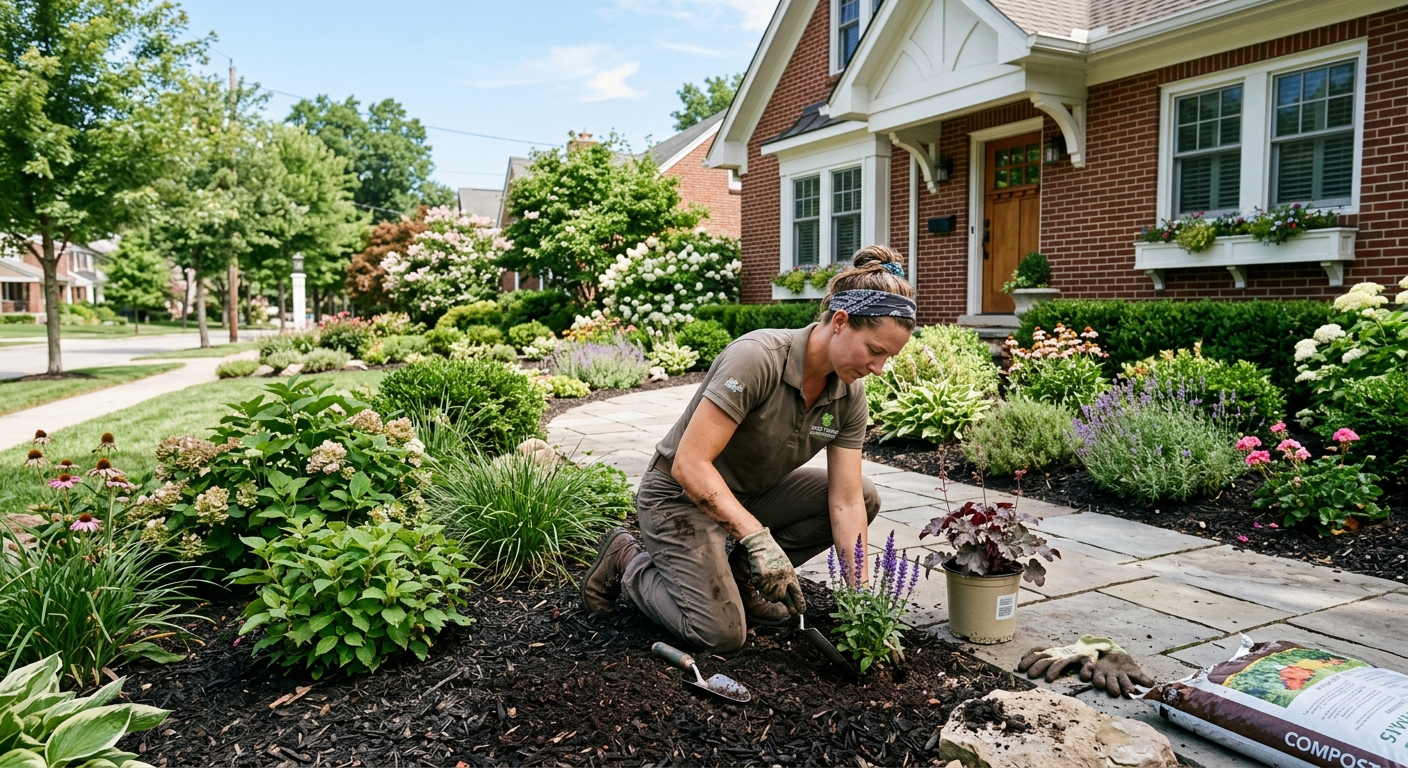
Landscaping options and costs in Cumberland
Cumberland is a small, housing-dense community where landscaping investment really matters: 72.0% of households own their homes, and 64.9% of dwellings are single-detached houses—meaning most properties have the yard space to justify drainage upgrades, planting beds, and usable patios. That ownership incentive shows up in the market with steady demand for curb-appeal renovations and “fix-the-site” projects on sloped or wet-prone lots.
On Vancouver Island and the Coast, most lots sit in mild coastal plant hardiness zones 7–9, so you can plan year-round and install from early spring through late fall. Costs are still shaped by coastal weather—heavy rain in winter can delay grading, and soft ground can increase excavation and compaction time. Good drainage is also a major driver for budgets on older homes: in Cumberland, 39.1% of homes were built before 1981, and those properties commonly have older foundation drainage patterns that new hardscape and planting must respect. As a result, contractors often price “site preparation” as a big portion of your total, especially when the plan includes retaining walls, drainage beds, or longer curb runs for paths and patios.
For many homeowners, the fastest way to compare proposals is to match scope side-by-side, starting with typical service tiers. Use the table below as a practical baseline for Cumberland projects, then we’ll break down the price factors that swing budgets up or down.
| Service |
Description |
Season |
Price Range |
| Full landscape design and installation |
Site visit, concept + planting plan, layout design, grading/drainage coordination, soil/topsoil, planting, mulch, and selected hardscape/sod as per plan |
Early spring through late fall (often flexible) |
$5,000–$40,000 |
| Sod installation (supply, grade, lay, roll) |
Grading for level, soil amendments, sod supply, layout, roll/pack, and initial watering guidance |
Late spring to early fall (best results before hottest weeks) |
$1,500–$8,000 |
| Lawn seeding (grade, seed, starter fertilizer) |
Fine grading, seed blend selection, starter fertilizer, seeding, light raking, and establishment plan |
Spring or early fall |
$800–$5,500 |
| Interlocking patio or walkway |
Excavation, compacted base, edging, interlocking stone, jointing sand, and cleanup |
Year-round scheduling; best access in dry windows |
$4,000–$28,000 |
| Retaining wall (interlocking block) |
Excavation to structural base, compacted backfill, drainage gravel/weep management, blocks and finish |
Spring through fall (delays possible after heavy wet periods) |
$8,000–$60,000 |
| Tree and shrub planting |
Soil preparation, planting, staking as needed, mulch rings, and basic aftercare plan |
Spring through fall |
$800–$15,000 |
Prices are estimates only and vary by project scope, site access and material selection.
What affects the price of landscaping in Cumberland
Even on the same street in Cumberland, quotes for the “same” landscaping can vary by 30–50% because the scope is rarely identical once contractors factor in site conditions, drainage, and how the work fits the coastal schedule. Labour and material availability in the Vancouver Island and Coast region also influences pricing—because installations run in a long season, crews can be booked solid, and site prep can become the deciding factor when weather turns wet. In practice, a basic planting plan may land near the lower end of the $5,000–$40,000 design/install band, while a drainage-and-retaining package can push you toward the top end quickly.
What drives the biggest swing is climate and frost behaviour. Vancouver Island sits in mild coastal zones 7–9 with gentler freeze–thaw than inland areas, but frost still impacts excavation depth, block wall bases, and compaction. A properly built retaining-wall base still needs to reach below the frost line, so structural work isn’t “optional” even when spring arrives early. Coastal BC’s long growing season supports lush planting palettes—broadleaf evergreens and ornamental grasses—yet heavy winter rain makes drainage non-negotiable. If your site has pooling, contractors may add a drainage bed or French drain, which adds both labour and rock/gravel material.
Two common examples in Cumberland: (1) Older homes (many built before 1981) often have less predictable lot drainage, so a simple interlocking walkway can become more expensive once excavation ties into foundation moisture control; (2) Sloped backyards around the core neighbourhood areas see more retaining-wall work, which is why wall projects can shift from a mid-range walkway budget into the higher retaining-wall band. When you see design/install near $5,000–$40,000, ask what portion is strictly “planting” versus “site engineering,” because that’s where the real difference usually lives.
| Price Factor |
Why It Matters |
Cost Impact |
| Yard size in sq ft — the primary cost driver for softscape |
More area means more excavation, soil amendment, seed/sod, mulch, and labour hours |
Large yards can push costs toward the top end of $5,000–$40,000 for full projects |
| Grading and drainage work — slope corrections add significant cost |
Correcting uneven grades requires additional topsoil removal/addition and careful compaction |
Often increases project budgets noticeably (sometimes the largest line-item) |
| Drainage bed or French drain installation |
Helps manage heavy-rain runoff and prevents pooling that harms foundations and plantings |
Can move a project from mid-range softscape into retaining-wall/hardscape pricing territory |
| Plant material tier — native shrubs vs. ornamental vs. mature specimen trees |
Specimen-size stock costs more and usually needs more labour for planting and staking |
Tree and planting line items can escalate into the upper $800–$15,000 range |
| Hardscape vs. softscape ratio — walls and patios cost more per sq ft than lawn |
Stonework requires base prep, compacted layers, and precise cutting/edging |
Shifts budgets upward faster than adding equivalent area of lawn or mulch beds |
| Irrigation system design and installation |
Drip layouts and controllers reduce water waste and protect plants through wet/dry cycles |
Adds cost, but can prevent plant losses and reduce ongoing watering time |
| Soil amendment and topsoil required |
Poor native soil often needs compost, amendments, and sometimes import soil |
Delays + delivery/handling can add thousands to the estimate |
| Tree removal or stump grinding before new planting |
Root disturbance impacts grading, drainage and replanting layout |
Can add labour and disposal costs, especially with limited access |
Permits & regulations in British Columbia
In British Columbia, most everyday planting and landscape improvements typically do not require a permit. For Cumberland homeowners, planting, sodding, most softscape installs (mulch beds, shrubs, perennials, ornamental grasses) are usually treated as landscaping work and are typically handled under normal contracting rules, not building-permit approvals.
Where permits often come in is with retaining walls and any work that materially changes drainage patterns. In many municipalities, retaining walls above about 1.0 m (3.3 ft) generally require a building permit and may require engineered drawings. Also, significant lot-grading changes that redirect runoff toward neighbouring properties or storm sewer connections can trigger approvals or at least require extra documentation to ensure you’re compliant with drainage expectations.
Before any digging for planting holes, footing bases, or drain lines, require utility locates (marking) to prevent damage to buried services. For water-related work, confirm irrigation and water-use bylaws. While restrictions can vary by time of year and region, water-efficient systems—like drip and smart controllers—are commonly expected, especially during drought-style conditions seen across BC in hotter periods.
To verify a contractor in Cumberland: check their British Columbia business/contracting registration (via the appropriate provincial online registry), confirm they carry liability insurance (request a current certificate of insurance naming you as the interested party where applicable), and confirm their worker coverage status (WSIB/WCB coverage—ask for the clearance letter or evidence of coverage). Only hire once you have those documents and an itemised scope.
Planning a landscape that thrives in Cumberland's climate
Planning a yard for Cumberland is about working with the island’s coastal rhythm rather than fighting it. Cumberland aligns with coastal plant hardiness zones 7–9, meaning you can select lush, four-season structure (evergreens, grasses, and layered shrubs) and still get reliable growth—so long as you manage winter wet and spring establishment correctly. Begin with plant selection: choose zone-appropriate, ideally native or well-adapted species that handle coastal winters with less watering and better resilience. Pair that with a realistic frost-and-drainage approach: in Vancouver Island and Coast conditions, pooling harms plants and can also elevate foundation moisture issues, especially on lots with older drainage patterns.
Sod vs. seed is another decision point. Sod gives instant results and helps with erosion control on sloped sites, but it typically costs about 3–4x more per sq ft than seeding once you factor supply, grading prep, and installation timing. If you have a $1,500–$8,000 lawn budget, sod can be justified for high-visibility front areas or to stabilize bare ground quickly. If you can tolerate a longer green-up window, seeding is often the better value.
For drainage and grading, budget time and effort up front: correcting a slope or adding a drainage bed can prevent repeated waterlogged failures. For hardscape like patios and interlocking pathways, base preparation must account for frost movement; contractors should build compacted layers and proper base depth so stonework doesn’t shift. Finish with low-maintenance design strategies: mulch rings, groundcovers, and perennials reduce annual weeding, while still delivering strong curb appeal. Rain gardens and gentle bioswales can be excellent in Cumberland where runoff needs somewhere to go.
As a concrete example, if you’re deciding between a larger sod area and a smaller sod area plus drainage improvements, it often makes sense to put your “extra dollars” into drainage first—because fixing pooling can protect both plants and hardscape, whereas replacing a struggling sod lawn can cost again within a season.
| Element |
Climate Consideration |
Maintenance Level |
Price Band |
| Sod lawn installation |
Instant coverage helps control erosion in wet seasons; establish quickly before summer dry spells |
Medium (watering during establishment, then mow) |
$1,500–$8,000 |
| Native perennial garden |
Coastal zone-appropriate plants handle winter wet better; strong seasonal structure |
Low to medium (mulch refresh, occasional pruning) |
$2,000–$12,000 |
| Mulched shrub border |
Mulch moderates soil moisture through coastal wet/dry swings; suppresses weeds |
Low (seasonal topping) |
$800–$8,500 |
| Interlocking stone patio |
Requires frost-smart base prep and good drainage to prevent settling |
Low (cleaning, occasional joint sand top-up) |
$4,000–$28,000 |
| Retaining wall (block) |
Structural base depth and drainage gravel are essential even in mild zones |
Low (visual checks and drainage management) |
$8,000–$60,000 |
| Drip irrigation system |
Efficient watering supports plants with less water waste in coastal dry periods |
Low (seasonal checks) |
$1,200–$7,500 |
How to choose a landscaping contractor in Cumberland
Choosing the right contractor in Cumberland starts with proof, not promises. In British Columbia, confirm their liability insurance—ask for a current certificate of insurance before work begins. For coverage of workers, verify their WSIB/WCB status by requesting a clearance letter or evidence of active coverage (their office can usually provide this quickly). If they claim specialized capabilities (like retaining-wall construction, drainage systems, or mature-tree installs), ask how those skills are supported—crew experience is one thing; documented training and past job photos are better.
Then get 2–3 itemised written quotes instead of single lump sums. You want labour and materials broken down by scope: grading/drainage, excavation, base materials, pavers or blocks, soil amendments, plant lists, mulch, and irrigation components. A quote should also clearly state what’s excluded—disposal, tree removal, utility locate costs, topsoil import, and any permit-related tasks if applicable.
Read the warranty details: request the workmanship warranty length and whether it’s transferable if you sell. Product warranties usually run through manufacturers, while workmanship warranties are the contractor’s responsibility. For payment, never pay more than 10–15% upfront; use progress payments tied to milestones, and hold back until you’re satisfied with completion and cleanup.
Finally, timeline clarity matters in coastal scheduling. Get a start date and an estimated completion window in writing, and ask how they handle rain delays—especially for grading and base work.
- Ask for a written scope of work with measurements (sq ft, linear feet, or quantities)
- Confirm liability insurance and provide the certificate before any soil is moved
- Verify WSIB/WCB clearance or active coverage paperwork
- Check that utility locates are included (or clearly assigned) before digging
- Ensure labour + materials are itemised (not “materials allowance” with no breakdown)
- Confirm disposal/recycling of debris is included
- Ask whether topsoil/soil amendments are import or re-use (and what products they plan to use)
- For drainage and walls, require details on gravel sizes, filter fabric use (if needed), and backfill compaction
- Get a planting list or plant photos with scientific names (not just “shrubs”)
- Clarify irrigation scope: drip vs sprinkler, controller, and whether zones are included
- Review warranty: workmanship duration, exclusions, and whether it transfers to future owners
- Use a payment schedule with a holdback until final inspection and cleanup
Concrete red flags in Cumberland: (1) they won’t provide insurance or proof of coverage; (2) they won’t itemise materials and labour, or they use vague allowances; (3) they promise “no drainage needed” on sloped or pooling sites; (4) they ask for large upfront payments; and (5) they can’t explain frost-depth/base preparation for patios or block work.
Frequently asked questions — landscaping in Cumberland
How do I plan a low-maintenance yard?
A low-maintenance yard in Cumberland usually starts with plant selection and a drainage-first layout. Because you’re in coastal BC (zones 7–9) with long growing seasons, you can build a four-season structure using evergreen shrubs, grasses, and perennials that don’t require constant replanting. To reduce upkeep, group plants with similar water needs, use 2–3 inches of mulch in beds, and choose groundcovers where weeds normally return. If your lot is prone to pooling (common on older properties built before 1981), address grading or add a drainage bed before planting—this prevents plant stress and rework. Budget-wise, many homeowners find strong value by investing in full design/install scope around $5,000–$40,000, then limiting sod to the highest-visibility area. In most Cumberland yards, drip irrigation with a smart controller is also a “set it and forget it” upgrade.
How deep should a retaining-wall base be for local frost?
Even though Cumberland sits in mild coastal zones 7–9, you still need a frost-resilient retaining-wall base. In practice, base depth must reach below frost influence, and contractors confirm depth using local soil conditions, wall height, and engineered/design requirements where applicable. As a rule of thumb, block walls are not “shallow landscaping”—they require proper excavation, compacted structural base, and backfill compaction so blocks don’t settle or tilt after wet winters and spring thaw. That’s why retaining-wall pricing often reflects the groundwork effort, with projects commonly landing in the $8,000–$60,000 range depending on height, length, and whether drainage/gravel systems are included. If your wall approaches permit thresholds (often around 1.0 m in many BC municipalities), require a contractor to clarify whether engineered drawings are needed and what base specification they are following.
How much does professional landscape design cost?
In Cumberland, design costs are often bundled into a full “design and installation” package, so you’re comparing apples-to-apples with what actually gets built. For typical homes, full landscape design and installation commonly sits within $5,000–$40,000 depending on grading complexity, irrigation, and hardscape intensity. If you’re doing only planting and layout, the investment may land nearer the lower portion; if you need drainage solutions and retaining walls, budgets tend toward the higher end. Because you’re on Vancouver Island, there’s a longer working window (early spring through late fall), which can reduce time pressures—but not remove the cost of correct drainage and base prep. If you request a separate design-only quote, ask what’s included (site visit, concept plan, planting list, and revisions) so you don’t pay for a plan that can’t be priced accurately for installation.
How do I compare landscaping quotes?
To compare quotes in Cumberland, insist on itemised scopes rather than lump sums. You want to see labour + materials for grading/drainage, excavation and base, stone or blocks, soil amendments, plant quantities (and ideally scientific names), mulch, and irrigation components. Compare “what’s excluded” too: disposal, utility locates, tree removal/stump grinding, and any permit-related work. A good comparison should also separate softscape and hardscape line items; patios and retaining walls tend to cost more per sq ft because they require base layers and precise compaction. If one quote includes a drainage bed or French drain and another doesn’t, the difference can easily explain a large budget gap. As a quick benchmark, if your project is largely planting and lawn, quotes often cluster near $5,000–$40,000 for full installs, while lawn-only work may sit in the $1,500–$8,000 band for sod.
How long does a landscaping project take in Cumberland?
Project duration in Cumberland depends mostly on site prep, weather windows, and hardscape scale. Coastal BC typically offers a long installation window (early spring through late fall), but heavy wet periods can slow grading and base work, especially where drainage correction is needed. As a general guide: planting-only upgrades can be quicker, while full design/install with grading, soil imports, and irrigation can take longer—often multiple weeks including deliveries and curing/set times for base materials. Interlocking patios and retaining walls require strict base compaction and careful sequencing, so they can extend timelines compared with simple mulch and shrubs. If you’re planning sod, installation is fast but establishment care is important for the first weeks. Ask contractors for a written start date and completion estimate, and confirm how they handle rain delays so your schedule accounts for Cumberland’s coastal conditions.
What is the best grass type for a Cumberland lawn?
For Cumberland lawns, homeowners typically do best with grass types that tolerate coastal moisture swings and handle periodic wet periods without thinning. The “best” choice depends on sun exposure, traffic, and whether you’ll seed or install sod. Many contractors recommend cool-season turf grasses for Vancouver Island and the Coast because they perform well in mild winters and spring/fall growth. If you want the most reliable fast coverage, sod can be installed in an appropriate season window, and that work commonly falls in the $1,500–$8,000 range depending on size and prep. If you’re optimizing budget, seeding can be less expensive than sod and may fit projects where you’re within the lower end of the overall landscape scope. Regardless of type, the real success factor is correct grading and soil preparation—if the yard holds water, even the best grass will struggle.