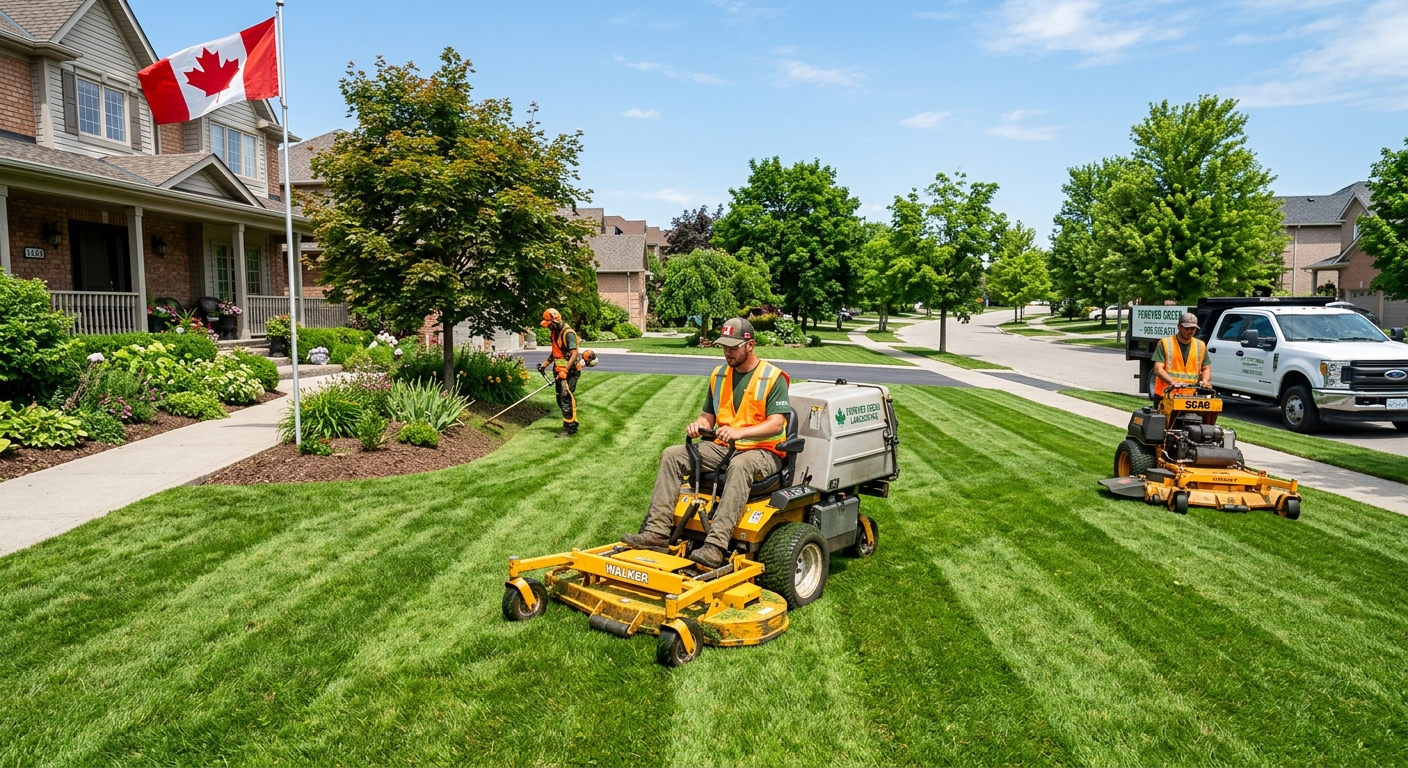
Landscaping options and costs in Denman Island
Denman Island homeowners often start by comparing “what can we afford right now?” versus “what will still look good in five years?” With a 2021 population of 1,020 residents (Statistics Canada, 2021 Census), Denman Island is a smaller market, so scheduling can be tighter during spring and early summer. At the same time, the Lower Mainland–Southwest’s long, cool growing season (last spring frost often landing early March to early April near the coast) helps contractors keep projects moving and broadens what can be installed—especially layered perennial and evergreen designs.
Across the region, mild, wet winters and fewer extended frozen weeks in hardiness zones 7–8 generally reduce “lost time” on planting, but you still pay for the right base prep and drainage where soil stays saturated. On sloped sites common near the island’s shoreline and hillside properties, structural work like patio bases and retaining-wall footings must be built for freeze–thaw cycles to prevent movement. That’s why the same general “refresh” can land anywhere from a small softscape update to a multi-trade installation involving excavation, drainage, compaction, and sometimes irrigation upgrades.
Contractor demand is especially high in neighbourhood pockets with older homes and mature landscaping—typically around the main residential areas where driveways, small front yards, and coastal-facing beds need careful grading and curb-safe drainage. Use the comparison below to benchmark your next quote, then we can narrow it to the right scope and materials.
| Service |
Description |
Season |
Price Range |
| Full landscape design and installation |
Site visit, design, planting plan, soil/grade notes, delivery coordination, and installation of softscape + hardscape components |
Mar–Nov (wettest winter weeks reserved for drainage/structural planning) |
$8,500–$45,000 |
| Sod installation (supply, grade, lay, roll) |
Grading, weed control, topsoil/compaction, sod delivery and rolling, starter fertilizer |
Apr–Oct (best after frost window) |
$3,500–$8,500 |
| Lawn seeding (grade, seed, starter fertilizer) |
Light grading, seed mix, starter fertilizer, rake-in, light watering plan |
Mar–May and Sep–Oct |
$2,000–$6,500 |
| Interlocking patio or walkway |
Excavation, base course, edging, pattern layout, jointing sand, compaction |
Apr–Nov (weather-dependent) |
$6,000–$35,000 |
| Retaining wall (interlocking block) |
Excavate and form base, geotextile/drainage layers, blocks with cap/finishing, backfill compaction |
Apr–Nov |
$12,000–$70,000 |
| Tree and shrub planting |
Soil improvement, amendments, staking/tying (as needed), mulching, seasonal planting plan |
Mar–Nov |
$1,500–$14,000 |
Prices are estimates only and vary by project scope, site access and material selection.
What affects the price of landscaping in Denman Island
In Denman Island and across the Lower Mainland–Southwest, it’s common to see quotes for the “same job” vary by 30–50% once you account for scope details, labour scheduling, and whether drainage, soil prep, and irrigation are truly included. While the overall climate is similar, each yard’s slope, access, and how much of the work is truly “landscape construction” (not just planting) can change costs quickly—especially compared with other parts of British Columbia where freeze duration, water constraints, and contractor availability differ.
Plant hardiness and frost dates shape both what grows and what crews can safely install. In coastal BC (typically zones 7–8), longer working and growing windows allow lush palettes, but you still need proper drainage because wet winters can keep soils saturated. If a project touches structural items like retaining walls, freeze–thaw cycles still require deeper, engineered-style bases to reduce frost heave and wall movement. In the BC interior—often where drought and water restriction planning pushes drip and smart controllers—irrigation design can dominate the budget. Prairie regions face a shorter frost-free window and wind-driven moisture loss, so drought-tolerant planting and tighter scheduling can reduce material choices but compress labour time; southern Ontario often has a moderate season with its own irrigation needs during dry spells. All of that is why prices can land anywhere within broader bands—like the $5,000–$50,000 range for design & installation—depending on what’s actually included.
Concrete examples for Denman Island: (1) a backyard with a sloped grade that needs re-grading and sub-drainage can add significant cost even if the visible planting area is small; (2) a “simple” lawn conversion can jump toward the upper end of the $2,000–$8,000 sod band when we must remove existing thatch, amend compacted soil, and improve drainage; (3) mature tree planting costs more up front (larger root balls, staking, and labour time), but it often reduces long-term replacement risk in windy coastal conditions.
| Price Factor |
Why It Matters |
Cost Impact |
| Yard size in sq ft — the primary cost driver for softscape |
More area means more topsoil/seed/sod, more planting labour, and more materials logistics |
Usually the biggest swing; can shift total by several thousand dollars |
| Grading and drainage work — slope corrections add significant cost |
Lowering pooling and protecting foundations requires excavation, re-compaction, and sometimes re-routing |
Often adds thousands, especially on sloped coastal properties |
| Drainage bed or French drain installation |
Improves water movement; required where downspouts or surface runoff create saturated zones |
Commonly a major line-item within a landscape build |
| Plant material tier — native shrubs vs. ornamental vs. mature specimen trees |
Smaller stock is cheaper, but mature specimens cost more and require more careful installation |
Can change planting budgets from “nice refresh” to premium transformation |
| Hardscape vs. softscape ratio — walls and patios cost more per sq ft than lawn |
Hardscape includes base engineering, compaction, and more trades time |
Raises total toward the retaining-wall/hardscaping bands quickly |
| Irrigation system design and installation |
Drip zones, hose bib tie-ins, controllers, and layout labour drive costs |
Can add substantially if a full rework is needed |
| Soil amendment and topsoil required |
Coastal soils can vary; amendments and proper depth reduce plant stress and failure rates |
Moderate to high impact depending on how much is replaced |
| Tree removal or stump grinding before new planting |
Access, equipment, disposal, and surface restoration add complexity |
Often increases total by a few thousand dollars or more |
Permits & regulations in British Columbia
In British Columbia, most straightforward landscape work—planting, sodding, and the majority of softscape tasks—typically does not require a permit. That means you can usually replace grass, replant beds, add mulch, and install many types of garden structures without municipal approvals. However, retaining walls above the common threshold of about 1.0 m (3.3 ft) in many municipalities often require a building permit, and sometimes engineered drawings depending on height, soil conditions, and wall design. Changes to lot grading that meaningfully alter drainage toward neighbouring properties or connect to storm sewer systems can also trigger approval requirements.
Before anyone digs on Denman Island: require utility locates. Call to have buried services identified before planting holes, trenching for drainage, or installing wall footings. It’s also smart to confirm local irrigation and water-use bylaws—even though Denman Island benefits from coastal moisture, restrictions can still apply during drought periods across parts of the province.
For contractor verification: first check licence/registration status through the appropriate online provincial resources (use the name provided on their invoice and their business details). Next, request a current certificate of insurance for liability coverage; it should clearly show project address/coverage dates. For workers, confirm coverage through the WCB/WSIB equivalent clearance documentation (you can ask for the clearance letter or proof of coverage as provided by the contractor). A reputable landscaper in British Columbia should provide these items before work starts and include them in your project file.
Planning a landscape that thrives in Denman Island's climate
Planning for Denman Island is mostly about working with hardiness zone 7–8 conditions—mild winters, cool summers, and frequent rain—rather than fighting saturation and wind. Start with plant selection: choose zone-appropriate natives and dependable evergreen broadleaf shrubs where possible, and pair them with perennials that tolerate wet winters without constant fuss. Because the Lower Mainland–Southwest season is longer (with frost typically not pushing deep freezes for extended periods), you can establish plants early, but the yard still needs good drainage so roots aren’t sitting in waterlogged soil.
Sod vs. seed is where people often spend money without getting the best long-term value. Sod gives instant “curb impact” but usually costs about 3–4x more per sq ft than seeding once you include grading and proper compaction. For example, if you’re deciding between a small front-lawn repair, seeding can land closer to the $2,000–$6,500 lawn seeding range, while a comparable sod job may be near the $3,500–$8,500 sod band. In many Denman Island properties, that price difference is justified when you need rapid use (pets/kids/entryway) or when soil prep is already aligned for sod.
Drainage and grading are critical. Pooling against foundations or under downspouts can increase foundation moisture and create patchy lawns. For patios and retaining walls, base prep matters: excavate and compact to a depth that accounts for frost heave risk and freeze–thaw cycles, and include drainage layers so water can move away. To keep maintenance low, build with mulch, groundcovers, and long-blooming perennials; add drip irrigation only where plants need it (not where rain will handle it). If you want a “rain-garden” feel, design a planted soak area using amended soil and select moisture-tolerant plants—an approach that fits the region’s wet winters while reducing runoff.
| Element |
Climate Consideration |
Maintenance Level |
Price Band |
| Sod lawn installation |
Needs solid drainage and consistent early watering through establishment despite coastal moisture |
Low to moderate (mowing and occasional spot repair) |
$3,500–$8,500 |
| Native perennial garden |
Zone-appropriate plants handle cool seasons; mulch helps stabilize wet/dry swings |
Low (seasonal pruning and light weeding) |
$2,500–$10,000 |
| Mulched shrub border |
Evergreen structure reduces bare-soil erosion in heavy rain periods |
Low (refresh mulch 1–2 times/year) |
$2,000–$9,000 |
| Interlocking stone patio |
Base must manage freeze–thaw cycles and keep water from migrating toward foundations |
Low (occasional joint sand top-up) |
$6,000–$35,000 |
| Retaining wall (block) |
Proper drainage/backfill controls water pressure during wet winters |
Low (inspection after heavy seasons) |
$12,000–$70,000 |
| Drip irrigation system |
Efficient watering supports establishment during drier weeks and reduces runoff |
Moderate (winterize and controller setup) |
$1,500–$8,500 |
How to choose a landscaping contractor in Denman Island
Start with documentation. In British Columbia, ask for current liability insurance (certificate of insurance) and proof of workers’ coverage via WSIB/WCB clearance documentation—then confirm the business name on those documents matches the contract. If they can’t provide proof quickly, that’s a major warning sign. Also request their licence/registration status where applicable through the appropriate provincial online registry, and verify it before money changes hands.
Next, get 2–3 itemised written quotes. You want labour and materials broken out, not just a lump sum. A good quote clearly separates demolition (if any), excavation, base prep/compaction, drainage work, fabric/geotextile, stone/sod/seed, plant quantities, irrigation components, disposal, and finishing.
Read the scope carefully for what’s excluded: is there a permit pull included if a retaining wall requires it? Is topsoil included and what depth? Is disposal included for removed turf, stumps, or old retaining material? Warranty should be specific: workmanship warranty length (and what it covers), plus product/manufacturer warranty details (and whether it’s transferable to you). For payment, avoid paying more than 10–15% upfront. Use progress payments and a holdback until substantial completion and cleanup. Finally, insist on a written timeline with a proposed start date and estimated completion—Denman Island projects can be weather-impacted, but you should still get dates on paper.
- Confirm licence/registration status (where applicable) using the contractor’s exact legal business name.
- Request certificate of liability insurance before any site work starts.
- Ask for WCB/WSIB clearance documentation (or equivalent proof of coverage) and keep a copy.
- Get at least two comparable itemised quotes with labour and materials listed separately.
- Verify measurements: sq ft for lawn/bed areas, linear ft for retaining walls, and patio thickness/base notes.
- Confirm grading/drainage scope in writing (what slope changes, what drains, what outlets).
- Check soil requirements: topsoil depth, amendments, compaction steps, and fabric/geotextile use.
- Ensure disposal is included for turf removal, stump grinding debris, and excess soil.
- Confirm whether permits are required and who pulls them (if a retaining wall triggers approval).
- Ask about irrigation: whether drip lines, backflow preventer, and controller programming are included.
- Review warranty terms: workmanship duration, replacement policy, and product warranty transferability.
- Use payment milestones: keep 10–15% holdback until cleanup and final walk-through.
Red flags I see around Denman Island include: vague “all-in” pricing with no quantities, no drainage/base details for patios or retaining walls, refusing to provide insurance/WCB proof, demanding large upfront payments, and pushing the “best time” to plant without discussing frost timing, soil moisture, or access constraints.
Frequently asked questions — landscaping in Denman Island
How do I find a licensed landscaper in Denman Island?
In Denman Island (and across British Columbia), the best starting point is to ask contractors directly for their current documentation before you sign anything. Request their proof of liability insurance and their workers’ coverage clearance (WSIB/WCB equivalent documentation), then verify the business details match the contract and invoice. You can also confirm any applicable licence/registration status through the relevant provincial online registry using the contractor’s exact legal name. Next, shortlist by asking for 2–3 itemised references on similar coastal projects—especially ones involving drainage, patios, or retaining walls—because wet winter soils and freeze–thaw cycles change installation requirements. For budget fit, compare at least one design-and-install quote in the broader $5,000–$50,000 range alongside a more focused planting or lawn scope so you can judge whether you’re comparing comparable work (Statistics Canada, 2021 Census).
How much does landscaping cost in Denman Island?
Landscaping costs on Denman Island typically range widely because each yard’s drainage, slope, and access are unique. A modest softscape refresh (mulch, shrubs, and some perennials) might sit closer to the lower end of the planting band, while full design-and-install projects often land in the $5,000–$50,000 range depending on hardscape and excavation. For example, installing sod can commonly fall around the $3,500–$8,500 band once grading and proper base prep are included; seeding is often lower, commonly starting around the $2,000–$6,500 range for typical backyards and front repairs. Retaining-wall projects generally start higher due to excavation and drainage layers, commonly within the $12,000–$70,000 band. In the Lower Mainland–Southwest climate (zones 7–8), planting may be easier seasonally, but wet soils still require correct drainage to prevent future failures.
What plants thrive in Denman Island's climate zone?
Denman Island falls within hardiness zone 7–8 conditions, so you’ll usually have better success with cold-tolerant broadleaf evergreens, hardy shrubs, and long-blooming perennials than you would in colder parts of Canada. In coastal BC’s mild, wet winters, plants need good drainage and mulch to avoid root stress; choosing zone-appropriate species reduces the need for winter protection. Homeowners often do well with native and naturalized options that handle coastal wind and periodic saturated soils, then add structure using evergreen shrubs and groundcovers for year-round curb appeal. In practice, your soil amendments and placement matter as much as the species—low spots and downspout areas should be planted with moisture-tolerant choices, while raised borders do better with plants that prefer less “sitting water.” A planting list should be tailored to sun/shade exposure on your property rather than using a one-size palette.
Sod vs seed — which is better for a Denman Island lawn?
Sod and seed both work in Denman Island, but the better option depends on how quickly you need results and how prepared your base is. Sod gives instant coverage and helps reduce erosion while the lawn establishes; however, it typically costs about 3–4x more per sq ft than seeding once grading, topsoil, and compaction are included. A typical sod installation often falls around $3,500–$8,500, while lawn seeding commonly starts around $2,000–$6,500 for comparable areas. Seed can be the better value if you can wait for germination and you’re willing to manage watering carefully during establishment. Because the Lower Mainland–Southwest has a long-ish planting season (with frosts often near early March to early April along the coast), seeding in spring or fall can perform well, but drainage and weed control still determine success. If your yard has drainage issues, fixing them first is usually the smartest “return on investment.”
How much does a retaining wall cost in Denman Island?
Retaining-wall costs on Denman Island are usually driven by wall height, wall length (linear ft), site access, and how much drainage and excavation is required. Interlocking block walls typically land in the $12,000–$70,000 range for common residential projects once you include proper base construction, geotextile/drainage layers, backfill compaction, and finishing. Wet winter soils make drainage non-negotiable: without weeping/drainage layers, walls can experience pressure build-up and fail faster. Freeze–thaw cycles in the region also mean the base has to be set up correctly to reduce frost heave and movement. If your wall is above the typical ~1.0 m (3.3 ft) threshold seen in many municipalities, a permit and sometimes engineered drawings may be required, which can affect timeline and cost.
When is the best time to landscape in Denman Island?
For most planting and lawn work on Denman Island, the best window is from spring through fall. In the Lower Mainland–Southwest, last spring frost often falls early March to early April near the coast, and first fall frost is often not until November—so you generally have a longer season than in the Prairies. Planting and softscape installation can often proceed from March into November, with the wettest winter weeks typically avoided for ground disturbance. Sod and seeding have more specific timing: sod is usually best after the frost window, while seeding can be done in spring (and sometimes again in fall) for strong germination. Hardscapes like patios and retaining walls are also commonly scheduled April through November, because base excavation, compaction, and drainage layers require workable soil conditions. Even in mild coastal climates, we still build for freeze–thaw cycles, so scheduling and proper base prep both matter.