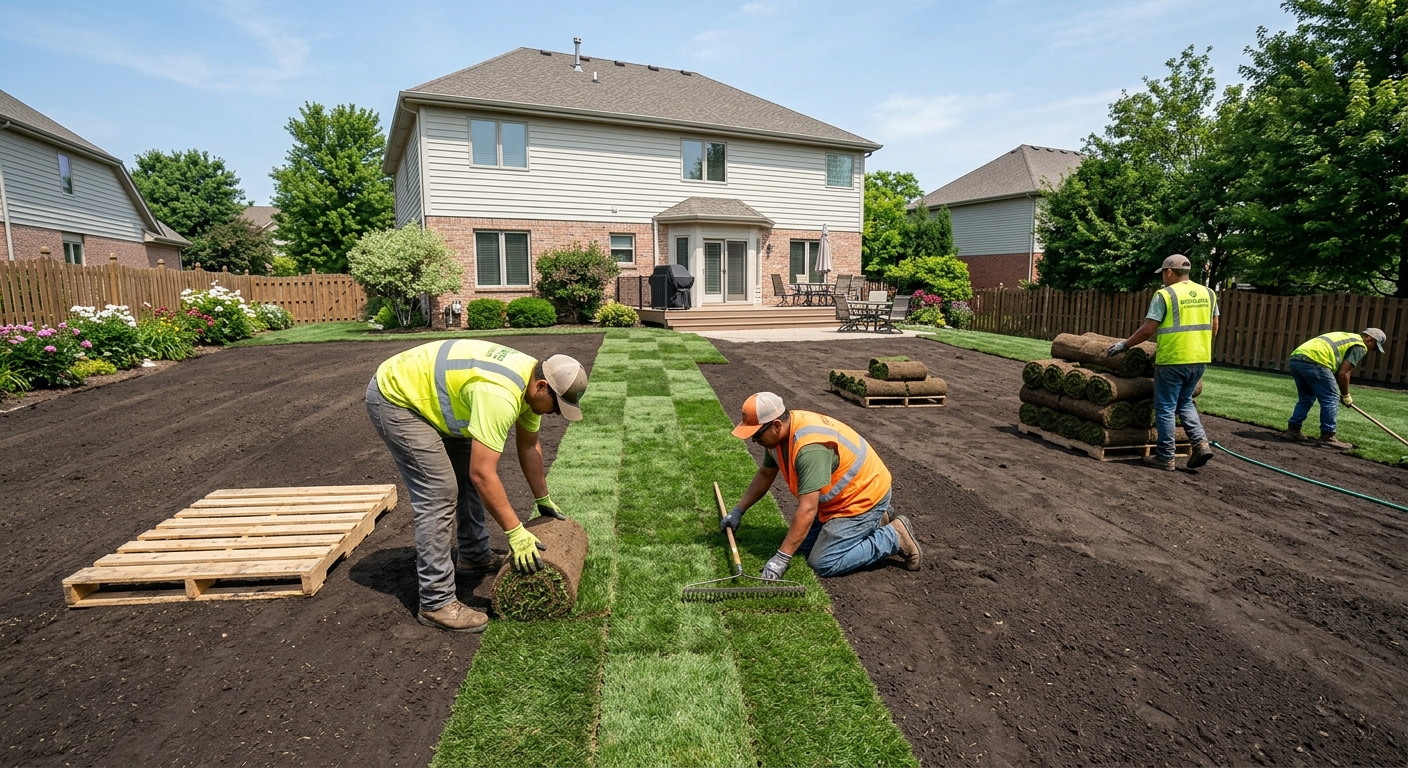
Landscaping options and costs in Glenrosa
In Glenrosa, landscaping projects range from quick lawn upgrades to full front-yard makeovers, and costs typically track both how much work you want and how complex the site is. Because Glenrosa’s population is 6,039 (Statistics Canada, 2021 Census), competition among contractors can be tighter than in larger coastal hubs, so detailed site visits and clear scopes help you avoid redesign fees. The housing mix in the Lower Mainland–Southwest also includes many detached homes, which usually means more yard area to maintain—and more opportunity to invest in drainage, planting beds, and hardscape that protect foundations over time.
Lower Mainland–Southwest sits in plant hardiness zones 7–8, with mild, wet winters and a long window for planting and softscape. That longer season can reduce scheduling pressure compared to colder parts of British Columbia, but it doesn’t eliminate cost drivers: heavy rain still demands engineered drainage, and freeze–thaw cycles can stress patio and retaining-wall bases even in coastal areas. Labour rates and material pricing in this region also run higher than many inland communities because both transport costs and demand are steadier year-round. In Glenrosa, contractor demand is often highest in older residential pockets where foundations and drainage were built with fewer modern backflow, weeping-tile, and soil-amendment considerations—particularly around established neighbourhood areas near town’s main residential corridors.
Below is a practical comparison of common services in Glenrosa, so you can translate a quote into scope.
| Service |
Description |
Season |
Price Range |
| Full landscape design and installation |
Site assessment, layout, plant palette, grading/drainage plan, planting, hardscape and/or irrigation as needed |
Spring–Fall (softscape); structural work planned around weather |
$5,000–$50,000 |
| Sod installation (supply, grade, lay, roll) |
Remove debris, minor grading, topsoil/loam, install sod, roll and first watering plan |
Late spring–early fall (avoid waterlogged weeks) |
$2,500–$7,500 |
| Lawn seeding (grade, seed, starter fertilizer) |
Grade correction, seed selection, starter fertilizer, light cover/rolling |
Spring or early fall |
$1,500–$5,500 |
| Interlocking patio or walkway |
Excavation, base compaction, edging, pavers, slope to drainage away from foundation |
Spring–Summer (best compaction windows); fall for lighter work |
$10,000–$40,000 |
| Retaining wall (interlocking block) |
Block installation, drainage gravel and weeping-tube where required, geogrid/compaction |
Spring–Summer (dry-footing conditions) |
$12,000–$60,000 |
| Tree and shrub planting |
Soil prep, planting, staking where needed, mulch ring, initial watering schedule |
Spring–Fall (water carefully through establishment) |
$1,200–$15,000 |
Prices are estimates only and vary by project scope, site access and material selection.
What affects the price of landscaping in Glenrosa
The same landscaping job can land 30–50% apart across the Lower Mainland–Southwest and other parts of British Columbia because quotes bundle different levels of site prep, drainage engineering, and material tiers. In Glenrosa (zone 7–8), contractors may use lush, layered planting palettes that look fuller sooner, but that only works when drainage is correct and the installation window is planned around wet weeks. In colder Prairie regions (zone 2–4), clients often pay for frost-proof base depth and fewer watering-dependent details; that short frost-free period also compresses crews and can raise day rates. In the dry BC Interior, irrigation design often costs more up front (efficient drip and controllers) to prevent long-term plant loss during restrictions, while Southern Ontario (zone 5–6) tends to see different cost emphasis—more summer irrigation labour during dry spells.
In Glenrosa specifically, two concrete examples explain why pricing moves: (1) a sloped front yard may require extra grading and deeper, properly compacted bases to manage freeze–thaw movement. Even a small change in slope can add excavation, haul-away, and retaining materials; those upgrades can shift a patio from roughly the $10,000–$40,000 band to the higher end. (2) Heavy clay or poorly draining soils often trigger additional soil amendment and a drainage bed/French drain installation, increasing both material and labour.
Housing age matters too. If your home is older, buried downspouts or outdated grading can cause persistent pooling near foundations; correcting that may add to design & installation pricing in the broader $5,000–$50,000 range because the work becomes more than cosmetic—it's protection. Conversely, a flat, accessible lawn replacement is often simpler and keeps labour hours closer to the lower end.
| Price Factor |
Why It Matters |
Cost Impact |
| Yard size in sq ft — the primary cost driver for softscape |
More area means more topsoil/loam, labour hours, and plant or seed quantities |
Often the biggest swing; can change total cost by 20–60% depending on area |
| Grading and drainage work — slope corrections add significant cost |
Correct slopes protect foundations and prevent water pooling that can kill lawns and rot beds |
Can add substantial excavation, re-compaction, and rework—commonly 10–30%+ |
| Drainage bed or French drain installation |
Captures and redirects excess water during wet winters; reduces weed pressure and soil saturation |
Material and digging time can push budgets up by 15–40% on affected areas |
| Plant material tier — native shrubs vs. ornamental vs. mature specimen trees |
Genetic hardiness and size at install change both cost and how quickly the yard “fills in” |
Upgrades to larger, named varieties can raise planting totals 25–100% |
| Hardscape vs. softscape ratio — walls and patios cost more per sq ft than lawn |
Base prep, labour intensity, and materials for pavers/blocks are more expensive than seed/sod |
Switching from 70% lawn to 70% hardscape can increase total by 30–80% |
| Irrigation system design and installation |
Efficient layouts (drip/smart controllers) reduce water use while protecting established plantings |
Can add 10–25% to softscape budgets depending on zones and coverage |
| Soil amendment and topsoil required |
Improves rooting in wet winters and supports healthy growth in zone 7–8 |
Small amendments may add 5–10%; major replacement can add 15–35% |
| Tree removal or stump grinding before new planting |
Stumps create decay and shade issues, and excavation around roots adds labour and disposal |
Often a major additive; can be a 10–40% swing depending on number/size |
Permits & regulations in British Columbia
In British Columbia, most planting, sodding and typical softscape work does not require a permit—so tasks like installing sod, seeding lawns, planting shrubs and trees, adding mulch, and building small garden borders are generally straightforward. Where permits commonly come into play is structural and drainage-adjacent work. For example, retaining walls above the local threshold—often around 1.0 m (3.3 ft) in many municipalities—may require a building permit, and some projects may require engineered drawings. Also, changing lot grading in a way that affects how water flows toward neighbouring properties or storm sewer connections can trigger approval requirements.
Before any digging (even for planting holes), confirm utility locates. Calling for utility marking is essential when installing trees, drainage beds, or wall footings, because contractors must avoid underground service strikes.
For a homeowner in Glenrosa, verifying a contractor’s credentials is a simple step-by-step process. First, ask for proof of general liability insurance (and confirm the coverage is current) by reviewing the certificate of insurance—ensure the effective dates match your project timeline. Second, confirm the contractor’s licensing status through the online registry or business listing relevant to your trade category (your contractor should provide a link or reference number). Third, ask how they handle worker coverage: in BC, check their Workers’ Compensation coverage status/clearance documentation if they have employees. Finally, request the warranty details in writing and keep a copy of all documentation for your records.
Planning a landscape that thrives in Glenrosa's climate
Planning in Glenrosa means working with plant hardiness zone 7–8, the Lower Mainland–Southwest precipitation pattern, and a frost calendar that generally allows landscaping through much of the year. Start with plant selection: choose native or zone-appropriate varieties that tolerate mild coastal winters and cool summers, and that won’t need heavy winter protection. In practice, that often means shrubs and perennials built for wetter winters, then balanced with mulching and correct soil drainage so crowns don’t sit in water.
Next, decide sod versus seed based on your timeline and your tolerance for establishment. Sod gives instant curb appeal, but it costs about 3–4x more per sq ft than seeding once grading, topsoil and labour are included. If you’re fixing a small lawn patch for just appearance, sod may be worth it. For a broader lawn recovery, seeding usually makes more sense economically.
Drainage and grading are critical in Glenrosa. Wet winters can create pooling that leads to weeds, thinning grass and root stress. For patios and retaining walls, base preparation must account for freeze–thaw movement: excavate to a stable base, compact properly, and slope surfaces to move water away from foundations.
For low maintenance without losing curb appeal, use groundcovers, thick mulch layers, and repeat perennial groupings. Consider rain-garden style planting where water naturally collects, and combine with drip irrigation where needed. One common cost justification: adding a drainage correction plus drip to newly planted beds can prevent plant loss that otherwise forces reseeding or replanting—often saving more than the initial $5,000–$50,000 design/install budget increase you might see on a full-yard refresh.
| Element |
Climate Consideration |
Maintenance Level |
Price Band |
| Sod lawn installation |
Establishment matters during wet winters and cool shoulder seasons; avoid waterlogged install days |
Low to moderate (first 4–8 weeks of care) |
$2,000–$8,000 |
| Native perennial garden |
Designed for zone 7–8 conditions; mulch and good drainage reduce winter crown issues |
Low (spring tidy-up, periodic divide/replenish) |
$3,000–$12,000 |
| Mulched shrub border |
Handles cool summers and wet winters when plants are spaced and drainage is correct |
Low (weeding first year, then reduced) |
$2,000–$10,000 |
| Interlocking stone patio |
Needs slope to drainage away from foundation to manage freeze–thaw stress at edges |
Low (seasonal inspection and occasional joint/top-up) |
$10,000–$40,000 |
| Retaining wall (block) |
Proper drainage gravel and weeping management prevents water pressure during wet seasons |
Low (annual check for movement and weep paths) |
$10,000–$80,000 |
| Drip irrigation system |
Helps you water efficiently during summer cool spells and protects established plants during any restrictions |
Low (tune settings, seasonal checks) |
$1,500–$6,500 |
How to choose a landscaping contractor in Glenrosa
Choosing the right landscaper in Glenrosa starts with verifying credentials the right way—don’t rely on word-of-mouth alone. In British Columbia, ask for proof of general liability insurance and confirm the certificate of insurance is active for your project dates. If the contractor has employees, request evidence of worker coverage status/clearance documentation relevant in BC (your contractor should be able to provide it). For licensing, confirm they are properly registered for the work they’re proposing—use the online registry or the trade/business listing they reference, and cross-check the details match the company name on your contract. If the scope includes structural elements like retaining walls, request confirmation of whether any engineering or additional sign-offs are needed for your height and design.
Next, get 2–3 itemised written quotes. You want a breakdown that separates labour from materials (pavers, block, soil amendments, sod/seed, irrigation components) and lists quantities where practical. Read exclusions carefully: ask if permit pulls are included (where required), whether disposal/haul-away is included, and how they handle unforeseen site conditions like saturated soil or old foundation drainage issues. Warranty matters too—ask for the workmanship warranty length and whether the manufacturer warranty on plants, sod (if applicable) and hardscape materials is transferable to you.
Payment should be controlled. Never pay more than 10–15% upfront; use progress payments tied to measurable milestones and hold back a portion until the job is complete and clean. Finally, insist on a written timeline with a start date and estimated completion window.
- Ask for at least 2–3 references from similar Glenrosa projects in the last 12–24 months
- Ensure quotes are itemised: labour, materials, quantities, and unit rates where possible
- Confirm whether grading, drainage correction, and soil amendments are included or treated as extras
- Ask who pulls permits if the project crosses a retaining-wall threshold or affects lot drainage
- Verify utility locates are included before digging for trees, drains, or wall footings
- Request a clear disposal/haul-away line item for debris, excess soil and old turf
- Get a written planting plan with plant list, sizes at install, spacing, and watering method
- Confirm irrigation details: drip zones, controller type, backflow prevention requirements, and coverage
- Review workmanship warranty length and claim process in writing
- Agree on a protection plan for existing lawns/driveways and how they prevent rutting
- Use a payment schedule with a holdback until cleanup and final walk-through are complete
- Confirm the crew count and start/finish times so the schedule is realistic, not optimistic
Red flags in Glenrosa include: (1) quotes that are “lump sum” with no quantities, (2) refusal to provide current insurance or proof of coverage, (3) vague scope wording like “best effort” for drainage without a plan, (4) asking for large upfront payments (over ~15%), and (5) no written timeline or warranty terms.
Frequently asked questions — landscaping in Glenrosa
What is the best grass type for a Glenrosa lawn?
For Glenrosa and the Lower Mainland–Southwest (zone 7–8), many homeowners are best served by a cool-season lawn mix, because summers are generally cool enough for performance and winters are mild. In practice, contractors commonly recommend blends that include perennial ryegrass for establishment speed and blending with fescues for durability and colour through shoulder seasons. If your property stays soggy in winter (common where grading or drainage was overlooked), you’ll want a seed choice and installation method that can tolerate wet periods without thinning. Regardless of the type, your results depend on grading, starter fertiliser, and consistent early watering. A well-planned lawn is also part of why full landscape work can fall anywhere in the $5,000–$50,000 band—drainage and soil prep directly affect how the grass holds up.
When should I aerate and overseed my lawn in Glenrosa?
In Glenrosa, timing typically favours spring or early fall—when temperatures are mild and the lawn can recover without extreme heat stress. Aeration is most effective when the soil isn’t waterlogged; if you aerate during the wettest weeks, you risk smearing and uneven penetration. A common rhythm is to aerate in spring, then overseed shortly after, or to do the same in early fall so seedlings establish before winter. If your lawn is thinning due to compacted soil or drainage issues, overseeding alone won’t fix it; you’ll usually need some soil improvement. That’s one reason why lawn seeding quotes (often within the $1,500–$5,500 band) can rise when contractors include grading correction or topsoil/loam delivery.
What trees grow best in Glenrosa's climate zone?
Because Glenrosa sits in plant hardiness zone 7–8, many coastal BC-friendly deciduous and broadleaf trees perform well when planted in well-drained soil and given adequate early watering. Homeowners often do well with varieties that handle mild winters and can tolerate coastal moisture—especially when the planting is spaced for mature canopy size. For yard structure, small-to-medium specimen trees (chosen for your available space and sightlines) can look better sooner than scattered small saplings, but they cost more at install time. If your yard has drainage limitations near foundations, contractors may recommend a different placement or improved drainage before planting, which can impact overall tree and shrub planting budgets within the $1,000–$15,000 range. A good contractor will also consider wind exposure, sun/shade patterns, and soil amendments so the tree’s first two growing seasons set it up for long-term success.
How much does sodding a yard cost in Glenrosa?
In Glenrosa, sod pricing depends mainly on yard area and the amount of prep needed (grading, soil amendment, and removal of existing turf). For typical projects, contractors often price sod installation within the $2,000–$8,000 band; small areas with minimal regrading land toward the lower end, while full-front-yard installs with significant prep and topsoil can go higher. The real cost driver is prep. If your lawn is uneven or has drainage problems, you should expect additional labour and materials to correct the base—because sod will only look straight and stay healthy if the ground is properly prepared. Also ask what’s included for first watering guidance. A reputable installer will plan establishment care, which protects your investment and helps prevent expensive rework later.
How do I prevent weeds in my Glenrosa garden?
Weed prevention in Glenrosa is mostly about reducing opportunities for seeds to germinate and improving the health of your plants so weeds can’t compete. Start with soil preparation: remove existing weeds thoroughly, loosen compacted areas, and correct drainage so beds don’t stay overly wet. Then use a proper mulch layer (installed at the right thickness and refreshed seasonally) around shrubs and perennials—mulch blocks light and slows weed growth. Edging and weed barrier materials can help in specific paths, but many homeowners get better long-term results with a layered approach: spaced plants, clean soil, mulch, and maintenance in the first year while your garden establishes. If your contractor offers soil amendment, it can also reduce weed pressure by supporting stronger roots. If you’re planning a wider garden refresh, this is part of why full landscape design & installation can fall anywhere in the $5,000–$50,000 band.
How do I design a low-water yard in Glenrosa?
Designing a low-water yard in Glenrosa is less about extreme xeriscape and more about smart water efficiency for wet-winters and any dry periods. First, use zone-appropriate plants that tolerate coastal moisture but don’t require frequent summer soaking—native perennial gardens and mulched shrub borders generally reduce irrigation needs once established. Second, focus on soil health and drainage: healthy soil holds moisture better, and correct grading prevents wasted water from pooling where roots can’t use it. Third, use drip irrigation with a properly set controller and zoning so you deliver water only where plants need it. Even though Glenrosa generally isn’t under the same routine summer watering bans as the drier BC Interior, efficient irrigation still helps manage costs and resilience during restrictions. For many homeowners, the irrigation and plant choices that raise the upfront estimate pay off through fewer plant losses and less ongoing labour.