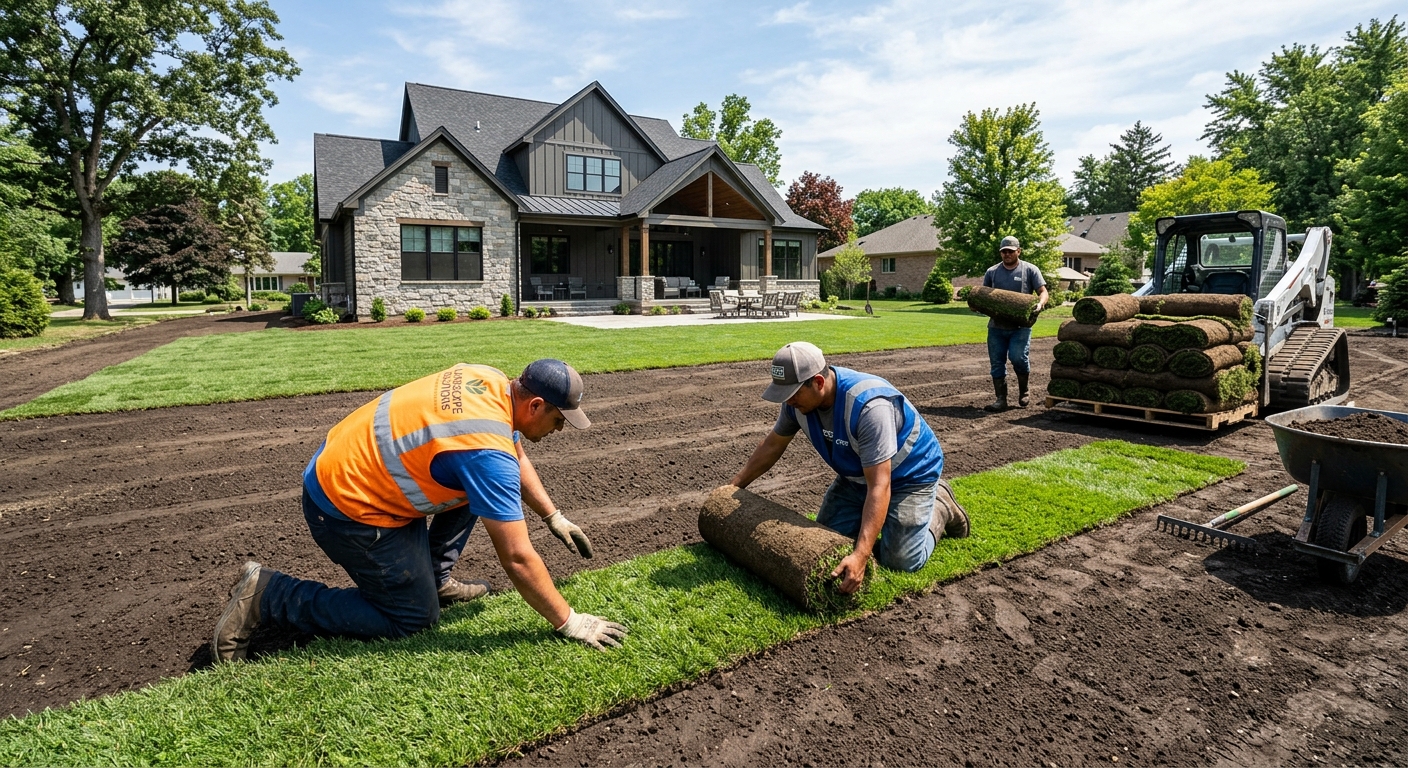
Landscaping options and costs in Horseshoe Bay
Landscaping in Horseshoe Bay starts with one big advantage: you’re not building into a short, harsh season. With a small local population of 1,935 residents (Statistics Canada, 2021 Census), many neighbourhoods—especially along the waterfront and hillside pockets—have limited staging space, which can affect access and labour planning. Also, Horseshoe Bay has a housing stock pattern that often includes detached homes with meaningful yard areas, so homeowners commonly invest in front façades, layered planting beds, and curved drive/side-walk connections.
In the Lower Mainland–Southwest (plant hardiness zones 7–8), mild, wet winters and long, cool summers let us install planting, softscape, and drainage more of the year than in most of Canada. That said, costs still aren’t “one-size-fits-all.” Even though frost is milder than in Prairie cities, freeze–thaw cycles can still damage patios and retaining structures if drainage and base prep aren’t done correctly. In sloped areas, proper excavation depth, compacted bases, and water management can add labour but prevents costly repairs later. Because landscaping demand is steady in areas such as the Horseshoe Bay “village core” and adjacent hillside streets, contractor schedules can tighten in spring and early summer—so booking sooner can reduce rush premiums.
Below are typical price bands homeowners in Horseshoe Bay see for common projects; use them to compare quotes before you dial in scope in a site visit.
| Service |
Description |
Season |
Price Range |
| Full landscape design and installation |
On-site assessment, concept + planting plan, grading/drainage coordination, supply and installation of planting and/or hardscape |
Apr–Nov (with some winter scheduling for procurement) |
$8,000 – $45,000 |
| Sod installation (supply, grade, lay, roll) |
Minor grading, base prep, sod supply, lay/roll, top up/repair edges, initial watering guidance |
Apr–Oct (best before heat stress) |
$2,500 – $7,500 |
| Lawn seeding (grade, seed, starter fertilizer) |
Grading/topping where needed, seed selection, starter fertiliser, light raking, seeding and initial watering |
Mar–May or Sep–Oct (avoid midsummer stress) |
$1,800 – $5,500 |
| Interlocking patio or walkway |
Excavation, compacted base, edging, interlocking pavers, joint sand, clean-up |
Apr–Nov |
$12,000 – $55,000 |
| Retaining wall (interlocking block) |
Layout, excavation, drainage gravel, geotextile, block installation, cap/finish details |
Apr–Nov |
$15,000 – $70,000 |
| Tree and shrub planting |
Soil prep and amendments, container-to-ground planting, staking where required, mulching, first-season follow-up care |
Mar–Nov (best in shoulder windows) |
$2,000 – $14,000 |
Prices are estimates only and vary by project scope, site access and material selection.
What affects the price of landscaping in Horseshoe Bay
Two homeowners can get quotes for the “same” landscaping idea and still see a 30–50% difference across the Lower Mainland–Southwest (and across BC overall) because what drives cost here isn’t just materials—it’s access, drainage complexity, and how long the crew can work efficiently on a specific slope or tight lot. In Horseshoe Bay, many sites combine shoreline moisture, variable grades, and landscaping that needs to look tailored rather than stock-standard, which increases design time and on-site labour.
Climate and frost timing affect both what grows and how long we can safely build. Coastal BC’s zones 7–8 and milder frost (last spring frost often early March to early April near the coast, with first fall frost typically not until November) allow longer planting and softscape windows than Prairie regions, but retaining work still must handle freeze–thaw cycles. That means bases are dug deeper with drainage and compaction—often pushing hardscape and wall projects into higher price bands such as $10,000 – $80,000 for retaining/hardscaping when slopes and drainage are included.
Concrete examples from local jobs: (1) If the lawn area is shaded and stays wet, sod can fail unless grading and drainage are corrected first—costs rise before turf even goes down. (2) A modest block wall that “should fit” may require deeper excavation and a proper drainage bed if water is observed near the foundation; that’s where wall projects can move from lighter installs toward the upper end of $10,000 – $80,000. (3) Mature specimen plantings in coastal nurseries cost more upfront but can reduce the number of planting cycles needed to achieve curb appeal quickly.
On many older Horseshoe Bay homes, established gardens and existing drainage patterns can be unknown until we excavate. If we discover compacted soil, buried debris, or misdirected downspouts, soil amendment and drainage work can add thousands. That’s why a “tree and shrub planting” quote can remain around $1,000 – $15,000 for clean beds, but climb when excavation expands for drainage correction.
| Price Factor |
Why It Matters |
Cost Impact |
| Yard size in sq ft — the primary cost driver for softscape |
More area means more topsoil/seed or sod, more edging, more labour hours |
Typically the largest swing; can change totals by $2,000–$20,000+ |
| Grading and drainage work — slope corrections add significant cost |
Fixing pooling, correcting falls, and creating stable contours requires excavation and re-compaction |
Often adds $1,500–$12,000 depending on slope and volume removed |
| Drainage bed or French drain installation |
Ensures water moves away from foundations and plant zones |
Commonly adds $2,000–$15,000+ for longer runs or tight trenching |
| Plant material tier — native shrubs vs. ornamental vs. mature specimen trees |
Specimen stock increases purchase price and planting labour (bigger holes, staking, protection) |
Can shift $1,000–$8,000+ even with similar layout |
| Hardscape vs. softscape ratio — walls and patios cost more per sq ft than lawn |
Materials, base prep, and jointing increase labour and material costs |
Hardscape-heavy designs often raise total by $5,000–$40,000 |
| Irrigation system design and installation |
Drip lines, zones, backflow prevention, controllers, and tuning add build time |
Often adds $1,800–$10,000 depending on number of zones |
| Soil amendment and topsoil required |
Coastal soils can need organic amendments for drainage and rooting (especially after excavation) |
Usually adds $800–$6,000+ for haul, supply and incorporation |
| Tree removal or stump grinding before new planting |
Removal involves additional equipment, disposal, and access considerations |
Commonly adds $500–$5,000 per tree depending on size |
Permits & regulations in British Columbia
In British Columbia, most typical planting and softscape work doesn’t require a permit. That usually includes: sod installation, lawn seeding, planting trees and shrubs, mulching, and generally replacing landscaping that doesn’t change drainage in a major way. Most homeowners in Horseshoe Bay can proceed with these tasks once utility locates are handled for any digging.
What often does require a permit is structural work involving retaining walls above a height threshold—commonly around 1.0 m (3.3 ft) in many municipalities—because these walls may be treated as structural elements. If your project involves significant lot grading changes, such as altering drainage direction toward a neighbour’s property or toward a storm connection, approval requirements can apply. Before excavation, call for utility locates (and ensure the contractor is using locates as part of their process) before digging planting holes or wall footings.
Here’s a practical step-by-step approach for a Horseshoe Bay homeowner to verify a contractor’s legitimacy. First, ask for the contractor’s business licence details (where applicable) and their certificate of insurance—confirm it includes general liability and that the coverage limits are appropriate for construction work. Next, confirm how they cover workers (in BC, this is typically through the relevant workplace coverage registration for their crew). Then, check the licensing/registration listing online, if available for their trade category. Finally, ask for a clearance letter/standing documentation if they have recent project registrations—don’t rely on verbal assurances.
Also confirm irrigation and water-use bylaws when discussing watering schedules, especially if you’re switching from lawn to drip or adding controller-based systems.
Planning a landscape that thrives in Horseshoe Bay's climate
In Horseshoe Bay, the goal is to design with the grain of coastal conditions: cool, wet winters, mild frost risk, and long shoulder seasons. The plant palette in zones 7–8 lets you use broadleaf evergreens and layered perennials, but you still need excellent drainage. In Lower Mainland–Southwest, standing water and foundation moisture are more common landscape “fail points” than winter kill.
Start with plant selection. Choose native and zone-appropriate species and build structure with evergreens and shrubs, then add long-blooming perennials for colour. This reduces watering and winter protection needs. Next, sod versus seed: sod gives instant coverage and quick curb appeal, but it’s usually more expensive—commonly around $2,500 – $7,500 for typical installs in this area—while seed can be closer to $1,800 – $5,500 when the base is already reasonably ready. Sod is justified when you have erosion-prone slopes or want immediate function (kids/pets, entertaining), but seed can work well if you’re willing to protect the seedbed and keep moisture consistent through germination.
Drainage and grading are critical. Create gentle slopes away from foundations, and plan for rain events by using swales, amended soil, and mulch (not bare soil) in low points. For hardscape like patios or retaining walls, base preparation must account for freeze–thaw behaviour even in coastal BC. Dig deeper, compact in lifts, and include proper drainage gravel behind walls to prevent hydrostatic pressure. For low maintenance, use groundcovers and mulched shrub borders, and consider rain-garden pockets to capture roof runoff.
One dollar example: if your budget allows, swapping a thin topsoil-only approach for a proper drainage bed under part of a lawn area can cost an extra few thousand—often $2,000–$6,000+—but it can protect a $2,500–$7,500 sod investment from patchiness and washouts. That’s where spending early prevents paying twice later.
| Element |
Climate Consideration |
Maintenance Level |
Price Band |
| Sod lawn installation |
Needs good drainage and consistent early watering through root establishment in cool, wet-to-dry swings |
Low after establishment, higher during first 4–8 weeks |
$2,500 – $7,500 |
| Native perennial garden |
Zone-appropriate plants handle coastal winters; mulch helps prevent soil heaving in wet spells |
Low to medium (weeding first year, then tidy-ups) |
$2,000 – $12,000 |
| Mulched shrub border |
Evergreen structure and mulch conserve moisture and reduce splashing soil during storms |
Low (annual top-up and seasonal pruning) |
$1,500 – $9,000 |
| Interlocking stone patio |
Base prep and slope away from the house helps manage freeze–thaw and rain runoff |
Low (occasional cleaning and joint sand top-up) |
$12,000 – $55,000 |
| Retaining wall (block) |
Drainage behind wall is essential to avoid water pressure in wet coastal winters |
Low after build (inspections and settling monitoring) |
$15,000 – $70,000 |
| Drip irrigation system |
Drip matches coastal water availability and supports efficient watering if summer restrictions occur |
Low (seasonal adjustments and filter checks) |
$1,800 – $10,000 |
How to choose a landscaping contractor in Horseshoe Bay
Choosing a contractor in Horseshoe Bay should start with proof, not promises. In British Columbia, ask for their current licensing/registration details for the type of work they do (especially if they’re building structures like retaining walls or patios). Next, verify general liability insurance by requesting a certificate of insurance that lists your property as an additional insured, where applicable. For worker coverage, confirm they have the appropriate workplace coverage for their crew—don’t accept “we’re covered” without documentation. If they can’t provide paperwork quickly, move on.
Then, get 2–3 itemised written quotes. You want labour and materials broken out—excavation, base materials, pavers/block, drainage gravel, geotextile, soil/topsoil, and plants. A lump-sum quote is harder to compare and easier for exclusions to hide. Read the scope carefully: is permit pulling included (if needed for a retaining wall height or grading changes)? Is disposal included? Who hauls away excavated material? Are utility locates included and performed before digging? If irrigation is part of the plan, ask about controller type, number of zones, and who tunes/initially tests the system.
Warranty matters too. Ask for a workmanship warranty length for installation (not just a manufacturer warranty for materials). Clarify whether warranties are transferable if you sell. For payments, never pay more than 10–15% upfront; use holdback until the job is complete and cleaned up. Request a written start date and completion estimate, and confirm scheduling around spring wet conditions and contractor availability in the village core and nearby hillside streets.
- Provide a written scope of work with quantities (sq ft, linear ft, tree count) and a site plan reference
- Confirm insurance paperwork before signing anything
- Ask whether utility locates are included and documented
- Require an itemised labour + materials breakdown (no “mystery” line items)
- Confirm drainage/grading assumptions and whether water flow is tested/observed
- Ask who supplies and compacts base materials and to what depth
- Verify retaining wall details include geotextile and drainage gravel behind the wall
- Request irrigation design by zone if you’re upgrading watering (drip vs sprays for beds)
- Check disposal/haul-away inclusion and dump fees
- Get a written warranty statement (workmanship) and product warranty terms
- Use a payment schedule with a holdback until final acceptance
- Confirm cleanup standards and the “end state” of edges, topsoil, and mulch lines
In Horseshoe Bay, red flags I watch for are: (1) quotes that omit drainage details for lawns near slopes or foundations, (2) no proof of insurance/certificates when you ask, (3) retaining wall proposals that don’t mention drainage gravel and base preparation, (4) vague exclusions like “permits not included” without specifying what triggers a permit, and (5) demanding a large upfront payment before any material ordering or scheduling is confirmed.
Frequently asked questions — landscaping in Horseshoe Bay
How do I design a low-water yard in Horseshoe Bay?
In Horseshoe Bay (Lower Mainland–Southwest, plant zones 7–8), low-water design usually means reducing thirsty turf, improving drainage so plants don’t “soak and struggle,” and using efficient irrigation only where needed. Start by replacing parts of lawn with native perennials, groundcovers, and mulched shrub borders—these hold moisture better and tolerate coastal winters with less drama. If you want a lawn, consider seeding in bare patches rather than full sod; seed projects can land around $1,800 – $5,500 when the base is ready, and you can overseed in the shoulder seasons. Pair plant beds with drip irrigation by zone and use smart controllers so watering can respond to rainy periods. Finally, capture roof runoff with a small rain-garden pocket or swale—this often reduces the need for “extra” watering during dry spells.
How do I find a licensed landscaper in Horseshoe Bay?
Begin by asking each contractor for documentation: (1) the right licensing/registration for the trade category they perform, (2) a certificate of insurance showing general liability coverage, and (3) worker coverage for their crew. In British Columbia, reputable contractors will provide paperwork quickly—so if they stall or only send partial pages, that’s a problem. For verification, check online registries that match their stated trade category and compare what’s on their website to what’s on the certificate and proposal. Next, request a written quote that matches their scope: itemised labour + materials, drainage/grading assumptions, disposal and whether locates are included. For Horseshoe Bay specifically, also ask how they handle sloped sites and freeze–thaw base prep for patios/walls, because that’s where inexperienced contractors often cut corners.
How much does landscaping cost in Horseshoe Bay?
Landscaping costs in Horseshoe Bay depend heavily on how much softscape versus hardscape you’re adding, plus drainage and site access. For a common baseline, full design plus installation is often in the wide range of $8,000 – $45,000, while tree and shrub planting alone typically sits around $2,000 – $14,000 depending on plant size and site prep. Sod installation (supply, grade, lay, roll) often falls near $2,500 – $7,500, while seeding is frequently less, commonly $1,800 – $5,500 when the base is already reasonably level. Retaining walls and interlocking patios are where budgets can jump because excavation, base depth, drainage gravel and compaction matter—retaining/hardscaping often reflects the larger band of $15,000 – $70,000 or more depending on size and complexity.
What plants thrive in Horseshoe Bay's climate zone?
Horseshoe Bay is in the Lower Mainland–Southwest zones 7–8, so you can grow a broad mix of coastal-friendly shrubs, perennials, and many broadleaf evergreens with far less winter protection than in colder parts of Canada. The key is still drainage: pick plants that tolerate wet winters but don’t sit in water for long periods. In practice, many successful yards use evergreens for structure (so the garden looks finished in winter), plus long-blooming perennials for colour and pollinator support. If you’re aiming for low water, focus on native or proven coastal species and build layered planting beds with mulch. A pro planting plan also considers spacing and maintenance—dense borders reduce weeds faster, which lowers your long-term upkeep. A good landscaper should suggest zone-appropriate alternatives when nurseries have stock shortages.
Sod vs seed — which is better for a Horseshoe Bay lawn?
For Horseshoe Bay, both sod and seed can work, but “better” depends on your site conditions and timeline. Sod is usually best when you need instant usable grass, want faster visual results, or your lawn area is erosion-prone. The trade-off is cost: sod installs commonly land around $2,500 – $7,500. Seed is often the better value when your base is properly graded and you can maintain consistent moisture during germination; seeding commonly falls near $1,800 – $5,500. Coastal BC also allows great planting windows, but the wettest periods can hide drainage problems. If water pools, neither sod nor seed will perform long-term without correcting grading/drainage first—so your contractor should assess how water behaves after storms before recommending turf type.
How much does a retaining wall cost in Horseshoe Bay?
Retaining wall pricing in Horseshoe Bay usually reflects excavation depth, wall height/length, drainage details, and whether the site is sloped or access is tight. Interlocking block retaining walls commonly land around $15,000 – $70,000 in this area depending on size and complexity. In coastal BC, drainage behind the wall isn’t optional—it’s what keeps hydrostatic pressure from undermining the structure during wet winters and freeze–thaw cycles. If your wall is near a foundation, on a slope, or requires a larger drainage bed/French drain, expect the project to move toward the upper range. Also consider permitting: in British Columbia, walls above a typical threshold (often around 1.0 m) may require a permit and sometimes engineered input, so ask your contractor whether permits are included in their scope.