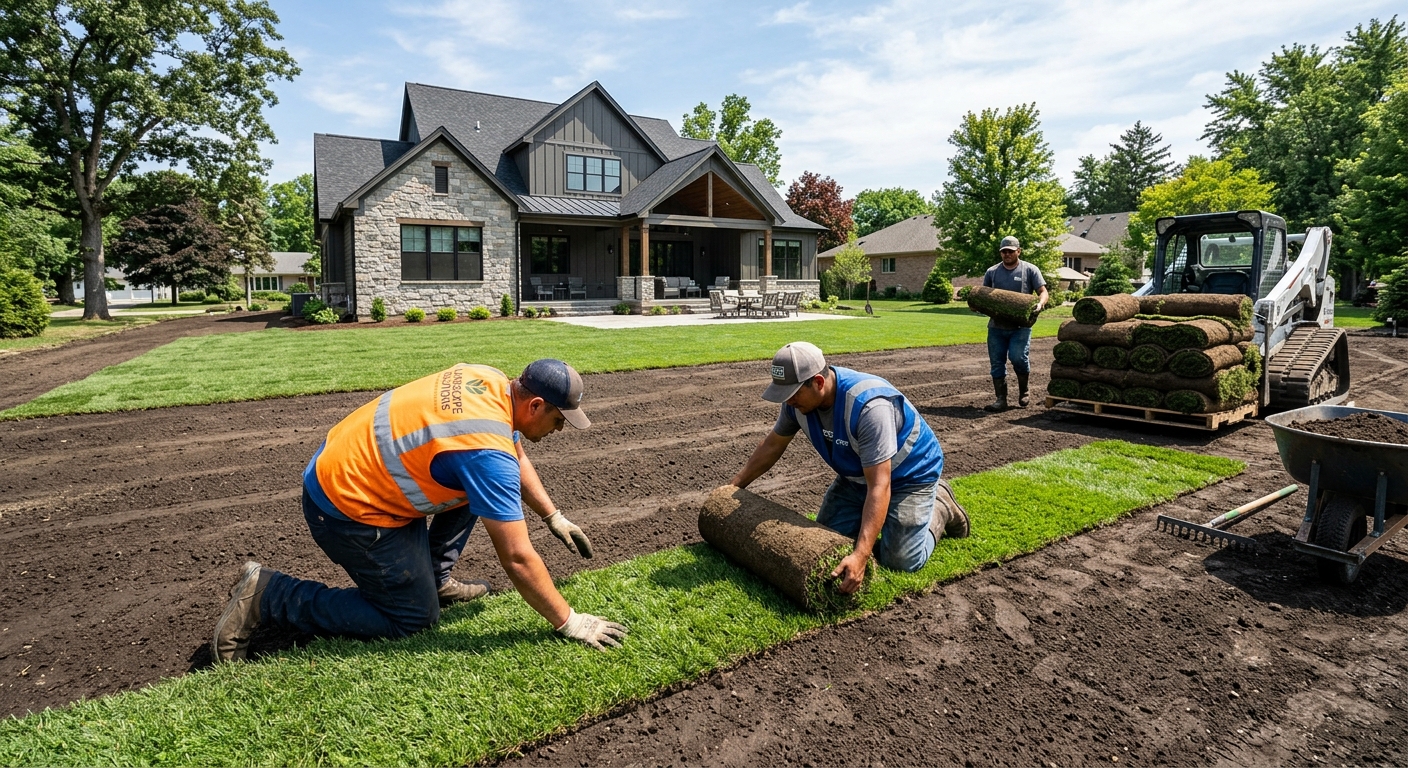
Landscaping options and costs in North Cowichan
In North Cowichan, the right landscaping approach depends on whether you’re enhancing a single-detached home yard or tightening up drainage and hardscape around older properties. With 10,575 homeowner households (76.9% of households own) and 62.5% of dwellings being single-detached, there’s a lot of private yard space to work with—and that’s one reason landscaping projects are consistently in demand. It’s also common to see work triggered by upkeep on older housing stock; 42.6% of homes were built before 1981, so many yards need soil correction, improved edging, and foundation-aware drainage upgrades before planting or turf goes in.
Vancouver Island and the Coast sit in mild coastal zones 7–9. That means a longer installation window—many crews start early spring and continue into late fall—so pricing is often more stable than in short-season regions. Labour availability can tighten around popular neighbourhoods (especially near Cowichan Bay and the Tsawout-facing areas of the district where access and traffic management take more planning), but the schedule benefits homeowners who want phased improvements rather than one rushed install.
Cost differences also show up because coastal BC rain patterns raise the importance of compaction, base preparation, and drainage design. A sloped backyard can quickly move a “simple” planting job into retaining-wall and drainage territory. To help you compare apples-to-apples, the table below shows typical budget ranges for common North Cowichan landscaping scopes.
| Service |
Description |
Season |
Price Range |
| Full landscape design and installation |
On-site design, grading/disciplined drainage plan, topsoil, planting plan, hardscape/paths (as selected), and install coordination |
Early spring to late fall (year-round planning) |
$5,000–$40,000 |
| Sod installation (supply, grade, lay, roll) |
Soil prep, weed suppression, grade corrections, sod delivery/laying, rolling, and establishment watering guidance |
Late spring through early fall |
$1,500–$8,000 |
| Lawn seeding (grade, seed, starter fertilizer) |
Light grading/tilling, seed blend, starter fertilizer, straw/mulch (as required), and initial maintenance plan |
Spring or early fall |
$900–$5,000 |
| Interlocking patio or walkway |
Excavation, base course, compacted leveling sand, pavers, edging, and jointing sand; simple drainage allowances if needed |
Spring to fall |
$4,000–$20,000 |
| Retaining wall (interlocking block) |
Block system, reinforced base and drainage layer (where required), backfill, compaction, and finish grading |
Spring to fall |
$4,000–$60,000 |
| Tree and shrub planting |
Plant layout, soil amendments, planting, staking (if required), mulch rings, and watering plan |
Late spring, summer (for container stock), or early fall |
$800–$15,000 |
Prices are estimates only and vary by project scope, site access and material selection.
What affects the price of landscaping in North Cowichan
On Vancouver Island and the Coast, you can often see landscaping quotes for the “same” yard work vary by 30–50% between contractors, even within North Cowichan. That spread comes down to what’s actually included (drainage design, soil replacement, labour hours, disposal), the quality tier of materials, and how the crew sequences the work during wet months. Labour rates and material pricing are also influenced by the fact that crews tend to run a long season in coastal BC, so scheduling, site access, and demand can shift pricing.
The biggest driver is how the job fits our coastal plant hardiness zones 7–9: frost is gentler than in the Prairies, which allows more planting time, but heavy rain still demands good drainage and erosion control. If a site has freeze–thaw exposure at the edges of a foundation or along walkways, base preparation and compaction remain cost-critical—just not as extreme as inland BC. By comparison, Prairie regions (Zone 2–4) need more drought- and wind-tolerant species and deeper, frost-conscious wall base depth due to colder freeze conditions, often compressing timelines and increasing the complexity of soil management. The dry BC Interior also changes irrigation design due to water-use limits. Southern Ontario (Zone 5–6) is often moderate, but contractors still price irrigation and mid-summer maintenance planning around dry spells.
In North Cowichan, two concrete examples that swing costs are: (1) sloped yards needing grading and retaining wall tie-ins—this can push your project from basic planting into the retaining walls & hardscaping band (often $4,000–$60,000), and (2) older home yards (like those built pre-1981) frequently have compacted fill that requires topsoil/soil amendment before turf goes in, nudging “softscape-only” plans toward full landscape budgets (commonly $5,000–$40,000). For exposed south-facing corners, adding drip irrigation and drought-tolerant palettes can raise upfront costs but prevent expensive turf failures over the first couple of seasons.
| Price Factor |
Why It Matters |
Cost Impact |
| Yard size in sq ft — the primary cost driver for softscape |
More area means more soil prep, seed/sod, edging, and labour hours |
Can change total cost by several thousand dollars as the job scales |
| Grading and drainage work — slope corrections add significant cost |
Fixing pooling, correcting grades, and building subtle fall away from foundations requires time and material |
Often one of the largest adders for sloped properties |
| Drainage bed or French drain installation |
Coastal rain can saturate soil; drains protect foundations and keep plant roots healthy |
Material + trenching + disposal increases budget noticeably |
| Plant material tier — native shrubs vs. ornamental vs. mature specimen trees |
Size, availability, and transplant difficulty affect both material price and labour time |
Specimen trees can move a planting budget toward the high end ($) |
| Hardscape vs. softscape ratio — walls and patios cost more per sq ft than lawn |
Stone/pavers require excavation, base, compaction, and skilled laying |
Patios and interlocking work can outpace lawn costs quickly |
| Irrigation system design and installation |
Efficient coverage matters in exposed areas; coastal mist doesn’t replace root-zone irrigation during dry spells |
Drip kits and smart controllers add cost, especially for zoning |
| Soil amendment and topsoil required |
Establishing turf and healthy roots depends on replacing or improving poor, compacted, or rocky fill |
Can turn a low-scope job into a mid-range project |
| Tree removal or stump grinding before new planting |
Root disturbance affects grading and can delay installation schedules |
Adds labour, equipment, and disposal costs |
Permits & regulations in British Columbia
In British Columbia, most planting, sodding, and typical softscape landscape work does not require a permit. That includes turf installation, shrub and tree planting, mulch and groundcover, and installing standard garden edging—so long as you’re not materially changing drainage patterns toward neighbouring lots or storm systems. In North Cowichan, the work that more often triggers approvals is retaining-wall construction, especially when walls exceed a height threshold commonly around 1.0 m (3.3 ft) in many municipalities. For those cases, a building permit may be required and engineered drawings can be requested depending on wall conditions (height, soil, surcharge loads, and proximity to structures).
Also pay attention to grading: changes to lot grading that direct runoff in a new way—such as toward a neighbouring property or a storm connection—can trigger review requirements. Before any digging for planting holes or wall footings, call utility locates so you’re not damaging underground services.
To verify a contractor’s legitimacy in North Cowichan (and across BC), do this step-by-step: (1) check licensing credentials via the BC provincial registry or contractor verification page the company provides; (2) request a current certificate of insurance (general liability) showing they’re insured for your type of work; and (3) ask for proof of coverage for workers through the appropriate provincial workplace coverage system (and confirm it matches the scope). If a contractor can’t provide documentation promptly, treat that as a major red flag and request written clarification before signing.
Planning a landscape that thrives in North Cowichan's climate
Designing for North Cowichan means working with our coastal zone 7–9 conditions: long growing seasons, mild freezes, and winter wet that can overwhelm poor drainage. Start with plant selection—choose native and zone-appropriate species that handle local winters without heavy winter protection and typically need less watering once established. In exposed or wind-facing areas near the Cowichan Valley, structure plants like broadleaf evergreens, ornamental grasses, and hardy perennials often outperform delicate choices that need more replanting. For turf, the sod versus seed decision is where budgets and outcomes often diverge: sod gives instant curb appeal and faster ground coverage, but it’s generally more expensive—often about 3–4× the material cost per square foot compared with seeding once you include prep and establishment.
Drainage and grading are non-negotiable on Vancouver Island and the Coast. Even with gentler freeze conditions, pooling around foundations can cause foundation moisture and plant stress. For frost-sensitive areas, base preparation for patios and retaining walls still needs to follow local best practice—compacted base layers and drainage layers help prevent movement during wetter freeze–thaw periods near the surface.
For maintenance, low-effort design wins: mulch rings for shrubs, groundcovers that close the soil surface, and seasonal perennials reduce weeding and annual upkeep without sacrificing appearance. If water efficiency is part of your goal (especially on south-facing slopes during summer dry spells), consider drip irrigation paired with a rain-garden style depression for roof runoff—rather than trying to “force” thirsty plants to survive.
Dollar example: If you’re deciding between 300 sq ft of sod and seeding for a front lawn, sod might land in the $1,500–$8,000 range depending on access and soil correction needs, while seeding often sits lower—making seeding the better value if you can tolerate a temporary look and commit to watering and weed control. If you need a fast finish for curb appeal or resale timing, paying for sod can be justified.
| Element |
Climate Consideration |
Maintenance Level |
Price Band |
| Sod lawn installation |
Establishes quickly in coastal zone 7–9; needs drainage and consistent early watering to prevent patching |
Low to moderate (first season care) |
$1,500–$8,000 |
| Native perennial garden |
Zone-appropriate plants handle mild winters; mulch and spacing improve airflow in wet months |
Low (seasonal tidy and occasional weeding) |
$800–$10,000 |
| Mulched shrub border |
Moisture control in winter and summer; prevents muddy splash and reduces weed pressure |
Low (replenish mulch as needed) |
$1,000–$12,000 |
| Interlocking stone patio |
Base compaction and drainage matter for coastal rain and surface movement |
Low (occasional cleaning and joint sand checks) |
$4,000–$20,000 |
| Retaining wall (block) |
Backfill and drainage layer prevent washout during wet winters; frost surface movement is reduced with proper build |
Low (periodic inspection) |
$4,000–$60,000 |
| Drip irrigation system |
Efficient delivery for long-season growth; supports drought-tolerant planting during dry spells |
Moderate (seasonal adjustments and controller checks) |
$1,200–$7,500 |
How to choose a landscaping contractor in North Cowichan
Choosing a contractor in North Cowichan comes down to verifying credentials and getting a clear, itemised scope. In British Columbia, confirm they have appropriate licensing for the work they’ll perform, carry liability insurance, and have the right workplace coverage for their employees. How to check each: (1) ask for their insurance certificate of liability and ensure it’s current and matches your address/project type; (2) request proof of provincial workplace coverage and confirm it covers the crew that will be on site; and (3) if they advertise licensed services beyond basic landscaping (like certain hardscape scopes that may involve additional responsibilities), ask for the relevant documentation and verify it through the provincial registry or the company’s provided licence details.
Next, get 2–3 itemised written quotes. You want a breakdown that shows labour and materials separately—especially for base materials (crushed rock, bedding sand), soil amendments, drainage components, and disposal. Make sure exclusions are explicit: is the permit pull included where required (often for higher retaining walls), is disposal included, and who handles any utility-locate tickets if needed? Warranty matters too: ask for a workmanship warranty length, what the manufacturer warranty covers for products (like sod types, pavers, or irrigation components), and whether warranties are transferable if you sell the home.
Use a sensible payment schedule: never pay more than 10–15% upfront. Hold back a portion until the final walk-through and completion of punch-list items. Finally, require a written timeline with a start date and an estimated completion date so you can plan around weather delays during coastal wet periods.
- Provide a written scope with quantities (sq ft of turf, linear ft of wall, patio sq ft).
- List specific materials (block brand/type, paver thickness, soil amendment specs, sod/seed variety).
- Include drainage details (French drain or drainage layer) if your yard slopes or pools.
- Confirm disposal is included (excavated soil, excess rock, old sod lift).
- Show how they prep base layers (compaction method, base depth, bedding sand thickness).
- Ask who manages utility locates and confirm locates are called before digging.
- Request references for similar coastal BC projects, ideally on sloped lots.
- Provide proof of insurance and workplace coverage before work starts.
- Clarify payment terms and milestones in writing.
- Ask about watering and establishment instructions for sod/seed and irrigation startup.
- Confirm the crew schedule and weather contingency plan for rain/wet ground days.
- Ensure any required permits are identified and responsibility is assigned (if applicable).
Red flags to watch for in North Cowichan: vague lump-sum quotes without measurements; refusal to provide insurance or workplace coverage documentation; no written warranty details; “too-good-to-be-true” pricing that ignores drainage/base prep (especially for walls and patios); and a payment request that asks for most money upfront without a clear schedule or completion criteria.
Frequently asked questions — landscaping in North Cowichan
Sod vs seed — which is better for a North Cowichan lawn?
In North Cowichan, sod is usually the better choice when you want fast results or when you’re replacing a lawn that’s patchy and uneven. Coastal conditions in the zone 7–9 range support establishment, but the first season still depends on good soil prep and drainage. Sod often costs more because you’re paying for turf production and handling—typical sod installs in our local tier can land around $1,500–$8,000 depending on area and prep. Seeding is the better value if you can manage watering and weed control while the lawn establishes, and you’re comfortable with a less instant look. For slopes, pooling, or heavy rainfall spots, either option needs correct grading—otherwise you’ll pay again to fix failures.
How much does a retaining wall cost in North Cowichan?
Retaining wall pricing in North Cowichan is driven by wall length, height, soil conditions, and whether the build requires proper drainage and reinforced base preparation. For interlocking block retaining walls, typical budgets generally fall within $4,000–$60,000 for many residential scopes in the region. A short, straight wall on stable soil can be mid-range, while a longer wall on a sloped yard—especially where grading corrections and drainage layers are needed—pushes toward higher figures. Homes built before 1981 are more likely to have older drainage patterns or compromised fill, which can add excavation and soil replacement time before the wall goes in.
When is the best time to landscape in North Cowichan?
For North Cowichan, the best time is typically late spring through early fall, because coastal BC’s mild winters and longer growing window allow crews to work steadily and plants to root before colder, wetter stretches. Sod is commonly installed during the warm season, while seeding is often done in spring or early fall to take advantage of moisture without extreme heat. Hardscape and retaining walls are also usually planned for dry, workable weeks—still, good contractors plan around rain days with careful scheduling. If you’re doing full landscape design and installation, you can book the design phase earlier in the year and keep installation flexible from early spring to late fall, which helps manage availability in high-demand areas.
Do I need a permit for a retaining wall in British Columbia?
In British Columbia, many softscape tasks like planting and sodding typically don’t need a permit, but retaining walls often do depending on height and local requirements. A common threshold used in many municipalities is around 1.0 m (3.3 ft); if your planned wall exceeds that, expect a building permit and sometimes engineered drawings, depending on the wall’s conditions (height, soil, and loads). Also note that changes to lot grading that affect drainage direction can trigger approvals. The safest approach in North Cowichan is to ask your contractor to identify whether your wall height and footprint are likely to require a permit, and to confirm responsibility for the permit process before any work starts.
How do I improve drainage in my yard?
Improving drainage usually starts with diagnosing where water is going: pooling near foundations, runoff across a slope, or soggy areas that stay wet after rain. In North Cowichan’s coastal climate, winter wet can saturate soil, so solutions often include re-grading to direct water away from structures, adding a drainage bed, or installing a French drain. A “small” drainage correction can still affect the cost because it may involve trenching, base materials, and disposal. If you’re planning hardscape (patios/walkways) or a retaining wall, drainage layers and proper base preparation are essential—this is a common reason quotes differ. Ask for a simple plan that explains where the drain or corrected grade routes water.
What is xeriscaping and does it suit North Cowichan?
Xeriscaping is landscaping designed to reduce irrigation needs by using drought-tolerant plants, efficient watering methods (often drip), and soil strategies like mulch to retain moisture. In North Cowichan, xeriscaping can absolutely work, but it should be done with coastal reality in mind: we get plenty of rain in wet seasons, so the goal isn’t “no water ever”—it’s smarter water use during dry spells and better performance year-round. Drip irrigation can prevent overwatering and help establishment of drought-tolerant palettes. If you combine xeriscape planting with drainage improvements, you’ll usually get stronger results than simply swapping plants. Many homeowners still spend within local landscape budgets like $5,000–$40,000 when they include design, soil prep, and efficient irrigation layout.