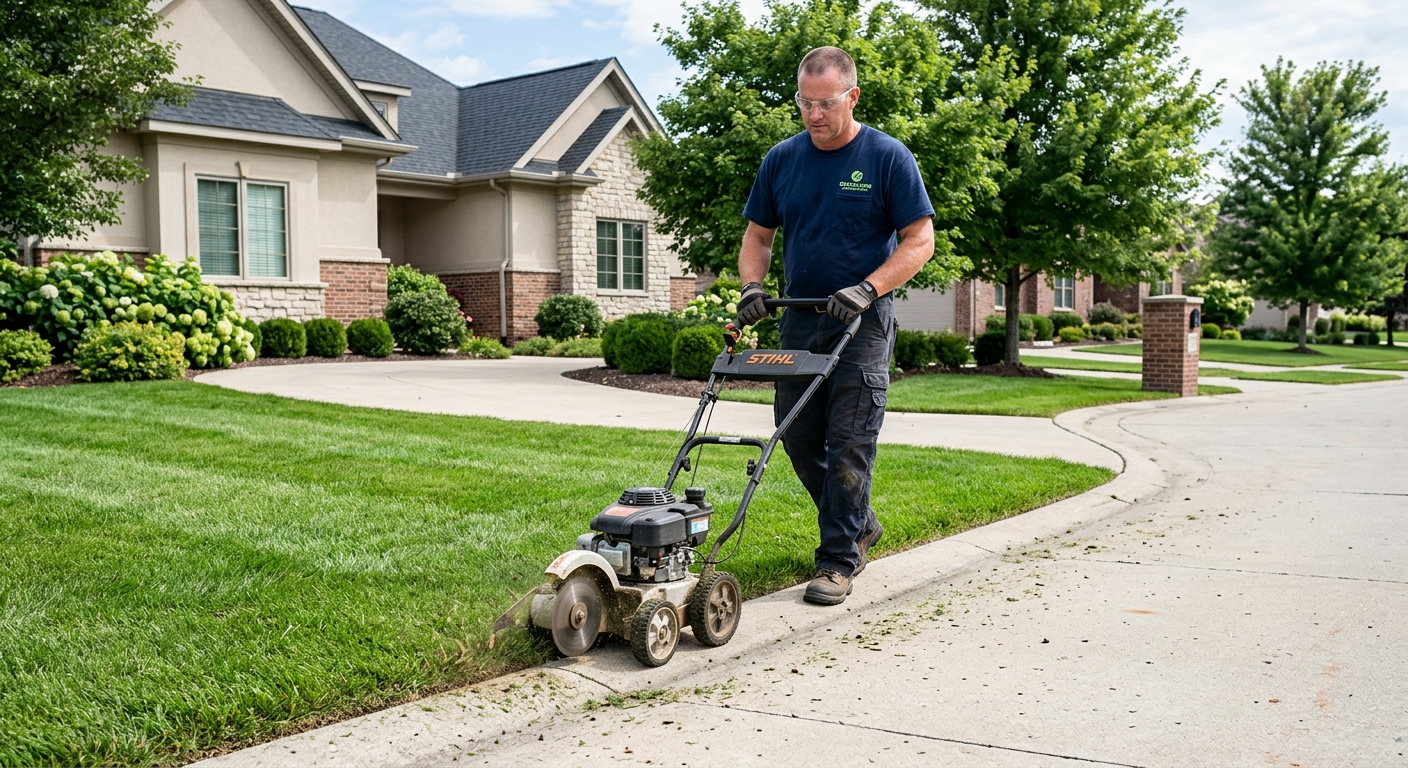
Landscaping options and costs in Fairwinds
Fairwinds is a small community on Vancouver Island, and that matters for landscaping pricing because your crew size and availability can be tighter than in the Lower Mainland–Southwest metros. With a population of 1,147 (Statistics Canada, 2021 Census), many landscaping projects are scheduled as add-ons to broader island work, so access, scheduling, and material logistics can influence labour costs. The housing context also tends to produce more yard-focused upgrades: when households own the “extra space,” they’re more likely to invest in layered planting and hardscape that improves daily usability—patios, walkways, and better drainage.
In the Lower Mainland–Southwest (plant hardiness zones 7–8), winter damage risk is lower and winters are typically mild and wet. That longer working and growing season supports richer planting palettes and fewer “rush” windows, but it also means crews may be balancing jobs around heavy rainfall weeks. Structural work still needs to respect freeze–thaw cycles: even in coastal areas, proper base depth, compaction, and drainage details are what prevent frost heave and wall movement on sloped sites common near viewpoints and hillside lots in the region. If you’re near Fairwinds/Departure Bay-style coastal lots with windy exposure and damp soil, you often see higher demand for grading, drainage corrections, and hardy evergreen + perennial combinations. Next, compare common service types and price ranges in Fairwinds.
| Service |
Description |
Season |
Price Range |
| Full landscape design and installation |
On-site design, plant palette, grading concepts, hardscape/softscape layout, then build-out with installation coordination |
Spring to fall (major work typically Mar–Oct) |
$5,000–$50,000 |
| Sod installation (supply, grade, lay, roll) |
Site prep, topsoil/grade correction, weed control, sod delivery, installation and rolling |
Spring or early fall (best recovery) |
$2,000–$8,000 |
| Lawn seeding (grade, seed, starter fertilizer) |
Fine grading, seed selection, starter fertiliser, light raking and top-dressing as needed |
Spring or early fall |
$1,200–$4,500 |
| Interlocking patio or walkway |
Excavation, base course, edging, interlocking stone pavers, jointing sand, and compaction |
Late spring to early winter (weather dependent) |
$6,500–$25,000 |
| Retaining wall (interlocking block) |
Block wall layout, excavation, gravel base, drainage layer, geotextile as required, and wall build |
Summer to early fall for best install conditions |
$10,000–$80,000 |
| Tree and shrub planting |
Soil prep, planting, mulching, staking (if needed), and initial watering plan |
Nearly year-round (avoid wettest ground) |
$1,000–$15,000 |
Prices are estimates only and vary by project scope, site access and material selection.
What affects the price of landscaping in Fairwinds
In Fairwinds and across British Columbia, two quotes for the “same” landscape can differ by 30–50% because the hidden variables are often site conditions and build method—not the visible plants or pavers. Contractors in the Lower Mainland–Southwest can stretch the schedule through mild winters, but heavy rain weeks, steep access, and drainage complexity still drive labour hours and material waste. In practice, the plant hardiness zone and frost dates influence both what grows and how long crews can work: coastal zone 7–8 allows more lush planting palettes and longer install windows, while Prairie regions (zone 2–4) often force drought-tolerant choices and shorter frost-free windows. For Fairwinds, the main cost tension is that lush planting is achievable, but drainage and compaction details are still critical where soil stays wet.
Retaining walls also show why cost swings happen. In coastal BC, you may have to dig for stable bases and build proper drainage layers to manage rainfall and any freeze–thaw effects; that can move a wall from a “simple” garden feature to a more engineered build. For example, a typical interlocking patio might land in the $6,500–$25,000 range when it’s flat and accessible, but a similar patio on a sloped, excavatable lot with harder base requirements can trend toward the upper end of regional hardscape budgets. Planting costs can also swing: shifting from basic shrubs to mature specimen trees changes labour time, hauling, and staking needs—moving you within the $1,000–$15,000 planting band.
Concrete examples you’ll feel in Fairwinds: (1) lots with poor drainage often require extra grading and amended soil, adding truckloads; (2) curbs, fences, or narrow gates can increase labour because materials must be hand-carried or staged longer; (3) older home sites (higher likelihood of compacted subgrade) frequently need deeper base prep before pavers or wall footings.
| Price Factor |
Why It Matters |
Cost Impact |
| Yard size in sq ft — the primary cost driver for softscape |
More area means more excavation, soil/seed, materials, and crew time |
Often the biggest driver; can change total by 20%+ |
| Grading and drainage work — slope corrections add significant cost |
Fixes pooling and redirects runoff away from foundations |
Commonly adds 10%–30% to full installs |
| Drainage bed or French drain installation |
Relieves wet spots and prevents future frost/soil movement |
Can add several thousand dollars depending on linear feet |
| Plant material tier — native shrubs vs. ornamental vs. mature specimen trees |
Higher tiers cost more and require extra handling/staking |
May double material cost on planting-only projects |
| Hardscape vs. softscape ratio — walls and patios cost more per sq ft than lawn |
Pavers, block, base materials, and compaction are labour/material intensive |
Shifts project cost upward quickly if coverage increases |
| Irrigation system design and installation |
Drip lines + controllers improve efficiency and support longer growing seasons |
Often adds 10%–20% to a larger build |
| Soil amendment and topsoil required |
Improves root establishment in wet/coastal soils |
Truckload-heavy sites can add notable costs |
| Tree removal or stump grinding before new planting |
Clearing can be time-consuming and may require additional equipment |
Can add thousands; scope-dependent |
Permits & regulations in British Columbia
In British Columbia, most planting, sodding, and routine softscape work typically does not require a permit. That includes seeding, installing mulch, adding shrubs/perennials, and laying sod—provided you’re not changing drainage in a way that affects neighbouring properties or municipal storm connections. The work that often does require a permit is structural: retaining walls above the local height threshold (commonly around 1.0 m in many municipalities) usually need a building permit and sometimes engineered drawings depending on the wall design, soil conditions, and load considerations. Also, if you’re changing lot grading so runoff is redirected, you may need approval—especially when it impacts drainage paths toward neighbouring lots or a storm sewer tie-in.
Before any digging for planting holes or wall footings, contractors should arrange utility locates—this is critical even for “small” excavations near sidewalks, fences, or under walkways. For water-use, check irrigation and water-restriction bylaws in your area. While Fairwinds is on the coast, restrictions can still apply during drought periods province-wide, and smart irrigation scheduling helps keep systems compliant and efficient.
To verify your contractor in British Columbia, ask for: (1) licence status/registration details from the appropriate provincial/industry registry listing, (2) a certificate of insurance showing general liability and (where applicable) relevant coverage for landscaping activity, and (3) proof of workers’ coverage (WSIB is common in Ontario, while in BC you should confirm the equivalent workers’ compensation coverage). Your contractor should provide documentation up front, and your quote should clearly state who handles permits (if required).
Planning a landscape that thrives in Fairwinds's climate
Planning for Fairwinds means working with the coastal pattern: zone 7–8 conditions, mild wet winters, and a frost calendar that gives you a long runway for planting and softscape. Start with plant selection. Choose native or zone-appropriate shrubs, perennials, and evergreen structure so you’re not constantly replacing winter-damaged plants or fighting mildew from overly dense, poorly spaced beds. For lawn areas, decide early between sod and seed. Sod gives instant curb appeal, but in coastal BC it still needs good grading and drainage; it typically costs about 3–4x more per sq ft than seeding, so it’s best when you need fast results or repairs to existing turf.
Drainage and grading are the make-or-break items in the Lower Mainland–Southwest. Where you see pooling near foundations or along downspout routes, correct grading and add proper sub-drainage layers to prevent foundation moisture and reduce future freeze–thaw stress on edges. When you build patios or retaining walls, base preparation must account for frost heave risk: excavate to a stable base, use proper gravel layers, and compact correctly so the structure doesn’t settle or shift.
For low-maintenance design, build in repeatable “zones”: mulched shrub borders with evergreen structure, groundcovers to limit weeds, and perennials that bloom in stretches rather than once. Consider rain-garden or xeriscape elements where appropriate—on the coast you still want water-smart design, but you can capture and slow down runoff instead of paying for repeated irrigation. As a dollar example, if a 500 sq ft lawn conversion is the goal, replacing with sod often pushes you toward the $2,000–$8,000 range, while seeding and top-dress can fit closer to $1,200–$4,500 for many comparable sites—worth it when you can wait a season for full coverage.
| Element |
Climate Consideration |
Maintenance Level |
Price Band |
| Sod lawn installation |
Needs good drainage in wet seasons to avoid fungal issues; faster establishment in cool coastal weather |
Low-to-moderate (watering ramp + occasional patching) |
$2,000–$8,000 |
| Native perennial garden |
Zone-appropriate plants handle mild winters; longer bloom windows with correct spacing and soil prep |
Moderate initially, then low (mulch + occasional cutback) |
$1,800–$7,500 |
| Mulched shrub border |
Evergreen structure fits wet coastal winters; mulch helps manage moisture swings |
Low (weeding early, then routine refresh) |
$1,500–$6,000 |
| Interlocking stone patio |
Base must manage freeze–thaw effects and persistent coastal moisture; proper slope prevents pooling |
Low (cleaning + joint sand refresh as needed) |
$6,500–$25,000 |
| Retaining wall (block) |
Drainage behind the wall is essential under wet conditions; prevents hydrostatic pressure |
Low (periodic inspection of drainage outlets) |
$10,000–$80,000 |
| Drip irrigation system |
Efficient for targeted watering during seasonal dry spells; reduces waste around beds |
Low (seasonal adjustments + controller checks) |
$1,500–$7,500 |
How to choose a landscaping contractor in Fairwinds
Choosing the right contractor in Fairwinds is mostly about proof: coverage, a clear scope, and a build process you can verify. In British Columbia, ask for their business registration/industry standing where applicable, then review their certificate of insurance for general liability (and any additional coverage they carry for landscaping work). If they’ll have workers on site, confirm workers’ compensation coverage and ask for the clearance or proof document they provide. Don’t accept a verbal “we’re covered”—request copies and read the coverage dates. For WSIB/WCB, homeowners often get confused because provinces differ: in BC, your contractor should show the equivalent workers’ protection coverage documents used there.
Next, get 2–3 itemised written quotes with labour and materials broken out, not a single lump sum. The line items should call out excavation depth, base materials for patios/walls, drainage components, and what plant sizes are included. Read exclusions carefully: is disposal included? Is topsoil included or “allowance only”? Are permits (if required) handled by the contractor? For warranties, confirm workmanship length in writing (not just “we stand behind it”), plus product/manufacturer warranties and whether they’re transferable to the homeowner.
Payment schedule matters. Avoid heavy deposits: never pay more than 10–15% upfront. Use a holdback until key milestones are complete (base inspection, final grading, plant establishment steps). Finally, insist on a start date and completion estimate in writing, with weather contingencies for wet coastal weeks.
- Provide certificate of insurance (liability) with coverage dates and project location.
- Provide proof of workers’ compensation coverage used in British Columbia.
- Show prior Fairwinds/Island or Lower Mainland–Southwest similar projects with photos.
- Quote includes site measurements, soil/disposal assumptions, and access notes.
- Itemised labour/material breakdown (base, drainage, pavers/block, soil amendments).
- Scope states what happens if rain delays work (reschedule terms).
- Confirm plant list includes species, variety, pot size, and maturity/height.
- Clarify grading responsibility: who verifies positive drainage away from foundation.
- Confirm drainage components (French drain, weeping tile routing, outlets) if needed.
- Warranty states workmanship duration and what it covers (settlement, replacement, etc.).
- Payment terms capped at 10–15% deposit; holdback until completion.
- Permit responsibility is explicit if retaining wall thresholds are involved.
Red flags I see too often in Fairwinds: quotes that are not itemised (no base/drainage detail), contractors who won’t show insurance or workers’ coverage proof, “cheap” wall or patio pricing with missing base thickness/compaction steps, vague plant specs (no sizes/varieties), and schedules that promise year-round completion with no weather contingency for wet periods.
Frequently asked questions — landscaping in Fairwinds
How much does a retaining wall cost in Fairwinds?
In Fairwinds and the wider coastal BC market, retaining walls commonly fall in the $10,000–$80,000 band depending on length, height, soil conditions, and how much drainage work is required behind the wall. A straight, short block wall on accessible ground is usually toward the low end, while longer walls, taller segments near the 1.0 m threshold, or sites that need significant grading and drainage layers push the cost higher. Because Lower Mainland–Southwest projects still face freeze–thaw movement stress, proper excavation depth, compacted base, and drainage layers are non-negotiable—those line items are what separate “budget” results from durable walls. If you’re quoting, ask for a breakdown of excavation, drainage bed/French drain, block and geotextile, and disposal to compare apples to apples.
When is the best time to landscape in Fairwinds?
The best time in Fairwinds is generally spring through early fall, when soils are workable and plants can establish before winter. Coastal conditions in BC (zones 7–8 in the Lower Mainland–Southwest context) support a longer growing season than many other parts of Canada, but the wettest winter weeks can still slow installs and increase the risk of rutting. Sod is typically best in spring or early fall for reliable rooting, while planting is flexible but should avoid saturated ground. For hardscape like patios and walkways, late spring to early winter works best if drainage and base preparation are handled correctly. If you want the lowest disruption, schedule softscape first and hardscape when you can control dust and access. A good contractor will also build in weather contingency language to protect your timeline.
Do I need a permit for a retaining wall in British Columbia?
Often, yes—depending on wall height and how the project affects drainage and stability. In British Columbia, planting and most softscape work typically doesn’t require a permit, but retaining walls above the usual local height threshold (commonly around 1.0 m in many municipalities) commonly require a building permit. Some situations may also require engineered drawings based on the wall design, slope, and soil conditions. Additionally, if you’re changing lot grading so runoff drains toward a neighbour or storm connection, approval requirements can be triggered. For your Fairwinds project, ask your contractor to confirm whether the permit is required before work begins, and ensure the scope clearly states who pulls it. Your quote should also include utility locates for any excavation near services.
How do I improve drainage in my yard?
Start by observing where water pools after a heavy rain or when downspouts discharge. In Fairwinds and coastal BC yards, drainage improvements usually involve grading corrections plus targeted drainage systems rather than simply adding more topsoil. Common solutions include re-sloping the surface away from the foundation, installing a drainage bed or French drain to intercept wet zones, and ensuring outlets discharge safely (not onto neighbours’ properties). If the area is near a proposed patio or retaining wall, drainage layers and proper base construction prevent long-term movement from wet subgrade and freeze–thaw impacts. A practical step is to ask for a site review and to get a quote line item for drainage work (excavation, gravel bedding, geotextile, and drain routing) so you can compare contractors fairly. Efficient grading can reduce future plant stress and lower ongoing maintenance.
What is xeriscaping and does it suit Fairwinds?
Xeriscaping is a water-smart approach that reduces irrigation demand through drought-tolerant plants, mulch, and efficient layouts. In coastal BC like Fairwinds, the need is often different from the drier BC Interior, but xeriscape principles still help: you can replace high-water turf areas with layered beds, use groundcovers to limit evaporation, and install drip irrigation where it’s truly needed. The goal isn’t to eliminate greenery—it’s to use plants that are resilient and design so the yard tolerates occasional water restrictions without looking tired. If your yard has wet winter soil but dries out in summer, use rain-garden elements to slow and absorb runoff, paired with mulch and zone-appropriate shrubs/perennials. For lawn alternatives, it can also be a cost trade-off: sod projects often sit in the $2,000–$8,000 band, while seeding or planting-focused upgrades may fit below that depending on area and plant selection.
How do I plan a low-maintenance yard?
A low-maintenance yard in Fairwinds comes from making the “right” choices up front: design fewer, repeatable plant beds; use mulch and groundcovers to suppress weeds; and select hardy, zone-appropriate plants that don’t require constant replanting. Start by ensuring drainage and grading are correct so plants aren’t constantly stressed by pooling or foundation runoff. Next, decide on turf strategy: if you need a play area, sod can look great quickly, but seeding may be more budget-friendly—often within the $1,200–$4,500 range for many typical areas. For appearance without extra labour, use evergreen structure (shrubs or small trees), then add perennials for seasonal colour. Finish hardscape edges cleanly to reduce weed invasion, and consider drip irrigation with a smart controller so watering is targeted. Finally, ask your contractor for a maintenance outline (pruning schedule, mulch top-up timing, and seasonal irrigation checks) so the plan stays easy long after installation.