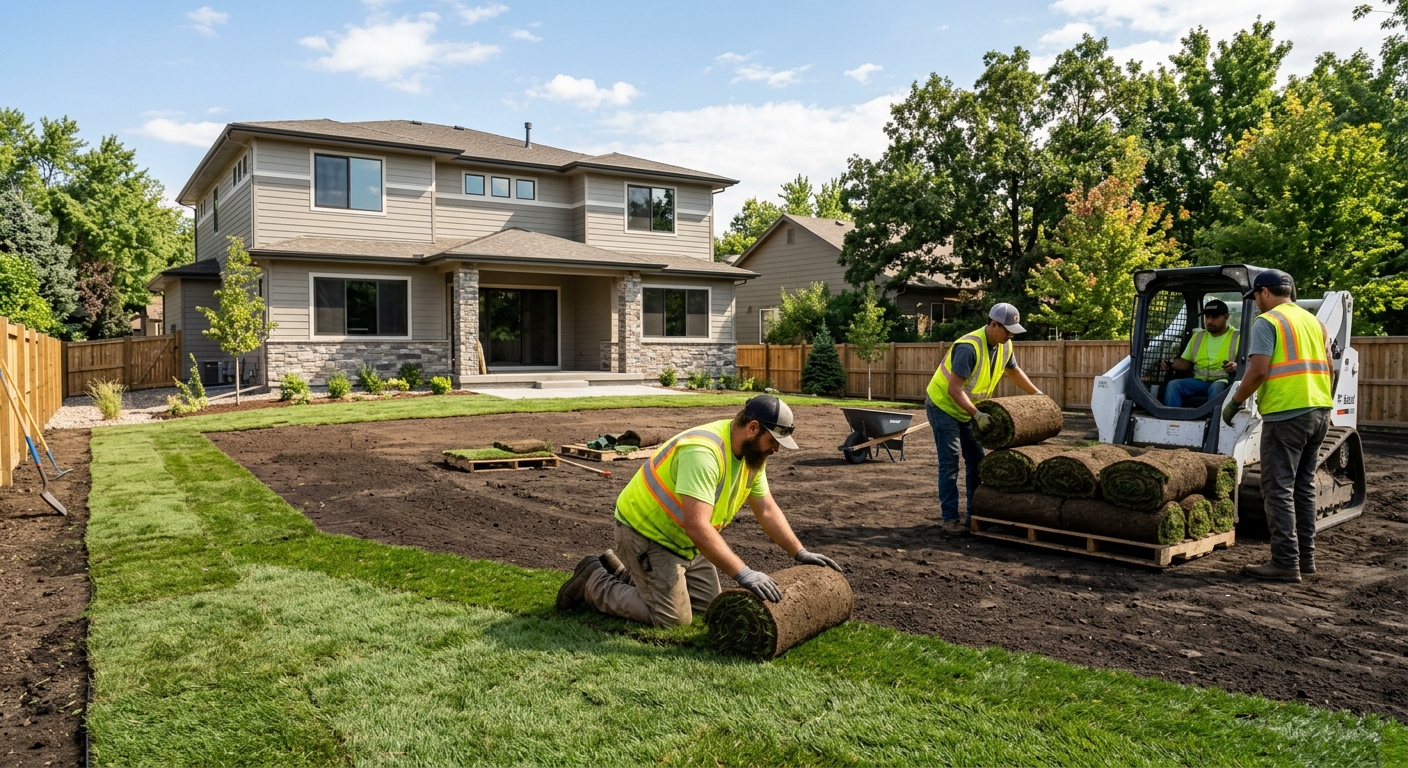
Landscaping options and costs in Saanich Core
Saanich Core is one of those places where landscaping is more than curb appeal—it’s a practical upgrade for how you live with wind, wet winters, and mild but changeable coastal weather. With a 2021 population of 5,470 (Statistics Canada, 2021 Census), Saanich Core has a steady base of homeowners who renovate patios, refresh garden beds, and expand planting as properties age. Most detached properties here come with enough yard space that owners can justify either a full rework or staged improvements, especially when they plan around drainage and winter performance.
Vancouver Island and the Coast sit in mild coastal plant hardiness zones 7–9, which helps contractors plan a longer season than many inland regions. That means you’ll often see installations booked from early spring through late fall, and you can design a lush, mixed palette—broadleaf evergreens, ornamental grasses, and four-season structure. At the same time, costs still rise when sites are sloped, when drainage fixes are needed, or when water-efficient irrigation is required for exposed areas. In neighbourhood pockets like Tillicum and around the Uptown/Elk Lake area, demand is especially strong because many homes are near shopping, schools, and transit corridors—so access, traffic control, and careful scheduling can add labour.
Below are typical starting points you can use to compare contractor quotes, then we’ll break down what drives the range in the next section.
| Service |
Description |
Season |
Price Range |
| Full landscape design and installation |
Site walk, planting plan, grading/drainage coordination, hardscape/softscape build, cleanup |
Early spring to late fall |
$5,000–$40,000 |
| Sod installation (supply, grade, lay, roll) |
Excavate to correct grade, soil prep, lay sod, roll, water-in |
Late spring to early fall |
$1,500–$8,000 |
| Lawn seeding (grade, seed, starter fertilizer) |
Grade correction, seed mix, starter fertilizer, light topdressing |
Spring or early fall |
$1,500–$5,500 |
| Interlocking patio or walkway |
Base prep, compacted granular layers, edge restraints, pavers, final jointing |
Dry weather window within spring–fall |
$4,000–$18,000 |
| Retaining wall (interlocking block) |
Block wall build with base depth, compaction, drainage gravel, filter fabric |
Spring–late fall |
$4,000–$60,000 |
| Tree and shrub planting |
Plant selection, soil conditioning, staking, mulch ring, initial watering |
Spring and fall (weather permitting) |
$800–$15,000 |
Prices are estimates only and vary by project scope, site access and material selection.
What affects the price of landscaping in Saanich Core
You’ll see the same landscaping job quoted 30–50% apart on Vancouver Island and the Coast—and that gap is usually explained by how a contractor handles drainage, soil prep, and material choices. Even though Saanich Core benefits from mild coastal zones 7–9 (a longer working window and better plant establishment), the site still determines labour time: sloped backyards, heavy rainfall winters, and access limitations around older neighbourhood streets can all push costs up or down. On the pricing side, contractors also carry different overhead and crew efficiency, so a “small” change like adding a proper drainage bed or upgrading soil amendments can move a job from the lower end of the $5,000–$40,000 landscape band toward the higher end.
Climate explains part of the equation. In coastal BC, less extreme frost means you can schedule more consistently, but you still need excellent drainage to avoid pooling and foundation moisture. Freeze–thaw cycles are gentler than in the interior, yet retaining wall base depth and compaction still matter for long-term stability. In the drier BC interior, water-use rules and irrigation design become a bigger driver of cost; in southern Ontario (Zone 5–6), summer dry spells often force irrigation planning too. In contrast, Prairie regions (Zone 2–4) typically face a shorter season, so both plant selection and labour scheduling can compress timelines while increasing the need for hardy, drought-tolerant choices—and that’s why budgets can behave differently across Canada.
Concrete examples from Saanich Core: (1) a backyard that needs regrading and outlet control for stormwater can add significant excavation and labour, often pushing the “softscape” portion toward the upper side of a mid-range landscape project; (2) swapping standard planting for specimen trees and thicker nursery stock quickly affects the $800–$15,000 tree and garden planting band; and (3) if your lawn area requires sod to correct uneven grade, you’ll usually trade lower material risk for the higher sod/lawn component cost inside the $1,500–$8,000 band.
| Price Factor |
Why It Matters |
Cost Impact |
| Yard size in sq ft — the primary cost driver for softscape |
More area means more topsoil, amendment, plants, labour hours, and cleanup time |
Usually the biggest swing factor; can move projects across the $5,000–$40,000 range |
| Grading and drainage work — slope corrections add significant cost |
Proper slope and outlet direction prevents pooling and protects foundations |
Commonly adds major excavation and base material costs; often pushes toward higher quotes |
| Drainage bed or French drain installation |
Captures and routes excess water; requires correct pipe placement and backfill |
Can significantly increase the hardscape/retaining-wall portion of the budget |
| Plant material tier — native shrubs vs. ornamental vs. mature specimen trees |
Higher-tier stock costs more to buy, and heavier items take more labour and sometimes equipment |
Mature trees can drive the $800–$15,000 planting band toward the top end |
| Hardscape vs. softscape ratio — walls and patios cost more per sq ft than lawn |
Base preparation, compaction, restraints and pavers/block add materials and labour |
Patios and block walls often accelerate totals faster than planting |
| Irrigation system design and installation |
Drip, smart controllers, and coverage mapping reduce waste and support establishment |
Efficient irrigation can add cost upfront, but helps prevent failed plantings and rework |
| Soil amendment and topsoil required |
Coastal soils can compact; amendments improve rooting and drainage balance |
Quality topsoil and amendment loads raise costs but improve long-term results |
| Tree removal or stump grinding before new planting |
Clearance affects access, disposal, and how much soil work is needed afterward |
May add equipment time and disposal charges; often changes scope quickly |
Permits & regulations in British Columbia
In British Columbia, most typical softscape work—planting, sodding, mulching, and garden-bed reworks—usually does not require a permit. For Saanich Core homeowners, that’s helpful because you can often upgrade your yard without a long approval cycle. The work that commonly DOES require a permit is retaining-wall construction above a local height threshold (commonly around 1.0 m in many municipalities) and situations where the proposed grading/drainage changes could affect neighbouring properties or how stormwater is handled. If you’re planning to alter lot grading in a way that changes drainage direction toward a neighbouring lot or a storm sewer connection, confirm requirements before any excavation.
Regardless of permitting, always arrange utility locates before digging planting holes or wall footings. BC has clear expectations for “call before you dig,” and hitting buried services can turn a landscaping job into a major delay.
To verify a contractor’s British Columbia coverage, start with three checks: (1) licensing/credentials—look for the appropriate provincial business and any applicable professional trade registrations in the contractor’s listing; (2) liability insurance—request a current certificate of insurance naming you as additional insured where appropriate; and (3) workers’ compensation coverage (WSIB/WCB equivalent) by asking for a clearance letter or proof of coverage. If they can’t provide documents quickly or the information doesn’t match your project dates, that’s a red flag.
Planning a landscape that thrives in Saanich Core's climate
In Saanich Core, a “good-looking” plan that ignores drainage and season timing usually fails first. Design around the local mild coastal hardiness zone (7–9) and your wet-winter pattern so roots have oxygen during the rainy months and plants aren’t stressed in drier, wind-exposed pockets. Start with plant selection: choose native and zone-appropriate species that handle winter moisture and cooler nights with less watering and less need for winter protection. Aim for layered structure—evergreen broadleaf shrubs for year-round form, ornamental grasses for movement, and perennials that repeat bloom.
Sod vs. seed is another common decision. Sod gives instant coverage and can stabilize soil on slopes, but it typically costs about 3–4x more per sq ft than seeding. For example, if you budget $2,500–$3,000 for a modest lawn patch, seeding might fit that target, while full sod installation could push you closer to the $1,500–$8,000 sod/lawn component band depending on area. If your grade is off, sod without correct grading is a shortcut that creates uneven, patchy turf—so insist on base prep and compaction.
Drainage and grading are critical across Vancouver Island and the Coast. Proper slope away from structures, plus a drainage bed where needed, reduces pooling and foundation moisture. For hardscape and retaining walls, base prep must suit the local frost behaviour—excavation and compaction layers are where walls and patios last. Finally, use low-maintenance strategies: mulch rings, groundcovers, and perennials reduce annual weeding and irrigation demand. If water management is a concern in exposed areas, consider a rain-garden planting pocket or a drip irrigation layout with a smart controller.
| Element |
Climate Consideration |
Maintenance Level |
Price Band |
| Sod lawn installation |
Establishes quickly in zone 7–9 but needs correct grade and water-in during early rooting |
Low to moderate (first season care, then routine mowing) |
$1,500–$8,000 |
| Native perennial garden |
Handles coastal winters well when planted with good soil structure and appropriate spacing |
Low (seasonal pruning and occasional weeding) |
$800–$6,500 |
| Mulched shrub border |
Evergreen structure suits year-round interest; mulch helps manage winter wetness and summer drying winds |
Low (refresh mulch, light trimming) |
$1,200–$9,000 |
| Interlocking stone patio |
Requires well-drained base to prevent heaving and water pooling in freeze–thaw conditions |
Low (occasional joint weed control) |
$4,000–$18,000 |
| Retaining wall (block) |
Needs correct base depth, compaction, and drainage gravel behind the wall |
Low (periodic inspection) |
$4,000–$60,000 |
| Drip irrigation system |
Efficient watering supports establishment and reduces waste during drier stretches |
Moderate (seasonal checks and controller updates) |
$1,000–$7,500 |
How to choose a landscaping contractor in Saanich Core
Choosing the right contractor in Saanich Core is mostly about verification and clarity. In British Columbia, don’t assume coverage—ask for proof. For liability insurance, request a current certificate showing their insurer, policy limits, and coverage dates; ideally you’ll see you listed as additional insured for the work. For workers’ compensation coverage, ask for a clearance letter or proof of active coverage that matches your project timeframe. If they can’t provide documents quickly or they provide generic PDFs that don’t include your job’s dates, keep looking.
Next, insist on 2–3 itemised written quotes rather than a single lump sum. The quote should separate labour and materials (pavers or block, soil/topsoil loads, drainage rock, plants, mulch) and specify unit quantities where possible. Read the scope carefully: what’s excluded (disposal, tree removal, additional topsoil, utility locate fees, extra excavation)? If a permit is required for a retaining wall above the threshold, confirm who pulls it and what’s included in the schedule.
Warranty matters too. Ask for: workmanship warranty length, whether it includes settlement or grading issues, and whether product/manufacturer warranties apply to plants or only to hardscape materials. Clarify if any warranty is transferable to future owners. On payment schedule, never pay more than 10–15% upfront; hold back until the job is complete and cleaned. Finally, request a start date and completion estimate in writing, including contingency for rainy-day shutdowns.
- Provide a detailed site plan and scope summary, not just a sketch
- Confirm they include utility locates before digging
- Ask how drainage will be handled (slope, outlets, drains, filter fabric)
- Verify soil prep steps: compaction method and amendment/topsoil depth targets
- Get an irrigation diagram if sprinklers/drip are included
- Ask who supplies plants—your choice or theirs (and at what tier)
- Confirm hardscape base layers, restraints, and jointing material
- Review disposal and trucking: included or billed separately
- Confirm protection of your lawn, fencing, and nearby landscaping during construction
- Ensure the quote lists timelines for each phase (rough-in, base, install, cleanup)
- Request warranty terms in writing for workmanship and materials
- Use staged payments tied to milestones (base complete, wall complete, planting complete)
Red flags to watch in Saanich Core: vague “we’ll handle it” drainage promises, missing insurance/coverage paperwork, quotes that don’t itemise quantities or show what’s included, payment requests above 10–15% upfront, and no written timeline or warranty terms.
Frequently asked questions — landscaping in Saanich Core
How much does landscaping cost in Saanich Core?
In Saanich Core, typical landscaping budgets for a complete homeowner transformation often land in the $5,000–$40,000 range, depending on how much is being rebuilt (planting only vs. grading, drainage, patios, and walls). If you’re focusing on softscape, sod installation commonly falls in the $1,500–$8,000 component band, while seeding is usually lower if the grade is already correct. Tree and shrub planting is often budgeted around $800–$15,000 depending on whether you’re adding small shrubs or larger nursery specimens. Sloped lots and drainage fixes are the biggest “hidden” cost drivers on Vancouver Island, so it’s wise to ask for a drainage plan and soil prep details—not just a plant list. (Statistics Canada, 2021 Census)
What plants thrive in Saanich Core's climate zone?
Saanich Core sits in coastal plant hardiness zones 7–9, so many homeowners do well with broadleaf evergreens and hardy perennials that tolerate mild winters and damp conditions. In practice, contractors often build layered gardens using evergreen structure (for year-round form), ornamental grasses (movement and drought tolerance once established), and native-leaning shrubs/perennials that handle wet winters with good drainage. The key is matching plants to the site: a wetter edge of the yard can take different choices than a raised, windy patio border. If you’re planting after foundation work or on amended soil, ask your contractor what soil depth and amendment they plan—healthy rooting is what makes coastal planting “stick.” For irrigation, drip systems usually perform well for establishment and for efficient summer watering in exposed areas.
Sod vs seed — which is better for a Saanich Core lawn?
For many Saanich Core properties, both work, but the “better” option depends on grade and timing. Sod gives instant cover and helps stabilize soil, especially where erosion or uneven grade is an issue—however, it typically costs about 3–4x more per sq ft than seeding. If your lawn area is properly graded and you’re working within the spring or early fall planting window, seeding can be a cost-effective path and fits the lower side of lawn budgets. If your quote shows sod in the $1,500–$8,000 band, compare what’s included: correct grade correction, soil prep/compaction, and water-in instructions. Sod without drainage or grading prep usually leads to patchiness, particularly in wet coastal winters.
How much does a retaining wall cost in Saanich Core?
Retaining wall projects in Saanich Core are commonly budgeted within the $4,000–$60,000 range, largely because wall height, length, and site conditions drive excavation, base depth, compaction, and drainage complexity. If the wall needs proper drainage gravel behind it (and a filter fabric setup), that adds cost but protects the wall and prevents water pressure build-up. Sloped yards near older homes may also require more granular base work and haul/disposal. Before comparing quotes, ask whether they included drainage bed components, base depth targets, and whether they’re using interlocking block rated for the height. If your wall might trigger permitting in BC (often around a 1.0 m threshold, depending on municipality), confirm whether the contractor is handling that step.
When is the best time to landscape in Saanich Core?
On Vancouver Island and the Coast, you typically have a longer installation window than many parts of Canada, thanks to mild coastal zones 7–9. For most projects, late spring through fall is ideal—especially for planting, sod, and hardscape. Sod and seeding both benefit from weather that supports germination/establishment, and planting in spring or fall is often most reliable. For drainage and grading, contractors aim to schedule around workable dry stretches to keep base materials from getting saturated. If you’re doing a retaining wall or interlocking patio, start times should consider rain days because base layers and compaction are sensitive to moisture. A good contractor will give you a start date and completion estimate in writing and explain how they’ll manage rainy weather delays.
Do I need a permit for a retaining wall in British Columbia?
In British Columbia, many softscape changes (planting, sodding) typically don’t require permits, but retaining walls often do when they exceed a local height threshold—commonly around 1.0 m in many municipalities (the exact requirement can vary). Changes to lot grading that affect how drainage leaves your property or impacts neighbouring properties can also trigger approvals. For Saanich Core homeowners, the safest approach is to ask your contractor to confirm the permit requirement before construction and to document how drainage will be handled behind the wall. Also, ensure utility locates are arranged prior to digging wall footings. When comparing quotes, check whether permit pulling (if required), engineered drawings (if needed), and inspection steps are included or excluded.