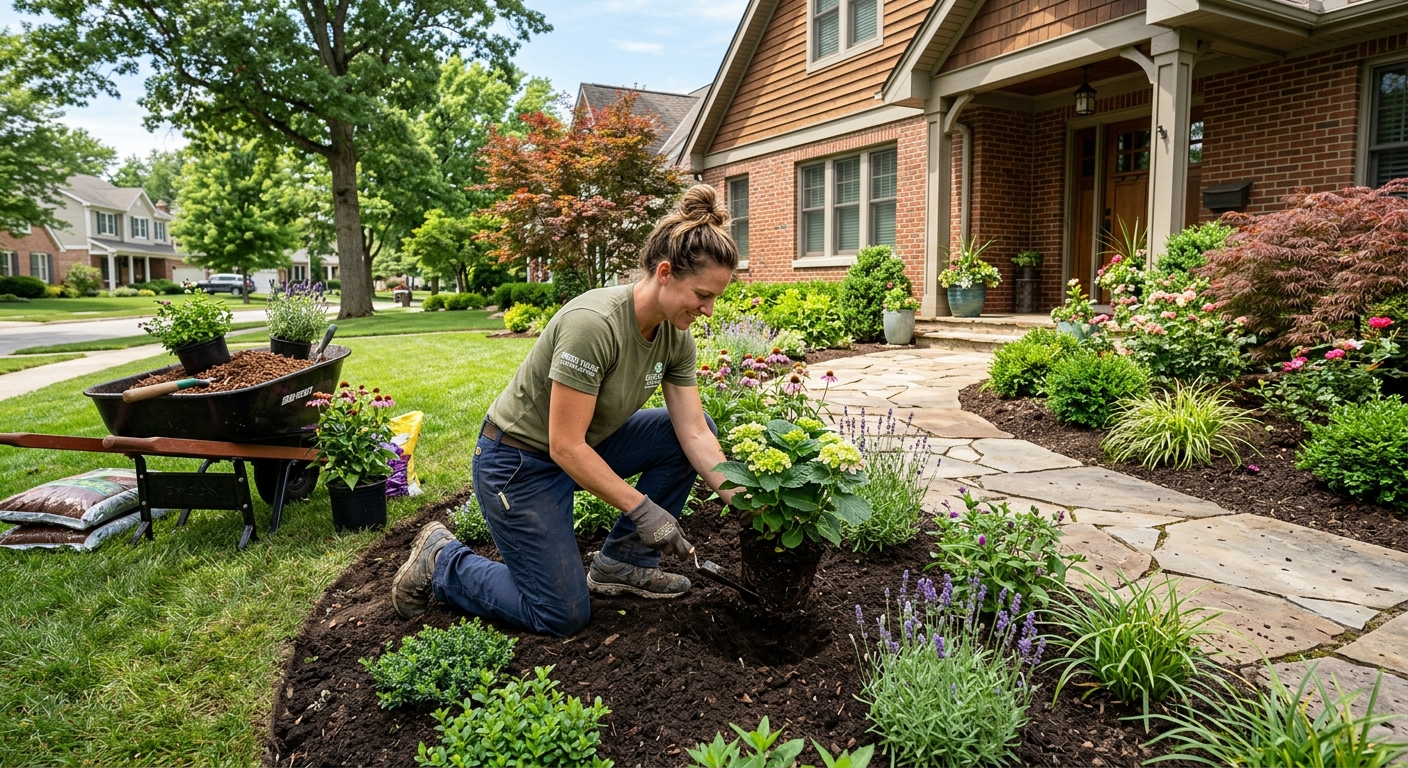
Landscaping options and costs in Lyndhurst
Lyndhurst, British Columbia is a small community where landscape upgrades tend to be meaningful—there’s room to improve how a property feels and functions year-round. With a population of 5,370 (Statistics Canada, 2021 Census), the local contractor base is limited compared with larger Lower Mainland centres, so scheduling can tighten in peak planting and hardscape periods. Most homes here also have enough outdoor space to justify a proper plan (Statistics Canada, 2021 Census), which is why homeowners often move beyond “quick fixes” and into layered planting, better drainage, and low-maintenance layouts.
In the Lower Mainland–Southwest, you typically sit in plant hardiness zones 7–8, with mild, wet winters and a long, cool growing season. That longer working window can reduce downtime and allow more planting and softscape work across fall and spring. At the same time, costs can still rise because design-quality and labour availability matter: when winters are wet, grading and drainage detailing takes extra time to do right, and contractors are careful about freeze–thaw cycles around patios and retaining walls. On sloped sites common in the region, proper base prep and drainage are what prevent frost heave and wall movement.
Demand is especially strong around the more established residential pockets near the community core, where homeowners tend to refresh curb appeal and backyard usability at the same time.
Below is a practical comparison of common services and what most Lyndhurst homeowners can expect to budget before you request itemised quotes.
| Service |
Description |
Season |
Price Range |
| Full landscape design and installation |
Site visit, concept + planting plan, grading/drainage plan (if needed), supply and install softscape and/or hardscape |
Spring–fall (design year-round; best install weather varies) |
$5,000–$50,000 |
| Sod installation (supply, grade, lay, roll) |
Remove old turf, fine grade, soil prep, lay rolls, roll and initial watering setup |
Late spring to early fall (avoid the wettest weeks for best seam bonding) |
$2,000–$8,000 |
| Lawn seeding (grade, seed, starter fertilizer) |
Rake and grade, seed blend, starter fertiliser, light topdressing, first watering schedule |
Spring to early fall |
$1,000–$5,000 |
| Interlocking patio or walkway |
Excavate, base + compaction, edge restraint, pavers and/or natural stone, setting and clean-up |
Spring–fall (best before heavy winter rains) |
$10,000–$40,000 |
| Retaining wall (interlocking block) |
Wall build with proper base prep, drainage weep materials, backfill and compaction |
Spring–fall (structural work needs dry access) |
$15,000–$80,000 |
| Tree and shrub planting |
Soil amendment, planting, staking (as required), mulch and first-season care guidance |
Spring–fall (with good moisture conditions) |
$1,000–$15,000 |
Prices are estimates only and vary by project scope, site access and material selection.
What affects the price of landscaping in Lyndhurst
In Lyndhurst and across the Lower Mainland–Southwest, two quotes for the “same” landscape can differ by 30–50% because the scope details rarely match: one contractor includes drainage corrections, another bundles topsoil, and one uses higher tiers of plants or pavers. Labour pricing also varies with access constraints (narrow lanes, sloped yards, and how close equipment can work to the foundation). The market can be more competitive in summer, but wet stretches still slow excavation and grading quality, which affects labour hours.
Climate and hardiness fundamentals drive both what grows and what work can safely happen. With zones 7–8 and last spring frost often around early March to early April near the coast, you get a long planting season, so costs can be spread across more months. However, retaining-wall base prep must still account for freeze–thaw cycles; that means deeper excavation, proper drainage and compaction. Compare this to Prairie regions (zones 2–4), where frost depth and short frost-free windows can compress timelines and push clients toward drought-tolerant, wind-hardy planting—often changing both material selection and labour scheduling. Meanwhile, the drier BC Interior uses more efficient irrigation planning due to restrictions, and Southern Ontario’s moderate season still requires irrigation during summer dry spells.
In Lyndhurst, two common cost drivers are drainage-grade corrections and soil prep. For example, adding a French drain or regrading to stop pooling can push a project from a basic planting budget closer to a mid-range retaining/hardscape range (for patios and walkways, many projects land in the $10,000–$40,000 band). On the softscape side, a larger turf area can move from near the seeding band toward the sod installation band ($2,000–$8,000) depending on how much grading is required and whether the existing soil supports immediate rooting.
Finally, local housing-stock age plays a role: older lawns and foundation perimeters sometimes sit on compacted fill or disturbed soil, which can add soil amendment and regrading labour. Even relatively small foundation-adjacent repairs can change topsoil volume needs by hundreds of dollars in materials and equipment time.
| Price Factor |
Why It Matters |
Cost Impact |
| Yard size in sq ft — the primary cost driver for softscape |
More area means more turf, soil amendments, edging, mulch, and labour hours. |
Small yards can start near the seeding band; larger lawns often approach the sod installation band. |
| Grading and drainage work — slope corrections add significant cost |
In wet coastal conditions, correcting grades prevents pooling and foundation moisture. |
Can add thousands to the budget, especially when re-contouring for a backyard usable slope. |
| Drainage bed or French drain installation |
Proper underdrains reduce standing water, but require excavation depth and gravel layers. |
Often pushes costs upward by a noticeable margin compared with planting-only projects. |
| Plant material tier — native shrubs vs. ornamental vs. mature specimen trees |
Mature trees and premium varieties cost more and require higher-value labour for handling and placement. |
Shifts the project toward the upper end of the $1,000–$15,000 planting band. |
| Hardscape vs. softscape ratio — walls and patios cost more per sq ft than lawn |
Pavers/blocks require excavation, base material, compaction, and edge restraint. |
Raises total cost quickly; patios/walkways commonly land in the $10,000–$40,000 range. |
| Irrigation system design and installation |
Drip and smart controls improve efficiency, but add design time and components. |
Can materially increase upfront cost while reducing long-term watering and failures. |
| Soil amendment and topsoil required |
Existing soil quality determines how much compost/topsoil and conditioning is needed. |
Light amendments are manageable; extensive replacement can add significant material and disposal costs. |
| Tree removal or stump grinding before new planting |
Removal creates waste haul-off and can require careful sequencing to protect nearby services. |
Often adds thousands depending on access and root conditions. |
Permits & regulations in British Columbia
In British Columbia, most common landscape work—planting, sodding, and the majority of softscape installations—generally does not require a building permit. Where permits commonly come into play is structural or drainage-impact work. Retaining walls above a typical height threshold—often 1.0 m (3.3 ft) in many municipalities—may require a building permit and sometimes engineered drawings. Also, significant lot grading changes that redirect drainage toward neighbouring properties or into/away from storm connections can trigger an approval requirement.
Before any digging (planting holes or wall footings), have utilities located. Utility locates are critical because landscaping often intersects with service lines—especially near foundations, fences, and older underground runs.
To confirm a contractor is legitimately licensed and insured in BC, homeowners in Lyndhurst should verify three items step-by-step. First, check the contractor’s licensing information through the applicable online registry used in British Columbia for trades and contractors (varies by business type, but licensing status should be easy to confirm). Second, request a current certificate of insurance and confirm liability coverage is active for the project dates. Third, confirm workers’ compensation coverage (WSIB/WCB equivalent coverage in Canada for the employer), and ask for documentation showing the account is in good standing (or a clearance-style letter where applicable). If a contractor can’t provide proof quickly, that’s a reason to pause—especially for retaining walls and any excavation-related scope.
Finally, confirm irrigation and water-use bylaws if your plan includes an automatic system. Even though coastal BC is wetter than the Interior, rules can still tighten during drought-like conditions, and efficient drip design is a safer, lower-risk choice.
Planning a landscape that thrives in Lyndhurst's climate
The best landscape plans for Lyndhurst work with the local rhythm: cool, wet winters; a long spring-to-fall growing window; and freeze–thaw cycles that still affect hardscape base performance. Start with plant selection. Choose native, zone-appropriate species that tolerate regular rainfall and cool nights, and that don’t require heavy winter protection beyond normal mulching. In zones 7–8, you can build lush, layered gardens with broadleaf evergreens and long-blooming perennials, but the “win” is selecting plants that match site moisture—wet pockets need different choices than drier raised areas.
Next, decide sod vs. seed. Sod gives instant visual results and can stabilize soil quickly, but it’s typically about 3–4 times the cost per square foot compared with seeding. If you need curb impact this season, sod can be worth it; if you can wait for a full establishment period, seeding is the smarter budget move.
Drainage and grading are where Lyndhurst yards succeed or fail. Regrading to prevent pooling protects foundation moisture and reduces freeze–thaw stress on edges and walkways. For hardscape, base preparation must be built for the local frost behaviour: deeper excavation, proper compaction, and drainage layers help prevent movement over time.
For low maintenance, use groundcovers, mulched shrub borders, and perennial structures that repeat year to year. Rain gardens and xeriscaping are still relevant—though in Lower Mainland–Southwest, the goal is often “smart water capture” rather than pure drought survival. For example, replacing a broad lawn swath with a mulched perennial band can reduce annual upkeep without sacrificing curb appeal. If a lawn replacement or refresh is needed, consider that sod installation often lands in the $2,000–$8,000 band, while a seeded approach keeps you closer to lower initial outlay—then you invest the savings into drainage details or better plant structure where it shows.
| Element |
Climate Consideration |
Maintenance Level |
Price Band |
| Sod lawn installation |
Quick rooting during spring/fall; needs good grade to avoid water staying under seams in wet weeks |
Medium (watering establishment, mowing, occasional patching) |
$2,000–$8,000 |
| Native perennial garden |
Zones 7–8 support long-lived blooms; place by sun and moisture to avoid winter stress |
Low to medium (weeding and seasonal pruning) |
$1,500–$10,000 |
| Mulched shrub border |
Mulch buffers wet/cool winters and reduces weed competition in coastal conditions |
Low (light trimming, mulch refresh) |
$1,200–$9,000 |
| Interlocking stone patio |
Freeze–thaw cycle resistance depends on base depth, compaction, and drainage away from the house |
Low (occasional cleaning and joint maintenance) |
$10,000–$40,000 |
| Retaining wall (block) |
Needs proper base and drainage backfill to prevent water pressure and wall movement |
Low (periodic inspection) |
$15,000–$80,000 |
| Drip irrigation system |
Improves efficiency and helps tolerate occasional water-use restrictions; pairs well with mulched beds |
Medium (controller checks, seasonal adjustments) |
$1,000–$6,000 |
How to choose a landscaping contractor in Lyndhurst
Choosing the right landscaping contractor in Lyndhurst starts with proof, not promises. In British Columbia, ask for (1) their contractor/trade licence details (and verify them online using the appropriate BC registry for their trade category), (2) liability insurance with coverage amounts that match the work (especially for excavation, patios, and retaining walls), and (3) confirmation of workers’ compensation coverage (WSIB/WCB equivalent coverage). Request documents before work begins and make sure the certificates show active coverage for the project dates and address.
Then get 2–3 itemised written quotes, ideally with a labour + materials breakdown rather than a single lump sum. Scope clarity matters: confirm what’s included for disposal, topsoil supply, compaction, base materials, irrigation components, and any contingency for wet-weather delays. For permits, ask directly whether the contractor will pull permits (when required, such as certain retaining wall scenarios) or whether you’re responsible. A transparent quote lists allowances (for stone, pavers, and plant sizes) so you can compare apples-to-apples.
Warranty should cover workmanship—many reputable crews provide a written workmanship warranty for installation and base work—and you should ask about manufacturer warranties for plants and products. Payment scheduling should be conservative: never pay more than 10–15% upfront; hold back a portion until the job is complete and cleanup is done. Finally, get the timeline and start date in writing, including an estimated completion date and what happens if weather interrupts excavation or seeding.
- Verify BC licensing status using the online registry before signing.
- Request a current certificate of insurance and confirm coverage dates and project address.
- Confirm workers’ compensation coverage documentation for the employer.
- Ask for 2–3 references from similar Lyndhurst projects (drainage, patio, or planting).
- Ensure quotes are itemised: excavation, base, drainage materials, labour, and plant list.
- Check what’s excluded: stump removal, haul-away, utility locates, and soil testing.
- Confirm disposal is included (landfill tipping fees vs. “hauling only”).
- Ask about base construction for patios/walkways and drainage details for retaining walls.
- Confirm whether permit pulling is included when a retaining wall exceeds the common height threshold.
- Get warranty terms in writing: duration, coverage scope, and claim process.
- Agree on a payment schedule with a holdback until completion and final grading.
- Confirm start date and weather contingency plan (especially for wet-season grading).
Red flags I see around Lyndhurst: a contractor who won’t provide insurance/licence proof, only offers vague “lump sum” pricing with no breakdown, promises zero drainage details (“it’ll be fine”), refuses a holdback or asks for most payment upfront, or provides no written scope for disposal and grading—then changes the price after excavation starts.
Frequently asked questions — landscaping in Lyndhurst
How do I improve drainage in my yard?
In Lyndhurst and the Lower Mainland–Southwest, drainage fixes usually start with grading. If water pools near the house or along a fence line, contractors typically recommend regrading so runoff moves away from foundations, then adding targeted drainage like a French drain or drainage bed where water collects. Because the area has mild, wet winters and you still get freeze–thaw cycles, drainage isn’t just comfort—it’s protection against edge shifting and foundation moisture. Expect drainage correction to add cost versus planting-only work; for many yards, it’s a key driver in whether your project stays in a planting budget or climbs toward hardscape-style budgets (for patios/walkways, commonly $10,000–$40,000). A good contractor should also discuss where water will go (infiltration area vs. connection path) and the utility locates needed before any digging.
What is xeriscaping and does it suit Lyndhurst?
Xeriscaping is low-water landscaping that uses drought-tolerant plants, mulch, and efficient irrigation. In Lyndhurst (coastal BC, typically zones 7–8), you’ll still get plenty of rain in winter, so pure “desert-style” xeriscaping isn’t always the best match. Instead, think of it as water-smart design: capture and slow runoff with rain gardens, choose plants that don’t mind cool wet seasons, and use drip irrigation with a smart controller so summer watering is targeted rather than wasteful. Even if water bans aren’t constant in coastal BC, occasional restrictions and rising water costs still make efficient systems attractive. If you’re converting lawn to beds, your upfront lawn cost comparison matters—sod often falls in the $2,000–$8,000 band, while a seeded approach can reduce the initial spend and let you invest more in drainage and plant structure.
How do I plan a low-maintenance yard?
A low-maintenance yard in Lyndhurst usually comes from fewer “high-frequency” tasks: less mowing, fewer weeding cycles, and planting that matches the yard’s moisture. Start by reducing lawn area—mature gardens, mulched shrub borders, and groundcovers tend to require less annual upkeep than turf. Use a repeatable plant palette with zone-appropriate species for zones 7–8, and place them by sun and wetness so they don’t struggle in winter or dry spells. Add 2–3 inch mulch consistently and keep the edging clean to stop grass creep. For the structure, hardscape and well-built bases reduce ongoing repairs; for example, a properly prepped patio can stay stable for years. If you’re comparing options, sod installation often costs more than seeding and increases mowing requirements—so many homeowners prioritize drainage and bed structure first, then choose turf only where it’s genuinely needed.
How deep should a retaining-wall base be for local frost?
For retaining walls in the Lower Mainland–Southwest, “exact depth” depends on wall height, block type, and soil conditions—but the principle is consistent: the base must be built below the frost-affected zone and supported with proper drainage. Because the region experiences freeze–thaw cycles even with mild winters, shallow foundations increase the risk of movement and water pressure behind the wall. A credible contractor will also include drainage weep materials and backfill compaction, not just block stacking. If you’re in the Lyndhurst area, ask your contractor for their base section detail and compaction plan in writing; that’s often where quotes diverge. Retaining wall projects commonly fall into the $15,000–$80,000 range depending on height, length, and drainage complexity.
How much does professional landscape design cost?
Professional design in the Lower Mainland–Southwest can range widely because some firms provide full concept-to-planting-package services, while others focus on design only and charge separately for installation. For Lyndhurst homeowners budgeting with installation in mind, full landscape design and installation commonly lands in the $5,000–$50,000 band. If you want only design, you may still see a portion of your design fee credited toward installation depending on the contractor’s policy. The key is to ask for deliverables: do they provide a planting plan with quantities, a grading/drainage concept, and an installation schedule? Also ask whether allowances are used for plants and hardscape materials. A clear scope reduces the “quote surprises” that can push the same intended result up or down by 30–50% across the region.
How do I compare landscaping quotes?
To compare landscaping quotes in Lyndhurst fairly, start by ensuring you’re comparing the same scope and quality. Ask each contractor for an itemised breakdown: excavation quantities, base materials, drainage components (if any), disposal/haul-off, edging, and the exact plant list with sizes and counts. Confirm what’s excluded (permit pulling, utility locates, topsoil depth, soil amendment, and irrigation components). Look at warranty terms for workmanship and ask how long coverage lasts and what’s included in a claim. When payment terms differ, don’t be swayed by the lowest number—make sure upfront payment stays around 10–15% and that a holdback exists. Finally, watch for unrealistic pricing: if one quote is far below the typical band for patios/walkways ($10,000–$40,000) or retaining walls ($15,000–$80,000), it may be missing drainage and base preparation details that are critical in coastal BC frost–thaw conditions.