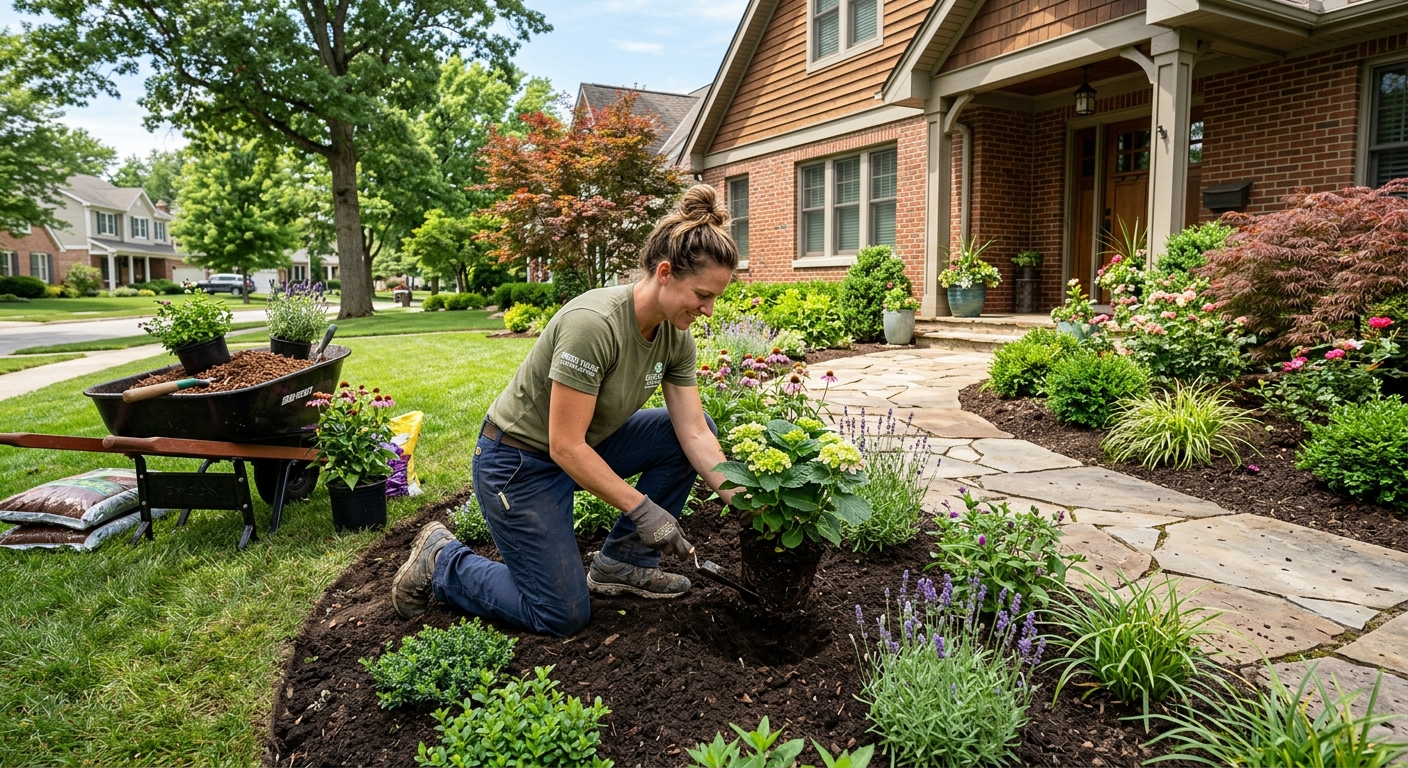
Landscaping options and costs in Vancouver
Landscaping in Vancouver is often all about balancing curb appeal with wet-season practicality. In a city where about 45.5% of households are homeowners (Statistics Canada, 2021 Census), many detached and semi-detached properties have the yard space to justify upgrades like patios, mature planting, and drainage fixes. That matters because Vancouver’s housing stock includes a meaningful share of single-detached homes (14.7% of dwellings), and those lots typically need more planning time and material than small townhome courtyards.
In the Lower Mainland–Southwest (plant hardiness zone 7–8), the long growing season helps contractors schedule more work than in colder Prairie regions, so you’ll see a wider palette of plants and layered designs. However, Lower Mainland landscaping costs still rise when sites have sloped grades, older soils, or neighbourhood street-access constraints—common in areas such as Kerrisdale and the West Side, where driveway widths and lane access can drive labour hours. Structural work (patios, steps, retaining walls) must account for freeze–thaw cycles and foundation moisture, even though Vancouver’s frost window is shorter. Expect efficient excavation, drainage detailing, and compaction to be priced into the job—because that’s what prevents settlement, wall movement, and water pooling after heavy rain.
Below is a practical pricing comparison you can use when reviewing quotes from local crews, then we’ll break down the main drivers that swing the total by tens of thousands.
| Service |
Description |
Season |
Price Range |
| Full landscape design and installation |
Site walk, concept-to-details design, planting plan, grading/drainage coordination, and full install (softscape + hardscape) |
Mar–Dec (wettest weeks may shift dates) |
$5,000–$50,000 |
| Sod installation (supply, grade, lay, roll) |
Remove/prepare existing area, minor grading, add topsoil/soil amendments as needed, lay sod, roll, and initial watering plan |
Mar–Oct (cooler months preferred) |
$2,000–$8,000 |
| Lawn seeding (grade, seed, starter fertilizer) |
Light soil prep, grading, seed + starter fertiliser, rake-in and mulch (as needed) for germination |
Mar–May or Aug–Sep |
$1,500–$6,000 |
| Interlocking patio or walkway |
Excavation, base (crushed stone + compaction), edging, interlocking pavers, slope to drain, basic finish work |
Apr–Nov |
$8,000–$35,000 |
| Retaining wall (interlocking block) |
Layout, excavation, drainage gravel/geotextile, block system install, cap/finish, and tie-in grading |
Apr–Nov (weather-dependent) |
$12,000–$45,000 |
| Tree and shrub planting |
Soil prep, planting holes, amendments, staking (if needed), mulching, and watering plan for establishment |
Mar–May or Sep–Oct |
$1,200–$15,000 |
Prices are estimates only and vary by project scope, site access and material selection.
What affects the price of landscaping in Vancouver
In Vancouver and across the Lower Mainland–Southwest, two homeowners can receive quotes that differ by 30–50% for what looks like the “same” job. The spread usually comes down to how much of the work is hidden beneath the surface: grading, drainage, base preparation, excavation depth, disposal, and whether the design uses basic plantings or a more layered, longer-lived palette. Labour availability also fluctuates—spring and early summer in neighbourhoods like Kitsilano and Mount Pleasant are typically busy—so a tight schedule can add cost for the same square footage.
Climate and frost timing influence both what grows and what crews can safely build. Vancouver sits mostly in zone 7–8, with last spring frosts typically running early March to early April near the coast and first fall frost often not until November. That helps keep planting and softscape work active longer than colder regions, but structural work still must handle freeze–thaw cycles—so wall bases are commonly dug deeper and drainage layers must be precise. In Prairie zones (2–4), short growing seasons and harsher winters push clients toward drought-tolerant, wind-hardy species and compress seasonal schedules. In the drier BC Interior and Alberta, water restrictions shape irrigation design and turf choice; in Southern Ontario, a moderate season often increases irrigation during summer dry spells. Coastal BC, by contrast, enables lush planting palettes, yet heavy rain means drainage detailing is non-negotiable.
Concrete examples: (1) A simple lawn refresh might land closer to the $2,000–$8,000 range for sod in a straightforward yard, but adding regrading and a drainage bed can quickly push totals toward full softscape/full design territory (often within the $5,000–$50,000 band) because excavation and compaction expand scope. (2) For retaining walls, replacing “surface” block work with a proper drainage layer can add labour and material, but it reduces long-term settlement and wall movement—especially on older lots built before 1981, where soils may be less predictable and may require more soil amendment and base rebuilding (43.0% of homes built before 1981; Statistics Canada, 2021 Census).
| Price Factor |
Why It Matters |
Cost Impact |
| Yard size in sq ft — the primary cost driver for softscape |
More area means more labour hours for prep, planting, topsoil, and materials |
Low-to-high variance; often the biggest swing in total |
| Grading and drainage work — slope corrections add significant cost |
Correcting slopes and directing runoff protects foundations and prevents pooling |
Can add thousands even when visible changes seem minor |
| Drainage bed or French drain installation |
Captures subsurface water and moves it to a safe discharge point |
Increases excavation, stone, geotextile, and restoration costs |
| Plant material tier — native shrubs vs. ornamental vs. mature specimen trees |
Mature trees and specialty ornamentals cost more and may require extra labour |
Material cost jump + potential rigging/staking |
| Hardscape vs. softscape ratio — walls and patios cost more per sq ft than lawn |
Hardscape needs thicker base, careful compaction, and more finishing |
Switching from lawn to pavers can double per-square-foot cost |
| Irrigation system design and installation |
Drip lines, zones, controllers, backflow requirements, and layout add complexity |
Often a major line item when turf and layered beds expand |
| Soil amendment and topsoil required |
Quality soil supports roots in wet seasons and reduces settling |
Costs rise with poor existing soil or heavy rework needs |
| Tree removal or stump grinding before new planting |
Root disruption, haul-away, and time on site affect both labour and disposal |
Can add a meaningful one-off cost before planting even begins |
Permits & regulations in British Columbia
In British Columbia, most residential landscaping tasks—planting, sodding, and the majority of softscape work like mulching and seeding—typically do not require a permit. Where permits commonly come into play is with retaining walls above the municipal threshold (commonly 1.0 m, or 3.3 ft, in many municipalities), where you may need a building permit and sometimes engineered drawings depending on height, soil conditions, and the surrounding grade. Also, changes to lot grading that can affect drainage patterns—especially if runoff is directed toward neighbouring properties or storm sewer connections—may trigger approval requirements.
Before any excavation for planting holes, drainage, or wall footings, always call for utility locates. This is critical because Vancouver-area yards often have service lines running close to driveways and fence lines. For irrigation, confirm water-use expectations and any applicable bylaw rules—particularly relevant if your design includes turf and if future restrictions tighten during drier periods.
To verify a Vancouver contractor properly, ask for three things and check them in writing: (1) a British Columbia licence number where applicable for their trade scope, (2) liability insurance (certificate of insurance showing the coverage is current), and (3) proof of worker coverage—commonly WSIB or WCB depending on the employer’s registration. You can also ask for a clearance letter where their coverage provider supports it. If they can’t provide documents promptly, treat that as a red flag and request written evidence before signing.
Planning a landscape that thrives in Vancouver's climate
Designing a Vancouver yard that thrives means choosing plants and building details that work with zone 7–8 conditions, the city’s frequent rainfall, and the early spring to early fall frost rhythm. Start with plant selection: lean toward native, zone-appropriate shrubs and perennials that handle wet winters without staying waterlogged, and that don’t need heavy winter protection in most years. This improves long-term appearance and reduces annual labour.
Sod vs. seed is another practical decision. Sod gives instant curb appeal but costs roughly 3–4x more per square foot than seeding because you’re paying for the sod product, trucking, and faster installation. In Vancouver, sod is often worth it on smaller front-yard lawns where homeowners want a quick finish—especially if a full design includes edging and irrigation from day one. For larger lawns where time and budget matter, seeding can deliver a greener result at a lower upfront cost with more patience during germination.
Drainage and grading are critical in the Lower Mainland–Southwest. Even in mild winters, pooling against foundations can lead to soil saturation, moss growth, and settlement. For hardscape like patios and retaining walls, base preparation must account for freeze–thaw cycles—so excavation depth, proper base thickness, and compaction aren’t optional. Low-maintenance strategies that still look lush include mulched shrub borders, groundcovers, and perennials layered with seasonal colour. If you want a water-smart approach, consider a rain garden in low spots and drip irrigation for established beds to tolerate occasional water restrictions without lawn die-off.
Dollar example: spending an extra $5,000–$8,000 on regrading and a drainage bed can be justified if it protects a patio base and prevents water from entering the yard. Without that work, you may pay again later for settlement repair and redoing affected planting beds—far more expensive than getting drainage right the first time.
| Element |
Climate Consideration |
Maintenance Level |
Price Band |
| Sod lawn installation |
Fast establishment in cool, wet-friendly seasons; avoid waterlogging and ensure good grading |
Low to moderate (watering and occasional edging checks) |
$2,000–$8,000 |
| Native perennial garden |
Zone-appropriate plants handle Vancouver winters better and support year-round structure |
Low (mulch refresh and seasonal tidy) |
$3,000–$12,000 |
| Mulched shrub border |
Mulch buffers soil moisture swings and suppresses weeds in rainy periods |
Low (weed control early on, then routine trim) |
$2,500–$10,000 |
| Interlocking stone patio |
Requires proper slope to drain and compacted base to handle wet winters |
Low (occasional cleaning; re-sanding joints as needed) |
$8,000–$35,000 |
| Retaining wall (block) |
Needs drainage gravel and correct base depth for frost heave resistance |
Low once built correctly |
$12,000–$45,000 |
| Drip irrigation system |
Efficient watering for beds and trees; better tolerance if restrictions tighten |
Low to moderate (seasonal adjustments and checks) |
$3,000–$12,000 |
How to choose a landscaping contractor in Vancouver
Choosing a landscaping contractor in Vancouver starts with documentation and clarity. First, verify the right British Columbia licensing for the scope they’re offering, then request proof of liability insurance with the certificate showing the coverage is active. For worker coverage, ask how their crews are covered—commonly WSIB/WCB depending on their employer setup—and request current proof or a clearance letter where available. A reputable contractor should provide these without pressure and should match the certificate holder name to the company on your quote.
Next, get 2–3 itemised written quotes that show labour and materials separately (not a single lump sum). For Vancouver projects, ask specifically about grading and drainage inclusions: is base excavation included, what drainage products are used, and how is spoil/disposal handled? Confirm whether permits (if required for a retaining wall above the threshold) are included or excluded, and whether utility locates are arranged before digging. A clean scope prevents cost creep.
Warranty matters too. Ask for a workmanship warranty length (for example, settlement or workmanship issues), product/manufacturer warranty details for pavers, blocks, plants, and irrigation parts, and whether warranties are transferable if you sell the home.
Payment schedule: never pay more than 10–15% upfront. Use milestone payments and a holdback until the job is complete and you’ve reviewed final cleanup and walkthrough items. Finally, timeline: get the start date and an estimated completion date in writing, with weather allowances for Vancouver’s wettest weeks.
- Provide a BC licence number (when applicable) that matches the contract company name.
- Show current liability insurance (certificate of insurance) before work starts.
- Provide proof of worker coverage (WSIB/WCB or equivalent) and clearance letter where available.
- Use itemised quotes: labour hours, excavation, base materials, drainage components, plants, and irrigation parts.
- Confirm disposal/haul-away is included (and where debris goes).
- Ask who does utility locates before digging footings, trenching, or planting holes.
- Check scope wording: exclusions (soil import, tree removals, changes to design, extra haulage).
- Verify the base build-up for patios/walkways (base thickness, compaction method, edging).
- Verify retaining wall drainage (geotextile, drainage gravel, weep provisions) rather than “block only.”
- Ask for plant substitutions policy if supply delays occur.
- Confirm warranty terms in writing: workmanship duration, what’s covered, and how to claim.
- Set payment milestones: limit upfront deposit to 10–15% and hold back until final walkthrough.
Concrete red flags: (1) they won’t provide insurance/coverage documents on request; (2) the quote is not itemised and doesn’t specify drainage/grading inclusions; (3) they start digging without discussing utility locates; (4) they ask for large upfront payments (more than ~15%); (5) they avoid putting warranty and completion timelines in writing.
Frequently asked questions — landscaping in Vancouver
Do I need a permit for a retaining wall in British Columbia?
In British Columbia, many landscaping activities like planting and sodding typically don’t require permits, but retaining walls are a common exception. A building permit is often required when a retaining wall is above the municipal threshold—commonly around 1.0 m (3.3 ft) in many areas—especially if the wall is taller, engineered, or on challenging soils. Even when the wall is close to the threshold, your municipality may request more documentation if grading or drainage could be impacted.
For a Vancouver homeowner, the practical step is to ask the contractor to confirm whether your wall height and design trigger a permit locally, then coordinate the permit process before construction starts. If your contractor quotes a retaining wall “block install only,” ask whether permits are included. If permits aren’t included, you should get the expected permit timeline and responsibilities in writing.
How do I improve drainage in my yard?
In Vancouver and the Lower Mainland–Southwest, improving drainage usually starts with regrading so runoff doesn’t pond near foundations. If water is persistent, a drainage bed or French drain is often the real solution—paired with proper compaction and restoring turf/planting layers. Look for common symptoms: standing water after heavy rain, soggy soil near fences, or repeated moss growth in the same spot.
When you request a quote, ask what the contractor is including: excavation depth, geotextile use, drainage gravel size, where the water will daylight or connect, and how the surface will be restored. A yard with slope corrections and a drain plan can change the price significantly—often moving from simple lawn work (commonly around the $2,000–$8,000 sod band) toward larger softscape scope if drainage excavation and base rebuilding are required.
What is xeriscaping and does it suit Vancouver?
Xeriscaping is landscaping designed to reduce water use using drought-tolerant plants, efficient irrigation, mulch, and smart grading—then it’s maintained with less labour and less water demand. In Vancouver, you may not face the same routine summer watering bans as the BC Interior, but water efficiency still matters due to rising costs and periodic restriction tightening.
Yes, xeriscaping can suit Vancouver when it’s designed around your yard’s actual wet/dry patterns. You’d typically avoid “true desert” layouts and instead use resilient plants that thrive in zone 7–8 while improving drainage in winter. Practical tools include mulch layers, groundcovers, rain gardens to handle heavy rainfall, and drip irrigation. A mixed approach often looks best: lower-maintenance beds and reduced lawn areas where appropriate, while keeping turf only where you genuinely use it.
How do I plan a low-maintenance yard?
A low-maintenance Vancouver yard is usually built on three foundations: (1) smart plant selection for zone 7–8, (2) weed control through soil prep and mulch, and (3) drainage-correct design so you’re not fighting standing water. Choose layered plantings—mulched shrub borders and native or well-adapted perennials—so you’re not constantly replanting bare areas. Add groundcovers where weeds tend to return quickly.
For lawn, decide whether you truly need full turf coverage. Seeding is often the budget option for larger areas, while sod is best for smaller spaces where you want fast results. In many projects, homeowners spend more on hardscape and drainage up front because it reduces future repairs; for example, a full landscape can land in the broader $5,000–$50,000 range depending on scope, and the extra cost is usually justified when patios, proper base build-ups, and reliable watering are included.
How deep should a retaining-wall base be for local frost?
The exact base depth depends on wall height, soil conditions, and the wall system’s engineering details, so the “right” depth isn’t one universal number. In the Vancouver area, you still have freeze–thaw cycles, so proper frost resistance matters even with milder winters than colder provinces. That’s why reputable builders follow the manufacturer/spec requirements for excavation depth, compaction, and drainage gravel layers.
As a homeowner, don’t rely on a vague rule of thumb. Ask your contractor to explain the base build-up for your specific wall height and the soil they find on site, and whether they’re factoring drainage and frost effects into the design. If the wall crosses the permit threshold or site conditions are questionable, an engineered approach may be required, which is the safest way to ensure the base is built for long-term stability.
How much does professional landscape design cost?
Professional landscape design in Vancouver varies widely based on whether you’re doing design-only or design plus installation, how complex the site is, and how detailed the planting and hardscape drawings need to be. As a practical benchmark, many homeowners end up within broader project budgets such as $5,000–$50,000 for full design and installation when grading, drainage, patios, and plantings are included. For planting-focused projects, costs can also fall into smaller bands (for example, tree and shrub planting often aligns with $1,200–$15,000 depending on quantities and plant size).
When comparing quotes, ask what “design” includes: site measurements, concept plan, final planting layout, irrigation notes, and hardscape elevations. Make sure the quote ties design scope to a realistic build scope—otherwise you can pay for drawings that don’t match how the contractor will construct in Vancouver’s wet-season conditions.