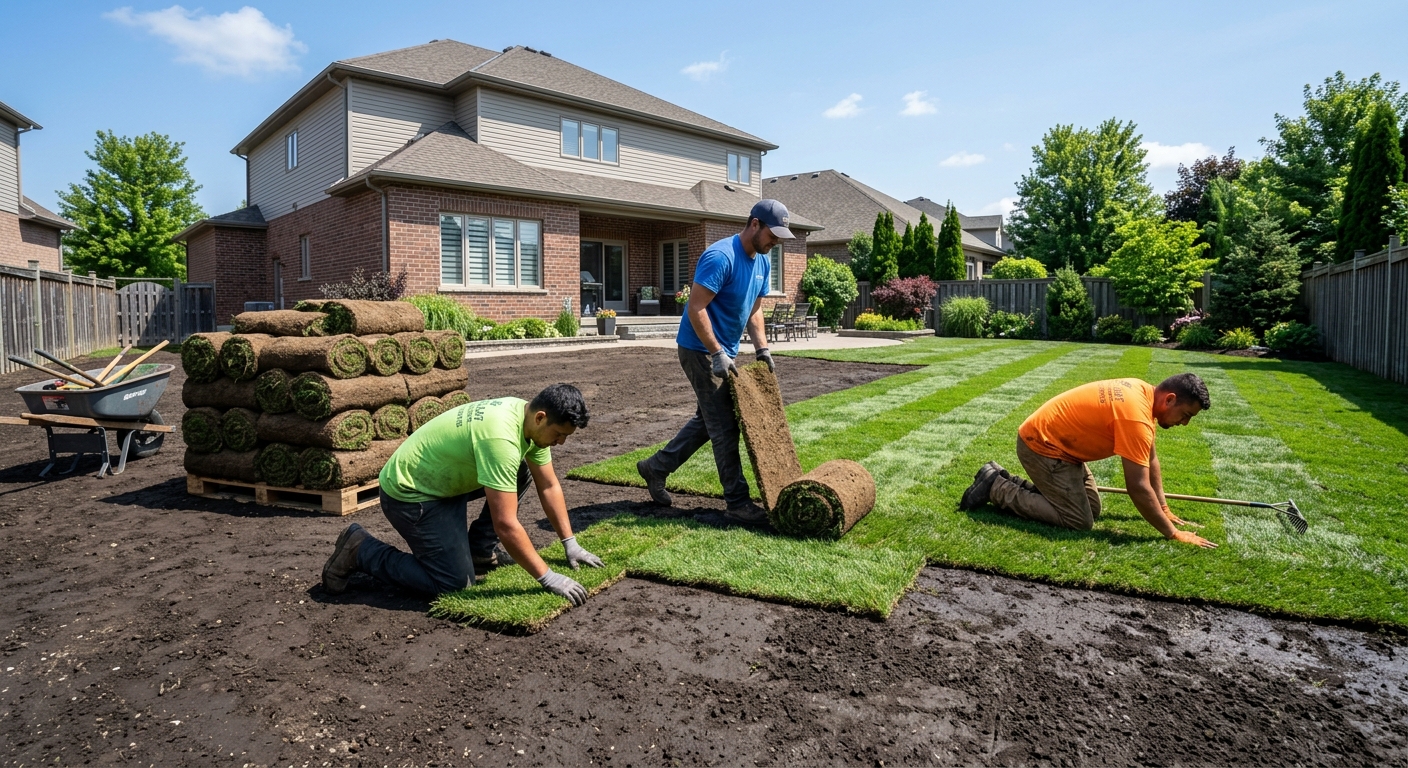
Landscaping options and costs in Fernie
Fernie homeowners often have the same goal—boost curb appeal and make the yard easier to enjoy—but the best approach and price can look very different from property to property. With 62.4% of homes in the area being single-detached dwellings, many Fernie yards have enough space to justify real upgrades like patios, shrub borders, or full softscape plans. And because 72.1% of households own their home, it’s common to see longer-term investments rather than quick, one-season fixes.
In the Kootenay, landscaping costs are shaped by climate and buildability. We sit roughly in hardiness zone 5–6 (depending on elevation and exposure), where freeze–thaw cycles and late spring frosts limit planting windows. That means crews plan installations from mid-April through October, but actual work depends on frost dates, soil moisture, and access. Sites with slopes, heavy rock, or freeze-sensitive areas (walkways, patios, and retaining-wall bases) require extra excavation, proper compacted aggregate, and drainage layers—so the “same size” job can cost materially more.
Demand is especially strong in established residential pockets near downtown and along the valley edges, where older homes (59.6% built before 1981) often have mature trees, uneven grades, and drainage issues that need addressing before planting or paving. Below is a practical cost comparison to help you align quotes across contractors—then we’ll break down the biggest price drivers next.
| Service |
Description |
Season |
Price Range |
| Full landscape design and installation |
Site visit, concept design, plant selections, grading/cleanup, hardscape and softscape build-out |
Mid-April through October (weather-dependent) |
$8,000–$60,000 |
| Sod installation (supply, grade, lay, roll) |
Remove existing lawn/vegetation, grade and level, base prep, sod supply and installation |
Late spring to early fall when soils are workable |
$6–$14 |
| Lawn seeding (grade, seed, starter fertilizer) |
Light grading, seed selection, starter fertilizer, seeding and initial maintenance guidance |
Spring (after last frost) and early fall for best establishment |
$2–$6 |
| Interlocking patio or walkway |
Excavation, base course, compacted bedding sand, interlocking stones, edge restraints |
Best during dry, workable weather windows |
$25–$120 |
| Retaining wall (interlocking block) |
Excavate and compact base, block installation, drainage gravel and weep provisions |
Typically April to September for better base conditions |
$120–$400 |
| Tree and shrub planting |
Planting, staking where needed, mulching rings, soil conditioning, post-plant watering plan |
Spring and fall planting windows |
$500–$15,000 |
Prices are estimates only and vary by project scope, site access and material selection.
What affects the price of landscaping in Fernie
In Kootenay communities, including Fernie, it’s normal to see quote differences of 30–50% for what sounds like the same landscaping scope. The reason usually isn’t the “look”—it’s what’s hidden in the site conditions and the labour plan. A company may price for a simple, flat lawn install, while another budgets for rock removal, drainage corrections, or additional base depth to handle freeze–thaw. Contractor capacity also matters: when weather or road access limits crews, scheduling constraints can increase labour cost.
Across British Columbia, the plant hardiness zone and frost-defined season influence both what grows and what can be installed safely. In colder, zone 5–6 Kootenay areas, we often narrow planting windows and design with winter survival in mind. Prairie regions (zone 2–4) typically need more wind- and drought-tolerant species and require strict base depth planning for frost; some jobs also feel more weather-limited. Coastal BC (zone 7–8) allows a longer growing season and lush palettes, but still depends on drainage where heavy rain is frequent. In the drier BC interior, water restrictions push irrigation design toward efficient drip, mulched beds, and smart zoning rather than broad, high-input turf. Southern Ontario (zone 5–6) has a moderate season but still sees summer dry spells, which affects how much irrigation and soil amendment are budgeted.
Concrete Fernie examples: older homes built before 1981 can have settled grades, so re-grading to protect foundations adds labour and materials—often shifting a job from a typical $8,000–$60,000 “design/build” band toward the higher end when hardscape drainage is required. Similarly, sites with slopes or poor drainage may need a drainage bed or French drain before planting; that can increase costs even before you touch plant prices like the $500–$15,000 range for trees and shrubs. These are the changes that most often explain why one proposal reads “similar,” but totals far apart.
| Price Factor |
Why It Matters |
Cost Impact |
| Yard size in sq ft — the primary cost driver for softscape |
Softscape quantities scale directly with soil prep, edging, mulch, and plant count |
Higher sq ft can move a job from mid-range to top-end of design/build budgets |
| Grading and drainage work — slope corrections add significant cost |
Kootenay freeze–thaw and uneven grades can cause pooling and heaving if not corrected |
Can add substantial labour and aggregate, commonly creating the biggest quote gaps |
| Drainage bed or French drain installation |
Prevents water from saturating soils that freeze and expand around foundations |
Material + trenching depth can noticeably increase hardscape and planting scope costs |
| Plant material tier — native shrubs vs. ornamental vs. mature specimen trees |
Specimens cost more and may require specialized equipment, staking, and protection |
Can swing tree/shrub planting from the lower to upper end of the $500–$15,000 band |
| Hardscape vs. softscape ratio — walls and patios cost more per sq ft than lawn |
Patios and retaining walls require excavation, base layers, and longer build time |
Shifts the overall project toward the higher end of landscaping design/install pricing |
| Irrigation system design and installation |
Efficient watering matters in the drier interior; zoned drip reduces waste |
More zones and smart controllers increase upfront cost but often reduce seasonal maintenance |
| Soil amendment and topsoil required |
Rocky or compacted soils need conditioning to support root establishment and drainage balance |
Large corrections can add to both material and trucking/excavation time |
| Tree removal or stump grinding before new planting |
Roots and stumps affect grading and excavation; disposal and ground conditions matter |
Can add a separate line item that meaningfully changes the total |
Permits & regulations in British Columbia
In British Columbia, most everyday yard work—planting new shrubs and trees, sodding, and typical softscape tasks like seeding and mulch—generally does not require a permit. Retaining walls are the common exception. In many municipalities across BC, retaining walls above a threshold height (often around 1.0 m / 3.3 ft) typically require a building permit, and sometimes engineered drawings depending on site conditions. If your plan includes changing lot grading in a way that affects drainage toward neighbouring properties or storm sewer connections, approvals may also be required.
Before any digging, arrange utility locates. Even “small” projects like planting holes or installing a French drain can hit buried lines. Also confirm local irrigation and water-use rules: in the BC interior, drought conditions can tighten watering schedules, and your irrigation plan should match the bylaw.
To verify a contractor’s standing in BC, follow a simple homeowner checklist: (1) ask for proof of British Columbia contractor licensing/registration where applicable (the contractor should tell you what they’re registered for), (2) request a current certificate of insurance showing general liability, and (3) confirm coverage for workplace injury protection (WSIB/WCB). Then keep documents: a valid clearance letter or equivalent proof of coverage, plus an insurance certificate that names you as the certificate holder if offered.
Planning a landscape that thrives in Fernie's climate
Planning for Fernie means working with frost, drainage behaviour, and hardiness—not hoping for the best. With Kootenay landscapes roughly in zone 5–6 (depending on elevation and exposure), you want plants selected for cold tolerance and spring recovery, plus design details that reduce winter stress. A yard that looks great in July can fail in March if water pools or if bases aren’t prepared for freeze–thaw.
Start with plant selection. Prioritize native and zone-appropriate shrubs, perennials, and grasses that require less watering and typically handle winter protection with less effort. For lawn, your choice matters: sod gives instant coverage, but it costs about 3–4x more per sq ft than seeding when you include supply and install. Seeding is usually the better value for new lawns, especially if you’re patient with establishment and can manage the initial watering and weed control.
Drainage and grading are critical in Kootenay. Even a beautiful planting plan can struggle if runoff is directed toward foundations or if soils stay saturated. For patios and retaining walls, base prep must consider the frost line and provide proper compacted aggregate and drainage so water doesn’t freeze under slabs or wall cores.
To keep maintenance realistic year-round, build low-maintenance structure with mulch, groundcovers, and perennials, and use xeriscape thinking where water efficiency is a priority. A rain-garden or swale design can manage runoff while supporting drought-tolerant plantings—especially helpful on older properties where drainage paths have shifted.
Example: if you’re choosing between sod and seeding for a similar lawn footprint, spending more on sod might be justified when you need “finished appearance” quickly. If time is flexible, seeding typically delivers a better long-term budget—freeing dollars to invest in proper grading/drainage layers and a shrub border that actually survives Fernie winters.
| Element |
Climate Consideration |
Maintenance Level |
Price Band |
| Sod lawn installation |
Needs consistent establishment during Fernie’s short, frost-defined season |
Moderate (watering and early care required) |
$6–$14 |
| Native perennial garden |
Zone-appropriate plants handle cold snaps and rebound after late spring frosts |
Low to moderate (seasonal pruning and mulch top-ups) |
$2,000–$12,000 |
| Mulched shrub border |
Mulch buffers freeze–thaw and reduces soil heaving around shrub roots |
Low (weed control and occasional watering) |
$1,500–$8,500 |
| Interlocking stone patio |
Base prep and drainage prevent heaving and water infiltration in freeze cycles |
Low (routine sweeping and occasional joint sand top-up) |
$25–$120 |
| Retaining wall (block) |
Requires proper drainage gravel and compaction for long-term stability |
Low (periodic inspection of drainage outflows) |
$120–$400 |
| Drip irrigation system |
Zoned delivery supports efficient watering during shoulder-season and summer heat |
Moderate (seasonal controller checks and winterization) |
$1,200–$7,500 |
How to choose a landscaping contractor in Fernie
Choosing a contractor in Fernie is mostly about proof and clarity. First, verify British Columbia licensing/registration where applicable, then ask for a current certificate of insurance showing general liability. Next, confirm workplace injury coverage (WSIB/WCB): request the certificate or clearance documentation and make sure the dates are current. A reputable contractor can provide these before you sign anything and won’t treat them as “optional paperwork.”
Second, request 2–3 itemised written quotes, not a single lump-sum number. You want labour and materials broken out so you can compare apples-to-apples—especially for drainage depth, base course material, edging, disposal, and plant quantities. If one quote says “grade and prepare” without specifying what’s included, it’s a common reason totals diverge later.
Read the scope carefully for exclusions: is permit pulling included (if applicable for a wall), is topsoil or disposal included, and who supplies and installs irrigation controllers? Clarify product warranties (manufacturer) and workmanship warranties (how long the contractor stands behind installation). Ask whether warranties are transferable if you sell your home.
For payment, avoid large deposits. In practical terms, never pay more than 10–15% upfront; hold back a portion until the job is complete and deficiencies are corrected. Get a start date and completion estimate in writing, with weather-related contingencies noted, so you’re not stuck waiting through frost-affected weeks.
- Provide BC proof of registration/licensing (ask what category applies to your scope).
- Share a current certificate of insurance (confirm expiry date).
- Confirm WSIB/WCB clearance or coverage documentation (not just a verbal claim).
- Use itemised quotes with line-by-line labour and materials.
- Specify excavation depth, base course type, and drainage provisions.
- Clarify disposal: haul-away included or not, and where debris is taken.
- Ask how they handle frost-impacted soils and rainy weeks (schedule rules).
- Confirm plant counts/sizes and whether substitutions are allowed.
- Request irrigation details if included: zones, controller, and head types.
- Get a written workmanship warranty term (and what it covers).
- Agree on payment milestones tied to inspections and completion.
- Confirm start date, target completion date, and who you contact during the build.
Red flags in Fernie include: (1) quotes that omit drainage or base prep specifics for patios/walls, (2) no proof of WSIB/WCB or insurance until you chase it, (3) refusing itemised pricing (“trust us” pricing), (4) pushing for large upfront payments beyond 10–15%, and (5) vague schedules that ignore weather constraints in a frost-defined season.
Frequently asked questions — landscaping in Fernie
How much does landscaping cost in Fernie?
Landscaping pricing in Fernie depends heavily on whether you’re doing softscape only (plants, mulch, lawn) or adding hardscape and drainage. For context, many full design-and-install projects land in a broad range of $8,000–$60,000, with the higher end usually tied to grading corrections, drainage beds, and larger patios or walls. Lawn projects are often priced by area: sod typically runs about $6–$14 per sq ft when supply and install are included, while seeding usually costs less but takes longer to establish. Tree and shrub planting can vary widely depending on plant sizes and quantities, often starting around the $500–$15,000 band. Because Fernie has a short frost-defined season, contractors also price in weather-risk—so two “similar” yards can differ when one needs more excavation or drainage work. (Statistics Canada, 2021 Census)
What plants thrive in Fernie's climate zone?
For Fernie and the Kootenay region, we typically design around a hardiness zone roughly in 5–6, which means your best results come from zone-appropriate and cold-tolerant choices that can handle late spring frosts and winter freeze–thaw. Homeowners do well with hardy shrubs and native perennials rather than relying on delicate ornamentals that struggle after temperature swings. In practice, we often build layered beds: a foundation of shrubs (for structure and winter presence), perennials for seasonal colour, and grasses or groundcovers for stability and reduced erosion. If your site is exposed—windy edges near valley slopes—select plants with better winter burn and wind tolerance, and mulch properly to buffer soil movement. Because many Fernie properties are older (with 59.6% built before 1981), we also pay attention to drainage patterns before planting so roots aren’t sitting in waterlogged soils.
Sod vs seed — which is better for a Fernie lawn?
Sod and seed both work in Fernie, but the “better” option depends on your timeline and your site conditions. Sod gives instant coverage, which can be worth the extra cost when you want a finished look quickly—however, sod is often about 3–4x more per sq ft than seeding once you include supply and installation. Seeding is usually the better value for long-term cost and lets you improve soil prep and drainage as part of the establishment process. The key in Fernie is timing: plant after the last frost in spring or choose early fall to help seedlings establish before deeper cold. Also, seed can fail if the ground is uneven or drains poorly—freeze–thaw can heave areas that aren’t graded correctly. If drainage and grading are solid, seeding generally delivers better value; if you need instant results, sod can be justified despite the higher upfront spend.
How much does a retaining wall cost in Fernie?
Retaining-wall pricing varies by height, length, block system, and—most importantly—the base preparation and drainage details needed for stability in Kootenay freeze–thaw conditions. As a general guide, Fernie retaining-wall projects commonly fall within the $120–$400 range (typically shown per relevant unit such as face area or system pricing depending on the proposal structure). Walls usually cost more than many homeowners expect because they require excavation, compacted base materials, drainage gravel, and proper wall-back drainage so water doesn’t freeze behind the wall. If your site includes heavy rock, steep access challenges, or additional grading corrections, the total can climb. If you’re comparing quotes, make sure each includes the same drainage provisions (weeping outlets/weep provisions, drain rock, and filter fabric where required) so you’re not comparing apples to oranges.
When is the best time to landscape in Fernie?
The best time to landscape in Fernie is generally mid-April through October, but the exact window depends on frost-out timing and soil conditions. We plan around a frost-defined season, so early spring work often focuses on grading, drainage, and base prep when soils are workable. Planting is usually strongest in spring after the risk of hard frost has passed and again in fall when temperatures cool but soils still support root establishment. Hardscape like patios and retaining-wall builds benefit from dry, stable weather because compacted bases and drainage layers perform best without excess moisture. If you’re doing sod, you’ll need to align with workable ground temperatures and consistent early watering. For homeowners, the practical takeaway is to book design and site assessment early, especially if you want a full install; crews can be booked around frost windows, and weather changes can shift start dates.
Do I need a permit for a retaining wall in British Columbia?
In British Columbia, permits commonly come into play for retaining walls once they reach certain heights—often around 1.0 m (3.3 ft) depending on the municipality and wall characteristics. Smaller landscaping tasks like planting, seeding, or sodding typically do not require a permit. However, you should also consider permit triggers related to lot grading that changes drainage patterns toward neighbouring properties or storm connections. For your Fernie project, the best approach is to ask your contractor to confirm whether your wall height and design require a permit before construction starts. A solid contractor will also include utility locates before digging wall footings (and before planting holes), and they’ll align the irrigation or drainage plan with local water-use rules during drought conditions. If you want, share your wall height and approximate length and I’ll tell you what to ask your contractor to confirm.