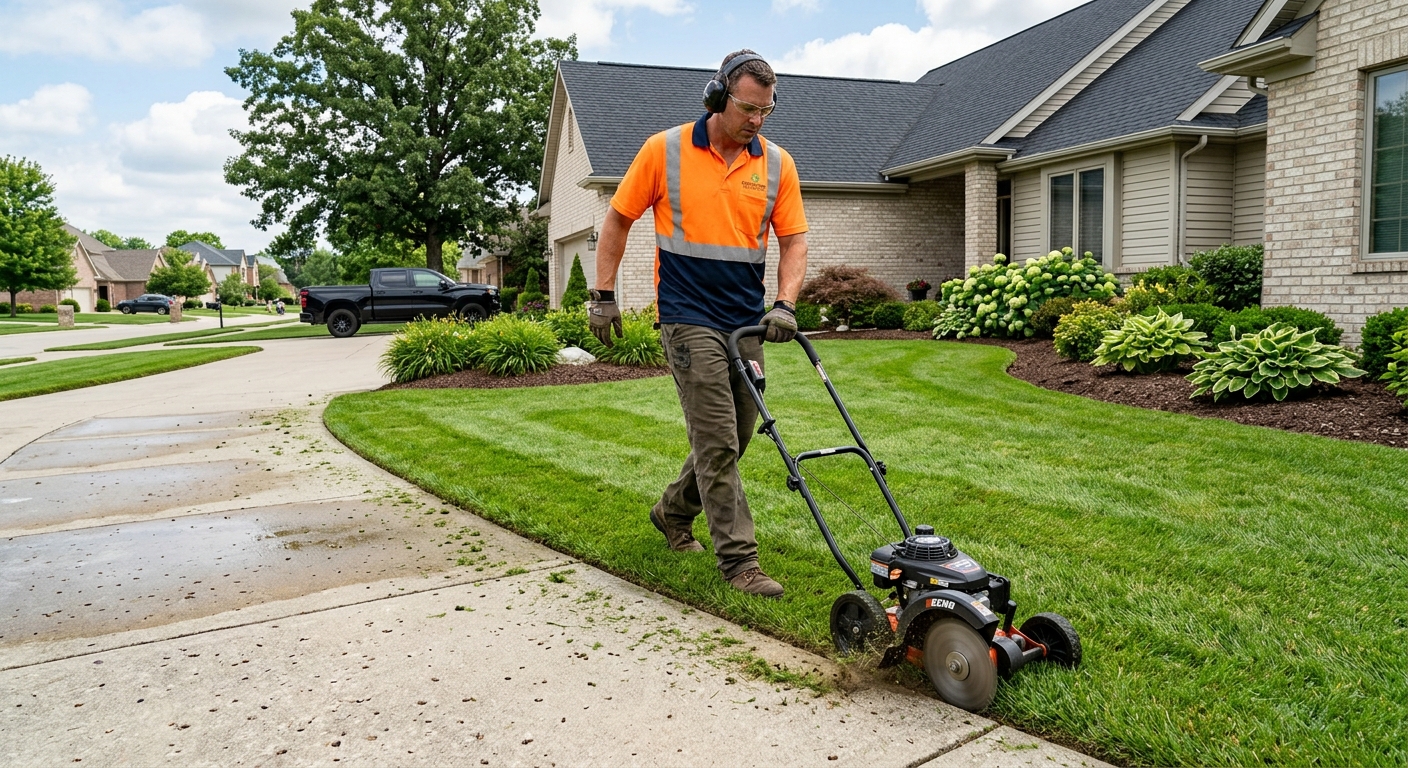
Landscaping options and costs in Acton
Acton is a smaller community inside the Greater Toronto Area, and that shows up in landscaping demand: many homeowners want curb appeal that looks “finished” without locking themselves into years of high-maintenance work. With a population of 9,377 (Statistics Canada, 2021 Census), there are fewer contractors per capita than in downtown Toronto, so availability can tighten in spring and early summer. You’ll also see steady investment because Acton’s housing stock in the GTA commonly includes detached properties with yard space, which makes softscape upgrades (sod, planting beds, paths) a practical way to add value and comfort.
Cost in the Toronto area is shaped first by climate and soil. Acton sits in hardiness zones 6a–7a, so we design for winter lows around –23 to –18°C and for freeze–thaw cycles that can move patios, steps, and retaining wall bases if the granular base and drainage aren’t done correctly. Deep winter frost and seasonal ground movement mean more excavation, better compaction, and often subdrain planning—especially where clay and fill soils hold water. That structural work is also why the contractor labour component tends to stay higher than in milder climates.
In Acton, landscaping trade is especially in demand around the newer growth pockets near Highway 25 and in established residential streets close to the town core, where homeowners commonly prioritize patios, driveway walkways, and boundary planting.
Below is a practical cost comparison to help you benchmark what you should expect from design through installation.
| Service |
Description |
Season |
Price Range |
| Full landscape design and installation |
Site visit, concept & layout, plant list, grading/drainage plan, softscape + hardscape coordination |
Late April to October |
$8,000–$40,000 |
| Sod installation (supply, grade, lay, roll) |
Remove debris/old sod (if needed), grade and topsoil, supply sod, install and roll |
May to early July (best results); fall for re-establishing |
$2,500–$8,000 |
| Lawn seeding (grade, seed, starter fertilizer) |
Light grading, seed mix, starter fertilizer, covering/rolling as needed |
Late April to June and again in August to September |
$1,800–$5,500 |
| Interlocking patio or walkway |
Excavation, geotextile, base, sand setting bed, edge restraint, pavers |
May to October |
$6,000–$30,000 |
| Retaining wall (interlocking block) |
Wall blocks, excavation, engineered base approach (as needed), drainage layer and weep provision |
May to October |
$6,000–$30,000 |
| Tree and shrub planting |
Soil prep, planting, staking (if required), mulch rings, first-season care guidance |
Spring and early fall |
$800–$6,000 |
Prices are estimates only and vary by project scope, site access and material selection.
What affects the price of landscaping in Acton
In Acton and across the Toronto market, quotes for the same-looking job can swing by 30–50% because the “hidden work” differs: drainage corrections, excavation depth, soil conditions, plant sizing, and how much design time is included. Two yards can have the same patio footprint, but if one needs heavier granular base for frost movement or includes a French drain tie-in, the real cost changes quickly. In Ontario, where the working season is strongly limited by freeze–thaw and temperature, labour timing and crew scheduling also influence pricing.
Climate and hardiness matter too. Acton is roughly in zones 6a–7a, so we can install a broader range of hardy shrubs and perennials than in the Prairie regions (zones 2–4). In the Prairies, shorter seasons and frequent drought push designs toward simpler, drought-tolerant palettes and a very efficient layout. Retaining wall bases in those colder zones must reach well below frost to prevent heaving, which can raise costs. Coastal BC often supports longer, milder growing seasons and lush evergreen structure, but heavy rainfall areas require excellent drainage detailing. The dry BC interior faces water restrictions that drive drip irrigation and low-precipitation planting choices. In Southern Ontario (zone 5–6 and surrounding transition areas), the pattern is moderate season length with summer dry spells—so we plan irrigation coverage when lawns and newly planted beds are expected to look good through August.
Concrete examples in Acton: (1) a clay-heavy yard that holds water can require subdrains and additional topsoil amendment before sod—often adding substantial cost beyond the $2,500–$8,000 lawn band; (2) a small retaining wall on a sloped lot frequently needs more excavation and a proper drainage layer, bringing projects into the $6,000–$30,000 hardscape range; and (3) mature trees cost more to install because they’re heavier, require careful root ball handling, and need proper staking and watering plans.
| Price Factor |
Why It Matters |
Cost Impact |
| Yard size in sq ft — the primary cost driver for softscape |
More area means more excavation, more material (topsoil/seed/sod), and more labour hours |
Often the biggest swing; doubling area can more than double total cost depending on access and soil prep |
| Grading and drainage work — slope corrections add significant cost |
Toronto-area clay/fill often needs reshaping to prevent pooling near foundations |
Can add several thousand dollars, particularly when regrading is deeper than expected |
| Drainage bed or French drain installation |
Freeze–thaw movement and standing water can undermine patios and wall bases without drainage |
Frequently pushes mid-size projects upward into higher bands for hardscape totals |
| Plant material tier — native shrubs vs. ornamental vs. mature specimen trees |
Material quality affects survival, size at planting, and labour (staking, spacing, handling) |
Tree and mature plant choices can be a major cost driver within the $800–$6,000 planting band |
| Hardscape vs. softscape ratio — walls and patios cost more per sq ft than lawn |
Stonework requires thicker base preparation, paver leveling, and edging restraint |
Shifts totals quickly toward the $6,000–$30,000 retaining wall/hardscaping bands |
| Irrigation system design and installation |
Acton summers can be humid but also dry in stretches; newly planted beds need consistent moisture |
Typically adds budget if you choose full coverage heads vs. localized hose-end options |
| Soil amendment and topsoil required |
Low-quality clay can suppress rooting and cause lawn thinning or patchiness |
Can add material delivery and spreading time; more amendment means higher cost |
| Tree removal or stump grinding before new planting |
Impacts excavation depth, disposal, and sometimes root management for nearby walls |
Often adds both labour and equipment time, raising the job beyond “plant-only” pricing |
Permits & regulations in Ontario
In Ontario, most day-to-day landscaping work—like planting, sodding, and most softscape installation—typically does not require a permit. However, certain hardscape and site-alteration activities often do. Retaining walls above a common threshold (typically 1.0 m / 3.3 ft in many municipalities, but always confirm locally for your exact wall height) usually require a building permit and may require engineered drawings depending on conditions. Changes to lot grading can also trigger approvals, particularly when drainage patterns change toward neighbouring properties or toward storm sewer connections. If you’re planning work that meaningfully alters how water flows during rain events, treat it as permit-sensitive.
Before digging planting holes, footings, or drainage trenches, arrange utility locates—this is essential for locating underground services and avoiding service disruption. For water rules, Ontario homeowners should confirm local irrigation and water-use bylaws, especially if your yard project includes an automated system and you’re targeting summer establishment.
Step-by-step for verifying a contractor in Acton: first, ask for their Ontario business details and confirm their licensing where applicable (and that they operate as a legitimate business, not just individuals with a truck). Next, request a certificate of insurance showing liability coverage (and ensure the certificate lists your address or project as an insured activity, if offered). Then confirm WSIB/WCB status—get proof of coverage (or a clearance letter, where that applies) before work begins. Finally, keep everything in writing: scope, permit responsibility (if any), disposal, and the start/completion dates.
Planning a landscape that thrives in Acton's climate
To make your yard thrive in Acton, design for what the site will do in our zone 6a–7a conditions—winter cold, hot humid summers, and the freeze–thaw cycles that stress soil and hardscape. Start with plant selection: choose native and zone-appropriate shrubs and perennials that can handle winter lows near –23 to –18°C without constant protection. Then decide sod vs. seed. Sod gives instant curb appeal and erosion control, but it’s often about 3–4x more per sq ft than seeding because you’re paying for turf material and more handling; seeding costs less but takes longer to “lock in” and needs good early moisture.
Drainage and grading are where many budgets succeed or fail in Toronto-area yards. Pooling water can damage foundations and weaken bases under patios, so we grade for flow away from the house and add drainage solutions when clay or fill holds water. For hardscape, we prepare base thickness and compaction with the local frost line in mind—patios and steps that skip proper granular layers tend to heave and settle.
For low-maintenance beauty, use groundcovers, mulched shrub borders, and perennial groupings designed to fill in over time. In water-smart yards, consider rain-garden pockets that capture roof runoff, plus xeriscape elements like drought-tolerant grasses and deep-rooted perennials—useful when you install drip irrigation or when you want to reduce summer watering demands.
Dollar example: if you’re comparing lawn establishment, sod installed might land in the $2,500–$8,000 band, while seeding with starter fertilizer can be substantially lower (often $1,800–$5,500 depending on area and prep). If you need immediate use for a backyard before the next summer season, sod can be worth it; if timing is flexible, seeding usually gives better value with patience.
| Element |
Climate Consideration |
Maintenance Level |
Price Band |
| Sod lawn installation |
Best installed in suitable spring windows to root before early summer stress; drainage matters to avoid winter thaw issues |
Low once established; requires watering and light mowing during rooting |
$2,500–$8,000 |
| Native perennial garden |
Hardy species handle zone 6a–7a winters; reduces watering needs once rooted |
Medium first year, then lower (mulch refresh, occasional weeding) |
$800–$6,000 |
| Mulched shrub border |
Mulch buffers temperature swings and reduces moisture loss during humid summer stretches |
Low; annual trimming and mulch top-up |
$1,200–$7,000 |
| Interlocking stone patio |
Requires correct base and drainage to resist freeze–thaw movement |
Low (occasional leveling checks, joint sand upkeep) |
$6,000–$30,000 |
| Retaining wall (block) |
Proper drainage behind the wall is essential to prevent frost-related pressure and movement |
Low once built correctly; periodic inspection for settlement |
$6,000–$30,000 |
| Drip irrigation system |
Targets root zones and supports drought-tolerant planting through summer dry spells |
Low day-to-day; needs seasonal start-up checks |
$1,800–$7,500 |
How to choose a landscaping contractor in Acton
Choosing the right contractor in Acton comes down to proof: proof of coverage, proof of scope clarity, and proof they build for freeze–thaw realities. Start with licensing and insurance. In Ontario, confirm the company is properly registered for the work they’re offering. Ask for a certificate of liability insurance and verify the policy is current (and ideally lists your address/job as the certificate-holder for the project). Next, request WSIB/WCB documentation: you want either active coverage proof or the appropriate clearance documentation before anyone digs or installs hardscape on your property.
Then get 2–3 itemised written quotes. A good quote separates labour and materials (pavers/blocks, topsoil/seed/sod, drainage rock, geotextile, irrigation components) and lists unit quantities (sq ft, linear ft, number of trees/shrubs). Be wary of “all-in” lump sums without a breakdown. Confirm whether permits are handled if required, and whether disposal is included (spoils haul-away, old sod removal, cutting/grinding debris). Ask about what’s excluded—like additional excavation if subsoil is worse than expected or regrading beyond a stated tolerance.
Warranty matters. Ask for a workmanship warranty length and whether it applies to settlement, base failures, and plant replacement for the first season. Also confirm product/manufacturer warranties and whether they’re transferable to you. Payment schedule: never pay more than 10–15% upfront. Hold back a portion until the job is complete and cleaned up. Finally, insist on a timeline in writing with a start date, key milestones, and a completion target.
- Verify insurance certificates and WSIB/WCB status before work begins.
- Use itemised quotes with quantities and unit pricing (sq ft, linear ft, plants by count/size).
- Confirm disposal/haul-away is included (or priced separately).
- Ask who is responsible for utility locates and when they’ll be scheduled.
- Clarify grading targets and drainage direction (away from house, not toward neighbours).
- Require a written workmanship warranty and what it covers.
- Check whether wall bases include proper drainage layers and weep provisions.
- Confirm sod/seed preparation includes soil amendment if clay is present.
- Ask about compaction methodology for hardscape bases.
- Get start date, finish date, and weather contingency plan in writing.
- Hold retainage until final cleanup and walkthrough.
- Avoid “cash discount, no paperwork” offers for hardscape and drainage work.
Red flags I see in Acton include: vague scopes that don’t name materials (brand/type of pavers or sod), quotes that don’t address drainage or base preparation despite freeze–thaw conditions, contractors asking for a large deposit beyond 10–15%, no written warranty terms, and crews starting excavation before utility locates or before you’ve agreed on grading/drainage direction.
Frequently asked questions — landscaping in Acton
How much does a retaining wall cost in Acton?
In Acton, a typical interlocking block retaining wall commonly lands in the $6,000–$30,000 range depending on wall height, total linear feet, site access, and how much excavation/drainage work is required. If your yard has clay or fill that needs deeper base preparation for freeze–thaw movement, you can pay more even for a “small” wall. Premium factors include proper drainage behind the wall (drainage layer, geotextile, and any weep provisions), hauling/disposing of excavated material, and any need for regrading. If your wall height is near permitting thresholds (often around 1.0 m in many municipalities), permit and possibly engineering requirements can also influence the final total. Get an itemised quote so you can compare apples-to-apples on base thickness and drainage details.
When is the best time to landscape in Acton?
For most Acton landscaping, late April through October is your main window, because Ontario’s freeze–thaw and soil conditions limit proper installation when the ground is too wet or frozen. Spring is ideal for planting trees, shrubs, and most perennial beds, and it’s also when we do sod if temperatures allow quick rooting. For lawns, seeding often works well from late April into June and again in late summer/early fall (August to September) when temperatures cool but soil moisture is steadier. Hardscaping like interlocking patios and block walls is best installed in dry weather (typically May to October) so bases compact properly. If you’re adding drainage improvements, we can sometimes schedule earlier work, but we still prioritize safe digging conditions and proper curing time for any related components.
Do I need a permit for a retaining wall in Ontario?
Often, yes—depending on height and how the wall is built. In Ontario, planting and most softscape work typically don’t require permits, but retaining walls above a common threshold (frequently around 1.0 m in many municipalities) are where permits become likely. Some projects also require engineered details based on soil conditions and the wall’s role in stabilizing grades. Changes to lot grading can also trigger approval requirements, especially if water flow toward a neighbouring property or a storm connection could be impacted. In Acton, the safest approach is to ask your contractor to confirm local requirements before they start. A professional quote should specify whether a permit will be pulled, and if not, who is responsible.
How do I improve drainage in my yard?
Drainage improvements start with observing where water sits after rain and how your lot slopes toward the house. In Acton, many yards sit on clay/fill, which holds moisture and contributes to pooling and foundation moisture risk. The most common solutions include regrading to direct water away from the foundation, installing a drainage bed, and adding a French drain where water concentrates. If you’re also planning a patio or retaining wall, drainage is even more important because freeze–thaw movement can magnify base problems. Contractors should assess whether subdrains or downspout tie-ins are needed and plan geotextile and proper gravel sizing. Ask for a written drainage plan and make sure it matches your actual site grading—this is where cost can vary significantly among quotes.
What is xeriscaping and does it suit Acton?
Xeriscaping is a water-wise approach that uses drought-tolerant plants, efficient irrigation (often drip), and soil mulching to reduce watering needs. In Acton (hardiness zones 6a–7a), it can suit many homeowners well—especially those tired of maintaining thirsty lawns or those who want a design that looks good in summer dry stretches. That said, “xeric” doesn’t mean “no greenery.” We often blend hardy perennials, ornamental grasses, shrubs, and deep-rooted species, then use mulch and, where appropriate, drip irrigation to keep new plantings established. A rain-garden pocket can also capture roof runoff instead of letting it pool. If your goal is a traditional green lawn all season, sod or seed will cost more (sod is commonly in the $2,500–$8,000 band), but xeriscaping can reduce ongoing water and maintenance while improving curb appeal.
How do I plan a low-maintenance yard?
A low-maintenance yard in Acton is mainly about designing for fewer recurring tasks: fewer lawn mowing cycles, fewer weeds, and plants that handle our winters without special protection. Start by choosing zone-appropriate shrubs and perennials, grouping plants so they shade soil (less weed germination), and using mulch to stabilize moisture and suppress weeds. For lawn, consider whether seeding suits your timeline or whether sod makes sense for immediate use (sod typically falls in the $2,500–$8,000 range). If you want structure without constant upkeep, add perennial borders and a simple hardscape anchor like an interlocking walkway or patio built with proper base preparation for freeze–thaw. Finally, include a practical irrigation plan—either targeted drip for beds or a system sized to avoid overwatering. In Ontario, confirm any irrigation rules your municipality may enforce during drought conditions.