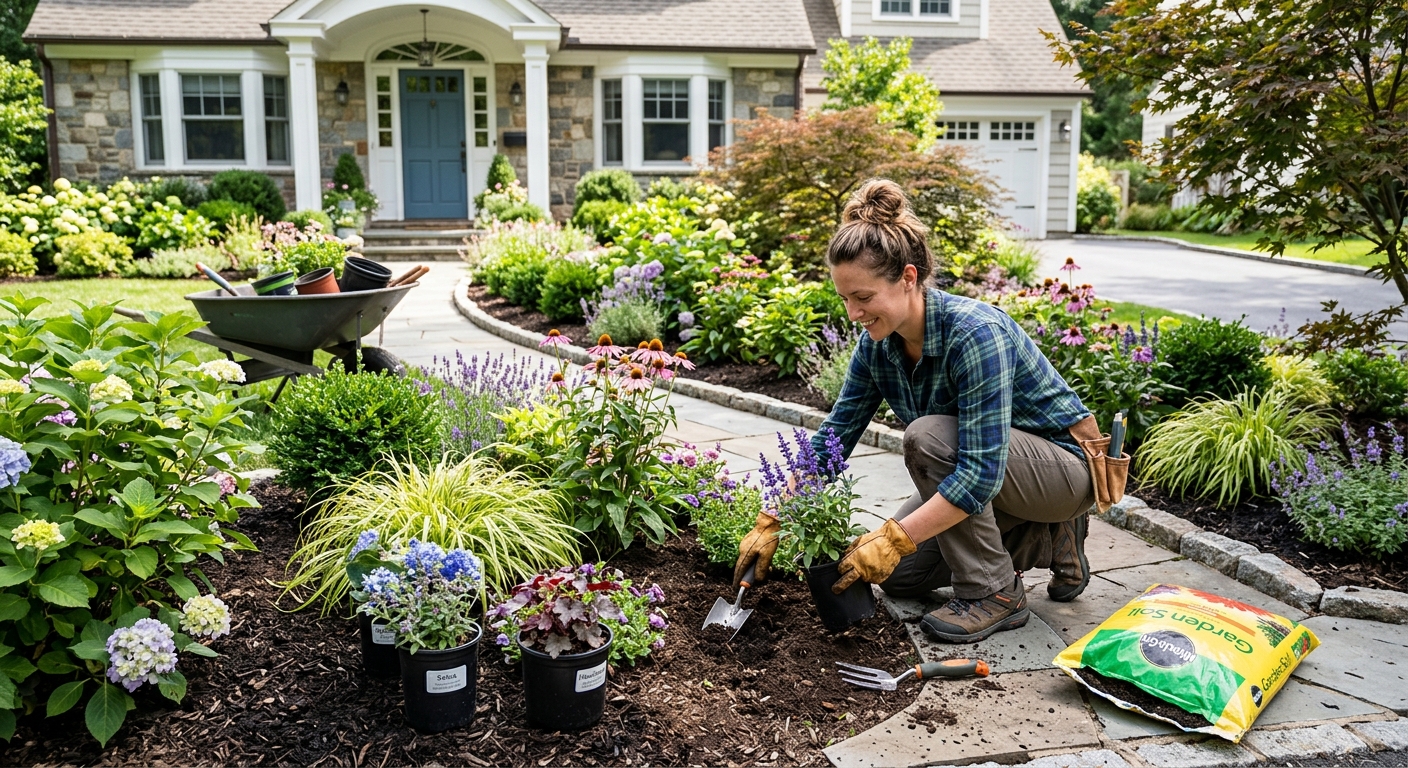
Landscaping options and costs in Briar Hill-Belgravia
Briar Hill-Belgravia, Ontario is a neighbourhood where homeowners often invest in curb appeal and functional outdoor space at the same time—because the housing stock tends to bring real yard sizes to the table. With a population of 14,257 people (Statistics Canada, 2021 Census), there’s steady demand for contractors who can handle typical GTA site conditions: clay/filled soils, mature-tree lots, and freeze–thaw movement that punishes weak base construction. In practice, this means landscaping pricing reflects both what can survive our plant hardiness conditions (Toronto’s zone range is roughly 6a–7a) and how long crews can work reliably (generally late spring through fall). If you’re near the St. Clair Avenue East corridor or pockets of higher foot traffic around the neighbourhood’s older residential streets, you’ll often see more frequent work—driveways, front walks, and low retaining touches are especially popular there.
Toronto-area work also gets priced with practical labour availability in mind. When contractors are booked in mid-summer, quote ranges tighten for popular start dates but increase for rush scheduling. Meanwhile, excavation and drainage corrections can swing budgets sharply: even a “simple” patio can require extra base depth and granular layers to avoid heaving after winter. To help you compare like-for-like, the table below uses current GTA cost bands for common scope packages, then you can decide which option fits your timeline and tolerance for maintenance.
| Service |
Description |
Season |
Price Range |
| Full landscape design and installation |
Site visit, concept + plant plan, grading/drainage (if needed), softscape + hardscape build-out, irrigation allowance, cleanup |
May–Oct (plan ahead for April/early May installs where feasible) |
$8,000–$40,000 |
| Sod installation (supply, grade, lay, roll) |
Grade/tamp, topsoil/topdressing, sod lay, rolling, starter fertilizer and early watering guidance |
Late Apr–Jun and early Sep–Oct |
$2,500–$8,000 |
| Lawn seeding (grade, seed, starter fertilizer) |
Light raking/conditioning, seed + starter fertilizer, mulch blanket (where recommended) |
Apr–Jun and Aug–Sep (cooler windows improve germination) |
$1,200–$4,000 |
| Interlocking patio or walkway |
Excavate, geotextile + compacted granular base, edging, sand setting bed, interlock/stone installation |
May–Oct (concrete/stone prep can be done earlier) |
$6,000–$30,000 |
| Retaining wall (interlocking block) |
Block system with proper backfill, drainage gravel, and reinforcement/backing where required |
May–Oct |
$6,000–$30,000 |
| Tree and shrub planting |
Soil prep, planting, staking (as needed), mulch rings, watering plan |
Apr–May and Sep–Oct |
$800–$6,000 |
Prices are estimates only and vary by project scope, site access and material selection.
What affects the price of landscaping in Briar Hill-Belgravia
In Briar Hill-Belgravia and across the Toronto region, two homeowners can get noticeably different quotes for the “same” landscaping scope—often by 30–50%. That variance usually comes down to hidden site conditions, contractor workflow, and how much of the work is engineered versus simply installed. Toronto’s climate and soils are the big driver: winter frost and frequent freeze–thaw cycles mean grading, base depth, and drainage aren’t optional. Even with the same patio size, a job that includes full base build-up and drainage correction costs more than a superficial re-surfacing.
What we can plant (plant hardiness zones 6a–7a) and the working season also set labour costs. In Prairie regions (Zone 2–4), shorter seasons and frequent drought force designs toward drought-tolerant, wind-hardy plants, and the working season can be several weeks shorter—so per-day labour rates and simplification of palettes show up in price. Coastal BC (Zone 7–8) supports lush growth with longer planting windows, but heavy-rainfall drainage detailing matters. In southern Ontario (Zone 5–6), we usually have a moderate season but still deal with summer dry spells, so irrigation design can become a cost line-item. If you’re comparing quotes, remember that a full landscape design and installation commonly starts around $8,000–$40,000, while a focused hardscape such as a retaining wall often sits in $6,000–$30,000 depending on wall height and base conditions.
Concrete local examples: (1) Clay-heavy lots often require excavation and soil amendment; that means more truck loads and more labour. (2) If your downspouts or sump discharge route toward the yard, we may need a drainage bed or French drain, which can add days but protects foundations and patios. (3) Many older properties have mature trees; transplant/planting is straightforward, but stump grinding and haul-away add cost quickly.
| Price Factor |
Why It Matters |
Cost Impact |
| Yard size in sq ft — the primary cost driver for softscape |
More area means more topsoil, labour hours, and material quantity |
Often the largest variable; can swing the total by several thousand dollars |
| Grading and drainage work — slope corrections add significant cost |
Proper slope and away-from-house grading reduces pooling and freeze–thaw heaving |
Commonly adds a meaningful uplift when significant regrading is needed |
| Drainage bed or French drain installation |
Captures subsurface water and relieves saturated clay conditions |
Can move a job from “basic install” to “engineered drainage,” adding thousands |
| Plant material tier — native shrubs vs. ornamental vs. mature specimen trees |
Mature trees and premium ornamentals cost more and require careful handling |
Low tier: lower spend; mature specimens can add multiple thousands |
| Hardscape vs. softscape ratio — walls and patios cost more per sq ft than lawn |
Stone/base/edges and proper compaction are labour- and material-intensive |
Higher hardscape ratios can push budgets toward the upper bands |
| Irrigation system design and installation |
Toronto dry spells and new planting beds benefit from reliable watering schedules |
Can add a substantial line item depending on zone count and layout |
| Soil amendment and topsoil required |
Clay fill often needs conditioning for roots to establish and drains to perform |
More amendment/topsoil = higher delivery and labour cost |
| Tree removal or stump grinding before new planting |
Stumps and roots can prevent correct base prep and new planting layouts |
Often adds unexpected hours and disposal/hauling charges |
Permits & regulations in Ontario
In Ontario, most typical landscaping work—like planting, seeding, sodding, mulch installs, and most softscape improvements—generally does not require a building permit. However, certain projects cross into structural territory. Retaining walls above a height threshold—commonly around 1.0 m (3.3 ft) in many municipalities—often require a building permit, and sometimes engineered or detailed drawings depending on height and site conditions. Also watch for work that changes lot grading or drainage direction: if your plan alters how water flows toward a neighbouring property or connects into a storm service, approvals may be triggered.
Before anyone digs, you should insist on utility locates. Call Ontario’s “utility locate” process before installing irrigation trenches, planting holes, or any retaining wall footings so crews can avoid damaging buried services. For water-use rules, Briar Hill-Belgravia homeowners should confirm irrigation expectations and any local restrictions during drought periods; rules are often tightened in hot dry stretches across Ontario.
To verify a contractor is set up properly, do three things step-by-step:
- Licence/credentials: ask for their Ontario business information and confirm the appropriate registration where applicable through official online resources.
- Liability insurance: request a certificate of insurance and confirm it’s current, includes landscaping/contracting activities, and names you as certificate holder if offered.
- WSIB coverage: ask for WSIB clearance (or WCB equivalent coverage documentation as applicable) and review the clearance details.
If any of these items are missing, that’s a sign to slow down and ask questions before signing.
Planning a landscape that thrives in Briar Hill-Belgravia's climate
Designing for Briar Hill-Belgravia’s climate means working with our winter freeze, humid summer stretches, and the reality of freeze–thaw movement under stone and retaining systems. With Toronto roughly in hardiness zones 6a–7a, choose woody plants and perennials that tolerate winter lows near –23 to –18°C and can handle hot, often humid summers. I also plan with your frost timeline in mind: early installs (late spring) reduce winter exposure for new plantings, and fall planting often supports strong root establishment before deep frost.
Plant selection should prioritize native and zone-appropriate species that need less watering and less winter protection. For lawn, decide early between sod and seed. Sod gives instant results and stabilizes erosion, but it typically costs about 3–4x more per sq ft than seeding once you factor in removal, prep, and labour intensity. If your goal is a quick green look—especially in front-facing areas—sod can be worth the premium. If you can accept a longer “work up” period, seeding is more budget-friendly and fits well with fall renewal.
Drainage and grading are the non-negotiables in Toronto. We grade to move water away from the foundation, then protect the yard with correct base layers under patios and walks. For hardscapes like patios and retaining blocks, base prep needs to be built for local frost depth conditions: adequate granular base thickness, proper geotextile/filtration separation, and drainage backfill prevent heaving and water trapping.
Low-maintenance strategies help you keep curb appeal without constant work: mulch rings, groundcovers, well-spaced perennials, and seasonal pruning rather than repeated replanting. If you want “xeriscape” thinking for Ontario, the analogue is low-water planting plus rain-garden capture in the right spots, not desert plants. For a practical example, if a seeding approach saves you money now, it can justify spending the difference toward proper drainage under a patio where problems show up later.
| Element |
Climate Consideration |
Maintenance Level |
Price Band |
| Sod lawn installation |
Needs stable moisture during establishment; base/grade must drain to prevent winter rot |
Low short-term after install, higher during first 4–6 weeks (watering/monitoring) |
$2,500–$8,000 |
| Native perennial garden |
Tolerates local winter lows and summer humidity with better long-term resilience |
Low to moderate (spring cleanup, occasional watering year one) |
$800–$6,000 |
| Mulched shrub border |
Mulch improves root insulation and helps manage clay moisture swings |
Low (weeding reduced, seasonal shaping) |
$800–$6,000 |
| Interlocking stone patio |
Freeze–thaw demands correct base depth, drainage slope, and compaction |
Low (periodic joint sand/weed control) |
$6,000–$30,000 |
| Retaining wall (block) |
Backfill and drainage protect against water pressure and frost heave |
Low (inspection of drainage outlets and minor touch-ups) |
$6,000–$30,000 |
| Drip irrigation system |
Targets watering to reduce evaporation and supports plant establishment in hot weeks |
Low (set-and-check; seasonal winterization) |
$1,500–$7,000 |
How to choose a landscaping contractor in Briar Hill-Belgravia
Choosing the right contractor in Briar Hill-Belgravia is mostly about proof and process. First, verify Ontario licensing/credentials where applicable, then confirm liability insurance. Ask for a current certificate of insurance (not just an image of a policy card) and confirm the coverage matches the work type. Next, request evidence of WSIB coverage or clearance. A legitimate contractor should be able to provide up-to-date WSIB documentation and will usually welcome the request—it’s standard due diligence.
Second, get 2–3 itemised written quotes. The quote should break out labour and materials separately: excavation, base material, geotextile, interlock/stone, soil amendment, disposal, and any irrigation components. Avoid “lump sum” quotes that don’t state what’s included. Ask directly whether permits are required and whether the contractor will pull them (where applicable), whether disposal is included, and what haul distance assumptions they’re using. For hardscaping and retaining work, insist on base prep details and drainage/backfill specifications.
Third, check warranty terms. Request a workmanship warranty length and clarify what product warranties cover (and whether they’re transferable to you as the homeowner). Finally, payment schedule matters: never pay more than 10–15% upfront. Hold back payment until the job is complete and deficiencies (settling, grading issues, jointing corrections) are corrected. Get the start date and completion estimate in writing, including weather-related contingency language.
- Ask for 2–3 recent project photos in similar soil/drainage conditions.
- Confirm who will be on-site (crew lead) and average crew size.
- Require itemized pricing for excavation, base, and drainage components.
- Check that site prep includes geotextile/compaction steps where relevant.
- Ask what happens if frost arrives early (re-seeding guarantees, plant protection).
- Confirm disposal is included or priced separately.
- Verify irrigation scope: controller, zones, heads, and winterization steps.
- Request a plant list with sizes and installation dates (not just “assorted shrubs”).
- Ask for warranty in writing: workmanship + product coverage.
- Review payment schedule—keep final holdback until punch list completion.
- Ensure the contract includes start/completion target dates.
- Confirm they will locate utilities before digging.
Red flags I see with under-vetted landscaping contractors in Briar Hill-Belgravia include: refusing to provide WSIB clearance or a current certificate of insurance, quoting only totals without itemized labour/materials, skipping drainage/backfill details for patios or retaining walls, pressuring you for large upfront deposits (beyond 10–15%), and changing scope verbally after you’ve signed without a written change order.
Frequently asked questions — landscaping in Briar Hill-Belgravia
How do I design a low-water yard in Briar Hill-Belgravia?
In Briar Hill-Belgravia, a true “low-water” yard is usually achieved by combining smart plant selection with irrigation design, not by using desert-style planting. Focus on native and zone-appropriate perennials/shrubs that tolerate winter lows (Toronto is roughly zone 6a–7a) and summer humidity, then place them where they get the right light and airflow. Use mulch depth consistently to reduce evaporation and reduce weeds that compete for moisture. For irrigation, consider drip for beds rather than full-coverage sprinklers; it delivers water directly to roots and limits waste during windy/humid days. If you’re comparing budgets, a focused tree and garden planting budget (around $800–$6,000) can pair with a modest irrigation upgrade, instead of trying to sod the entire yard. Also, grade your yard so water drains away from foundations but concentrates where you want it—this is the Toronto “rain-garden” mindset that often reduces summer hand-watering.
How do I find a licensed landscaper in Briar Hill-Belgravia?
Start by asking every contractor in Briar Hill-Belgravia for three documents: (1) proof of current liability insurance, (2) WSIB coverage or clearance documentation, and (3) their business/contracting credentials relevant to Ontario. You can then verify coverage by requesting a certificate of insurance and a WSIB clearance letter or documentation dated within the last period. Next, look for professionalism in quoting: ask for itemized labour and material breakdowns, and confirm what’s included for disposal, grading, and base prep. It’s also smart to request a short list of similar nearby projects and follow up with references where possible. If they’re reluctant to provide documentation, that’s a risk signal—especially for stonework and retaining walls where base quality affects long-term stability. For context, many homeowners spend in the broader landscaping bands of $8,000–$40,000 when they do a full design/build, so due diligence matters before you commit.
How much does landscaping cost in Briar Hill-Belgravia?
Landscaping costs in Briar Hill-Belgravia typically depend on whether you’re doing a full design/build or just a specific component, like lawn or hardscape. For example, full landscape design and installation often lands in the $8,000–$40,000 range depending on yard size, drainage corrections, and how much hardscape (patios/walks/walls) you’re adding. If you’re focused on the lawn, sod installation (supply, grade, lay, roll) commonly falls in the $2,500–$8,000 band, while tree and shrub planting is often in the $800–$6,000 range. In Toronto-area clay/fill sites, drainage and grading can move budgets faster than people expect, because freeze–thaw failures happen when base and slopes are wrong. Since you’re in a neighbourhood with active demand, scheduling in peak summer may also affect labour costs and availability.
What plants thrive in Briar Hill-Belgravia's climate zone?
For Briar Hill-Belgravia, plan around Toronto’s approximate hardiness range of 6a–7a and the reality that winter lows near –23 to –18°C and summer humidity both matter. Plants that tend to perform well include cold-hardy shrubs and perennials that establish with less winter protection once rooted. In shrub borders, choose varieties that tolerate our freeze–thaw cycles and can handle summer moisture fluctuations after rain. For structure, we often select woody plants with good form and reliable spring growth, and then layer in perennials for colour over the growing season. A practical approach is to pair native/region-tolerant plants with mulch and correct watering year one—this reduces long-term replacement. If you’re budgeting, keep in mind that tree and garden planting is often around $800–$6,000; that budget buys more meaningful impact when species are selected for site conditions (sun/shade, clay wetness, and drainage) rather than choosing based on looks alone.
Sod vs seed — which is better for a Briar Hill-Belgravia lawn?
Sod and seed both work in Briar Hill-Belgravia, but the “better” choice depends on timing and what you need from the lawn right away. Sod gives immediate visual results and can help stabilize soil quickly, which is useful if you’re reseeding during a period where erosion risk is higher. Seed is more economical and works well if you can protect the area and water consistently during germination. The trade-off is cost and speed: sod typically costs far more per square foot than seeding once prep and labour are included. If you want a clear planning example, sod installation commonly sits around $2,500–$8,000, while seeding can be less depending on area and the site prep required. For either option, proper grading and drainage matter—Toronto’s freeze–thaw movement makes low spots prone to thin grass and pooling. If your lawn area drains poorly, fix grading first, then choose sod or seed.
How much does a retaining wall cost in Briar Hill-Belgravia?
Retaining wall costs in Briar Hill-Belgravia typically vary with wall height, length, soil conditions, and whether drainage/backfill and proper base build-up are included. In the Toronto market context, interlocking block retaining walls commonly fall in the $6,000–$30,000 band. The biggest reason the range is wide is that a wall in clay/fill soils with drainage issues may require more excavation, engineered backfill/gravel, and drainage measures to prevent water pressure and freeze–thaw movement. Also, if your wall is taller than a threshold commonly around 1.0 m (3.3 ft), permits may be required in many Ontario municipalities, which can add scheduling steps (not necessarily massive costs, but time). Before pricing, confirm base depth and drainage provisions are written into the scope—cheap walls that skip those details usually cost more later.