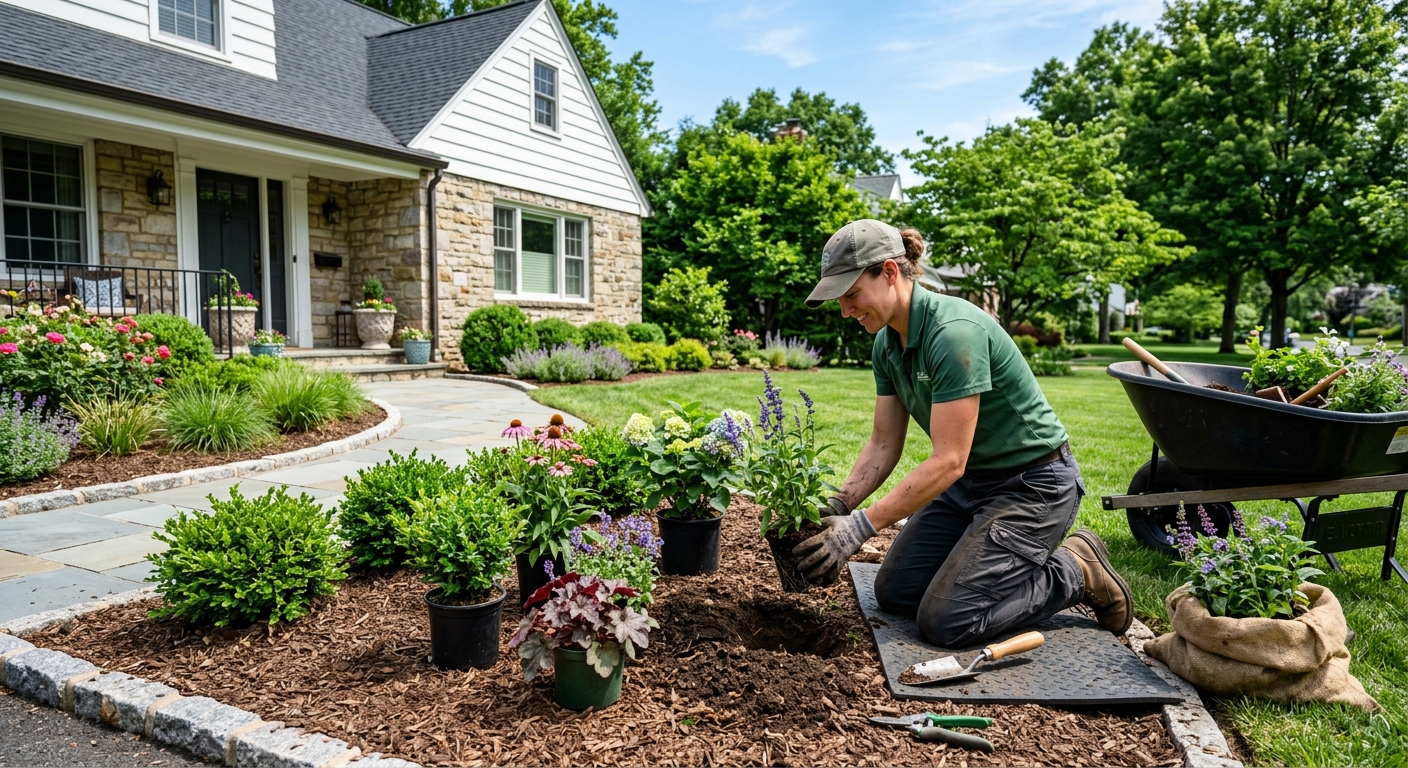
Landscaping options and costs in Lucan
In Lucan, landscaping decisions usually start with one practical question: what do you want your yard to do for you? With a small community of about 2,541 residents (Statistics Canada, 2021 Census), many homes here sit on detached lots where there’s room to expand softscape, add curb appeal, and improve how water moves across the property. A large share of households also invests in exterior upgrades because the benefits are visible every day—think mowing time, safer walkways, and plants that survive winter without constant replanting.
Toronto-area costs are shaped by a forgiving-but-demanding climate: summers can be hot and humid, while winters bring deep frost and frequent freeze–thaw. That combination raises the price of any work tied to structure—retaining walls, patios, steps, and drainage—because proper excavation, granular base depth, geogrid/footings, and subdrains are what keep everything stable. Contractor availability also matters; during spring rush (after thaw), labour schedules tighten and timelines can affect total project cost.
In Lucan’s residential pockets near Hwy 4 and along the more established neighbourhood streets, interlocking walkways and foundation-adjacent planting tend to be especially popular—often bundled with drainage adjustments to stop pooling and protect basement walls. From there, it becomes easier to compare apples to apples in a budget range, which is why the table below breaks down common project types.
| Service |
Description |
Season |
Price Range |
| Full landscape design and installation |
On-site design, grading plan, plant palette, softscape + hardscape installation (patios/walkways, beds, lawn, lighting-ready prep where applicable) |
Late April–October |
$8,000–$40,000 |
| Sod installation (supply, grade, lay, roll) |
Topsoil/grade correction, sod supply, laying, rolling, starter fertilizer, light watering plan |
May–June and early September |
$2,500–$8,000 |
| Lawn seeding (grade, seed, starter fertilizer) |
Minor grading, seed mix + starter fertilizer, raking, light rolling; follow-up watering guidance |
April–May and early September |
$1,800–$6,000 |
| Interlocking patio or walkway |
Excavation, base/gravel compaction, edging, interlocking stone, jointing sand, slope to drain |
May–October |
$6,000–$30,000 |
| Retaining wall (interlocking block) |
Wall layout, excavate/compact, block installation, drainage stone + weeping/drainage pipe where required |
May–October |
$6,000–$30,000 |
| Tree and shrub planting |
Planting holes, amendments, staking (where needed), mulch, initial watering plan for zone-appropriate plants |
Spring and fall |
$800–$6,000 |
Prices are estimates only and vary by project scope, site access and material selection.
What affects the price of landscaping in Lucan
Even when homeowners ask for “the same” landscape job, quotes across the Toronto region can swing by 30–50%. The main reason is that landscaping is highly site-specific: soil conditions, slope, access for mini-excavators, and how much regrading or drainage is needed. Labour availability in the GTA during spring installation windows can also shift pricing, and premium plant choices (or mature specimen sizes) add cost quickly.
In southern Ontario, the plant hardiness range and frost pattern drive both what survives and when work can be completed. While the ground is workable through much of the May to October frost-free window, freeze–thaw cycles increase structural costs—especially for retaining walls and patios—because bases must be built for movement control. That’s a different reality than Prairie regions (Zone 2–4), where shorter seasons and drought push simpler, ultra-hardy planting and deeper, wind-tolerant selection; and it’s also unlike coastal BC (Zone 7–8), where lush growth is easier but heavy rain still demands drainage design. Dry BC interiors further change irrigation and plant palette due to restrictions, whereas in Lucan you’ll typically plan for summer dry spells through targeted watering rather than full xeric resets.
Two common Lucan examples: (1) If your yard needs significant regrading to stop water moving toward a foundation, expect added excavation and drainage work—often pushing a “simple beds and lawn” plan toward the broader $8,000–$40,000 design-and-install band. (2) If you’re installing an interlocking walkway where the base must be rebuilt for stability, costs commonly land within the $6,000–$30,000 hardscaping band, especially when clay fill is removed and replaced.
| Price Factor |
Why It Matters |
Cost Impact |
| Yard size in sq ft — the primary cost driver for softscape |
More area increases labour hours, materials (seed/sod/topsoil/mulch), and maintenance setup |
Higher square footage can move a project up a whole price tier |
| Grading and drainage work — slope corrections add significant cost |
Fixing slopes to prevent pooling or foundation seepage requires excavation and precise recontouring |
Often a major contributor to 30–50% quote variance |
| Drainage bed or French drain installation |
Subsurface water control adds pipe, fabric, gravel, and outlet planning |
Can elevate hardscape/softscape bundles into design-install ranges |
| Plant material tier — native shrubs vs. ornamental vs. mature specimen trees |
Premium cultivars and larger caliper trees cost more and require additional protection/staking |
Material upgrades can noticeably raise the mid-project total |
| Hardscape vs. softscape ratio — walls and patios cost more per sq ft than lawn |
Stone and block require deeper bases and compaction; lawn relies on lighter materials |
Rebalancing the plan toward stone typically increases overall budget |
| Irrigation system design and installation |
Sprinklers/drip lines, controllers, and trenching affect labour and materials |
Adds cost but improves survival for sod and new plantings |
| Soil amendment and topsoil required |
Clay-heavy or disturbed soils need structured amendments to support roots and stable grading |
Delivery and prep can add meaningful dollars, especially for larger lawns |
| Tree removal or stump grinding before new planting |
Removal adds safety, haul-away, stump grind depth, and root/soil disturbance repair |
Frequently shifts a “planting-only” job into a larger install budget |
Permits & regulations in Ontario
In Ontario, most garden work and softscape installation—like planting beds, sodding, seeding, mulch, and typical grading for aesthetics—generally doesn’t require a building permit. Where permits often come into play is when you change structures or drainage in ways that could affect safety or neighbouring properties. For example, retaining walls above a local height threshold (commonly around 1.0 m in many municipalities) typically require a building permit, and sometimes engineered drawings depending on height, location, and soil conditions.
Also pay attention to lot grading: if the work alters drainage so that water is directed toward neighbouring properties, services, or storm connections, approvals may be required. Before any excavation, call for utility locates so contractors can mark buried lines around where posts, drainage pipes, or wall footings will go. This step protects you from the delays and hazards that come with unmarked utilities.
To verify a contractor in Lucan, ask for three things and check them in writing. First, confirm their Ontario licence/registration through the applicable public registry for their category of work. Second, request a current certificate of insurance (liability) naming you as additional insured if applicable. Third, confirm workers’ coverage (WSIB/WCB) so subcontractor labour isn’t exposed. Finally, get a signed scope and keep it on hand—if you need to escalate, dates and work descriptions matter.
Planning a landscape that thrives in Lucan's climate
Planning for Lucan means designing for our hardiness zone realities and the practical limits of the frost calendar. In Toronto-area conditions (zones roughly 6a–7a), many owners do best with native and zone-appropriate shrubs and perennials that can tolerate winter lows near –23 to –18°C, then handle humid summers without constant replanting. Start with plant selection: choose varieties with proven winter structure, add mulch depth, and group plants by sun and moisture so you’re not forcing one plant to survive the worst microclimate corner of your yard.
For lawn, the sod-vs-seed decision is mostly about timeline and patience. Sod gives instant visual coverage and quicker erosion control, but it’s usually 3–4x the per-sq-ft cost of seeding. If your goal is immediate curb appeal for an upcoming event, sod can be worth it; if you can wait and follow watering closely, seeding is often the smarter budget play.
Drainage and grading are non-negotiable in the GTA: even a small slope error can cause pooling, foundation moisture, and winter heaving. For patios and retaining walls, proper base preparation must account for freeze–thaw—adequate granular layers, compaction, and proper drainage relieve pressure during thaw cycles. Low-maintenance design strategies like groundcovers, mulched borders, and repeatable plantings reduce annual labour while keeping the yard full-looking.
Where water efficiency matters, consider rain gardens or drought-tolerant borders using plants that handle both rain bursts and dry spells. A practical example: if you’re budgeting lawn renewal, spending toward the $2,500–$8,000 sod band is justified when you need fast coverage and erosion control; otherwise, seeding can deliver a similar look over time for less, especially when drainage is already corrected.
| Element |
Climate Consideration |
Maintenance Level |
Price Band |
| Sod lawn installation |
Best installed after soil warms (spring) or before deep frosts (early fall); needs consistent moisture for root take |
Medium (watering/monitoring early on) |
$2,500–$8,000 |
| Native perennial garden |
Zone-appropriate perennials tolerate –23 to –18°C lows when mulched; design for sun exposure and drainage |
Low to medium (weeding first year, then lighter) |
$1,000–$6,000 |
| Mulched shrub border |
Mulch buffers freeze–thaw stress; choose shrubs that handle humid summers without constant watering |
Low (annual mulch top-up) |
$800–$4,500 |
| Interlocking stone patio |
Freeze–thaw requires deep, compacted bases and correct slope for drainage |
Low (occasional joint sand refresh) |
$6,000–$30,000 |
| Retaining wall (block) |
Winter soil movement demands proper base depth, compaction, and drainage behind the wall |
Low (periodic inspection) |
$6,000–$30,000 |
| Drip irrigation system |
Targets root zones, helpful during humid summers and occasional drought spells in southern Ontario |
Medium (seasonal adjustments) |
$1,500–$7,500 |
How to choose a landscaping contractor in Lucan
Choosing the right contractor in Lucan starts with verification. First, confirm Ontario licensing/registration for the specific type of work they’re advertising. Next, request liability insurance and read the certificate: it should be current, list valid coverage limits, and show your property/address (or you as additional insured if the contract states it). For workers, ask for WSIB/WCB clearance documentation—then verify the coverage is active and matches the legal business name on the quote. Don’t rely on “we’re insured” in conversation; get proof you can keep.
Then, get 2–3 itemised written quotes. You want labour and materials broken down (excavation, base/gravel, fabric/drainage, stone/block, plants, topsoil, disposal, and any irrigation components), not one lump sum number. Make sure the scope clarifies exclusions: is permit work included if a retaining wall triggers it, is hauling/disposal part of the price, and what happens if the soil differs from what was assumed?
Warranty matters: ask for workmanship warranty length and what it covers (settlement, drainage issues, stone base movement) and whether product warranties transfer if you sell the home. For payment, never agree to large upfront amounts; a typical safe approach is 10–15% deposit, with the remainder tied to milestones and a holdback until final cleanup and punch-list completion. Finally, require an installation timeline in writing—start date and estimated completion—so spring scheduling pressures don’t turn into open-ended delays.
- Provide a detailed scope of work with measurements and a site plan if applicable.
- Include line items for base depth, compacted granular materials, and edging.
- Ask how drainage will be handled (French drain, daylighting, slope corrections).
- Confirm which plants are included (common name + size at install).
- Request proof of liability insurance and WSIB/WCB clearance before signing.
- Check whether disposal/hauling is included for excess soil and demolition.
- Verify permit responsibility for retaining walls if height thresholds apply locally.
- Get a schedule for watering and sod protection during the establishment period.
- Ask about geotextile/fabric use where indicated (especially near drainage beds).
- Clarify warranty terms in writing, including what triggers service visits.
- Confirm payment milestones and keep a holdback until final inspection.
- Request a point-of-contact for changes and site condition issues.
In Lucan, watch for these red flags: vague “allowance” numbers with no quantities, quotes that don’t explain base prep for patios/walls, refusal to provide WSIB/WCB or insurance documents in advance, missing disposal costs (so you get billed after excavation), and no written start/completion dates. If you see more than one of these, it’s worth switching contractors before work begins.
Frequently asked questions — landscaping in Lucan
Sod vs seed — which is better for a Lucan lawn?
For a Lucan lawn, sod and seed can both work, but the “better” choice depends on timing and your ability to keep the new lawn consistently moist. Sod gives instant coverage and faster erosion control after grading. If you need curb appeal right away, sod is often the practical route, and installed sod commonly falls within the $2,500–$8,000 band depending on yard size and prep. Seeding is usually more budget-friendly, but it takes longer to look full and requires disciplined watering through germination. In southern Ontario’s zone 6a–7a conditions, timing is everything—late spring and early fall are usually the safest windows. The bigger decision is whether your drainage is corrected first; otherwise, even good seed or sod struggles in pooling areas.
How much does a retaining wall cost in Lucan?
Retaining wall pricing in Lucan varies with height, length, soil conditions, and the amount of drainage needed behind the wall. In the Toronto-area market context, many interlocking-block retaining wall projects land within the $6,000–$30,000 range. Clay-heavy soils or sites needing significant excavation and recontouring tend to push higher because the base must be properly compacted and drainage must be handled (drainage stone, weeping tiles/drain line where required, and correct backfill). If utility locates and disposal are needed, that can also affect the quote. A reputable contractor will explain how they’ll manage freeze–thaw movement with proper base depth and drainage—without that, the wall may shift over time.
When is the best time to landscape in Lucan?
In Lucan, most landscaping installs are best from late April through October because soils thaw and weather is dependable enough for plant establishment and hardscape base work. For sod, homeowners typically aim for spring after the ground warms or early September so roots establish before deep winter frost. Tree and shrub planting is often strongest in spring and fall, when plants are less stressed than in peak summer heat and humidity. Concrete/stone work generally runs when drainage and base compaction can be managed without excessive rain. If you’re bundling multiple tasks—grading, drainage, beds, and patios—planning earlier in the season helps avoid spring scheduling pressure that can increase labour costs.
Do I need a permit for a retaining wall in Ontario?
Often, yes—depending on the wall height and local requirements. In Ontario, planting and most softscape work typically does not require a permit, but retaining walls above a common threshold (frequently around 1.0 m in many municipalities) usually require a building permit, and sometimes engineered drawings. In Lucan, the practical step is to confirm the height, location, and whether the wall is near property lines or affected by how drainage must be managed. Your contractor should be able to tell you whether permit responsibility is included or how they’ll support you through the process. For any wall and also for drainage trenches, utility locates should be done before digging, even when permits aren’t required.
How do I improve drainage in my yard?
The first step is diagnosing where water is coming from and where it goes. Many Lucan yards suffer from subtle slope issues where downspouts or surface runoff don’t drain away from foundations. A contractor should evaluate grading, check for pooling after rainfall, and consider a drainage bed or a French drain to move subsurface water. If the problem is surface flow, regrading and swales may be enough. If the issue is ground saturation, a subdrain approach is often better. Drainage improvements are also the foundation of long-term hardscape success—patios and retaining walls need proper base preparation for freeze–thaw and correct drainage to reduce heaving. After drainage is addressed, you can safely refresh lawn or planting areas without repeated washouts.
What is xeriscaping and does it suit Lucan?
Xeriscaping is a water-wise approach: it uses drought-tolerant plants, mulches, soil improvements, and efficient irrigation so the landscape needs less water once established. In Lucan, it can suit the right yards—especially those with sunny, drying areas or higher summer watering challenges—but it shouldn’t ignore southern Ontario’s freeze–thaw and winter needs. A “good” xeriscape plan still includes winter-hardy structure (shrubs and perennials that can handle lows near –23 to –18°C) and smart drainage so plants aren’t left sitting in wet clay. If you already have drainage problems, fix grading first before switching to xeric planting. Many homeowners also blend the idea with rain gardens or targeted drip irrigation to keep maintenance down while protecting investment.