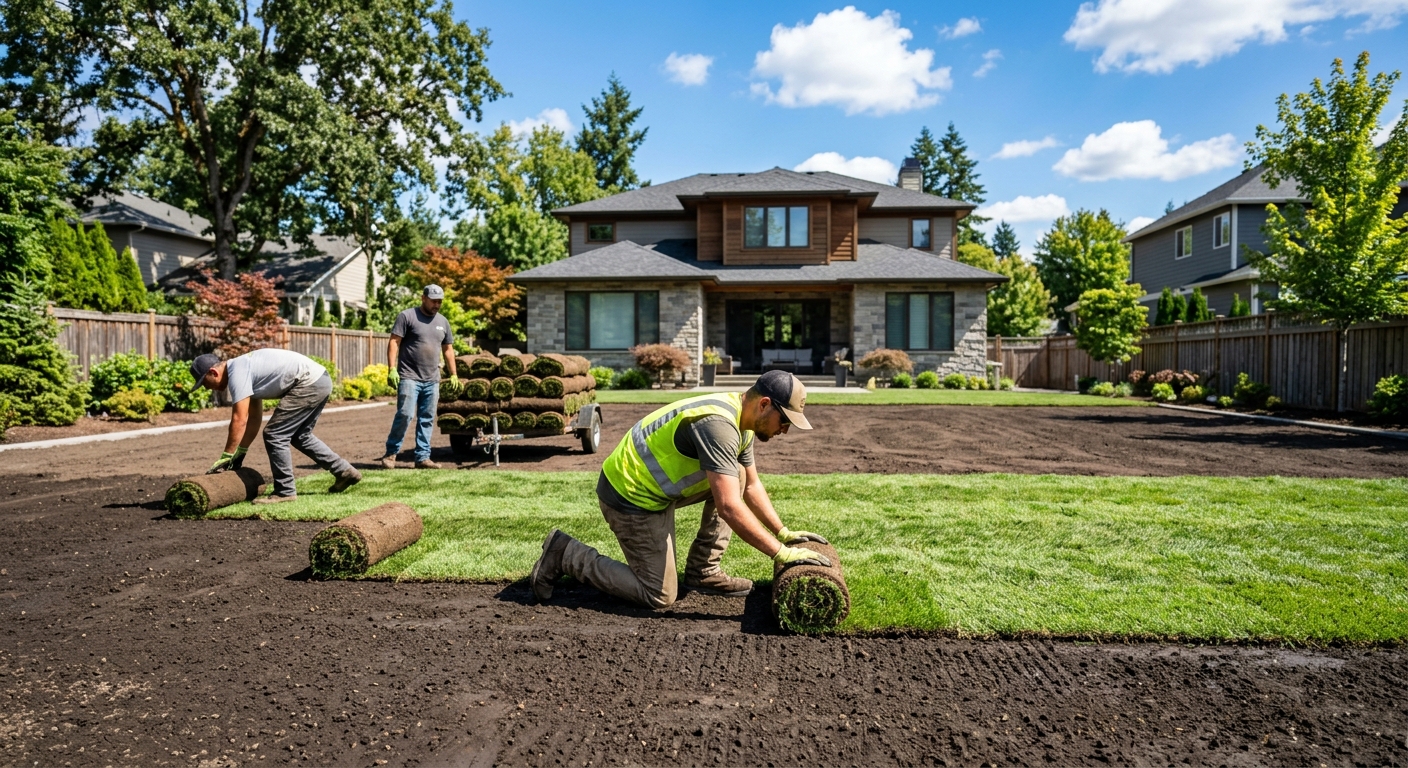
Landscaping options and costs in Church-Yonge Corridor
In Church-Yonge Corridor, homeowners typically balance curb appeal with practical upgrades—because this pocket of Toronto has a lot of mature housing stock, dense infill, and smaller side yards where access (and disposal) can drive labour. With a total population of 31,340 (Statistics Canada, 2021 Census), the area also has steady demand for walkways, patios, and garden refreshes that can be installed during the short, reliable working window from roughly May to October. Many properties here sit on detached lots with yard space, which makes larger “softscape first” projects more common than in purely condo-dominant neighbourhoods.
Cost is shaped by GTA climate and soil: Church-Yonge Corridor is mainly in hardiness zones 6a–7a, so we choose plants that can handle winter lows near –23 to –18°C, then survive hot, often humid summers. Freeze–thaw cycles are a structural cost driver too—so patios, steps, and retaining walls need proper granular base depth, drainage, and sometimes geogrid. Local clay and fill soils often require excavation, soil amendment, and careful grading to prevent water from pooling near foundations. Contractor availability is strongest during spring install ramp-up (after frost), which can affect scheduling and sometimes pricing.
Trade demand is especially high around Yonge–Finch and the surrounding North York pockets where families frequently update front walks, install interlocking patios, and replace tired lawns with more durable garden beds. From there, the best way to compare options is the table below, starting with full design-and-install packages and moving through hardscape and planting scopes.
| Service |
Description |
Season |
Price Range |
| Full landscape design and installation |
Site visit, concept plan, grading/drainage strategy, plant list, soil amendments, and installation of softscape + hardscape |
May–October |
$8,000–$40,000 |
| Sod installation (supply, grade, lay, roll) |
Remove old turf, rough grade, topsoil/compaction as needed, sod delivery and laying, light rolling and initial watering plan |
Late April–October (best in spring/early fall) |
$2,500–$8,000 |
| Lawn seeding (grade, seed, starter fertilizer) |
Fine grading, seed selection, starter fertiliser, raking/rolling, and establishment care guidance |
April–June and late August–September |
$1,200–$4,500 |
| Interlocking patio or walkway |
Excavation, compaction, granular base, edging, interlocking stone, and jointing sand |
May–October |
$6,000–$30,000 |
| Retaining wall (interlocking block) |
Layout, excavation, base/gravel or engineered footing approach (as required), block installation, drainage behind wall |
April–October |
$6,000–$25,000 |
| Tree and shrub planting |
Soil preparation, planting holes, amendment/topdressing, staking (when needed), watering plan |
Spring and fall (often best root establishment) |
$800–$6,000 |
Prices are estimates only and vary by project scope, site access and material selection.
What affects the price of landscaping in Church-Yonge Corridor
Even when two neighbours ask for the “same” landscape update in Church-Yonge Corridor, quotes can swing by 30–50% across Toronto and Ontario. The biggest reasons are how much preparation is hidden under the top layer—grading, soil condition, drainage, and the frost-safe base required for patios and walls. Labour rates are also higher in the GTA, and contractors often price for risk: navigating tight driveways, hauling soil and stone away, and working around existing utilities.
Climate and working season drive both plant costs and labour productivity. In southern Ontario (zone 5–6), we have a moderate growing season with dry spells in summer that make watering strategy important. In the GTA’s zone 6a–7a context, we design for winter lows around –23 to –18°C, which means plant choices (hardy shrubs and woody structure) and proper mulching matter. In contrast, Prairie regions (zone 2–4) typically demand more drought- and wind-tolerant planting and often see shorter working seasons; that can reduce design complexity but increases survival-focused material choices. Coastal BC’s longer growing season supports lush palettes, but heavy-rainfall areas still require drainage planning; the dry BC interior’s restrictions shift budgets toward drip irrigation and xeric planting.
Two concrete Church-Yonge Corridor examples: (1) a clay-heavy front yard that needs re-grading and a subdrain can push a project from the lower end of a patio budget toward the high end of the $6,000–$30,000 band because excavation and base work expand. (2) replacing a small lawn patch with sod—often the $2,500–$8,000 range—can become less “worth it” if drainage issues remain, because new turf won’t establish evenly. Finally, housing age matters: older properties often have compacted fill and older drains, so soil amendment and drainage corrections can add thousands—especially when excavation depth must accommodate freeze–thaw stability.
| Price Factor |
Why It Matters |
Cost Impact |
| Yard size in sq ft — the primary cost driver for softscape |
More area means more soil, edging, seed/sod, mulch, and labour hours |
Higher area can add thousands quickly (softscape scales linearly) |
| Grading and drainage work — slope corrections add significant cost |
Fixing pooling near foundations and run-off patterns requires excavation and re-shaping |
Often the difference between “basic refresh” and “major site works” |
| Drainage bed or French drain installation |
Improves water movement during storms and reduces freeze–thaw damage risk |
Can meaningfully increase total price on clay soils |
| Plant material tier — native shrubs vs. ornamental vs. mature specimen trees |
Size at planting and how long growers have nurtured specimens drives material cost |
Smaller native beds tend to be budget-friendlier than feature trees |
| Hardscape vs. softscape ratio — walls and patios cost more per sq ft than lawn |
Patios and retaining walls require deeper excavation, base layers, and heavier materials |
Shifts project toward the mid-to-upper hardscape bands |
| Irrigation system design and installation |
Even in zone 6a–7a, dry summer weeks may require targeted watering zones |
Upfront cost increases but can reduce plant losses and maintenance |
| Soil amendment and topsoil required |
Clay and fill often need improved structure and drainage to support roots |
Can add cost when there’s no suitable native top layer |
| Tree removal or stump grinding before new planting |
Impacts excavation, hauling, and sometimes re-routing utilities |
Often a surprise cost if not scoped early |
Permits & regulations in Ontario
In Ontario, most routine landscaping—planting beds, sodding, seeding, and most softscape work—typically does not require a building permit. That said, retaining walls are the common exception. In many Ontario municipalities, retaining walls above a height threshold of about 1.0 m (3.3 ft) generally require a building permit, and some projects may also require engineered drawings depending on height, soil conditions, and surcharge loads. Since Church-Yonge Corridor is within Toronto’s broader permitting environment, your contractor should confirm the exact threshold and process for your address before digging footings.
Homeowners also need to be aware that changes to lot grading can trigger requirements—especially where grading affects drainage patterns toward neighbouring properties or storm sewer connections. Regardless of permits, always confirm utility locates before digging planting holes, installing French drains, or excavating for wall footings. Calling to locate underground services is a safety step and helps avoid costly repairs.
To verify your contractor’s credentials in Ontario, do this step-by-step: (1) check the company’s business registration and any applicable provincial licensing/registration information through official online registries; (2) request a Certificate of Insurance showing current liability coverage and that landscaping-related work is included; (3) verify WSIB/WCB clearance (coverage/clearance letter) to confirm workers are protected; (4) ask who is responsible for permits if required (engineer sign-off and permit submissions), and confirm waste disposal is included in the written scope.
Planning a landscape that thrives in Church-Yonge Corridor's climate
Planning a yard that thrives in Church-Yonge Corridor starts with working with the local hardiness zone and Toronto’s frost-and-moisture reality. The area sits largely in zones 6a–7a, with winter lows near –23 to –18°C and freeze–thaw cycles that can heave poorly built surfaces. On top of that, summer can be hot and humid, but dry spells still happen—so the “best” yard is one that both survives winter and doesn’t demand constant hand-watering.
1) Plant selection: choose native and zone-appropriate species that can handle winter without heavy protection. This reduces annual losses and lowers ongoing watering. 2) Sod vs. seed: sod gives instant coverage, but it costs about 3–4x more per sq ft than seeding because you’re paying for mature turf and more intensive install time. 3) Drainage and grading: Toronto clay and fill can trap water near foundations; even a beautiful bed can fail if water pools and freezes. 4) Hardscape base preparation: patios, paths, and retaining walls need base depth and compaction designed for frost stability—meaning proper granular layers and drainage strategy behind walls. 5) Low-maintenance design: use mulched shrub borders, perennial structure, groundcovers, and thicker mulch to reduce weeds and annual labour.
For water context, consider a rain garden in a low spot or a strategically placed xeric-style planting pocket on drier edges—without going fully “desert” in Southern Ontario. A simple dollar example: if a 300 sq ft front section can be seeded for roughly a fraction of the cost of sod, you may save thousands while still getting long-term performance—provided you fix grading and drainage first. If drainage is left alone, sod money tends to get wasted in patchy areas.
| Element |
Climate Consideration |
Maintenance Level |
Price Band |
| Sod lawn installation |
Best in spring/early fall to establish before winter; needs consistent moisture during rooting |
Moderate during establishment, lower after |
$2,500–$8,000 |
| Native perennial garden |
Zone-appropriate plants handle –23 to –18°C lows; mulch helps with freeze–thaw protection |
Low to moderate (weeding first year, then light upkeep) |
$800–$4,500 |
| Mulched shrub border |
Denser planting reduces soil exposure; helps prevent summer crusting and winter temperature swings |
Low after establishment; seasonal pruning |
$1,200–$5,000 |
| Interlocking stone patio |
Freeze–thaw demands correct base prep, drainage slope, and compaction |
Low (periodic joint sand top-up) |
$6,000–$30,000 |
| Retaining wall (block) |
Requires drainage behind wall and stable base depth below frost influence |
Low (inspect after heavy winters) |
$6,000–$25,000 |
| Drip irrigation system |
Targets watering for hot, humid summers and dry spells while reducing waste |
Low (seasonal adjustments and occasional checks) |
$1,500–$7,000 |
How to choose a landscaping contractor in Church-Yonge Corridor
Choosing the right landscaping contractor in Church-Yonge Corridor is mainly about verifying coverage, then making sure you’re comparing the same scope across quotes. First, verify Ontario credentials: ask for the company’s liability insurance certificate (make sure it covers landscaping/contracted work), and request proof of WSIB/WCB clearance for worker protection. You should also check online business information for the contractor’s standing and ensure the contact name matches the quote paperwork. If the work involves any retaining wall permitting or engineered elements, confirm they’ve handled similar Ontario submissions before.
Next, get 2–3 itemised written quotes—not just lump sums. You want line items for excavation/base, drainage components (if any), soil/topsoil, stone or sod quantity, plant count and size, disposal, and labour. Carefully review what’s excluded: for example, is hydro/utility locate included, is waste hauling included, and will they repair damaged lawn/sidewalk after installation? Permits—if required for your retaining wall—should be clearly assigned: who pulls the permit, who pays fees, and what documentation you receive.
Warranty also matters. Ask for the workmanship warranty length, what product/manufacturer warranties apply to plants or materials, and whether the warranty is transferable if you sell. For payment, never agree to more than about 10–15% upfront; hold back the remainder until substantial completion and cleanup are verified. Finally, insist on a written timeline with a start date and completion estimate—GTA projects can stall when frost lifts late or deliveries get delayed.
- Confirm the contractor provides a detailed, itemised quote (labour + materials), not a vague lump sum.
- Ask who is responsible for utility locates and whether they’re included in the price.
- Verify liability insurance certificate is current and request WSIB/WCB clearance.
- Check whether the quote includes excavation, disposal/hauling, and site protection (fencing/boards).
- Confirm base build-up specs for patios/walks (granular layers, compaction, slope to drainage).
- Ensure retaining wall quotes include drainage behind the wall (not just blocks).
- Ask for exact plant quantities and sizes (e.g., container size or caliper), plus acceptable substitutions.
- Confirm sod/seed schedule and what happens if weather delays installation.
- Get written scope for topsoil depth and soil amendment type when clay/fill is present.
- Clarify exclusions: tree removal, stump grinding, existing drainage repairs, and rodent/soil issues.
- Request warranty details in writing (workmanship, plant replacement policy, duration).
- Use a payment schedule with a holdback until final walk-through and cleanup are done.
Concrete red flags in Church-Yonge Corridor: a contractor who won’t provide insurance/WSIB documents, itemised pricing that’s missing base/grading or disposal details, promises to “start immediately” without a written schedule, refusal to include drainage provisions behind walls, and contracts that ask for large deposits (over 15%) or provide only verbal warranty terms.
Frequently asked questions — landscaping in Church-Yonge Corridor
Do I need a permit for a retaining wall in Ontario?
In Ontario, most planting and softscape work (like sodding and garden beds) usually doesn’t require a permit, but retaining walls commonly do once they exceed a municipal height threshold—often around 1.0 m (3.3 ft). Because Church-Yonge Corridor falls under Toronto-area permitting practice, you should confirm the exact threshold and requirements for your address before a contractor excavates footings. A reputable contractor will include permitting responsibilities in the quote and explain whether engineered drawings may be needed based on soil conditions and wall height. If your plan doesn’t mention permits at all, ask directly: “Is the permit included, and who applies?” Also ensure utility locates are done before any digging for block bases or drainage.
How do I improve drainage in my yard?
Drainage problems are one of the biggest cost swings in Church-Yonge Corridor because clay and fill soils can hold water and fuel freeze–thaw damage. The most effective approach starts with grading: directing runoff away from foundations and eliminating low, pooling spots. If water persists, we typically add a drainage bed or French drain that ties into a safe outlet per the site plan. For yards that stay wet after rains, soil amendment and topsoil depth can matter too—roots need structure to prevent waterlogging. If you’re only replacing lawn without addressing grading, you’ll often see patchiness and rework costs. In many cases, drainage work is the reason a project climbs toward the higher end of the hardscape band (for example, $6,000–$30,000 for patios/walks when base and drainage are expanded).
What is xeriscaping and does it suit Church-Yonge Corridor?
Xeriscaping is a landscaping approach that reduces water use by selecting drought-tolerant plants, using efficient mulching, and often incorporating drip irrigation and careful soil preparation. In Church-Yonge Corridor and southern Ontario, xeriscaping can suit certain areas—like sunny side yards that dry out quickly—but you usually don’t want a full “desert yard” because winters are cold and plants must handle freezes down near –23 to –18°C. A more practical strategy is “low-water design”: native perennials and shrubs where you can, plus xeric planting pockets paired with mulch, rain-garden style capture in low spots, and drip irrigation for targeted watering during summer dry spells. If irrigation is included, it increases upfront cost, but it can improve survival rates and reduce hand-watering—especially after new sod or seed establishment.
How do I plan a low-maintenance yard?
A low-maintenance yard in Church-Yonge Corridor usually comes from designing the right plant density and reducing bare soil. Start with mulched shrub borders and native perennial gardens—they outcompete weeds once established and fit Ontario winter conditions. Use groundcovers and a thicker mulch layer to reduce annual weeding, and group plants by water needs so you’re not over-watering some areas while others struggle. For softscape, many homeowners find that sod or seed works best when drainage and grading are already correct; otherwise, you spend time on repairs. Hardscape can also help: a properly built interlocking patio adds structure and makes yard maintenance simpler (sweeping and joint maintenance instead of constant lawn mowing), commonly in the $6,000–$30,000 range depending on size and base preparation. Finally, schedule pruning and bed refreshes for two windows: late spring and early fall.
How deep should a retaining-wall base be for local frost?
For Ontario retaining walls, the “right” base depth depends on wall height, soil type, and whether the wall requires engineered footing. In general, you need a stable foundation built below the zone where frost movement can destabilize the base. That’s why we don’t use guesswork: we design the wall base and compaction strategy so it remains stable through freeze–thaw cycles common in Church-Yonge Corridor. If your wall is above the typical 1.0 m (3.3 ft) permitting threshold, plan on a stricter design approach and possibly engineer involvement. Before construction, a proper contractor will assess subsoil, specify base/gravel layers, and include drainage behind the wall; drainage is just as important as depth because trapped water increases pressure and freeze effects.
How much does professional landscape design cost?
Professional landscape design pricing varies widely based on how detailed the plan is and whether it’s tied to installation. In the Church-Yonge Corridor market, design and installation packages often fall within broad project bands—commonly $8,000–$40,000 when design includes grading/drainage strategy, plant specs, and installation. If you’re separating design from build, some contractors offer concept plans that cost less than full construction documentation; however, the “value” is highest when you need site grading help or want a durable hardscape layout that accounts for Toronto’s freeze–thaw and clay soils. Always ask what the design scope includes (site measurements, soil/drainage notes, plant list quantities, and whether contractor pricing is locked to the plan). A good design helps prevent rework—often saving money compared to paying for multiple rounds of installation changes.