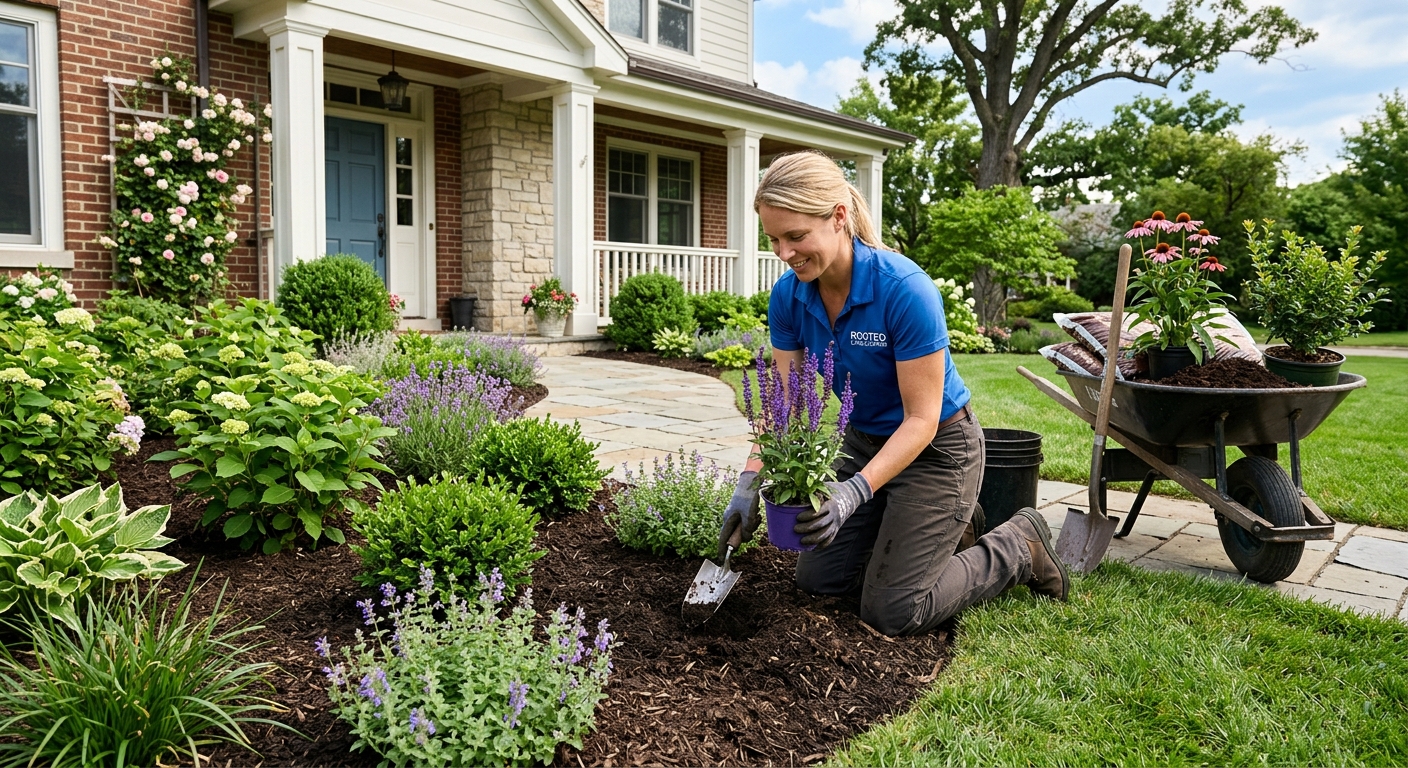
Landscaping options and costs in Etobicoke
Etobicoke homeowners typically have more yard scope to work with than many urban cores, and that shapes the way landscaping budgets get planned. In a 2021 snapshot, Etobicoke’s population was about 365,000 (Statistics Canada, 2021 Census), which helps explain why there’s strong contractor capacity—but also why schedules can tighten quickly around spring grading season. In neighbourhoods with older housing stock and established streetscapes, like Etobicoke Creek / Humber Bay Shores and parts of West Deane Park, driveways, patios, and drainage corrections are commonly requested because they’re where water pooling and freeze–thaw movement show up first.
On cost, Toronto-area landscaping is driven by climate and soil: we’re working in plant hardiness zones 6a–7a with winter lows often around –23 to –18°C, plus frequent freeze–thaw cycles. That means retaining walls, patios, and steps require properly compacted granular bases, drainage layers, and geotechnical-aware footing depth—more labour and more material than milder climates. At the same time, installation timing matters: the frost-free window roughly runs May to October, so work has to be coordinated around weather and municipal water management priorities.
Because yard sizes, soil conditions (often clay and fill), and how much hardscape you add can vary a lot street to street, two “similar” projects can land far apart. The table below gives typical Toronto-tier ranges so you can compare proposals before you choose design style, materials, and scope.
| Service |
Description |
Season |
Price Range |
| Full landscape design and installation |
Site walk, concept + planting plan, grading/drainage coordination, softscape + hardscape installation |
May–October |
$8,000–$40,000 |
| Sod installation (supply, grade, lay, roll) |
Topsoil/grade prep, sod delivery, rolling, starter fertilizer, establishment watering guidance |
April–June; Sept–Oct |
$2,500–$8,000 |
| Lawn seeding (grade, seed, starter fertilizer) |
Fine grading, seed blend, starter fertilizer, light raking/rolling; first-season care |
April–June; Sept |
$1,500–$5,500 |
| Interlocking patio or walkway |
Excavation, base + geotextile, joint sand, interlock/pavers, edging, leveling |
May–October |
$6,000–$25,000 |
| Retaining wall (interlocking block) |
Wall layout, excavation, base stone, compacted backfill, drainage management, block installation |
May–October |
$6,000–$30,000 |
| Tree and shrub planting |
Soil amendment, planting pits, staking if needed, mulch rings, watering plan |
April–May; Sept–Oct |
$800–$6,000 |
Prices are estimates only and vary by project scope, site access and material selection.
What affects the price of landscaping in Etobicoke
In Etobicoke and across the wider Toronto market, the same “headline” landscaping job can vary by 30–50% because the quote is usually made up of several cost drivers: site conditions, excavation depth, drainage requirements, and how much of the work is hardscape versus softscape. Two yards that both need “a patio and garden cleanup” can still differ dramatically if one has heavy clay fill, poor drainage, and tight access down a narrow side passage—each adds labour, equipment time, and granular materials. That’s why you’ll often see a design-and-install package land anywhere from the lower end of the $8,000–$40,000 band, while smaller refresh jobs sometimes sit closer to the mid or upper parts of the retaining wall and planting ranges.
Climate and season shape the work too. In our plant hardiness zones 6a–7a, frost dates help define the working season, and freeze–thaw cycles influence how deep footings and wall bases must go. Prairie regions (Zone 2–4) typically need drought-tolerant, wind-hardy planting and more “hard-working” designs because the working season is shorter and dry stretches are common. Coastal BC (Zone 7–8) can support lush broadleaf evergreens and year-round structure, but heavy rainfall still requires drainage discipline. Dry BC interior and some Alberta areas often rely on drip irrigation and xeric planting due to water limits, which can change irrigation and plant palette costs.
Concrete Etobicoke examples: (1) if your yard has a slope toward the house or foundation, grading correction plus proper subdrains increases costs before you even get to the patio surface. (2) If you’re adding an interlocking walkway over existing soil without excavation depth and compaction checks, you often end up paying again later for settlement repairs. (3) If you need mature trees or larger caliper shrubs, the $800–$6,000 planting range can climb quickly because larger stock costs more and can require extra labour for handling and staking—especially around older lots that may have buried utilities or compacted fill.
| Price Factor |
Why It Matters |
Cost Impact |
| Yard size in sq ft — the primary cost driver for softscape |
More area means more topsoil, amendments, seed/sod, labour time, and materials |
Often the biggest driver; can swing total cost by 20–60% |
| Grading and drainage work — slope corrections add significant cost |
Correct runoff protects foundations and reduces puddling during Toronto rain events |
Can add a large chunk to “lawn only” projects |
| Drainage bed or French drain installation |
Improper drainage leads to winter freeze–thaw lift and soft base failure |
Material + excavation labour; commonly a major add-on |
| Plant material tier — native shrubs vs. ornamental vs. mature specimen trees |
Larger/more specialized stock costs more and takes more labour to install |
Can move costs from the lower to upper planting range |
| Hardscape vs. softscape ratio — walls and patios cost more per sq ft than lawn |
Hardscape requires excavation, base, compaction, stone/interlock, and edging |
Shifts most budgets toward retaining-wall and interlock bands |
| Irrigation system design and installation |
Even small zones require trenches, heads, backflow prevention planning, and controller setup |
Can increase project budgets substantially |
| Soil amendment and topsoil required |
Clay/fill often needs amendment depth for roots and turf establishment |
Adds hauling, material, and spreading labour |
| Tree removal or stump grinding before new planting |
Access and stump size determine equipment time and disposal |
Can add days of work and lift overall totals |
Permits & regulations in Ontario
In Ontario, most typical planting and softscape work—like sodding, lawn seeding, shrub planting, and groundcover installation—generally does not require a permit. Where permits become relevant in Etobicoke is usually with retaining walls above a height threshold, which in many municipalities is around 1.0 m (3.3 ft). Some projects may also require additional review if the design involves engineered elements.
Changes to lot grading that affect drainage patterns toward neighbouring properties or storm sewer connections can also trigger approval requirements. As a practical step, call for utility locates before digging planting holes or any wall footings (even for small trenches), because a surprise cable or service line can stop the job and create replacement costs. For water rules, confirm any local irrigation and water-use bylaws; while Ontario is not uniformly “ban-tight” like some dry regions, rules can tighten during drought-like conditions or heat waves.
How to verify a contractor’s Ontario compliance, step by step: (1) ask for the contractor’s business information and confirm they are properly registered/eligible for the scope they’re selling; (2) request a current certificate of insurance (liability) showing the correct insured party and active dates; (3) ask for confirmation of WSIB coverage for workers (or evidence that the contractor complies through the appropriate coverage status). Keep copies of the COI and any clearance documentation, and ensure the insurance limits are reasonable for excavation, machinery, and hardscape work.
Planning a landscape that thrives in Etobicoke's climate
To plan a yard that thrives in Etobicoke, you design around the reality of our hardiness zone (6a–7a), Toronto’s seasonal rainfall pattern, and freeze–thaw cycles—not against it. Start with plant selection: choose zone-appropriate and, where it makes sense, native varieties that handle winter lows near –23 to –18°C without constant fuss. That usually reduces watering needs and winter protection costs compared with more delicate ornamentals.
Next, decide between sod and seed with your timeline and budget in mind. Sod gives instant visual coverage, but it typically costs 3–4x more per sq ft than seeding once you factor in supply and installation labour. If you can accept a greener “work in progress” for one season, seeding often gives better value and still performs well with proper soil preparation and starter fertilizer. If you need a finished look for a specific event or resale timing, sod is where that premium is justified.
Drainage and grading are the make-or-break items in Toronto. Pooling water around foundations invites foundation moisture and winter heave. For hardscape, patio and retaining wall bases must be built for frost stability: adequate depth, compacted granular layers, and drainage layers to manage water movement.
Finally, use low-maintenance strategies that don’t compromise curb appeal: mulched shrub borders, groundcovers, and perennial structure with 2–3 repeat species for cohesion. For water-smart options, consider a small rain-garden pocket downspout collection or a xeriscape-style planting zone in areas that get less consistent irrigation—while still selecting hardy Ontario plants.
A simple budget example: if you’re replacing a worn lawn, seeding a modest front area might fit closer to the mid-to-lower portion of the lawn seeding band, while switching to sod could push you into the upper lawn installation range. That difference is “worth it” when you need immediate curb appeal or when erosion control requires fast cover.
| Element |
Climate Consideration |
Maintenance Level |
Price Band |
| Sod lawn installation |
Rapid establishment helps resist summer stress and winter exposure; proper grade prevents puddling |
Medium (watering/first-season care) |
$2,500–$8,000 |
| Native perennial garden |
Native and zone-appropriate species handle cold and spring thaws better; mulch protects crowns |
Low to medium (spring tidy, occasional weeding) |
$1,200–$6,000 |
| Mulched shrub border |
Good winter structure; mulch buffers freeze–thaw and moderates moisture |
Low (1–2 mulch refreshes per year) |
$1,000–$5,500 |
| Interlocking stone patio |
Freeze–thaw requires correct base depth, compaction, and drainage layers |
Low (sweep, occasional joint sand top-up) |
$6,000–$25,000 |
| Retaining wall (block) |
Backfill, drainage, and frost-stable base depth protect against movement |
Low (annual inspections for shifting) |
$6,000–$30,000 |
| Drip irrigation system |
Targeted watering improves plant hardiness and reduces waste during humid summers |
Medium (season start/close adjustments) |
$1,800–$8,500 |
How to choose a landscaping contractor in Etobicoke
Start by verifying licensing and coverage the way Ontario homeowners should. Ask for their Ontario business registration details (and confirm eligibility for the type of work being quoted). Then request a current certificate of insurance—liability insurance should match the project location and be valid for the full build window. For worker protection, ask about WSIB coverage (or equivalent coverage status where applicable). You can verify coverage details by checking the WSIB/coverage documentation they provide, and by reviewing that the COI lists the correct legal name and addresses. Don’t accept “we’re covered” without documents you can keep.
Next, collect 2–3 itemised written quotes. The best quotes separate labour and materials, showing excavation quantities, base stone depth, drainage elements, plant list/unit sizes, disposal, and any regrading work. Watch for scope gaps: ask if permits are included (where required), whether disposal/soil hauling is included, and what happens if excavation reveals unsuitable fill.
Warranty matters too: ask for the workmanship warranty length (for bases and installation), whether there’s a manufacturer warranty on specific products (like retaining wall block or sod/seed), and whether warranties are transferable if you sell your home. Payment schedule should be conservative—typically never more than 10–15% upfront. Hold back a portion until completion checks are done (grade lines, drainage function, plant health at handover).
Finally, timelines should be written. Get a start date and a completion estimate, plus weather contingencies given Toronto’s freeze–thaw and spring rain variability. A contractor who won’t put dates and exclusions in writing usually can’t control the project flow.
- Request itemised labour/material breakdown (no single “lump sum” only).
- Confirm soil disposal and hauling are included (or priced) in writing.
- Ask for drainage scope in detail: subdrain, socked pipe, outlets, and grading targets.
- Get the plant list with sizes (height/canopy) and quantities, not just “shrubs”.
- Verify insurance documents: COI dates, insured party name, project address.
- Ask for WSIB clearance/coverage documentation for working crews.
- Request start/completion dates and the “weather delay” policy.
- Clarify what’s excluded: underground locates, tree removal stump grinding, existing fence repairs.
- Confirm base prep specs for hardscape (geotextile, compaction method, edge restraints).
- Ask about maintenance instructions at handover (watering schedules, mulching depth).
- Review warranty terms: workmanship length and what voids it.
- Holdback payment plan: keep remaining balance until punch list is completed.
Red flags in Etobicoke: (1) “We don’t need insurance/WSIB for small jobs,” (2) quotes that don’t specify drainage/grading details or base depth for patios/walls, (3) no written scope for disposal and restoration (grass/clean-up), (4) payment requests above 10–15% upfront without a signed schedule, and (5) vague plant lists (“assorted evergreens”) instead of named species and sizes.
Frequently asked questions — landscaping in Etobicoke
How deep should a retaining-wall base be for local frost?
In Etobicoke, retaining-wall stability is about managing frost movement and water pressure. For most block retaining walls, the base is commonly designed to sit on well-compacted granular materials with depth determined by wall height, soil conditions, and drainage plan—not just a single one-size number. Because freeze–thaw cycles are significant in southern Ontario, the wall needs an engineered or spec-based excavation depth, plus proper backfill compaction and drainage (often a granular drainage zone behind the wall). If you’re near the typical 1.0 m retaining-wall permitting threshold, request the contractor’s proposed base and drainage details in writing and confirm whether any engineered drawings are required. A reputable contractor should be able to explain their frost stability approach rather than “guessing” based on photos.
How much does professional landscape design cost?
Professional landscape design in the Toronto area commonly ranges from a modest design fee to being bundled into a full design-and-install project. For budgeting purposes, Etobicoke homeowners typically see total project pricing align with the broader $8,000–$40,000 band when design is included with installation scope (grading, planting, and hardscape as needed). If you’re paying for design only, quotes should separate design labour from construction costs so you can compare options fairly. In neighbourhoods with older lots and drainage issues, good design usually costs less than fixing a poorly graded patio or wall later—especially in clay/fill soils where pooling can show up quickly after spring thaw. Always ask what the design deliverables include (plant list, hardscape layout, and grading/drainage notes).
How do I compare landscaping quotes?
Compare quotes like-for-like by checking scope first: grading targets, drainage work, base prep specs for interlocking, and whether disposal/soil hauling is included. In Ontario, rainfall and freeze–thaw make drainage and compaction critical, so a quote that is cheaper but thinner on drainage layers can lead to settlement and rework. Ask for an itemised breakdown of labour and materials (even if totals are higher): plant sizes, quantities, and type of stone/base are especially important. Also confirm season and timeline—spring work is weather-dependent around Etobicoke, and gaps can inflate labour rates. If one proposal is close to the “smaller” range while another is closer to the $6,000–$30,000 retaining-wall/hardscaping tier, make sure you’re not comparing different wall heights or different excavation depth assumptions.
How long does a landscaping project take in Etobicoke?
Typical timelines in Etobicoke depend on scope and weather, but many backyard refresh projects progress in phases. A lawn-only sod install can sometimes be completed in a day or two once prep is done; planting and mulching often fit into 1–3 working days. Interlocking patios and walkways usually take longer because excavation, base build, compaction, and laying patterns require time—often spanning several working days. Retaining walls add more complexity with excavation, base stone, backfill compaction, and drainage, so they can take a week or more depending on wall length and access. Spring and early summer weather can extend timelines due to saturation in clay soils and scheduling around other jobs. Always require a written start date, an estimated completion window, and a clear “weather delay” policy.
What is the best grass type for a Etobicoke lawn?
For Etobicoke, the “best” choice depends on sun, foot traffic, and how you plan to maintain the lawn in heat and humid summers. Many homeowners do well with cool-season turf types because they stay active during the Ontario growing season and handle winter conditions better than warm-season grasses. If your lawn receives moderate to full sun, a blended approach often performs more reliably than a single variety. If the yard is shaded or struggles with thinning, you may need a shade-tolerant blend and a better overseeding/aeration routine. Regardless of type, the performance difference comes from preparation: proper grading, topsoil quality, and a consistent watering schedule during establishment. If you’re redoing a lawn, compare sod versus seed options: sod is typically faster to green up, while seeding can be more economical within the lawn seeding price band.
When should I aerate and overseed my lawn in Etobicoke?
In Etobicoke and the Toronto area, the most reliable aeration/overseeding window is usually late summer into early fall—when the ground is still warm enough for seed germination but temperatures cool enough to reduce stress. A common approach is to aerate once, then overseed with a compatible seed blend and apply starter fertilizer, followed by light top-dressing and consistent watering until establishment. If you aerate too early in hot weather, seedlings can struggle; if you do it too late after cold sets in, you risk poor germination. For many homeowners, doing aeration and overseeding every 1–3 years is enough to keep turf dense, especially if you have pets, regular mowing, or thin patches. If you’re comparing turf rebuild options, remember sod costs more upfront but gives immediate coverage, while overseeding fits better when you can wait through one growth cycle.