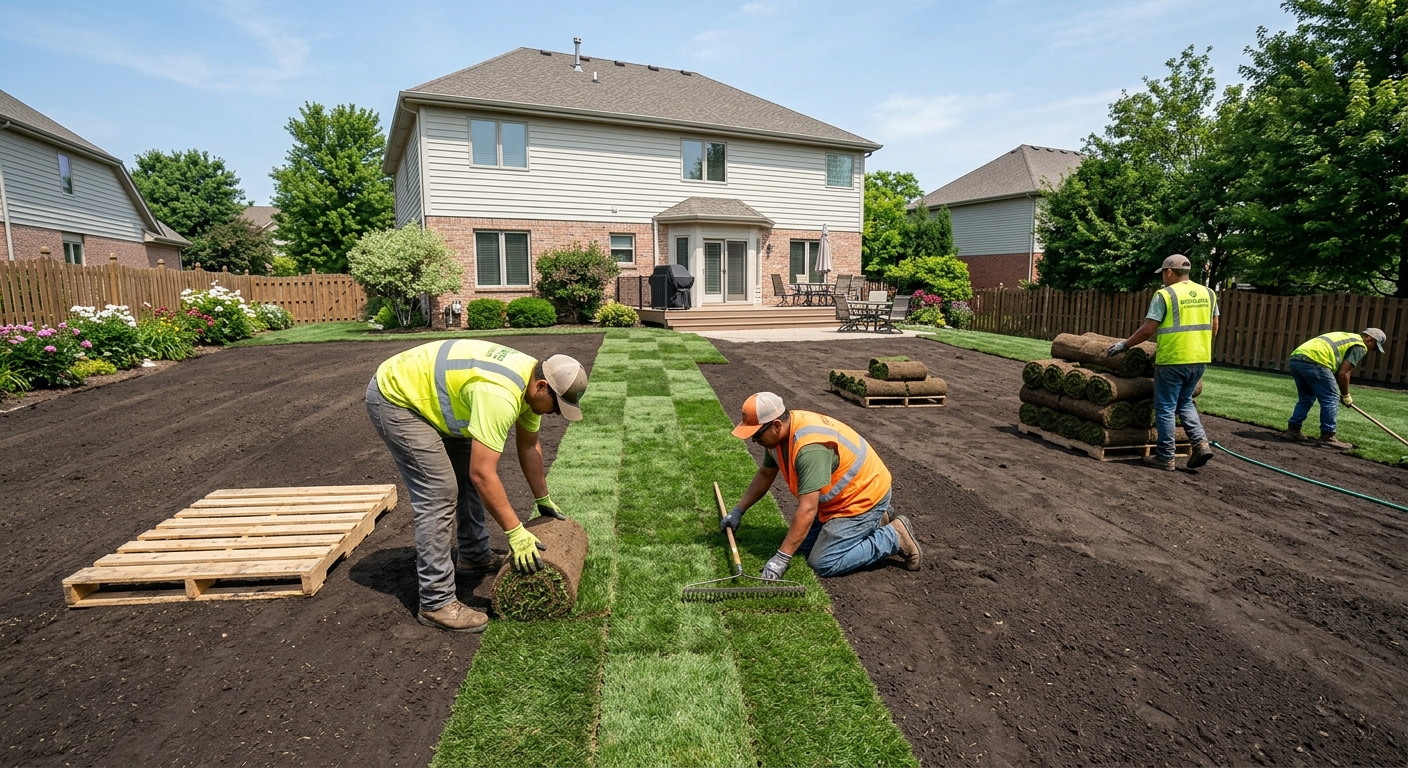
Landscaping options and costs in Cliffcrest
Cliffcrest is a mature neighbourhood on the Toronto side of the GTA, where many lots sit on deeper residential streets with solid, single-detached housing stock and real yard space to work with. In the 2021 Census, Cliffcrest had 15,935 residents (Statistics Canada, 2021 Census), and that steady homeowner base supports a dependable pool of local crews—especially around the mid-to-late spring install window. Pricing still moves with scope, but you’ll often see the biggest swings because GTA winters bring frequent freeze–thaw cycles and because local clay and fill soils can need excavation, amendment, and drainage work before plants or hard surfaces can be installed confidently.
Toronto-area landscaping is also shaped by plant hardiness zones 6a–7a, so we select woody plants and perennials that can handle winter lows roughly between –23°C and –18°C, while also tolerating hot, often humid summers. That means better survival rates for zone-appropriate planting, but it also means we plan timing carefully—installing too late can increase winter desiccation risk. If your property is near the busiest retrofit corridors in Cliffcrest (commonly where access is tight and front-yard curb appeal drives landscaping demand), you’ll likely be competing for crew availability—another reason earlier scheduling can matter.
To compare realistic budgets for common projects in Cliffcrest, use the ranges below as a planning baseline, then we can tighten the numbers once we understand your yard size, drainage situation, and finish level.
| Service |
Description |
Season |
Price Range |
| Full landscape design and installation |
Site visit, grading/drainage plan (if needed), plant layout, softscape and hardscape build-out, labour + typical materials |
May to October |
$8,000–$40,000 |
| Sod installation (supply, grade, lay, roll) |
Remove existing grass where required, fine-grade, soil amendment, sod placement and rolling, start-up watering guidance |
Late April to early July (or late Aug to early Sept where conditions allow) |
$2,500–$8,000 |
| Lawn seeding (grade, seed, starter fertilizer) |
Light grading, seed selection, starter fertilization, topdressing (as required), initial watering schedule |
Spring (Apr–May) or fall (Aug–Sept) |
$900–$3,500 |
| Interlocking patio or walkway |
Excavate, compacted base and edging, bedding sand, pavers/stone, jointing, slope for drainage |
May to October |
$6,000–$30,000 |
| Retaining wall (interlocking block) |
Wall layout, excavation to footing depth, compacted base, block installation, weeping/drainage strategy where required |
May to September |
$6,000–$30,000 |
| Tree and shrub planting |
Soil preparation, planting layout, staking (as required), watering plan for establishment, mulch ring/border setup |
Late April to October (root-zone friendly timing) |
$800–$6,000 |
Prices are estimates only and vary by project scope, site access and material selection.
What affects the price of landscaping in Cliffcrest
In Cliffcrest and across the Toronto market, quotes for the same “size” project can swing by 30–50% because the real drivers are rarely visible from the curb: soil condition, drainage needs, base preparation for hardscapes, and the amount of labour time required to do it right under freeze–thaw conditions. In southern Ontario (plant hardiness zones 6a–7a), the frost-free window is roughly May to October, which concentrates installation demand and can raise labour rates as crews fill calendars. Retaining walls, patios, and steps need properly compacted granular bases and drainage; when clay/fill soils are involved, excavation and soil amendment can become the dominant cost.
Climate is a major reason pricing differs even between regions. Prairie regions (zone 2–4) need ultra-hardy, drought-tolerant species and often push simpler planting palettes because of shorter seasons and harsher weather, while retaining wall base depth must reach below colder frost conditions. Coastal BC (zone 7–8) supports a longer growing season and lush plant palettes, but heavy rain makes drainage design critical. Dry BC interior municipalities often require drip irrigation and xeric approaches due to water restrictions. By contrast, in Cliffcrest we design for humid summers and winter freeze–thaw, so irrigation is mainly establishment support rather than year-round survival.
Concrete examples that raise or lower cost in Cliffcrest: (1) if your site needs re-grading to shed water away from the foundation, labour and disposal can add thousands on top of base packages. (2) If you want interlocking pavers or a retaining wall, deeper base construction and proper drainage typically push the project toward the higher end of hardscaping ranges—often aligning with the $6,000–$30,000 band. (3) If you’re replacing a patchy lawn with sod instead of seeding, budget jumps are common; sod projects frequently land in the $2,500–$8,000 range depending on area and prep.
Many Cliffcrest homes were upgraded over time, so you may also be dealing with older underground services or settled grading. That can increase excavation time and the amount of base material required, even when the visible landscaping footprint seems modest.
| Price Factor |
Why It Matters |
Cost Impact |
| Yard size in sq ft — the primary cost driver for softscape |
More area means more topsoil/seed/sod, more labour hours, and more materials |
Typically increases most costs proportionally; large yards can double the total budget |
| Grading and drainage work — slope corrections add significant cost |
Correcting low spots protects foundations and prevents water pooling in spring/fall |
Often adds significant labour and disposal; can push softscape-only plans into “full install” territory |
| Drainage bed or French drain installation |
Intercepts groundwater and redirects it away from walls and landscaped beds |
Material + excavation + piping work; commonly one of the largest add-ons |
| Plant material tier — native shrubs vs. ornamental vs. mature specimen trees |
Hardiness matters in zones 6a–7a; mature specimens cost more and require careful handling |
Small planting jobs can stay near the lower bands; mature trees can swing budgets upward quickly |
| Hardscape vs. softscape ratio — walls and patios cost more per sq ft than lawn |
Patios and steps need base depth, compaction, edging, and proper slope for drainage |
Shifts totals toward the $6,000–$30,000 hardscaping range for typical front-yard footprints |
| Irrigation system design and installation |
Helps establish turf and beds in summer humidity; must be planned around freeze conditions |
Upfront system cost can be offset by reduced rework and better establishment |
| Soil amendment and topsoil required |
Clay/fill often needs improvement for root growth and stable grading |
Can add trucking, testing, and labour; increases material-heavy job totals |
| Tree removal or stump grinding before new planting |
Clears space and prevents future root issues; also affects excavation access |
Adds equipment and disposal time; can delay planting schedules |
Permits & regulations in Ontario
In Ontario, most straightforward landscaping work—like planting, sodding, lawn seeding, and typical softscape installation—normally does not require a permit. If you’re adding shrubs, mulch, groundcover, or re-seeding a lawn area, you typically can move ahead with contractor scheduling once site conditions are confirmed.
Where permits can come in: retaining walls that exceed a height threshold (often around 1.0 m (3.3 ft) in many municipalities) may require a building permit, and some projects need engineering drawings to address stability under soil and drainage loads. Also, if you’re making grading changes that meaningfully alter drainage patterns—especially toward neighbouring lots or storm sewer connections—approvals may be triggered. Before any digging, have your contractor arrange utility locates so you don’t damage gas, hydro, telecom, or water services when drilling or excavating for wall footings and drainage beds.
To verify an Ontario-licensed contractor in Cliffcrest step-by-step: (1) ask for their business name and registration details; (2) confirm they carry liability insurance (request an up-to-date certificate of insurance naming you as additional insured where applicable); (3) confirm WSIB clearance (or coverage status) for workers; (4) request the written clearance letter or proof document and check it matches the legal name you were quoted under. For excavation-heavy jobs, these checks matter even more because missteps around drainage or services can become expensive fast.
Planning a landscape that thrives in Cliffcrest's climate
In Cliffcrest, planning the yard to “fit” the climate means choosing plants for zone 6a–7a conditions and building the right drainage and base layers around Toronto’s freeze–thaw cycle. Start with plant selection: prioritize native or proven zone-appropriate species that tolerate winter lows and humid summers, and group them by sun exposure so they don’t struggle. This reduces watering needs and winter protection effort. For lawns, decide early between sod and seed. Sod gives instant coverage and erosion control, but it usually costs more because it’s labour-intensive to grade correctly and it requires careful handling and consistent watering at establishment. Seeding costs less but takes longer to look full.
Drainage and grading are critical in Toronto. Even a small slope mistake can create spring puddling, which can lead to foundation moisture concerns and stressed plantings. For hardscape, ensure proper base preparation and compaction for patio and walkway foundations; deeper frost-impacted layers reduce the risk of heaving and settlement. If you’re considering a retaining wall, pair it with a drainage strategy so water doesn’t build up behind the blocks.
For low-maintenance curb appeal, use mulched shrub borders, groundcovers, and perennials that form dense coverage—so weeds have less space to germinate. For water context, consider rain-garden elements or a cistern-fed drip setup where runoff management is part of the design. A good example: if you want immediate usability and soil stability, spending toward interlocking patios in the higher hardscape range can be justified because you’re paying for correct base layers that protect the investment. If your goal is budget-friendly improvement, seeding is often the smarter start—then you can add a perennial border over the next seasons.
With the right plan, a Cliffcrest yard can look sharp throughout the season and still be resilient through winter.
| Element |
Climate Consideration |
Maintenance Level |
Price Band |
| Sod lawn installation |
Establishment depends on spring/fall weather; must be watered consistently during hot humid stretches |
Medium (first 4–8 weeks of establishment care) |
$2,500–$8,000 |
| Native perennial garden |
Zone 6a–7a hardy perennials handle winter lows when roots are mulched and crowns are planted correctly |
Low to medium (weeding in year one, then reduced as beds fill in) |
$1,500–$6,000 |
| Mulched shrub border |
Mulch helps moderate soil temperature swings and supports moisture retention in summer |
Low (top up mulch annually; light pruning as needed) |
$1,000–$5,500 |
| Interlocking stone patio |
Freeze–thaw tolerance requires proper base depth, compaction, and drainage slope |
Low (occasional joint maintenance and sealing if specified) |
$6,000–$30,000 |
| Retaining wall (block) |
Needs correct footing depth and drainage behind the wall to avoid hydrostatic pressure |
Low (periodic checks for settling and drainage function) |
$6,000–$30,000 |
| Drip irrigation system |
Targets root zones and reduces surface evaporation during humid summers; winterization planning is essential |
Medium (seasonal adjustments and winter shut-down) |
$2,000–$7,000 |
How to choose a landscaping contractor in Cliffcrest
Choosing a contractor in Cliffcrest starts with verifying the basics—then confirming the details in writing. For Ontario coverage, ask for three things: (1) proof of liability insurance (certificate of insurance with your project address or contractor name and coverage limits); (2) proof of WSIB coverage (or a clearance letter, depending on their situation) for workers; and (3) clarity on who is responsible for any sub-trades like excavation or tree work. Check that the certificate and WSIB documents are current and match the legal business name on the quote, not just a brand name on a truck.
Next, request 2–3 itemised written quotes that break labour and materials by line item—so turf prep, base materials, drainage components, and disposal are visible rather than hidden in a lump sum. Read the scope carefully: what’s excluded (rock removal, stump grinding, topsoil haul-away, sediment control)? Is permit assistance included for retaining walls where required? Is waste disposal and clean-up part of the price or billed separately?
Warranty is where good contractors stand apart. Ask for a workmanship warranty length (often covering settling or installation-related failures) and confirm manufacturer warranties for specific materials where applicable, plus whether coverage is transferable. For payment, never pay more than 10–15% upfront; hold back a portion until completion and final grading/clean-up are confirmed. Finally, insist on a written timeline: proposed start date, working period, and an estimated completion date.
- Ask for current liability insurance and confirm the certificate matches the quote’s legal company name.
- Request WSIB clearance/coverage proof before work begins.
- Confirm who handles utility locates for excavation and wall footings.
- Get itemised labour + materials pricing (no “materials included” blanket statements).
- Verify base thickness, compaction approach, and drainage slope for patios/walkways.
- For retaining walls, ask about footing depth, backfill, and drainage behind the wall.
- Ask whether disposal/haul-away is included and what volume limits apply.
- Confirm topsoil/top-up or soil amendment quantities and the planned mix.
- Look for a written start date, completion target, and weather-plan (rain delays, frost timing).
- Request a written workmanship warranty and what it covers (and for how long).
- Use a payment schedule with a final holdback until plants establish and the site is cleaned.
- Ask for references from similar Cliffcrest-sized front/back yard jobs.
In Cliffcrest, four or five common red flags include: a contractor who won’t provide WSIB or insurance proof, quoting without itemising grading/drainage prep, promising “any time of year” installation for sod without addressing frost timing, refusing to put drainage or base specs in writing, and asking for large upfront deposits (beyond 10–15%) or pushing for cash-only payments.
Frequently asked questions — landscaping in Cliffcrest
How do I prevent weeds in my Cliffcrest garden?
Weed prevention in Cliffcrest starts with a solid bed foundation. After grading and soil prep, we recommend using a weed-suppression layer under mulch (where appropriate), then applying 2–3 inches of quality mulch and keeping it topped up annually. Dense planting helps too—perennials and groundcovers that fill gaps reduce sunlight reaching weed seeds, so weed pressure drops in year two. If your bed edges are irregular, add edging so mulch doesn’t wash away during Toronto’s spring storms. For lawns that border gardens, sharp transitions and proper mowing height reduce seed heads. Many homeowners also try to seed or plant too late; in zone 6a–7a conditions, stressed plants invite weeds, so we time installations within the May to October working window when practical (Statistics Canada, 2021 Census).
How do I design a low-water yard in Cliffcrest?
A low-water yard in Ontario isn’t about zero watering—it’s about targeted watering and smart plant selection. In Cliffcrest’s humid summers, efficient irrigation usually matters most during establishment and dry spells rather than year-round. Choose zone-appropriate natives and perennials that tolerate cold winters (roughly –23°C to –18°C lows in our zone planning), then group plants by sun and moisture needs so you’re not overwatering shade beds. Consider mulch-heavy shrub borders and groundcovers to reduce evaporation. Where runoff and water management overlap, a rain-garden approach can capture downspout water and reduce irrigation demand. If you’re installing turf, sod gives instant coverage but costs more—often in the $2,500–$8,000 range—while seeding may be a first-step budget option before you invest in drip irrigation.
How do I find a licensed landscaper in Cliffcrest?
Begin by asking any contractor you’re considering for proof of liability insurance and WSIB coverage, and ensure the documents match the legal name on the quote. In Cliffcrest (and across Ontario), licences/coverage verification is mainly about operational compliance—so don’t rely on social media alone. Next, request an itemised written proposal that includes grading/drainage assumptions, disposal details, and the base specs for patios or retaining walls. Confirm they arrange utility locates before digging. A reputable contractor will also be comfortable discussing warranties and will provide a written timeline with a start date and completion estimate. If the quote is vague—especially around drainage work—keep looking. For excavation-heavy tasks, these checks are even more important because freeze–thaw performance depends on what’s underneath, not just the visible finish.
How much does landscaping cost in Cliffcrest?
Landscaping cost in Cliffcrest depends on scope—softscape alone versus hardscape + drainage + larger planting. As a planning reference, full landscape design and installation often falls within the $8,000–$40,000 band for typical residential upgrades. If you’re focused on turf, sod supply and installation frequently lands around $2,500–$8,000 depending on prep and area; lawn seeding can be lower depending on coverage needs. For structure, interlocking patios and retaining walls commonly sit in the $6,000–$30,000 range once base depth, compaction, drainage, and disposal are included. Tree and shrub planting is often a smaller add-on at $800–$6,000. Since Cliffcrest is part of the Toronto-area market, quotes can still vary by 30–50% when drainage and soil amendment requirements differ between yards.
What plants thrive in Cliffcrest's climate zone?
Cliffcrest planning typically targets hardiness zones 6a–7a, which is forgiving for many woody plants and perennials that can tolerate winter lows roughly between –23°C and –18°C. Thriving choices are usually those that are proven for southern Ontario and matched to sun exposure: well-drained spots support many shrubs and perennials, while consistently damp areas benefit from moisture-tolerant species and better drainage. For winter resilience, we also recommend mulching and correct planting depth—especially for shrubs and root-zone-sensitive plants. If you have clay-heavy soil, soil amendment and proper bed preparation help plants establish and resist summer stress. A good contractor will build a layered palette—groundcovers for weed suppression, perennials for season colour, and shrubs/trees for structure—so your yard looks finished even in late fall.
Sod vs seed — which is better for a Cliffcrest lawn?
Sod is usually better when you need instant coverage, erosion control, or you want the yard to look finished this season. It’s also helpful if you have slopes or areas where seed would struggle to stay in place. The trade-off is cost: sod installation in Cliffcrest commonly sits around $2,500–$8,000 because of grade prep, handling, and establishment watering requirements. Seeding is often the budget-friendlier path and can work very well when timing is right (spring or fall), but it takes longer to fill in and requires consistent watering during germination. For many homeowners, the best approach is a “sod where it matters” strategy (front entrance or high-visibility strips) and seeding for larger back areas—so you get curb appeal without paying for sod everywhere.