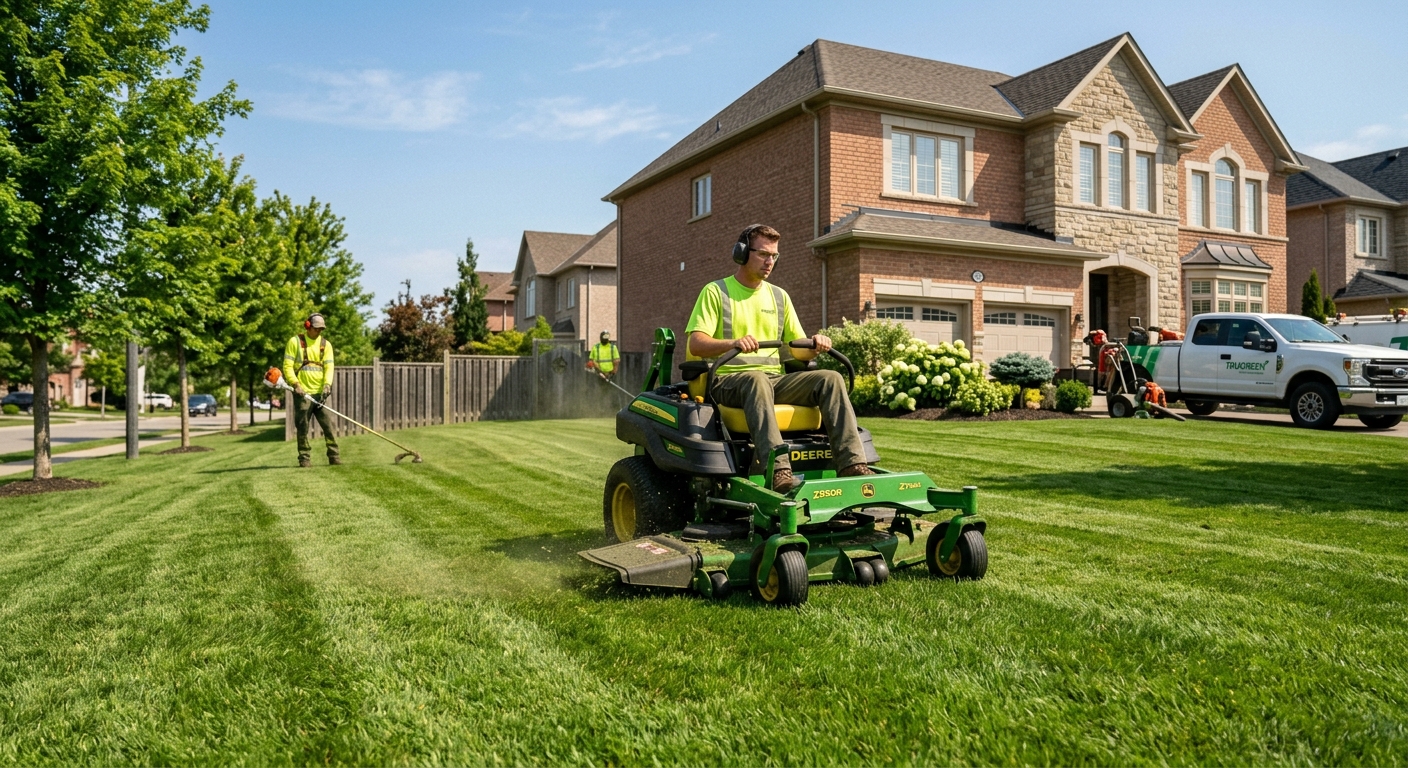
Landscaping options and costs in Mississippi Mills
Mississippi Mills is a great place to invest in landscaping, especially on the many single-detached properties that make up 77.1% of homes in the area—each one typically has enough yard space to justify a full plan. It also helps that most households are homeowners (83.2%), so you’ll see more long-term yard improvements like patios, perennial borders, and mature trees rather than just quick cosmetic updates. That ownership profile pairs well with the local climate: Kingston–Pembroke sits mostly in hardiness zones 5a–5b, with freeze-thaw cycling and winter wind that can be tough on shallow-rooted plants and poorly built hardscaping.
Because the frost-free growing season is roughly May–October, contractors schedule planting, sodding, and grading-heavy work when soils aren’t frozen. Costs can also reflect contractor availability near peak spring and early summer windows, when demand rises across neighbourhoods like Almonte’s established residential streets and the surrounding rural edges. At the same time, local material supply in the Kingston–Pembroke corridor (topsoil, mulch, aggregates) helps keep pricing more moderate than in larger, higher-overhead markets.
Below is a practical comparison of common landscape projects—use it to benchmark quotes before you compare details like drainage scope, soil amendment, and plant size.
| Service |
Description |
Season |
Price Range |
| Full landscape design and installation |
Site visit, concept + planting plan, layout, soil prep, grading, planting, sod/seed, and selected hardscape |
Spring to early fall (planting windows) |
$4,500–$22,000 |
| Sod installation (supply, grade, lay, roll) |
Grading and compaction, supply and lay sod, edge finishing, rolling, light topdressing |
Late spring through summer |
$3,000–$7,500 |
| Lawn seeding (grade, seed, starter fertilizer) |
Fine grading, seed + starter fertiliser, light raking/rolling, seeding-to-germination plan |
Spring or early fall |
$2,000–$6,000 |
| Interlocking patio or walkway |
Excavation, granular base, compaction, edging, interlocking stones, jointing sand |
May to October (weather dependent) |
$6,000–$28,000 |
| Retaining wall (interlocking block) |
Wall layout, excavation, reinforced/stepped base build, drainage layer/weep provisions, block installation |
May to October |
$7,000–$34,000 |
| Tree and shrub planting |
Plant supply, excavation, backfill with soil amendments, staking where needed, mulch rings, watering plan |
Spring and fall |
$1,200–$7,500 |
Prices are estimates only and vary by project scope, site access and material selection.
What affects the price of landscaping in Mississippi Mills
In Mississippi Mills and across the Kingston–Pembroke economic region, two quotes for the “same” landscaping can easily differ by 30–50%. The biggest reason is that scope rarely matches: one contractor may include proper drainage correction and soil amendment, while another does a lighter surface-grade pass. Labour timing also matters—because hardiness zone 5a–5b yards depend on frost-safe installation windows, spring and early summer work tends to price higher when everyone is booking at once.
Seasonal limitations affect both what grows and when crews can work in-ground. In Ontario’s zone 5a–5b, plants and turf must establish during the May–October frost-free period, so topsoil quality, compaction, and irrigation planning become part of the cost. The contrast is straightforward: Prairie regions (zone 2–4) often require more drought- and wind-tolerant design and more attention to soil moisture strategies; coastal BC (zone 7–8) may allow lush planting but demands strong drainage discipline in heavy rainfall areas. Southern Ontario generally has adequate rainfall, but summer dry spells still require efficient irrigation design—typically drip in beds and matched precipitation on lawns.
Local examples that move price up or down in Mississippi Mills: (1) a backyard with clay-leaning loam that needs regrading to stop water from pooling near a foundation can add significant labour and material, often pushing a lawn project toward the higher end of the $2,500–$8,000 lawn band; (2) if your patio or walkway needs deep base preparation to manage freeze-thaw heaving, costs commonly shift into the $5,000–$35,000 hardscape band; (3) homes built before 1981 (43.4% of dwellings) frequently have older grading patterns, mature root zones, or undocumented drainage that can require extra site work before planting.
In short, the “how” matters as much as the “what”—drainage, base depth, and plant size are where savings usually disappear, and where proper installation protects your investment for years.
| Price Factor |
Why It Matters |
Cost Impact |
| Yard size in sq ft — the primary cost driver for softscape |
More area means more excavation, soil/seed/sod, labour hours, and material volume |
Small lawns can land near the low end; larger properties can push projects toward the top of the band by 30%+. |
| Grading and drainage work — slope corrections add significant cost |
Freeze-thaw cycles intensify the effects of poor slope or water routing |
Can add thousands, especially if recontouring must protect foundations and walkouts. |
| Drainage bed or French drain installation |
Subsurface water control prevents pooling and reduces heaving risk under hardscaping |
Often a major add-on; can move a “basic” lawn job into full landscape pricing. |
| Plant material tier — native shrubs vs. ornamental vs. mature specimen trees |
Mature stock costs more and needs more labour for fit, staking, and aftercare |
Shifts the project toward the upper portion of tree/shrub planting bands. |
| Hardscape vs. softscape ratio — walls and patios cost more per sq ft than lawn |
Hardscape requires deeper excavation, compacted granular base, and higher material costs |
Even moderate patios can cost multiple times per sq ft compared to turf establishment. |
| Irrigation system design and installation |
Ontario summers can dry out; correct spacing and zoning prevents plant loss and overwatering |
Improves long-term success but adds equipment, trenching, and controller cost. |
| Soil amendment and topsoil required |
Clay/compaction or low-organic soils reduce root establishment without amendment |
Can add hauling and labour; worth it when drainage or fertility is limiting. |
| Tree removal or stump grinding before new planting |
Roots and remnants affect excavation depth and plant survivability |
Often increases both labour time and disposal/handling costs. |
Permits & regulations in Ontario
In Ontario, most typical soft landscaping work—planting trees and shrubs, adding topsoil, seeding, and sodding—does not require a permit. Homeowners generally can install garden beds and lawn upgrades without approvals. Retaining walls are different: in many municipalities, retaining walls above a height threshold (commonly around 1.0 m, or 3.3 ft) typically require a building permit, and some projects may need engineering drawings depending on height, location, and soil conditions. Also pay attention to what’s being changed: significant lot grading that redirects drainage toward neighbouring properties or impacts storm connections can trigger review requirements.
For Mississippi Mills homeowners, the practical approach is: (1) call for utility locates before any digging (planting holes, trenching for drains, and wall footings); (2) ask your contractor to confirm whether your wall size and location meet permit triggers before construction begins; and (3) if you’re adding drainage, clarify where water will be conveyed (to a legal outlet, ditch, or approved discharge path).
How to verify a contractor’s credentials step-by-step: First, confirm Ontario licensing/registration where applicable using the contractor’s business information on provincial/industry registries. Second, ask for a current Certificate of Insurance (liability) with your address listed and check expiry dates. Third, request WSIB coverage confirmation or acceptable proof of equivalent coverage where relevant—don’t accept verbal assurances. Finally, if the company issues a clearance letter through their insurer/work coverage portal, request a copy and keep it with your contract paperwork.
Planning a landscape that thrives in Mississippi Mills's climate
Designing for Mississippi Mills means working with hardiness zone 5a–5b, Ontario’s freeze-thaw winters, and a frost calendar that limits deep planting and turf establishment to the warmer months. Start with plant selection: choose native and zone-appropriate shrubs and perennials that can handle winter wind and temperature swings with less intervention. For soft landscaping, sod versus seed is a common decision point—sod gives instant visual results but typically costs about 3–4x more per sq ft than seeding because you’re paying for the turf layer, delivery, and faster installation demands.
Drainage and grading are non-negotiable in Kingston–Pembroke. Pooling water around a foundation can lead to ongoing maintenance headaches, and it can also undermine hardscape bases during winter freeze-thaw cycles. For patios and retaining walls, proper base preparation matters more than most homeowners expect: granular bases need to be deep, well-compacted, and installed with drainage provisions so frost doesn’t lift materials. A small interlocking patio can look level in summer, but if base depth and compaction aren’t right, heaving can develop after winters.
For low-maintenance design, use groundcovers, mulched shrub borders, and hardy perennials that close gaps quickly (less weeding) and reduce watering once established. If you want a water-wise approach without going fully desert-themed, consider a rain garden or bioswale in a low spot to manage stormwater naturally, and pair it with mulch and drip irrigation for targeted moisture.
Example of where price differences are justified: if you need a usable front walk quickly, paying more for sod can make sense—especially if you’re creating a path and planting bed at the same time—because you’ll reduce erosion while the lawn establishes. If you can wait a bit, seeding is often the smarter value option for areas where you can keep traffic off during germination.
| Element |
Climate Consideration |
Maintenance Level |
Price Band |
| Sod lawn installation |
Requires frost-safe installation and consistent moisture during early roots; protects soil from freeze-thaw movement once established |
Medium (watering in establishment phase, occasional touch-ups) |
$3,000–$7,500 |
| Native perennial garden |
Zone-appropriate plants reduce winter die-back and come back stronger after Ontario winters |
Low to medium (spring cleanup, occasional dividing) |
$1,200–$5,500 |
| Mulched shrub border |
Mulch buffers soil temperature swings and helps retain moisture through summer dry spells |
Low (weeding reduced, mulch top-ups) |
$1,000–$4,000 |
| Interlocking stone patio |
Needs deep granular base and drainage to prevent heaving during freeze-thaw cycles |
Low (occasional joint sand top-up) |
$6,000–$28,000 |
| Retaining wall (block) |
Correct base depth and drainage behind the wall are essential in clay/loam soils |
Low (annual inspection for drainage outlets and settling) |
$7,000–$34,000 |
| Drip irrigation system |
Ontario doesn’t need desert-level drought tolerance, but targeted irrigation improves establishment during summer dry spells |
Medium (seasonal winterisation and controller checks) |
$1,800–$6,500 |
How to choose a landscaping contractor in Mississippi Mills
When you’re hiring a landscaping contractor in Mississippi Mills, start by verifying the basics in Ontario: liability insurance and WSIB/WCB coverage. Ask for a Certificate of Insurance (liability) and confirm the policy is active, the coverage amounts are appropriate, and the certificate references your project/address or at least the insured entity. For work eligibility and worker protection, request WSIB coverage confirmation—if they’re using subcontractors, ask who carries coverage for each crew member and get their proof too. If a contractor can’t provide documentation promptly, that’s a warning sign.
Next, request 2–3 itemised written quotes. You want a labour + materials breakdown, not a single lump-sum number. Look specifically for what’s included: excavation depth for sod, granular base thickness for patios, whether drainage rock and filter fabric are included, and how topsoil amendments are specified. Confirm whether disposal (debris/extra soil) is included, and whether permit pulls—where required for retaining walls or grading—are included or billed separately.
Warranty is where workmanship issues are handled. Ask for a workmanship warranty length for installation (not just product warranty), and clarify whether it’s transferable if you sell your home. Get a clear payment schedule: never pay more than 10–15% upfront; keep a holdback until the job is complete and you’ve confirmed walk-through standards. Finally, timeline matters—get a start date and estimated completion date in writing, including weather-dependent allowances common in Ontario.
- Provide proof of current liability insurance and expiry dates.
- Provide WSIB coverage confirmation (or acceptable documentation) before work starts.
- Use itemised quotes (labour, materials, excavation/grading, drainage, delivery).
- Clearly state scope exclusions (tree removal, stump grinding, hauling/disposal).
- Specify base depths and compaction requirements for patios/walkways/retaining walls.
- Specify drainage components (filter fabric, weeping outlets, stone gradation) where needed.
- List plant quantities and sizes (e.g., caliper/height for trees, container size for shrubs).
- Confirm topsoil/soil amendment type and thickness, not just “added soil.”
- Ask about irrigation inclusion if you’re installing beds or sod.
- Request warranty details in writing: duration, coverage, and limits.
- Confirm payment schedule and keep a holdback until final acceptance.
- Get start date and completion estimate in the contract, with weather notes.
Common red flags I see in Mississippi Mills: quotes that omit drainage or granular base specs; refusing to provide insurance/coverage paperwork; vague wording like “we’ll fix grading” without measurements; charging most payment upfront; and promising installation “anytime” without acknowledging Ontario’s frost-safe windows and weather delays.
Frequently asked questions — landscaping in Mississippi Mills
Do I need a permit for a retaining wall in Ontario?
In Ontario, most planting and typical soft landscaping work usually doesn’t require a permit, but retaining walls often do. As a rule of thumb used in many municipalities, walls above about 1.0 m (3.3 ft) typically require a building permit, and some locations or designs may also need engineering drawings. In Mississippi Mills, the key is not just the wall height—drainage behind the wall, how the wall affects lot grading, and where it sits on your property can all influence whether approvals are needed. Before your contractor starts, ask them to confirm permit requirements in writing and whether permit pull is included in the quote. If they can’t tell you clearly, you’ll want to verify directly with the municipality’s building/planning office.
How do I improve drainage in my yard?
Yard drainage fixes in Mississippi Mills should start with understanding where water is coming from and where it wants to go. Because Kingston–Pembroke has freeze-thaw winters, surface pooling and saturated soils can also contribute to heaving under patios and walkways if base construction isn’t right. Common solutions include regrading to direct runoff away from foundations, installing a drainage bed or French drain (often with filter fabric and washed stone), and improving downspout discharge so water doesn’t overload low areas. If you’re installing a walkway or patio, drainage should be planned during base prep—not patched after. A good contractor will include drainage scope in the quote and explain discharge routing.
What is xeriscaping and does it suit Mississippi Mills?
Xeriscaping is water-smart landscaping that reduces watering needs through plant selection, mulching, soil improvement, and efficient irrigation. In Mississippi Mills (Ontario), you don’t have the year-round mild conditions you see on the Prairies or coastal BC, but summer dry spells do happen, so the “principles” of xeriscaping can be useful—especially targeted irrigation and mulch-heavy beds. The climate is still zone 5a–5b, so we focus on winter-hardy, drought-tolerant natives rather than only low-water ornamental looks. If you want to keep it practical, combine groundcovers, a layered mulch approach, and drip irrigation. You can often design a beautiful yard without fully converting every area—so you still get curb appeal while managing costs.
How do I plan a low-maintenance yard?
A low-maintenance yard in Ontario usually comes from three choices: fewer high-effort features, better plant spacing/selection, and weed suppression. Start by choosing zone-appropriate shrubs and perennials that hold their structure through winter and rebound reliably in spring. Use mulch on beds to stabilize soil temperatures and reduce evaporation, and plant groundcovers where you’d otherwise fight weeds. Pair that with a simple irrigation strategy (drip in beds; lawn heads matched to precipitation) so you’re not overwatering or relying on guesswork. From a budgeting perspective, it can be more cost-effective to invest in proper installation once than repeatedly patching damaged turf—sod projects, for example, often sit in the $3,000–$7,500 band depending on size and prep.
How deep should a retaining-wall base be for local frost?
Retaining-wall base depth needs to be designed for site conditions and drainage, but Ontario’s freeze-thaw environment makes “shallow” bases risky. In practice, contractors build retaining-wall foundations using deep, well-compacted granular base materials and include drainage layers behind the wall to prevent water pressure and saturation. The exact depth depends on wall height, block system, soil type, and the required setback/engineered design when applicable. For Mississippi Mills yards, I recommend you require the contractor to specify base construction details (excavation depth, granular type, compaction, and drainage components) in writing and confirm whether the wall height triggers permit/engineer requirements. That’s the real safeguard against frost-related movement.
How much does professional landscape design cost?
Professional landscape design pricing varies by scope—how many concepts you need, whether it includes a full planting plan, and if it’s tied to installation. In the Kingston–Pembroke area, design-and-install packages are commonly priced within the broader landscape investment range, and total project costs often land across the $4,000–$30,000 band depending on hardscape, drainage work, and plant quantities. If you’re only doing design (not installation), expect a smaller cost than full turnkey projects, but the best value is usually when design and installation are coordinated so drainage and grading details carry through correctly. For Mississippi Mills homeowners, especially on older properties (many built before 1981), coordinated design can prevent expensive rework by identifying drainage and base requirements up front.