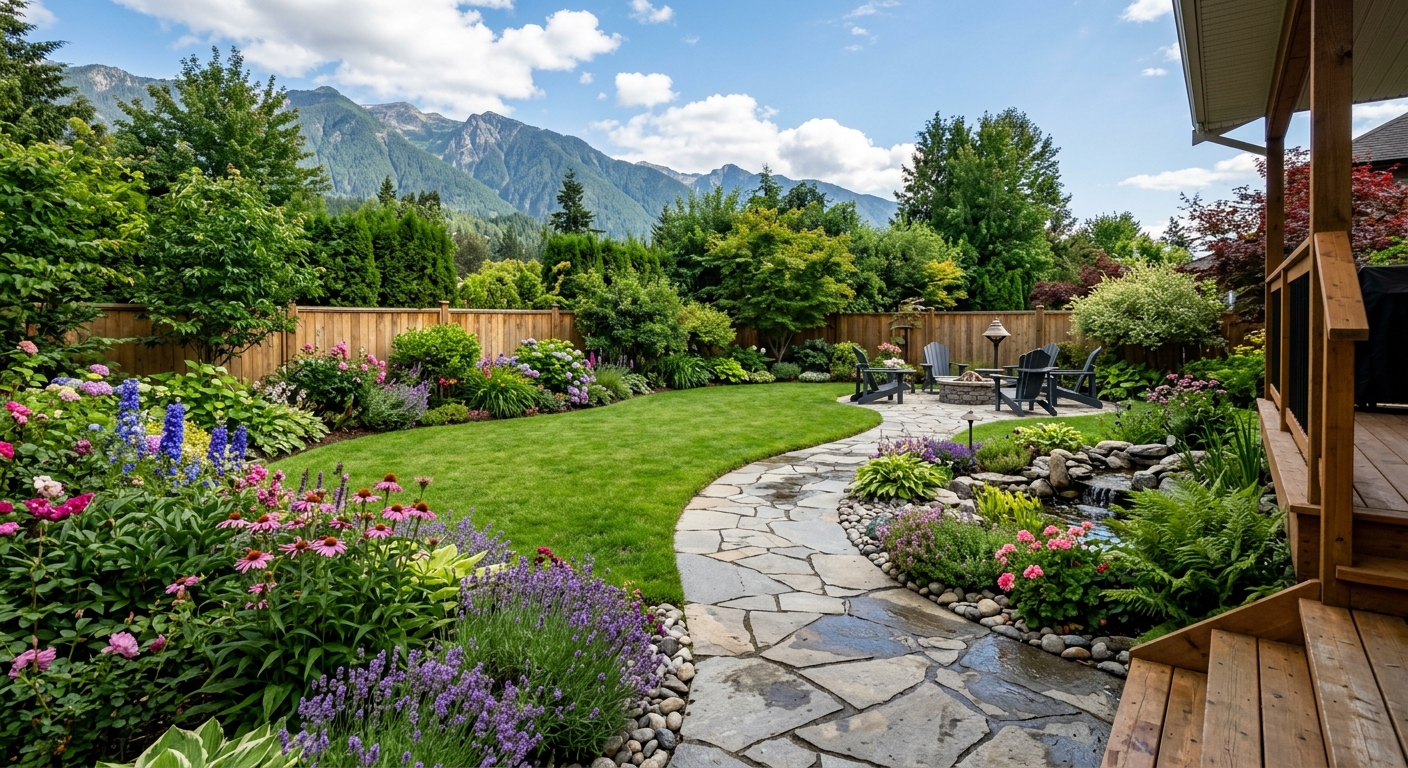
Landscaping options and costs in Hornepayne
Landscaping in Hornepayne is where practicality meets curb appeal. With 87.5% of local dwellings being single-detached homes (Statistics Canada, 2021 Census), most properties have the yard area to justify real upgrades—paths, planting beds, and even a small patio. It also helps that 79.5% of households own their homes, which typically means homeowners are more willing to invest in longer-lasting improvements rather than temporary fixes (Statistics Canada, 2021 Census). In the Northeast region’s cold continental setting, winter hardiness and short frost-free windows strongly shape both what contractors can install and how much it costs to do it well. Crews often concentrate work from mid-to-late spring through early fall, and freeze-thaw cycles make drainage and base prep more labour-intensive than in milder climates.
Labour availability can be tighter in the busiest summer weeks, and mobilization premiums are common when a project needs excavation equipment, landscape fabric disposal runs, and skilled crews in the same short window. That’s especially noticeable in areas with older housing stock (84.1% of homes built before 1981, Statistics Canada, 2021 Census), where existing drainage patterns and buried services can require extra investigation before any hardscaping or retaining work. In Hornepayne—particularly around the town’s residential core and older street lots—demand is high for drive-by upgrades like walkways, foundation-friendly drainage, and hardy tree/shrub planting.
Below is a realistic cost comparison for common landscaping scopes in Hornepayne, so you can benchmark quotes before you start scheduling.
| Service |
Description |
Season |
Price Range |
| Full landscape design and installation |
Site walk, grading concept, planting plan, topsoil/soil prep, hardscape and softscape coordination, project management |
Mid/late spring to early fall |
$8,000–$30,000 |
| Sod installation (supply, grade, lay, roll) |
Minor grading, base preparation, soil amendments, sod delivery, laying, rolling and initial watering guidance |
Spring to early fall |
$3,000–$9,000 |
| Lawn seeding (grade, seed, starter fertilizer) |
Final grade, seed blend selection, starter fertilizer, light raking, and first-season establishment plan |
Spring seeding; limited fall seeding where timing allows |
$1,200–$4,500 |
| Interlocking patio or walkway |
Excavation, compacted base, geotextile, edge restraints, bedding sand, pavers, joint sand, cleanup |
Mid/late spring to early fall |
$6,000–$25,000 |
| Retaining wall (interlocking block) |
Excavate/compact base to frost-appropriate depth, block wall build, drainage backing, weep management |
Mid/late spring to early fall |
$10,000–$25,000 |
| Tree and shrub planting |
Soil prep, holes with proper spacing, amendment, staking (as needed), mulching, initial care instructions |
Spring and early fall |
$1,500–$8,000 |
Prices are estimates only and vary by project scope, site access and material selection.
What affects the price of landscaping in Hornepayne
In Hornepayne, it’s common to see quotes for the “same” project vary by 30–50%—mostly because the scope details are different, not because one contractor is simply cheaper. Across Northeast and Ontario, the biggest levers are (1) the short working season and weather window, (2) what the ground needs to make it last through freeze-thaw, and (3) material tiers (plants and pavers) that affect both looks and longevity. In practice, a simple lawn job can turn into a soil and drainage rebuild, and a small patio can become more expensive when base thickness and edging are done properly for the frost line.
Plant hardiness zone and frost dates define both what grows and what the working season allows. Prairie-like conditions (often Zone 2–4) mean shorter growing periods and more emphasis on drought-tolerant, wind-hardy species. For retaining walls and paved areas, base depth must reach below the frost-affected zone, and drainage layers (geotextile, gravel, and proper weep management) increase labour. Coastal BC’s longer season can support lush planting and more complex softscape, which often lowers install pressure but can raise drainage requirements in heavy-rainfall pockets. In dry interior regions, irrigation design (usually efficient drip and zoning) is shaped by water restrictions; in Southern Ontario (Zone 5–6), the season is longer but summer dry spells still drive irrigation planning.
Concrete examples that raise or lower cost in Hornepayne: (1) A 300–600 sq ft sod area with minimal grading may land closer to the lower end of the $3,000–$9,000 band; add heavy regrading near a downspout and you can quickly move toward the top end. (2) Converting a “flat lawn” to a terraced look with a small wall can shift costs into the $6,000–$25,000 range for patios and the higher ranges for properly drained retaining work because excavation and drainage backing add hours and aggregate. (3) Homes built before 1981 may have older drainage patterns and concealed services that require careful locating and sometimes deeper excavation before you can even start.
| Price Factor |
Why It Matters |
Cost Impact |
| Yard size in sq ft — the primary cost driver for softscape |
More area means more labour, materials (topsoil, seed/sod), and more production time in a short season |
Can change the total by several thousand dollars and move projects between price bands |
| Grading and drainage work — slope corrections add significant cost |
Freeze-thaw and pooling risk require regrading so water sheds away from foundations |
Often adds major labour and aggregate; typically one of the largest “hidden scope” items |
| Drainage bed or French drain installation |
Proper sub-drainage prevents standing water, frost heave, and premature lawn failure |
Material and excavation increases can push totals upward noticeably |
| Plant material tier — native shrubs vs. ornamental vs. mature specimen trees |
Hardy natives reduce replacement risk; mature stock costs more and needs careful installation and staking |
Can separate a budget planting from a premium curb-appeal install by thousands |
| Hardscape vs. softscape ratio — walls and patios cost more per sq ft than lawn |
Pavers/blocks require base thickness, compaction, edges, and labour-intensive installation |
Swapping “mostly lawn” for “mostly patio/wall” can swing your quote dramatically |
| Irrigation system design and installation |
Short season and dry spells mean efficient watering; drip/zoning is usually more cost-effective long-term |
Basic starter systems add cost; larger zones and backflow protection increase the total |
| Soil amendment and topsoil required |
Older lots and poor native soils often need amendment depth for roots to establish before winter |
Adds material delivery and spread time; can be essential for sod/seed success |
| Tree removal or stump grinding before new planting |
Roots, stumps and debris complicate grading and reduce planting success without prep |
Equipment time and disposal can materially increase costs |
Permits & regulations in Ontario
In Ontario, most typical landscaping and planting work usually does not require a permit—things like sod and lawn seeding, planting beds, mulching, and standard softscape installs are typically handled as private property improvements. The work that often does require approval is retaining-wall projects above a municipal height threshold—commonly around 1.0 m (3.3 ft) in many places—and wall designs that affect structural stability may also require engineered drawings. Another area that can trigger review is changing lot grading in a way that alters how water drains, especially if it directs runoff toward a neighbour’s property or toward storm connections where rules apply.
Before any digging, call for utility locates so you know where underground services run. This matters for planting holes, French drains, and especially retaining wall footings where excavation is deeper. Also confirm local irrigation and water-use bylaws—while Hornepayne homeowners deal with Ontario rules, it’s still important to follow any restrictions on watering schedules during dry periods.
Step-by-step verification for a homeowner in Hornepayne: (1) ask for the contractor’s business identification and ensure they’re actively operating; (2) request a valid certificate of liability insurance naming you as the property owner/insured party where applicable; (3) confirm WSIB/WCB clearance (or exemption documentation if relevant) and keep a copy for your records; (4) verify the contractor’s credentials before work begins—look for the clearest evidence on government or regulatory registries and in their paperwork; and (5) keep the quote and scope in writing so any permit responsibility or exclusions are clearly stated before you sign.
Planning a landscape that thrives in Hornepayne's climate
To make a landscape thrive in Hornepayne, plan for the realities of a cold continental climate: hard freezes, freeze-thaw cycles, and a shorter establishment window. Start with plant selection. Choose zone-appropriate, hardy varieties that can handle winter stress with less reliance on heavy watering and added protection. When you’re deciding between sod and seed, remember the timeline. Sod gives instant curb impact, but it’s still rooting in cold soil as temperatures swing—done well, it helps a yard settle before winter. Seeding costs less, but it needs proper grade, seed-to-soil contact, and a good moisture plan during germination. In Northeast-style conditions, drainage and grading are not optional; pooling near foundation walls can lead to winter heave, patchy lawns, and stressed shrubs.
For hardscape, base prep is where longevity is won. Pavers and block work should be built on a compacted base designed for frost heave resistance, with geotextile and proper drainage paths. Low-maintenance design strategies help you keep the yard looking sharp year after year: mulched shrub borders, groundcovers that outcompete weeds, and hardy perennials that return reliably after winter. If you’re thinking about water efficiency, xeriscape principles can work—use drought-tolerant plants, thicker mulch layers, and consider a rain-garden style swale or a controlled drainage bed where water naturally collects after storms.
A specific example of when cost differences make sense: if sod is priced around $3,000–$9,000 for your area, paying for sod can be justified if you need a functional lawn quickly (kids/pets, erosion control, immediate appearance) and you’re also correcting drainage. If your grade is off and you skip drainage work, sod often fails prematurely, and you pay twice. For budget-focused improvements, seeding can be a better first step when combined with regrading and soil amendment.
| Element |
Climate Consideration |
Maintenance Level |
Price Band |
| Sod lawn installation |
Needs good grade and moisture management before freeze; establishment is sensitive to temperature swings |
Medium (watering during establishment, light touch-ups) |
$3,000–$9,000 |
| Native perennial garden |
Hardy perennials and natives handle winter stress better and re-emerge reliably in cold seasons |
Low to medium (spring cleanup and occasional weeding) |
$1,500–$6,000 |
| Mulched shrub border |
Mulch moderates soil temperature and reduces winter root stress; hardy shrubs resist cold and wind |
Low (mulch refresh, minimal pruning) |
$2,000–$7,000 |
| Interlocking stone patio |
Base and drainage must be designed for frost; poor compaction leads to shifting over winter |
Low (occasional joint sand top-up) |
$6,000–$25,000 |
| Retaining wall (block) |
Back drainage and proper base depth prevent freeze pressure and wall movement |
Low (monitoring and minor repairs if needed) |
$10,000–$25,000 |
| Drip irrigation system |
Efficient watering matches short establishment periods and helps avoid waste during dry spells |
Medium (seasonal checks and blowout/maintenance before cold) |
$2,000–$8,000 |
How to choose a landscaping contractor in Hornepayne
Choosing the right landscaping contractor in Hornepayne starts with proof, not promises. For Ontario coverage, ask for a current certificate of liability insurance (and confirm the coverage is active and adequate for outdoor construction work). Next, request WSIB/WCB clearance documentation—this protects you if an accident happens during excavation, deliveries, or hardscape installation. If the contractor says they’re “not required,” get the exemption documentation in writing so you’re not left holding risk. For licensing and business legitimacy, review their business details and look for the most current listings or registries that apply to their specific trade scope, then cross-check the certificate dates you receive.
Get 2–3 itemised written quotes—labour and materials clearly separated. Make sure the quote lists key line items like excavation depth, base materials, geotextile, joint sand, disposal, and topsoil/soil amendment quantities (where relevant). Scope clarity matters because exclusions can quietly shift the final cost: ask whether permits are included (if a retaining wall triggers approval), whether disposal is included for spoil and old sod, and whether site protection (tarping, driveway protection mats) is part of the price. Confirm workmanship warranty length in writing and whether product/manufacturer warranties transfer to you. Finally, protect your budget with a payment schedule: never pay more than 10–15% upfront, and hold a portion until completion and cleanup are confirmed. Request a start date and a completion timeline in writing, especially because the short working season can compress schedules.
- Ask for liability insurance certificate and verify it covers landscaping/hardscape excavation work.
- Request WSIB/WCB clearance (or documented exemption) before any digging starts.
- Insist on an itemised quote with quantities for topsoil/aggregate and labour hours or crews.
- Clarify who pulls permits (when required) and whether permit fees are included or separate.
- Confirm disposal haul-away for spoil, old sod, stumps, and construction debris.
- Verify base build details: compaction requirements, geotextile, and frost-appropriate thickness.
- Ask about drainage implementation (French drain, weep management, and slope direction).
- Confirm plant sourcing: native/zone-appropriate varieties and whether substitutions need approval.
- Get a warranty in writing for workmanship (and separately, product/manufacturer warranty).
- Request a payment schedule with no more than 10–15% upfront and a holdback until completion.
- Review the schedule: start date, weather-dependent pauses, and completion estimate.
- Ask who handles utility locates and how they protect underground services during work.
In Hornepayne, red flags include: quoting a retaining wall without discussing drainage backing, base depth, and freeze-thaw requirements; providing only a lump-sum price with no quantities or exclusions; asking for a large upfront payment (beyond 10–15%); skipping proof of liability insurance or WSIB/WCB documentation; and starting work without a clear written timeline or scope sheet that defines disposal and site protection.
Frequently asked questions — landscaping in Hornepayne
How long does a landscaping project take in Hornepayne?
Project timelines in Hornepayne depend heavily on the work type and weather window. Because Hornepayne’s cold continental conditions shorten the planting and installation season, most construction-heavy jobs run from mid-to-late spring through early fall. A small interlocking walkway can often be completed in days once materials are on-site, while patios and retaining walls typically take longer because excavation, base compaction, drainage detailing, and cure/settle time are required. For softscape-only work, planting and mulching can usually be done quickly, but sod and seed still require establishment time after installation. If your property is older (many homes pre-1981), hidden drainage issues can add days once we correct grading and confirm where water should go.
What is the best grass type for a Hornepayne lawn?
For Hornepayne lawns, the “best” grass is the one matched to winter survival and early spring recovery. In practice, many homeowners do well with a hardy cool-season blend (often with a mixture of fine fescues and other cold-tolerant types), because they handle temperature swings and establish reliably when the grade is correct. The key isn’t only the grass species; it’s the preparation—proper soil amendment, final grading, and seed-to-soil contact. If you’re comparing options, sod (commonly in the $3,000–$9,000 band depending on size and prep) gives faster visual results, while seeding is more budget-friendly but needs time and moisture management during germination. Either way, drainage away from the foundation determines whether your grass survives winter and spring runoff.
When should I aerate and overseed my lawn in Hornepayne?
In Ontario, including Hornepayne, aeration and overseeding usually work best when the lawn can grow quickly enough to recover before cold sets in. Spring aeration is often timed after the ground is workable and growth is underway, while overseeding follows shortly after so new seed can germinate in warming conditions. A fall approach can work too, but timing must be tight—too early and you’ll get weeds; too late and seedlings may not establish before freeze. The biggest local “do/don’t” is moisture and pooling: if water sits in low spots near the house, seed can rot and new grass won’t anchor. If your lawn struggles after storms, it may be better to address grading and drainage first, even before you spend on seed and fertilizer.
What trees grow best in Hornepayne's climate zone?
In Hornepayne, focus on cold-hardy, Ontario-suited trees that can handle winter desiccation and wind stress. Common choices often include species like hardy spruce types, columnar or rounded forms of conifers for structure, and robust deciduous trees selected for their winter tolerance and soil adaptability. The right answer depends on your exact site—sun exposure, soil quality, and whether water drains well. For older lots in Hornepayne (many homes built before 1981), soil can be compacted or poorly drained near foundations, which affects what survives. A good contractor will also consider spacing so mature trees aren’t planted too close to foundations, eavestrough discharge, or underground services. For best results, ask for a zone-appropriate list and confirm the expected mature size.
How much does sodding a yard cost in Hornepayne?
Sodding in Hornepayne commonly lands in the $3,000–$9,000 range, depending on lawn size, whether grade correction is needed, and how much soil amendment is required. If your yard needs significant regrading so water doesn’t run toward the foundation, that prep can push the price toward the upper end even if the “sq ft of sod” looks modest. Access matters too—tight side yards or long delivery distances can add labour and equipment time. If you’re currently replacing damaged areas from poor drainage, it’s often cheaper long-term to pair sod installation with the correct drainage adjustments rather than repeatedly patching failed spots after each spring thaw.
How do I prevent weeds in my Hornepayne garden?
Weed prevention in Hornepayne is mostly about barrier strategy plus long-term soil health. Start with site prep: remove existing weeds thoroughly (including roots), then improve soil so plants establish quickly and shade the ground. For beds, use a layered approach—quality mulch with adequate depth reduces light hitting weed seeds and helps keep soil temperatures stable through winter and spring swings. Choose zone-appropriate perennials and shrubs that grow in reliably; sparse plantings leave open soil where weeds take hold. A weed mat can help in some situations, but it’s not a cure-all—poorly installed barriers can trap moisture in the wrong place. If your garden area has drainage issues, address grading or add a drainage bed first so plants aren’t stressed during freeze-thaw cycles.