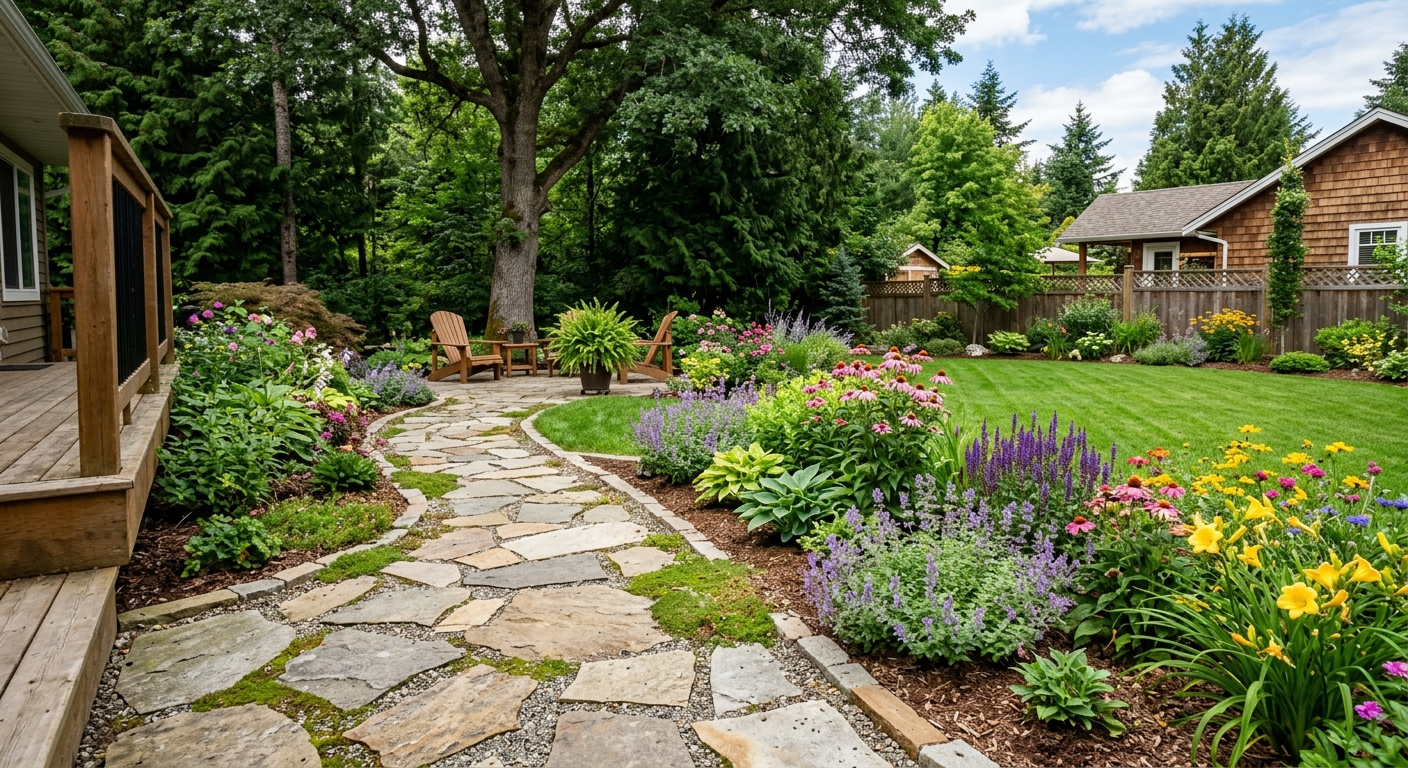
Landscaping options and costs in Bay Street Corridor
Bay Street Corridor homeowners typically want a yard that looks crisp right away, but still holds up through Toronto’s hot, humid summers and winter freeze–thaw cycles. With a population of 25,797 in the Bay Street Corridor area (Statistics Canada, 2021 Census), there’s steady demand for curb appeal upgrades on fast-paced residential streets—especially where older lots need drainage improvements before any sod or stone goes down. Many properties here are established, and in practice that means contractors often contend with clay-heavy soils, irregular grading, and mature trees to work around. In this part of Toronto, that mix directly affects labour time and the amount of base preparation required for hardscape.
We also see cost pressure from contractor availability during the May–October window: the “build season” is long enough for full installations, but frost timing and spring ground conditions still influence start dates and whether excavation must pause. If you’re in high-demand pockets like Yorkville and the nearby Rosedale edges, design-and-install work often books earlier due to premium scheduling expectations and tighter access for trucks and material staging.
The sections below give you realistic budget ranges for common projects, then you can compare quotes apples-to-apples using the same scope. Use the table as a baseline before you talk to a contractor about grading, drainage, irrigation, and plant selections that match Ontario’s Zone 6a–7a conditions and local soil realities.
| Service |
Description |
Season |
Price Range |
| Full landscape design and installation |
Site visit, concept + planting plan, grading recommendations, softscape + hardscape install (labour + materials as scoped) |
May to early November (weather-dependent) |
$8,000–$40,000 |
| Sod installation (supply, grade, lay, roll) |
Topsoil assessment, grading/leveling, sod supply, prep + lay, rolling, initial watering plan |
Late April to October (best on warming soil) |
$2,500–$8,000 |
| Lawn seeding (grade, seed, starter fertilizer) |
Minor grading, seed mix, starter fertiliser, light raking, initial watering guidance |
Spring or early fall |
$1,800–$6,000 |
| Interlocking patio or walkway |
Excavation, base course, geotextile/geogrid as needed, interlocking stone + edging, compaction |
May to October (some early/late work if ground is firm) |
$6,000–$30,000 |
| Retaining wall (interlocking block) |
Block wall build with proper footing depth, drainage gravel, and reinforcement where required |
May to October |
$6,000–$30,000 |
| Tree and shrub planting |
Soil prep, amendments, staking/tying as needed, planting layout, mulch ring |
Spring and fall (with watering plan) |
$800–$6,000 |
Prices are estimates only and vary by project scope, site access and material selection.
What affects the price of landscaping in Bay Street Corridor
Even for the “same” landscaping job, Toronto-area quotes can swing by 30–50% because the biggest cost drivers—soil conditions, drainage needs, and how much base preparation is required—aren’t identical from property to property. In Ontario, your hardiness zone (Toronto is roughly 6a–7a) and the frost calendar define both plant survivability and the days contractors can work. That working-season reality is why one lot can be ready for full installation in May while another requires delayed excavation until the ground firms up. In contrast, Prairie regions (Zone 2–4) often need drought-tolerant, wind-hardy selections and a simpler planting palette, and wall footings there can require different approaches because the shorter season and colder ground behaviour compress planning and labour windows. Coastal BC (Zone 7–8) supports lush growth longer, but heavy-rainfall areas still demand excellent drainage design. Dry interior BC is shaped by water restrictions, often pushing irrigation upgrades like drip and low-precipitation heads.
In Bay Street Corridor specifically, local clay and fill soils frequently add excavation and soil amendment, which can move you within the $8,000–$40,000 design-and-install range—or keep you near the $6,000–$30,000 hardscaping tier if you’re staying mostly on the softscape side. A practical example: a 250 sq ft sod lawn can land toward the lower end if grading is minor, but if you uncover compacted subsoil and need additional topsoil and regrading, the job becomes more like a full rework. Another example is drainage: adding a French drain or addressing downspout runoff can add cost, but it’s often cheaper than replacing paving later due to settling or wet spots.
| Price Factor |
Why It Matters |
Cost Impact |
| Yard size in sq ft — the primary cost driver for softscape |
More area means more labour for grading, seeding/sod, edging, and materials. |
Higher-end quotes typically track larger square footage and longer install time. |
| Grading and drainage work — slope corrections add significant cost |
Clay soils and foundation proximity require correct positive drainage to avoid pooling. |
Can add substantial labour and extra topsoil/gravel. |
| Drainage bed or French drain installation |
Freeze–thaw plus wet soils can undermine patios and lawn areas. |
Often the difference between a simple softscape job and a mid-range hardscape project. |
| Plant material tier — native shrubs vs. ornamental vs. mature specimen trees |
Mature trees cost more and need careful handling, staging, and sometimes larger excavation. |
Budget can rise quickly when specimen sizes or unusual cultivars are requested. |
| Hardscape vs. softscape ratio — walls and patios cost more per sq ft than lawn |
Stonework requires thicker bases, compaction, and precise edging. |
Shifts pricing toward the retaining wall & hardscaping bands. |
| Irrigation system design and installation |
Zone-appropriate watering improves survival in summer dry spells and reduces waste. |
More heads, zones, backflow devices, and trenching increase cost. |
| Soil amendment and topsoil required |
Poor native clay and compacted fill can throttle root growth without improvement. |
Extra delivery, spreading, and labour raises softscape budgets. |
| Tree removal or stump grinding before new planting |
Access, debris handling, and ground disturbance affect prep and replanting. |
Can add a standalone scope item and delay installation dates. |
Permits & regulations in Ontario
For most Bay Street Corridor homeowners, planting beds, sodding, and the majority of softscape work do not require a permit in Ontario. That usually includes tasks like laying sod, seeding, mulching, planting shrubs and perennials, and installing non-structural edging where you’re not creating a regulated retaining structure. However, retaining walls are the big exception: in many municipalities across Ontario, retaining walls above a common height threshold (often 1.0 m / 3.3 ft) require a building permit and sometimes engineered drawings, especially if the wall is structural or supports surcharge loads.
Also watch for approvals tied to grading. If your proposed changes to lot grading affect drainage toward neighbouring properties or storm sewer connections, you may need municipal sign-off. Before any digging, call for utility locates: contractors should verify underground services for both planting holes and wall footings. And while water restrictions are more widely discussed in dry interior regions of Canada, it’s still wise to confirm irrigation and water-use rules in your area for Ontario—especially during drought-like stretches when outdoor watering may be limited.
To verify a contractor in Bay Street Corridor, check:
- Ontario licence/registration information (via the relevant online registry for your contractor category)
- Liability insurance certificate (COI) showing adequate coverage for landscaping activities
- WSIB/WCB clearance or proof of coverage (where applicable for the contractor’s work and staffing)
- Workmanship warranty terms in writing
- Subcontractor alignment (if they’re using stone masons or excavators, they should remain covered)
Finally, ask whether permit applications (if any) are included in the quote before work begins, so there are no surprises once excavation starts.
Planning a landscape that thrives in Bay Street Corridor's climate
Planning a landscape for Bay Street Corridor means working with Toronto’s hardiness range (about Zone 6a–7a), your seasonal precipitation, and the freeze–thaw schedule—not fighting it with fragile ornamentals or shallow base prep. Start with plant selection: choose native, zone-appropriate shrubs and perennials that can handle winter lows near –23 to –18°C with minimal protection, and that don’t require constant watering once established. For lawn, decide early between sod and seeding. Sod gives instant cover and erosion control, but it’s typically 3–4x more per sq ft than seeding—so it’s best when you need the yard functional fast, or the site is prone to washouts.
Drainage and grading are critical in Toronto: we design for water to move away from foundations and to reduce pooling where clay holds moisture. For hardscape, patio and walkway bases must be compacted and installed with enough granular depth to perform through frost action; this is where freeze–thaw cycles become a structural cost driver later if prep is skipped. Low-maintenance strategies keep curb appeal without yearly hassle: mulched shrub borders, groundcovers between perennials, and a thoughtful mix of 3-season plants reduce weeds and watering.
Because water needs matter locally too, consider rain-garden pockets in downspout paths or xeric-leaning planting areas with mulch and selected perennials—this can reduce irrigation run time while keeping the yard attractive through humid summers.
Example of when price differences are justified: if you’re fixing bare soil quickly in a high-traffic front yard, sod is worth it when you need immediate coverage to prevent mud and erosion, and you’re budgeting within the $2,500–$8,000 sod band. If you can wait for a fuller season to thicken, seeding is often the better value within the design budget because it’s usually far less expensive while still reaching a solid lawn when soil prep is done correctly.
| Element |
Climate Consideration |
Maintenance Level |
Price Band |
| Sod lawn installation |
Establishes quickly in Ontario’s May–October window; winter survival depends on proper grading and initial watering. |
Medium first season, then low with mowing and occasional overseeding. |
$2,500–$8,000 |
| Native perennial garden |
Zone-appropriate plants handle winter cold and summer humidity with less watering once rooted. |
Low to medium; annual edging and spring cleanup. |
$800–$6,000 |
| Mulched shrub border |
Mulch reduces soil moisture swings and helps protect shallow roots during freeze–thaw. |
Low; occasional mulch top-ups and light pruning. |
$1,500–$7,500 |
| Interlocking stone patio |
Requires a properly designed base for frost resistance and to prevent heaving or settling. |
Low; occasional joint sand refresh and weed control. |
$6,000–$30,000 |
| Retaining wall (block) |
Drainage and footing depth matter most under Toronto’s freeze–thaw cycles and wet seasons. |
Low once built correctly; inspection for drainage performance after heavy rain. |
$6,000–$30,000 |
| Drip irrigation system |
Targets root zones efficiently and helps manage summer dry spells in Zone 6a–7a conditions. |
Medium; seasonal blowout and timer adjustments. |
$2,000–$10,000 |
How to choose a landscaping contractor in Bay Street Corridor
Choosing a contractor in Bay Street Corridor starts with verifying the basics in writing. For Ontario landscaping work, confirm that the contractor carries adequate liability insurance and that they can provide WSIB/WCB coverage proof or clearance where applicable (depending on how they staff and subcontract). How to check: request a current certificate of insurance (COI) and make sure the coverage dates are active and aligned with your project period; ask for WSIB/WCB documentation directly, or a clearance letter if they’re operating under that framework. If they hesitate to provide documents before pricing, treat that as a red flag.
Next, get 2–3 itemised written quotes, not just a lump sum. You want a labour-and-materials breakdown so you can compare line items like excavation depth, base type (and thickness), drainage work, number of tree shrubs, topsoil amount, and whether disposal/cleanup is included. Also read exclusions: are permits included if a retaining wall needs one? Is geotextile/geogrid included where needed? Is sod delivery and waste allowance part of the estimate? For warranty, ask for workmanship warranty length and whether the product/manufacturer warranty is provided in writing and transferable if you sell.
Payment schedule matters. Don’t pay more than 10–15% upfront. Hold back a portion until the job is complete and any punch-list items are resolved. Finally, insist on a start date and a realistic completion estimate in writing—Toronto weather can slow work, but timelines should still be clearly stated.
- Ask for current liability insurance COI (with effective dates and coverage limits)
- Request WSIB/WCB clearance or proof of coverage
- Verify the contractor’s Ontario registration/licence category relevant to their scope
- Get 2–3 itemised quotes with quantities (sq ft, linear ft, number of plants)
- Confirm whether excavation, haul-away, and disposal are included
- Ask for base prep specs for patios/walkways (granular layers and compaction)
- Clarify drainage scope (downspout tie-ins, French drain, grading direction)
- Confirm whether erosion control is used during install (especially around spring)
- Require a planting plan or plant list with botanical names, sizes, and spacing
- Check warranty terms: workmanship length, exclusions, and claim process
- Limit upfront payment to 10–15% and hold a final payment until punch-list completion
- Get a written schedule: start date, inspection checkpoints, and completion target
Common red flags in Bay Street Corridor: contractors who won’t provide insurance/WSIB proof; quotes that omit drainage/grading details yet assume hardscape will “just settle”; vague planting descriptions like “assorted shrubs” without sizes/names; payment requests above 15% upfront; and no written timeline or warranty terms in the estimate.
Frequently asked questions — landscaping in Bay Street Corridor
How do I design a low-water yard in Bay Street Corridor?
In Bay Street Corridor (Ontario), “low-water” still has to perform through humid summers and winter cold, so we focus on smarter plant placement and soil quality rather than only reducing water. Start by improving topsoil and using mulch (2–3 inches) to slow evaporation and protect roots during freeze–thaw swings. Choose drought-tolerant, zone-appropriate perennials and shrubs and group plants by water needs so you’re not overwatering everything. If you’re irrigating, a drip system with separate zones is usually more efficient than sprinklers. In high-runoff areas, adding a rain-garden pocket near downspouts can reduce summer watering while controlling pooling. Budget-wise, many homeowners complete a starter planting + mulch upgrade in the $800–$6,000 range, then decide later whether irrigation is needed to protect new installs.
How do I find a licensed landscaper in Bay Street Corridor?
To find a qualified landscaper for a Bay Street Corridor project, start by asking for proof of Ontario registration/licence (appropriate to the contractor’s trade scope), plus liability insurance and WSIB/WCB coverage or clearance documentation. The fastest way is to request documentation before you sign anything: a current certificate of insurance (COI) with active dates and adequate coverage, and either WSIB/WCB clearance or proof of coverage showing they’re set up to employ workers. Next, compare itemised quotes and ask specific questions: who is responsible for disposal, whether drainage/grading is included, and what the base specs are for patios or block walls. If they can’t explain the scope clearly or won’t put warranty terms and timelines in writing, move on. For many homeowners, switching from an unclear quote to an itemised one helps keep your budget aligned—especially when you’re budgeting in the $8,000–$40,000 full design-and-install tier.
How much does landscaping cost in Bay Street Corridor?
Landscaping costs in Bay Street Corridor vary most due to site conditions (clay/fill, slope, drainage), access, and how much hardscape versus softscape you’re adding. For a full design plus installation, a typical range is $8,000–$40,000, with costs rising when you need significant grading, drainage beds, or more stonework. Sod projects commonly fall around $2,500–$8,000 depending on how much regrading is required. If your plan is mainly hardscape—like an interlocking walkway or small patio—or includes retaining wall work, budgets often align with $6,000–$30,000 depending on wall height and base depth. Because Toronto sits in roughly Zone 6a–7a, freeze–thaw can increase the importance of proper excavation and base prep, which is why detailed scopes matter.
What plants thrive in Bay Street Corridor's climate zone?
Bay Street Corridor sits in Ontario’s broader Zone 6a–7a range, so the best performers are hardy shrubs and perennials that tolerate winter cold (often roughly –23 to –18°C) and humid summers. In practice, we commonly specify plants like serviceberry, lilac varieties, hardy hydrangea types (where suitable), and winter-resilient groundcovers, paired with perennials that can handle spring freeze–thaw without constant replanting. Native-leaning choices generally reduce maintenance and watering once established, especially when installed with proper spacing and mulch. If you’re aiming for long-season colour, we build a layered plan: a structure layer (shrubs), a middle layer (perennials), and a filler layer (groundcovers). For new planting budgets, many homeowners spend about $800–$6,000 for tree and shrub installation depending on sizes and how much soil prep is needed.
Sod vs seed — which is better for a Bay Street Corridor lawn?
Sod and seed both work in Bay Street Corridor, but the better choice depends on timing and your site conditions. Sod is ideal when you need instant coverage to prevent erosion or mud quickly, and it’s usually installed in late spring through fall during the warmer growth window. It’s also more expensive; many projects land in the $2,500–$8,000 band depending on regrading needs. Seeding is more budget-friendly and works well when you can keep traffic off the area while it establishes, typically in spring or early fall. A critical factor is soil prep: both sod and seed fail when grading and topsoil quality are poor. If your yard is clay-heavy and pooling, fix drainage first—otherwise you’ll pay for sod or seed twice due to thinning from wet spots.
How much does a retaining wall cost in Bay Street Corridor?
Retaining wall pricing in Bay Street Corridor is driven by length, wall height, block type, and—most importantly—foundation and drainage requirements to handle Toronto’s freeze–thaw cycles. Many retaining wall projects in this area fall within $6,000–$30,000, with the higher end typically tied to longer walls, more excavation, and additional drainage gravel or reinforcement. In Ontario, retaining walls above a common threshold (often 1.0 m / 3.3 ft) may require a building permit and sometimes engineered drawings, so confirm that early to avoid delays. Before quoting, good contractors should assess soil, explain how they’ll build the base and drainage behind the wall, and include proper geotextile and compaction. If you’re budgeting, ask whether haul-away and disposal are included too—those site costs can be significant in established neighbourhoods.