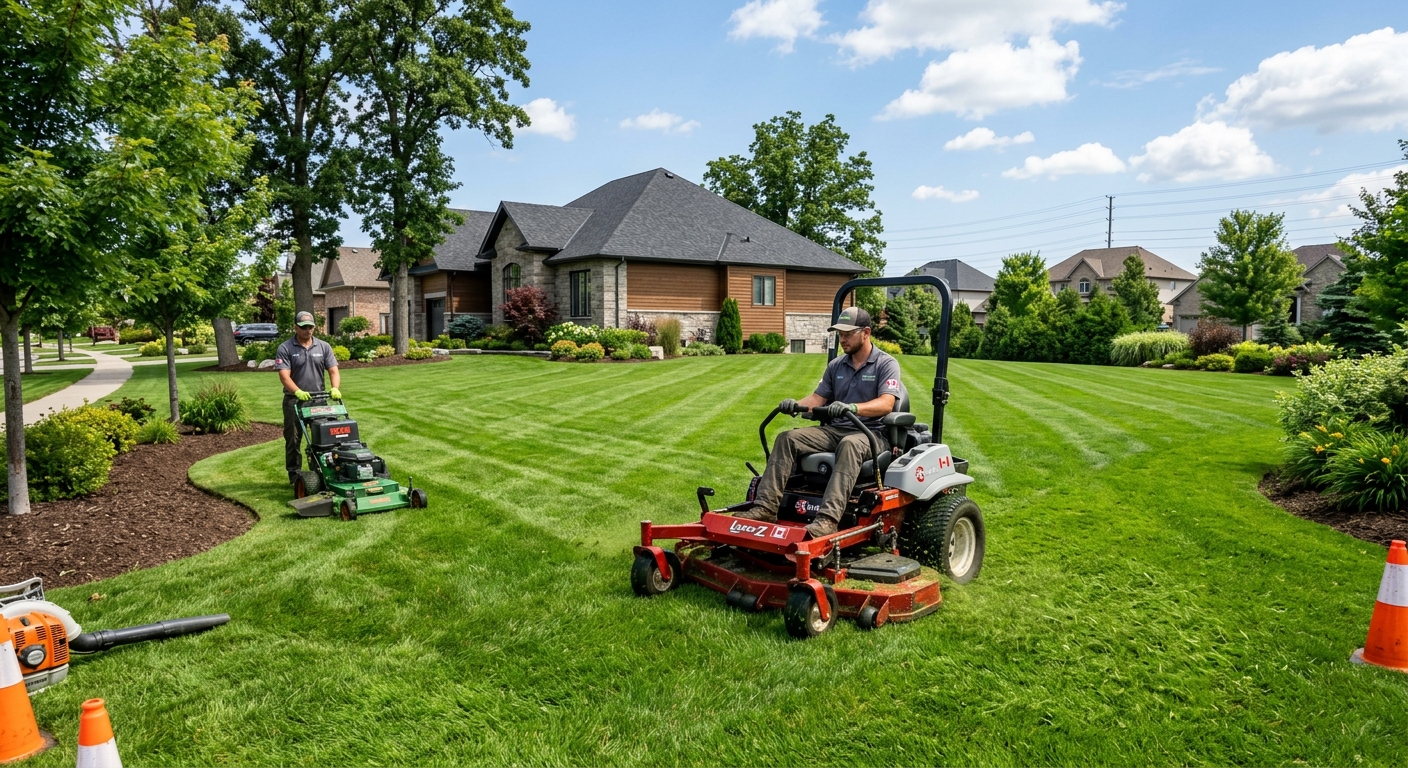
Landscaping options and costs in Humbermede
Humbermede is where Toronto’s suburban lots meet the kind of practical landscaping homeowners expect: good curb appeal, reliable drainage, and plants that can handle winter cold without constant rework. With a population of 15,545 residents (Statistics Canada, 2021 Census), there’s steady demand for seasonal upkeep and “right-sized” upgrades—especially on the many detached properties that typically come with real yard space and room to add beds, walkways, or shade trees. That matters because more square footage and more surfaces (lawn, shrubs, hardscape) usually mean more labour hours and more material, so costs can rise quickly from “simple refresh” to “full property makeover.”
In the Humbermede/Toronto market, landscaping pricing is driven by the way our freeze–thaw cycles affect both plants and structures. The working window is mainly late spring through early fall, so contractors schedule aggressively once soil is thawed and compaction work is safe. Also, local clay and fill soils often require excavation, soil amendment, and sometimes subdrains to keep patios, walls, and foundations dry—so even jobs that look similar on paper can price differently once grading is measured on-site. This is especially common in areas like Mineola-adjacent pockets and other established neighbourhood streets where yards were shaped decades ago and drainage can be uneven.
Below is a practical comparison of common options and typical ranges so you can line up quotes before you book a site visit.
| Service |
Description |
Season |
Price Range |
| Full landscape design and installation |
Concept + layout, plant palette, grading/drainage plan, hardscape/softscape install, cleanup |
May–October |
$8,000–$40,000 |
| Sod installation (supply, grade, lay, roll) |
Soil prep, grading/leveling where needed, sod delivery and installation |
April–June (best) / early September |
$2,500–$8,000 |
| Lawn seeding (grade, seed, starter fertilizer) |
Topdress/grade corrections, seed blend, starter fertilizer, light rolling |
April–June / September |
$1,500–$5,500 |
| Interlocking patio or walkway |
Excavate, granular base, edge restraints, interlocking stone placement, compaction and jointing |
May–September |
$6,000–$30,000 |
| Retaining wall (interlocking block) |
Block wall build, drainage layer, geotextile/fill, proper base for frost |
May–October |
$6,000–$30,000 |
| Tree and shrub planting |
Plant supply, staking (if needed), amendments, mulching, initial watering plan |
April–June / September–early October |
$800–$6,000 |
Prices are estimates only and vary by project scope, site access and material selection.
What affects the price of landscaping in Humbermede
In Toronto-area communities like Humbermede, two homeowners can receive quotes for “the same” landscaping scope and still see differences of roughly 30–50%. The usual reasons are measurement, site conditions, and how much of the quote is truly doing the work versus allowing for unknowns. Local crews price to protect themselves from surprises: hidden drainage problems, harder-than-expected excavation in clay, limited access around driveways, or the need for subdrains to stop water from pooling near foundations.
Climate also plays a role in cost and scheduling. The GTA sits around plant hardiness zones 6a–7a, with winter lows roughly near –23 to –18°C. That frost and the freeze–thaw cycles dictate deeper bases and better drainage for patios and retaining walls. Prairie regions (zone 2–4) usually have shorter seasons and colder ground stability issues, which often pushes designs toward ultra-hardy, drought-tolerant species and may require different wall/foundation assumptions. Coastal BC (zone 7–8) can support lush palettes and a longer season, but heavy rainfall still means drainage detailing. Dry BC interior municipalities and parts of Alberta commonly have water restrictions that change irrigation design. In southern Ontario (our zone 5–6 baseline), the season is moderate, but we still hit summer dry spells—so irrigation layout can affect both material and ongoing performance.
Concrete examples from Humbermede: (1) if the yard grade causes water to “sheet” toward a basement window, you may need drainage bed work before turf or beds—often shifting an install from the lower end of $2,500–$8,000 lawn projects toward the upper end once excavation and amendments are included; (2) if a retaining wall is required where clay is soft or the slope is steep, the job often aligns closer to $6,000–$30,000 because base depth, geotextile, and drainage stone aren’t optional. Even housing age matters: older lots can have compacted fill layers and legacy grading that require more removals and replacement topsoil, which adds both labour and hauling.
| Price Factor |
Why It Matters |
Cost Impact |
| Yard size in sq ft — the primary cost driver for softscape |
More square footage means more labour hours for prep and more material (topsoil, seed/sod, mulch) |
Can change project cost by 20–60% depending on scope |
| Grading and drainage work — slope corrections add significant cost |
Toronto clay often needs re-contouring to prevent pooling and protect foundations |
Often adds substantial excavation, base prep, and re-haul |
| Drainage bed or French drain installation |
Stops water behind walls and under turf; includes stone, piping and tie-ins |
Material + labour can push jobs into a higher band |
| Plant material tier — native shrubs vs. ornamental vs. mature specimen trees |
Mature trees cost more and may need extra crew time for positioning and root ball handling |
Can swing plantings by thousands for the same layout |
| Hardscape vs. softscape ratio — walls and patios cost more per sq ft than lawn |
Interlocking stone and retaining walls require granular base, compaction, and more detail work |
More patios/walls typically increases total cost significantly |
| Irrigation system design and installation |
Heads, zones, backflow prevention and controller setup depend on yard shape and sun exposure |
Adds material and labour; improves survivability during summer dry spells |
| Soil amendment and topsoil required |
Heavy clay often needs amendment for turf establishment and healthier root growth |
Hauling and materials add cost, especially for large corrections |
| Tree removal or stump grinding before new planting |
Impacts disposal and can affect root disturbance around walkways or foundations |
Typically increases both labour time and equipment fees |
Permits & regulations in Ontario
In Ontario, most routine landscaping activities—like planting, sodding, seeding, adding mulch beds, and most softscape work—typically do not require a permit. Homeowners in Humbermede can usually proceed with these types of projects once the contractor follows safe digging practices and respects property lines and existing services.
Where permits often come in is when the work changes structural or drainage conditions. Retaining walls above the local threshold—commonly around 1.0 m (3.3 ft) in many municipalities—typically require a building permit and sometimes engineered drawings. Also, changing lot grading that affects how water drains toward a neighbour or a storm connection may trigger review or approvals, because municipalities want to manage stormwater responsibly.
A practical, step-by-step homeowner check looks like this:
- Before digging for planting holes, subdrains, or wall footings, confirm utility locates (call before you dig) so you don’t hit buried services.
- Ask the contractor whether a permit is required for the specific retaining wall height and footing design and whether they will pull it.
- Verify the contractor’s Ontario licensing and confirm liability insurance (request a current certificate of insurance showing coverage limits).
- Request WSIB/WCB coverage proof for relevant trades and workers (a clearance letter or proof of account coverage, depending on the contractor).
- For irrigation: confirm any water-use bylaw requirements and drought-season rules (especially relevant when GTA dry spells tighten outdoor watering schedules).
If a contractor can’t clearly explain whether permits apply to your scope or can’t provide documentation on request, that’s a strong warning sign.
Planning a landscape that thrives in Humbermede's climate
To make a yard thrive in Humbermede, design with the realities of GTA cold, humidity, and freeze–thaw cycles—then choose plants and construction details that can handle them. Start with plant selection. In our zone range (roughly 6a–7a), you’ll generally get the best long-term results by leaning on native and zone-appropriate shrubs, ornamental grasses, and perennials that tolerate winter lows near –23 to –18°C. That typically means less watering once established and fewer failures than “borderline hardy” ornamentals.
Next, decide between sod and seed. Sod gives instant curb appeal and quicker functional turf, but it costs about 3–4 times more per sq ft than seeding once you include prep and materials. For example, if your lawn area needs major regrading, paying for sod may still be justified—but only if your drainage is solved first. If the goal is budget flexibility and you can wait for coverage, seeding is often the wiser move.
Drainage and grading are non-negotiable in Toronto. Pooling water can rot crowns, undermine foundations, and create frost-related movement in hardscape. For hardscape, patio and walkway bases must be built for winter performance—adequate granular layers, proper compaction, and edge restraint help prevent heaving and shifting.
Finally, use low-maintenance strategies that look good for years: mulched shrub borders, groundcovers, and a perennial backbone reduce mowing and annual bed work. Where you want to cut water use, consider rain-garden pockets (to manage runoff) or drought-tolerant planting zones paired with mulch. Even in Humbermede, where summer drought spells happen, smart zoning of irrigation and deeper mulching can keep landscapes resilient without sacrificing curb appeal.
| Element |
Climate Consideration |
Maintenance Level |
Price Band |
| Sod lawn installation |
Best during warm soil periods to establish roots before winter; must be graded to avoid pooling |
Low to moderate (water to establish; then routine mowing) |
$2,500–$8,000 |
| Native perennial garden |
Hardy to zone conditions; better winter performance and often more drought-tolerant once established |
Moderate (spring tidy, occasional weed control, mulch refresh) |
$800–$6,000 |
| Mulched shrub border |
Mulch buffers temperature swings and reduces winter heaving stress at soil surface |
Low (mulch top-ups, pruning as needed) |
$1,500–$7,500 |
| Interlocking stone patio |
Freeze–thaw demands a properly compacted granular base and good subgrade drainage |
Low (periodic joint sand check) |
$6,000–$30,000 |
| Retaining wall (block) |
Base depth, geotextile, and drainage layers protect against frost movement and water pressure |
Low (visual checks for drainage/outflow) |
$6,000–$30,000 |
| Drip irrigation system |
Helps manage summer dry spells and targets roots; reduces overspray on clay |
Moderate (seasonal adjustments, winter blow-out if required) |
$1,500–$9,000 |
How to choose a landscaping contractor in Humbermede
Choosing the right contractor in Humbermede starts with proof and process. In Ontario, verify licensing requirements for the scope (your contractor should clearly state what they are authorized to do), and request liability insurance documentation—ask for a current certificate of insurance. For worker coverage, request WSIB/WCB proof (commonly a clearance letter or proof of account coverage, depending on how they manage compliance). Don’t accept vague assurances; documentation should match your project dates and the workers assigned.
Next, get 2–3 itemised written quotes. You want a labour + materials breakdown (not a lump sum) showing what’s included: excavation quantities, granular base depth for hardscape, drainage components, plant sizes, and whether disposal is part of the price. Ask whether permits are included (for retaining walls that trigger them) and confirm site protection (drip lines for trees, walkway protection, and clean jobsite practices).
Warranty matters: request a workmanship warranty length (e.g., for patios, drainage performance, and plant survival support if offered), plus the manufacturer’s warranty details for major materials like irrigation components or interlocking products. Also ask if warranties are transferable if you sell your home.
For payment, never pay more than about 10–15% upfront. Hold back the remainder until the job is complete, graded properly, and cleaned. Finally, insist on a written start date and a realistic completion estimate that reflects Toronto’s typical late spring to early fall installation window.
- Confirm liability insurance limits and date validity before work starts.
- Request WSIB/WCB proof (clearance letter or account coverage documentation).
- Ask for a detailed scope: excavation, base build-up, drainage, edging, and topsoil quantities.
- Require product specifications: sod/seed type, block size, tree cultivar and caliper, irrigation brand/model if applicable.
- Ensure drainage tie-ins are written clearly (where water goes and what prevents backflow).
- Ask whether disposal/hauling and site cleanup are included.
- Confirm permit responsibility for retaining walls above the local threshold and grading changes.
- Get the warranty in writing for both workmanship and materials (including any conditions).
- Review timeline assumptions: when soils are expected to be workable in Humbermede.
- Require start/completion dates in the contract, not “as weather permits” only.
- Check how changes are priced (change orders in writing, with unit pricing if possible).
- Never accept “cash only” with no documentation; insist on invoice/contract paperwork.
Red flags in Humbermede typically include: (1) quotes that omit base depth/granular layers for interlocking or retaining walls; (2) no proof of liability insurance or WSIB/WCB documentation; (3) vague plant sizing (“assorted shrubs” with no quantities/calipers); (4) payment terms asking for more than 15% upfront without a staged schedule; and (5) pressure to sign quickly without a clear scope, permit plan (if required), or warranty terms.
Frequently asked questions — landscaping in Humbermede
What is xeriscaping and does it suit Humbermede?
Xeriscaping is a landscaping approach that reduces water use by combining drought-tolerant plants, efficient irrigation (when needed), heavy mulching, and designs that prevent runoff or pooling. In Humbermede/Ontario, it can absolutely suit many yards—especially because we get hot, sometimes humid summers and intermittent dry spells. The key is not to “import desert rules,” but to select hardy plants that thrive in our zone range and clay-heavy soils once established. Practically, xeriscaping often looks like a layered mix of native perennials, ornamental grasses, and well-mulched shrub beds with targeted drip irrigation rather than broad, high-water lawns. If you’re debating lawn replacement, compare options: sod projects often fall around $2,500–$8,000, while shifting part of the lawn to mulch and native beds can reduce long-term watering and mowing.
How do I plan a low-maintenance yard?
A low-maintenance yard is mostly about reducing “repeat tasks”: fewer lawn mow hours, fewer weeds, and less rework after winter. In Humbermede, start with drainage and grading first, because pooled areas become persistent weed zones and can kill turf. Then choose a structure plan: a perennial backbone (plants you can leave standing for winter), mulched shrub borders, and groundcovers that fill space so weeds don’t have room to establish. Keep plant palettes zone-appropriate for our winter cold—roughly near –23 to –18°C lows—so you’re not replacing plants every few years. For turf, seeding is often slower but can be budget-friendlier than sod; sod is typically faster for immediate results but costs more. For a direction check, full projects often land within $8,000–$40,000 depending on hardscape, drainage, and how much new planting you’re adding.
How deep should a retaining-wall base be for local frost?
For a retaining wall in Humbermede, the base depth should be designed to handle Ontario freeze–thaw movement and to ensure stability on compacted soil. In practice, contractors specify the excavation depth and base composition based on wall height, soil conditions, and drainage design—because clay and fill can compress differently than expected. A correct wall build includes compacted granular base plus drainage stone behind the wall, with geotextile where needed, and proper compaction lifts. If you’re trying to decide whether your project might require a permit, remember that walls above the local height threshold (commonly around 1.0 m in many municipalities) often need a building permit and sometimes engineered drawings. The best approach is to have your contractor document the base and drainage layers in writing rather than relying on a single “one-size” depth, since the local soil and wall height drive the specification.
How much does professional landscape design cost?
Professional landscape design costs vary based on whether you’re doing a full concept with drawings, a planting plan, or a hardscape layout. In the Toronto area, many homeowners roll design into the installation scope, especially when they’re already budgeting for hardscape and drainage work. For a full landscape design and installation, typical overall project ranges commonly land in the $8,000–$40,000 band. If you’re not ready for construction yet, some contractors offer a stand-alone design/planting plan, but the exact price depends on the level of drawings and site work (existing measurements, soil notes, and grading/drainage assumptions). The best way to judge value is to request an itemised proposal showing what design deliverables you’re getting and how revisions are handled—so you can avoid paying for rework later.
How do I compare landscaping quotes?
Start by comparing “apples to apples,” because landscaping quotes can look similar while hiding major differences. Ask each contractor for an itemised breakdown: excavation and base details for patios/walls, drainage components, soil amendment/topsoil quantities, plant types and sizes, and what disposal/cleanup is included. Confirm whether permits are included for retaining walls above the local threshold and whether grading changes that affect drainage toward storm connections are covered. Then compare warranty terms: workmanship coverage for hardscape performance and any plant support or guarantees. Price should be one factor, but scope completeness is usually more important—an underpriced quote can be missing granular base depth, drainage stone, or the irrigation plan. Even within typical ranges (for example, lawn installs often fall around $2,500–$8,000), you’ll see the real value when every line item is comparable.
How long does a landscaping project take in Humbermede?
Project length depends on scope and weather. In Humbermede, installation typically fits the frost-risk window from late spring to early fall, because contractors need workable soil and safe excavation conditions. Small planting refresh jobs can take a day to a few days, while sod and regrading can take several days including prep and establishment steps. Interlocking patios and retaining walls generally require more time for excavation, base construction, compaction, drainage layers, and final stone placement—plus curing/settling time where needed. A full design + installation can stretch longer depending on sequencing between grading/drainage, hardscape build, and final planting. If you’re planning around schedules, ask for a written timeline with milestone dates (demo/excavation, base build, hardscape, planting) so delays due to rain or material lead times are clear. Also plan for “weather-first” weekends—Toronto-area clay can get slow once it’s wet.