Landscaping options and costs in Laurelwood
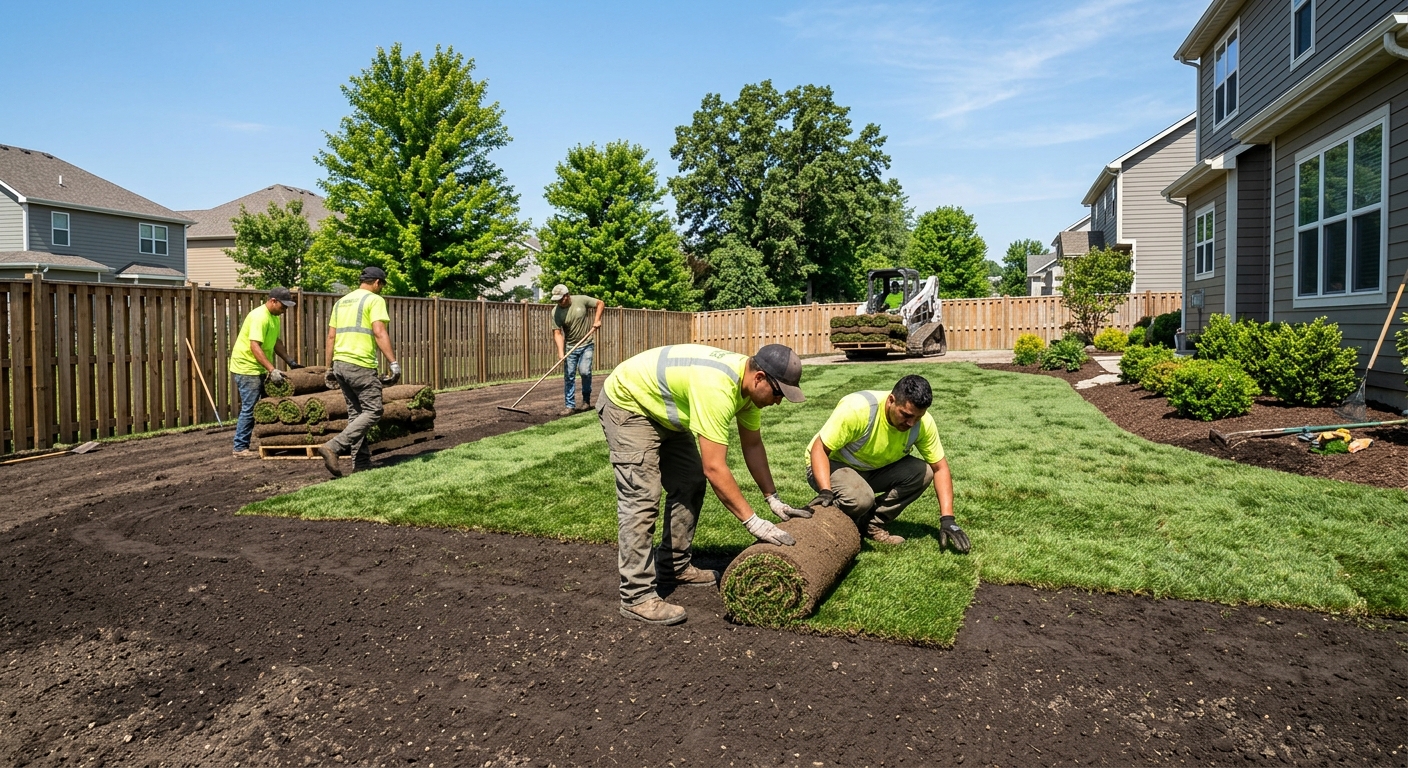
Laurelwood is a great place to invest in your home’s outdoor space—especially because so many households here benefit from the yard footprint that typically comes with single-detached living (Statistics Canada, 2021 Census). With a local population of 5,150, contractor availability is strong enough to get competitive bids, but projects still depend on the GTA’s weather window and crew scheduling. In the Toronto area, landscaping costs are shaped by freeze–thaw cycles, deep winter frost, and the way clay/fill soils can hold moisture. Those factors make proper drainage, granular base prep, and geogrid/foundation depth non-negotiable for patios, steps, and retaining walls. Expect more labour and material to protect hardscape longevity than you would in milder regions.
In Laurelwood and nearby neighbourhoods along the main commuting corridors, demand is especially high for front-yard curb upgrades and backyard hardscape conversions—think interlocking walkways and small patios—because homeowners often want a cleaner, more usable yard before the busy summer season. That demand can tighten scheduling from late spring through early fall, which influences pricing on a per-install basis.
Below is a practical cost range for common landscaping scopes in Laurelwood, so you can compare apples-to-apples before you request quotes.
| Service |
Description |
Season |
Price Range |
| Full landscape design and installation |
Site visit, concept plan, planting + hardscape layout, grading/drainage coordination, labour and materials for a complete refresh |
Late April–October |
$8,000–$40,000 |
| Sod installation (supply, grade, lay, roll) |
Soil prep, topsoil amendment as needed, grading, sod delivery/laying, rolling and initial watering plan |
Late April–June; early September |
$2,500–$8,000 |
| Lawn seeding (grade, seed, starter fertilizer) |
Light regrade, seed blend and starter fertilizer, rake/roll, and establishment care |
April–May; August–September |
$1,800–$6,500 |
| Interlocking patio or walkway |
Excavation, compacted base, geotextile, interlocking stone installation, edging, and jointing |
May–September |
$6,000–$30,000 |
| Retaining wall (interlocking block) |
Layout, excavation and compaction, block installation, drainage gravel/weep provisions, finishing |
May–September |
$6,000–$30,000 |
| Tree and shrub planting |
Planting beds, soil amendment, staking, watering plan, and cleanup |
April–June; September–October |
$800–$6,000 |
Prices are estimates only and vary by project scope, site access and material selection.
What affects the price of landscaping in Laurelwood
Even when you ask for the “same” job, Toronto-area landscaping quotes can swing by 30–50% because the work is rarely identical once we factor in site conditions, drainage complexity, and plant/hardscape choices. In Laurelwood, the yard is typically clay-heavy and built on varying fill—so a simple-looking front walk can become a bigger excavation and base-prep job when we discover soft spots or need to correct slope to keep water away from foundations. Hardscape and planting are also constrained by the local working season: in our hardiness zone (around 6a–7a), crews can install reliably during the frost-free window from roughly May to October, with shoulder-season planting typically limited to dates that won’t stress new roots.
Planting and cost are also tied to winter survivability and summer humidity. In the Prairie regions (Zone 2–4), designers lean toward drought-tolerant, wind-hardy species and simpler palettes because shorter seasons and frequent dryness reduce establishment success. Coastal BC (Zone 7–8) can support a larger lush palette, but heavy rainfall makes drainage and soil structure equally important. In Southern Ontario, we usually need irrigation planning for summer dry spells, and we design for freeze–thaw so patios and retaining walls don’t heave or shift.
Two common Laurelwood examples that change cost quickly: (1) if grading needs an added drainage swale or we install a French drain, labour rises substantially because trenching, bedding stone, and outlet tie-ins are time-intensive; (2) upgrading from standard shrub sizes to a more mature specimen tree can be worth the upfront cost, but it’s reflected in the tree planting band—often moving closer to the upper end of $800–$6,000 for a multi-species screen. Similarly, if your project shifts from seeding to sod, you’ll feel the pricing difference—sod installation is commonly in the $2,500–$8,000 range because it includes both higher material cost and tight handling logistics.
| Price Factor |
Why It Matters |
Cost Impact |
| Yard size in sq ft — the primary cost driver for softscape |
More area means more topsoil, seed/sod, mulch, edging, and time |
Low: +/– 10%; larger yards can add $2,000+ per 500–1,000 sq ft depending on scope |
| Grading and drainage work — slope corrections add significant cost |
Proper slope prevents pooling and foundation moisture; often requires deeper excavation |
Can add 20–40% if regrading is needed across a wide footprint |
| Drainage bed or French drain installation |
French drains require trenching, geotextile, perforated pipe, gravel, and discharge routing |
Frequently adds $1,500–$6,000 depending on length and tie-in complexity |
| Plant material tier — native shrubs vs. ornamental vs. mature specimen trees |
Larger or more specialized plants cost more and may need professional handling/staking |
Mature specimens can shift planting budgets by $1,000–$4,000+ for screening and structure |
| Hardscape vs. softscape ratio — walls and patios cost more per sq ft than lawn |
Concrete/base preparation and stone placement drive higher material and labour costs |
Switching from mostly lawn to mostly hardscape can double a portion of the total project budget |
| Irrigation system design and installation |
Sprinklers/drip need layout, trenching, backflow, and proper zoning for efficiency |
Often adds $2,000–$8,000 depending on size and complexity |
| Soil amendment and topsoil required |
Clay and fill may need compost, sand blending, or imported topsoil for root health |
Can add $500–$3,500+ based on soil volume and haul distance |
| Tree removal or stump grinding before new planting |
Roots and stumps affect excavation, access, and replanting feasibility |
Can add $800–$4,000+ depending on number, size, and access |
Permits & regulations in Ontario
In Ontario, most routine landscaping work—like planting trees/shrubs, sodding lawns, and installing typical softscape beds—usually does not require a building permit. Where homeowners often get surprised is with retaining walls and changes that affect drainage. In most Ontario municipalities, retaining walls above a height threshold (commonly 1.0 m / 3.3 ft) typically require a building permit and may call for engineering/structural input depending on height, soil conditions, and wall type. Also, any significant change to lot grading that redirects water toward a neighbouring property or alters stormwater flow can trigger approval or inspection requirements.
Before you dig in Laurelwood, always plan for utility locates (Call Before You Dig or the provincial equivalent process) because cable, gas, and service lines can run where you’d expect only “garden soil.” Confirm irrigation and water-use requirements too. Even though Ontario doesn’t run like the dry interior of BC, summer watering rules can still be enforced during drought-like conditions.
How to verify your contractor: (1) ask for proof of Ontario licensing (as applicable to the scope), and check their business registration if relevant; (2) request a current certificate of insurance showing general liability with adequate limits; (3) ensure they have WSIB/WCB coverage clearance (or equivalent proof of coverage) and don’t rely on verbal assurances. Then review the certificate—make sure the dates are current and the name matches the contracting entity—before the first shovel moves.
Planning a landscape that thrives in Laurelwood's climate
Designing for Laurelwood means working with our plant hardiness (about 6a–7a), managing moisture in clay-heavy soils, and planning around freeze–thaw. Start with plant selection: choose hardy, zone-appropriate perennials and woody plants that tolerate winter lows near –23 to –18°C and rebound after spring freeze swings. Native-friendly options usually establish well with less fuss and typically perform better than “borderline” ornamentals that are meant for milder climates.
For turf, decide between sod and seed based on timeline and budget. Sod gives instant curb appeal and erosion control, but it’s commonly $2,500–$8,000 because it includes supply and installation logistics. Seeding is lower cost and fits a “repair/refresh” approach, but it takes longer to green up and needs consistent moisture during establishment.
Drainage and grading come next. Toronto-area rain events plus winter thaw can pool around foundations if grades are off by even a small amount. That’s why we often address grading before patios and steps. For hardscape, base preparation must account for local frost behaviour—proper granular depth, compaction, and drainage layers reduce heave and settlement.
To keep maintenance manageable, build low-maintenance structure with mulch, groundcovers, and perennial massing—then use drip or targeted sprinklers only where plants truly need it. If you want a more water-smart approach, you can blend in rain-garden pockets and xeriscape-style plantings in the lowest-water zones of the yard (like side yards), while still keeping the lawn portion modest.
Example: if you’re replacing a worn 1,000 sq ft lawn area, sod might land near the middle of $2,500–$8,000, while seeding plus soil prep may be less—so sod is justified when you need fast results for events, resale photos, or erosion control. If you have time for establishment, seeding often makes more financial sense.
| Element |
Climate Consideration |
Maintenance Level |
Price Band |
| Sod lawn installation |
Best installed during warm, stable growth windows; roots establish before fall frost |
Moderate (watering + first-season mowing) |
$2,500–$8,000 |
| Native perennial garden |
Hardy plant selection handles –23 to –18°C lows and humid summers; mulch improves winter protection |
Low to moderate (spring cleanup + occasional weeding) |
$1,200–$6,000 |
| Mulched shrub border |
Clay soils benefit from proper amendment and consistent moisture during establishment |
Low (mulch refresh 1–2 times/year) |
$900–$4,500 |
| Interlocking stone patio |
Freeze–thaw demands deep, compacted base + drainage to prevent movement |
Low (periodic joint maintenance) |
$6,000–$30,000 |
| Retaining wall (block) |
Needs drainage gravel/weep provisions and footing depth designed for frost movement |
Low (visual inspections after winter) |
$6,000–$30,000 |
| Drip irrigation system |
Helps target summer watering needs efficiently; supports plant establishment |
Low (seasonal adjustments + checks) |
$2,000–$8,000 |
How to choose a landscaping contractor in Laurelwood
Choosing the right contractor in Laurelwood is mostly about verification and clarity. First, verify Ontario compliance for your specific scope and confirm insurance: ask for a current certificate of insurance (general liability) and ensure the coverage is active and tied to the legal business name on the quote. For work that involves labour risk on your property, request proof of WSIB/WCB coverage (or a clearance letter, where applicable). If a contractor can’t provide these documents promptly, that’s a major warning sign.
Next, get 2–3 quotes that are itemised—not just a total. Look for a breakdown that separates labour and materials (stone type and thickness, base depths, soil amendment quantities, plant sizes, and how drainage will be handled). Confirm what’s excluded: disposal/haul-away, tree removal, utility marking compliance, and whether permits (where required for retaining walls above thresholds) are included in the price.
Warranty matters in landscaping because soils and freeze cycles reveal problems over time. Ask for: (1) workmanship warranty length for hardscape and grading, (2) manufacturer warranties for plants/products where offered, and (3) whether warranties are transferable if you sell your home.
Payment schedule should be conservative: typically no more than 10–15% upfront for mobilization and materials, with a holdback until completion and cleanup. Require a written start date and a completion estimate based on weather and delivery timelines.
- Request insurance + WSIB/WCB proof before signing anything
- Use an itemised quote (materials specs, base depths, plant sizes)
- Confirm site access plan (parking, driveway protection, staging)
- Verify topsoil/soil amendment type and thickness (not just “soil”)
- Ask how drainage will be tested and tied in (where applicable)
- Clarify base construction details for patios/walkways (geotextile, compacted granular layers)
- Confirm whether edging and jointing materials are included
- Check sod/seed establishment responsibilities (watering schedule, starter fertilizer)
- Ask who performs utility locates and how excavation is managed
- Confirm permit responsibility if a retaining wall triggers approval requirements
- Get warranty terms in writing (workmanship + any product coverage)
- Agree on payment milestones tied to inspection points
Red flags to watch for in Laurelwood: (1) a quote that only lists one line item (no base depth, no soil specs, no plant sizes); (2) no proof of insurance/WSIB/WCB; (3) demands for large upfront payments; (4) vague “we’ll sort it out” drainage statements without a plan; and (5) pressure to sign immediately without a site visit.
Frequently asked questions — landscaping in Laurelwood
How do I improve drainage in my yard?
In Laurelwood (and across the Toronto area), drainage improvements usually start with correcting grading so water doesn’t pool near foundations. The most effective fix depends on where the water goes: if it stays in low spots, we regrade with proper slope and consider adding topsoil only after subgrade is stable. If water is coming from higher areas or soaking laterally through clay, a French drain (or drainage bed) with proper geotextile, gravel, and a safe outlet often costs more upfront, but it prevents repeated freeze–thaw damage. Make sure any drainage plan aligns with Ontario expectations about not pushing runoff onto neighbouring properties. Before digging, have utility locates completed and confirm the discharge route. If your lawn is wet, avoid heavy top-dressing alone—roots need the right structure, not just more material.
What is xeriscaping and does it suit Laurelwood?
Xeriscaping is a water-wise landscaping approach that uses drought-tolerant plants, efficient irrigation, and soil strategies (mulch/organic amendments) to reduce watering needs. In Laurelwood, it can suit specific parts of the yard—like side areas that bake in summer or spots that are hard to irrigate evenly—while still keeping a more traditional turf area where you want that classic look. Because Laurelwood sits in a temperate zone with cold winters, you don’t want “only desert plants”; you want hardy selections that handle our winter lows and return reliably. Pair xeriscape-style planting with rain-garden pockets where you can safely capture runoff, and use drip irrigation if you’re installing irrigation anyway. In practice, homeowners often blend xeriscape beds with a smaller sod section to balance cost and curb appeal. For budgeting, turf choices alone can swing totals—sod is commonly around $2,500–$8,000 for typical installs.
How do I plan a low-maintenance yard?
A low-maintenance yard in Ontario is mostly about reducing ongoing “tasks,” not eliminating care. Start by choosing hardy, zone-appropriate plants that won’t struggle after winter freeze–thaw, and group them by sun and moisture conditions so you’re not overwatering or constantly replanting. Use mulch generously to suppress weeds and protect roots, and design beds with fewer, stronger plant masses instead of many scattered specimens. For turf, seeding can be a lower-cost option for gradual improvement, while sod delivers faster results if you need it for erosion control or timing. For structure, consider groundcovers and perennial repeats to limit weeding. If your yard has slope or water movement issues, fix drainage first—otherwise you’ll spend the season fighting wet soil and plant decline. For hardscape, properly built patios and walkways reduce annual mess and settlement complaints; those projects often fall in the $6,000–$30,000 range depending on size and base requirements.
How deep should a retaining-wall base be for local frost?
For a retaining wall in Laurelwood, base depth must account for Ontario frost behaviour and stability requirements, but the exact excavation and footing design depends on wall height, soil type, and whether the wall is engineered. In many Ontario projects, crews commonly excavate below the frost-impacted zone and build from compacted granular base upward, then add drainage gravel behind the wall with proper provisions for water escape (weep holes/pipe where needed). Clay and fill soils often require additional attention because they can shift and hold water. If your wall is above the local permit threshold (often around 1.0 m / 3.3 ft in many municipalities), get it treated as a permitted, properly designed project—don’t guess on base depth. The safest approach is to ask for the contractor’s written base construction details and, when required, engineering documents.
How much does professional landscape design cost?
In the Toronto area, design pricing can vary because some providers include design with installation, while others bill design as a standalone service. For typical Laurelwood homeowners planning a refresh that combines grading, planting, and hardscape, total landscape design and installation is often budgeted within $8,000–$40,000 depending on scope and complexity. If you already have a basic layout and want mostly implementation, design may be smaller or structured as a concept + plant list. If your project includes significant grading/drainage, patios/steps, or retaining walls, design becomes more valuable because it coordinates levels and avoids expensive rework once bases are excavated. When comparing contractors, ask whether the quote includes site measurements, a scaled plan, and a plant palette with sizes—then confirm whether design revisions are included before construction starts.
How do I compare landscaping quotes?
To compare landscaping quotes in Laurelwood (and avoid overpaying), insist on itemised estimates rather than only totals. Make sure each quote lists labour and materials separately and specifies key details: patio/walk base construction layers, stone thickness, geotextile and edge materials, topsoil depth and soil amendments, and plant sizes (not just “shrubs”). Also confirm drainage plans—if one quote includes a French drain or grading correction and another doesn’t, the difference isn’t cosmetic; it’s structural and affects long-term performance through freeze–thaw. Check whether permits are included where needed, who handles disposal/haul-away, and whether watering and establishment care are included for sod/seed. For fairness, compare scopes and then look at warranty terms and insurance/WSIB/WCB proofs. A contractor charging a little less might be skipping essentials, which can erase savings quickly.