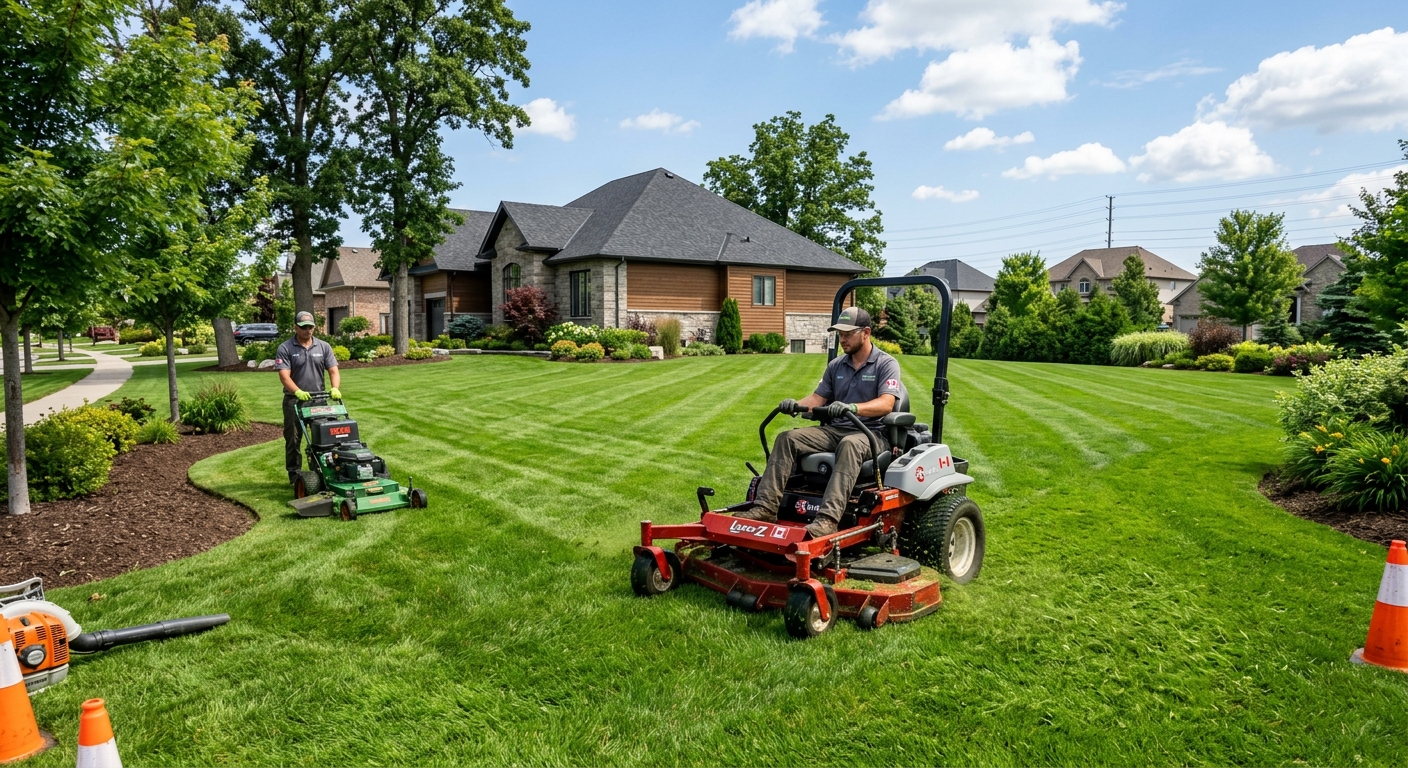
Landscaping options and costs in Forest Hill South
Forest Hill South, Ontario is one of those neighbourhoods where landscaping isn’t just “nice to have”—it’s part of how homes hold their value and how families enjoy their yards. With a population of 10,732 (Statistics Canada, 2021 Census), the area is dense with established properties, many of them long-settled and set back with generous frontages and side yards typical of detached neighbourhoods. That yard space often drives stronger demand for full-service design-and-install packages, especially around tree-lined pockets where residents want structure, privacy, and curb appeal without constant upkeep.
In Toronto’s plant hardiness band (zones 6a–7a), we design for winter lows roughly in the –23 to –18°C range and for humid summers. Costs in Forest Hill South also reflect local conditions contractors deal with every week: freeze–thaw cycling, clay and fill soils that can need excavation and amendment, and the need for correct drainage under patios, steps, and retaining walls. Labour availability is generally good in the Toronto area, but the market can tighten in late spring and early fall when everyone is scheduling installs for the frost-free window of about May to October.
When homeowners start with a clear plan—often in higher-traffic areas such as the Forest Hill South stretch toward Eglinton Avenue and surrounding side streets—our schedules typically prioritize core hardscape and drainage first, then finishing with planting and lawn. That sequencing is exactly why the price range varies, and why your best comparison starts with the categories below.
| Service |
Description |
Season |
Price Range |
| Full landscape design and installation |
Site assessment, grading/drainage plan, design concept, plant layout, hardscape and softscape installation |
May–October |
$8,000–$40,000 |
| Sod installation (supply, grade, lay, roll) |
Base preparation, soil conditioning, sod delivery and installation, rolling and initial watering guidance |
April–June; late August–September |
$2,500–$8,000 |
| Lawn seeding (grade, seed, starter fertilizer) |
Light grading, seeding, starter fertilizer and mulching; establishment plan for summer heat |
April–June; early fall |
$1,800–$5,500 |
| Interlocking patio or walkway |
Excavation, compacted granular base, geotextile (as needed), edging, interlocking stone installation |
May–October |
$6,000–$25,000 |
| Retaining wall (interlocking block) |
Block wall with proper base, drainage gravel/weep considerations, and surface finishing |
May–October |
$6,000–$30,000 |
| Tree and shrub planting |
Soil prep, planting, staking as required, mulch rings, and follow-up watering guidance |
May–October (spring and early fall preferred) |
$800–$6,000 |
Prices are estimates only and vary by project scope, site access and material selection.
What affects the price of landscaping in Forest Hill South
In Forest Hill South and across the Toronto area, the same “type” of project can land 30–50% apart in price. The driver is usually not the surface finish—it’s the hidden work: excavation depth, soil condition, drainage requirements, and how much hardscape you’re actually getting for the footprint. In southern Ontario, most jobs also follow freeze–thaw realities, so contractors price for durability first and appearance second.
Climate and frost dates directly shape both what grows and the working season. With Toronto sitting in zones 6a–7a, we can plant more varieties than in Prairie regions (where zones 2–4 and wind/drought push designs toward ultra-hardy, drought-tolerant palettes and shorter working windows). Coastal BC, with its longer, milder growing season (often zone 7–8), can support lush, broaderleaf structure, but heavy rainfall means drainage design is still critical. Meanwhile, southern Ontario needs reliable stormwater handling during wet spring periods, and we often plan irrigation coverage for humid summers when lawns and new plantings establish.
Two common Forest Hill South pricing examples: (1) a small interlocking patio may jump into a higher band when the contractor has to remove clay/fill, rebuild the granular base and ensure proper slope away from the house—those structural layers add labour and material. (2) a retaining wall can change significantly when the job needs proper drainage gravel and weep considerations plus a deeper base for stability under freeze–thaw.
Also note that housing stock here is often older and more settled, so bringing a yard back to “right” can mean soil amendment and spot repairs that push softscape from a simple seeding approach into full design-and-install territory—often starting around the lower end of $8,000–$40,000 for comprehensive work. For smaller additions like planting, many jobs land in the $800–$6,000 range depending on whether you’re adding a handful of shrubs or establishing multiple layers with a few specimen trees.
| Price Factor |
Why It Matters |
Cost Impact |
| Yard size in sq ft — the primary cost driver for softscape |
More area means more prep (grading/topsoil) and more material (sod/seed, mulch, plant stock) |
Small yards may stay near the low band; larger yards can push mid-to-upper pricing quickly |
| Grading and drainage work — slope corrections add significant cost |
Fixing pooling or redirecting water away from foundations requires excavation and re-compaction |
Can add a major share to overall cost, especially on clay/fill sites |
| Drainage bed or French drain installation |
Captures subsurface water and prevents foundation moisture and lawn failure |
Typically increases cost beyond “surface-only” estimates |
| Plant material tier — native shrubs vs. ornamental vs. mature specimen trees |
Higher-tier plants cost more and may require extra labour (bigger holes, staking, soil volume) |
Shifts projects from low-end planting budgets to mid-range installation budgets |
| Hardscape vs. softscape ratio — walls and patios cost more per sq ft than lawn |
Stone, base materials, and compacted layers are structurally labour-intensive |
Replacing lawn with stone or adding steps can raise the total materially |
| Irrigation system design and installation |
Proper head layout plus winter considerations affects performance and longevity |
Can move a project from basic establishment to a full, long-term system |
| Soil amendment and topsoil required |
Clay improvement and topdressing protect roots and reduce future failures |
Material hauling and labour add cost, especially where existing soil is poor |
| Tree removal or stump grinding before new planting |
Utilities and root mass dictate how disruptive removal becomes |
Adds equipment and disposal costs; can also delay planting windows |
Permits & regulations in Ontario
In Ontario, most typical planting and softscape work—like sodding, seeding, and installing gardens—usually does not require a permit. Tree and shrub planting is generally treated as routine landscaping. However, the items that often do require permits are hardscape changes that affect structural elements, drainage, or neighbouring properties. For example, retaining walls above a common threshold (often around 1.0 m / 3.3 ft, depending on municipal rules) typically require a building permit and sometimes engineered drawings. Significant changes to lot grading—especially where runoff could be redirected toward neighbouring lots or toward storm sewer connections—can also trigger approval requirements.
Before any digging, contractors and homeowners should arrange utility locates. That’s critical when you’re installing new drainage, building wall footings, or even digging planting holes near services. In Forest Hill South, where mature yards can hide utilities and old drain lines, locates reduce the risk of expensive delays.
To verify a contractor in Ontario, ask for three things and check them directly: (1) Ontario business/contractor licensing status as applicable in their trade practice (confirm via the appropriate online registry for their business), (2) proof of general liability insurance (ask for the current Certificate of Insurance and ensure the coverage limits are appropriate for landscaping scope), and (3) WSIB/WCB clearance or coverage documentation if they employ workers. Many reputable GTA landscapers will provide these up front with their quote.
Also confirm water-use rules with your contractor. While drought restrictions are most talked about in the dry BC interior and Alberta, Ontario can still tighten during peak demand periods—so plan irrigation scheduling and target efficient systems.
Planning a landscape that thrives in Forest Hill South's climate
Designing for Forest Hill South means working with Ontario’s zone 6a–7a hardiness and the reality that freeze–thaw cycles punish poor drainage and shallow bases. Start with plant selection: choose zone-appropriate, hardy perennials and shrubs (and when possible, native options) so you reduce winter burn and the need for extra protection. Next, match lawn strategy to your timeline. Sod gives instant results, but it depends on correct base preparation and consistent establishment watering. Seeding costs less, but it needs a patience window—especially through humid summers and wet spring transitions.
Drainage and grading are non-negotiable in Toronto. Pooling near foundation walls can lead to persistent foundation moisture and stressed grass. We typically build softscape slopes so they drain away, and we address low spots with regrading or a drainage bed/French drain where needed. For hardscape, the local frost line effect means patio and step bases must be compacted properly and built to the required depth for longevity; “thinner” bases settle and heave over time.
For low-maintenance beauty, layer groundcovers and mulched shrub borders to suppress weeds, then add repeat-bloom perennials for seasonal interest. Rain-garden features and targeted “xeric-style” zones (not full desert landscaping, but water-smart design) can reduce runoff and watering—particularly where downspouts discharge toward gardens.
Is the price difference justified? Often yes: a sod lawn install can fall into the $2,500–$8,000 band because it includes prep and installed rolls, whereas seeding may start lower but still requires topsoil/grade corrections and reliable establishment. If you need full coverage quickly for a spring event, sod’s higher cost can be the right trade. If timing is flexible and your soil is workable, seeding is frequently the better value.
| Element |
Climate Consideration |
Maintenance Level |
Price Band |
| Sod lawn installation |
Needs strong establishment through spring conditions and careful watering before hot, humid stretches |
Low-to-moderate during first 6–8 weeks; then standard mowing |
$2,500–$8,000 |
| Native perennial garden |
Zone-appropriate roots handle winter and summer swings with less winter protection |
Moderate (mulch refresh and light pruning) |
$1,800–$6,000 |
| Mulched shrub border |
Helps moderate soil temperature and reduces freeze–thaw stress at the root zone |
Low (weed suppression, seasonal fertilizer as needed) |
$1,200–$5,500 |
| Interlocking stone patio |
Freeze–thaw demands correct compacted base and drainage slope away from structures |
Low (occasional cleaning and joint maintenance) |
$6,000–$25,000 |
| Retaining wall (block) |
Stability depends on base depth and drainage gravel under Ontario’s winter cycles |
Low after installation; periodic inspection |
$6,000–$30,000 |
| Drip irrigation system |
Targets root zones during humid summers; helps reduce runoff and fungal stress |
Moderate (winterization and occasional head/line checks) |
$1,500–$6,500 |
How to choose a landscaping contractor in Forest Hill South
Choosing the right contractor in Forest Hill South comes down to verifying coverage, getting clear scope, and ensuring the quote matches how you want the work built (especially drainage and hardscape base prep). Start with licensing and coverage: in Ontario, ask for proof of general liability insurance (Certificate of Insurance) and confirm that any workers are covered under WSIB/WCB where applicable. How to check: request the documents with your quote or within 24–48 hours, confirm the policy is current, and ensure the contractor provides a WSIB/WCB clearance letter or confirmation for workers (not just a verbal promise).
Next, get 2–3 itemised written quotes. You want labour and material breakdowns—not a vague lump sum. Ask whether disposal of excess soil, stone cutting, and site protection are included. Confirm if a permit pull is included where needed (commonly for taller retaining walls and some grading/drainage approvals), and ensure utility locates are part of the plan before digging.
Warranty matters: ask for a workmanship warranty length and what it covers (settlement, cracking caused by base issues, plant replacement policy, and irrigation performance). Also ask about product/manufacturer warranties and whether they transfer to you as the homeowner.
For payment schedule, don’t agree to more than about 10–15% upfront. Hold back a portion until completion and cleanup are done and you’ve reviewed the final grading and drainage. Finally, insist on a start date and completion estimate in writing so your install aligns with the May–October window for planting and hardscape.
- Confirm general liability insurance (current COI) before signing.
- Request WSIB/WCB clearance documentation for workers.
- Ask for a trade-specific Ontario licensing reference where applicable to their work type.
- Get 2–3 itemised quotes with labour and materials separated.
- Ensure drainage scope is explicit (French drains, outlet ties, slope corrections).
- Confirm hardscape base specs: excavation depth, compacted granular layers, geotextile use.
- Ask who pulls permits (if required) and who pays fees.
- Clarify disposal: soil/stone removal included or billed separately.
- Review plant list for sizes (e.g., caliper/height), spacing, and replacement policy.
- Request a workmanship warranty in writing with a coverage duration.
- Use a payment schedule with only 10–15% upfront and a holdback to completion.
- Confirm timeline and whether work depends on weather or curing times.
Red flags to watch for in Forest Hill South: (1) quotes that skip drainage/grading details but still promise “better lawn” outcomes, (2) no written scope or vague “materials per estimate” language, (3) refusal to provide insurance/WSIB/WCB clearance, (4) pushing large upfront payments, and (5) no clear warranty terms for workmanship and plant establishment.
Frequently asked questions — landscaping in Forest Hill South
How do I find a licensed landscaper in Forest Hill South?
In Forest Hill South, start by shortlisting contractors that provide documentation up front. Ask for their Ontario business/contractor details where applicable, proof of general liability insurance (Certificate of Insurance), and WSIB/WCB clearance for any workers. Then verify the quote scope matches what you need—especially drainage and hardscape base prep—because that’s where “similar projects” differ the most. A practical approach is to call 2–3 companies, request an itemised quote, and ask each one the same checklist questions: who pulls permits (if retaining walls or grading approvals are triggered), whether utility locates are arranged, what disposal is included, and what the workmanship warranty covers. If a contractor can’t produce current paperwork quickly, consider it a stop sign.
How much does landscaping cost in Forest Hill South?
Landscaping costs in Forest Hill South typically depend on yard size, drainage repairs, and how much hardscape you’re adding. For a larger, coordinated project (design plus installation), budgeting within $8,000–$40,000 is common because Toronto’s freeze–thaw cycle pushes contractors to build proper bases and drainage. For lawn-only improvements, sod installation often lands around $2,500–$8,000, while planting additions can be much more modest depending on how many plants and whether mature specimens are included (often $800–$6,000). If your site has clay/fill or drainage issues, expect the quote to move upward—grading and subdrains are labour-heavy. Always compare apples-to-apples by looking at what’s included for excavation, soil amendment, and disposal.
What plants thrive in Forest Hill South's climate zone?
Forest Hill South falls in the Toronto-area zone 6a–7a range, where many hardy shrubs and perennials perform well through winter lows near –23 to –18°C and then handle humid summers. In practice, the best “thriving” plants are zone-appropriate and also fit your light conditions (front yards often vary from full sun to partial shade under mature trees). A good contractor will suggest a layered structure: hardy shrubs for winter form, perennials for repeat blooms, and groundcovers to reduce weeds. Where drainage is managed, you can also support stronger growth without constant watering. If you’re replacing failed lawn areas or struggling near downspouts, ask for a plant list paired to drainage conditions—because improving soil and water flow often helps more than switching plants alone.
Sod vs seed — which is better for a Forest Hill South lawn?
In Forest Hill South, sod is usually the better choice when you need instant curb appeal or you’re re-establishing a lawn quickly within the May–October window. It’s also more forgiving in erosion-prone areas because coverage starts immediately. The trade-off is cost: sod installation commonly sits in $2,500–$8,000, especially when base preparation and grading are needed. Seeding can be more budget-friendly and works well when you have time to establish roots, but results depend heavily on preparation, moisture management, and weed control. If your lawn failure is caused by drainage (pooling, poor slope, compacted clay), neither sod nor seed will truly “solve” it—address grading or add drainage first, then re-landscape for lasting success.
How much does a retaining wall cost in Forest Hill South?
A retaining wall cost in Forest Hill South commonly lands in the $6,000–$30,000 range, depending on wall height, total linear feet, material choice, and how much excavation and drainage work is required. Toronto’s freeze–thaw cycles make base depth and drainage crucial for stability, so contractors may need deeper preparation and proper gravel/weep considerations rather than “surface-only” solutions. Also check whether the wall triggers a permit: retaining walls above a common threshold (often around 1.0 m / 3.3 ft, depending on local rules) typically require a permit and sometimes engineered drawings. If your site needs regrading to protect foundations and manage runoff, that can raise the estimate further. The most accurate comparisons come from itemised quotes that list base and drainage details.
When is the best time to landscape in Forest Hill South?
For most landscaping work in Forest Hill South, timing follows Ontario’s frost-free window. Planting is typically best from late spring through early fall (generally May–October), with spring and early fall offering more stable establishment conditions. Sod and lawn work are often targeted for April–June and late August–September to balance growth and heat stress. Hardscape is commonly scheduled in the warmer months (May–October) because stone bases need proper compaction and curing conditions. Avoiding mid-winter installations helps prevent freeze–thaw damage and reduces repair risk. Also, plan ahead: in Toronto, demand spikes in late spring and early fall, so booking early helps you secure scheduling. If drainage or wall permits are needed, start those conversations early because approvals and utility locates can affect timelines.