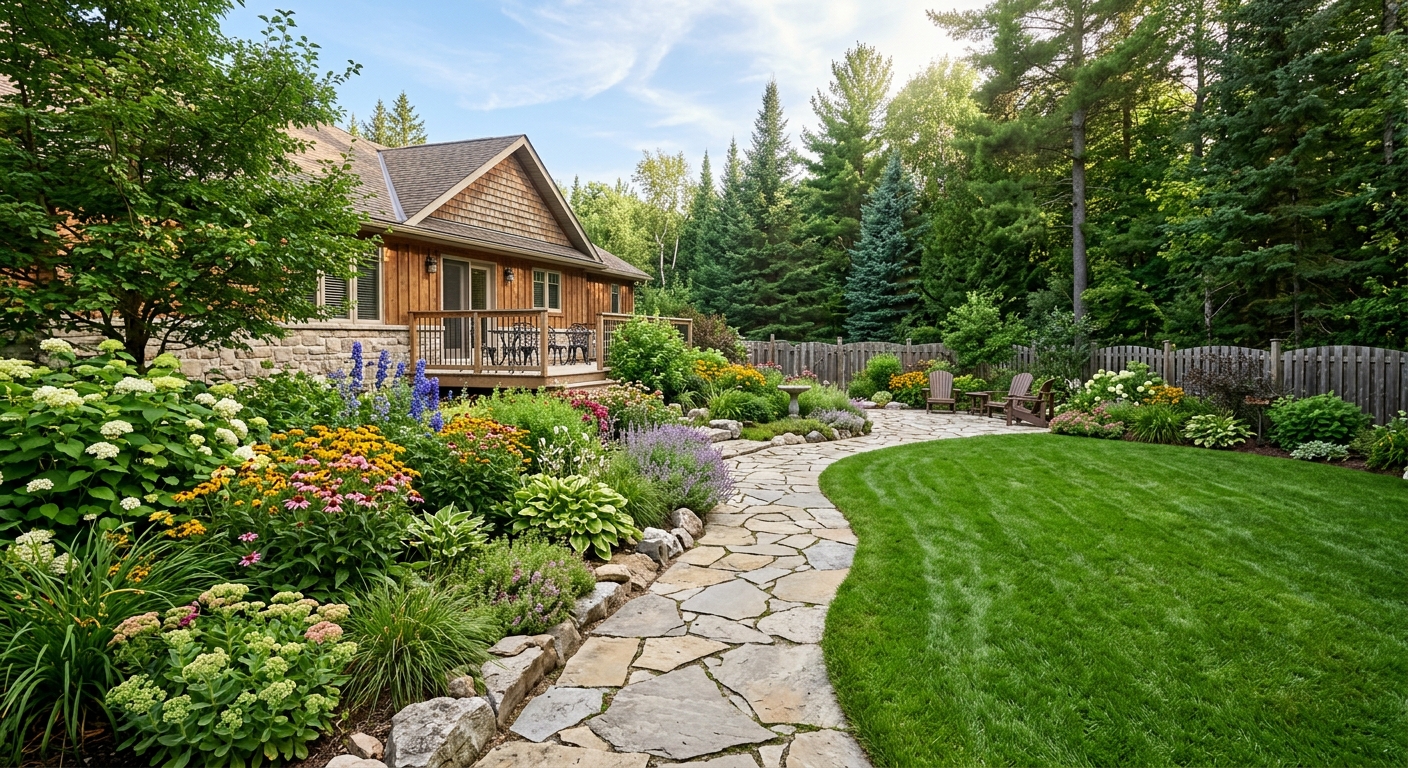
Landscaping options and costs in Newtonbrook West
Newtonbrook West, a dense, older-and-newer housing mix just north of Toronto’s core, is where landscaping choices often come down to practical curb appeal and long-term durability. With a population of 23,831 (Statistics Canada, 2021 Census), there’s steady local demand for contractors—especially in neighbourhoods like Bayview Village area streets where homeowners frequently refresh frontages, add walkways, and improve drainage. It also helps that many properties in the area are detached or semi-detached, which typically means more usable yard space to work with, so families are more willing to invest in visible improvements.
Toronto-area landscaping costs are heavily shaped by climate and soil. We’re usually working in plant hardiness zones 6a–7a with frost roughly May to October for the practical install window, then deep winter frost and freeze–thaw cycles that punish poor bases. Local clay and fill soils can require excavation, soil amendment, and sometimes subdrains to protect both softscape (lawns, beds) and hardscape (patios, steps, retaining walls). That’s why two quotes for similar-looking work can differ by a lot: base preparation, drainage corrections, and access (walk-outs, slopes, narrow driveways) affect labour and materials.
Below is a quick comparison of common landscaping packages and their typical ranges in Newtonbrook West—then you can use the factors section to understand why your final number may land closer to the low or high end.
| Service |
Description |
Season |
Price Range |
| Full landscape design and installation |
Site walk, planting plan, grading/drainage strategy, soil prep, installation of beds, lawn, and/or hardscape components |
May to October (weather-dependent) |
$8,000–$40,000 |
| Sod installation (supply, grade, lay, roll) |
Remove/prepare existing surface, grade for drainage, install sod, roll and water-in plan |
Late April to early November |
$2,500–$8,000 |
| Lawn seeding (grade, seed, starter fertilizer) |
Grade and loosen soil, add compost/topsoil where needed, seed mix and starter feed |
Early spring or late summer/early fall |
$1,800–$6,500 |
| Interlocking patio or walkway |
Excavate, build base (granular + compaction), edge restraints, install pavers with proper slope |
May to October |
$6,000–$30,000 |
| Retaining wall (interlocking block) |
Block wall with compacted granular base, drainage geocomposite/backfill, cap and finish |
May to October |
$8,000–$26,000 |
| Tree and shrub planting |
Soil improvement, planting holes, amendment, stakes/anchors as needed, mulch and initial watering plan |
Spring and fall (best survival) |
$800–$6,000 |
Prices are estimates only and vary by project scope, site access and material selection.
What affects the price of landscaping in Newtonbrook West
In Newtonbrook West and across the Toronto region, quotes for the same “headline” job can vary by 30–50% because landscaping is rarely just materials—it’s labour intensity, how much groundwork is required, and whether the design corrects existing drainage or settlement issues. A sod lawn might look straightforward, but if your yard is sitting on clay fill and water pools near foundations, the preparation work can quickly push the job toward the higher end of the $2,500–$8,000 range. Likewise, a simple patio can become a full base-rebuild if freeze–thaw risk is high and the existing subgrade is soft.
Climate and the working season set real constraints. In our Toronto hardiness zone (6a–7a), frost-free planting and installation is roughly May to October, but we still plan for freeze–thaw cycles that demand proper geotextile, edge restraints, and sufficient base depth. Prairie regions (Zone 2–4) typically need ultra-hardier, drought-tolerant species and simpler palettes because the growing season is shorter and summer drought is common; even retaining-wall base depth has to go deeper to remain stable. Coastal BC (Zone 7–8) usually supports lush, broadleaf plants and longer growing conditions, but heavy rain means drainage engineering is still critical. Dry BC interior and Alberta often face water restrictions, shaping irrigation design toward drip and low-precipitation heads. Southern Ontario (Zone 5–6) sits in the middle: moderate season, but summer dry spells still require irrigation planning.
Two common Newtonbrook West examples: (1) clay-heavy yards that slope incorrectly often require regrading plus amended topsoil, which raises softscape costs; (2) an older home with a perimeter drain tie-in may need a French drain and downspout redirection before sod or beds go in. If your foundation is near the planting area, we may also add additional excavation and drainage, nudging “mid” projects toward the top end of the $8,000–$40,000 full-install band.
| Price Factor |
Why It Matters |
Cost Impact |
| Yard size in sq ft — the primary cost driver for softscape |
Larger lawns and beds require more topsoil, seed/sod, mulch, and labour time |
Often the biggest swing; can move projects across entire price bands |
| Grading and drainage work — slope corrections add significant cost |
Freeze–thaw and pooling damage foundations and soften subgrades under hardscape |
Commonly adds major labour and machine time before any planting or pavers |
| Drainage bed or French drain installation |
Intercepts groundwater and relieves clay-related water pressure |
Can be a “must-do” for wet yards; increases both excavation and materials |
| Plant material tier — native shrubs vs. ornamental vs. mature specimen trees |
Mature trees have larger root balls, heavier handling, and longer establishment needs |
Can shift the planting portion from a few hundred to several thousand dollars |
| Hardscape vs. softscape ratio — walls and patios cost more per sq ft than lawn |
Walls and pavers require deeper excavation, compaction, and specialty stone or block |
Higher hardscape share typically pushes total cost into retaining/patio bands |
| Irrigation system design and installation |
Protects establishment in summer dry spells; design depends on coverage accuracy |
More zones and controls increase cost, especially if trenching is extensive |
| Soil amendment and topsoil required |
Clay and fill often need compost and nutrient correction for rooting success |
Adds delivery, spreading, and regrading labour |
| Tree removal or stump grinding before new planting |
Clearing affects time, disposal, and safe access for machinery |
Often triggers extra labour and haul/disposal charges |
Permits & regulations in Ontario
In Ontario, most routine landscaping work—planting, sodding, topdressing beds, and typical softscape installations—generally does not require a permit. However, retaining walls can be the exception. In many Ontario municipalities, retaining walls above a threshold (commonly around 1.0 m or 3.3 ft) typically require a building permit, and sometimes engineered drawings depending on height, location, and site conditions. If your wall is close to a property line or designed to retain significant soil depth, plan on extra scrutiny.
Also consider approvals when changes to lot grading can affect drainage. If regrading redirects water toward neighbouring properties or toward storm sewer connections, that may trigger requirements or conditions from the municipality. Before you dig for wall footings, subdrains, or any planting in-ground, you should call for utility locates to protect buried services.
For Newtonbrook West homeowners, here’s a simple verification approach for contractors:
- Check licensing and contractor information through the province’s official online registry where applicable to confirm the business identity and standing.
- Ask for a current certificate of insurance (liability) naming you as additionally insured if that’s part of their agreement.
- Confirm WSIB/WCB coverage (or the appropriate clearance) before work begins, especially for any excavation, machine use, or hardscape construction.
- Request the exact scope in writing (including disposal and permit responsibilities).
- If a retaining wall may cross the height threshold, confirm who is responsible for permit applications and drawings.
Planning a landscape that thrives in Newtonbrook West's climate
Designing for Newtonbrook West means working with our zone-6a–7a winter lows, humid summers, and the freeze–thaw cycle that keeps testing poorly prepared stone and compacted bases. Start with plant selection: choose zone-appropriate, ideally native or well-adapted perennials and woody shrubs that can handle winter dieback and bounce back. For lawns, decide early whether you want instant coverage or long-term cost efficiency—because sod and seed behave differently in our local season.
Sod vs. seed: sod gives immediate curb impact, but it’s typically more expensive per square foot. As a practical example, if you’re replacing a 400 sq ft front lawn, sod commonly lands in the $2,500–$8,000 band, while seeding—when the grade and soil are corrected—can be notably less. Seeding is usually most successful when you pair it with starter fertilizer and the right timing (spring or late summer/early fall), but it won’t look “finished” right away.
Drainage and grading come next. In Toronto, pooling water increases risk to foundations and undermines hardscape, so we slope away from the house and address clay-related saturation before turf or beds go in. For hardscape, base preparation matters: patios, steps, and retaining walls need granular layers built for our winter freeze cycle—proper thickness, compaction, and drainage space behind stone or block.
Finally, keep maintenance realistic. Mulch, groundcovers, and a layered perennial structure reduce weeding and help soils retain moisture. If you want lower watering, consider rain-garden elements or targeted xeriscape-style zones (not the whole yard), using drought-tolerant plants and mulch where sun and soil conditions support them.
| Element |
Climate Consideration |
Maintenance Level |
Price Band |
| Sod lawn installation |
Establishment needs watering during early summer; freeze–thaw makes grade accuracy important |
Low to moderate (water-in and first-season care) |
$2,500–$8,000 |
| Native perennial garden |
Choose hardy species for Zone 6a–7a and mulch for winter protection |
Moderate (spring cleanup, weed control) |
$800–$6,000 |
| Mulched shrub border |
Mulch stabilizes soil moisture and helps manage temperature swings |
Low (occasional refill, light pruning) |
$1,500–$7,000 |
| Interlocking stone patio |
Requires frost-safe base depth and proper slope to prevent water sitting under pavers |
Low (seasonal weed/weed-line checks) |
$6,000–$30,000 |
| Retaining wall (block) |
Behind-wall drainage and compacted base reduce freeze–thaw movement |
Low (periodic inspection of cap stones and drainage outlets) |
$8,000–$26,000 |
| Drip irrigation system |
Helps manage humid summers and dry spells while using water efficiently |
Moderate (season start/stop checks) |
$1,200–$6,500 |
How to choose a landscaping contractor in Newtonbrook West
Start by confirming the contractor is set up to work safely and legally in Ontario. Ask for proof of liability insurance (and whether you’re listed as additionally insured). For work that involves excavation or labour-intensive hardscape, confirm WSIB/WCB coverage and request the clearance letter or current proof of coverage before any equipment arrives. For licensing, make sure the contractor’s business details match what they provide on proposals and receipts, and use the province’s online resources to verify the company identity and standing.
Next, get 2–3 itemised quotes—not just a single lump sum. A solid Newtonbrook West quote breaks labour and materials into sections (e.g., excavation/grading, base prep, drainage items, stone/sod quantities, planting counts, irrigation lines, and disposal/haul-away). Confirm what’s included: permit pull responsibilities (if required for a retaining wall), utility locates scheduling, disposal of removed sod/soil, and whether topsoil and compost are supplied in specific depths or “all-in” amounts.
Pay attention to warranty terms. You should receive a workmanship warranty (commonly covering base prep, settling, and installation errors) and clarity on manufacturer warranties for products like pavers/blocks or irrigation components. Ask whether warranties are transferable to future owners.
For payment schedule, never pay more than about 10–15% upfront. Use a holdback until the job is complete and deficiencies are corrected. Also require a written timeline: a start date and an estimated completion date based on typical weather conditions for southern Ontario.
- They walk your site and document slopes, pooling areas, and how water moves away from the foundation.
- They include machine hours estimates if excavation or subdrains are required.
- They specify material quantities (sq ft of sod/pavers, linear feet of wall blocks, cubic yards of topsoil/stone).
- They list what is excluded (e.g., tree removal, stump grinding, utility reconnection fees).
- They confirm utility locates before digging.
- They state who pulls permits if a retaining wall crosses local height thresholds.
- They provide a drainage plan where grading is uneven or clay soils hold water.
- They provide a cleanup/disposal plan for removed soil, sod, and construction debris.
- They include an irrigation approach (even if “no irrigation”) so you’re not surprised later.
- They include a maintenance handover checklist (watering schedule, mulch depth, season steps).
- They provide a clear workmanship warranty in writing.
- They use a realistic start/finish window for Toronto’s frost-to-frost install period.
Concrete red flags in Newtonbrook West: they won’t itemise labour/materials; they ask for large upfront payments (well beyond 10–15%); they won’t discuss drainage or base prep for stonework; they can’t provide proof of liability insurance and WSIB/WCB coverage; or their proposal is vague about disposal, grading, and who handles any retaining-wall permit requirements.
Frequently asked questions — landscaping in Newtonbrook West
Sod vs seed — which is better for a Newtonbrook West lawn?
For many Newtonbrook West homeowners, sod is the better choice when you need instant visual improvement and want the lawn established quickly—especially if the front yard is visible from the street. Sod typically sits in the $2,500–$8,000 range depending on size and how much grading is required. Seed can be more economical, but it depends heavily on fixing grade and soil quality first; otherwise you’ll fight patchiness through summer drought spells and regrowth after frost. In Toronto’s climate, the best results usually come from matching timing (spring or late summer/early fall) with proper surface prep, starter fertilizer, and adequate watering-in. If your current lawn has drainage problems or compaction, correct that first—sod won’t fully “hide” long-term pooling.
How much does a retaining wall cost in Newtonbrook West?
Retaining walls commonly land in the $8,000–$26,000 range for interlocking block systems in the Newtonbrook West area, depending on wall height, linear feet, site access, and whether drainage behind the wall is required. The big cost drivers are excavation depth, compacted granular base preparation, and the drainage geocomposite/backfill details needed to reduce freeze–thaw movement. If your yard has soft clay or requires regrading to manage water, expect the job to move toward the higher end. For comparison, a smaller patio might be in the $6,000–$30,000 band, but walls require more structural prep. A proper quote should specify drainage components and base thickness, not just block quantity.
When is the best time to landscape in Newtonbrook West?
For Newtonbrook West, the practical install season is generally May through October, because we need workable weather for excavation, base compaction, and plant establishment before deep winter. Softscape (beds, planting, mulch) often does well in spring and fall because cooler temperatures reduce transplant stress. Sod can be installed from late April into early November, but you’ll want good watering-in during warmer stretches. Hardscape like patios and paver walkways is usually scheduled in the warmer months to ensure proper compaction and easier handling of base materials. If you’re planning drainage and regrading, do it early enough that the yard settles and you can verify water behaviour before final turf or planting. Avoid rushing near freeze dates—freeze–thaw can reveal base issues later.
Do I need a permit for a retaining wall in Ontario?
Often, yes—if your retaining wall is above a local height threshold (commonly around 1.0 m or 3.3 ft in many Ontario municipalities) or if the wall’s location and soil depth suggest greater engineering risk. Requirements can vary by municipality and by how the wall affects lot grading and drainage. In Ontario, planting and most softscape work typically does not require a permit, but retaining walls frequently do when they cross the threshold or involve complex drainage. For Newtonbrook West homeowners, the best approach is to ask your contractor to confirm whether the proposed wall height and design likely triggers a permit, then ensure the quote states who pulls the permit and includes any related drawings or inspections. Don’t assume—get it confirmed in writing before demolition or excavation.
How do I improve drainage in my yard?
Start by observing where water goes after rain: does it pool near your foundation, migrate toward a neighbour, or saturate along a fence line? In Newtonbrook West, clay and fill soils can hold water, so drainage fixes often begin with grading corrections and addressing downspout discharge. If the problem is persistent, a contractor may recommend a French drain or drainage bed with proper outlets and geotextile separation. It’s also common to redirect and control runoff with swales and careful slope away from the house before installing sod or interlocking. Improper drainage is a major driver of turf failure and hardscape settlement under freeze–thaw cycles. Ask for a plan that includes where water is collected and discharged, plus how excavation and backfill will be compacted safely.
What is xeriscaping and does it suit Newtonbrook West?
Xeriscaping is a water-wise landscaping approach that uses drought-tolerant plants, mulch, and smart irrigation (often drip) to reduce watering demands. In Newtonbrook West, it can suit certain parts of the yard—like sunny front borders, slopes, or areas with predictable dry conditions—especially during summer dry spells. However, most Ontario yards still need at least some watering for establishment, and winter conditions require hardy plant choices for Zone 6a–7a. A practical way to apply it is to combine xeriscape-style beds in selected zones with more moisture-tolerant turf elsewhere, rather than turning the whole lawn into a gravel-and-succulents layout that can look out of place. If you install a drip irrigation system, you’re essentially pairing xeriscaping principles with controlled watering, helping new plantings establish reliably.