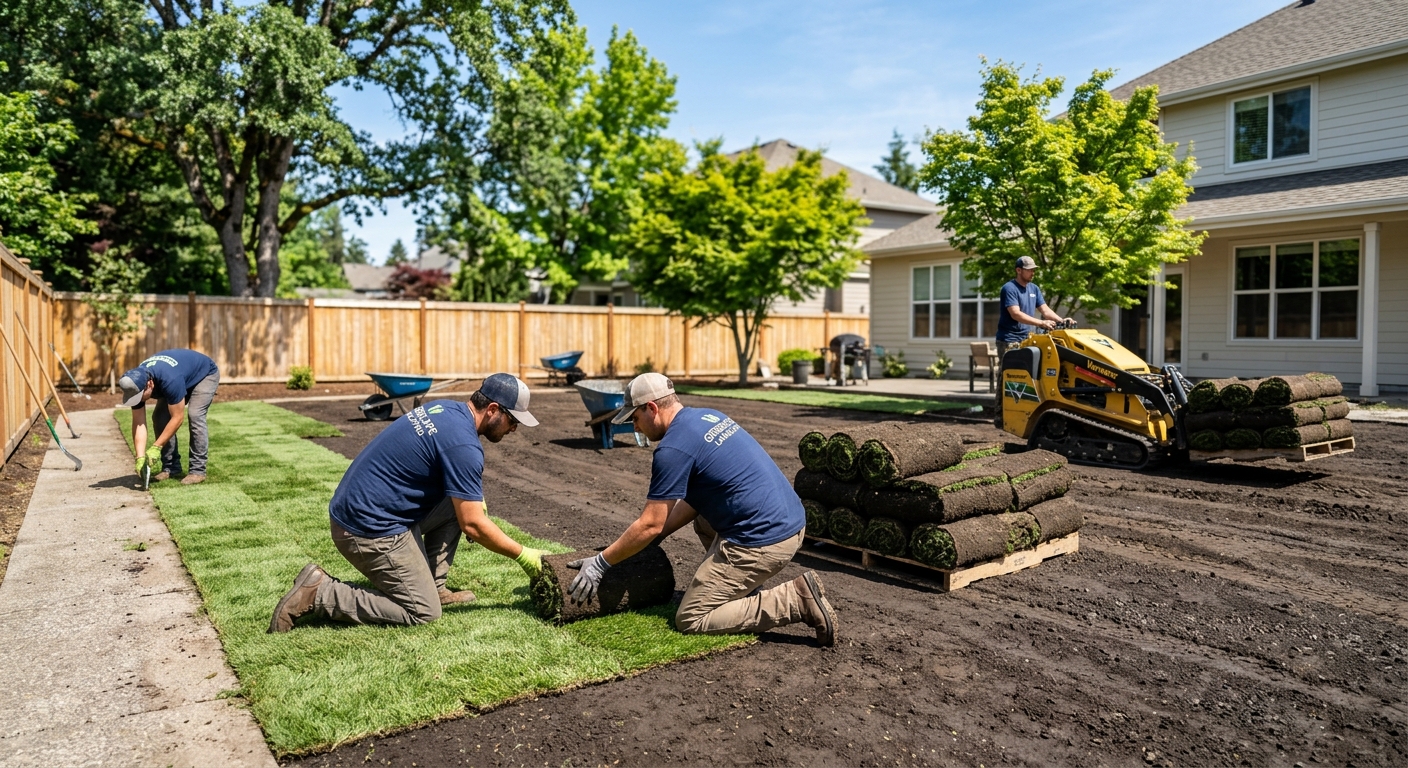
Landscaping options and costs in Rockcliffe-Smythe
In Rockcliffe-Smythe, homeowners typically start landscape planning by balancing curb appeal with the reality of Toronto’s clay-influenced soils, freeze–thaw winters, and a short but active growing window. With a 2021 population of 22,246, the neighbourhood’s steady housing demand supports an active local trades base—especially around fast-developing streets where spring approvals and construction schedules fill quickly (Statistics Canada, 2021 Census). Most residents are also surrounded by detached and family-oriented properties, which often means more yard area to improve and a stronger incentive to invest in long-term upgrades rather than quick fixes.
Cost is shaped by Ontario’s climate and the neighbourhood’s soil conditions. The GTA falls within plant hardiness zones 6a–7a, where winter lows near –23 to –18°C are usually manageable, but the freeze–thaw cycles punish poorly built bases. That’s why patios, steps and retaining walls often require deeper granular preparation, proper drainage, and occasionally subdrains—items that raise labour and materials compared to milder regions. Contractors also price work around the seasonal rhythm: deep frost pushes installation to late spring through fall, so demand spikes when the ground is workable.
In Rockcliffe-Smythe, this trade is especially in demand around the York University/Upper Avenue corridor area where families refresh front yards and improve drainage along mature lots. The result: you’ll see a wide spread in estimates, and the best way to compare quotes is to align scope and finish level before choosing a package. Use the table below to benchmark typical price ranges by common project type.
| Service |
Description |
Season |
Price Range |
| Full landscape design and installation |
Site visit, concept and layout, grading/drainage plan, plant selection, planting, topsoil, sod/seed, and hardscape coordination |
Late April–October |
$8,000–$40,000 |
| Sod installation (supply, grade, lay, roll) |
Remove existing growth as needed, rough grade, compact base, supply premium sod, lay/roll, starter fertilizer and light watering plan |
May–September |
$2,500–$8,000 |
| Lawn seeding (grade, seed, starter fertilizer) |
Fine grading, seed selection for sun/shade, starter fertilizer, light raking, and initial watering schedule |
April/May and early September |
$1,000–$4,000 |
| Interlocking patio or walkway |
Excavation, base/gravel, edge restraints, paver laying, compaction, leveling, and finishing joints |
May–October |
$6,500–$25,000 |
| Retaining wall (interlocking block) |
Layout, excavation, compacted base, geogrid/footing as needed, block installation, drainage weep holes and clean-back |
May–October |
$6,000–$30,000 |
| Tree and shrub planting |
Soil prep, planting holes, compost/topsoil blend, staking when required, mulching, and first-season care guidance |
April–June and September–October |
$800–$6,000 |
Prices are estimates only and vary by project scope, site access and material selection.
What affects the price of landscaping in Rockcliffe-Smythe
In Rockcliffe-Smythe, you can see the same landscaping job come in 30–50% apart across Toronto and Ontario because the “what” is rarely the same “how.” Two estimates may both list “interlocking,” but one may include proper base depth, edge restraints, and drainage while the other assumes the existing subgrade is adequate. Similarly, tree and shrub planting can look similar from the curb while one quote supplies smaller caliper stock versus larger, more expensive mature material with staking and amended soil.
Climate and timing drive both plant choices and labour time. In southern Ontario’s zone 6a–7a conditions, frost dates and freeze–thaw cycles determine what can be installed reliably and how deep bases must be. In Prairie zones (2–4), the shorter season pushes designs toward drought- and wind-tolerant species and simpler maintenance plans; retaining wall base depth must reach below the frost line there too. Coastal BC can support lush, broadleaf structure in a longer season, which can reduce wait time for planting—but heavy rain makes drainage detailing critical. Meanwhile, the dry BC interior’s water restrictions shape irrigation design toward drip and efficient heads. For Rockcliffe-Smythe, the working season is usually May to October, and clay/filled soils often require excavation and amendment to protect both hardscape stability and plant root health.
Concrete examples: (1) If your slope drains toward the house, a drainage bed or French drain can add significant scope to an otherwise “simple” front-yard refresh, moving a project closer to the $8,000–$40,000 full-landscape band. (2) Upgrading from seeding to sod for a similar lawn area can shift the lawn line item into the $2,500–$8,000 band because sod includes material supply plus careful install and watering. (3) Older homes in the neighbourhood may have buried services or compacted fill, increasing excavation time and disposal costs—especially when a new patio needs deeper granular layers.
| Price Factor |
Why It Matters |
Cost Impact |
| Yard size in sq ft — the primary cost driver for softscape |
More area increases topsoil, seed/sod, mulch, and labour hours |
Can change total softscape cost by 20–60% |
| Grading and drainage work — slope corrections add significant cost |
Proper slope prevents pooling, foundation moisture and winter heaving |
Often adds a major line item; can move work up a full project tier |
| Drainage bed or French drain installation |
Requires excavation, perforated pipe, gravel, and clean-out/connection details |
Commonly among the highest-cost additions after hardscape |
| Plant material tier — native shrubs vs. ornamental vs. mature specimen trees |
Larger caliper stock and premium ornamentals cost more and take longer to install |
Mature trees can increase planting budgets substantially |
| Hardscape vs. softscape ratio — walls and patios cost more per sq ft than lawn |
Patios/paths require thicker bases, compaction, edges and pavers/stone |
Shifts budget quickly toward the retaining wall/hardscaping band |
| Irrigation system design and installation |
Heads placement, controller setup, trenching, and winterization add labour and hardware |
Can add meaningful cost versus seeding/sodding only |
| Soil amendment and topsoil required |
Clay and compacted soils need compost/topsoil blends for root establishment |
Material delivery and labour can raise costs even on small gardens |
| Tree removal or stump grinding before new planting |
Removal/disposal changes site conditions and adds equipment time |
Often increases project scope and schedule |
Permits & regulations in Ontario
For most landscaping updates in Ontario, planting and softscape work does not require a permit. Sodding, seeding, and typical garden bed installation are generally considered minor site works and usually don’t trigger permitting. However, retaining walls can cross into permit territory depending on height and how the wall changes site stability. In many Ontario municipalities, retaining walls above about 1.0 m (3.3 ft) typically require a building permit, and sometimes engineered drawings—especially where drainage or geogrid/footings are involved.
Permits may also be triggered when you make grading changes that affect drainage toward neighbouring properties or toward storm sewer connections. Because stormwater management is a structural and environmental concern, it’s smart to treat any “we’ll re-slope the yard” plan as something to verify before digging.
Before any excavation for planting holes, french drains, or wall footings, your contractor should arrange utility locates to confirm the location of buried services. Homeowners should also confirm local irrigation and water-use bylaw requirements—while drought restrictions are often discussed more in dry regions, Ontario’s summer rules can still affect watering schedules.
How to verify your contractor (before work starts): check Ontario’s contractor licensing/registration information (where applicable), request a certificate of liability insurance and confirm the policy covers landscaping and site work, and ask for WSIB/WCB clearance. You can usually verify certificates directly from the insurer’s documentation and look up clearance/coverage status through the applicable worker compensation system. Make sure the clearance is current for the start date you’re booking.
Planning a landscape that thrives in Rockcliffe-Smythe's climate
To make a yard thrive in Rockcliffe-Smythe, design with the grain of Ontario’s climate: hard winters with freeze–thaw cycles, humid summers, and cold ground that takes time to warm. Start with plant selection—choose zone-appropriate, native-leaning species that tolerate –23 to –18°C winters and bounce back after spring thaw. This reduces winter protection needs and keeps watering more predictable. Next, match lawn strategy to your timeline: sod gives immediate curb appeal but generally costs 3–4x more per sq ft than seeding because you’re paying for product supply plus install labour. Seed wins when you can wait for establishment and keep soil consistently moist during germination.
Drainage and grading are non-negotiable in Toronto-area lots where pooling can lead to foundation moisture and stressed plants. A small slope fix, a topsoil rebuild, or a properly placed drainage bed can prevent recurring issues that become expensive in year two. For hardscape, proper base preparation matters: patios and walkways need well-compacted granular layers sized for frost action so the surface doesn’t heave. Retaining walls need footing depth and clean-back drainage detailing to stay stable through seasonal movement.
For low maintenance, use mulch (weed suppression and moisture control), perennial structure (reliable blooms with less replanting), and groundcovers that knit together quickly. If you want a water-smart approach, consider a rain-garden or carefully zoned, low-water planting beds where downspouts discharge—then irrigate only where needed. Example: if you’re deciding between seeding and sod for a similar front lawn patch, putting budget toward drainage improvements and better base prep may be more “worth it” than replacing seed with sod, especially when proper drainage reduces the risk of bare spots and thin turf. When full results are the priority and timing is tight, the lawn line often lands in the $2,500–$8,000 range; otherwise, seeding can stay closer to a smaller scope inside broader design plans closer to $8,000–$40,000.
| Element |
Climate Consideration |
Maintenance Level |
Price Band |
| Sod lawn installation |
Works best in May–September; requires consistent early watering to root in cold spring/fall shoulders |
Medium (watering + light rolling; mowing once established) |
$2,500–$8,000 |
| Native perennial garden |
Native/zone-appropriate plants handle winter lows and summer humidity with less winter protection |
Low to medium (mulch refresh, seasonal trimming) |
$1,800–$6,500 |
| Mulched shrub border |
Mulch buffers freeze–thaw stress around roots and reduces evaporation in hot spells |
Low (weeding reduced; occasional pruning) |
$1,200–$5,000 |
| Interlocking stone patio |
Needs frost-resilient base and drainage so it doesn’t heave during winter cycles |
Low (occasional cleaning and joint maintenance) |
$6,500–$25,000 |
| Retaining wall (block) |
Must manage water behind the wall and support movement through seasonal freeze–thaw |
Low (periodic inspection of drainage weeps) |
$6,000–$30,000 |
| Drip irrigation system |
Helps deliver targeted water in humid summers and supports root zones; winterize to protect lines |
Medium (season start/stop checks) |
$1,200–$6,000 |
How to choose a landscaping contractor in Rockcliffe-Smythe
Choosing the right contractor in Rockcliffe-Smythe is mostly about confirming you’ll be protected if something goes wrong—and that the quote matches the work you expect. In Ontario, start with liability insurance: ask for a current certificate showing coverage amounts and that landscaping/site work is included. Next verify WSIB/WCB coverage (clearance status), and ensure the company provides proof that it’s up to date before work begins. If you’re hiring subcontractors, insist they’re covered as well.
Then, get 2–3 itemised written quotes instead of lump sums. The breakdown should separate labour and materials and describe key items: excavation volume or area, base depth expectations for patios, drainage inclusions, topsoil/compost quantities, and the plant list (species and size). Ask whether permits are included (when applicable) and whether disposal/haul-away is part of the price. For retaining walls, confirm what’s included for geogrid/footing, drainage weep openings, and clean-back—these details change performance and cost.
Warranty matters. Request a written workmanship warranty length (often season-based), understand whether the product/manufacturer warranty is separate, and whether it’s transferable if you sell your home. For payment, never pay more than about 10–15% upfront; use a holdback until the job is complete and cleaned up. Finally, require a start date and completion estimate in writing—especially because Toronto projects can slip if the ground stays wet after spring thaw.
- Ask for a site visit before quoting, not just photos.
- Demand an itemised labour/material breakdown.
- Confirm disposal/haul-away is included (or priced separately).
- Verify base depth and compaction expectations for patios/walkways.
- For retaining walls, confirm drainage weeps and clean-back are included.
- Require utility locates before digging.
- Check liability insurance certificate and coverage dates.
- Request WSIB/WCB clearance proof for the company.
- Get the plant list with common and botanical names and sizes.
- Clarify watering responsibilities for sod/seed establishment.
- Review warranty terms in writing (workmanship + product).
- Use a written payment schedule with a reasonable holdback.
Red flags in Rockcliffe-Smythe include: (1) a contractor who won’t provide insurance and WSIB/WCB clearance documentation, (2) quotes that omit drainage details for clay/slope yards, (3) vague scopes like “interlocking installed” without base prep or compaction steps, (4) insisting on large upfront payments beyond 15%, and (5) skipping utility locates or refusing to document what was excavated and disposed of.
Frequently asked questions — landscaping in Rockcliffe-Smythe
How do I design a low-water yard in Rockcliffe-Smythe?
For low-water landscaping in Rockcliffe-Smythe, start by separating your yard into zones: plants near downspouts can be watered differently than plants beside the driveway where runoff is common. Choose zone-appropriate, drought-tolerant perennials and shrubs that still handle Ontario winters (zone 6a–7a) so you’re not replacing winter-killed plants after year one. Add 2–3 inches of mulch in beds to reduce evaporation and suppress weeds. Grade the yard so water moves away from the foundation—pooling leads to stress and “dead patches” that people try to fix with extra watering. If you’re installing a lawn, consider seeding rather than sod for large areas; sod projects often fall in the $2,500–$8,000 band. Pair that with drip irrigation only where needed and winterize lines before freeze-up.
How do I find a licensed landscaper in Rockcliffe-Smythe?
In Ontario, “licensed” can mean different things depending on the type of work, but you can still verify legitimacy with three practical checks before hiring in Rockcliffe-Smythe. First, request a current certificate of liability insurance—make sure it covers landscaping/site work and is active for the project dates. Second, ask for WSIB/WCB clearance so you know workers are covered. Third, get a written, itemised scope and confirm the contractor will arrange utility locates before digging. You can also look up the contractor’s registration information through Ontario’s relevant online resources and confirm the company name matches the documents you receive. Avoid anyone who will only quote by phone and refuses paperwork; a credible contractor will happily provide insurance and clearance and explain what’s included (base prep, drainage, disposal, and any permit steps if needed).
How much does landscaping cost in Rockcliffe-Smythe?
Landscaping costs in Rockcliffe-Smythe typically track the broader Toronto-area price bands, with final numbers depending on yard size, drainage needs, and how much hardscape is included. A full design and installation commonly lands in the $8,000–$40,000 range when grading, drainage, planting and softscape are all included. For lawn work, sod installation often sits in the $2,500–$8,000 band because it includes product supply and careful installation. Tree and shrub planting is commonly priced as a smaller line item (often $800–$6,000), while retaining walls can push higher when excavation and drainage detailing are required (often $6,000–$30,000). If a yard has clay soil and slope toward the house, drainage work is frequently the deciding factor in whether the project stays closer to the low end or moves toward the top of the range.
What plants thrive in Rockcliffe-Smythe's climate zone?
Rockcliffe-Smythe falls in plant hardiness zones 6a–7a, so plants should tolerate winter lows around –23 to –18°C and still handle humid summers. Look for native or well-adapted shrubs and perennials that establish reliably in Ontario soil and recover after freeze–thaw cycles. In practice, that often means using hardy ornamental trees (when site conditions fit), shrubs that can handle winter wind and snow load, and perennials that can take spring temperature swings without dying back. You’ll also want plants matched to sun exposure and moisture: incorporate a rain-garden or better-draining beds if you have pooling, and use mulch to buffer root zones. A good contractor can recommend species that align with local conditions rather than copying a Pinterest layout—this is one reason itemised quotes with a plant list can cost slightly more upfront but save money later.
Sod vs seed — which is better for a Rockcliffe-Smythe lawn?
In Rockcliffe-Smythe, sod is best when you want immediate visual results and you can support establishment watering during warm months. It’s also useful for smaller repairs where fast coverage matters. Seeding is usually the better value for larger lawns or when you can manage the germination schedule and keep the seedbed consistently moist. Price-wise, sod typically costs more and often falls into the $2,500–$8,000 band depending on area and site prep, while seeding can be significantly less for the same square footage when soil prep is straightforward. The deciding factor isn’t just price: soil drainage and grade matter. If the area holds water after rain, both sod and seed will struggle—so prioritize grading and drainage corrections before deciding. In Toronto-area freeze–thaw conditions, a properly prepared base helps turf recover in spring regardless of which method you choose.
How much does a retaining wall cost in Rockcliffe-Smythe?
A retaining wall in Rockcliffe-Smythe commonly ranges in the $6,000–$30,000 band, depending on height, length, block selection, and how much excavation and drainage are required. The biggest cost driver is not just “the wall face,” but the supporting work: base preparation, proper compaction, geogrid/footing expectations based on site conditions, and drainage weeps/clean-back behind the wall. If your yard has clay soil or slope issues that create water pressure, drainage detailing is essential for long-term performance and can move the project toward the upper end. Permits can also come into play for walls above about 1.0 m (3.3 ft) in many Ontario municipalities, so ask your contractor whether permit steps are included. A thorough, itemised quote will show excavation, drainage, and material quantities—not just the block count.