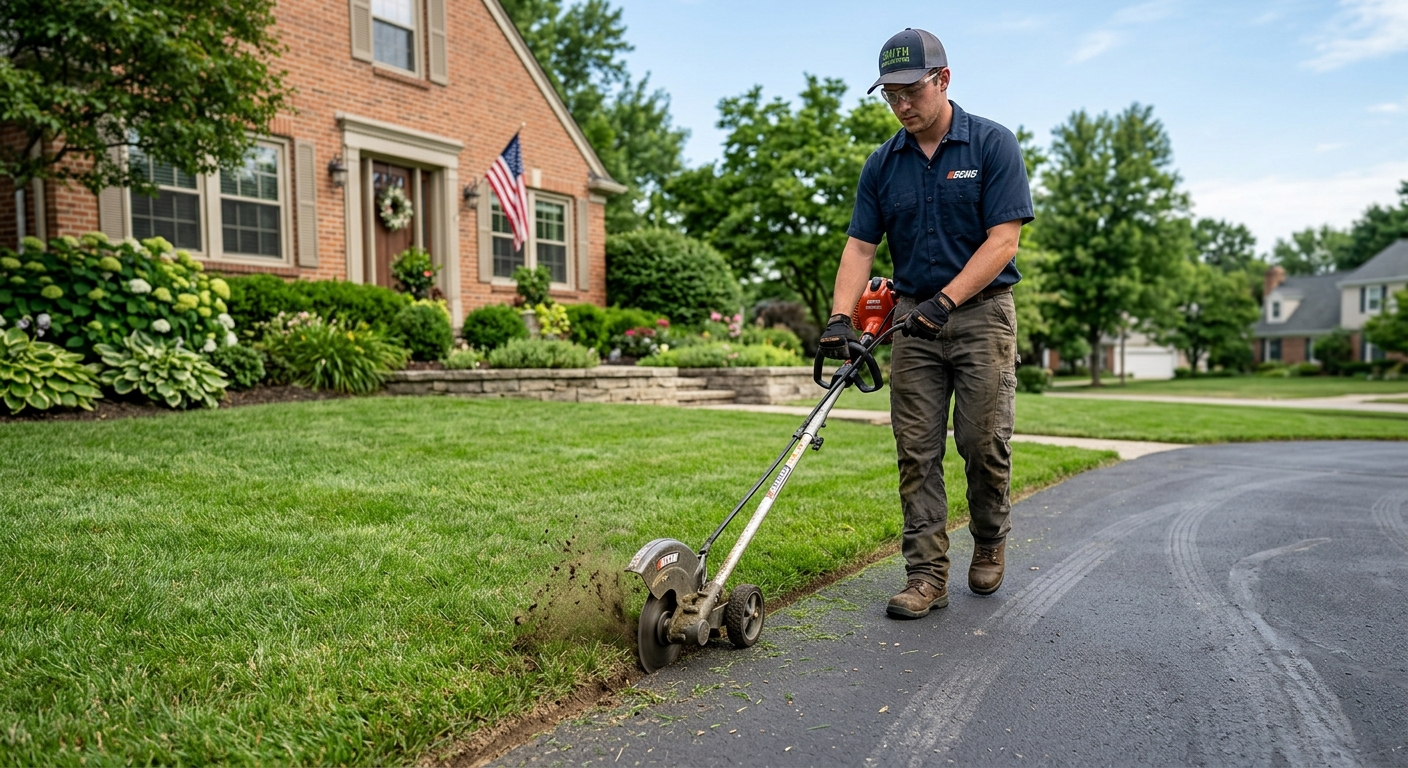
Landscaping options and costs in Penetanguishene
Penetanguishene homeowners typically have more backyard opportunities than many towns because a large share of local households own their homes—75.8% of households are homeowner households (Statistics Canada, 2021 Census). That ownership share matters: single-detached homes make up 68.0% of dwellings, so most landscaping projects start with real yard space for turf, beds, and walkways.
In the Kitchener–Waterloo–Barrie economic region, landscaping is shaped by a Zone 5b–6a climate with defined frost windows. That means planting and hardscaping work is concentrated roughly from mid-April through October, and anything structural (like retaining wall bases, patios, and walks) depends on deep, well-compacted granular layers to reduce freeze–thaw heave. The trade-off is that you generally have more contractor availability and a longer season than Prairie cities, but you still pay for precision labour during the shoulder months when crews are busy coordinating installs and inspections.
Where this shows up most in Penetanguishene is in older neighbourhoods with mature lots and more drainage surprises—areas like West St. South and parts of the Lakeview corridor see steady demand for grading, downspout tie-ins, and hardy foundation plantings. With that in mind, the table below compares common scopes and realistic price bands for your project type.
| Service |
Description |
Season |
Price Range |
| Full landscape design and installation |
Site walk, concept-to-final layout, grading/drainage plan, planting plan, hardscape build (as selected), soil prep, and installation |
Mid-April to October (often 2–8 weeks depending on scope) |
$8,000–$60,000 |
| Sod installation (supply, grade, lay, roll) |
Remove existing turf (as needed), light grading/leveling, topsoil amendment, sod supply, laying, rolling, and starter watering plan |
Late April to September (avoid extreme heat waves) |
$5–$10 |
| Lawn seeding (grade, seed, starter fertilizer) |
Rake aeration, finish grading, seed blend, starter fertiliser, light cover, and first mow guidance |
Spring (after frost) or early fall |
$2,000–$6,500 |
| Interlocking patio or walkway |
Excavation, granular base, edge restraint, interlock installation, compaction, and jointing |
Late spring to September |
$1,500–$12,000 |
| Retaining wall (interlocking block) |
Layout, excavation, drainage stone + weep control, geotextile, block installation, backfill, and finish grading |
May to September (weather-dependent compaction) |
$3,000–$15,000 |
| Tree and shrub planting |
Soil assessment, planting holes, amendment, mulch, staking (when needed), and initial watering plan |
May to early October (keep root establishment in mind) |
$500–$15,000 |
Prices are estimates only and vary by project scope, site access and material selection.
What affects the price of landscaping in Penetanguishene
In Penetanguishene, you can see quotes for the “same” landscaping idea vary by 30–50% across the Kitchener–Waterloo–Barrie region and Ontario because the real drivers aren’t just plant choices—they’re site conditions, frost-proof construction requirements, and how much detail a crew includes in preparation. In a region with Zone 5b–6a freeze–thaw, contractors must build deeper bases and correct drainage so patios, retaining walls, and walks don’t lift. That preparation can change a price band quickly. For example, a full-service landscape that starts in the design-and-install range of $8,000–$60,000 can swing upward if drainage improvements and soil reconditioning are required to protect foundations and prevent pooling.
Climate also limits the “working window.” In Southern Ontario, you get a moderate season, but summer dry spells still happen, so efficient irrigation design—zoned valves, rain sensors, and drought-tolerant planting—adds value but increases upfront cost. Prairie regions (Zone 2–4) often face shorter growing seasons and more wind exposure, which can push costs toward hardier, drought-tolerant plantings and more protective site prep. Coastal BC (Zone 7–8) can support a longer growing season and lush palettes, but heavy rainfall means drainage design becomes the priority; interior water rules during dry periods can also reshape irrigation scope.
Two common Penetanguishene examples: (1) older lots built before 1981 often have compacted soil or unknown grading history, which may require more topsoil and soil amendment—raising costs by hundreds to thousands. (2) If your downspouts discharge toward a low spot, adding a drainage bed or French drain can move a simple planting job into the higher end of the tree and garden planting band ($500–$15,000) because excavation and clean-out access are labour intensive. All of these factors directly tie back to how long the work takes and how much material is needed to build frost-stable hardscape.
| Price Factor |
Why It Matters |
Cost Impact |
| Yard size in sq ft — the primary cost driver for softscape |
More area means more topsoil, seed/sod, labour hours, and cleanup |
Can change totals by several thousand dollars depending on turf coverage |
| Grading and drainage work — slope corrections add significant cost |
Freeze–thaw punishes low spots; corrected slopes protect turf and structures |
Often increases project cost materially (frequently among the top 2–3 line items) |
| Drainage bed or French drain installation |
Helps move water away from foundations and prevents pooling |
Raises cost due to excavation depth, perforated pipe, stone, and disposal |
| Plant material tier — native shrubs vs. ornamental vs. mature specimen trees |
Mature specimens cost more and require proper staking and planting prep |
Can shift a planting total from mid-range to premium quickly |
| Hardscape vs. softscape ratio — walls and patios cost more per sq ft than lawn |
Patios and walls demand deep bases, compaction, and restraints |
Usually the biggest budget swing when moving from “lawn only” to mixed design |
| Irrigation system design and installation |
Zoning and efficient heads help during summer dry spells |
Adds cost upfront but reduces long-term maintenance and water waste |
| Soil amendment and topsoil required |
Penetration and drainage improve when the base soil is corrected |
Can add substantial material and delivery fees on problem sites |
| Tree removal or stump grinding before new planting |
Access and safety determine how much labour and disposal are needed |
Often increases the scope before planting even begins |
Permits & regulations in Ontario
In Ontario, most planting, sodding, and standard softscape landscaping does not need a permit. That usually includes grading for beds (within normal landscaping tolerances), mulch and topsoil placement, tree/shrub planting, and installing lawn seed or sod. The work that more often does require a permit is structural or drainage-altering construction—especially retaining walls above typical height thresholds. Many municipalities require a building permit for retaining walls at or above about 1.0 m (3.3 ft), and sometimes engineered drawings are requested depending on height, soil conditions, and design complexity.
Also confirm approval needs if your landscaping changes lot grading in a way that affects drainage patterns toward neighbouring properties or storm sewer connections. Before any digging—whether for planting holes, French drains, or wall footings—call for utility locates so you don’t hit buried services.
To verify an Ontario contractor in Penetanguishene, start with these steps. First, check the contractor’s licensing information through the appropriate provincial online registry (the listing should match the legal company name on their quote). Second, request a current Certificate of Insurance—verify general liability limits and ensure landscaping work is covered. Third, confirm WSIB/WCB coverage: ask for the clearance letter or proof of coverage (and document what you were given). If they can’t provide these items, that’s a strong sign to pause.
Planning a landscape that thrives in Penetanguishene's climate
Planning in Penetanguishene is about working with Zone 5b–6a conditions—hard freeze–thaw cycles, spring frost risk, and summer dry spells—rather than trying to force plants that need milder winters. Start with plant selection: choose native or zone-appropriate shrubs and perennials that tolerate local winters and typically require less watering once established. For many lawns, decide early whether you want sod or seed. Sod gives instant curb appeal and stabilizes soil quickly, but it costs more—often about 3–4x per square foot compared with seeding.
Drainage and grading are where most “surprise” problems begin in Southern Ontario. If water pools near the foundation, plants struggle, soil compacts, and hardscape can shift. For patios and retaining walls, correct base preparation matters: granular bases must be deep, well-compacted, and laid with proper drainage to reduce frost heave. This is why a patio or walkway install tends to carry a higher cost than turf work, even when the surface area looks similar.
Low-maintenance design strategies keep your yard attractive without weekly labour. Use mulched shrub borders, groundcovers, and perennials with staggered bloom so you get year-round structure. Add a rain garden or bioswale style bed if you have a low area that naturally collects water—done correctly, it can handle runoff and reduce irrigation needs.
Example of where pricing is justified: if you’re landscaping a small front lawn area, seeding might keep costs closer to the mid-range lawn seeding band, while sod can be worth it if you need fast, uniform coverage for curb appeal before an event. If the yard has drainage issues, invest first in grading and drainage; otherwise, you’ll pay again when turf fails.
| Element |
Climate Consideration |
Maintenance Level |
Price Band |
| Sod lawn installation |
Needs consistent watering during establishment through summer dry spells; hardiness is strong if soil grade is correct |
Low-to-moderate (more attention the first 2–6 weeks) |
$5–$10 (per sq ft equivalent range) |
| Native perennial garden |
Zone-appropriate plants handle winter better and typically need less watering once established |
Low (mulch top-ups and seasonal tidy-up) |
$2,000–$8,500 |
| Mulched shrub border |
Mulch improves soil moisture retention and moderates freeze–thaw cycles at the root zone |
Low-to-moderate |
$1,500–$6,000 |
| Interlocking stone patio |
Requires frost-stable base and drainage to prevent lifting and settling |
Low (occasional weed control at joints) |
$1,500–$12,000 |
| Retaining wall (block) |
Freeze–thaw stability depends on drainage stone, weeps, and backfill compaction below frost influence |
Low (inspection for movement and weep drainage) |
$3,000–$15,000 |
| Drip irrigation system |
Zoned drip helps during dry spells while reducing water use; tune to protect plants in shoulder seasons |
Low-to-moderate (seasonal checks and winterisation) |
$1,200–$6,500 |
How to choose a landscaping contractor in Penetanguishene
Choosing a reliable contractor in Penetanguishene comes down to documentation, clear scope, and proof they can build for local conditions. For Ontario coverage, verify general liability insurance: ask for a current Certificate of Insurance and confirm the limits are appropriate for construction work on residential lots. Next, confirm WSIB/WCB coverage—request a clearance letter or proof of coverage. If the contractor can’t provide this, they may be taking on risk personally, which can put your project at higher financial and safety exposure.
Then get 2–3 itemised written quotes. You want labour and materials separated (excavation, stone base, geotextile, interlock/unit pricing, topsoil delivery, seed/sod supply, and plant quantities). Avoid “lump sum only” quotes without line items, because it’s impossible to compare the same scope. Read the scope carefully: what’s included or excluded for disposal, utility locating calls, permit responsibilities (if any), and site protection (fencing, tarping, and protection of lawn/driveway areas)?
Ask about warranties in two parts: workmanship warranty length for installation, and any manufacturer/product warranty for materials. Confirm whether the product warranty is transferable to you. For payments, never pay more than 10–15% upfront; hold back a portion until the job is complete and cleaned up to your satisfaction. Finally, require a timeline in writing—start date and a realistic completion estimate based on weather and material lead times.
- Confirm the legal company name on the quote matches the insured entity on the insurance certificate.
- Request WSIB/WCB proof (clearance letter) before work starts.
- Ensure the quote is itemised: labour hours and material quantities/prices by line.
- Ask who calls for utility locates and who pays for that service.
- Verify drainage and base specs are included (granular base depth, compaction approach).
- Check whether excavation disposal is included or billed separately.
- Confirm topsoil/soil amendment type and how much is being delivered (by volume or equivalent).
- Ask about edging restraint, geotextile use, and jointing products for interlock.
- Clarify irrigation scope: controller, zones, heads, wiring, and winterisation plan if applicable.
- Get the plant list: species, size, and whether substitutions are allowed (and at what price level).
- Review start/stop dates and what happens if frost or heavy rain delays work.
- Make sure warranty terms are written and match the quoted scope.
Red flags I commonly see with landscaping contractors in Penetanguishene include: no written scope or sketch, vague promises like “we’ll fix drainage later,” refusal to provide insurance/WSIB proof, quotes that don’t include disposal or base construction details, and payment requests for large upfront deposits without a signed agreement.
Frequently asked questions — landscaping in Penetanguishene
How long does a landscaping project take in Penetanguishene?
A typical Penetanguishene landscape install depends on whether you’re doing turf only, a mixed softscape/hardscape job, or a full design-build. In general, small lawn work (seed or sod) can be completed in a day or two, while interlocking patios and walkways may take about 1–2 weeks including base preparation and curing/compaction time. Full landscape design and installation (for example, a project within the broader $8,000–$60,000 range) often runs longer—commonly several weeks—because plant procurement, soil prep, drainage corrections, and multi-trade scheduling are involved. With our Zone 5b–6a frost cycles, crews also avoid risky periods; if heavy rain or cold snaps hit, timelines can slide to the next workable weather window.
What is the best grass type for a Penetanguishene lawn?
For Penetanguishene lawns in Ontario’s Zone 5b–6a conditions, many contractors recommend a cool-season turf blend focused on durability and colour. The best “type” depends on sun exposure and how you plan to maintain mowing height, watering schedules, and overseeding. If your lawn sees moderate sun and typical backyard wear, a perennial ryegrass or tall fescue–based blend is often chosen for good establishment and hardiness through winter, with fescue helping the lawn handle summer dry spells once established. If you’re currently reseeding after sparse growth, a proper grade and starter fertiliser matter as much as the seed blend. If you’re comparing costs, seeding is usually cheaper than sod (your quote may fall closer to the $2,000–$6,500 lawn seeding band versus higher per-square-foot sod costs).
When should I aerate and overseed my lawn in Penetanguishene?
In Penetanguishene, the best aerate/overseed timing is usually in fall when soil temperatures are still warm enough for germination but weeds are slowing down. Late August through September is commonly the practical window, with a spring option after frost when the lawn starts greening and soil is workable. Aerating without correcting drainage or soil compaction won’t give lasting results—if water sits or the grade is off, address grading first. After aerating, apply the right seed rate, top with a light amount of amended material if your contractor suggests it, and use starter fertiliser for establishment. If your lawn is thin and you’re aiming for uniform coverage quickly, sod can be a faster visual fix, but if budget is the priority, seeding programs align better with the $2,000–$6,500 type band for typical projects.
What trees grow best in Penetanguishene's climate zone?
In Ontario’s Zone 5b–6a, hardy trees that tolerate winter cold and spring thaw conditions generally perform best. Common dependable options include serviceberry (small to medium tree/shrub form), white spruce for evergreen structure (where appropriate), and hardy shade trees such as sugar maple or red maple depending on your soil and space. For smaller yards, consider ornamental cherries or crabapple varieties that suit your mature size constraints. If you want quick screening, choose fast-growing species that are still winter-hardy and plant them with correct spacing and staking where needed. Because about 51.7% of local homes were built before 1981 (Statistics Canada, 2021 Census), many lots have older utility locations and mature canopy—so plan around services and consider professional utility checks. A tree and shrub planting scope commonly lands somewhere within the $500–$15,000 band depending on how many specimens and sizes you choose.
How much does sodding a yard cost in Penetanguishene?
Sodding cost in Penetanguishene is usually driven by total square footage and whether you need grading/topsoil correction before installation. In the local pricing bands, sod installation is commonly quoted around $5–$10 per square foot equivalent for supply and installation, while typical small-to-mid projects often include separate allowances for excavation, topsoil amendment, and cleanup. Your total can move higher if you’re converting low, uneven turf into a stable grade, or if you need edging and base prep around patios and steps. If you have drainage pooling, sod can fail early—so the best-value plan is often fixing drainage and grade first. Many homeowners choose seeding for budget reasons and use sod strategically for high-visibility front areas where instant coverage matters.
How do I prevent weeds in my Penetanguishene garden?
Weed prevention works best when you manage the soil surface, the planting density, and the time of intervention. Start with good site prep: remove existing weeds/roots, correct soil and compaction, and don’t skip proper mulch depth in beds. A mulched shrub border with consistent coverage dramatically reduces sunlight hitting weed seeds, which slows germination. Use landscape fabric selectively—many contractors prefer geotextile under certain base layers (like hardscape) but avoid overusing it under shrubs where it can complicate soil improvement. For existing beds, plan targeted early-season weeding before weeds seed, then follow up after rain. If you’re doing turf-to-bed transitions or edging around patios, install proper edging so you don’t create a weedy “gap.” Landscaping work that includes planting ($500–$15,000 range for many tree/shrub projects) can be a stronger long-term weed-control strategy than simply adding mulch alone, because dense, zone-appropriate plants choke out weeds as they establish.