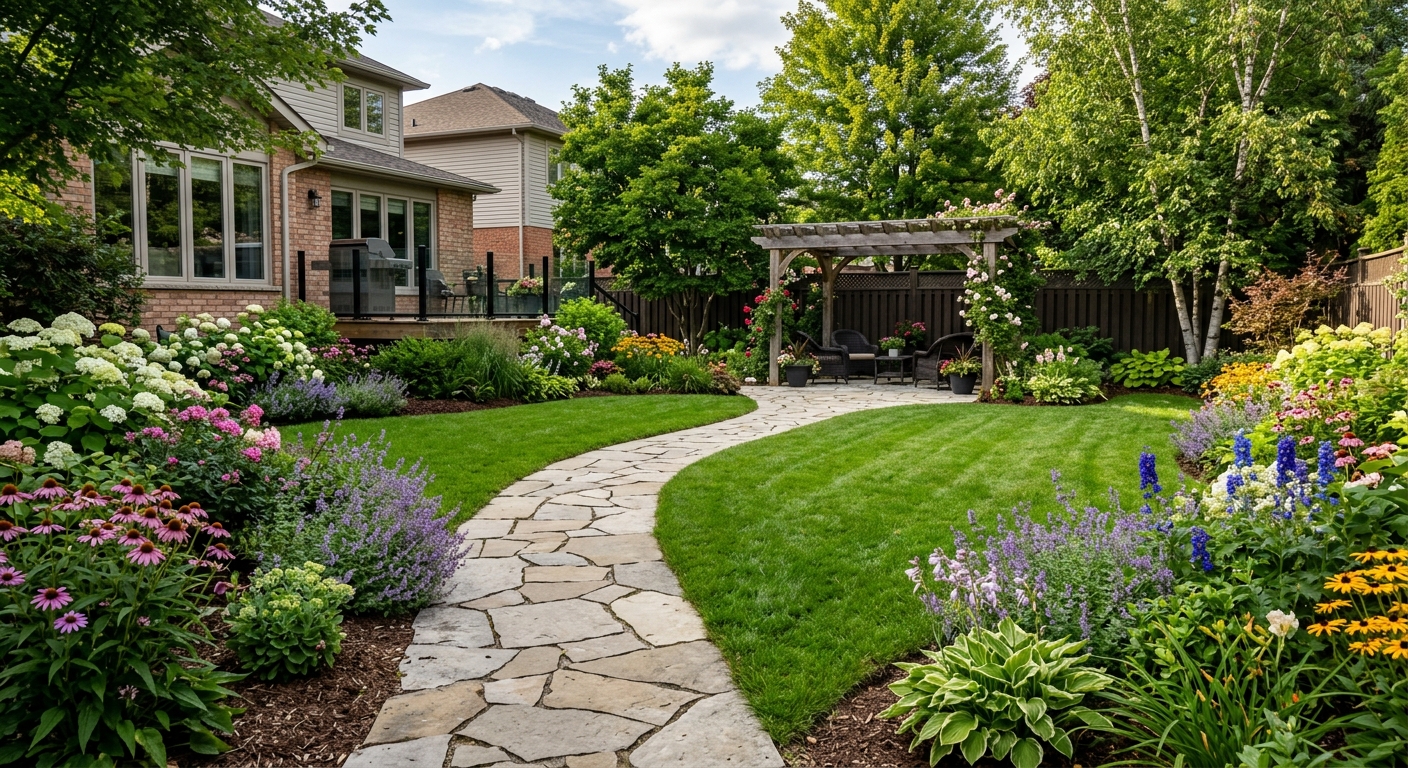
Landscaping options and costs in Port Stanley
In Port Stanley, Ontario, landscaping is one of the easiest ways to make a home feel finished—especially for residents on busy streets near the harbour where first impressions matter. With a population of 2,148 (Statistics Canada, 2021 Census), most yard work is done by smaller crews that book out quickly during the mid-spring and fall push. Port Stanley’s housing mix also drives demand: detached and larger lots tend to be common, so you’ll see more homeowners investing in full makeovers (design, planting, and hardscape) rather than “quick fixes.”
Toronto-area pricing is shaped by climate and soil. Even though the Greater Toronto Area typically sits in plant hardiness zones around 6a–7a, the working window is still limited by spring thaw, deep winter frost, and repeated freeze–thaw cycles. That’s why patios, steps, and retaining walls aren’t built on shortcuts—contractors need proper excavation, well-compacted granular base, and drainage to protect foundations and prevent heaving. In neighbourhood pockets such as the area around Talbot Street and the older residential streets closer to the waterfront, landscaping upgrades are especially in demand because homeowners often want curb-appeal improvements and better drainage before the summer season.
Below are practical cost ranges you can expect for common projects in Port Stanley, Ontario—use them to compare apples-to-apples when you request quotes.
| Service |
Description |
Season |
Price Range |
| Full landscape design and installation |
Site visit, concept + grading notes, plant palette, softscape + hardscape installation, and cleanup |
May to October (best for planting and full builds) |
$8,000–$40,000 |
| Sod installation (supply, grade, lay, roll) |
Soil prep, grading, sod delivery + lay, rolling, first watering guidance |
Late April to early June; late August to September |
$2,500–$8,000 |
| Lawn seeding (grade, seed, starter fertilizer) |
Light soil preparation, seed blend, starter fertilizer, mulching option |
Early spring or fall (cooler, steadier moisture) |
$1,200–$4,500 |
| Interlocking patio or walkway |
Excavation, base (granular layers), edging, interlocking stone installation |
May to November (weather dependent) |
$6,000–$24,000 |
| Retaining wall (interlocking block) |
Excavation, block system + geogrid (if required), drainage gravel + weep management |
May to October (good drying conditions) |
$6,000–$30,000 |
| Tree and shrub planting |
Soil preparation, planting, staking (if needed), mulch rings, first-season watering plan |
Spring and fall planting windows |
$800–$6,000 |
Prices are estimates only and vary by project scope, site access and material selection.
What affects the price of landscaping in Port Stanley
In the Toronto region, you can see the same project swing by 30–50% from one quote to another, even before you change any materials. The big reason is that “landscaping” often includes different hidden scopes: grading, soil amendment, drainage protection, base depth for frost resistance, and disposal. Two contractors may quote the same patio size, but one builds to a proper base and drainage plan for freeze–thaw conditions while the other assumes the existing soil is stable.
Climate and hardiness drive both plant selection and scheduling. In southern Ontario’s zone range (often around 6a–7a), we can install a broader range of woody plants and perennials than in Prairie regions (zone 2–4), where shorter seasons and frequent drought push clients toward ultra-hardier, drought-tolerant palettes and a simpler look. Coastal BC typically supports lush structure in milder winters (zone 7–8), but heavy rain there means drainage design becomes just as critical. In Port Stanley specifically, freeze–thaw cycles and occasional deep winter frost are major cost drivers for retaining walls and hardscapes. That’s why base preparation can raise a “flat” estimate by thousands—often aligning a patio build closer to the upper end of the retaining walls & hardscaping band of $6,000–$30,000 when drainage work and deeper excavation are required.
Two concrete examples I see often in Port Stanley: (1) turning a “quick re-sod” into a true lawn rebuild—if the base is uneven or compacted, contractors may need re-grading and soil amendment, pushing the project from the lower side of $2,500–$8,000 toward the mid-to-upper range; (2) adding downspout tie-ins and improving slope away from the foundation, which can transform an interlocking walkway from a “clean install” into a drainage-sensitive rebuild. Finally, older housing stock can mean more buried fill and tighter access, which affects labour time and equipment costs.
| Price Factor |
Why It Matters |
Cost Impact |
| Yard size in sq ft — the primary cost driver for softscape |
More area means more labour, material, topsoil, and disposal |
Often the largest swing; can change total by thousands |
| Grading and drainage work — slope corrections add significant cost |
Prevent pooling near foundations; ensure water flows to drains |
Can add substantial excavation and labour time |
| Drainage bed or French drain installation |
Protects walls, patios, and below-grade areas through freeze–thaw |
Typical “step-up” item for problem lots; adds both material + labour |
| Plant material tier — native shrubs vs. ornamental vs. mature specimen trees |
Mature trees cost more to source, deliver and install |
Small to moderate changes early; large jumps for specimens |
| Hardscape vs. softscape ratio — walls and patios cost more per sq ft than lawn |
Stone, base layers, edging, and compaction require more trades hours |
Shifts the project into the higher bands quickly |
| Irrigation system design and installation |
Smart layout, controller, backflow considerations, and trenching labour |
Costs can rise if trenching and coverage are complex |
| Soil amendment and topsoil required |
Clay and compacted fill often need conditioning for roots and drainage |
Can add material volume and rework if discovered late |
| Tree removal or stump grinding before new planting |
Equipment access and disposal affect labour and time |
Common add-on that can move the job into the next cost tier |
Permits & regulations in Ontario
In Ontario, many typical landscaping and softscape tasks generally do not require a permit. Planting beds, sodding, seeding, mulching, and most general grading for gardens are usually treated as landscaping work rather than building work. However, retaining walls above a height threshold—often around 1.0 m (3.3 ft) in many municipalities—is commonly where permits enter the picture, and some designs may require engineered drawings depending on height, conditions, and drainage.
What can trigger approval steps also includes changes to lot grading that meaningfully affect drainage toward neighbouring properties or toward a storm sewer connection. Because standing water and foundation moisture are common homeowner concerns in Port Stanley, contractors often propose drainage improvements; if those improvements involve meaningful changes, it’s smart to confirm requirements before work begins.
Step one for homeowners: ensure utility locates are done before digging. Even for planting holes or wall footings, locate requests reduce the risk of hitting underground services.
Step two: verify the contractor’s Ontario licence status (where applicable for the work being done), and confirm insurance documents. Ask for a certificate of insurance naming you as the certificate holder, and check whether they carry WSIB coverage (or WCB in other contexts). Request the clearance information and keep copies. Finally, confirm whether permits (if required) are included in the contractor’s scope and who pulls them.
Planning a landscape that thrives in Port Stanley's climate
To get a yard that thrives in Port Stanley, Ontario, design around the conditions that actually limit plants here: winter cold, freeze–thaw, and spring/fall weather swings. Port Stanley typically falls into a zone range around 6a–7a, so you’ll want hardy woody structure and perennials that can tolerate cold lows near the –23 to –18°C range, plus soils that handle wet-to-dry transitions.
Start with plant selection. A native and zone-appropriate mix reduces watering pressure and winter protection needs because the species are adapted to local winters. Next, choose sod vs. seed based on timing and expectations: sod gives instant curb appeal, but it usually costs about 3–4x more per sq ft than seeding, and it still needs proper grade and moisture management. If your goal is “lawn by June,” sod can be justified—especially when regrading is minimal. If you’re working with a modest budget or you’re flexible with timing, seeding in the cooler shoulder seasons often makes more financial sense.
Drainage and grading are critical in the Toronto market to prevent pooling and foundation moisture. For hardscape, build bases deep enough and compacted enough to survive freeze–thaw. If you’re adding a patio or walkway, expect excavation to a proper depth with layered granular base and attention to slope away from the house.
For low-maintenance design, use mulched shrub borders, groundcovers, and perennials with overlapping bloom and texture. Where water management is a concern, consider rain gardens and targeted “micro-zones” that slow and soak stormwater—often easier to maintain than a fully watered, uniform lawn.
As a dollar example: if you’re comparing a small lawn repair, seeding might land near the lower end of $2,500–$8,000 when it includes prep and starter fertility, while a comparable sod area commonly moves you closer to the upper end of the sod band once grade prep and sod delivery are included.
| Element |
Climate Consideration |
Maintenance Level |
Price Band |
| Sod lawn installation |
Needs correct grading and consistent watering during establishment; frost heave avoided with proper base |
Medium during first season, then low |
$2,500–$8,000 |
| Native perennial garden |
Zone-tolerant plants handle Ontario winters; mulch helps with freeze–thaw |
Low to medium (weeding first year) |
$1,800–$7,000 |
| Mulched shrub border |
Dense shrubs moderate soil moisture swings; winter interest with hardy structure |
Low after establishment |
$1,500–$6,000 |
| Interlocking stone patio |
Proper base and drainage prevent movement through winter freeze–thaw |
Low (occasional joint rebalancing/sealing) |
$6,000–$24,000 |
| Retaining wall (block) |
Needs drainage gravel and stable footings below frost influence |
Low after build |
$6,000–$30,000 |
| Drip irrigation system |
Targets root zones; helps manage summer dry spells while reducing waste |
Low (seasonal adjustments) |
$1,500–$7,500 |
How to choose a landscaping contractor in Port Stanley
Choosing the right contractor in Port Stanley starts with proof, not promises. First, verify insurance. Ask for a certificate of insurance (liability) and ensure it lists your address or that they’re willing to name you as certificate holder. For labour coverage, confirm WSIB clearance for Ontario (or the applicable coverage they carry) and request documentation showing the account is in good standing.
Next, get 2–3 itemised written quotes. A solid quote breaks labour and materials separately and spells out scope boundaries: what’s included in excavation, topsoil/compost, drainage work, base depth, and disposal. Avoid “lump sum” only pricing unless the scope is exceptionally detailed.
Read exclusions carefully: is permit pulling included (if required for a retaining wall or grading changes), who handles it, and what happens if locates reveal additional services? Also ask about warranty terms—workmanship warranty length, product/manufacturer warranty coverage, and whether warranties are transferable to you as the homeowner.
For payment schedule, don’t let them push for big deposits. A common safe approach is keeping upfront payment around 10–15%, then paying in milestones tied to measurable progress. Keep a holdback until the job is complete, cleaned up, and any punch-list items are addressed.
Finally, insist on a written timeline with start date and completion estimate. In Port Stanley, weather and frost limits can affect planting and base prep, so your contractor should explain how they’ll adjust if rain or late cold snap shifts the schedule.
- Verify WSIB/clearance documentation and ask for insurance certificates before work starts.
- Request Ontario licence/registration details applicable to their scope (and confirm they match the legal entity on the contract).
- Get 2–3 quotes with identical scope language so costs are comparable.
- Ask for base specifications: granular layers, compaction method, and drainage slope.
- Confirm soil amendment and topsoil depth/quantity (by cubic yards or equivalent).
- Clarify plant list substitutions—what can change and what cannot.
- Check whether disposal of excess soil/stone is included.
- Ask about utility locate responsibility and when they’ll schedule it.
- Confirm warranty length for workmanship and whether it covers settlement and drainage-related issues.
- Request a payment schedule with a 10–15% max upfront and a holdback after completion.
- Insist on start date and completion estimate in writing (and what happens with weather delays).
- Ensure the contract includes site protection (driveway mats, fencing, and mess containment).
Red flags I see with landscaping contractors in Port Stanley include: refusing to provide proof of insurance/WSIB, quoting without visiting the site or without measuring yard grades, leaving out drainage/base details in writing, pressuring for large upfront deposits, and offering only vague “we’ll handle everything” language with no disposal/permit scope clarity.
Frequently asked questions — landscaping in Port Stanley
How much does professional landscape design cost?
In Port Stanley and the broader Toronto area, design pricing usually depends on whether you want a concept-only plan or a full plan tied to a build. Many homeowners choose either a dedicated design fee or a design credit applied toward installation, especially when the project is larger than simple planting. For full landscape design and installation, homeowners commonly budget in the $8,000–$40,000 band because it typically includes site review, grading notes, plant palette, and execution coordination. If your needs are more limited—like a shrub border refresh or a planting plan—design can be less, but you should still expect the designer to address drainage, frost considerations, and plant hardiness for Southern Ontario. (Statistics Canada, 2021 Census)
How do I compare landscaping quotes?
To compare landscaping quotes in Ontario, insist on itemised, scope-matched estimates. Compare labour and materials separately—especially for excavation, base depth for stonework, drainage bed/French drain provisions, and soil amendment amounts. Quotes should also list plant types/sizes (not just “shrubs”), the sod/seed mix if lawn work is included, and whether disposal is part of the price. If one quote is lower but doesn’t mention proper grading and drainage or doesn’t specify base and compaction, that gap can become a surprise cost later—particularly with freeze–thaw in Port Stanley. Use price bands as a sanity check: for example, sod installs often land in the $2,500–$8,000 range depending on preparation, and interlocking/hardscaping moves quickly into the higher bands when drainage work is required.
How long does a landscaping project take in Port Stanley?
Timing in Port Stanley is driven by weather and the frost cycle, plus how much excavation and base prep is required. Planting and soil work are easiest in spring and fall, while hardscape projects are typically scheduled between late spring and fall when surfaces can stay workable. A small tree-and-shrub planting can be completed in a day to a couple of days, while full landscape builds with grading, drainage, and patios often take multiple weeks due to ordering, curing/settling, and staged installation. If your project includes sod installation, establishment watering and timing matter—late cold or heavy rains can delay completion even when materials are ready. If you have a retaining wall, allow additional time for drainage setup and proper base preparation to handle long-term stability.
What is the best grass type for a Port Stanley lawn?
For Port Stanley lawns in Southern Ontario, a fine fescue blend or a tall fescue (depending on sun exposure and traffic) is often the practical choice because these grasses tolerate our cold winters and recover reasonably after stress. Homeowners who want a denser, softer lawn look usually choose blends that balance colour, wear tolerance, and drought performance. If you’re seeding in spring or fall, the blend selection matters more than the bag “name.” If you’re installing sod, the sod type is typically selected based on the supplier’s inventory and your yard’s light conditions, then paired with correct grading so roots don’t sit in low spots where water pools. If you’re dealing with drainage or compaction issues, address those first—grass performance improves dramatically when freeze–thaw pooling is eliminated near the foundation.
When should I aerate and overseed my lawn in Port Stanley?
In Port Stanley, aeration and overseeding typically work best during the cooler growing windows: early fall is the most common timing because grass can recover before winter while still growing steadily. Spring aeration can work too, but you’ll want to avoid periods when soil is too wet and your lawn becomes compacted again. Aerate first (to relieve compaction and improve seed-to-soil contact), then overseed with an appropriate blend for your sunlight and traffic conditions, and finish with light covering and starter fertilizer if recommended by your contractor. If you’ve laid sod recently, wait for the establishment period and only overseed when you’re ready to thicken the lawn—don’t double-stress it. For homeowners doing a full refresh, contractors often coordinate this with grading repairs and drainage improvements so the lawn survives Toronto-region freeze–thaw.
What trees grow best in Port Stanley's climate zone?
In Port Stanley’s Southern Ontario conditions (around hardiness zone 6a–7a), you can grow a wide range of hardy trees, but the “best” choice depends on your yard size, soil drainage, and whether the tree needs to handle wind exposure. Common reliable options include serviceberry (Amelanchier), Japanese tree lilac (Syringa reticulata, depending on site), and hardy ornamental cherries in appropriate conditions. For larger structure trees, homeowners often choose species like sugar maple or other maples suited to your soil, with careful attention to watering during establishment. If drainage is poor, consult before planting—trees suffer long-term when roots sit in wet clay through freeze–thaw. A local planting plan is where a contractor earns their keep: they’ll match tree size and spacing to your lot so you don’t end up removing or replacing within a decade.