Landscaping options and costs in Fort Frances
Fort Frances homeowners often start their landscaping plans with the same question: what will it actually cost to make a yard look better and stay functional through our freeze-thaw cycles? With 2,515 homeowner households in town (Statistics Canada, 2021 Census) and 77.2% of dwellings being single-detached homes, many properties have the space—and the incentive—to invest in proper grading, walkways, and plantings rather than quick fixes. Just as importantly, the housing stock is older: 74.6% of homes were built before 1981 (Statistics Canada, 2021 Census), so you’ll commonly see yards that need reworked drainage, stronger topsoil profiles, and tougher landscaping structures to manage settlement over time.
In Northwest Ontario, landscaping pricing is shaped by the cold-tolerant plant requirements and the tighter working season caused by earlier fall freeze. That means fewer weeks to excavate, haul, and install materials, plus extra labour for frost-safe base preparation. Contractors also plan around earlier spring soil readiness, which affects sod timing and the feasibility of larger earthworks. In Fort Frances, demand is especially steady in established areas like Memorial Avenue and along the downtown core where homeowners want curb appeal without adding drainage problems near foundations.
Below is a practical comparison of common landscaping services and their typical price bands, so you can sanity-check quotes before you meet with a contractor.
| Service |
Description |
Season |
Price Range |
| Full landscape design and installation |
Site assessment, layout/planting plan, grading & drainage plan, supply & installation of hardscape and softscape |
Late spring to early fall |
$5,000–$18,000 |
| Sod installation (supply, grade, lay, roll) |
Minor grading, soil prep, sod supply and installation, rolling/establishment care |
May to early September |
$1,500–$6,000 |
| Lawn seeding (grade, seed, starter fertilizer) |
Grading to correct low spots, seed blend, starter fertilizer, light raking/rolling |
May to late August |
$1,000–$3,500 |
| Interlocking patio or walkway |
Base excavation, compacted stone base, bedding sand, interlocking stone, edging, finishing |
Late spring to fall |
$4,000–$15,000 |
| Retaining wall (interlocking block) |
Block wall with proper drainage, geotextile, base excavation/compaction, backfill |
Spring to early fall |
$4,000–$20,000 |
| Tree and shrub planting |
Soil amendments, planting, staking, watering plan, mulch rings, cleanup |
Spring and early fall |
$800–$4,500 |
Prices are estimates only and vary by project scope, site access and material selection.
What affects the price of landscaping in Fort Frances
In Fort Frances and across Northwest Ontario, even “the same” landscaping project can land 30–50% apart between quotes because the site conditions and frost-sensitive base work vary so much from property to property. A good example is lawn work: two yards might both need a lawn replacement, but if one requires regrading and drainage correction due to low areas, the cost can move from a typical sod range to a full softscape-and-base prep plan. That’s also why one contractor may price around the $1,500–$6,000 sod band while another lands higher due to hauling, soil replacement, and stabilization.
What’s driving those differences locally is the plant hardiness zone and frost dates: they determine both what species will survive and how long contractors can safely excavate and compact bases before freeze risk ramps up. Prairie regions with shorter growing seasons (often Zone 2–4) face winter stress, wind exposure, and a compressed turf establishment window; so you pay for durable, cold-hardy species and proper base depth for retaining work below frost influence. Coastal BC (Zone 7–8) can support lush palettes and longer installation windows, but pricing there is often heavier on drainage engineering for heavy rainfall. Dry BC interior and Alberta markets shape irrigation design around efficient watering, while Southern Ontario (Zone 5–6) has a more moderate season but still sees summer dry spells that affect irrigation and turf care.
Concrete Fort Frances examples: (1) a retaining wall usually costs more when the base needs to be excavated and compacted to frost considerations and when a proper drainage bed and backfill are included; (2) interlocking patios rise in price when the existing subbase is soft, requiring thicker granular base and additional disposal; (3) tree planting costs increase when older yards have poor soil, stump remnants, or require topsoil replacement to support new roots. With many homes built before 1981, it’s common to see older grading patterns that increase the labour for drainage correction and the soil volume needed—so budgets should reflect that reality, not just surface materials.
| Price Factor |
Why It Matters |
Cost Impact |
| Yard size in sq ft — the primary cost driver for softscape |
More area means more labour time, soil, sod/seed, and cleanup |
Typically the biggest lever; can swing overall price by 20–60% |
| Grading and drainage work — slope corrections add significant cost |
Fixing run-off paths prevents foundation moisture and long-term lawn failure |
Often adds major cost; can move a “lawn job” into design/installation territory |
| Drainage bed or French drain installation |
Captures subsurface water and routes it away from structures |
Can add thousands depending on linear footage and outlet location |
| Plant material tier — native shrubs vs. ornamental vs. mature specimen trees |
Hardiness and size at installation affect survival and establishment |
Material differences can significantly change totals even if labour is similar |
| Hardscape vs. softscape ratio — walls and patios cost more per sq ft than lawn |
Stone base preparation, edging, compaction, and pattern laying increase labour intensity |
Higher hardscape percentages typically increase project cost fastest |
| Irrigation system design and installation |
Zone planning, backflow protection, and efficient heads matter in shorter seasons |
Raises price if included; adds cost but can reduce turf failure |
| Soil amendment and topsoil required |
Existing soils may be compacted or low-quality, especially in older yards |
Volume of import can swing costs; hauling is labour-heavy in the region |
| Tree removal or stump grinding before new planting |
Root remnants and stumps complicate grading and create future settlement issues |
Often adds a significant line item and changes excavation requirements |
Permits & regulations in Ontario
In Ontario, most landscaping tasks such as planting beds, sodding, seeding, mulching, and typical softscape installations generally do not require a permit. The work that more often triggers a permit is retaining walls above a local height threshold—commonly around 1.0 m (3.3 ft) in many Ontario municipalities—and in some cases engineered drawings are requested depending on the wall height and conditions. Another area that can trigger approval is changes to lot grading that affect drainage patterns, especially if runoff would redirect toward neighbouring properties or tie into a storm system. Even when you don’t need a permit, your contractor should still design to keep water away from foundations.
Before excavation (for planting holes, French drains, or wall footings), arrange utility locates so you don’t hit underground services. That’s a crucial safety step, and it’s the first question you should ask your contractor. Also confirm irrigation and water-use rules. While Fort Frances can have regular water availability, Ontario’s seasonal conservation messaging can still affect how new systems are set up or scheduled in certain dry periods—your contractor should follow current local guidance.
To verify a Fort Frances contractor: check their Ontario business/contractor listing online where applicable, request a Certificate of Insurance showing liability coverage, and confirm they carry the required workplace coverage (WSIB/WCB) for their workers. Ask for the paperwork directly, then review it for active dates and matching company name before scheduling.
Planning a landscape that thrives in Fort Frances's climate
In Fort Frances, the best landscapes don’t fight the weather—they work with it. Start by matching plants to the local hardiness expectations and planning for a shorter working season with frost risk in both spring startup and fall wrap-up. For plant selection, favour native and zone-appropriate shrubs and perennials that are naturally adapted to cold winters and wind exposure, and that can tolerate the freeze-thaw movement that lifts and settles soil. Group plants by exposure (sun/shade, windward/leeward) so you’re not overwatering cold-sensitive areas just to “keep everything green.”
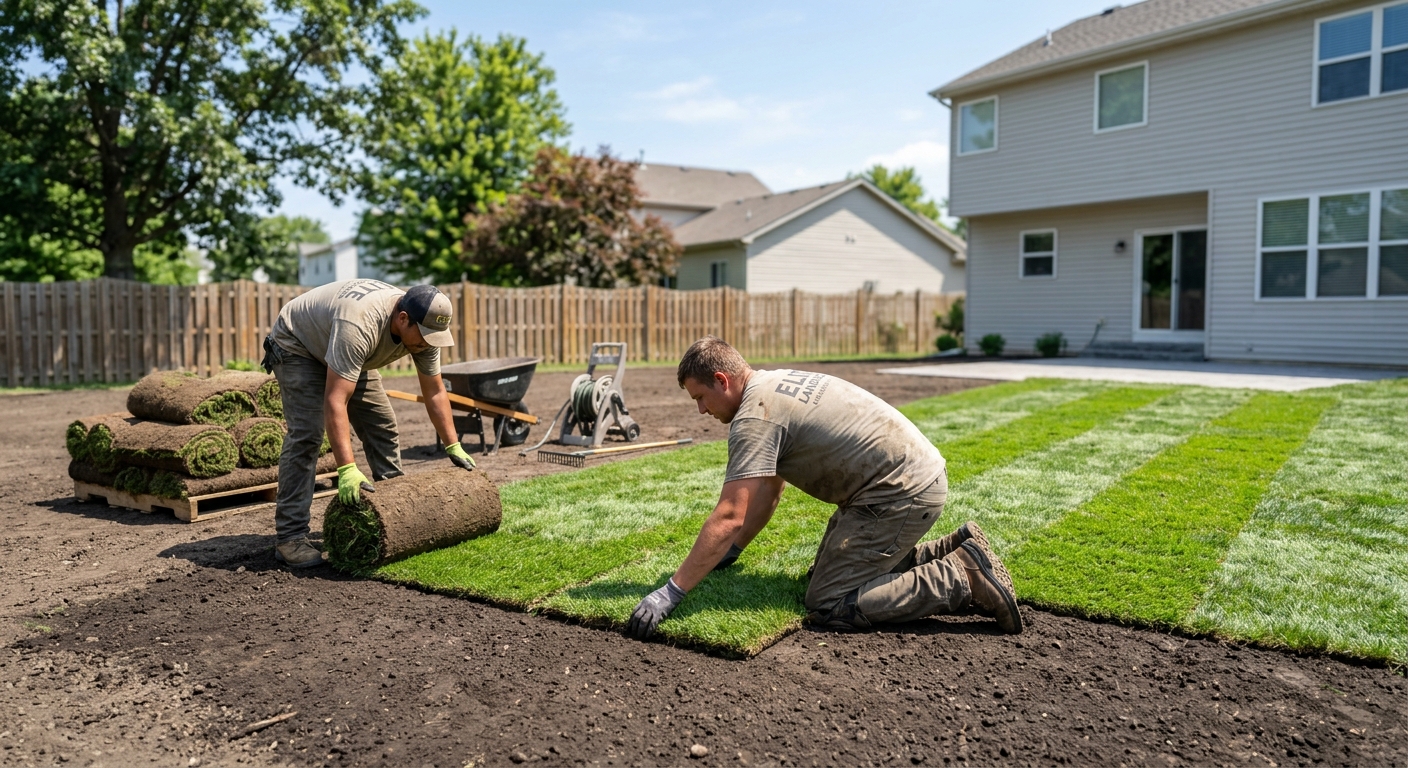
For turf, choose sod when you need instant curb impact and you can install during the correct establishment window; sod typically costs about 3–4x more per sq ft than seeding, but that difference can be justified when you’re fixing visible bare areas and want faster visual results. If you’re okay waiting a season, seeding can be a strong value option, especially where you have time to manage germination and mowing height. Drainage and grading are critical in Northwest Ontario: even small low spots can pool water, which freezes and damages turf and can drive moisture toward foundations.
For hardscape, base preparation matters more here because frost can shift improperly compacted material. With patios and retaining walls, contractors should excavate to a frost-considerate depth, compact well, and include proper drainage layers. Low-maintenance strategies—mulch, groundcovers, and perennials—reduce annual upkeep while maintaining seasonal colour. If you want an “efficient water” approach, consider rain-garden features and drought-tolerant plantings; even in less drought-prone settings, these elements help manage runoff during heavy precipitation.
Dollar example: If your lawn area is similar size, a sod installation at roughly $1,500–$6,000 may be worth it when you need quick appearance, but if your priorities are long-term cost control and flexibility, seeding typically comes in lower (often in the $1,000–$3,500 range for smaller-to-mid areas) and can be paired with grading corrections to prevent washouts.
| Element |
Climate Consideration |
Maintenance Level |
Price Band |
| Sod lawn installation |
Needs correct establishment timing before fall freeze; roots must settle before freeze-thaw |
Medium during first season, then lower once established |
$1,500–$6,000 |
| Native perennial garden |
Better winter survival and wind tolerance; mulch protects crown during freezes |
Low to medium (spring cleanup and light dividing as needed) |
$1,200–$3,800 |
| Mulched shrub border |
Cold-hardy shrubs plus consistent mulch reduces heaving and moisture swings |
Low (weeding control and occasional top-up) |
$800–$2,900 |
| Interlocking stone patio |
Requires frost-safe base depth and compaction to prevent heaving |
Low (periodic joint sand top-up and spot leveling) |
$4,000–$15,000 |
| Retaining wall (block) |
Backfill and drainage layers reduce freeze-driven pressure and wall movement |
Low once built; inspections after extreme winters |
$4,000–$20,000 |
| Drip irrigation system |
Efficient watering during short growing windows; frost-safe winterization planning |
Medium (seasonal programming and inspection) |
$1,200–$5,500 |
How to choose a landscaping contractor in Fort Frances
Choosing the right landscaping contractor in Fort Frances starts with verification. Ask for their Ontario business details and request proof of liability insurance (so you’re covered if something is damaged). Confirm workers are covered with WSIB/WCB and ask for the clearance/coverage documentation—don’t rely on a verbal “we’re insured.” For each item, ask to see a current certificate and ensure it matches the company name on the quote. If they won’t provide paperwork, that’s a major warning sign.
Next, get 2–3 itemised written quotes rather than one lump-sum. You want labour and materials separated for excavation, base stone, soil/topsoil, drainage components, plant materials, and any disposal fees. Read the scope carefully: what’s excluded (e.g., tree removal, stump grinding, hauling excess soil, or electrical work for lighting)? Is permit pulling included where a retaining wall permit may apply? Is cleanup and final grading included?
Warranty matters. Ask for a workmanship warranty length, whether plant replacements are included if failures happen within the first season, and whether product/manufacturer warranties are transferable. For payment, never pay more than 10–15% upfront; hold back the remainder until the job is complete and you’ve confirmed the final walk-through. Finally, require a start date and a completion estimate in writing, especially because the northern season can limit late fall work.
- Request liability insurance and WSIB/WCB proof before signing anything.
- Ask whether disposal/haul-away is included in the quote.
- Confirm who provides and compacts base materials for patios/walls.
- Get written clarification on grading targets and drainage direction.
- Ensure plant quantities and sizes (e.g., 2.0 m height, container size) are listed.
- Ask how they handle frost-safe base depth for hardscape.
- Confirm equipment access constraints (driveway protection, staging area).
- Ask about topsoil depth and soil amendment type, not just “add soil.”
- Verify edging type and locking system for interlocking stone.
- Check their cleanup plan and turf establishment care instructions.
- Ask how they document changes if you request add-ons mid-project.
- Confirm warranty terms in writing and what triggers a service visit.
If you see 4–5 of these red flags, be cautious: vague scope with no measurements or quantities, refusal to provide insurance/WSIB paperwork, quotes that only list “lump sum” labour without materials, no written timeline (especially around freeze risk), and payment schedules asking for more than 15% upfront without a contract and deliverables.
Frequently asked questions — landscaping in Fort Frances
How do I improve drainage in my yard?
In Fort Frances, drainage fixes start with observing where water collects during spring melt or heavy rains. The most reliable approach is usually grading corrections plus targeted sub-drainage (often a drainage bed or French drain) where water persists. A contractor should mark flow paths, confirm downspouts discharge away from the foundation, and identify low spots that can freeze and damage turf. Because many local homes are older (74.6% built before 1981, Statistics Canada, 2021 Census), buried drainage may be limited or misdirected—so fixing only the surface can fail. Expect drainage work to be labour-heavy due to excavation in northern conditions; pricing commonly moves the overall project beyond basic lawn bands (for example, sod-only estimates around $1,500–$6,000 when major drainage is required).
What is xeriscaping and does it suit Fort Frances?
Xeriscaping is landscaping designed to use water efficiently and reduce irrigation demand by pairing drought-tolerant (or water-efficient) plants with smart soil and mulch practices. Fort Frances isn’t typically as water-restrictive as dry interior climates, but xeriscape principles still help because our growing windows are short and winter stress is real—so plants need to be established quickly and reliably. The best fit is usually a “low-water, hardy” hybrid: mulched shrub borders, native perennials, and groundcovers that reduce evaporation, plus rain-garden style features to capture runoff. If you add irrigation, design it for efficient watering and winterization. In practical terms, xeriscaping often still requires proper grading and frost-safe hardscape bases; that’s where budgets can resemble retaining wall or patio projects rather than simple planting-only work.
How do I plan a low-maintenance yard?
A low-maintenance yard in Ontario’s Northwest starts with reducing annual tasks: fewer bare soil areas (which invite weeds), smart mulch, and plant choices that don’t need constant winter protection. In Fort Frances, aim for cold-tolerant, zone-appropriate species and group plants so they match sun and wind exposure. For turf, many homeowners choose sod for faster coverage, but seeding can be cost-effective if you’re managing establishment properly. If you’re comparing options, sod installations usually land around $1,500–$6,000 depending on area and prep; seeding can be a lower-cost path when your priority is long-term coverage without premium material costs. Pair this with durable edging, a clear drainage plan, and interlocking patios or walkways where foot traffic is consistent—then maintenance becomes mowing and seasonal cleanup rather than ongoing repairs.
How deep should a retaining-wall base be for local frost?
For a retaining wall in Fort Frances, the base depth needs to account for frost influence and stable compaction, not just the wall height. As a rule, contractors plan excavations deep enough to place compacted base material and a drainage layer that sits below the zone where freeze-thaw movement is most disruptive. Exact depth varies by block system, soil type, and wall height, so your contractor should base the plan on site conditions and manufacturer requirements. This is one reason a retaining wall commonly falls into the $4,000–$20,000 band: it’s not only block cost—it’s excavation, compaction, drainage backfill, and sometimes hauling and disposal. If your wall may exceed the local permit threshold (commonly around 1.0 m in many Ontario municipalities), confirm permitting before work begins.
How much does professional landscape design cost?
Professional design in Fort Frances is usually priced to reflect both time on-site and the complexity of the plan—especially when drainage corrections or hardscape layout is involved. For many homeowners, full design plus installation projects tend to align with the broader local band of $5,000–$18,000, because it often includes the design work, then carries into installation and material selection. Some companies offer a design-only fee for a planting plan or layout, but the total you spend can be higher or lower depending on whether you later hire separate crews for grading, hardscape, and planting. Given that 77.2% of dwellings are single-detached in Fort Frances (Statistics Canada, 2021 Census), many projects are more “yard-scale,” which can increase design effort and site measurements—so expect pricing to reflect your property size and how much regrading is needed.
How do I compare landscaping quotes?
Comparing quotes in Fort Frances should start with line-item consistency, not the bottom total. Ask each contractor for an itemised breakdown: excavation and base materials (for patios/walls), soil/topsoil and amendments, drainage components, plant quantities and sizes, and whether disposal and final cleanup are included. Confirm seasonal feasibility—late fall freeze risk can affect sod and planting scheduling—so verify the proposed installation window. Also check inclusions like permit handling for retaining walls (if above the local threshold), utility locates before digging, and warranty terms for workmanship and plants. A quick price reference helps: if one quote’s sod work is far from $1,500–$6,000 without explaining extra grading or drainage prep, it may be missing scope. Finally, compare payment schedules (avoid more than 10–15% upfront) and insist on a written start date and completion estimate.