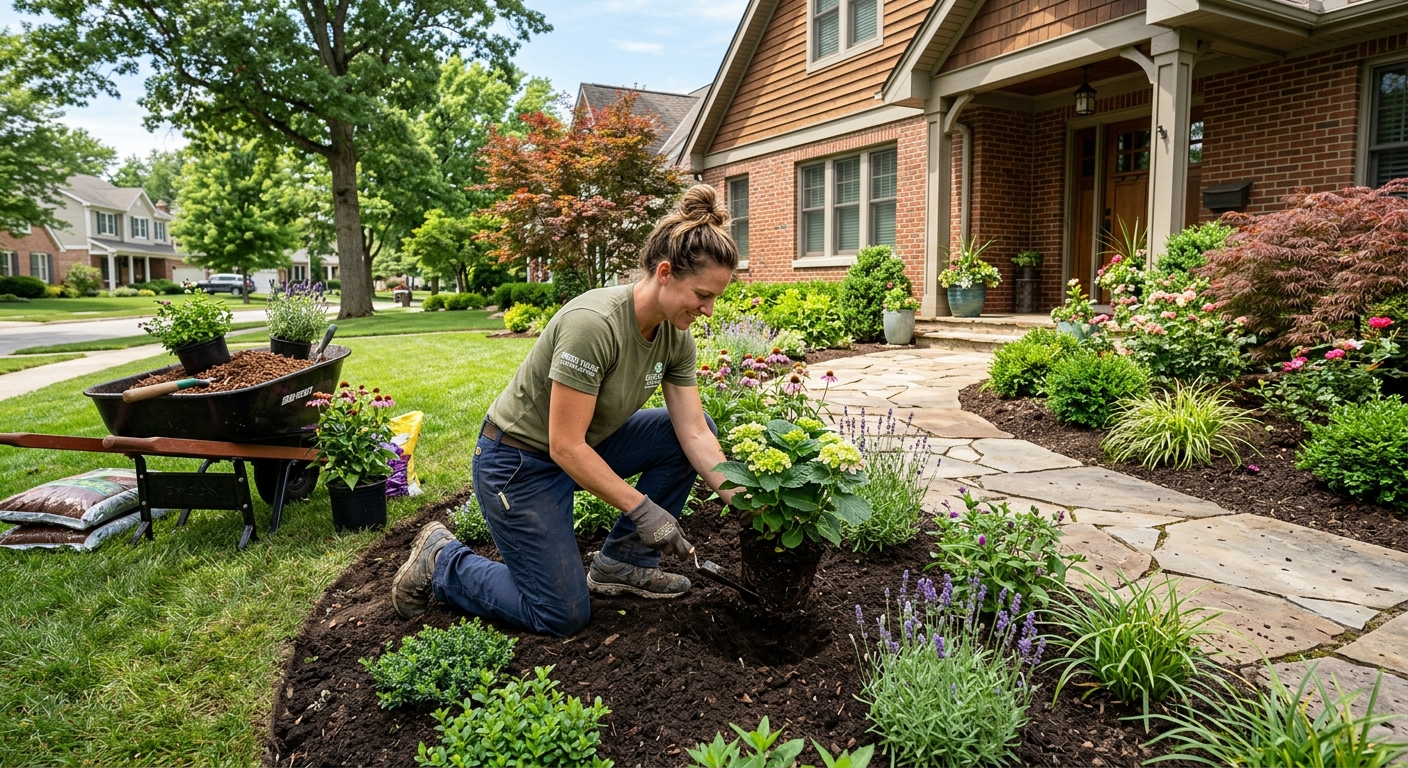
Landscaping options and costs in Preston Centre
Preston Centre is a neighbourhood where homeowners often want curb appeal that looks sharp right away, but still holds up through Toronto-area freeze–thaw cycles. With 10,441 people in the area (Statistics Canada, 2021 Census), demand is steady, and you’ll see a lot of projects clustered around older residential pockets where driveways, walkways, and planting beds are due for refresh. Many homeowners also have practical reasons to invest: detached properties are common in the GTA’s family-oriented areas, and that yard space makes larger softscape plans feel worthwhile.
In the Toronto market, landscaping costs tend to reflect two things at once: the plant hardiness reality (zones 6a–7a, winter lows roughly in the –23 to –18°C range) and the way winter can punish poorly built bases. Prepping for drainage and compacting granular layers for patios and retaining walls often adds labour and material versus milder climates. Likewise, the available working season generally runs from late spring through early fall, so crews prioritize scheduling and materials that perform reliably in our clay-and-fill soil conditions.
If you’re in the high-demand zone around the Preston Centre/Hwy 7 corridor area, it’s especially common to see front-yard interlocking and shrub upgrades—often because homeowners want faster “first impression” results before winter.
Below is a practical comparison of typical Preston Centre scope options to help you interpret quotes and budget.
| Service |
Description |
Season |
Price Range |
| Full landscape design and installation |
Site walk, concept + planting plan, grading/drainage coordination, soil amendment, softscape and hardscape build-out (patio/walks, beds, edging, topsoil, mulch) |
Late April–October |
$8,000–$40,000 |
| Sod installation (supply, grade, lay, roll) |
Remove existing turf (if required), grade/level, add topsoil where needed, lay sod, roll, starter fertilizer, first watering plan |
May–early October (best spring/fall) |
$2,500–$8,000 |
| Lawn seeding (grade, seed, starter fertilizer) |
Light regrading, rake/prepare seedbed, seed selection, starter fertilizer, mulch/erosion control as needed |
April–June or early fall |
$1,800–$6,500 |
| Interlocking patio or walkway |
Excavation, geotextile, granular base, compaction, edging, pavers/stone, cutting and finishing to doorways and steps |
Late April–September |
$6,000–$25,000 |
| Retaining wall (interlocking block) |
Layout, base prep, drainage behind wall (weep system/filter fabric), blocks, capstones, backfill and compaction |
May–September |
$6,000–$30,000 |
| Tree and shrub planting |
Soil prep, planting, staking (as needed), mulch rings, watering schedule, seasonal follow-up watering guidance |
April–June or September–October |
$800–$6,000 |
Prices are estimates only and vary by project scope, site access and material selection.
What affects the price of landscaping in Preston Centre
In Preston Centre and across the Toronto area, it’s common to see quotes for the “same” landscaping scope land 30–50% apart. The difference usually comes down to how a contractor handles three cost drivers: site conditions (especially clay and drainage), winter durability (base depth, compaction, freeze–thaw tolerance) and the plant/hardscape tiers they’re pricing. Two homeowners can choose the same look, but if one site needs more excavation and subdrains, the total price moves quickly.
Climate and seasonality also govern what’s possible. The GTA sits in plant hardiness zones 6a–7a, so we select woody plants and perennials that tolerate winter lows near –23 to –18°C and then plan planting during the window when roots can establish before deeper cold. Southern Ontario offers a moderate season with irrigation needs during summer dry spells, but the bigger structural costs still come from freeze–thaw cycles. By comparison, Prairie regions (Zone 2–4) often require simpler, ultra-hardy drought-tolerant designs and a shorter working season. Coastal BC can support a longer growing season and lush palettes, but heavy rainfall makes drainage design essential. In the dry BC interior, water restrictions push irrigation toward drip systems and low-precipitation heads.
Locally, I see cost movement from:
- Clay and fill soils that need soil amendment and sometimes subdrains to protect foundations and prevent pooling (a major contributor to grading costs).
- Older lots with settled grades—fixing slopes for patios/side yards can add base prep and rework.
- Front-yard upgrades near busy access points where logistics (truck access, material staging) add labour time.
As a quick budgeting reference, many homeowners anchor plans around the broader $8,000–$40,000 design-and-install band, and then decide whether to allocate more toward drainage-heavy hardscape like a wall or patio (often within the $6,000–$30,000 and $6,000–$25,000 ranges) versus using softer, lower-cost planting enhancements.
| Price Factor |
Why It Matters |
Cost Impact |
| Yard size in sq ft — the primary cost driver for softscape |
Larger lawns and planting beds require more material, base preparation, and labour hours |
Often drives the widest swings between quotes (can change totals by thousands) |
| Grading and drainage work — slope corrections add significant cost |
Proper drainage prevents water from pooling against foundations and paver slabs |
Can add substantial labour/excavation; frequently one of the biggest quote differences |
| Drainage bed or French drain installation |
Protects hardscape and landscaped areas during heavy rain and spring melt |
Increases material + trenching labour; often changes the project total noticeably |
| Plant material tier — native shrubs vs. ornamental vs. mature specimen trees |
Mature stock costs more and may require additional labour (lifting, staking, root ball handling) |
Can double or triple the planting line item depending on size and species |
| Hardscape vs. softscape ratio — walls and patios cost more per sq ft than lawn |
Stonework needs deeper base prep, edging, and precise compaction |
Projects shift upward quickly when patios/walls increase in area |
| Irrigation system design and installation |
Controls uniform watering in zone-appropriate plantings and helps establish sod or seed |
Typically adds cost but reduces failure risk for lawns and beds |
| Soil amendment and topsoil required |
Improves root establishment where clay/fill is compacted or poor for drainage |
Delivery, testing, and labour can add thousands on larger areas |
| Tree removal or stump grinding before new planting |
Clearing roots and stumps affects planting layout and prevents future heaving |
Can add cost depending on access, stump size, and disposal requirements |
Permits & regulations in Ontario
In Ontario, most landscaping work—like planting, sodding, and typical softscape (mulch beds, shrub borders, and walkway or patio construction with paver systems)—usually does not require a permit. Where permits often come into play is for structural changes and certain hardscape elements. For example, retaining walls above a municipal threshold (commonly around 1.0 m or 3.3 ft, depending on local rules) typically require a building permit, and in some cases engineered drawings are needed. Changes to lot grading that alter drainage patterns—especially toward a neighbouring property or toward storm connections—may also trigger approval requirements.
Before any digging, call for utility locates. Even a simple planting hole or small retaining-wall footing can hit buried services. For irrigation, confirm whether your property is subject to water-use bylaws and watering restrictions; while drought restrictions are more prominent in Alberta and the dry BC interior, Toronto-area watering rules can still affect timing and how often you water sod and new plantings.
To verify an Ontario contractor in Preston Centre, follow a practical checklist: (1) confirm the contractor’s licence status through the appropriate Ontario registry or business listing they provide in their quote; (2) request a current certificate of insurance showing liability coverage; (3) ask for WSIB/WCB coverage proof (or a clearance letter if applicable). Then match the name and address on the documentation to the quote and invoice. If they won’t provide insurance details or they keep the scope vague, that’s a red flag.
Planning a landscape that thrives in Preston Centre's climate
To make a yard thrive in Preston Centre, you want to design around our hardiness reality and how Toronto rainfall and frost behave—rather than just chasing a “look.” The GTA generally sits in zones 6a–7a, so choose native and zone-appropriate plants that can handle winter lows near –23 to –18°C and spring thaw. At the same time, many lawns and beds struggle when water sits in low spots, so drainage and grading are not optional.
Sod versus seed is the most common decision point. Sod gives instant visual results and can protect erosion, but it costs about 3–4x more per sq ft than seeding when you compare complete installed work. That said, the extra spend is justified when you need fast curb appeal or when timing constraints mean you’re finishing close to the peak planting window. Seeding can be more budget-friendly and works well if you can commit to watering and follow-up maintenance.
In Toronto, drainage and grading often decide whether patios, steps, and paver edges stay level through freeze–thaw. Base preparation should respect the frost cycle—adequate granular base depth, compaction, and proper edge restraint prevent heaving and settling. For low maintenance, build structure with mulched shrub borders, groundcovers, and perennials that repeat reliably year to year, and use a consistent mulch strategy to reduce weeds.
You can also include rain-garden elements or more xeric-friendly pockets (limited turf, deep-rooting perennials, and mulch) to reduce water demand during summer dry spells—without turning the yard into a “rock-only” look.
Example of where cost difference makes sense: if your lawn repair budget is tight, seeding within the $1,800–$6,500 range can be the smart move. If you need a fully finished lawn for a sale or event and want rapid establishment, sod budgets often fall in the $2,500–$8,000 range, but you should make sure grading and topsoil prep are included to avoid failure.
| Element |
Climate Consideration |
Maintenance Level |
Price Band |
| Sod lawn installation |
Works best when roots can establish before deeper cold; protect from summer dry spells and spring thaw pooling |
Moderate for first season (watering + light rolling checks) |
$2,500–$8,000 |
| Native perennial garden |
Zone-appropriate plants handle winter lows better and often need less watering once established |
Low after establishment (mulch refresh + seasonal pruning) |
$1,200–$7,000 |
| Mulched shrub border |
Mulch moderates soil temperature during freeze–thaw and helps reduce weed pressure |
Low to moderate (weeding the first year, then upkeep) |
$800–$4,500 |
| Interlocking stone patio |
Freeze–thaw demands engineered base prep, proper drainage slope, and restrained edges |
Low (occasional cleaning and joint maintenance) |
$6,000–$25,000 |
| Retaining wall (block) |
Back drainage and proper base depth prevent movement during winter cycles |
Low after build-out (periodic inspection for settling) |
$6,000–$30,000 |
| Drip irrigation system |
Helps manage watering in zone-appropriate beds and reduces waste; good for drought-prone spells |
Moderate (seasonal winterisation + checks) |
$1,000–$5,500 |
How to choose a landscaping contractor in Preston Centre
Choosing the right contractor in Preston Centre is mostly about proof: the work they say they’ll do, the coverage that protects you, and how clearly they price the job. Start by verifying Ontario credentials. Ask for a certificate of insurance (liability coverage) and confirm WSIB/WCB coverage or provide a clearance letter if their structure qualifies. Then, confirm the information on those documents matches the company on your quote and invoice. If they can’t provide paperwork, you’re taking on avoidable risk.
Next, get 2–3 written, itemised quotes—not just a lump sum. A good quote breaks out labour and materials separately for excavation/base prep, soil/topsoil, pavers/stone, planting stock, mulch, edging, and drainage components. Make sure scope exclusions are clear: is disposal included? Are utility locates included or is it your responsibility? Will they handle permit pulls if required for larger retaining walls or grading changes? The more detailed the scope, the fewer surprises appear later—especially when freeze–thaw durability requires correct base build-ups.
Warranty matters too. Ask for the workmanship warranty length (commonly tied to base and installation), and separate it from the product/manufacturer warranty on stone/pavers or plant material where applicable. Also ask whether warranties are transferable if you sell the home.
For payment, avoid heavy upfront payments—stick to roughly 10–15% at most, then use progress payments tied to milestones. Never release the holdback until the full job is complete and the grade and drainage are verified. Get a start date and completion estimate in writing, with weather contingencies noted.
- Ask for proof of liability insurance and WSIB/WCB coverage before work begins.
- Confirm the quote includes site access notes (parking, gate width, driveway protection).
- Request an itemised breakdown (labour, materials, excavation/base, disposal).
- Verify drainage and grading steps are listed, not assumed.
- Check that geotextile and granular base layers are specified for patios/walks.
- Confirm retaining-wall details include back drainage (filter fabric/weep system).
- Ask who supplies and installs edging and what type is used (restraint prevents movement).
- Get a disposal plan in writing (topsoil removal, old sod/turf, excess spoil).
- Confirm protection of existing trees, fences, and foundation areas during construction.
- Review workmanship warranty length and what it covers (settlement/heaving, labour only vs materials).
- Clarify payment schedule and retainage/holdback amount.
- Ensure a project schedule is included with weather delay assumptions.
Red flags we see in Preston Centre include: (1) quotes that are only verbal or lack itemised scope; (2) contractors who won’t provide insurance and WSIB/WCB paperwork; (3) vague statements like “we’ll fix drainage” without describing grading/drainage components; (4) heavy upfront payment demands; and (5) no written start/completion timeline—especially for hardscape where freeze–thaw risk makes timing and base prep critical.
Frequently asked questions — landscaping in Preston Centre
How long does a landscaping project take in Preston Centre?
For most Preston Centre homes, timelines depend on softscape versus hardscape. A small shrub and mulch refresh typically takes 1–3 days once materials arrive. Sod projects often run 2–4 days including prep and grading. Interlocking patios or walkways commonly take about 3–7 days depending on size, base work, and curing time. If you’re adding a retaining wall, allow for longer lead time because excavation, base prep, drainage behind the wall, and careful backfill compaction can extend the schedule to 1–2 weeks. Contractors also schedule around freeze risk and wet periods; late spring to early fall is usually the most reliable window.
What is the best grass type for a Preston Centre lawn?
In Southern Ontario, many homeowners do well with a blend designed for shade tolerance and durability through mowing seasons. The “best” choice depends on sun exposure and how much you can water during summer dry spells. If your yard gets partial shade near fences or mature trees, a shade-tolerant fine fescue blend can outperform more aggressive turf types. For full-sun yards with normal watering, a more wear-tolerant sod or seeding blend typically gives a consistent look. If you’re comparing budgets, remember sod installed often lands around $2,500–$8,000, while seeding is usually lower—often within a $1,800–$6,500 range—so grass type choice should align with how quickly you need results and how much maintenance you can commit to in year one.
When should I aerate and overseed my lawn in Preston Centre?
In Preston Centre, the safest timing is typically early fall or late spring, when soil temperature supports germination and grass can recover before deeper cold. Aeration helps where traffic or clay compaction limits root growth. If you’re overseeding, plan to aerate first, then seed into the holes and finish with light topdressing where the contractor recommends it. For best results, avoid overseeding right before a stretch of heavy rain that can wash seed, and avoid seeding when nights are consistently too cold to support establishment. If your lawn is thin due to shade or poor drainage, aeration helps—but the real fix is correcting grading and soil conditions so water doesn’t pool during spring thaw.
What trees grow best in Preston Centre's climate zone?
Preston Centre sits in Ontario’s broader zone 6a–7a range, so you can grow many common hardy street and garden trees with good winter performance. Homeowners often do well with smaller ornamental options like serviceberry or hardy flowering cherries in the right microclimate (good soil and drainage). For sturdier, longer-term structure, native-leaning trees such as littleleaf lindens, red maples (site-dependent), and hardy oaks can thrive when planted with proper spacing and soil prep. The key is matching the tree to your yard’s light, soil moisture, and available root space—especially on older lots where fill and clay can affect drainage. A contractor should also advise on staking and watering during the first season so roots establish before winter lows.
How much does sodding a yard cost in Preston Centre?
Sodding costs in Preston Centre commonly fall within the $2,500–$8,000 band, but the final number depends on grading prep, topsoil needs, and whether removal of existing turf is required. If the site needs regrading to address low areas or foundation-facing drainage, you’ll typically see the price move toward the upper part of the range. Sod also assumes a realistic irrigation and first-season care plan; if the base isn’t properly prepared, sod can fail even with the higher upfront material cost. If you’re comparing “cheaper now” versus “faster finish,” seeding is often the budget option within about $1,800–$6,500, while sod is the choice when you need instant curb appeal.
How do I prevent weeds in my Preston Centre garden?
Weed prevention works best when you stop the problem at the soil surface and reduce opportunities for light. In Preston Centre yards, a thick, consistent mulch layer (installed over well-prepared beds) is one of the most effective steps; it moderates soil temperature through freeze–thaw and helps suppress germination. Use the right weed-barrier strategy only where appropriate (some homeowners use landscape fabric for paths, but beds often do better with organic mulch and good plant density). Also correct drainage and soil compaction—stressed plants leave gaps where weeds move in. The first season is the hardest: expect some cleanup, then plan for annual mulch refresh. If you’re doing new planting, a weed-prep step in the scope can reduce recurring maintenance.